Click image to zoom · Click background or ✕ to close
🔍 Diagnosis Guide · CardamomNectar
Cardamom Plant Problems: 14 Issues Diagnosed & Fixed
Yellow leaves, brown tips, wilting, pests, or a plant that won’t flower — use the interactive Symptom Checker below to diagnose your cardamom in 60 seconds and get the exact treatment protocol.
⚡ Quick Answer — Cardamom Plant Problems
The most common cardamom plant problems: yellow leaves — usually overwatering and root rot (check drainage first); brown leaf tips — humidity below 60%; wilting in moist soil — root rot, repot urgently; not flowering — winter temperature below 18°C or a root-bound pot; pests (thrips, spider mites, mealybugs) — a weekly neem oil spray for 3 consecutive weeks. Use the Symptom Checker below for an instant, personalised diagnosis.
Diagnose the Problem Before You Treat It.
Cardamom plant problems are frequently misdiagnosed — yellow leaves alone have several different causes, and treating the wrong one usually makes things worse. This guide walks through every common cardamom problem systematically: observe the pattern, check the most likely cause first, then eliminate alternatives.
Cardamom is a resilient plant. Most problems — even moderate root rot — are recoverable if caught early. Every diagnosis below is cross-referenced with Kerala Agricultural University (KAU) guidelines and NIPHM cardamom pest-management research.
“Most cardamom problems come from one of two things: watering on a schedule instead of checking the soil, or not correcting the humidity indoors. Fix those two habits and the majority of the issues on this page simply stop happening.”
Olivia Turner — CardamomNectar Plant Problems Guide
14 problems diagnosed ✓
Interactive Symptom Checker ✓
Severity Calculator ✓
KAU & NIPHM referenced ✓
Expert reviewed ✓
Interactive Symptom Checker
Select every symptom your plant is showing for an instant diagnosisSelect every symptom your cardamom plant is currently showing. The checker analyses the combination and returns the most likely diagnoses with an exact, step-by-step treatment.
🩺
Cardamom Symptom Checker
Select symptoms → instant diagnosis + exact treatment protocol
What symptoms is your plant showing? Select all that apply:
Plant Health Severity Calculator
Not sure how urgent it is? Score your plant’s overall stress levelTick every statement that currently applies to your plant. The calculator scores overall stress and tells you whether to act today, this week, or just monitor.
📊
Plant Health Severity Calculator
Tick all that apply → urgency level + action plan
🌿 Leaf & Stem Appearance
🪱 Root & Soil Signs
🐛 Pest & Disease Signs
All 14 Cardamom Problems — Diagnosed & Fixed
Cause, identification, exact fix, and prevention for each14Problems Covered
2Critical / Untreatable
85%+Recoverable if Caught Early
KAU · NIPHMSources Verified
🔴 High
Problem 01
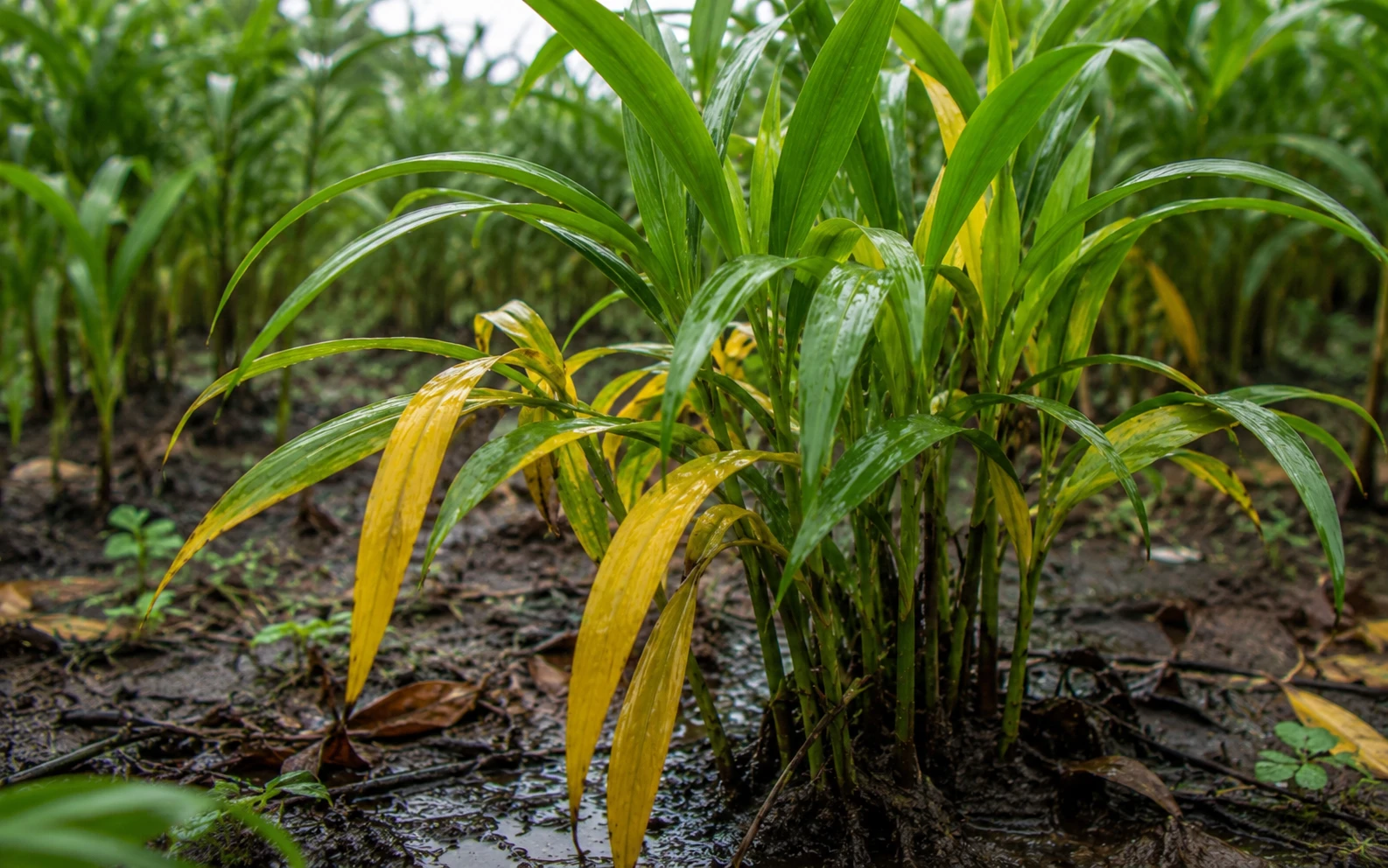
Yellow Leaves — Widespread
CauseOverwatering causing root rot (most common), or hard tap water raising soil pH, or nitrogen deficiency
IdentifyWet soil that won’t dry; foul smell; black, mushy roots on inspection; yellowing spreading upward
FixRemove plant, trim all black roots with clean scissors, air-dry 1 hr, repot in fresh mix. No water 48 hrs
PreventFinger-test soil before every watering. Multiple drainage holes. Never let the pot stand in water
🟡 Medium
Problem 02
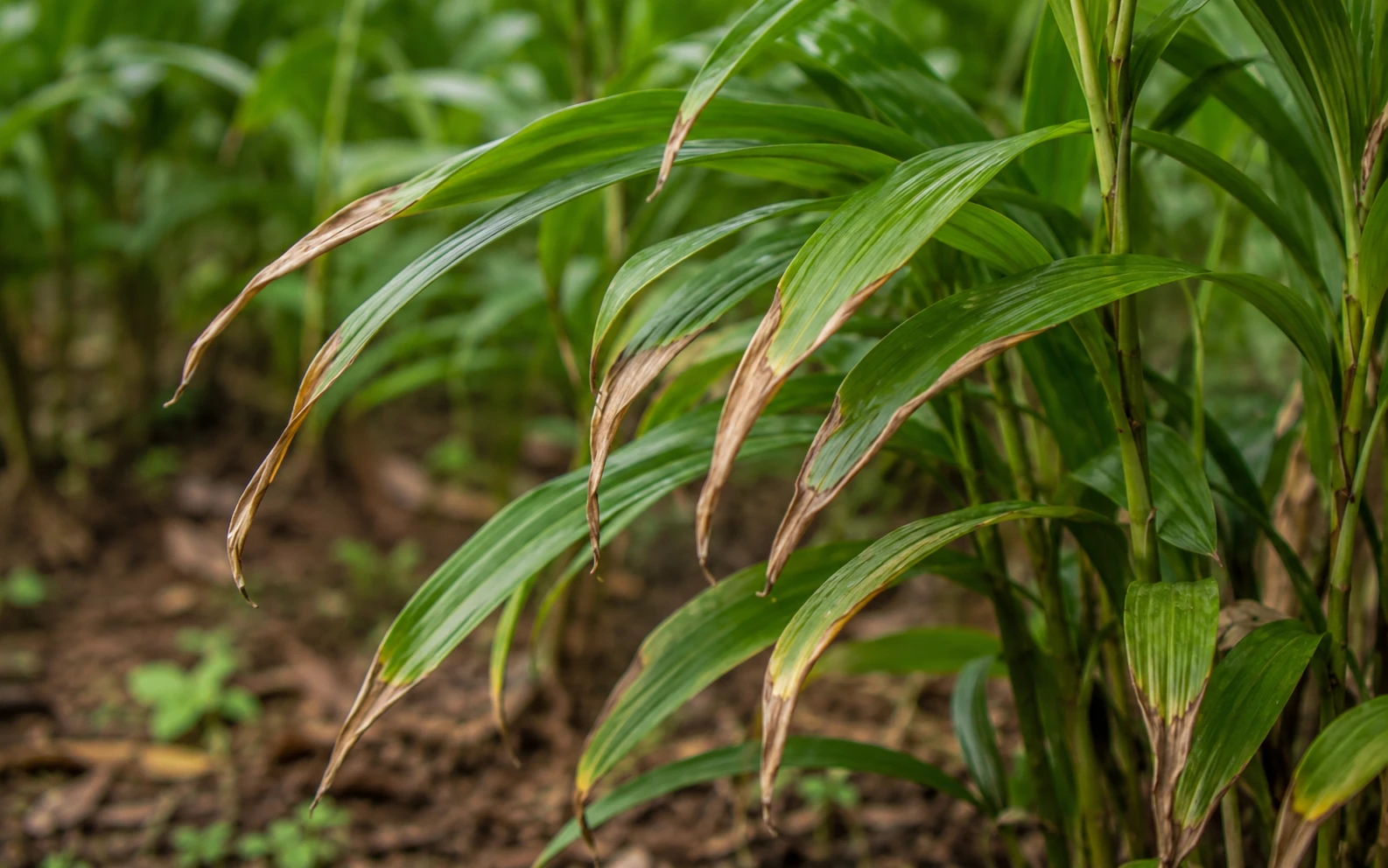
Brown Crispy Leaf Tips
CauseLow humidity (below 50%) — the most common winter problem when central heating is running
IdentifyTips only, not whole leaves; affects many leaves at once; worse in winter near radiators
FixAdd a pebble tray under the pot, move away from radiators; a humidifier set to 65% is the most effective fix
PreventMaintain 60–80% humidity year-round. Use rainwater, not hard tap water. Group with other tropicals
💀 Critical
Problem 03
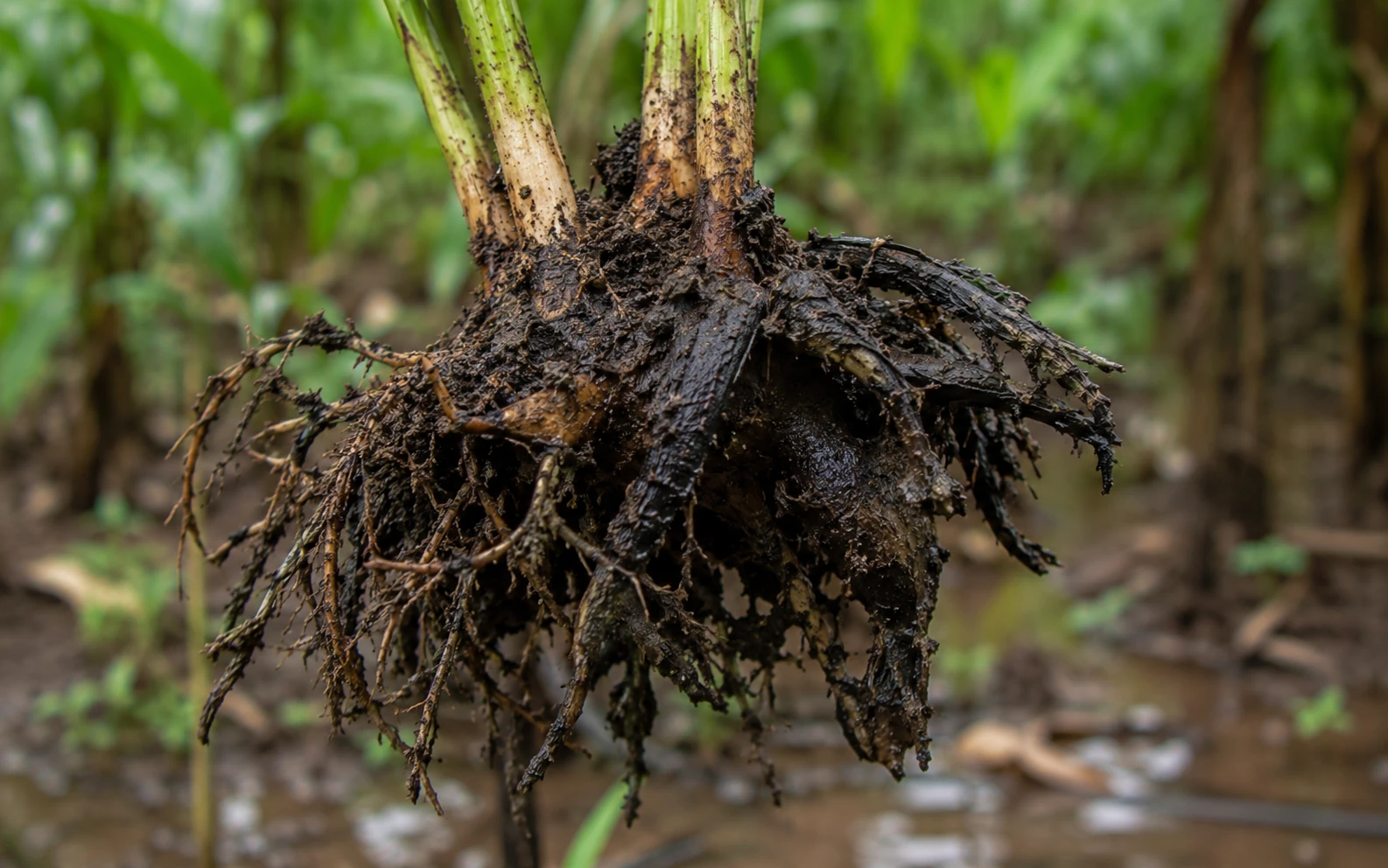
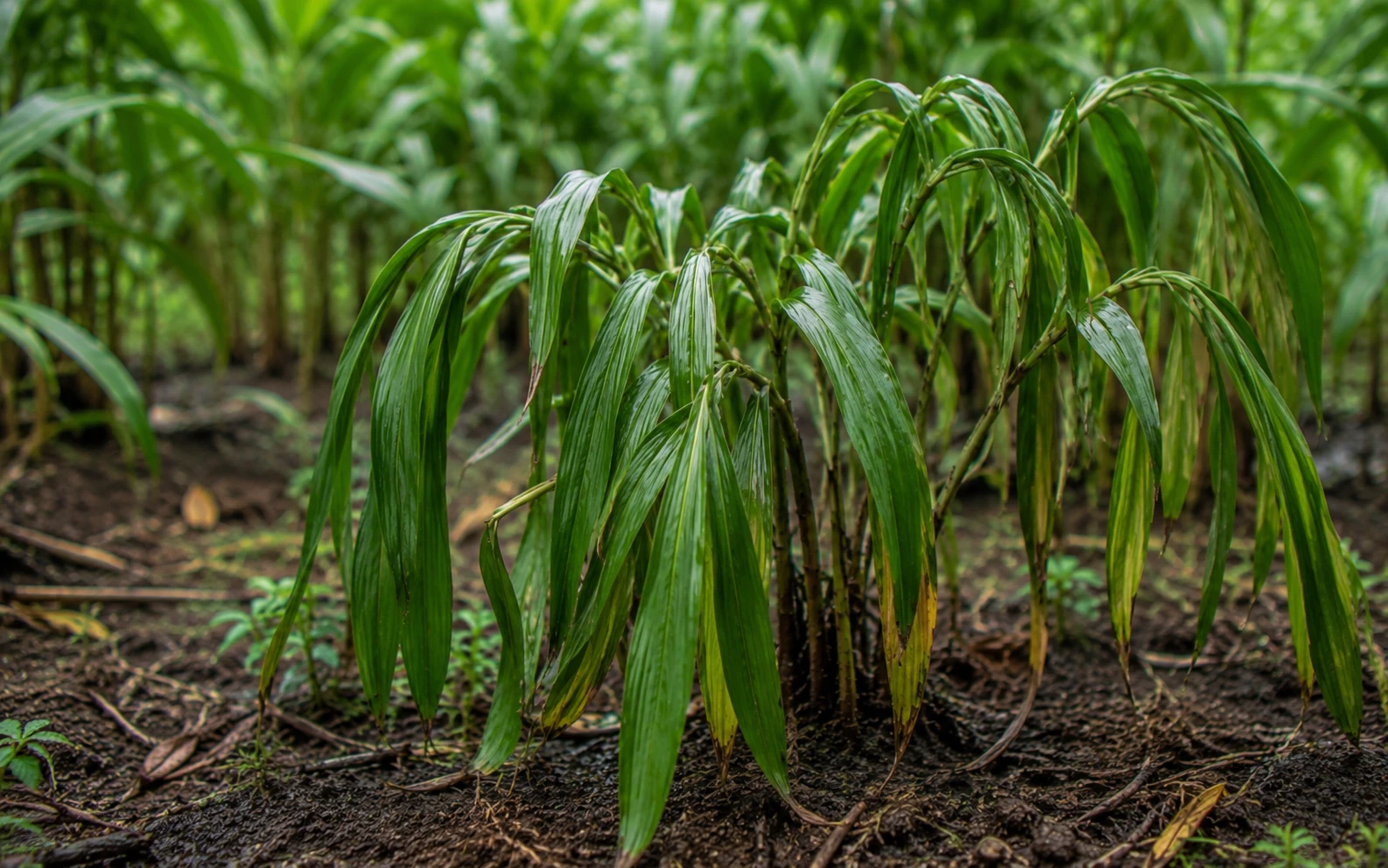
Root Rot (Phytophthora / Pythium)
CauseOverwatering plus poor drainage. Phytophthora nicotianae is the primary pathogen per NIPHM research
IdentifyWilting despite moist soil; foul smell from the pot; black, soft roots; dark discolouration at the stem base
FixTrim all rotten roots. Treat remaining roots with dilute H₂O₂ (1:4). Repot in sterile mix with a gravel base. No water 48 hrs
PreventGravel layer at the pot base, 20% perlite minimum, multiple drainage holes, never water on a fixed schedule
🔴 High
Problem 04
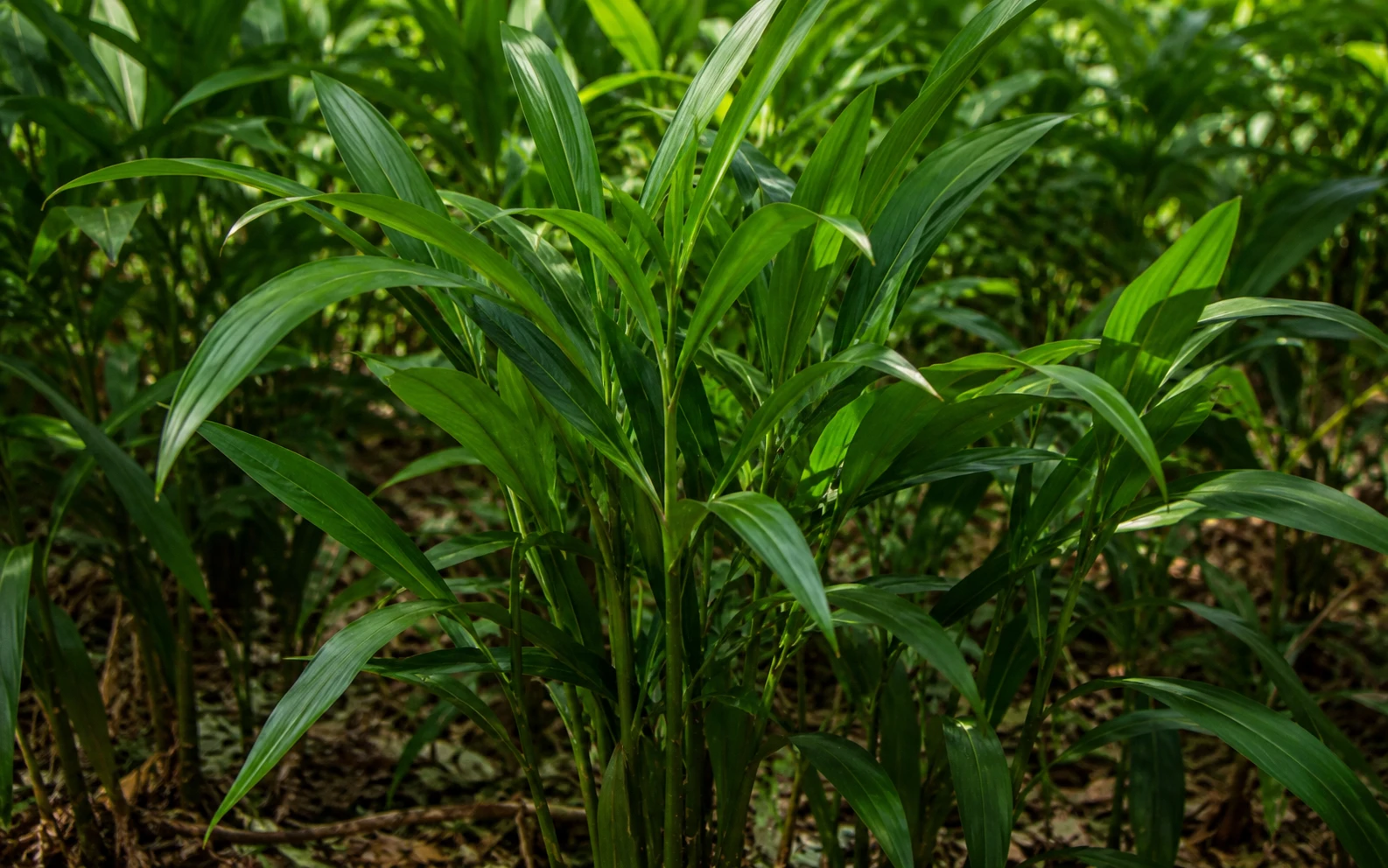
Wilting & Drooping
CauseTwo causes: root rot (damaged roots can’t deliver water) or severe drought stress
IdentifyCheck the soil — bone dry means underwatering; wet and smelly means root rot; wet with no smell means cold stress
FixDry soil: water thoroughly, it recovers in hours. Root rot: see Problem 03. Cold: move above 18°C immediately
PreventFinger-test soil before watering. Maintain 18°C minimum at all times. Avoid cold draughts near the plant
🟡 Medium
Problem 05
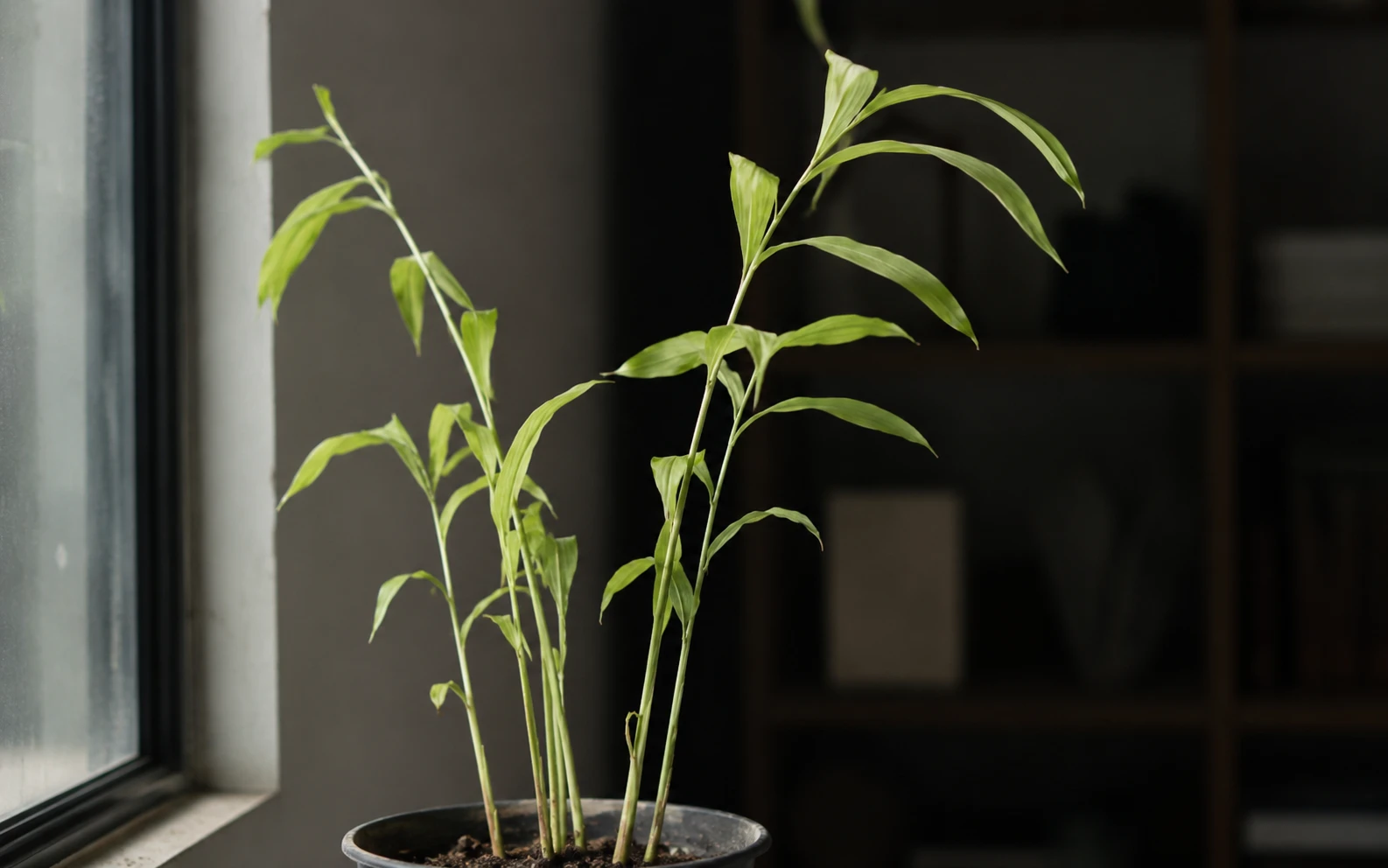
Not Flowering (Year 3+)
CauseTemperature below 18°C at any point year-round, a root-bound pot, insufficient light, or the plant is simply too young
IdentifyCheck age first (2–3 years from rhizome), then winter temperature, then root condition
FixRepot if root-bound. Maintain 18°C+ year-round. Add a grow light in winter. Switch to a potassium-rich fertiliser
PreventA cold windowsill without supplemental heat rarely flowers — a heated conservatory changes this significantly
🟢 Low
Problem 06
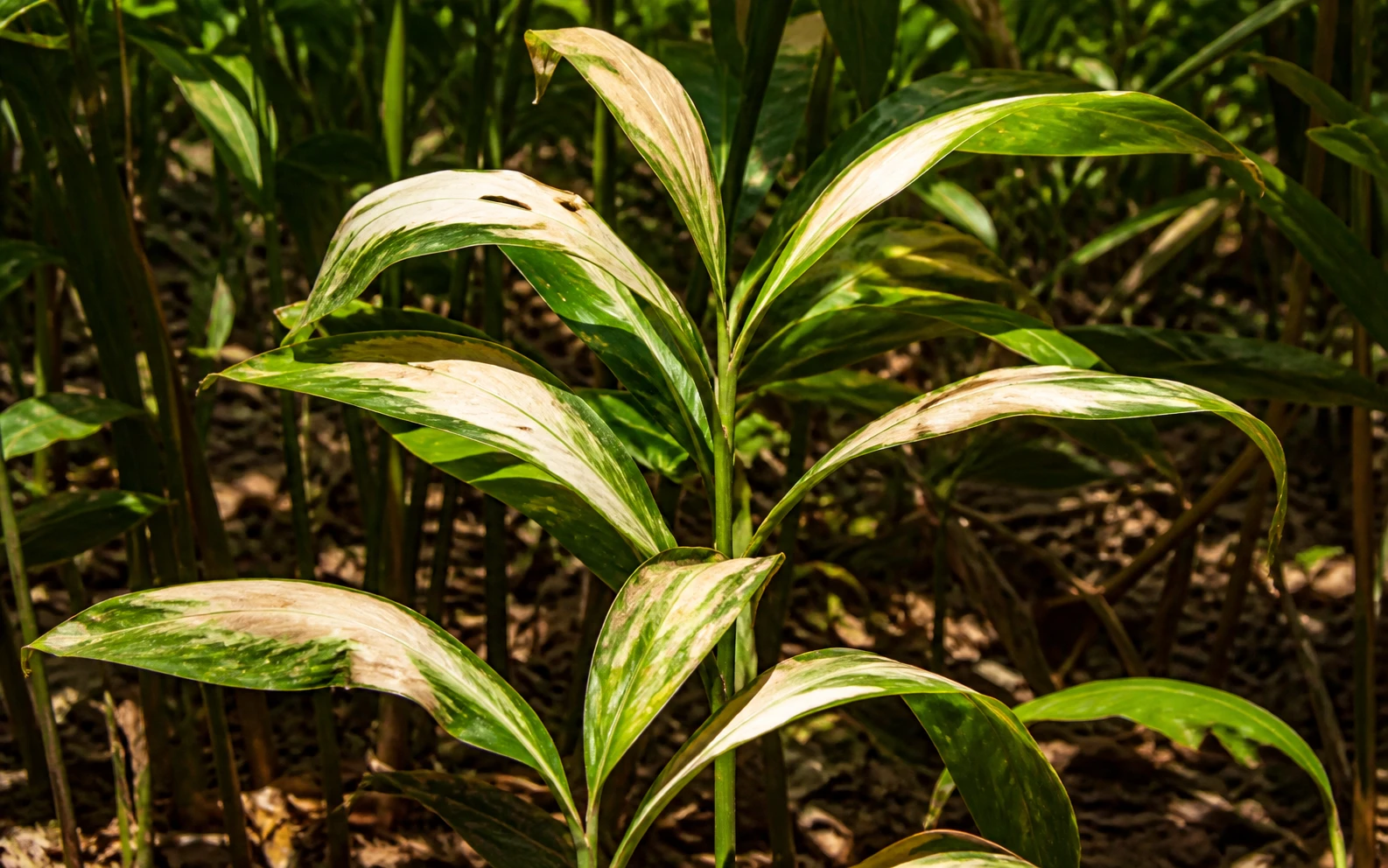
Leggy / Stretching Stems
CauseInsufficient light — etiolation. The plant stretches toward its light source; north-facing windows are the main culprit
IdentifyThin, elongated stems, a strong lean toward the window, long gaps between leaves
FixMove to a south-facing window. Rotate the pot 90° weekly. Add a full-spectrum LED grow light for 6 hrs/day
PreventOld leggy stems can’t be reversed — prune at the base. New growth in better light will be compact
🟡 Medium
Problem 07
Pale / Bleached Leaves
CauseDirect sun scorching that destroys chlorophyll, or nitrogen deficiency if light is already indirect
IdentifyBleached patches exactly where sun hits mean scorch; uniform pale colour across the whole plant means N deficiency
FixMove out of direct sun — a sheer curtain between the plant and the glass helps. If N deficiency: balanced NPK feed
PreventIndirect or filtered light only, never direct afternoon sun. Scorched leaves don’t recover but new growth will
🟡 Medium
Problem 08
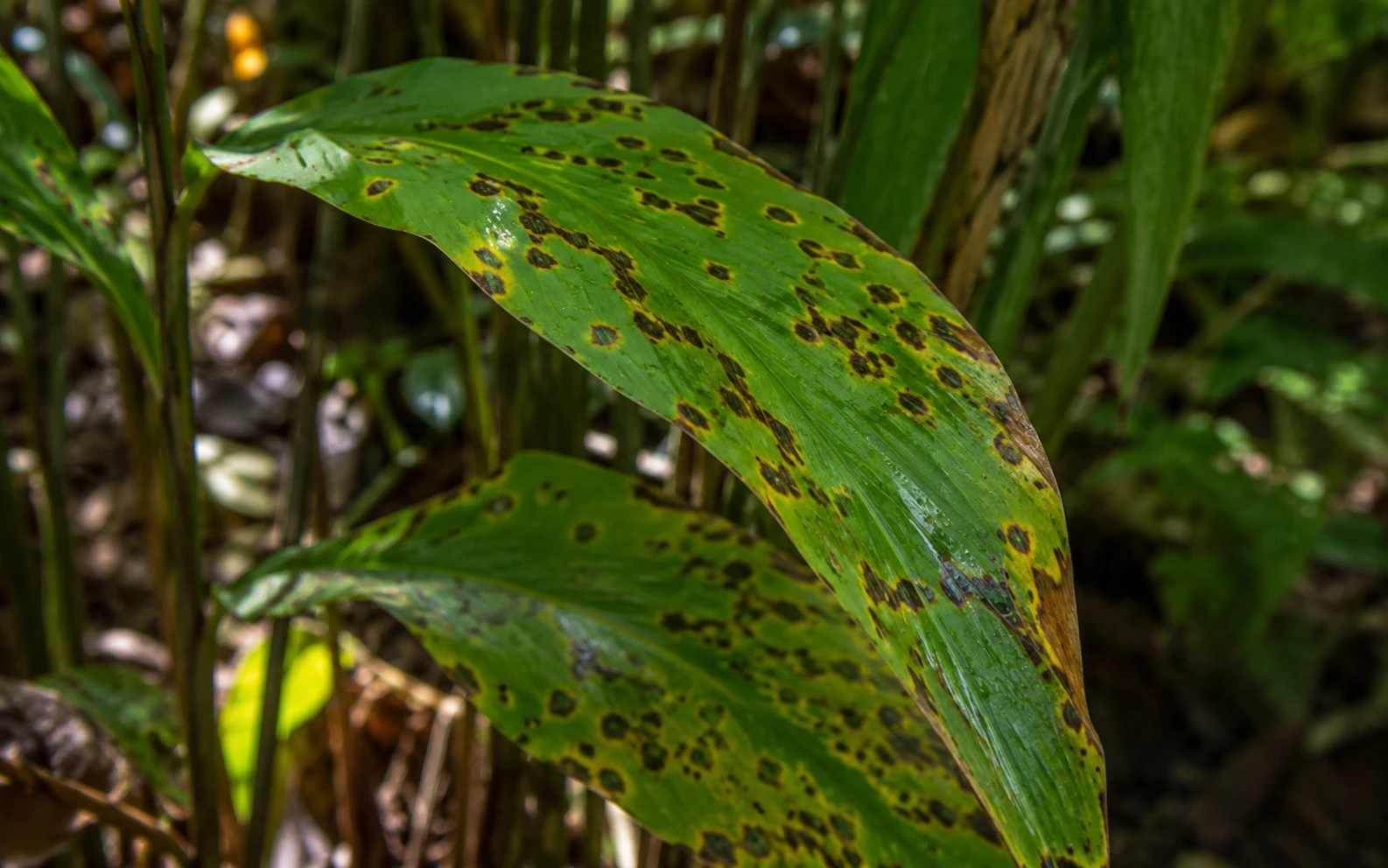
Dark Spots on Leaves
CauseFungal leaf spot (Phyllosticta elettariae or Alternaria sp.) driven by poor airflow and overhead watering
IdentifyDark circular spots with a yellow halo and defined edges — distinct from overwatering yellowing
FixRemove all affected leaves. Spray with dilute neem oil or copper fungicide. Improve air circulation
PreventAlways water at the base, never overhead. Good airflow around the plant. Remove dead leaves promptly
🔴 High
Problem 09
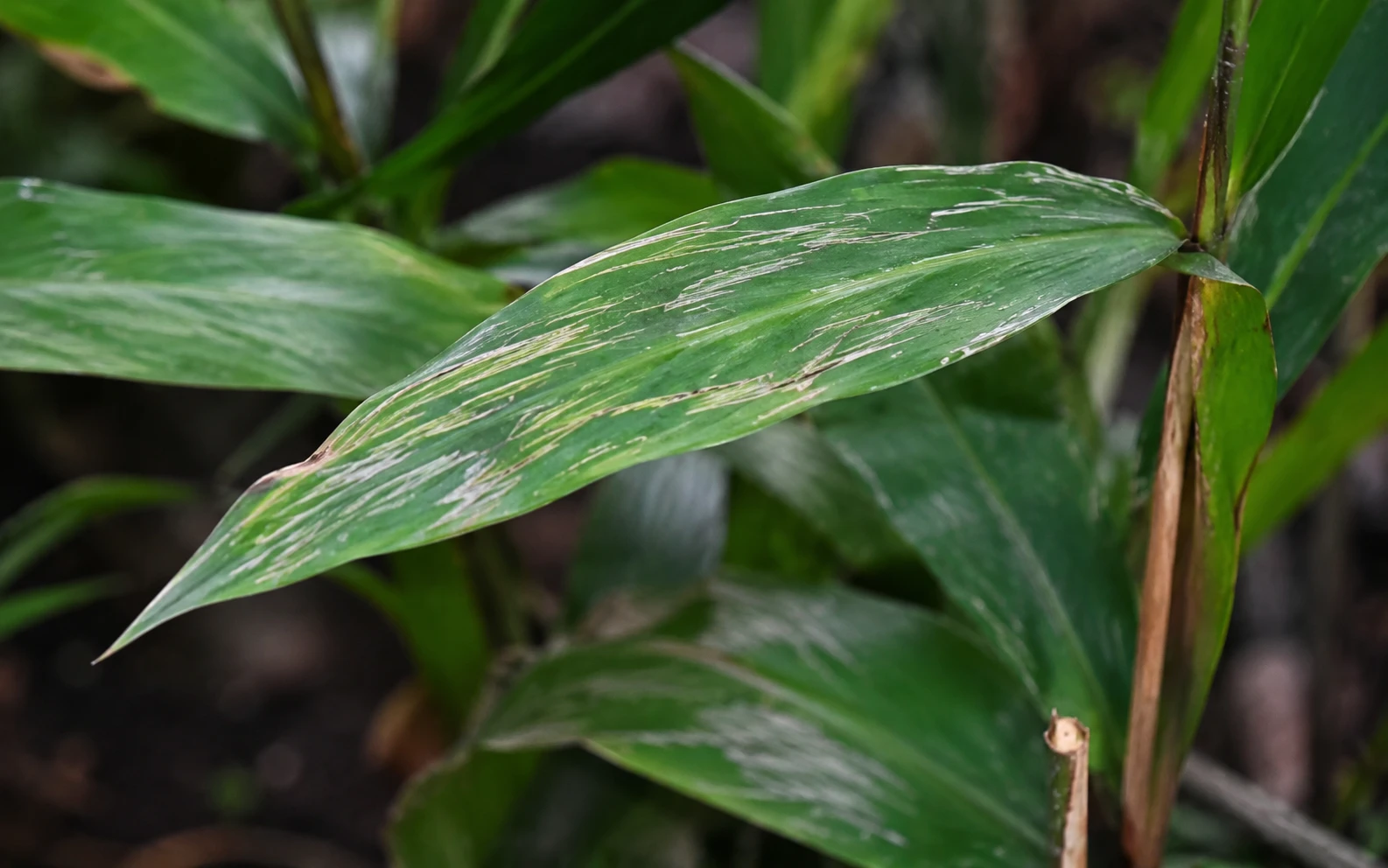
Thrips (Silver Streaks)
CauseSciothrips cardamomi or Frankliniella occidentalis — can also transmit Katte virus
IdentifySilver or bronze streaks on leaf surfaces, dark frass specks on the undersides, distorted new growth
FixIsolate the plant, use yellow sticky traps, and spray neem oil every 7 days for 3 weeks minimum
PreventSee the pest guide below for full identification and treatment detail →
🔴 High
Problem 10
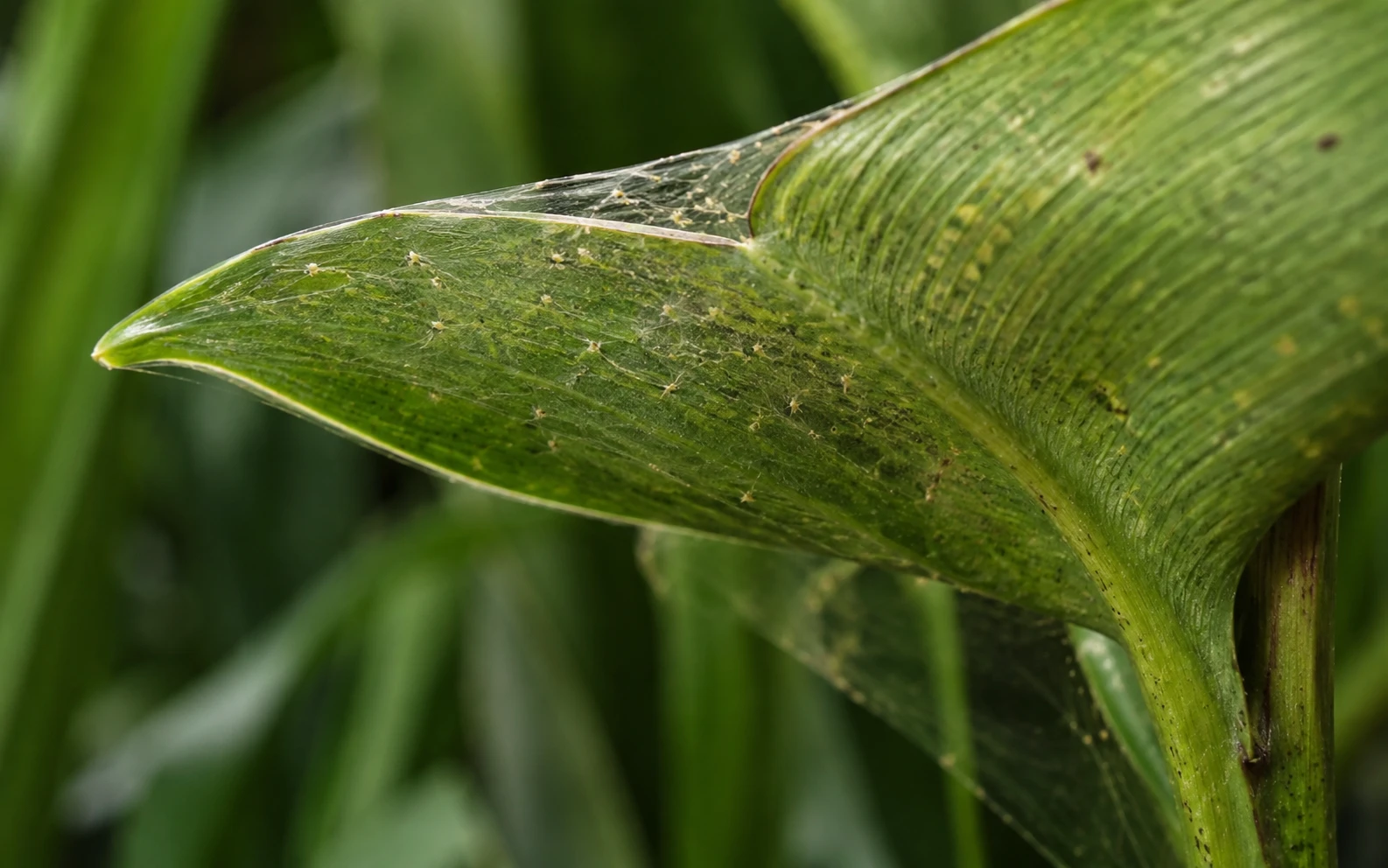
Spider Mites
CauseTetranychus urticae — hot, dry indoor conditions; the population can double every 3–5 days
IdentifyFine webbing on leaf undersides, pale stippling across the surface, tiny reddish moving dots
FixWipe leaves to remove webbing, then neem spray every 7 days for 3 weeks; raise humidity above 70%
PreventSee the pest guide below for full identification and treatment detail →
🔴 High
Problem 11
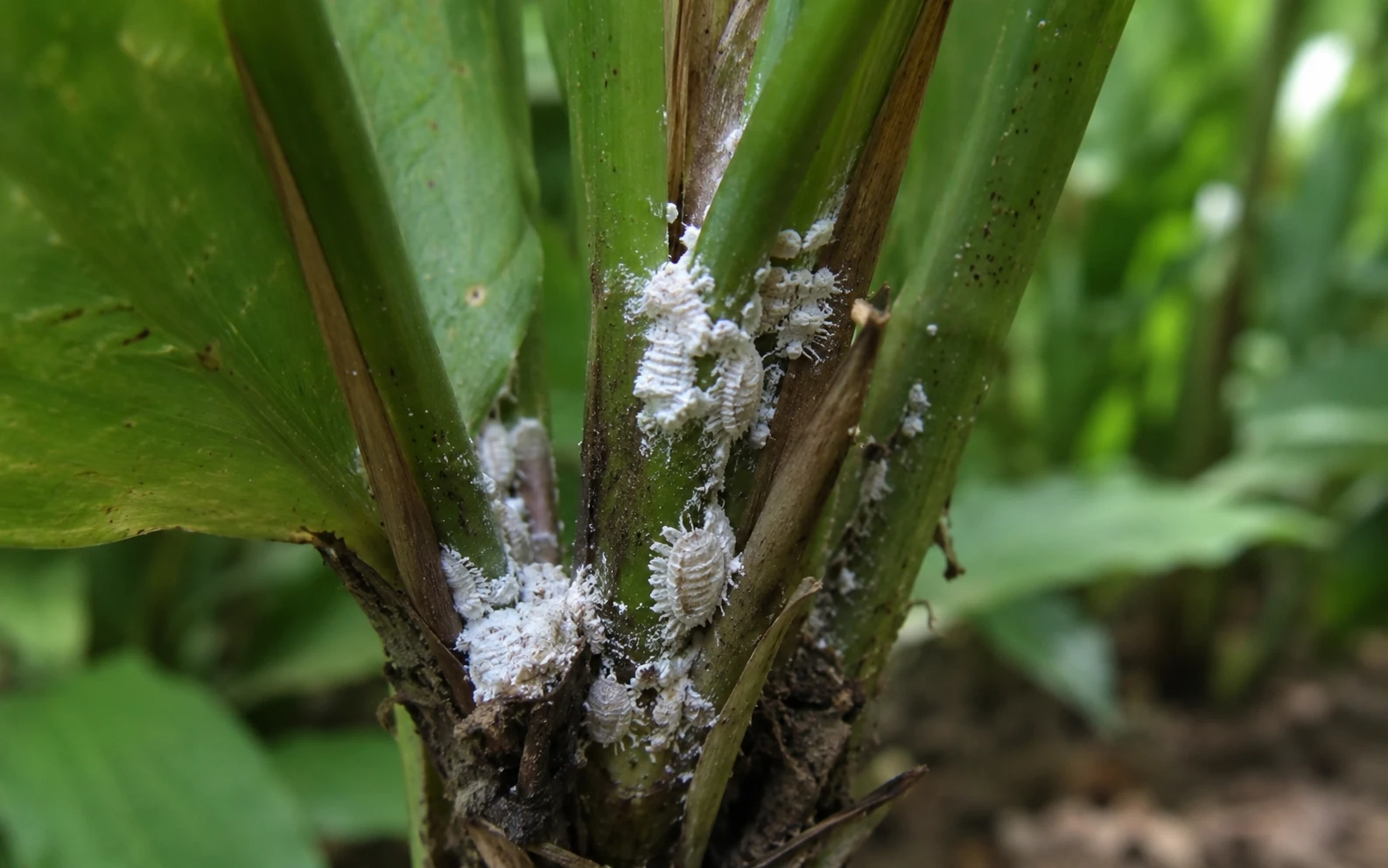
Mealybugs
CausePseudococcidae family — hide in leaf axils and stem joints, reproducing rapidly in warm indoor conditions
IdentifyWhite waxy cottony clusters in stem joints, sticky honeydew on leaves, yellowing below affected areas
FixDab each cluster with 70% isopropyl alcohol, then neem oil spray weekly for 4 weeks
PreventSee the pest guide below for full identification and treatment detail →
🟡 Medium
Problem 12
Scale Insects
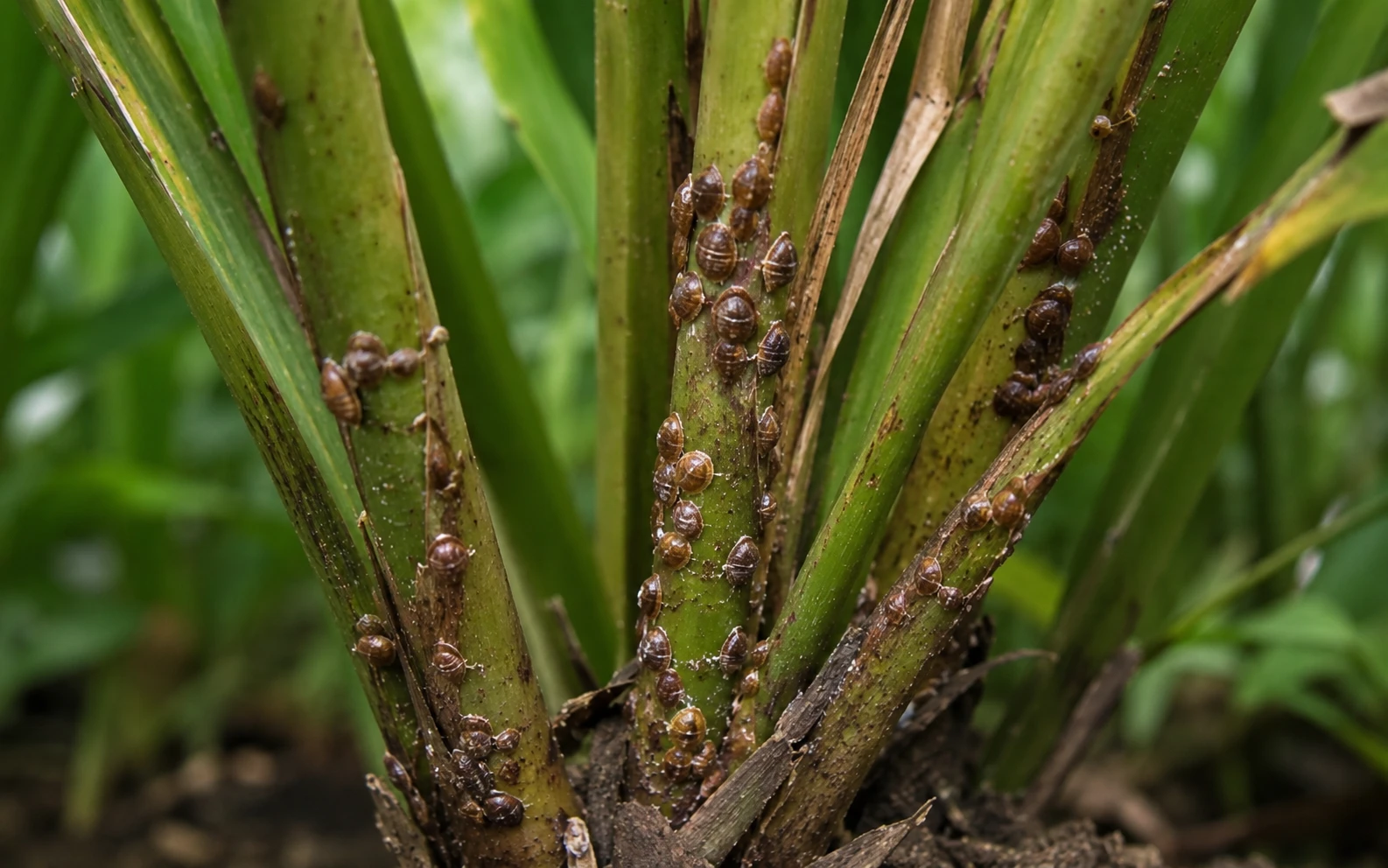
CauseAbgrallaspis sp. / Coccidae — hard waxy bumps on stems, documented in KAU pest research
IdentifyHard brown or tan bumps 1–3mm firmly attached to stems, sticky honeydew, soft insect body underneath
FixScrape off with a soft toothbrush, follow with an alcohol swab, then neem oil weekly for 3 weeks
PreventSee the pest guide below for full identification and treatment detail →
🟡 Medium
Problem 13
Root-Bound (No Growth, No Flowers)
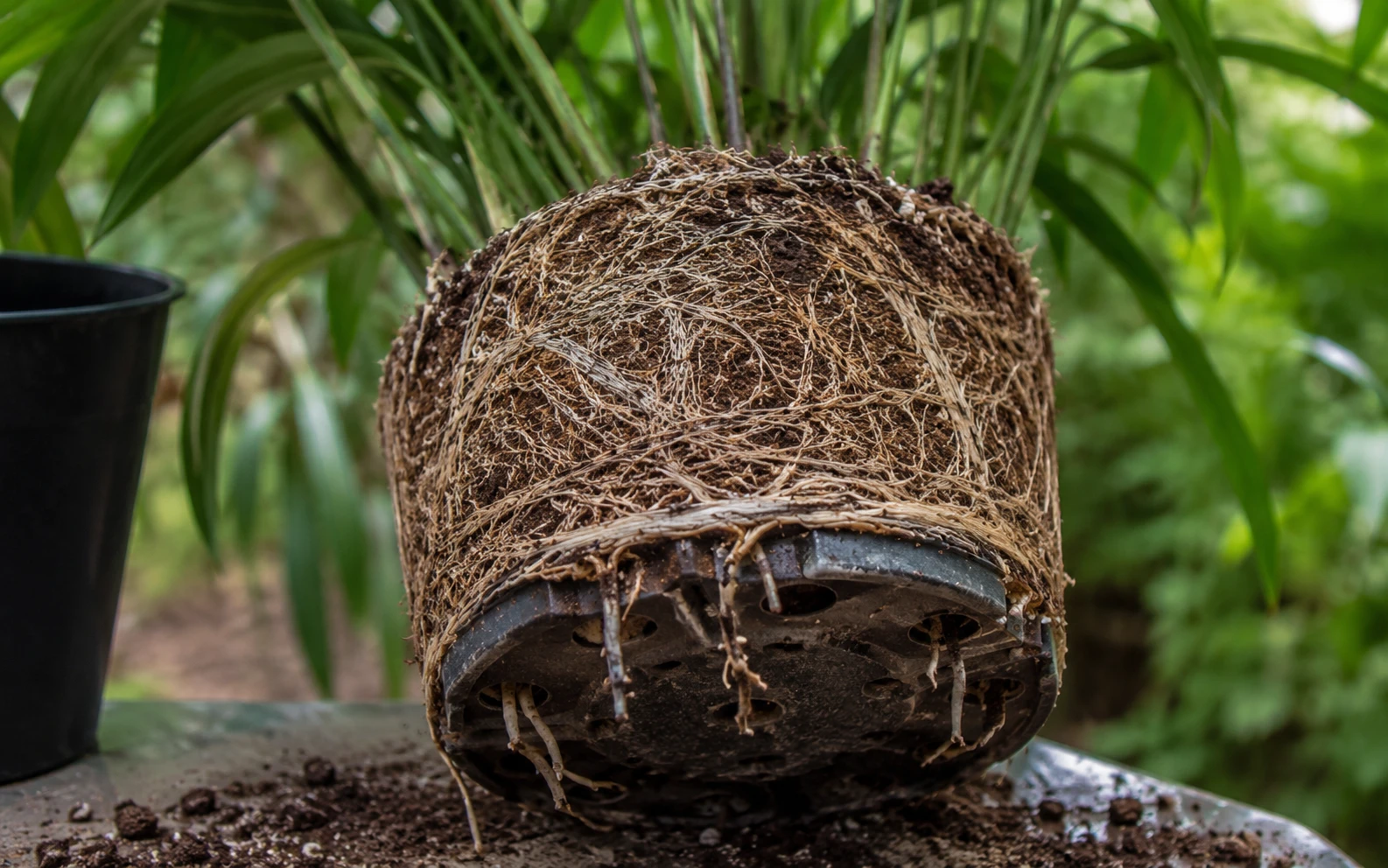
CauseThe plant has outgrown its container — the root mass fills the pot, leaving no room for new roots or moisture retention
IdentifyRoots escaping the drainage holes, soil drying within 24 hours, growth stopped, a previously flowering plant stops
FixRepot in spring into a container 2 inches deeper and wider only, using fresh soil mix
PreventRepot every 2–3 years proactively. Check roots annually in spring by gently lifting the plant from its pot
💀 Critical
Problem 14
Katte Disease (Mosaic Virus)
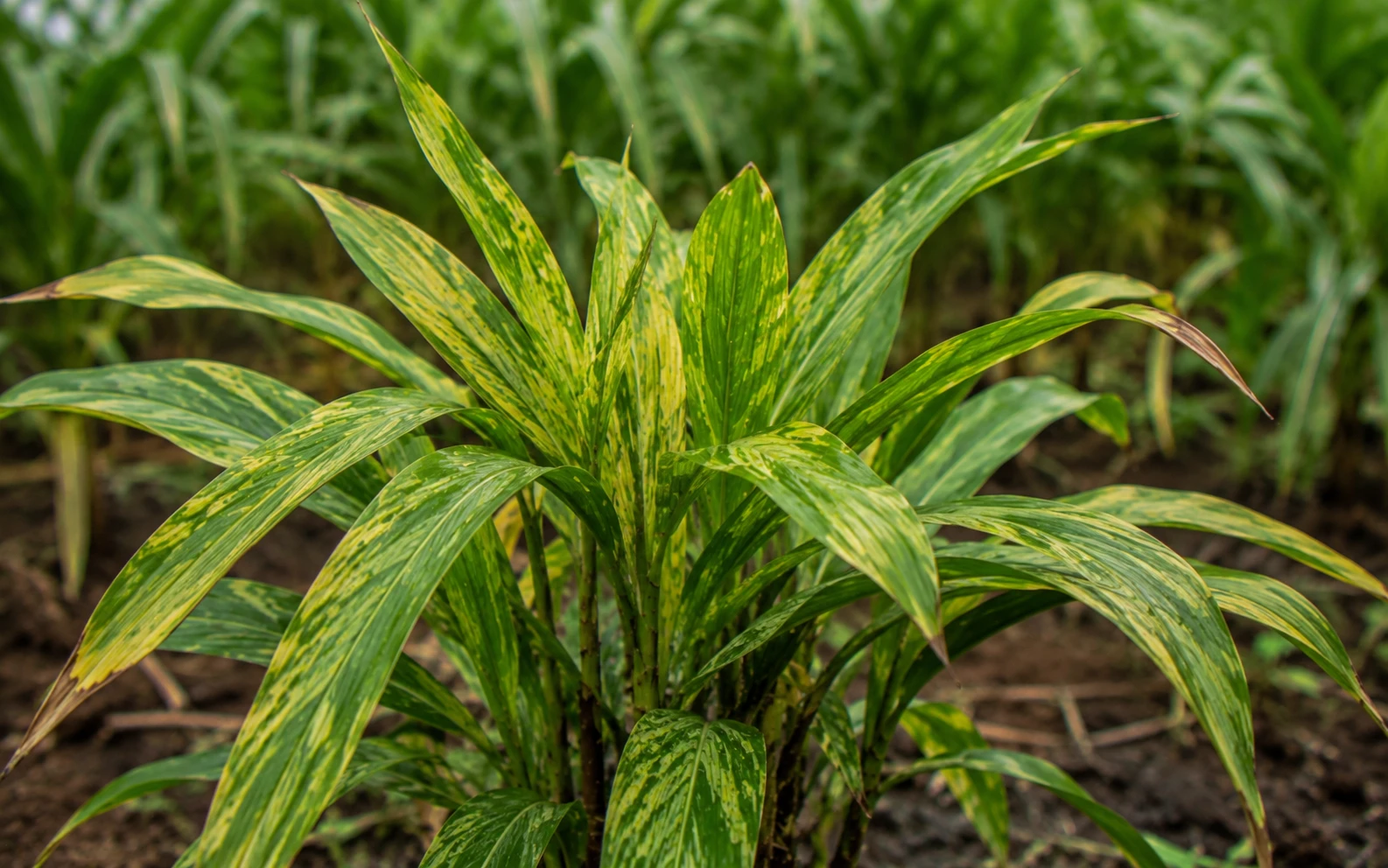
CauseCardamom Mosaic Virus, transmitted by the banana aphid (Pentalonia nigronervosa). No cure exists, per KAU
IdentifyMottled yellow-green marble pattern across leaves, stunted and distorted new growth, progressive decline
FixNo cure. Remove and destroy the infected plant immediately — do not compost. Sterilise all tools with alcohol
PreventSource only certified virus-free plants. Control aphids with neem oil. Never propagate from mottled material
Cardamom Pests — At a Glance
Quick overview — full identification and organic treatment guide linked belowThe four most common cardamom pests are thrips (silver leaf streaks), spider mites (fine webbing on leaf undersides), mealybugs (white cottony clusters in stem joints), and scale insects (hard brown bumps on stems). All four respond to a weekly neem oil spray applied for a minimum of three consecutive weeks to break the full pest lifecycle.
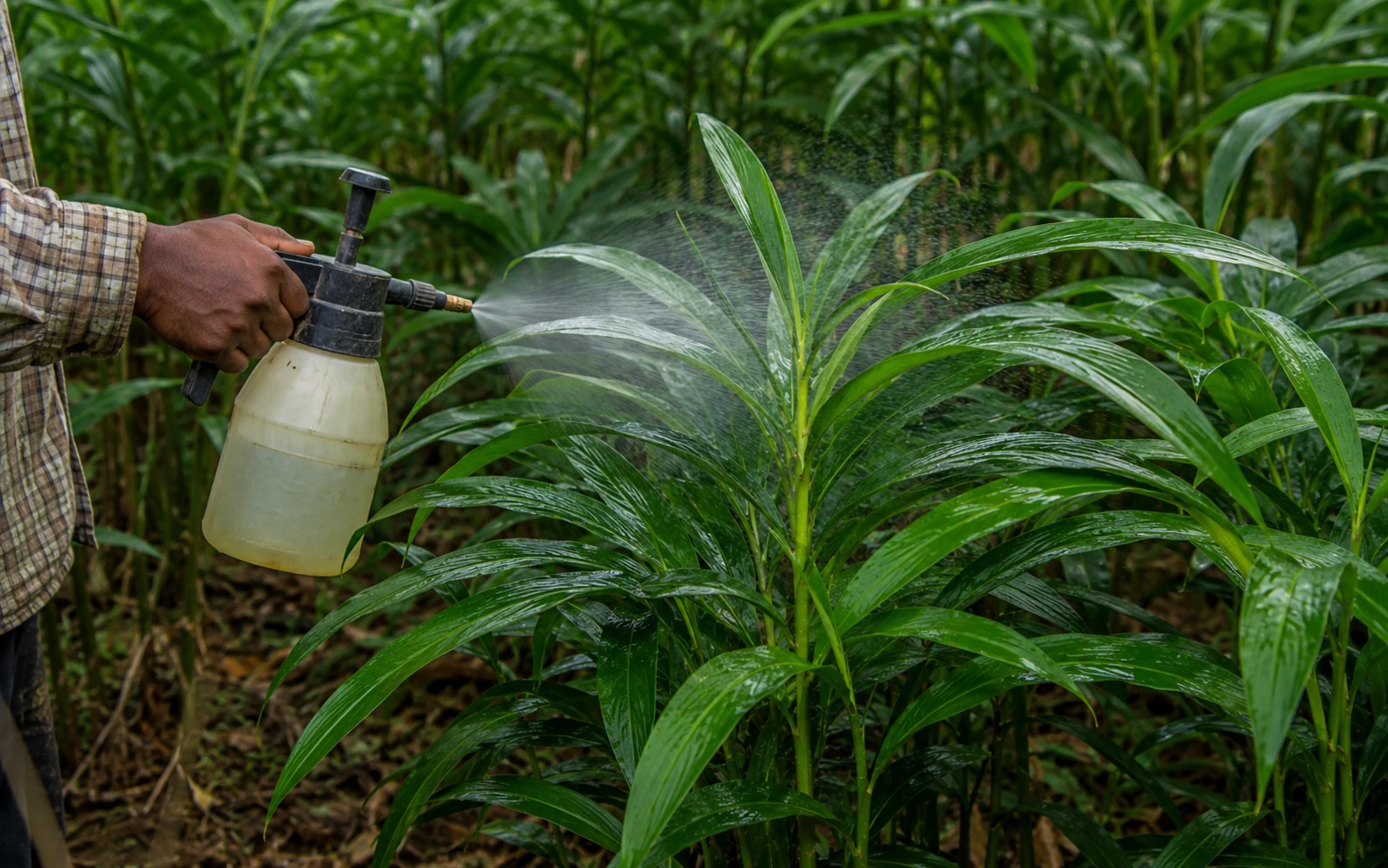
Our dedicated pests guide covers full identification photos, life cycles, exactly where each pest hides on the plant, the complete neem oil recipe and application schedule, and organic prevention routines for every stage of a cardamom plant’s life.
Full Pest Identification & Treatment Guide →Quick Diagnosis Reference Table
Narrow down your problem by symptom appearance and location| Symptom | Location | Most Likely Cause | Urgency | First Action |
|---|---|---|---|---|
| Uniform yellowing | Whole plant | Overwatering / root rot | Today | Inspect roots — repot if rotten |
| Yellow lower leaves only | Bottom leaves | Natural ageing or N deficiency | This week | Feed with NPK if not fed recently |
| Brown crispy tips | Leaf tips | Low humidity | This week | Add pebble tray / humidifier |
| Dark spots with yellow halo | Leaf surface | Fungal leaf spot | This week | Remove affected leaves, neem spray |
| Pale bleached areas | Where sun hits | Sun scorch | Monitor | Add sheer curtain, move from direct sun |
| Silver streaks | Leaf surfaces | Thrips | Today | Isolate, sticky traps, neem spray |
| Fine webbing | Leaf undersides | Spider mites | Today | Wipe leaves, neem spray, raise humidity |
| White cottony clusters | Stem joints | Mealybugs | Today | Alcohol swab, isolate, neem spray |
| Hard brown bumps | Stems | Scale insects | This week | Scrape off, alcohol, neem spray |
| Wilting, moist soil | Whole plant | Root rot | Today | Remove from pot, inspect roots, treat |
| Wilting, dry soil | Whole plant | Underwatering | Today | Water thoroughly — recovers within hours |
| Mottled marble pattern | Whole leaves | Katte mosaic virus | Today | Remove and destroy the plant — no cure |
| Leggy thin stems | New growth | Insufficient light | This month | South window or add a grow light |
| Growth stopped 3+ months | Whole plant | Root-bound or winter dormancy | This week | Check roots in spring, repot if needed |
Recovery Timeline — What to Expect
How long it actually takes cardamom to recover after treatmentDay 1 — Treatment Day
Diagnose, treat, and repot if needed. Remove all damaged material. Apply the first neem spray for pests. Do not fertilise — the plant needs energy for root recovery, not new growth. Correct conditions: 18–25°C, right light, humidity above 60%.
Days 2–14 — Watch Period
For pests: apply the second neem spray on day 7. No new pest activity by day 14 is a strong positive sign. For root rot: some continued wilting as new roots establish is normal — don’t overwater. For humidity problems: brown tips stop spreading within days of correcting humidity.
Weeks 2–6 — Early Recovery
New healthy green leaves are the clearest sign of recovery. Resume light feeding at half strength once new growth appears. Apply the third neem spray on day 21. Remove old damaged leaves to redirect energy to new growth.
Month 2–3 — Full Recovery
A recovered plant shows consistent new growth, healthy dark green colour, and firm stems. Resume full monthly feeding. Continue checking for pest recurrence every 2 weeks — stressed plants stay more susceptible for several months.
Month 6–12 — Flowering Returns
If the plant was flowering before the problem, flowering typically returns 6–12 months after full recovery, provided the underlying cause was permanently resolved. If the root cause wasn’t fixed, the plant won’t flower regardless of surface recovery.
Cardamom Plant Problems — Frequently Asked Questions
Every common question answered — featured snippet optimisedThe most common cause is overwatering causing root rot — check drainage holes and soil moisture first. Push a finger 2cm into the soil; if wet, stop watering for 7–10 days. Other causes, in order: low humidity causing nutrient lockout, temperature below 15°C, and hard tap water raising soil pH over time. Work through these systematically rather than guessing.
Brown leaf tips almost always indicate low humidity. Indoor winter heating can drop relative humidity to 30–40%, while cardamom needs 60–80%. Add a pebble tray filled with water directly under the pot (with the pot resting on the pebbles, not in the water). A humidifier within a metre of the plant gives the fastest improvement. Also check the plant isn’t near a radiator or air vent.
Wilting despite moist soil almost always indicates root rot — damaged roots can’t deliver water upward even when soil moisture is present. Remove the plant from its pot. Healthy roots are white or tan and firm; rotten roots are black, mushy, and smell unpleasant. Trim all rotten roots, air-dry for one hour, treat remaining roots with dilute hydrogen peroxide (3% diluted 1:4), and repot in fresh, well-draining mix. Don’t water for 48 hours.
Check four causes in order: (1) Temperature — did it drop below 18°C at any point during winter? Even brief cold snaps suppress flowering. (2) Root-bound — are roots escaping the drainage holes, or has growth stopped? Repot into a pot 2 inches larger in spring. (3) Light — is it getting 4–6 hours of bright indirect light daily, including in winter? (4) Fertiliser — switch to a potassium-rich feed from spring onward. A windowsill without supplemental heat rarely produces flowers; a heated conservatory changes this significantly.
Remove the plant from its pot and shake off old soil. Inspect all roots — healthy roots are firm and white or tan; rotten roots are black, brown, and mushy with an unpleasant smell. Using clean scissors, cut all rotten material back to healthy tissue. For severe rot, dip remaining roots in dilute hydrogen peroxide (3% H₂O₂ mixed 1:4 with water) for 5 minutes, then air-dry for one hour. Repot in fresh, sterile, well-draining mix with a gravel drainage layer. Don’t water for 48 hours or fertilise for 6 weeks.
Katte is Cardamom Mosaic Virus (CdMV), transmitted by the banana aphid (Pentalonia nigronervosa). It produces a distinctive mottled yellow-green marble pattern across leaves, with stunted and distorted new growth. There is no cure — Katte is confirmed as an incurable systemic viral disease by Kerala Agricultural University (KAU). The infected plant must be removed and destroyed immediately (do not compost), and all tools sterilised with 70% isopropyl alcohol.
The most common home-growing pests are thrips (silver leaf streaks), spider mites (fine webbing on leaf undersides), mealybugs (white cottony clusters in stem joints), and scale insects (hard brown bumps on stems). All four respond to a weekly neem oil spray for at least 3 consecutive weeks. See the complete pests guide for full identification photos and the exact treatment schedule.
White surface mold indicates overwatering and poor air circulation. It isn’t a direct threat to the plant itself, but it’s a clear warning sign of the conditions that cause root rot. Scrape off the visible mold, let the soil dry more fully between waterings, improve airflow around the plant, and check that drainage holes aren’t blocked. If mold keeps returning, add more perlite to the soil mix or repot into a better-draining blend.
A dormant plant shows reduced growth and possible yellowing of the oldest lower leaves, but stems stay firm and green and the rhizomes are healthy when inspected. A dying plant shows collapsing stems, extensive leaf drop without drying first, black discolouration at the stem base, and a foul smell from the soil. Scratch a stem lightly with a fingernail — green tissue underneath means the stem is alive. Inspect the rhizomes directly: firm, cream-coloured rhizomes mean recovery is possible; black or mushy rhizomes indicate advanced root rot.
Possibly — it depends entirely on whether the rhizomes are still alive. Remove the plant from its pot and inspect the underground rhizomes. If they’re firm, cream or light tan, and smell earthy rather than foul, the plant can recover: cut off dead stems at the base, repot in fresh mix, place in warm indirect light, water sparingly, and wait. New shoots can emerge within 4–8 weeks from healthy rhizomes. If rhizomes are black, mushy, and smell rotten, the plant is beyond recovery.
Also in the Cardamom Growing Series
Dive deeper into any specific topic
🌿
🐛
🪴
🏠
💧
🌱
Complete Growing Guide
The full pillar guide — every method, zone, and stage
Cardamom Pests
Full identification and organic treatment guide
Growing in Pots
Pot sizing, potting mix, and repotting cycle
Growing Indoors
Light, humidity, and indoor care guide
How to Water Cardamom
Frequency, technique, and seasonal adjustments
Cardamom Fertiliser
NPK ratios and the full feeding schedule
About the Author & Reviewer
Written by a spice plant specialist — reviewed by a botanical Ph.D.
Author
Olivia Turner
Olivia holds a BSc in Horticulture and specialises in spice plant cultivation, with a particular focus on cardamom, ginger, and turmeric. All plant-problem diagnoses on CardamomNectar are written by Olivia and cross-checked against Kerala Agricultural University (KAU) and NIPHM pest-management research.
View full profile →
Reviewer
Dr. Michael Bennett, Ph.D.
Dr. Bennett holds a doctorate in Botanical Sciences specialising in Zingiberaceae. He verified the diagnostic criteria, pathogen identifications, and treatment protocols on this page against IISR standards and peer-reviewed literature on Elettaria cardamomum health and pest management.
View full profile →References & Sources
KAU Agritech Portal (Kerala Agricultural University) — Cardamom integrated pest management, disease identification, and Katte (mosaic virus) confirmation.
NIPHM (National Institute of Plant Health Management) — Small cardamom IPM package: pest biology, thresholds, and organic treatment protocols.
Current Science, Vol. 126, No. 8 (April 2024) — Cardamom pest management research referenced for pathogen and pest identification.
IISR (Indian Institute of Spices Research) — Cardamom cultivation standards and disease-resistance guidance. Kozhikode, Kerala.
Ravindran P.N. & Madhusoodanan K.J. (2002) — Cardamom: The Genus Elettaria. CRC Press. Root rot and disease reference data.