
Fennel Seeds: Benefits, Uses, Nutrition and Everything Else
Saunf · Fenouil · Finocchio · Fenchel · Rezene
Quick answer
Fennel seeds are the dried fruits of Foeniculum vulgare, a Mediterranean plant in the carrot family. They taste mildly sweet and like liquorice, and are used whole or ground in curries, breads, sausages and spice blends, brewed as tea, and chewed after meals to freshen breath and ease bloating.


Most kitchens hold a jar of fennel seeds, and most of us use them for one thing only. They deserve more attention. The same small seed flavours Italian sausage, North Indian garam masala and Chinese five spice, sweetens bread and biscotti, and ends meals in countless restaurants as a bowl of after-dinner saunf.
This page is the hub for all of our fennel content. It gives you the essentials in one place (what fennel seeds are, how they taste, the varieties, benefits, nutrition, safety and storage) and points you to a dedicated guide whenever you want the full detail, whether that is nutrition facts, cooking uses or safety and side effects.
All Our Fennel Seed Guides
This page is the starting point for everything we publish on fennel. Each guide below goes deep on one question, so you can jump straight to what you need.
Learn about fennel seeds
Fennel Seeds in Arabic (Shamar & Saunf)
Arabic and Urdu names by region, pronunciation and how the words are used.
Read the guideFennel Seeds Nutrition
Calories, fibre, minerals and what a realistic serving provides.
Read the guideFennel Seeds Side Effects
Safety, allergies, pregnancy and who should be careful.
Read the guideCook and drink
Grow and compare
How to Grow Fennel
Sowing, spacing, care and harvesting your own fennel and seeds.
Read the guideFennel Bulb Plant
Florence fennel: how the bulb grows, how to buy it and cook it.
Read the guideFennel vs Cumin
How two look-alike seeds differ in flavour, use and substitution.
Read the guideFenugreek vs Fennel
Two seeds that are often mixed up, compared side by side.
Read the guideWhat Are Fennel Seeds?
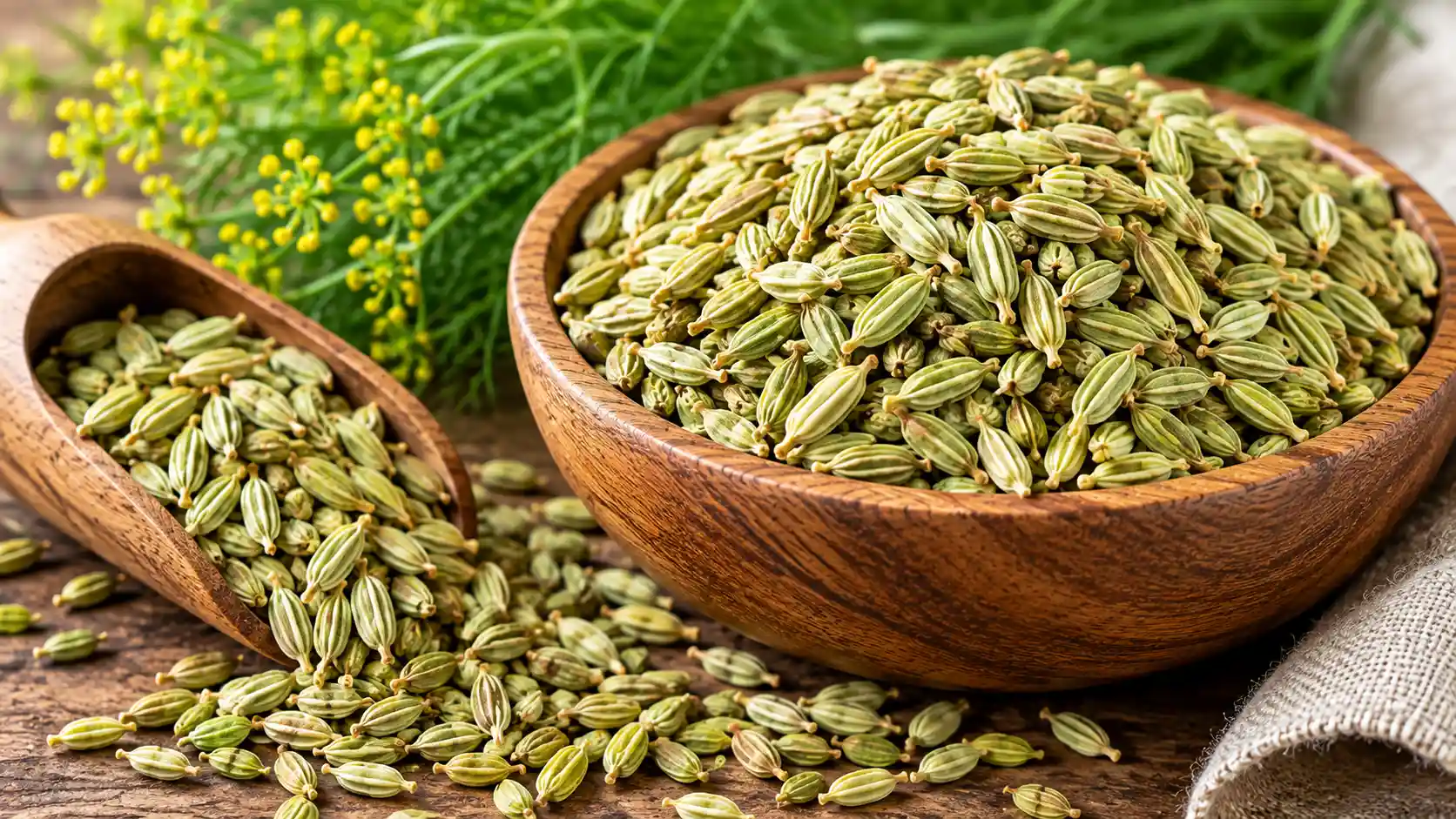
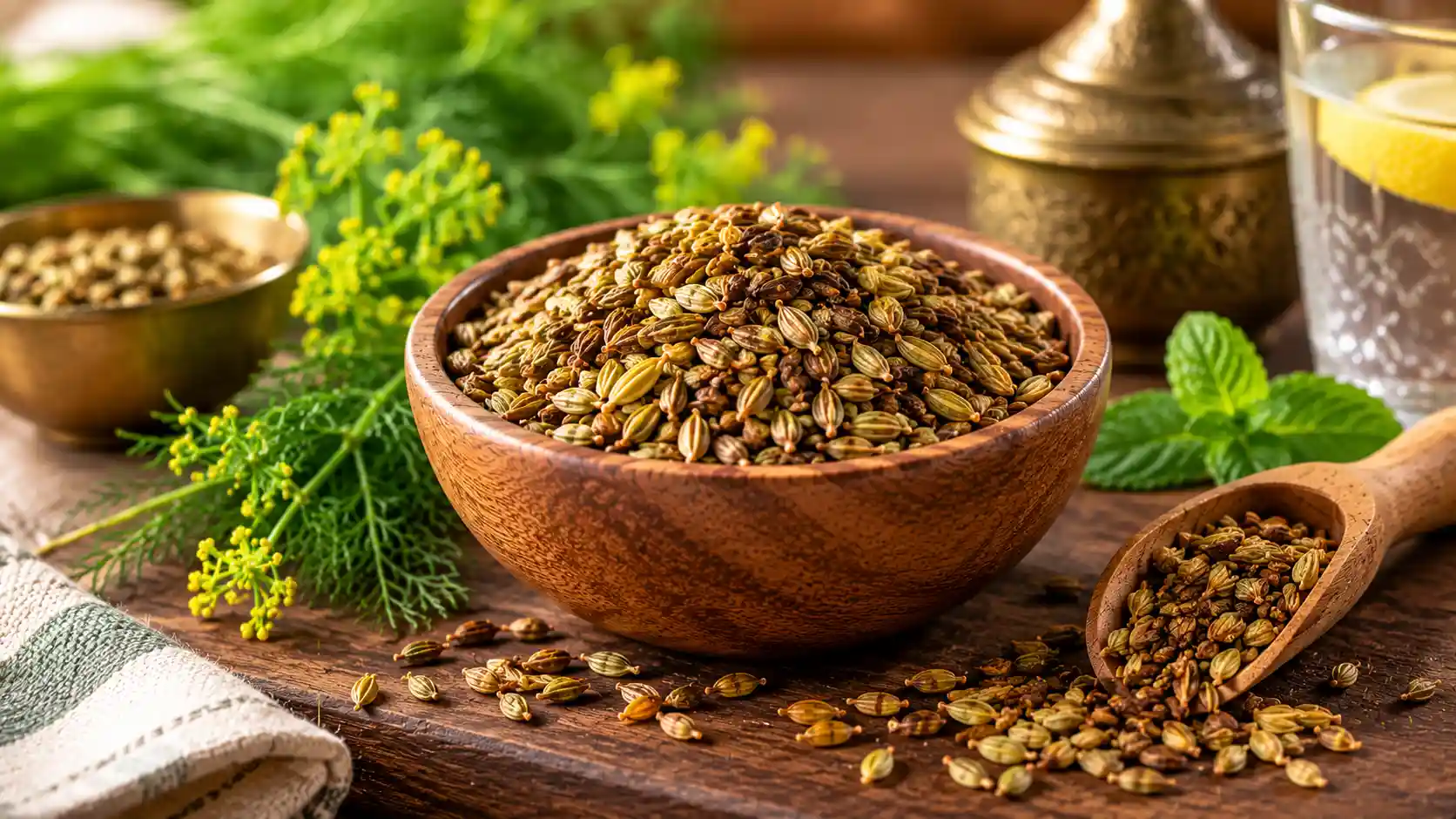
Fennel seeds are the dried fruit of the fennel plant, Foeniculum vulgare, a tall, feathery herb that belongs to the same family as carrot, celery, parsley, dill and cumin. Strictly speaking each “seed” is a small fruit that splits in two, which is why you see a pale ridged line down the middle.
Fresh seeds are green to yellow-green and slowly turn brown as they age. They are roughly 4 to 10 mm long, slightly curved, and smell sweet and herbal the moment you crush one. That scent comes mostly from anethole, the same compound that flavours anise and star anise.
What fennel seeds are called around the world
Fennel seeds go by many names, and the right word depends on the language and region. The most useful ones to know when shopping are below. In English, “sweet fennel” is the usual alternative name, while “aniseed” refers to a different plant (compared further down). Arabic names differ from country to country, so we cover them in their own guide: Fennel Seeds in Arabic (Shamar and Saunf).
South Asian names
Fennel Varieties and Plant Parts
All culinary fennel belongs to one species, but growers have selected different forms for different jobs. Knowing which is which stops you buying the wrong thing.
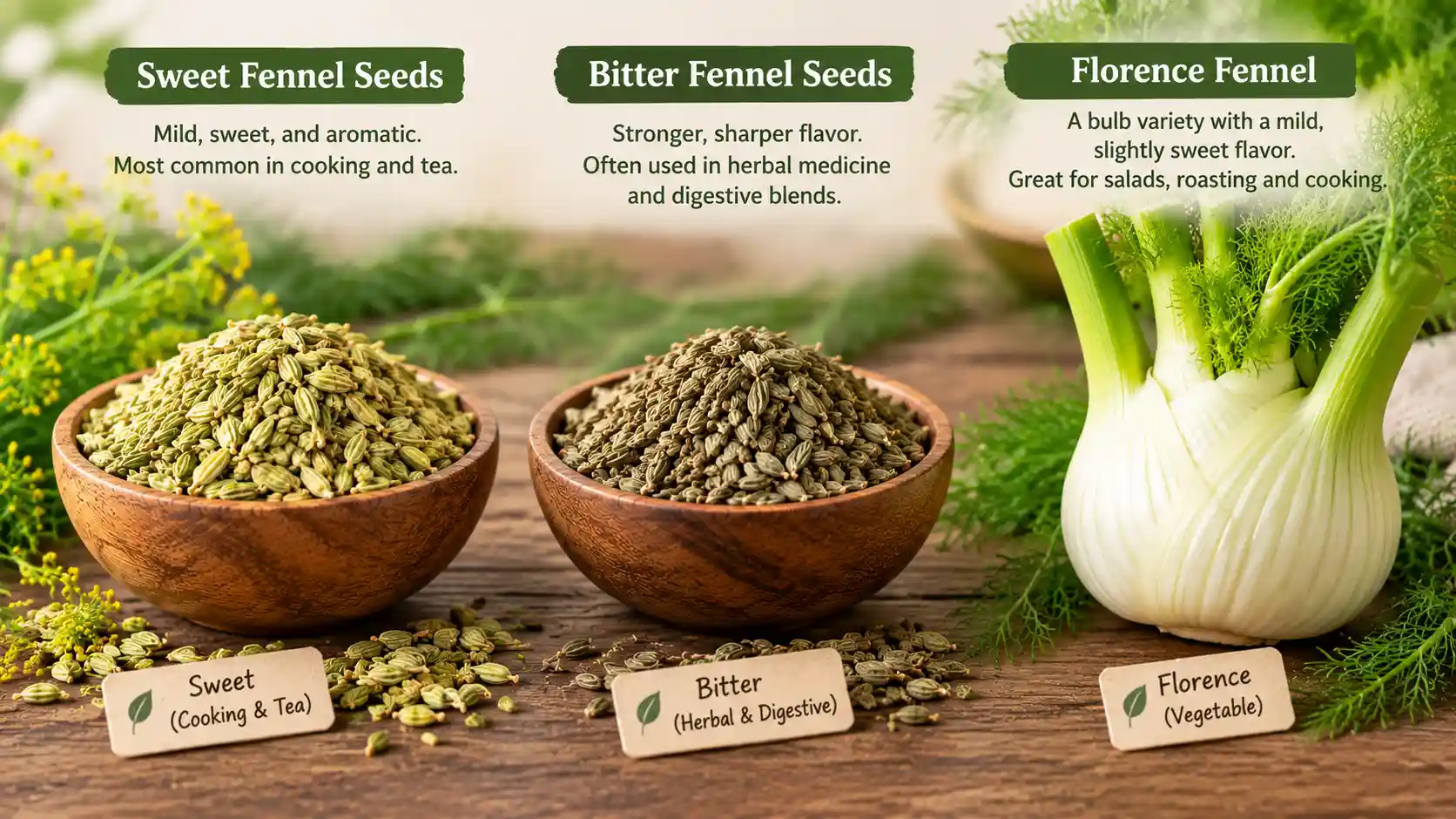
Sweet fennel
The main seed variety (var. dulce). Mild and sweet, it is the one most cooks and spice brands sell as “fennel seeds”.
Bitter fennel
Sharper and more pungent (var. vulgare). It is grown mainly for essential oil and herbal products rather than the kitchen.
Florence fennel
Grown for its swollen white bulb (var. azoricum), eaten as a vegetable. Read the fennel bulb plant guide.
Wild fennel
Grows freely around the Mediterranean and in many other regions. Strongly flavoured, and foraged for its fronds and seeds.
Seeds, bulb and fronds: one plant, three ingredients
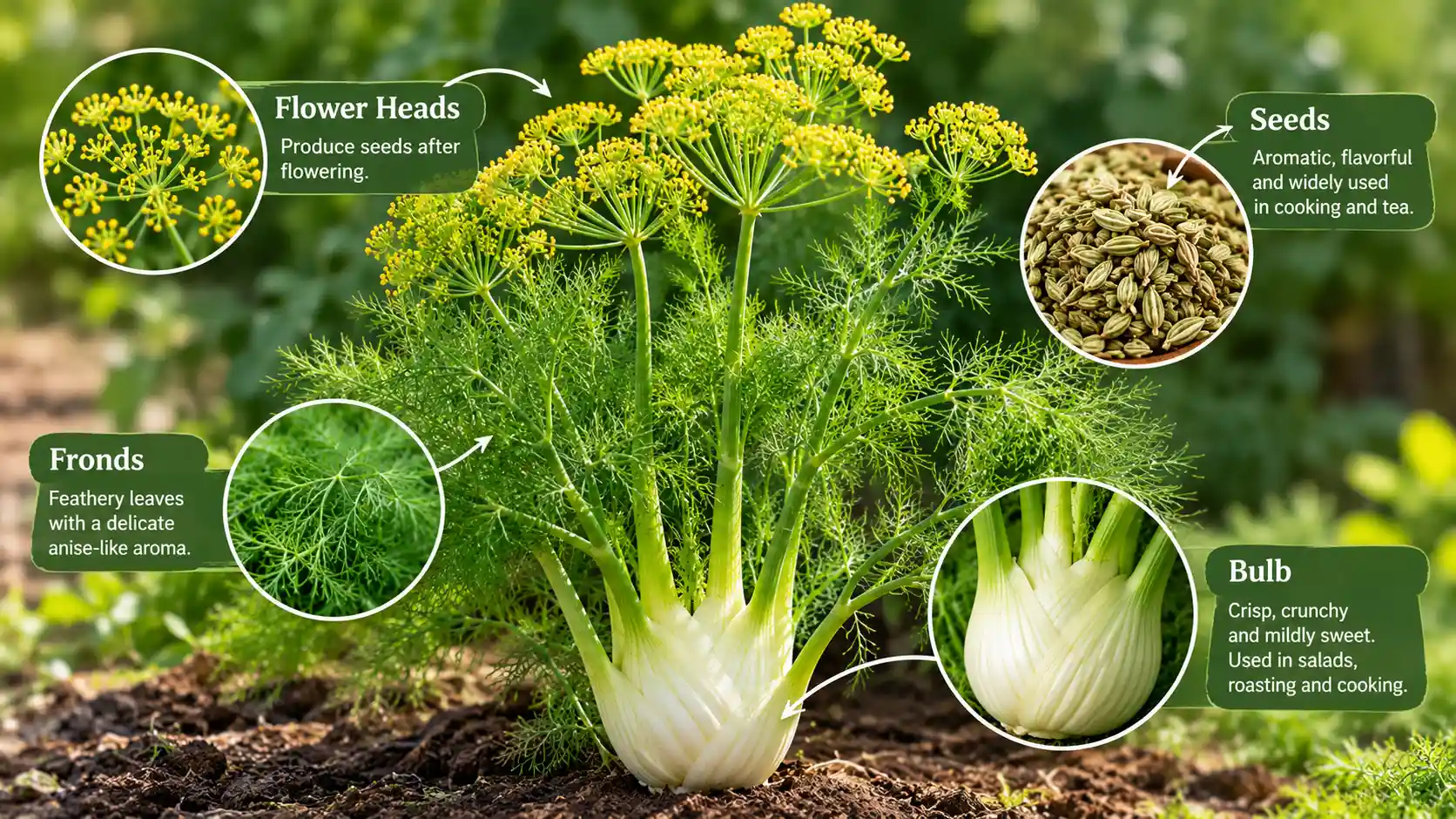
The fennel plant gives you three different ingredients. The seeds are the dried spice this page is about. The bulb is a crisp, anise-scented vegetable eaten raw in salads or roasted (our fennel bulb plant guide covers it). The fronds are the feathery leaves, used like dill as a fresh herb. They share a flavour family but are used very differently.
Where fennel grows
Fennel is native to the Mediterranean and now grows in many temperate and subtropical regions. India is the largest producer of fennel seed, with Egypt, Turkey, Iran and China also growing significant crops. Fennel likes full sun and well-drained soil, and the seeds are ready when the flower heads turn from yellow to brown. If you want to grow your own, see how to grow fennel.
Taste and How to Use Fennel Seeds
Fennel seeds taste sweet, warm and gently like liquorice, with a fresh, slightly grassy edge. They are far milder than anise, so they sit comfortably in savoury food. Heat changes them: dry roasting for two to three minutes turns the flavour nuttier and rounder, while raw seeds taste greener and sharper.
Four easy ways to start
Fennel is a key ingredient in garam masala, Chinese five spice and Italian sausage seasoning, and it pairs well with cumin, coriander and cardamom. For baking, pickling, spice rubs and more, see our full fennel seeds uses guide, or go straight to the fennel tea recipe. Fennel and cumin are easy to mix up in the spice rack, so read fennel vs cumin before swapping one for the other. Fennel also teams up well with cardamom in chai and after-meal seed mixes, and you can try the pair together in cardamom tea.
Health Benefits of Fennel Seeds at a Glance
Fennel has a long history in Ayurvedic, Unani, Greek and Arab traditional medicine, and some uses have modern research behind them. Others rest mostly on tradition or on laboratory work. Here is an honest summary, with the strength of evidence shown on each card. Most studies use concentrated extracts, not a teaspoon of seeds.
Digestion and bloating
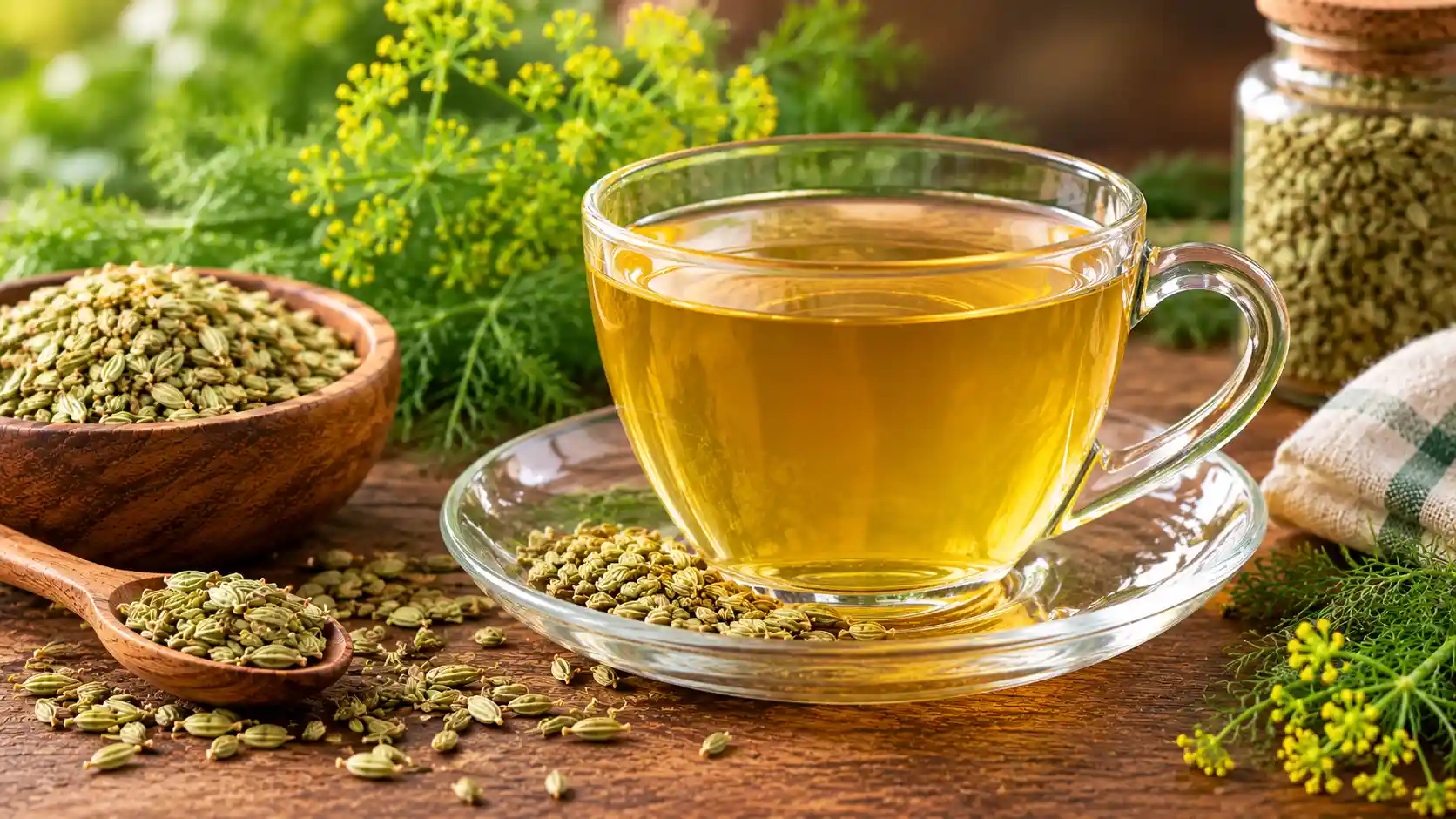
Anethole and related oils relax intestinal muscle and help release trapped gas. Germany’s Commission E has approved fennel seed for mild digestive complaints. A cup of fennel tea is the usual way to try it.
Traditional use; few human trialsPeriod cramps
Several small trials suggest fennel can reduce menstrual pain, probably through its muscle-relaxing and anti-prostaglandin effects.
Small human trialsAntioxidants
Fennel contains flavonoids and phenolic compounds such as quercetin and rosmarinic acid that neutralise free radicals in laboratory tests.
Mostly laboratory studiesFresh breath
Chewing the seeds releases aromatic oils that mask odour and stimulate saliva, which is why they are served after meals.
Traditional useBreast milk support
Fennel is a traditional galactagogue, but human evidence is limited. Speak to a doctor or lactation consultant before using it regularly.
Limited evidenceFibre and minerals
Fennel seeds are rich in fibre, calcium, magnesium and potassium per 100 g, though a normal serving is small.
Nutritional factFennel is not a cure for any condition, and these benefits are supportive rather than medical treatment. For the full nutrient breakdown see fennel seeds nutrition.
Fennel Seeds Nutrition per Teaspoon
Per 100 g, fennel seeds contain roughly 40 g of fibre, 16 g of protein, 1,196 mg of calcium, 385 mg of magnesium and 1,694 mg of potassium (USDA data). Nobody eats 100 g, so here is what one teaspoon (about 2 g) provides, calculated from those figures.
Approximate values per 1 teaspoon (about 2 g), scaled from USDA FoodData Central per-100 g figures for fennel seed.
The takeaway: fennel seeds are a flavourful, nutrient-dense addition rather than a main source of any single nutrient. The fennel seeds nutrition guide gives the full breakdown.
Safety: Who Should Be Careful With Fennel Seeds
In food amounts, fennel seeds are safe for most people and are classed as generally recognised as safe (GRAS) by the US FDA. A few groups should take more care.
People with Apiaceae allergies
If you react to celery, carrots or other plants in the carrot family, fennel can cause a reaction too.
Pregnancy and breastfeeding
Normal culinary use is generally considered fine, but large amounts of fennel tea, extracts, supplements and essential oil should be avoided unless your doctor agrees.
Hormone-sensitive conditions and hormonal medicines
Fennel has mild oestrogen-like activity. If you have a hormone-sensitive condition or take hormonal treatment, ask your doctor before using fennel medicinally.
Full precautions are in our fennel seeds side effects guide. This page is general information and not medical advice.
Buying and Storing Fennel Seeds
What to look for
Choose whole seeds over ground wherever you can. Good fennel seeds are a fairly even green-yellow, plump rather than shrivelled, and smell sweet and fresh when you rub a few between your fingers. Dull brown seeds with a faint smell are old. Whole seeds also let you roast and grind to order, which gives much stronger flavour.
How to store them
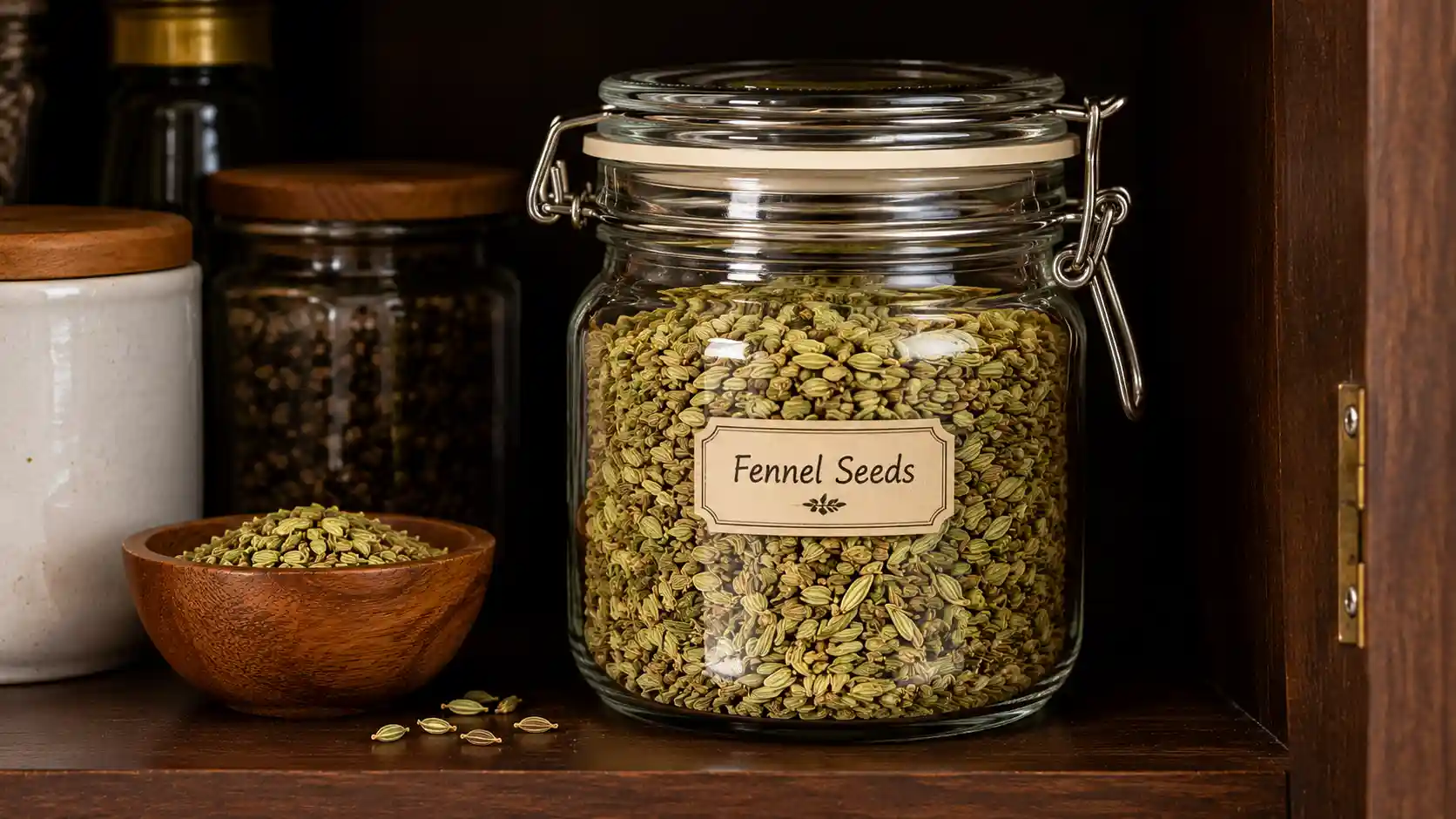
Keep fennel seeds in an airtight glass jar in a cool, dark cupboard, never above the stove or in a sunny window. Stored well, whole seeds stay flavourful for around one to two years. Ground fennel loses its aroma much faster, so grind small batches as you need them. If the seeds smell flat or dusty, replace them.
Fennel vs Similar Spices
Fennel is often confused with other small, ridged seeds. This quick table separates the usual suspects.
| Spice | Botanical name | Flavour | Best known for |
|---|---|---|---|
| Fennel seed | Foeniculum vulgare | Sweet, mild liquorice | Garam masala, sausage, tea, mouth freshener |
| Anise seed | Pimpinella anisum | Stronger, sweeter liquorice | Baking, liqueurs, sweets |
| Cumin | Cuminum cyminum | Earthy, warm, nutty | Curries, chilli, tacos, hummus |
| Caraway | Carum carvi | Rye-bread, anise-like | Rye bread, cabbage, stews |
Fennel and cumin look alike but taste very different, and we explain when one can replace the other in fennel vs cumin. Fenugreek is another frequent mix-up, covered in fenugreek vs fennel. Star anise is a different spice again; see black cardamom vs star anise for how it behaves in cooking.
Fennel Seeds: 12 Common Questions
What are fennel seeds?
What do fennel seeds taste like?
Is the fennel bulb the same plant as fennel seeds?
Is fennel the same as anise?
Are fennel seeds good for you?
How many fennel seeds can I eat per day?
Can you eat fennel seeds raw?
Why are fennel seeds served after meals?
How do I make fennel tea?
Are fennel seeds safe during pregnancy and breastfeeding?
How should I store fennel seeds?
What are fennel seeds called in other languages?