Fennel Seeds
Uses
15 powerful ways to use fennel seeds (Shamar / شمر / Saunf) — from ancient Arabic cooking traditions and Tibb al-Nabawi remedies to modern skincare and weight management. The most complete guide on the web.
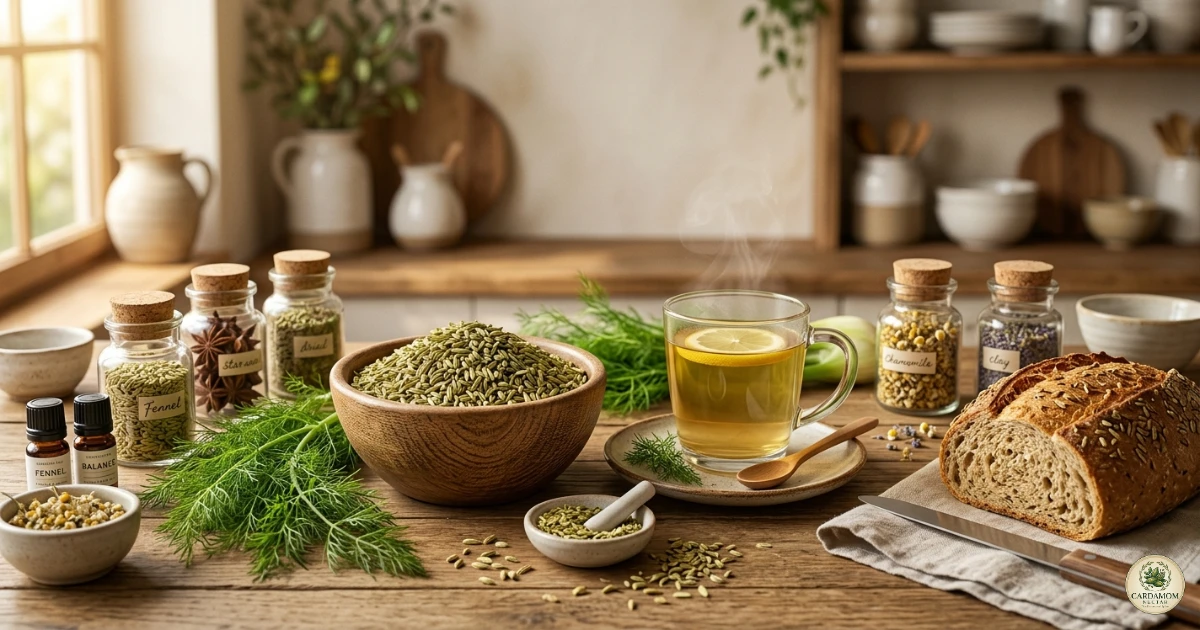


- Herbal tea — شاي الشمر
- After-meal mouth freshener
- Cooking spice — curries, rice, meat
- Arabic cuisine — machboos, maqlooba
- Digestive medicine — bloating & gas
- Women’s health — menstrual & hormonal
- Infant colic water (diluted)
- Weight management detox water
- Bread & baking
- Pickling & preserving
- Skin care — face steam & toner
- Hair care — scalp rinse
- Spice blends — bahaarat, panch phoron
- Essential oil & aromatherapy
- Traditional Islamic medicine (Tibb al-Nabawi)
15 Uses of Fennel Seeds — Complete Guide
From the souks of Cairo to Pakistani kitchen shelves — here is every meaningful use of fennel seeds, explained and actionable.
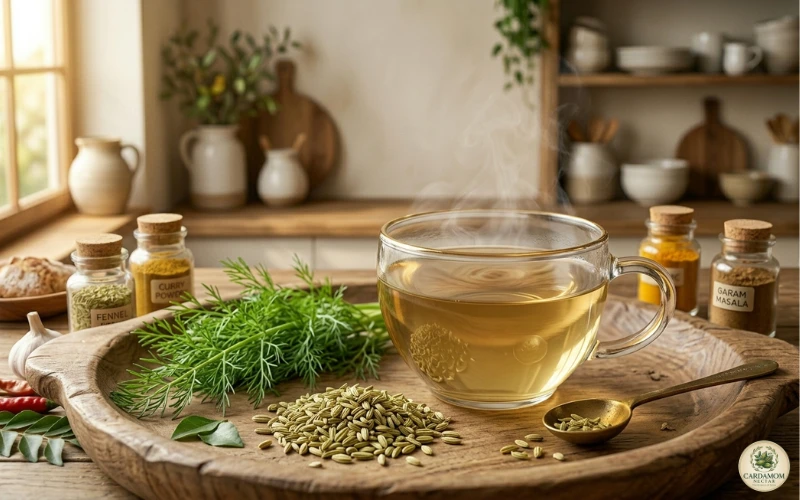
Fennel Tea — Shamar Tea (شاي الشمر)
The most popular use of fennel seeds worldwide. Steep 1 tsp lightly crushed seeds in boiling water for 8–10 minutes (covered) for a warming, digestive, aromatic tea. Used across the Arab world after meals for bloating, gas, menstrual cramps, and infant colic. Also called Shay al-Shamar (شاي الشمر) or Saunf Qahwa in Urdu.
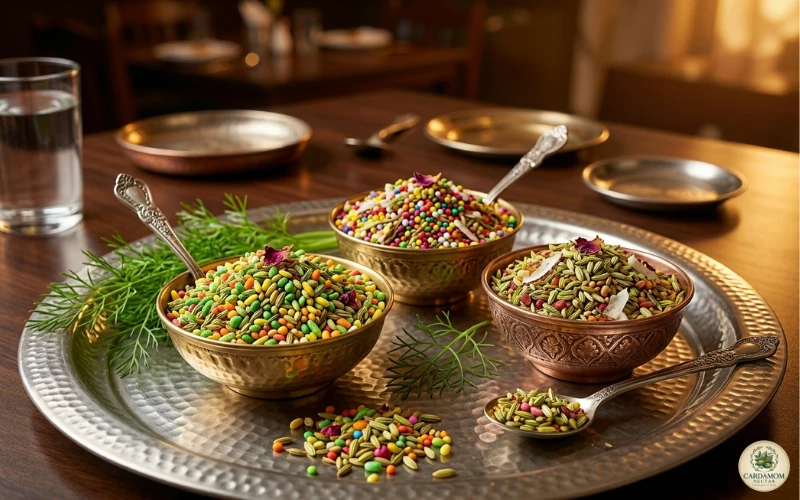
After-Meal Mouth Freshener (Saunf / Mukhwas)
Chewing a pinch of raw fennel seeds after meals is one of the most universal food customs in South Asian and Arab culture. The volatile oils (anethole, fenchone) kill odour-causing bacteria and leave a pleasant sweet-anise freshness. Sugar-coated fennel seeds (Saunf mukhwas) are served after meals in Pakistani and Indian restaurants worldwide. In Arab households, plain Shamar seeds are kept at the table.
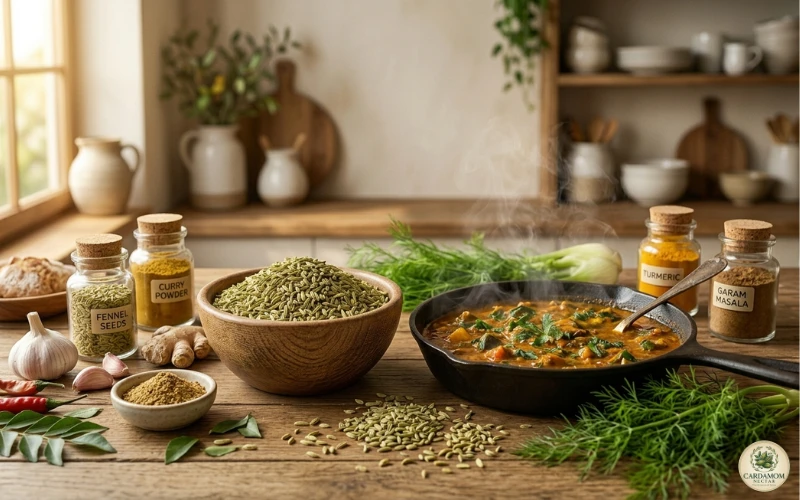
Cooking Spice — Curries, Rice & Meat
Fennel seeds are a foundational cooking spice across the Indian subcontinent and the Arab world. Toast whole seeds in a dry pan for 2–3 minutes until fragrant, then use whole or ground. In South Asian cooking they go into tarka (spice tempering) for dals and curries. In Arab cooking, they are fried in ghee at the start of biryani, machboos, and maqlooba to infuse the oil with flavour.
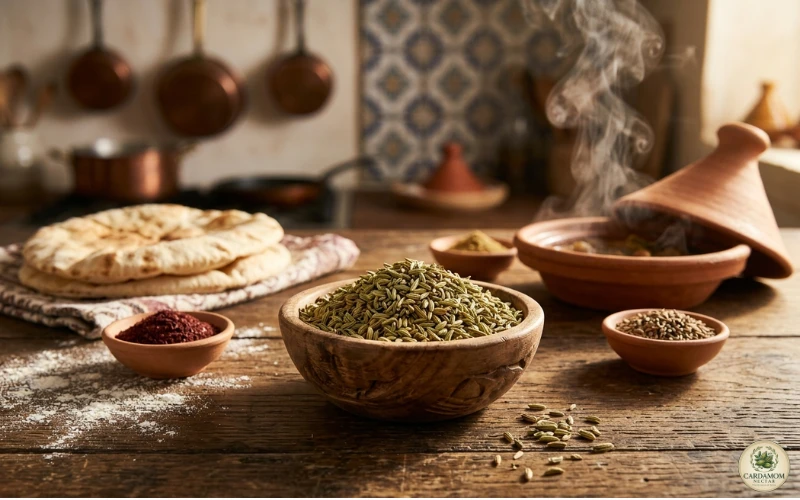
Arabic Cuisine — Machboos, Maqlooba & Tagine
In Gulf Arabic cooking, Shamaar (شمار) seeds are an essential ingredient in bahaarat spice blend, machboos (Saudi/Gulf rice), and slow-cooked lamb dishes. In Moroccan cooking, Bizbaaz (the Maghrebi word for fennel) is a key spice in lamb tagine and ras el hanout. In Levantine cooking, fresh fennel bulb (Shamraa) is grilled or braised as a vegetable or used raw in salads.
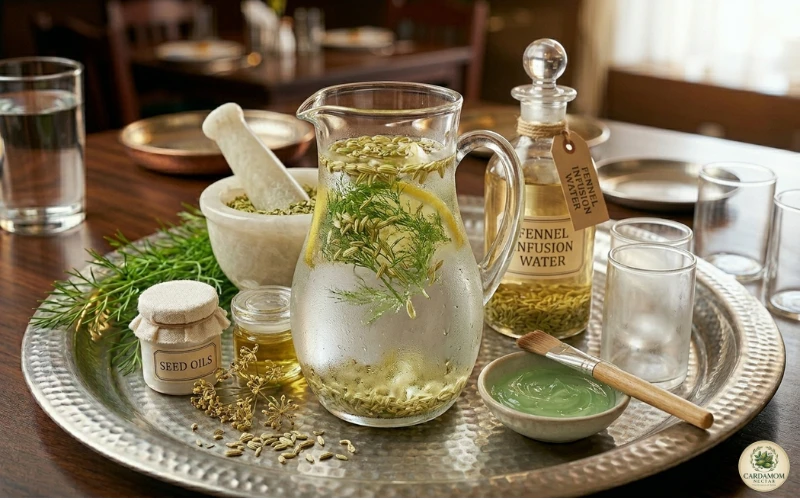
Digestive Medicine — Bloating, Gas & IBS
Fennel seeds are one of the most evidence-supported natural remedies for digestive problems. Trans-anethole relaxes the smooth muscles of the GI tract, reducing painful spasms that cause bloating and trapped gas. Fennel tea (شاي الشمر) drunk after meals provides relief within 20–30 minutes. Also effective for IBS-type symptoms, constipation, and general digestive discomfort.
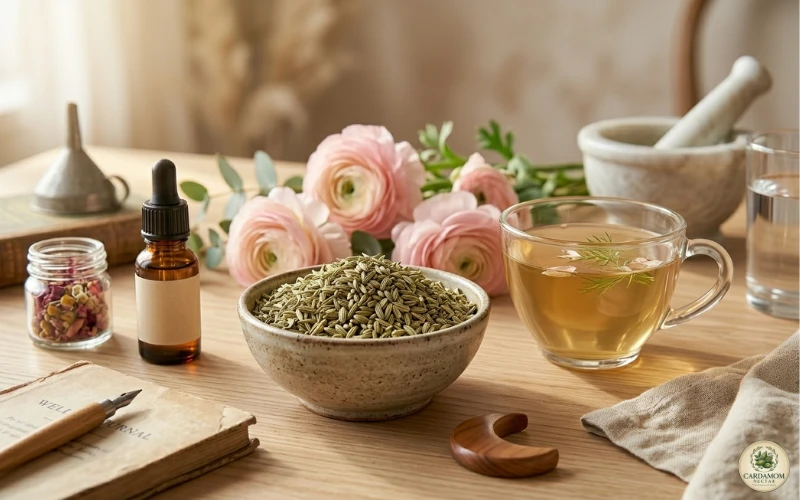
Women’s Health — Menstrual & Hormonal
Two key women’s health uses: (1) Menstrual cramps — anethole inhibits uterine contractions, providing relief comparable to ibuprofen in one 2021 RCT. (2) Lactation — phytoestrogens stimulate prolactin for increased milk production. Arab and South Asian mothers have used Shamar/Saunf for both purposes for thousands of years. Avoid medicinal doses during pregnancy.
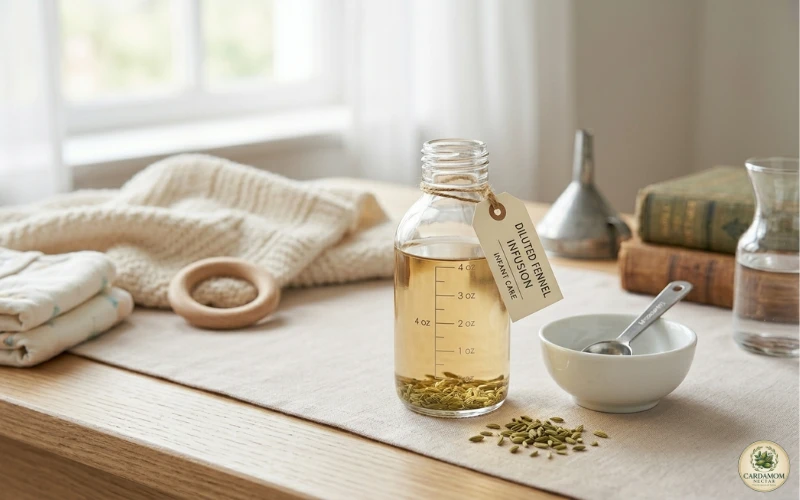
Infant Colic Water (ماء الشمر)
Diluted fennel seed water (ماء الشمر) has been a trusted Arab remedy for infant colic for centuries — and has Cochrane-reviewed clinical evidence behind it. Use only 2–3 seeds per 200ml of water, fully cool to room temperature, and strain through a fine sieve. Give only a few teaspoons to the infant, not a full cup. Always consult your paediatrician before use. Never give hot tea to infants.
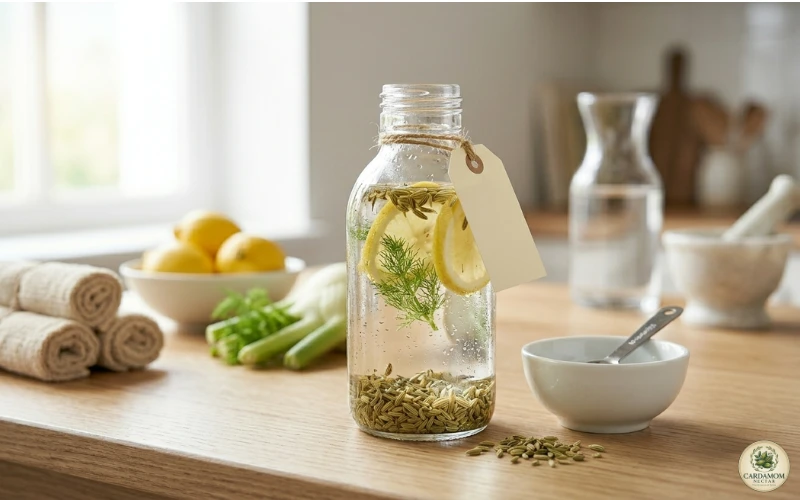
Weight Management — Fennel Detox Water
Fennel seed water (overnight cold brew) is a popular weight management practice in Arab and South Asian communities. Soak 1 tbsp seeds in 500ml water overnight; strain and drink first thing in the morning or before meals. The mild diuretic effect reduces water retention, while the appetite-suppressing action of anethole can reduce meal portions. A supportive tool — not a standalone fat-burner.
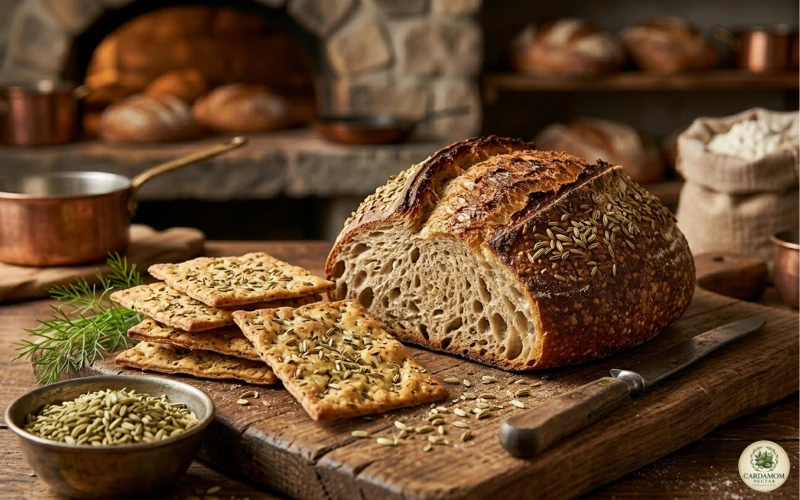
Bread & Baking
Fennel seeds have been used in bread baking since ancient Rome and Egypt. Add whole or lightly crushed seeds to bread dough, flatbreads (khubz), crackers, biscotti, or seed loaves. The seeds soften during baking while releasing a subtle, sweet-anise aroma. In the Middle East, fennel seeds are mixed into ka’ak (ring-shaped sesame cookies). In Italy, fennel seed taralli (ring crackers) are a regional staple.
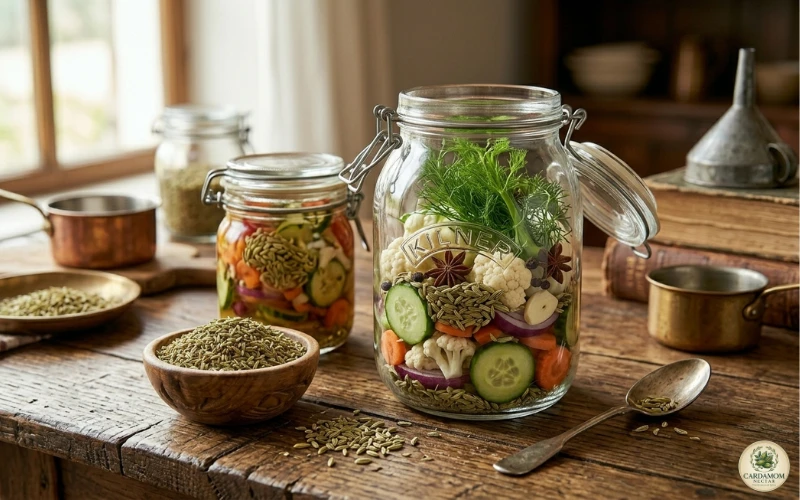
Pickling & Food Preservation
Fennel seeds have natural antimicrobial properties (from anethole and fenchone) that make them an effective natural preservative. Add whole seeds to vegetable pickling brines — cucumbers, olives, carrots, turnips. They are essential in traditional Arab olive preservation, Moroccan preserved lemons, and Indian achaar pickles. The seeds add flavour while their antimicrobial action inhibits unwanted bacterial growth.
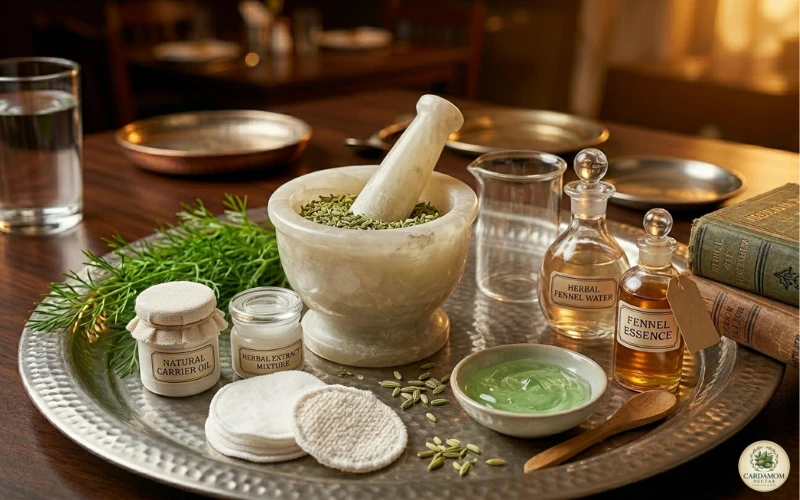
Skin Care — Face Steam & Natural Toner
Fennel seed water has been used as a natural skin toner and face steam across the Mediterranean and Middle East for centuries. The antioxidants (quercetin, rosmarinic acid) combat free radical damage, while anethole’s mild anti-inflammatory action reduces puffiness. Use cooled fennel tea as a face toner with a cotton pad, or add a handful of seeds to a bowl of steaming water for a 5-minute face steam to open pores and brighten skin.
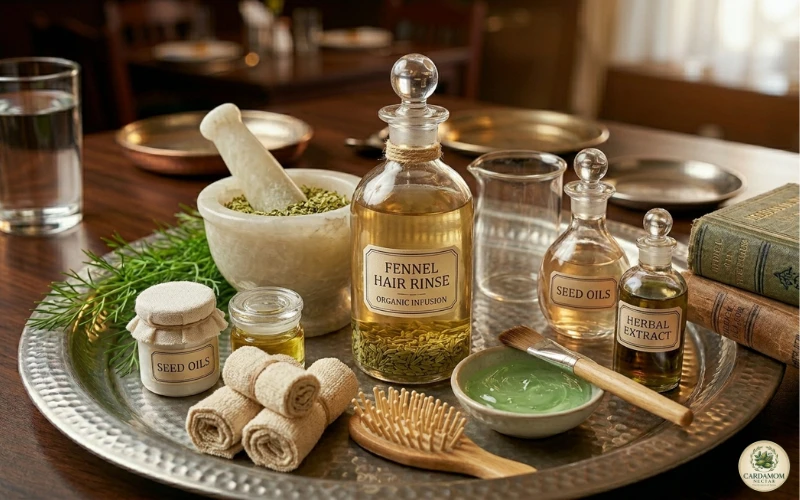
Hair Care — Scalp Rinse & Hair Rinse
Fennel seed tea used as a final hair rinse after shampooing is a traditional Arab and South Asian beauty practice. The antimicrobial properties of anethole may help reduce dandruff and scalp irritation. Antioxidants protect hair follicles from oxidative stress. Some traditional herbalists also recommend fennel seed oil (diluted in a carrier oil) as a scalp massage for thinning hair, though human clinical evidence is limited.
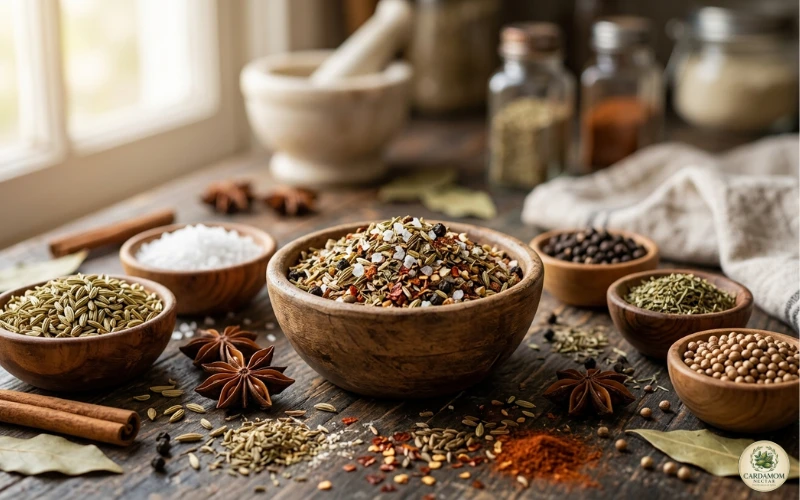
Spice Blends — Bahaarat, Panch Phoron & Ras el Hanout
Fennel seeds feature in several of the world’s most important spice blends. Bahaarat (بهارات) — the Gulf Arabic all-purpose spice blend — includes ground fennel. Panch Phoron — the Bengali five-spice blend — uses whole fennel seeds. Ras el Hanout — the Moroccan master blend — includes Bizbaaz (fennel). Chinese Five Spice also uses fennel seeds. In each blend, fennel provides the sweet, anise-like backbone that balances the hotter spices.
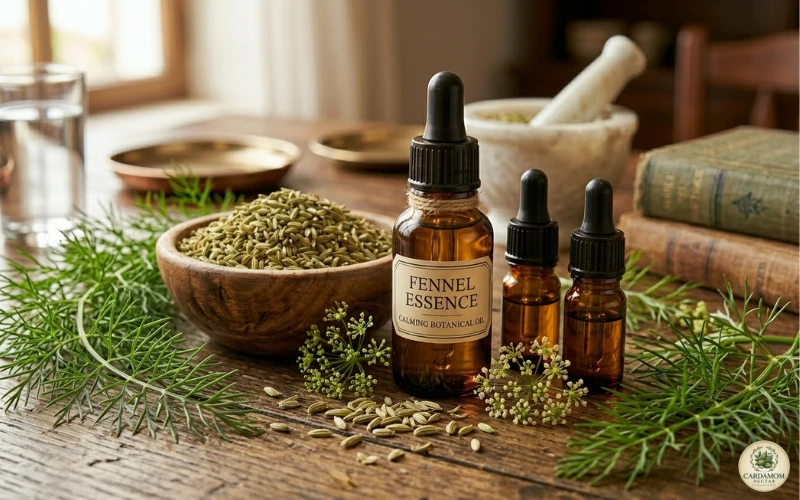
Essential Oil & Aromatherapy
Fennel essential oil (extracted by steam distillation of the seeds) is used in aromatherapy for digestive complaints, calming stress, and respiratory support. The oil is rich in trans-anethole (50–80%) and fenchone. In aromatherapy, it is diffused for its uplifting, liquorice-like aroma. For topical use, always dilute in a carrier oil (2–3 drops per tablespoon of carrier). Never ingest essential oil without professional guidance.
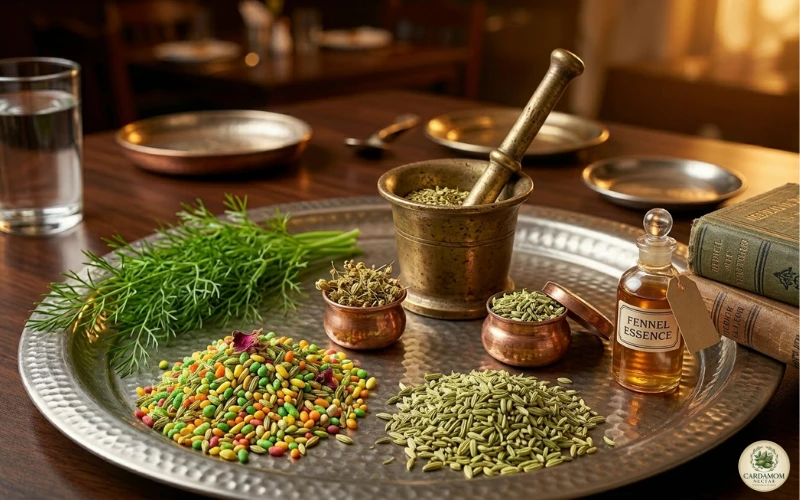
Traditional Islamic Medicine (Tibb al-Nabawi)
Fennel (Razianaj / رازيانج) is extensively documented in classical Islamic medicine. Ibn Sina (Avicenna, 980–1037 CE) prescribed it in Al-Qanun fi al-Tibb for: digestive weakness, kidney stones, eye health (as a wash), liver health, and lactation support. Ibn al-Baytar (1197–1248 CE) documented it as a diuretic, carminative, and galactagogue. These uses align closely with modern pharmacological research, validating centuries of Arab medical wisdom.
استخدامات الشمر — للقارئ العربي
الشمر (Foeniculum vulgare) من أكثر التوابل تعدداً في استخداماتها عبر الثقافات العربية والإسلامية. من مطابخ القاهرة إلى أسواق الرياض والمنازل اللبنانية — الشمر حاضر في كل مكان.
- ☕شاي الشمر — علاج الهضم والانتفاخ بعد الوجبات
- 🌴المجبوس والمقلوبة — يُقلى الشمار في السمن أولاً
- 🍼ماء الشمر للرضيع — علاج مغص الرضع (مخفف جداً)
- ♀آلام الدورة الشهرية والرضاعة — استخدام نسائي معروف
- 🌬️مضغ الشمر بعد الطعام — تعطير الفم بديلاً طبيعياً
- ⚖️ماء الشمر للتخسيس — ينقع ليلاً ويشرب صباحاً
- 🫙تخليل الزيتون والخضروات — حافظ طبيعي
- ✨ماء الشمر كتونر للبشرة — يقلل الانتفاخ والاحمرار
يُسمى الشمر بأسماء مختلفة حسب المنطقة: شمر في مصر والشام والعراق، شمار في السعودية والإمارات والكويت، شمرا في لبنان وسوريا، بسباس في المغرب والجزائر وتونس. في الباكستان والهند يُعرف بـسونف. جميع الأسماء لنفس النبات.
How to Use Fennel Seeds — Step-by-Step Guides
Four practical preparation methods — from tea to detox water to skin care. Each technique maximises the active compounds in the seeds.
How to Make Fennel Tea
Fennel Detox Water (Cold Brew)
Fennel Face Toner & Steam
Toasting Fennel Seeds for Cooking
Fennel Seed Use Finder
Tell me what you need — I’ll tell you exactly how to use fennel seeds for it, including Arabic instructions.
How to Buy & Store Fennel Seeds
Quality matters — stale seeds lose most of their essential oils and provide far fewer benefits. Here is how to buy, test, and store properly.
What to Look For
Buy whole seeds — never pre-ground. Whole seeds retain their volatile oils for 2–3 years if stored properly; ground fennel goes stale within weeks. Seeds should be pale greenish-grey, uniform in size, and smell strongly aromatic when you crush one between your fingers. A strong, sweet-anise scent = fresh and potent.
Freshness Test
Crush one seed between your fingers. If you get a strong, sweet, anise-like smell immediately — the seeds are fresh. If there is little to no smell, the seeds are stale and have lost most of their active volatile oils. Stale seeds will make weak tea and provide fewer health benefits. Replace seeds that fail the smell test.
What to Avoid
Avoid pre-ground fennel (lost oils), seeds stored in clear glass on shelves (light destroys volatiles), seeds that look dull brown-grey (oxidised), or seeds with no smell at all. Avoid buying in huge quantities unless you cook with them daily — even whole seeds degrade after 2–3 years.
Where to Buy
Arab countries: Any spice souk — ask for Shamar (شمر) in Egypt/Levant, Shamaar (شمار) in Gulf, Bizbaaz (بسباس) in Morocco. Online: Amazon.ae, Noon.com, Jumia Egypt. UK/Global: Asian grocers, Holland & Barrett. Pakistan/India: any masala shop — ask for Saunf (سونف).
Storage
Store whole fennel seeds in an airtight glass jar, away from heat, light, and moisture. A kitchen cupboard away from the stove is ideal. Do not store above the stove or near a window. Properly stored whole seeds last 2–3 years. Once ground, use within 1–2 months. For daily tea use, a small jar on the counter is fine if used within 3 months.
Organic vs Conventional
Organic fennel seeds are recommended for herbal medicine and high-consumption uses (daily tea, infant water). Conventional seeds are perfectly fine for general cooking. For infant colic water specifically, choose organic to minimise any pesticide residue exposure in the very small amounts used. Certified organic is widely available in Arab countries, UK, and South Asia.
Fennel Seeds Uses — FAQ
The most asked questions about how to use fennel seeds at home.