The Fennel Plant
Complete Guide
Everything about Foeniculum vulgare — the fennel plant. 4 types, 14 cultivars, complete grow-to-harvest guide, all edible parts (bulb, fronds, flowers, seeds, pollen), companion planting, and the deep Arabic and Islamic cultural history of this ancient Mediterranean herb.
Botanical Identity
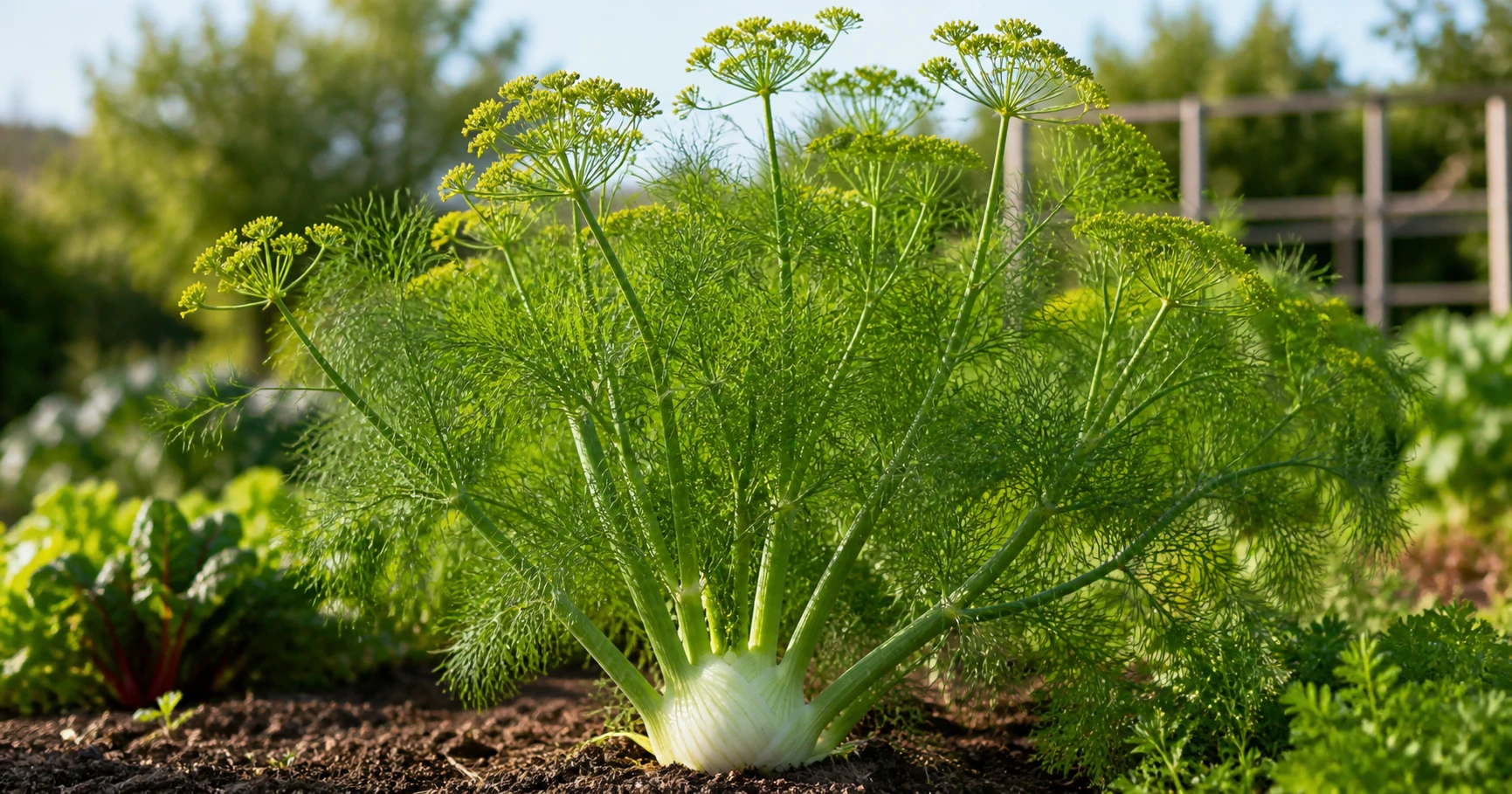
Fennel (Foeniculum vulgare) has a distinctive botanical profile. Its stems are hollow, erect, and glaucous green — growing up to 2.1 metres (7 feet) tall in ideal conditions for common fennel. The leaves are feathery and finely dissected, with threadlike segments about 0.5mm wide, giving them an appearance similar to dill fronds (but much larger). The plant produces flat-topped clusters of tiny yellow flowers in summer — the classic umbel shape of the Apiaceae family — each flower cluster containing 20–50 individual flowers that are highly attractive to beneficial insects.
The name “fennel” comes from Old English via Old French fenoil, from Latin faeniculum — a diminutive of faenum, meaning “hay.” Its anise-like flavour comes from the compound trans-anethole, also found in anise and star anise, though fennel’s flavour is generally milder and sweeter than both.
History & Origin
Fennel is indigenous to the shores of the Mediterranean Sea but has naturalised across much of the world — from California’s coastal hills to the roadsides of Australia and South Africa. Ancient Greeks and Romans prized it as medicine, food, and insect repellent. According to Greek mythology, Prometheus used a giant stalk of fennel to carry fire from Olympus to earth. Greek warriors ate fennel before battle believing it gave them courage. The medieval term for fennel was fenkil and it was one of nine sacred herbs in Anglo-Saxon medicine.
In Islamic medicine (Tibb al-Nabawi), fennel appears as Razianaj (رازيانج) in Ibn Sina’s Al-Qanun fi al-Tibb — prescribed for digestion, kidney health, lactation, and eye conditions. Today, India produces 60% of the world’s fennel output, followed by China and Bulgaria.
The 4 Types of Fennel Plant
All fennels are Foeniculum vulgare but are divided into four distinct types with very different appearances, uses, and growing characteristics. Understanding the differences is essential before growing or buying.
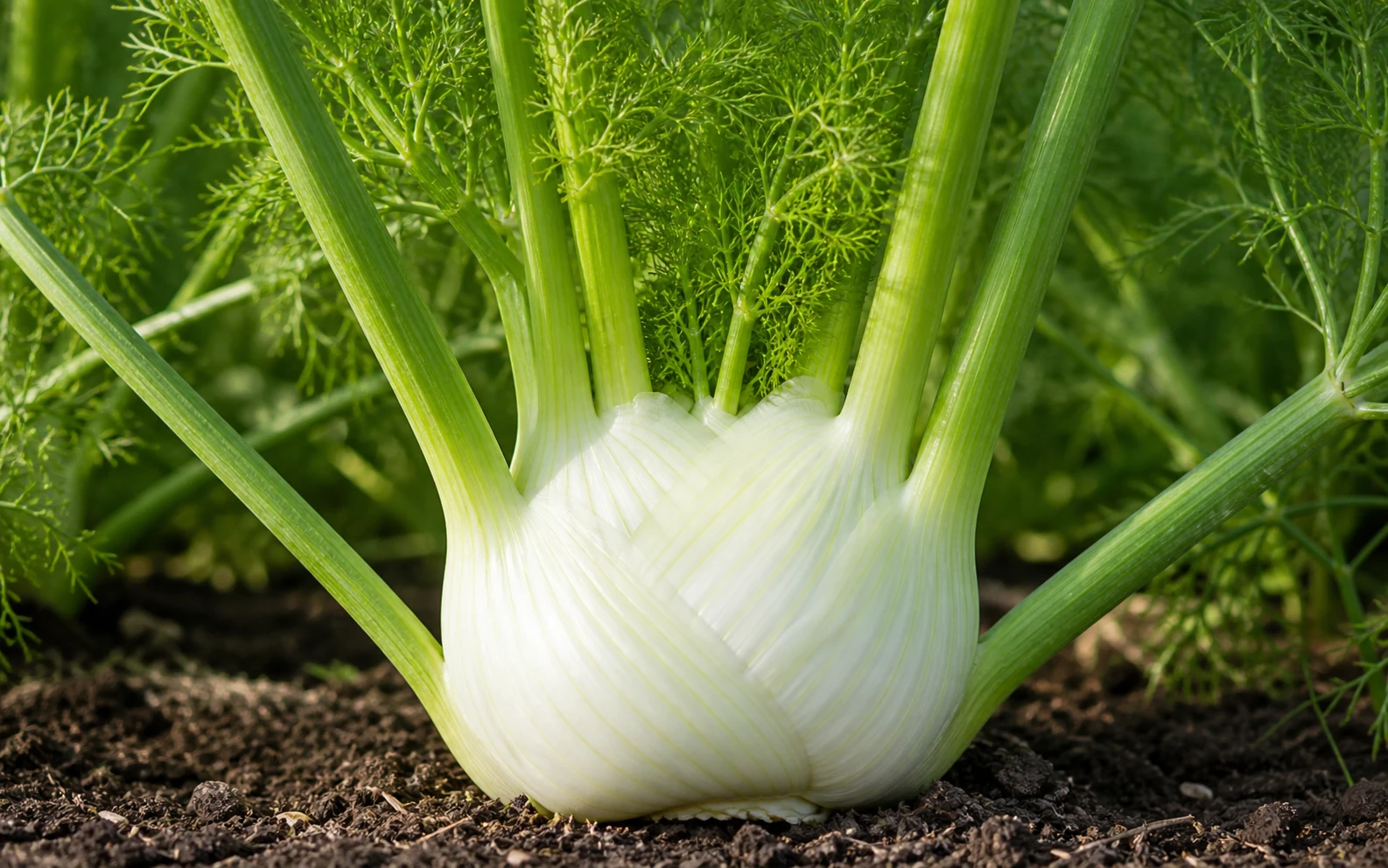
The most widely cultivated fennel for eating. Grown primarily for its large, white, bulbous base — technically swollen overlapping leaf stalks, not a true bulb. Has a crisp, celery-like texture and sweet anise flavour. Grows 60–90cm tall. Grown as a cool-season annual. Prone to bolting (premature flowering) in heat or stress. All varieties listed in supermarkets are Florence fennel.
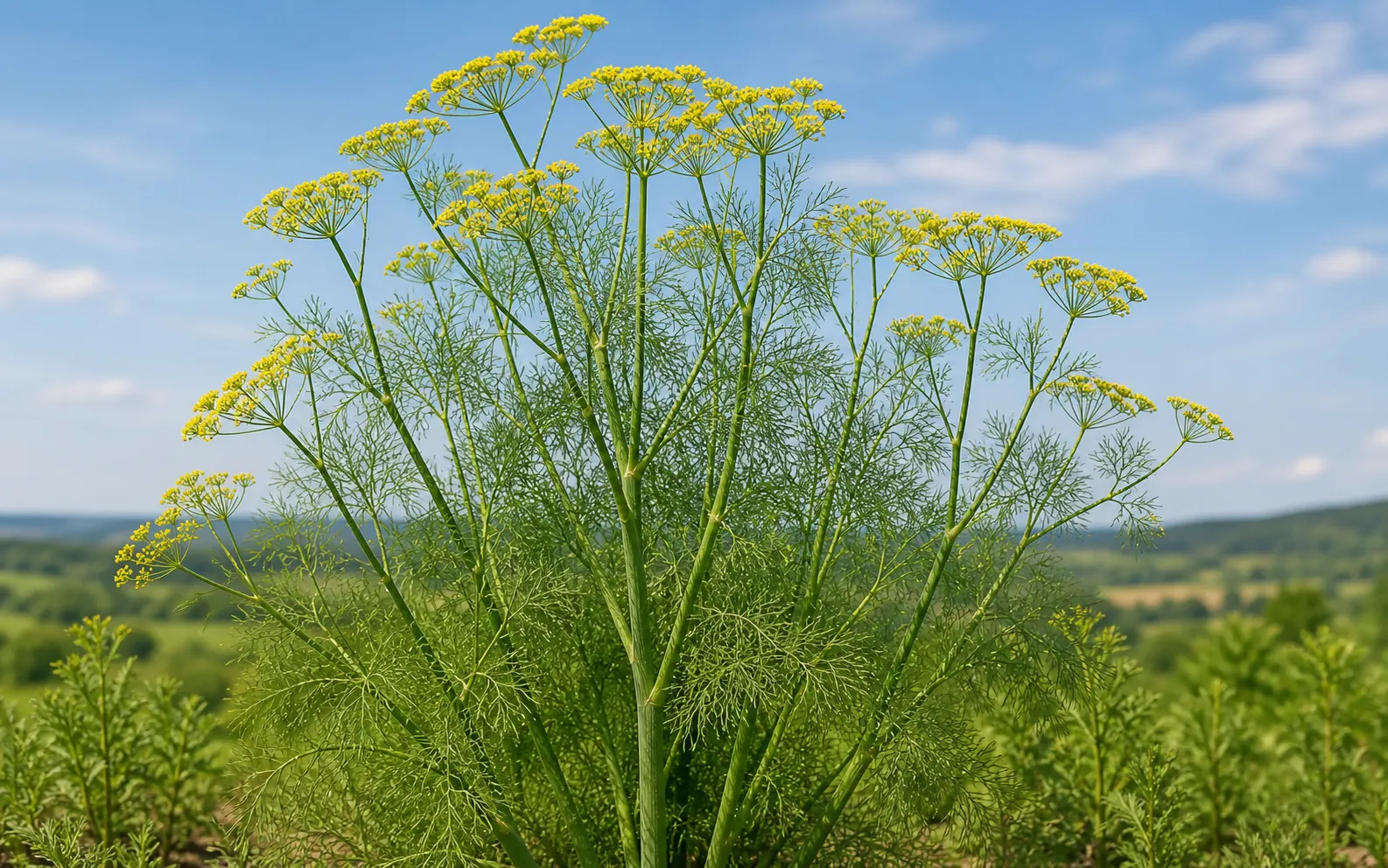
The original, perennial form of fennel grown for its feathery fronds and aromatic seeds. Grows up to 2.1 metres tall — much taller than Florence fennel. Does not produce a significant bulb. Hardy perennial in USDA zones 4–9. The source of the fennel seeds (Shamar / شمر / Saunf / سونف) sold commercially. Can become invasive in warm climates if seeds are not controlled. Prolific self-seeder.
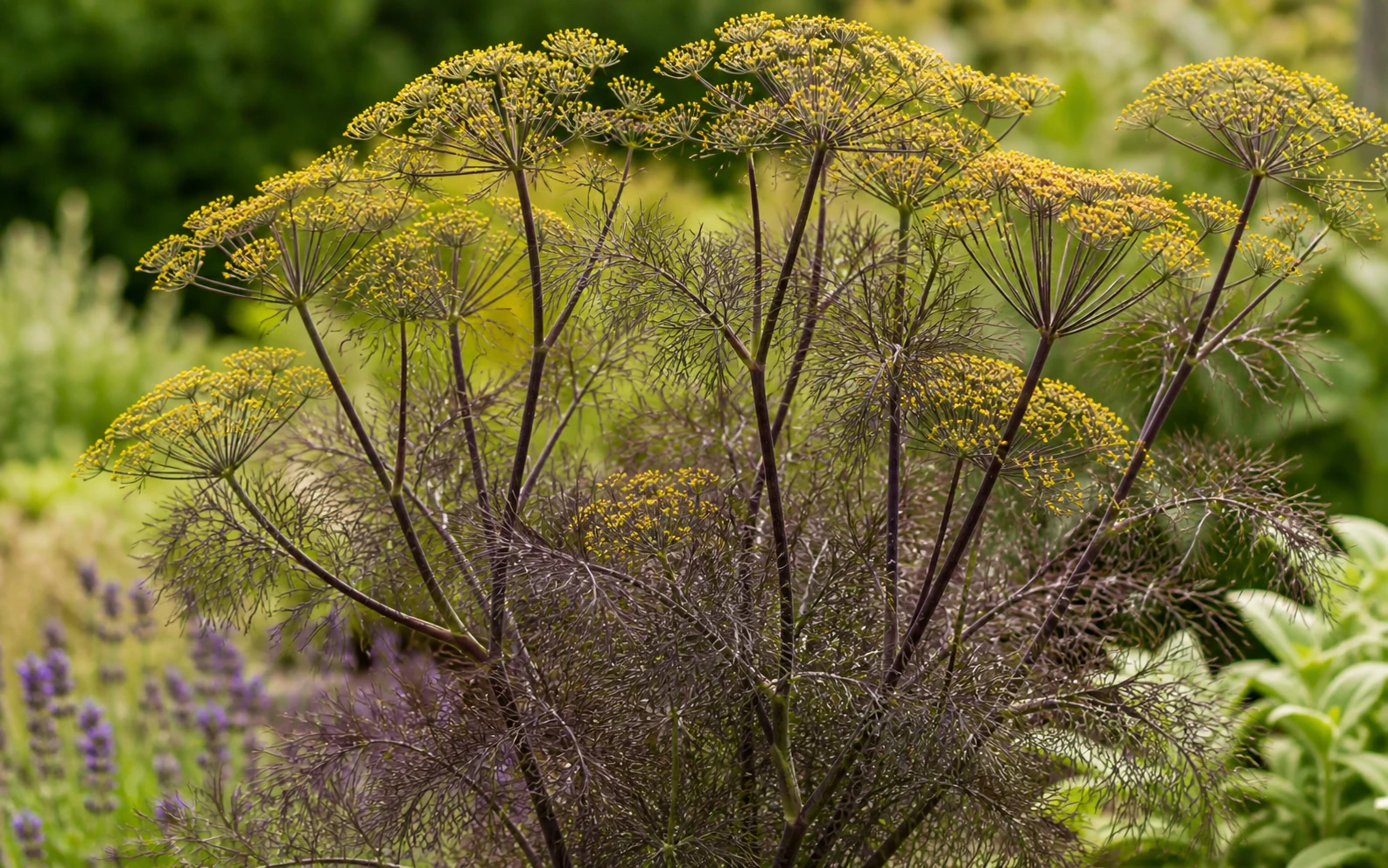
A stunning ornamental variety with feathery foliage in purplish-bronze to copper-brown tones that fade to dark green as the plant matures. Grows 1.5–2m tall. Used primarily as a dramatic garden feature — pairing beautifully with silver-leaved plants like sage and lamb’s ears. Fully edible — fronds and seeds have the same flavour as common fennel. Host plant for swallowtail butterfly caterpillars.
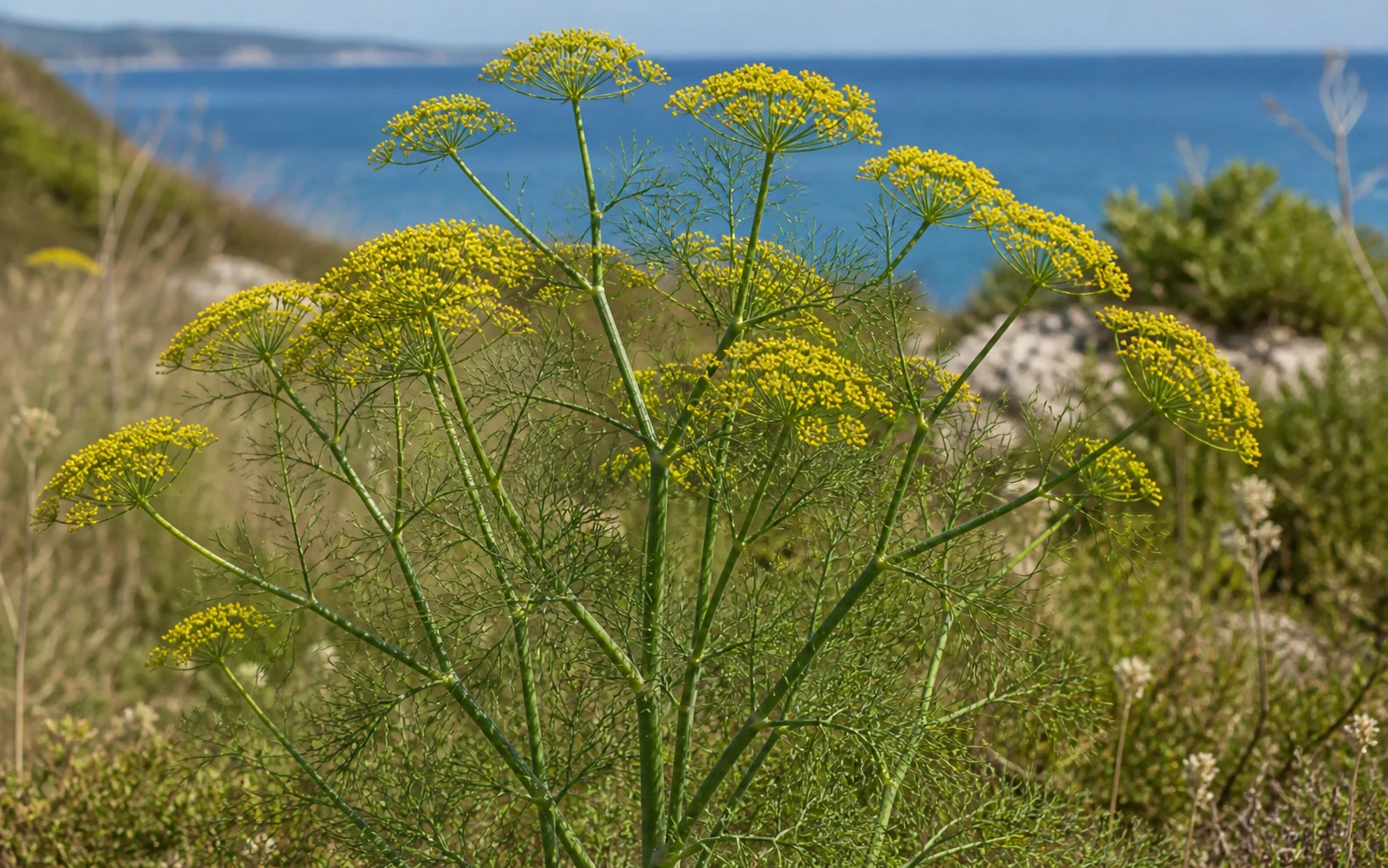
The ancestral wild form found growing naturally along Mediterranean coastlines, roadsides, and dry hillsides. Produces very small or no bulb. Seeds are more aromatic and stronger-tasting than cultivated varieties — with a camphor-like bitterness from higher fenchone content. Grows up to 1.5m. The source of truly wild fennel pollen — highly prized by gourmet chefs in Italy (finocchietto selvatico). Often considered a weed in warm climates.
14 Best Fennel Varieties — Which to Grow
From bolt-resistant Florence types to ornamental bronze cultivars — here are the best varieties for different purposes and climates.
| Variety | Type | Days | Key Feature | Best For |
|---|---|---|---|---|
| 🌿 Florence Fennel — Bulb Varieties | ||||
| Zefa Fino | Vegetable | 65 | Fastest maturing; excellent bolt-resistance | Short seasons, early planting |
| Rhondo F1 | Vegetable | 70 | Uniform round bulbs; quick to mature | Market growing, home garden |
| Orion | Vegetable | 75 | Large flavorful bulbs, good disease resistance | General purpose, reliable |
| Perfection | Vegetable | 80 | Very uniform white bulbs; strong flavour | Culinary excellence |
| Victoria | Vegetable | 75 | Vigorous; excellent bolt-resistance | Hot climates, summer sowing |
| Cantino | Vegetable | 85 | Very slow to bolt; ideal for early planting | Spring planting in warm areas |
| Amigo | Vegetable | 70 | Flattened white bulbs; bolt-resistant | Early harvest, container growing |
| Trieste | Vegetable | 80 | Large, flavorful; traditional Italian variety | Roasting, grilling, Italian recipes |
| 🌿 Herb / Common Fennel — Seed & Frond Varieties | ||||
| Sweet Fennel | Herb | 60 | Standard variety for seeds and fresh leaves | Tea, cooking, seed production |
| Dulce | Herb | 65 | Sweeter seeds with excellent essential oil yield | Shamar tea, essential oil |
| Magnafena | Herb | 70 | Very large seeds; turquoise-green foliage | Commercial seed production |
| 🎨 Bronze / Ornamental Varieties | ||||
| Purpureum | Ornamental | — | Classic bronze-purple foliage; the most popular ornamental | Garden borders, butterfly gardens |
| Rubrum | Ornamental | — | Deep bronze to red leaf; large fragrant umbels | Dramatic garden features |
| Smokey | Ornamental | — | Brown foliage; particularly sweet-tasting leaves | Ornamental + cooking |
All 6 Edible Parts of the Fennel Plant
The fennel plant is unique — every single part from root to flower is edible. Here is exactly how to use each part.
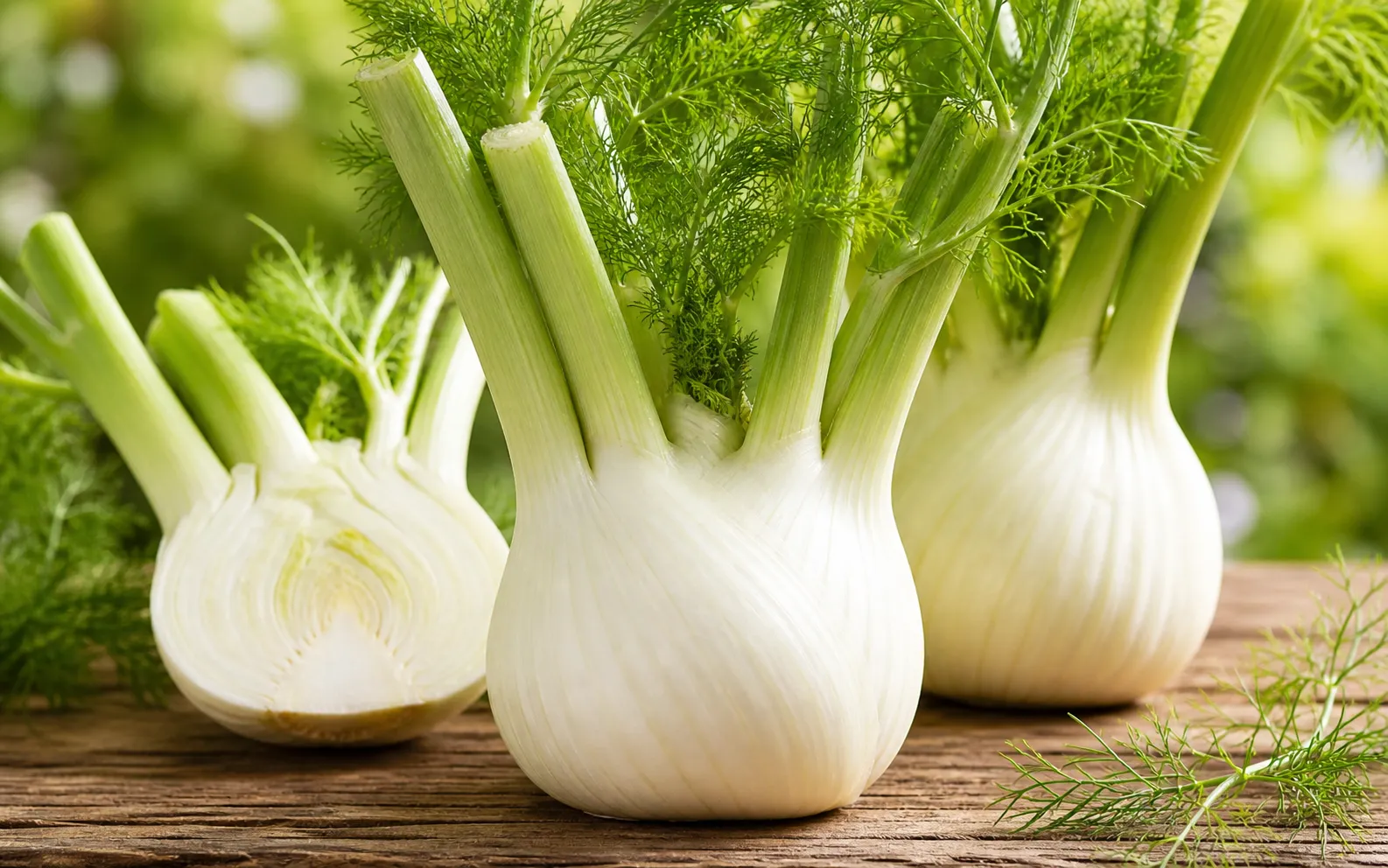
The Bulb
The swollen base of Florence fennel (technically overlapping leaf stalks, not a true bulb). Crisp, celery-like texture with sweet anise flavour. Eaten raw in salads, braised, roasted, grilled, or added to soups. Harvest when tennis-ball sized (8–12cm across). Store refrigerated up to 1 week.
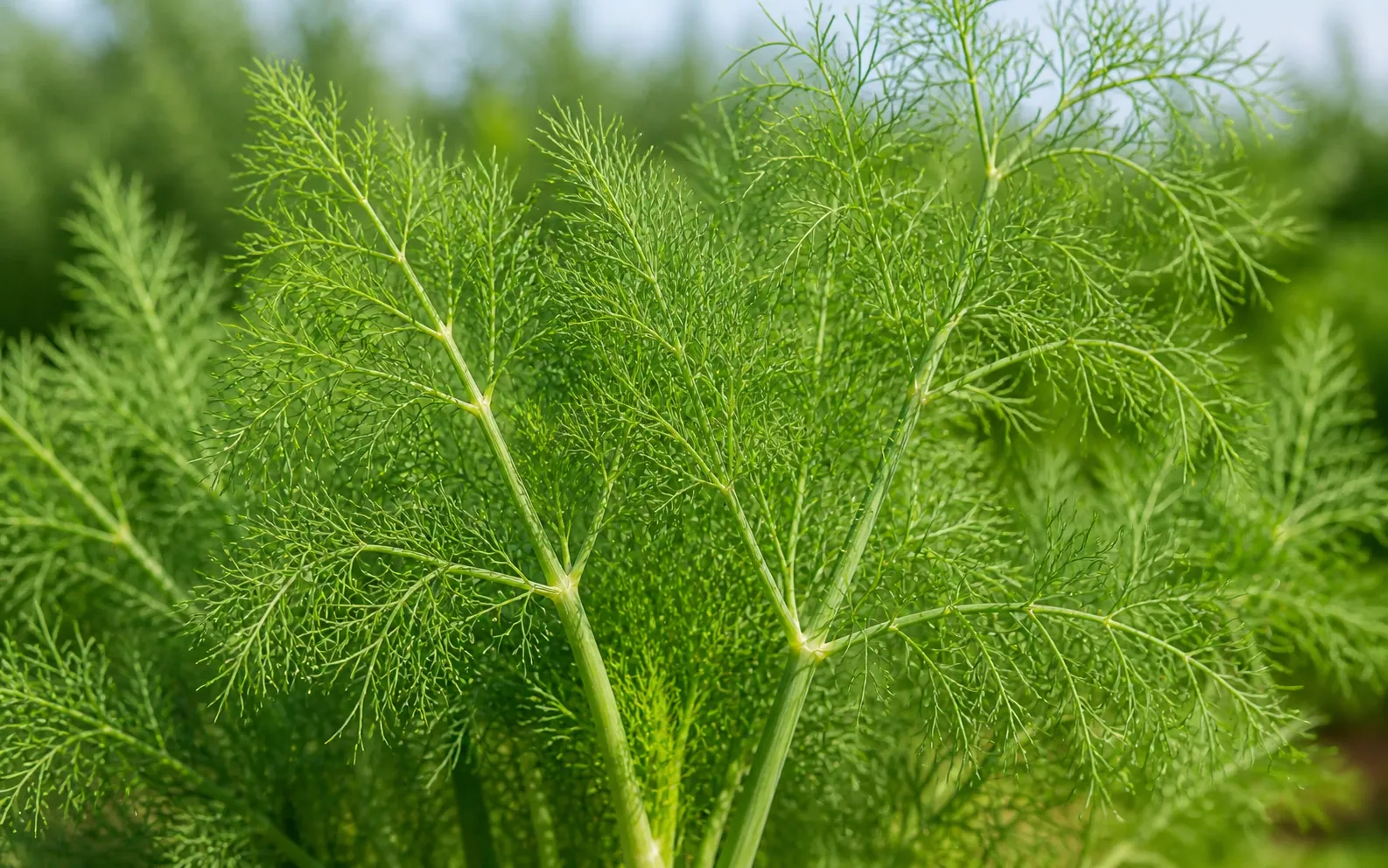
The Fronds (Leaves)
The feathery, dill-like leaves of the fennel plant. Soft, delicate, with a lighter anise flavour than the seeds. Used as a fresh herb garnish, in salads, with fish dishes, in sauces, and in Shamar tea. Harvest by cutting outer leaves, never more than ⅓ at once. Do not dry — they lose all flavour; always use fresh or freeze.
The Stalks (Stems)
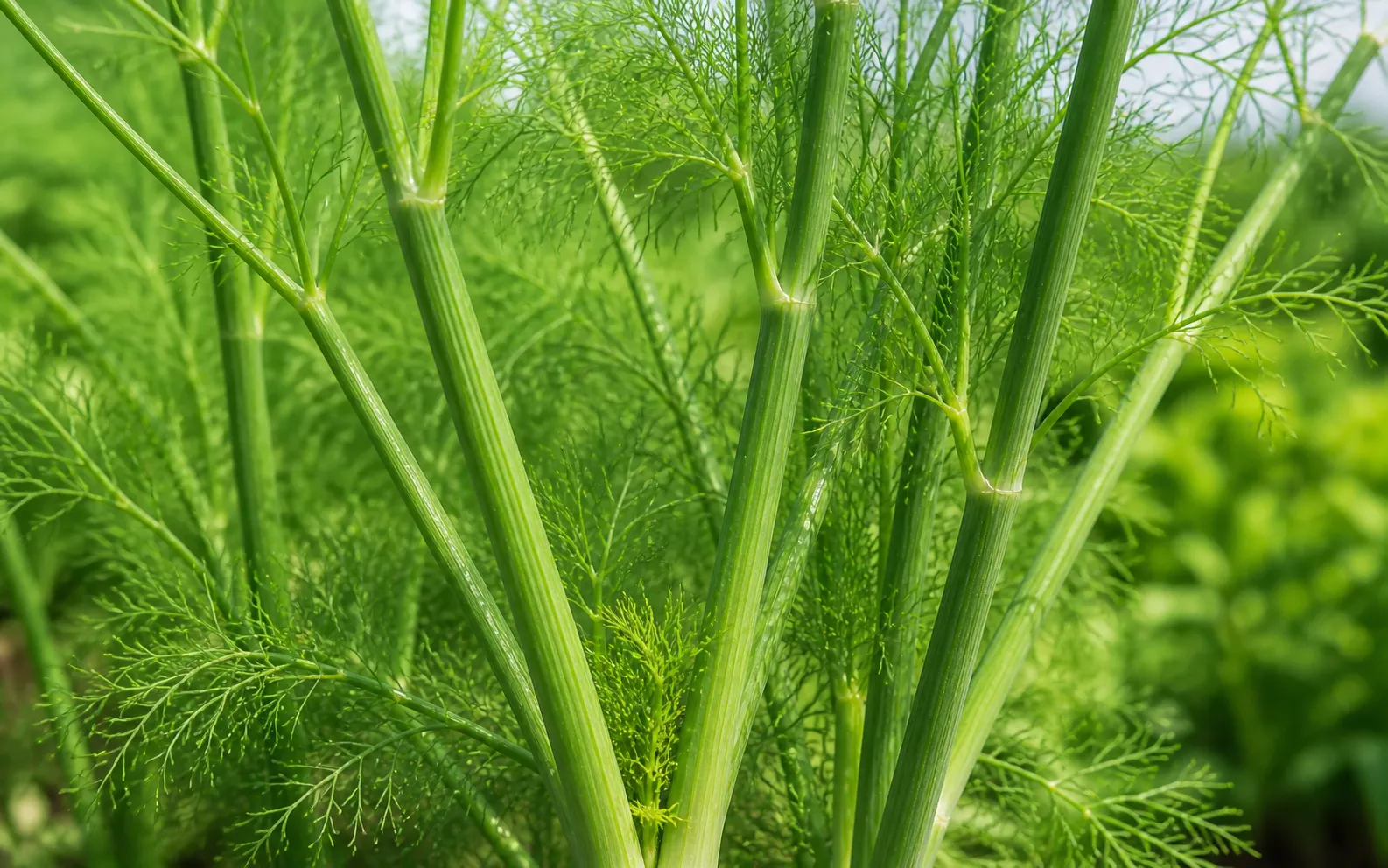
The hollow, crisp stems are edible and flavourful — milder than the bulb. Slice thinly and use raw in salads, add to stocks and soups (the hollow stems infuse wonderfully), or use as a flavouring bed when roasting fish or meat. In Spain, fennel stems are traditionally used in pickled aubergine (berenjenas de Almagro) preparation.
The Flowers
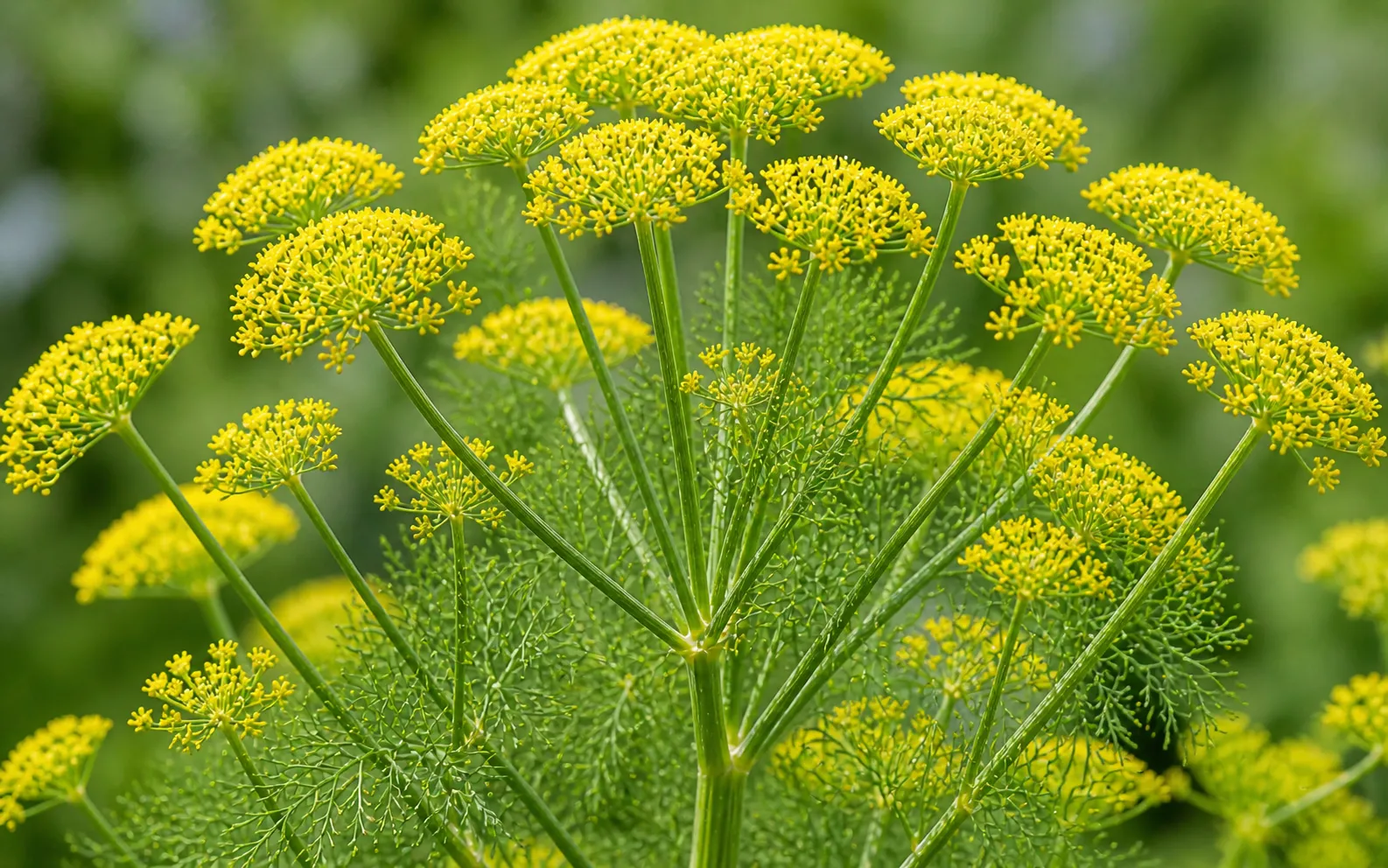
The flat-topped yellow flower umbels are fully edible — used as an aromatic garnish, added to salads, infused into vinegars or oils, or scattered over fish and egg dishes. The flavour is sweet and intensely anise-like — more concentrated than the fronds. Flowers bloom mid to late summer and attract pollinators heavily. Use immediately after cutting.
The Seeds (Shamar / شمر / Saunf)
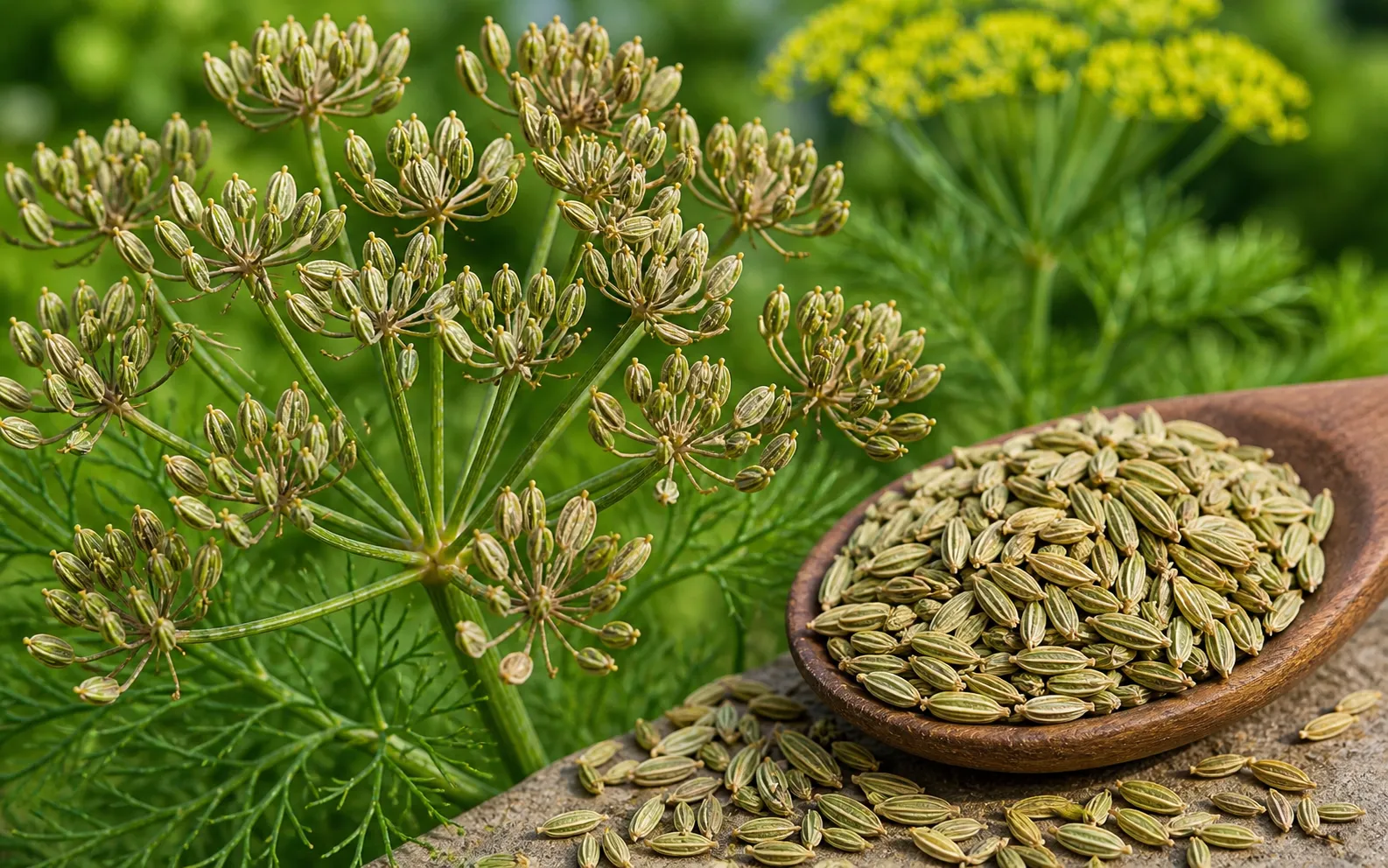
The most commercially important part of the fennel plant — the dried seeds are the Shamar (شمر) and Saunf (سونف) sold in every spice market globally. Used in tea (شاي الشمر), cooking, as a mouth freshener, and in traditional medicine. Harvest when flower heads turn brown — cut, bag, and dry. India produces 60% of world supply. Green seeds can be used fresh; dried seeds store 2–3 years.
The Pollen — The “Spice of Angels”
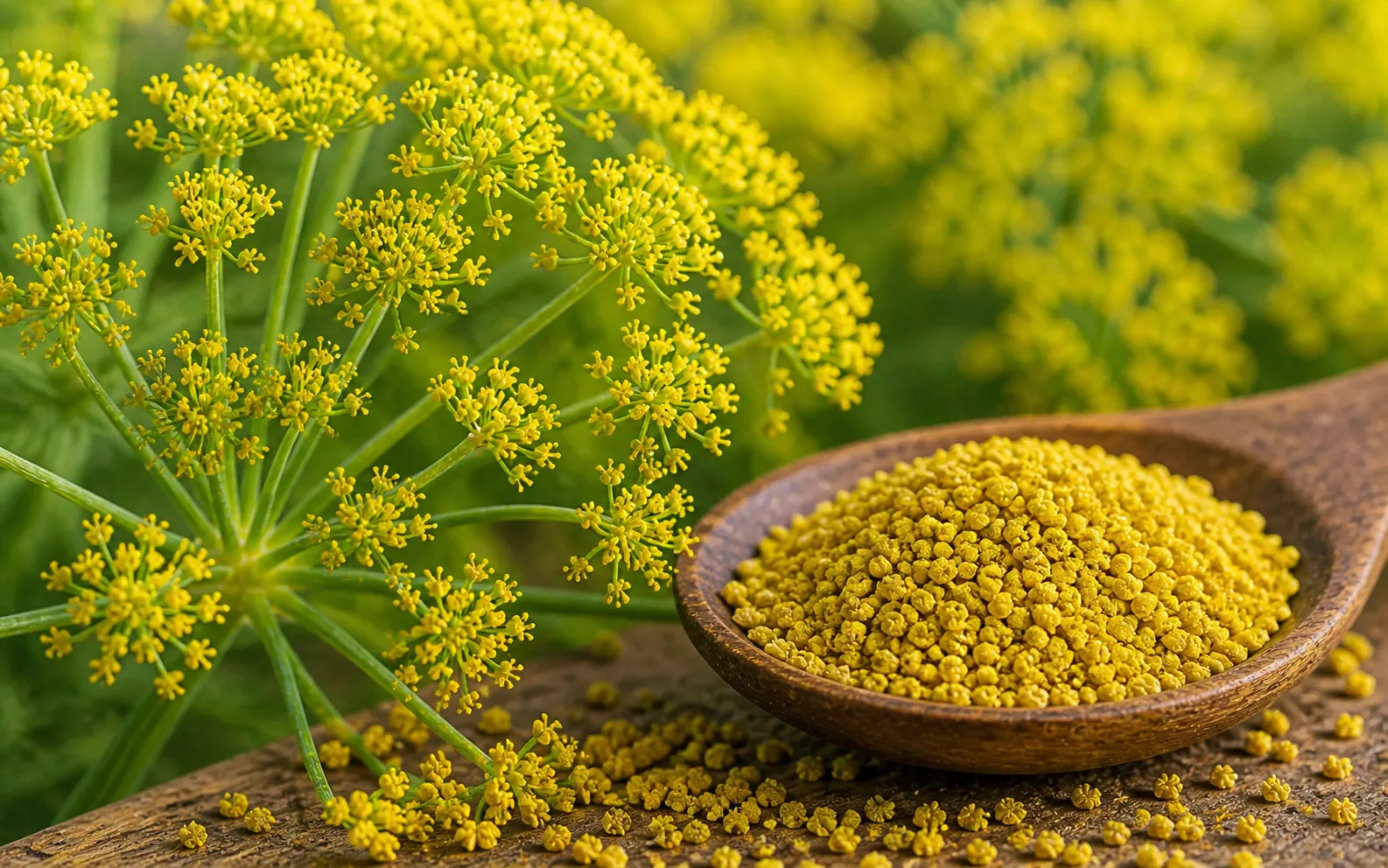
Fennel pollen is the most prized and expensive part of the plant — called the “spice of angels” by Italian chefs. Intensely aromatic, with a concentrated sweet-anise flavour more complex than the seeds. Collected by shaking open flower heads into a bag on a calm day. Used by Michelin-star chefs to season seafood, pasta, pork, and risotto. Very seasonal — available only during flowering. Commands premium prices.
How to Grow Fennel — Seed to Harvest
Growing conditions, timing, and technique that determine success or failure. The biggest mistake is sowing Florence fennel at the wrong time — it will bolt immediately.
Sunlight
Full sun — minimum 6–8 hours of direct sunlight daily. Partial shade produces weak, spindly plants with poor bulb development. Choose the sunniest, most sheltered spot in your garden.
Soil
Well-drained, fertile, loamy soil rich in organic matter. pH 5.5–8.0 (prefers slightly alkaline). Work aged compost into the bed before planting. Florence fennel needs more moisture-retentive soil than common fennel.
Watering
1 inch per week minimum. Never allow Florence fennel to dry out — drought stress triggers immediate bolting. Common fennel is drought-tolerant once established thanks to its deep taproot. Water at the base, never overhead.
Temperature
Cool-weather crop for Florence fennel. Best sown in midsummer (June–July) for autumn harvest. Spring sowings bolt quickly in heat. Seeds germinate best at 15–18°C (60–65°F). Tolerates light frost but not hard freeze.
Spacing
Direct seed ¼ inch deep. Thin Florence fennel to 20–30cm apart in rows 45cm apart. Common fennel: 30–45cm apart. Do NOT transplant — the deep taproot suffers extreme transplant shock. Direct sow only.
Fertilising
Prepare bed with compost before planting. Monthly side-dressings of well-rotted manure or compost tea boost bulb size. Avoid nitrogen-heavy fertilisers mid-season — they encourage foliage at the expense of bulb quality and aromatic compounds.
Florence Fennel — Growing Timeline
Pest, Disease & Bolting
🔴 Bolting — The #1 Enemy
Bolting (premature flowering) ruins the bulb — once a plant bolts, the bulb becomes tough, hollow, and bitter, and the plant’s energy shifts entirely to seed production. Causes: heat waves, long days, drought stress, transplant shock, early spring sowing, and nutrient deficiency. Prevention: sow in June–July, water consistently, choose bolt-resistant varieties (Zefa Fino, Victoria, Cantino), and mulch heavily to keep roots cool.
⚠️ Common Pests
Aphids — soft-bodied insects causing leaf distortion. Encourage ladybirds; apply insecticidal soap only if infestation is high. Armyworm larvae — skeletonise leaves; apply Bacillus thuringiensis. Cutworms — sever young stems at soil level; use foil collars. Swallowtail butterfly caterpillars — they eat fronds but are beneficial insects; hand-pick and relocate rather than using pesticides.
🦠 Diseases
Root rot & collar rot — caused by waterlogged soil. Ensure excellent drainage; do not plant too deep. Cercospora leaf blight — necrotic spots on leaves; rotate crops annually and use disease-free seeds. Downy mildew — yellow spots above, white growth below; improve air circulation. Powdery mildew — powdery coating on leaves; avoid overhead watering.
✅ Harvesting Seeds
For seed harvest (common fennel): allow plants to flower and set seed. When flower heads turn brown (late summer to early autumn), cut the entire seed head and place in a paper bag. Hang the bag upside-down in a cool, ventilated space. Seeds fall naturally into the bag as they dry. Clean and store in airtight jars. Properly stored fennel seeds (Shamar/Saunf) last 2–3 years. Freshness test: crush one seed — it should smell immediately and strongly of anise.
Fennel Companion Planting — Who to Grow Near
Fennel is allelopathic — it releases compounds that can inhibit the growth of nearby plants. Knowing its companions and enemies is essential for a productive garden.
⚠️ Important: Fennel is one of the garden’s most problematic companions. It produces allelopathic chemicals through its roots and decomposing leaves that inhibit the growth of many vegetables. Many gardeners grow fennel in a dedicated area or container away from the main vegetable garden.
Good Companions — Plant Near These
- Dill — a fellow Apiaceae plant that grows compatibly near fennel (but keep them separate to avoid cross-pollination affecting seed flavour)
- Sage — visually stunning with bronze fennel; the silver-grey foliage contrasts beautifully and both tolerate dry conditions
- Mint — compatible companion, both enjoy similar moisture levels
- Anise — related plant that grows well alongside fennel
- Wildflowers & pollinator plants — fennel’s flowers attract beneficial insects that help pollinate your entire garden
- Swallowtail butterfly gardens — fennel is a critical host plant for anise swallowtail and black swallowtail caterpillars
Bad Companions — Keep Away From These
- Tomatoes — fennel is allelopathic to tomatoes, stunting their growth significantly. This is one of the most well-documented bad plant pairings in gardening
- Beans — fennel inhibits bean germination and root development; keep at least 1 metre apart
- Peppers & courgettes (zucchini) — growth inhibited by fennel’s allelopathic compounds
- Brassicas (broccoli, kale, cabbage) — fennel is detrimental to most brassica family plants
- Aubergine (eggplant) — poor companion for fennel
- Coriander — cross-pollination can affect the seed flavour of both plants; keep separated by at least 3 metres if growing for seed
- Caraway — competition and cross-pollination issues with fennel
نبات الشمر — التاريخ العربي والإسلامي
الشمر من أعرق النباتات التي وردت في التراث الطبي والثقافي العربي والإسلامي. عُرف في الطب الكلاسيكي باسم الرازيانج، وذُكر في مؤلفات أعظم أطباء الإسلام، من ابن سينا إلى ابن البيطار.
- 📚ابن سينا (٩٨٠–١٠٣٧م) في “القانون في الطب” — وصف الرازيانج لعلاج الهضم والكلى والعيون والرضاعة
- 📚ابن البيطار (١١٩٧–١٢٤٨م) في “الجامع لمفردات الأدوية” — وثّق الشمر كمدرٍّ للبول والحليب ومقوٍّ للمعدة
- 🌙الطب النبوي — ذُكر الشمر ضمن الأعشاب النافعة للجهاز الهضمي في التراث الإسلامي
- 🏺مصر الفرعونية — استُخدم الشمر في الطب المصري القديم لأكثر من ٣٠٠٠ سنة قبل الميلاد
يُسمى نبات الشمر بأسماء مختلفة حسب المنطقة: شمر في مصر والشام والعراق، شمار في الخليج (السعودية والإمارات والكويت وقطر)، شمرا في لبنان وسوريا، بسباس في المغرب العربي، رازيانج في الكلاسيكية والفصحى. وبالأردية والهندية: سونف (سونف).
يُزرع الشمر تجارياً في مصر والمغرب واليمن وسوريا وتونس. الهند هي أكبر منتج عالمي للشمر (٦٠٪ من الإنتاج العالمي)، وتصدر كميات كبيرة للدول العربية. يُقدّم الشمر الطازج في المطبخ الشامي كخضار للسلطة أو مشوياً مع السمك.
🇨🇳 الصين: ثاني أكبر منتج
🇧🇬 بلغاريا: ثالث أكبر منتج
🇪🇬 مصر: منتج عربي رئيسي
🇲🇦 المغرب + تونس: إنتاج إقليمي هام
Fennel Variety
Finder
Tell me what you want to grow fennel for — I’ll recommend the best variety and tell you exactly how to grow it.
Every recommendation includes advice for growing in hot Middle Eastern climates (Gulf, Egypt, Levant) and the Arabic name to ask for in local nurseries.
From quick-maturing Zefa Fino to dramatic Bronze Purpureum — all 14 varieties assessed for your specific goal.
Meet the Authors

Emily has spent over a decade exploring the culinary traditions of the Arab world, South Asia, and the Mediterranean. She has visited fennel-producing regions in Egypt, Morocco, and southern Italy to research this plant’s cultural and culinary significance firsthand. She speaks conversational Arabic and writes bilingual guides for global audiences.

Dr. Bennett holds a doctorate in nutritional sciences and has published research on the bioactive compounds of Mediterranean and Middle Eastern medicinal plants. He verifies all botanical claims, variety information, and growing advice on Cardamom Nectar against current horticultural and phytochemical literature.
Fennel Plant — Frequently Asked Questions
Every common question about the fennel plant — answered in full.