Elaichi Black Tea Recipe
The Classic Cardamom Chai
Crushed green cardamom pods simmered with Assam black tea and milk — no spice blend, no shortcuts, just the original elaichi chai the way it’s brewed across South Asia, made in one saucepan in 10 minutes.


Elaichi black tea (cardamom chai) is made by simmering 6–8 crushed green cardamom pods in water for 3–4 minutes, adding Assam black tea leaves, then finishing with milk and sugar. Total time: 10 minutes. Key rule: crush the pods and simmer them before adding the tea — that’s what pulls the cardamom’s aroma fully into the water.
How to Make Elaichi Black Tea
Elaichi black tea takes 10 minutes: simmer crushed cardamom in water, add black tea leaves, pour in milk, sweeten, then strain.
- Crush the cardamom: split 6–8 pods to expose the seeds.
- Simmer: boil the crushed pods in water for 3–4 minutes.
- Add tea leaves: stir in Assam black tea, simmer 2 minutes.
- Add milk: pour in milk, simmer 2–3 minutes until caramel-colored.
- Sweeten & strain: add sugar, strain into cups, serve hot.
Common Elaichi Black Tea Mistakes to Avoid
Most flat, weak, or bitter cups of elaichi chai come down to one of these five habits.
| Mistake | Why It Happens | The Fix |
|---|---|---|
| Adding tea and cardamom at the same time | Cardamom needs a head start to release its oils into the water | ✓ Simmer crushed pods 3–4 minutes before adding tea |
| Using whole, uncrushed pods | Intact pods barely release any aroma into the water | ✓ Crush pods with a knife or mortar and pestle first |
| Boiling milk too long | Extended boiling scorches the milk and dulls the cardamom flavor | ✓ Simmer milk gently for just 2–3 minutes |
| Using old, pre-ground cardamom | Ground cardamom loses most of its aroma within weeks of grinding | ✓ Crush whole pods fresh, right before brewing |
| Letting brewed chai sit before straining | Tea leaves left in liquid keep steeping and turn the cup bitter | ✓ Strain immediately once simmering is done |
Why Green Cardamom and Black Tea Belong Together
Elaichi — the Hindi and Urdu word for green cardamom — has flavored black tea across South Asia, the Gulf, and East Africa for generations, and the pairing isn’t arbitrary. Green cardamom’s primary aromatic compound, 1,8-cineole, is cool, floral, and slightly citrusy, and it cuts directly through the tannic, malty bitterness of strong Assam black tea. The result is a cup that tastes rounder and more fragrant than either ingredient alone.
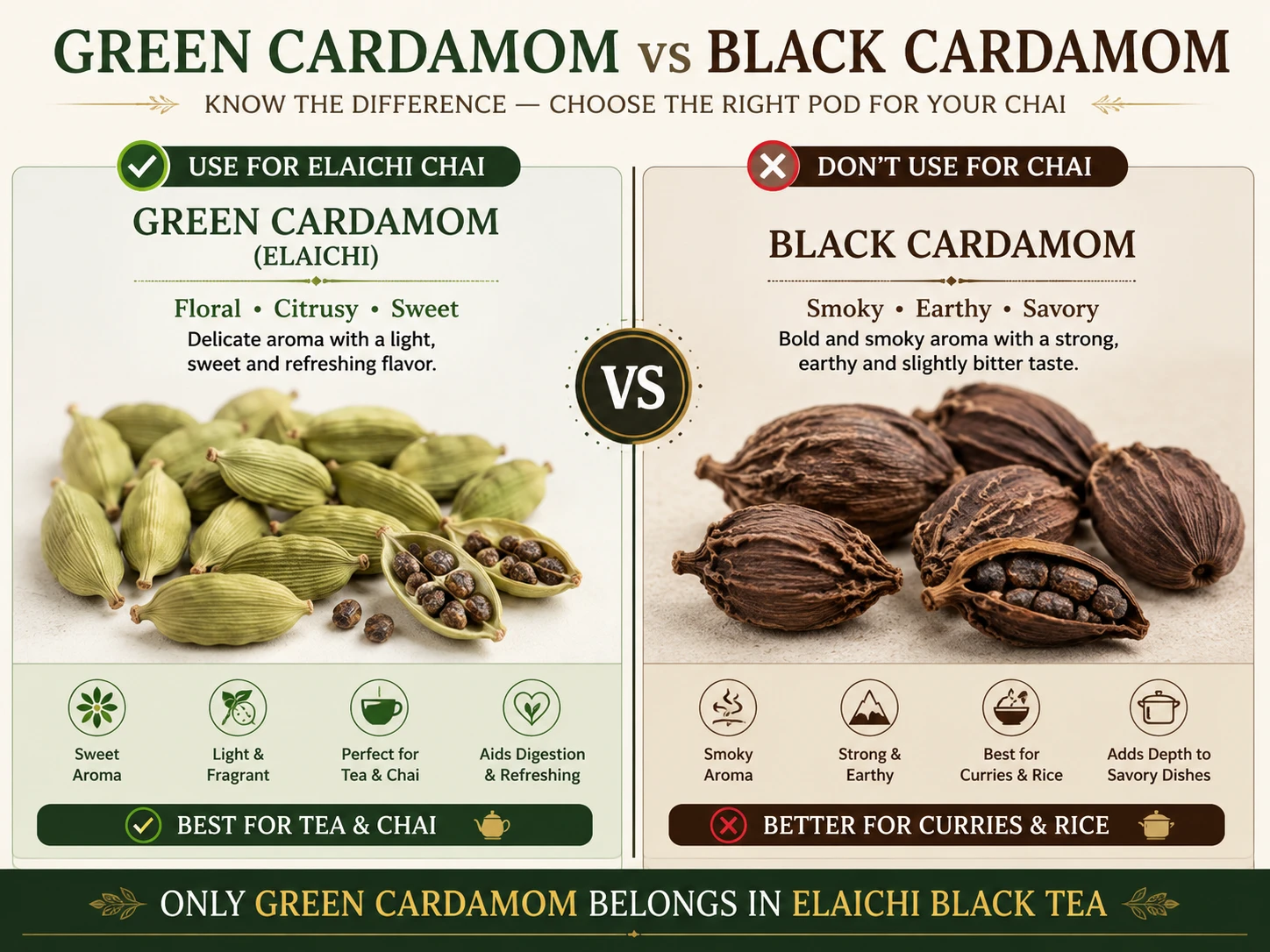
Green Cardamom (Elaichi), Not Black
Black cardamom is smoky and savory — the wrong pod for chai. Only green elaichi belongs in this recipe.
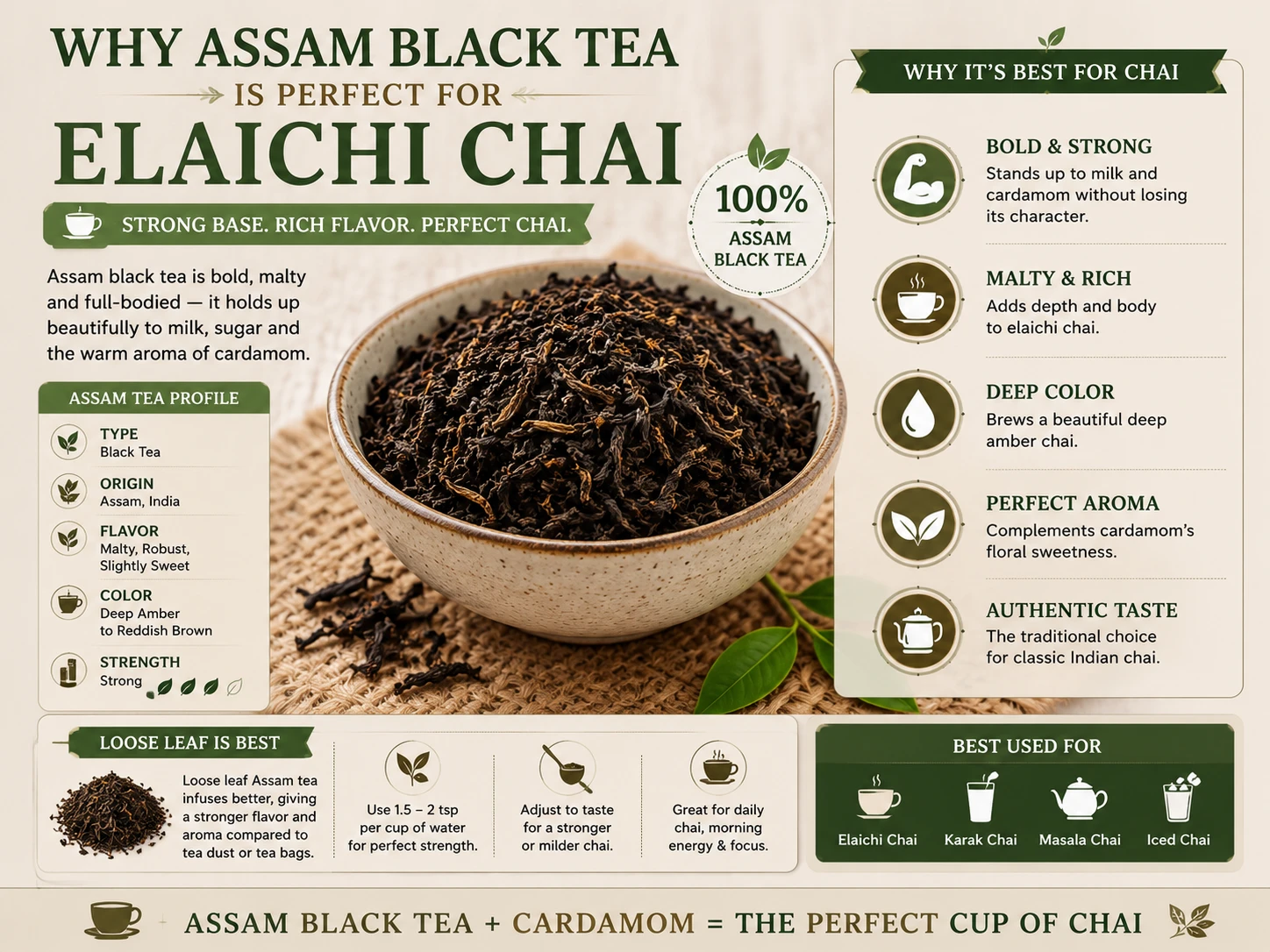
Assam Black Tea Base
Assam’s malty strength stands up to milk and cardamom without disappearing — the classic base for elaichi chai.
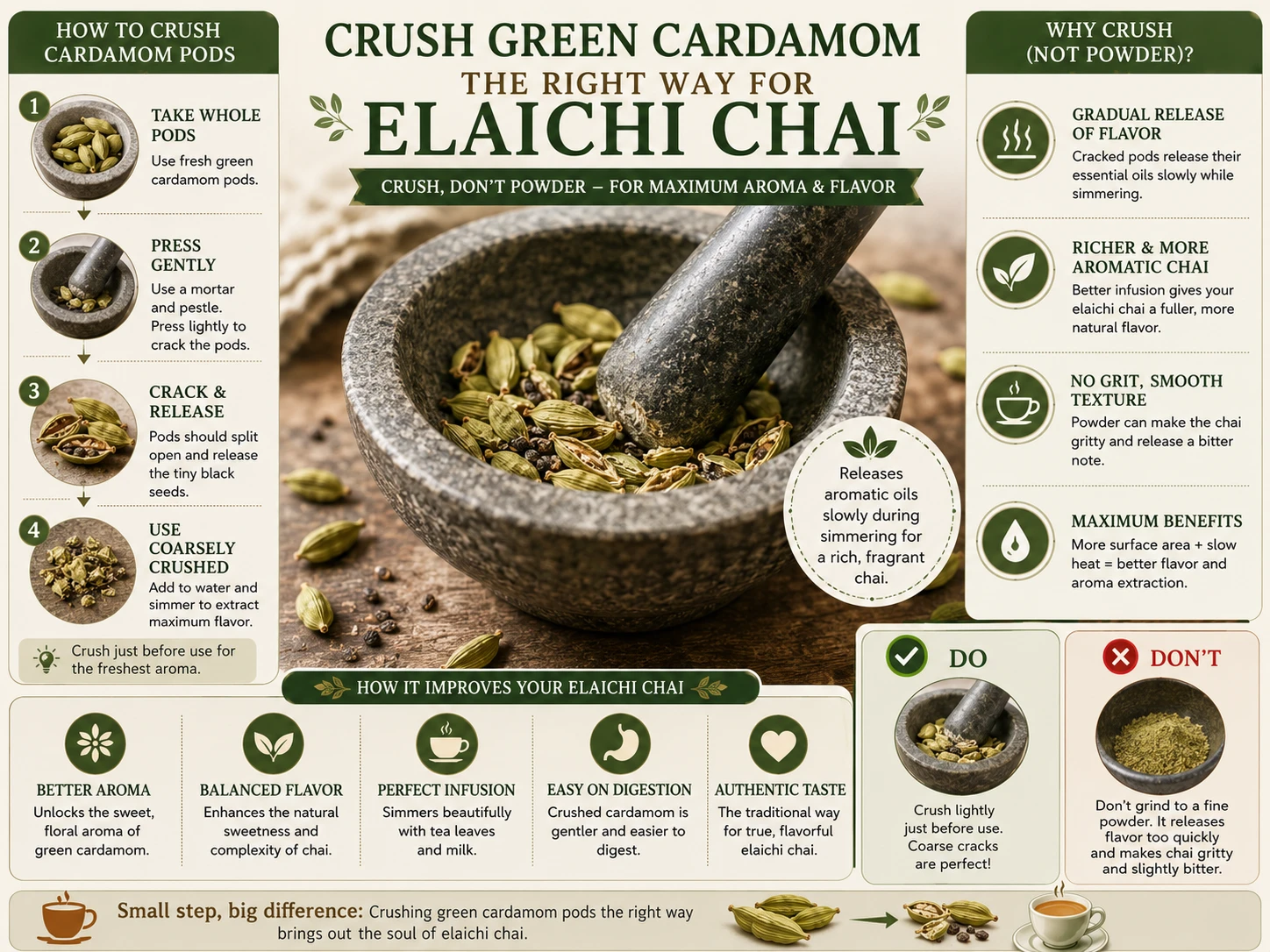
Crush, Don’t Powder
Lightly cracked pods release oils gradually during the simmer. Powder releases everything too fast and turns gritty.
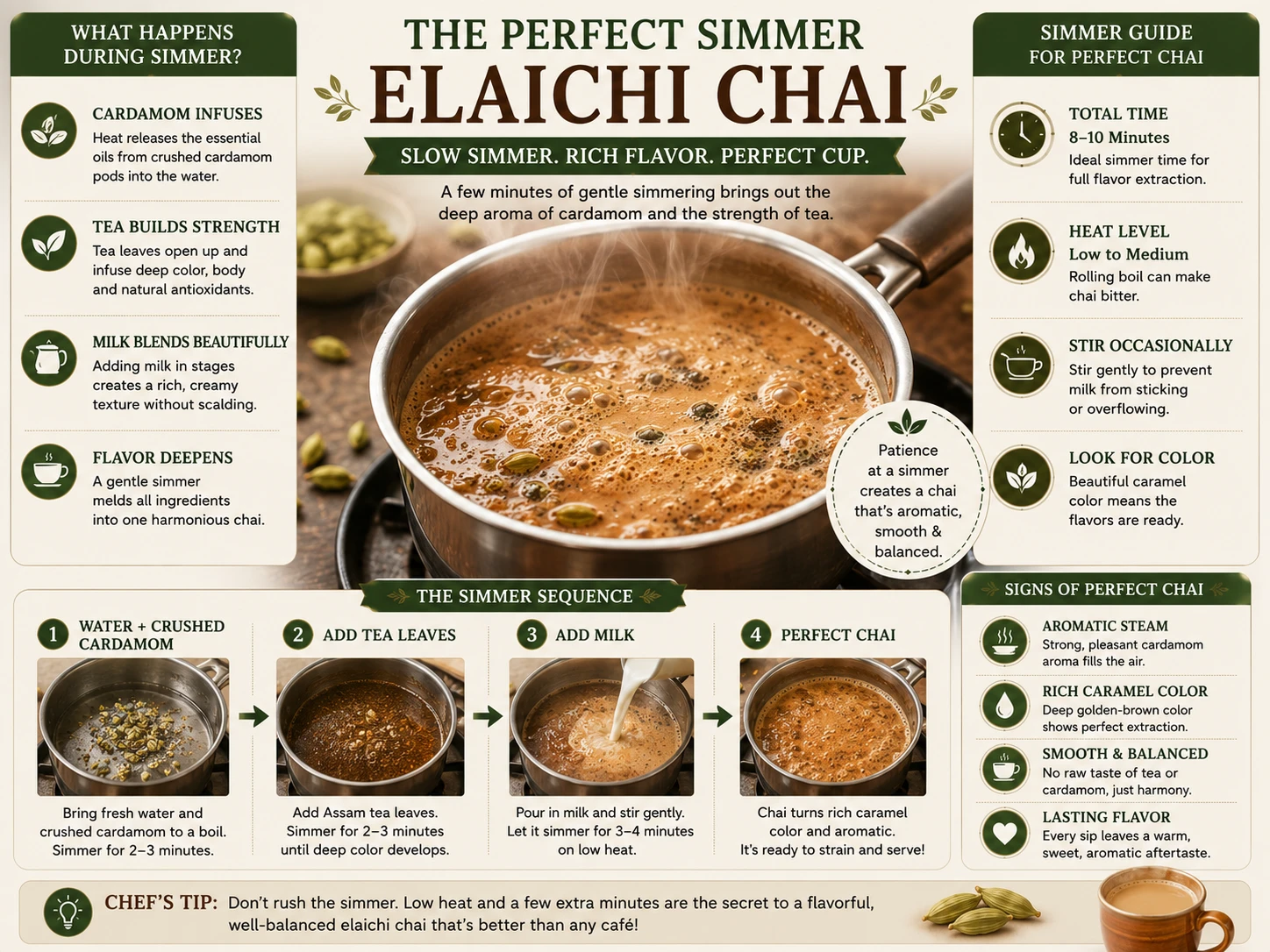
The Simmer Technique
Water first, then tea, then milk — added in stages, each ingredient gets time to actually infuse the cup.
Does Elaichi Black Tea Have Caffeine?
Yes — elaichi black tea contains caffeine, but the cardamom itself contributes none of it. Green cardamom is entirely caffeine-free; every milligram of caffeine in this cup comes from the Assam black tea leaves. A standard cup made with this recipe carries roughly 40–60mg of caffeine, similar to a regular cup of black tea and about half a cup of coffee.
If you want the cardamom flavor without the caffeine, two options work well: swap the black tea for a caffeine-free base (see the Substitutions section below), or simmer the crushed cardamom pods in water and milk without any tea leaves at all — you’ll still get a warm, aromatic, elaichi-flavored milk drink, just without the tannic tea character.
Elaichi Chai Glossary
A few terms that come up constantly around this recipe, and what they actually mean.
How Difficult Is This Recipe?
One saucepan, one strainer, no special equipment. The only real skill is timing each addition correctly.
← This Recipe
Ingredients
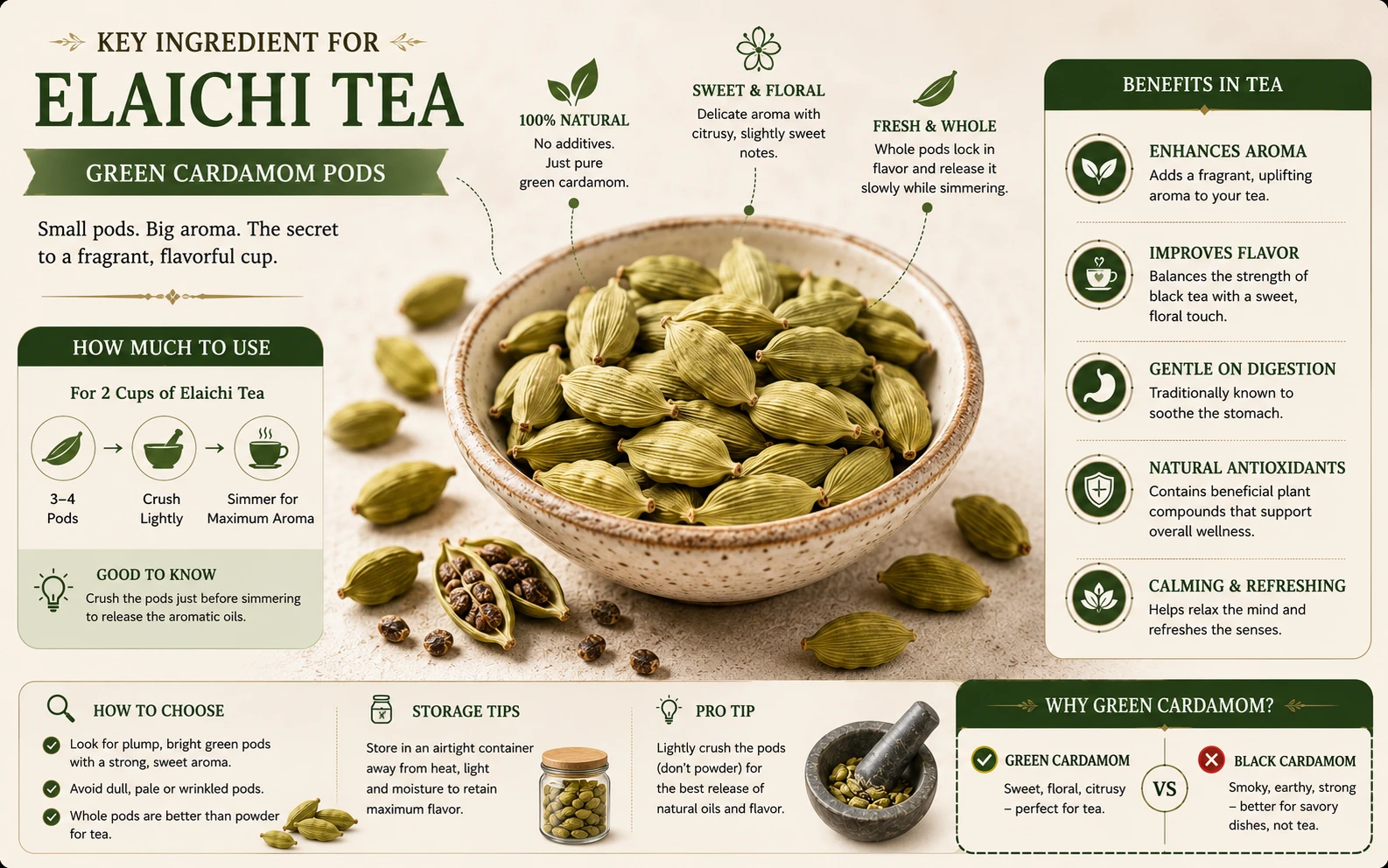
Green Cardamom (Elaichi)
6–8 pods, crushed. This is the whole point of the recipe — crush fresh, right before simmering.
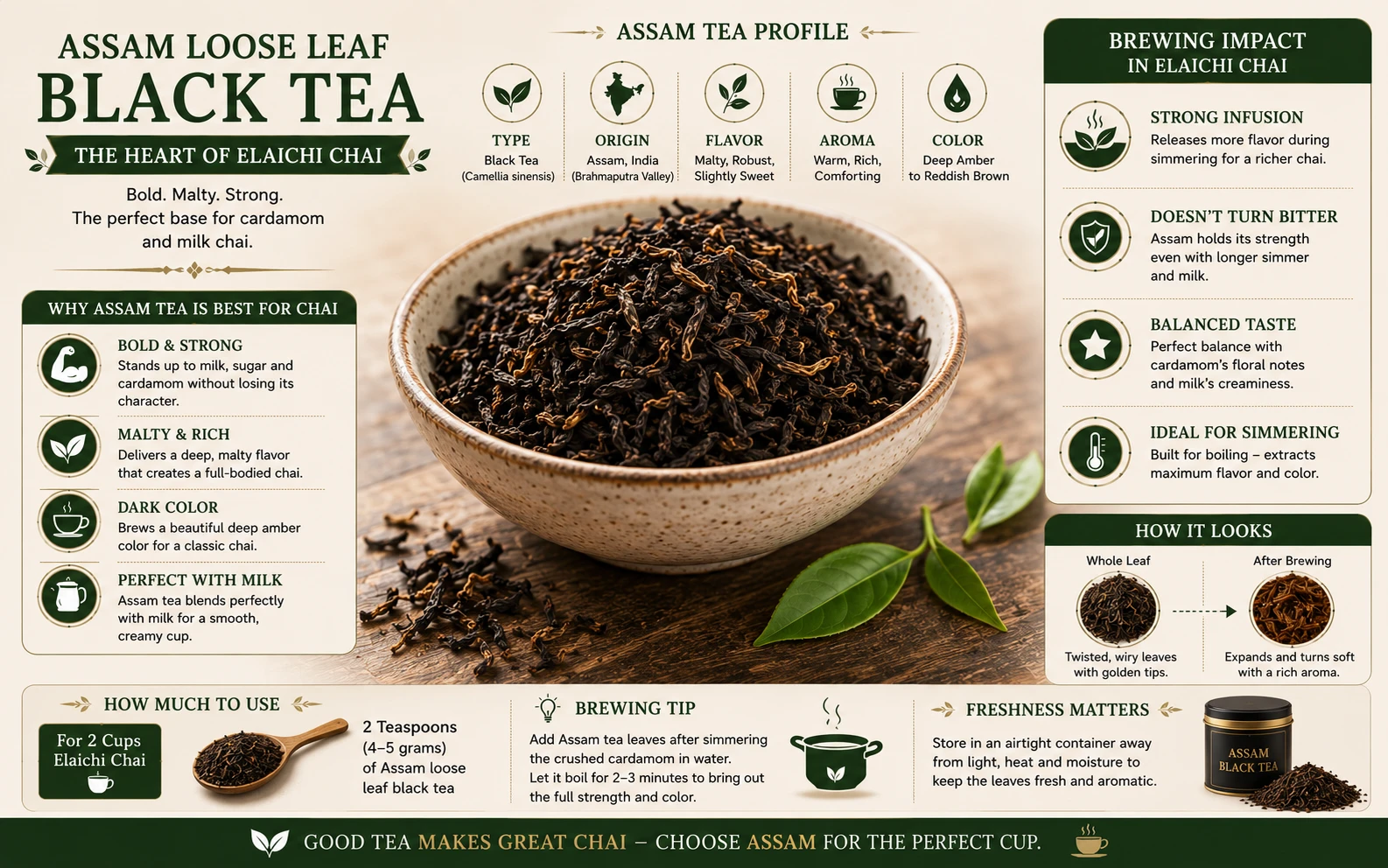
Assam Black Tea
2 tsp loose leaf, or 2 tea bags. Strong Assam stands up best to milk and cardamom.
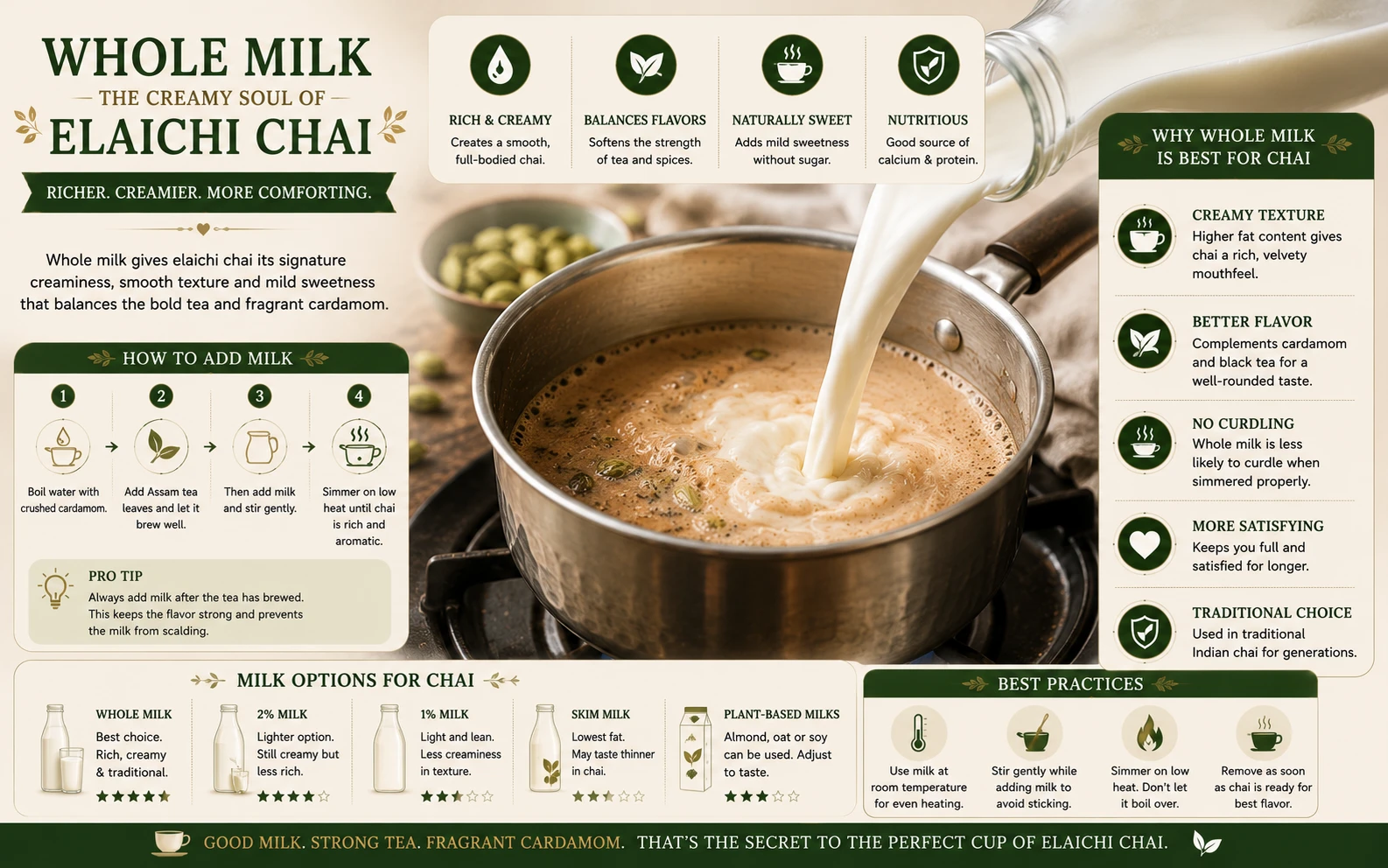
Whole Milk
1 cup (240ml). Full-fat gives the richest body; lower-fat milk works but tastes thinner.
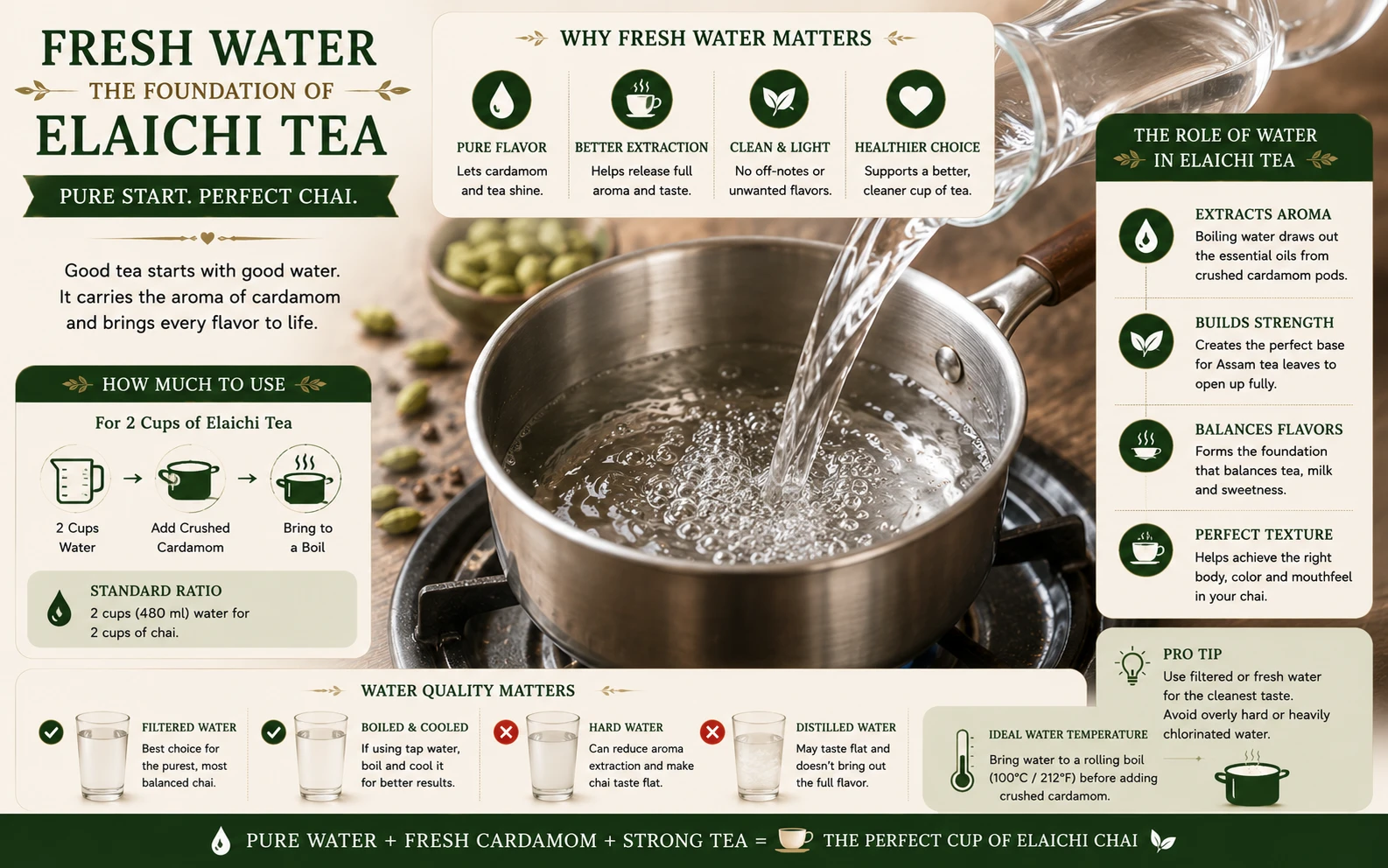
Fresh Water
2 cups (480ml). Filtered water gives a cleaner cup, though tap water works fine.
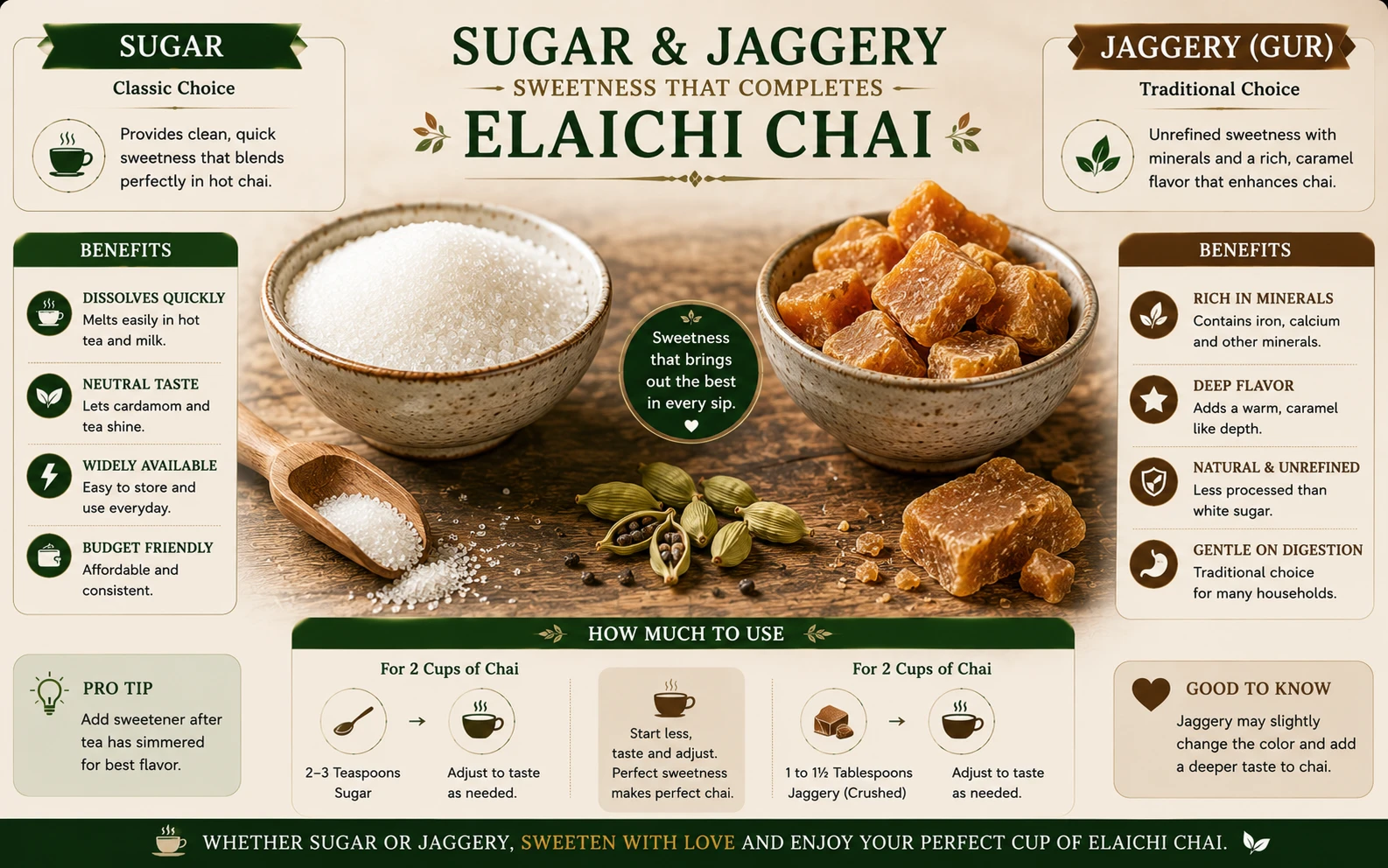
Sugar or Jaggery
2–3 tsp, to taste. Jaggery adds a deeper, slightly caramel note over plain sugar.
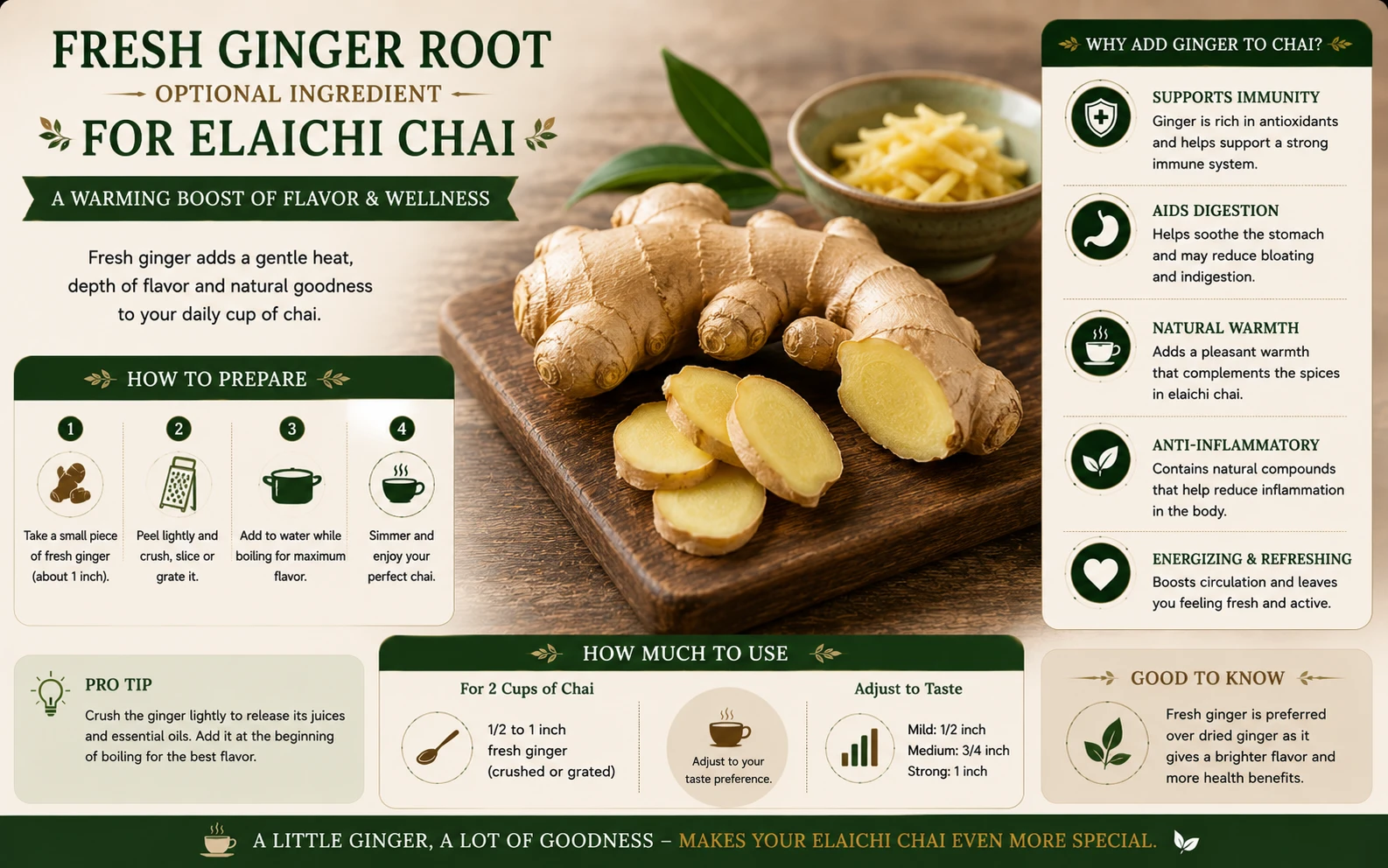
Fresh Ginger (Optional)
½-inch, crushed. Adds warmth without turning this into a full masala chai.
Equipment You’ll Need
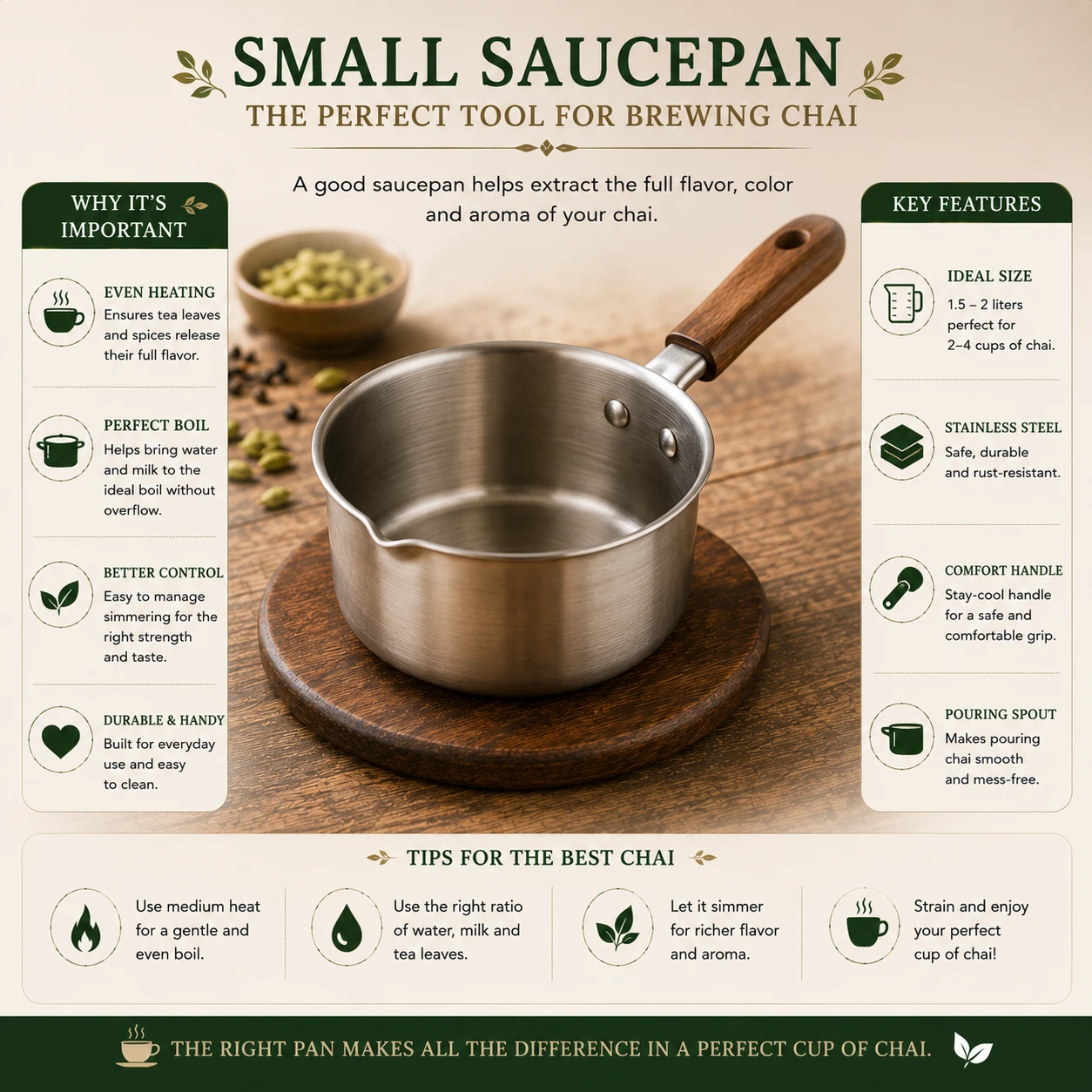

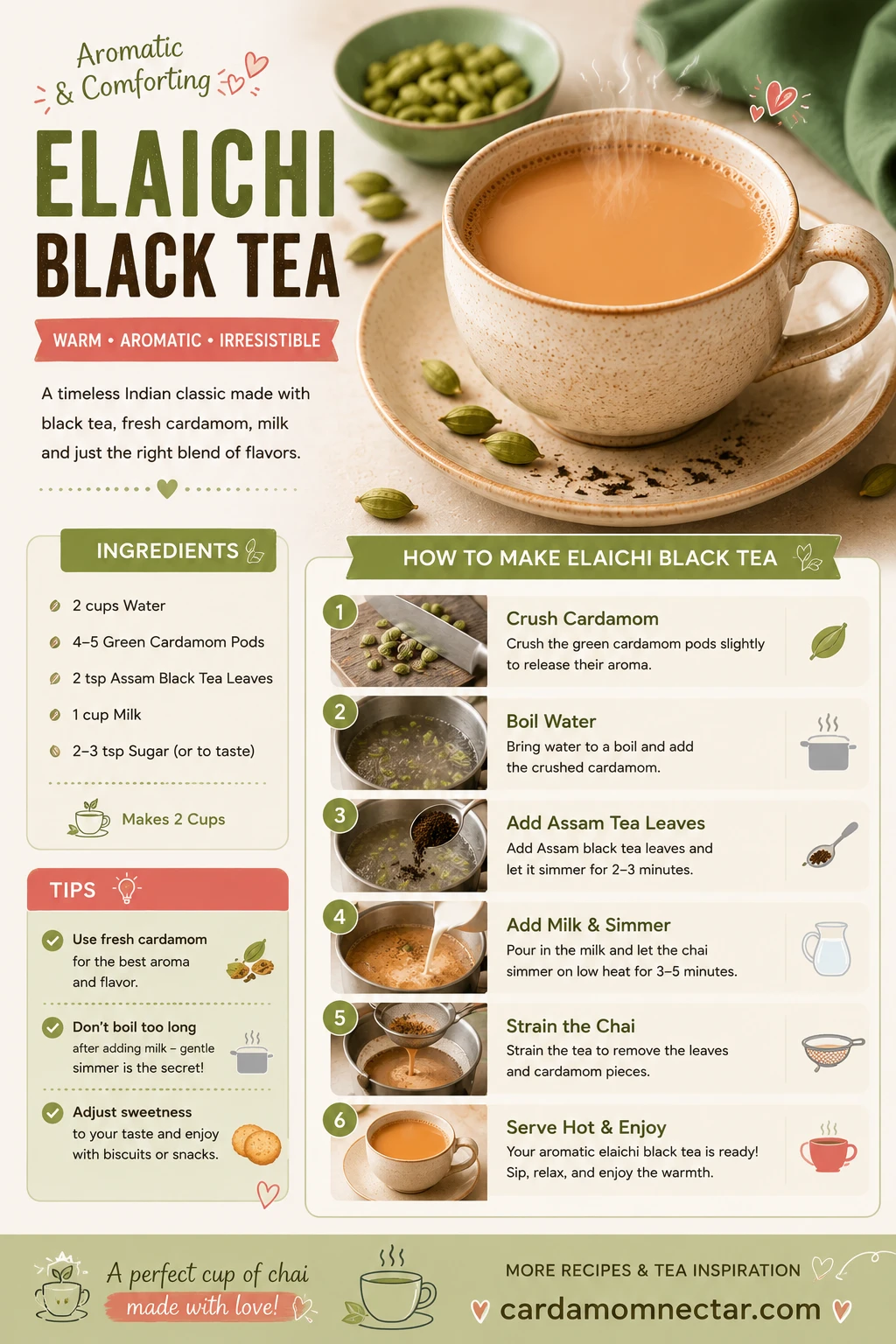
Crushed green cardamom simmered with Assam black tea and milk — the classic cardamom chai.
✓ Tap an ingredient as you prep it — it’ll stay checked when you come back.
- 2 cups / 480ml fresh water
- 6–8 pods green cardamom, crushed
- 2 tsp loose Assam black tea (or 2 tea bags)
- 1 cup / 240ml whole milk
- 2–3 tsp sugar or jaggery, to taste
- ½ inch fresh ginger, crushed (optional)
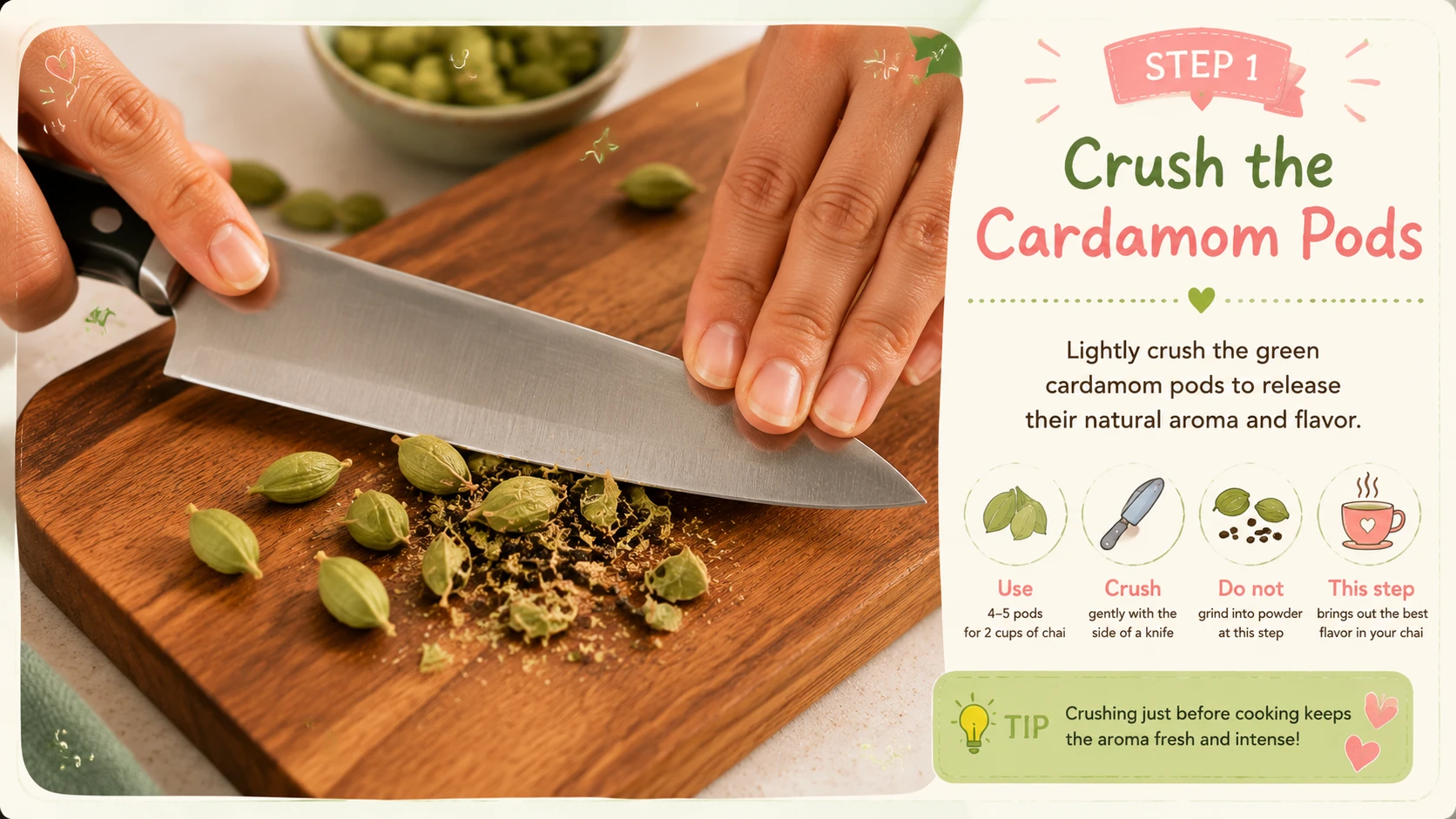
Crush the cardamom pods
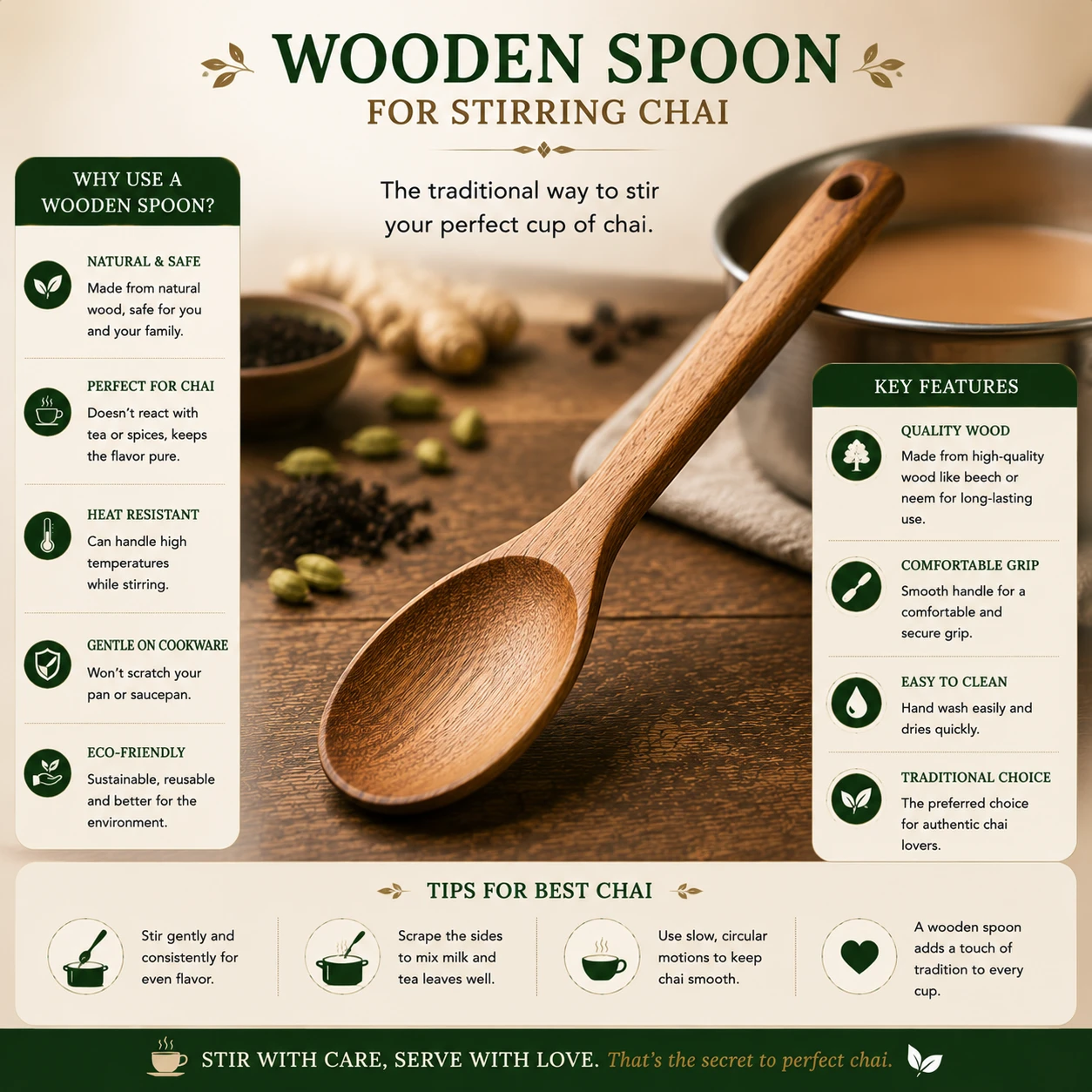
Lay 6–8 green cardamom pods on a cutting board and press down firmly with the flat of a knife, or crack them in a mortar and pestle, until each pod splits open. You want the pods cracked and the seeds exposed, not fully powdered — a coarse crush releases the aromatic oils gradually as it simmers, which gives a cleaner-tasting cup than pre-ground cardamom does.
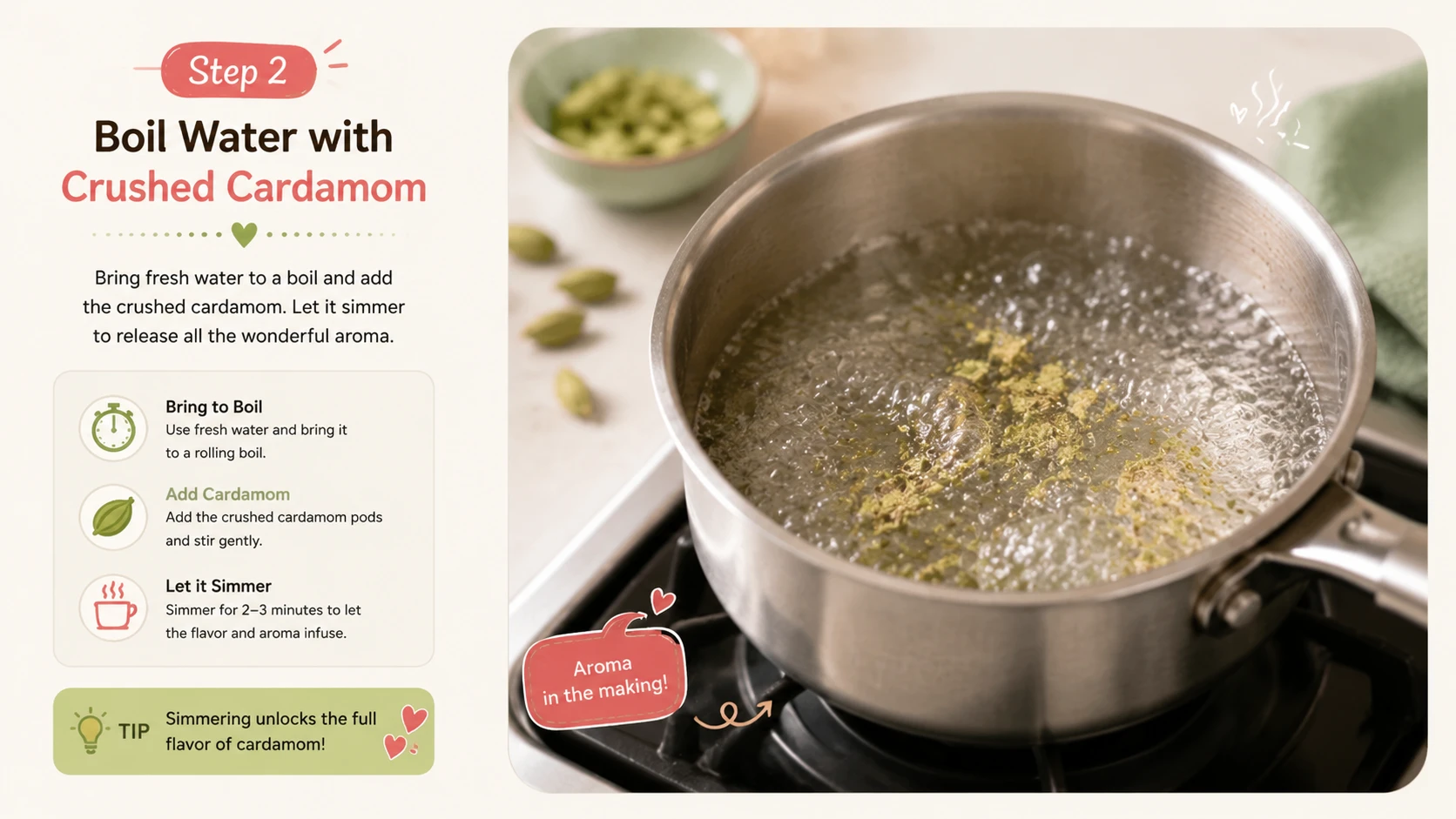
Boil water with the cardamom
Add the crushed cardamom pods (and the ginger, if using) to 2 cups of fresh water in a small saucepan. Bring to a rolling boil, then reduce the heat and simmer for a full 3–4 minutes. This step matters more than any other in the recipe — it’s what actually pulls cardamom’s fat- and water-soluble aromatic compounds out of the pod and into the liquid before the tea ever goes in.
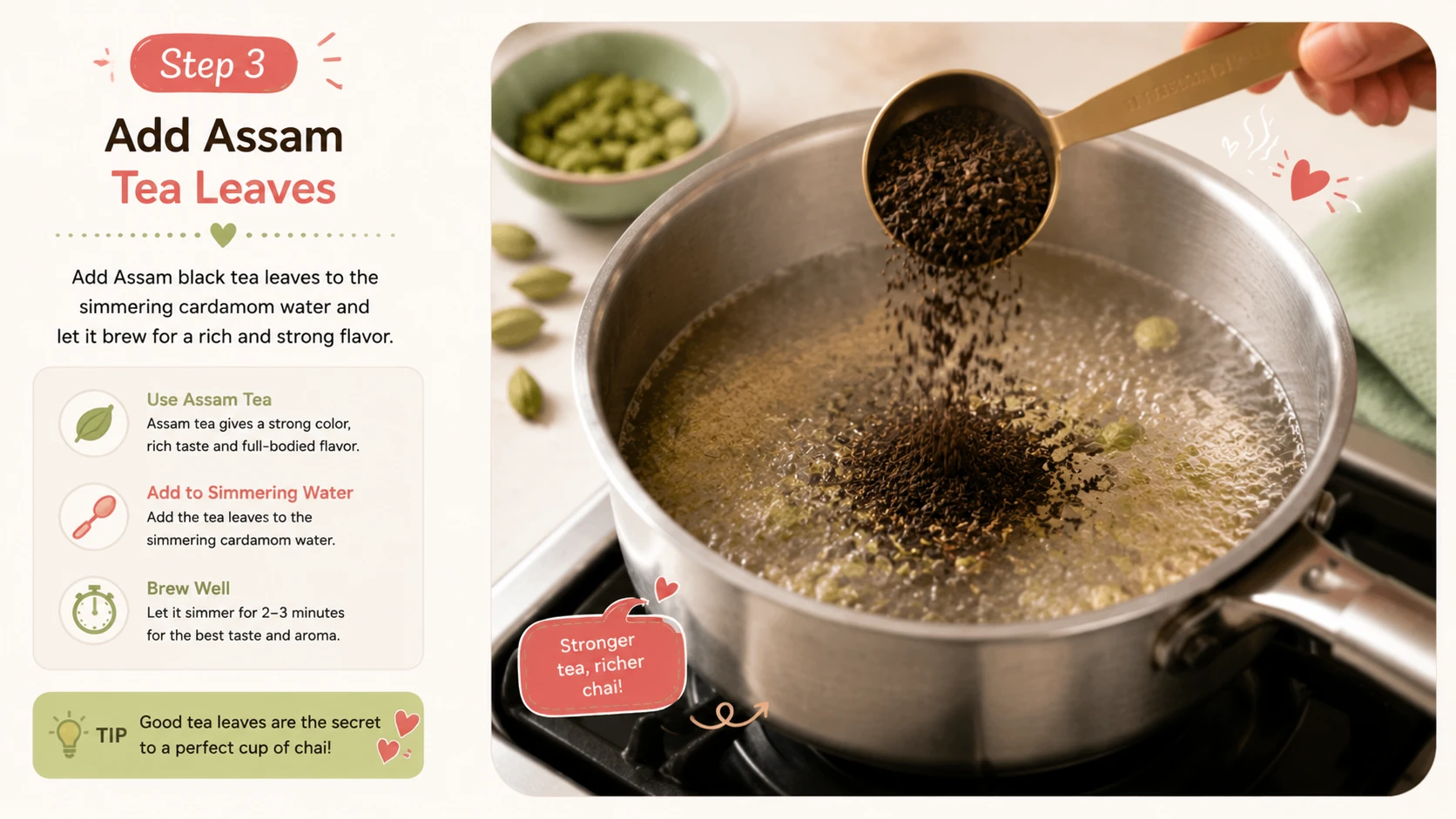
Add the tea leaves
Stir in the loose Assam black tea (or drop in the tea bags) and simmer for 2 more minutes. Watch the water — it should deepen from clear to a strong reddish-brown as the tannins release. If you like your chai extra strong, this is the step to extend by a minute, not the milk step that follows.
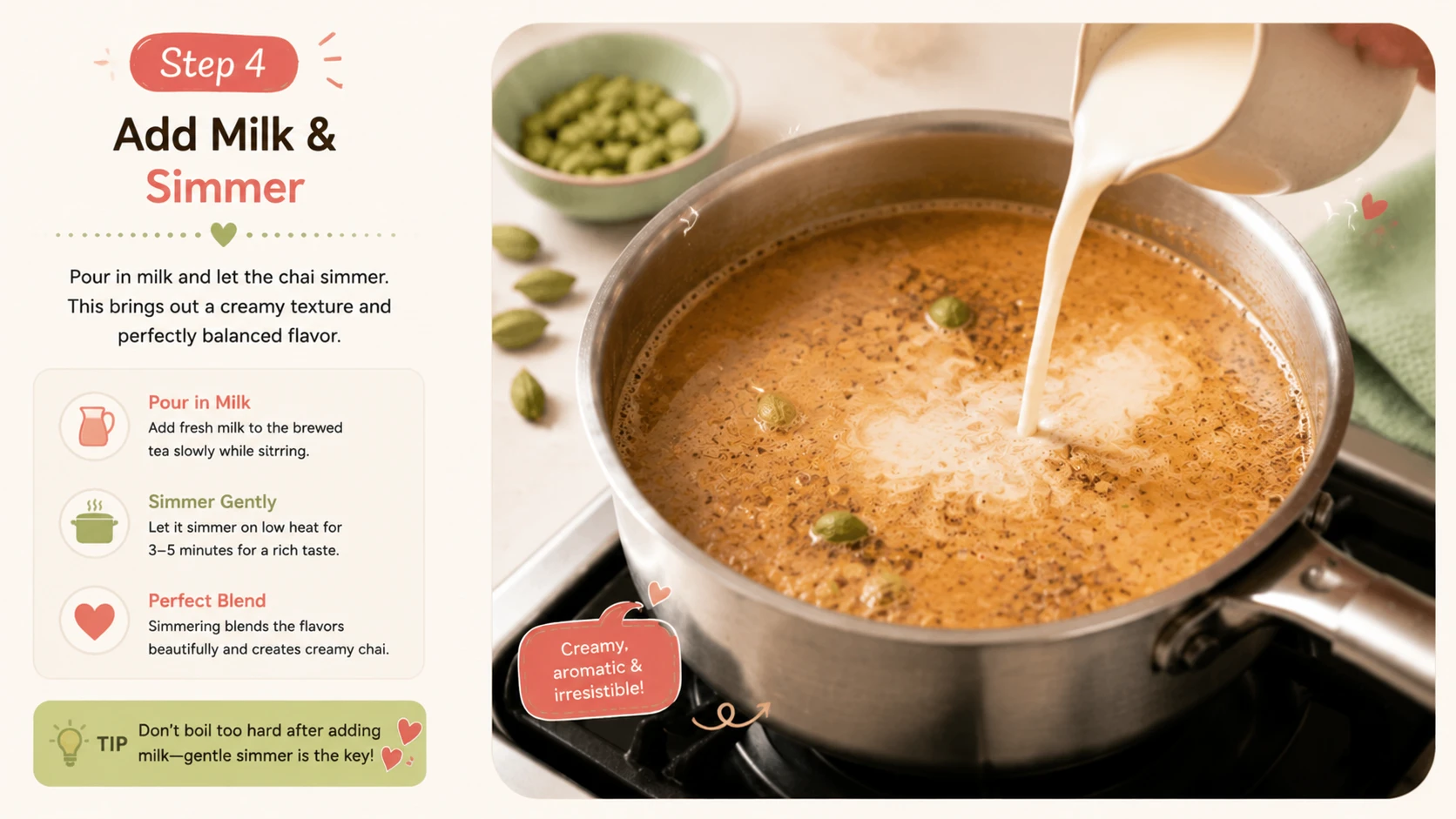
Add milk and simmer
Pour in the whole milk and raise the heat until the chai comes back to a gentle boil, watching closely since milk can boil over quickly. Reduce to a simmer for 2–3 minutes, until the color turns a warm caramel-tan and small bubbles form at the edges. Avoid a hard, extended boil here — it scorches the milk and dulls the cardamom aroma you just worked to build.
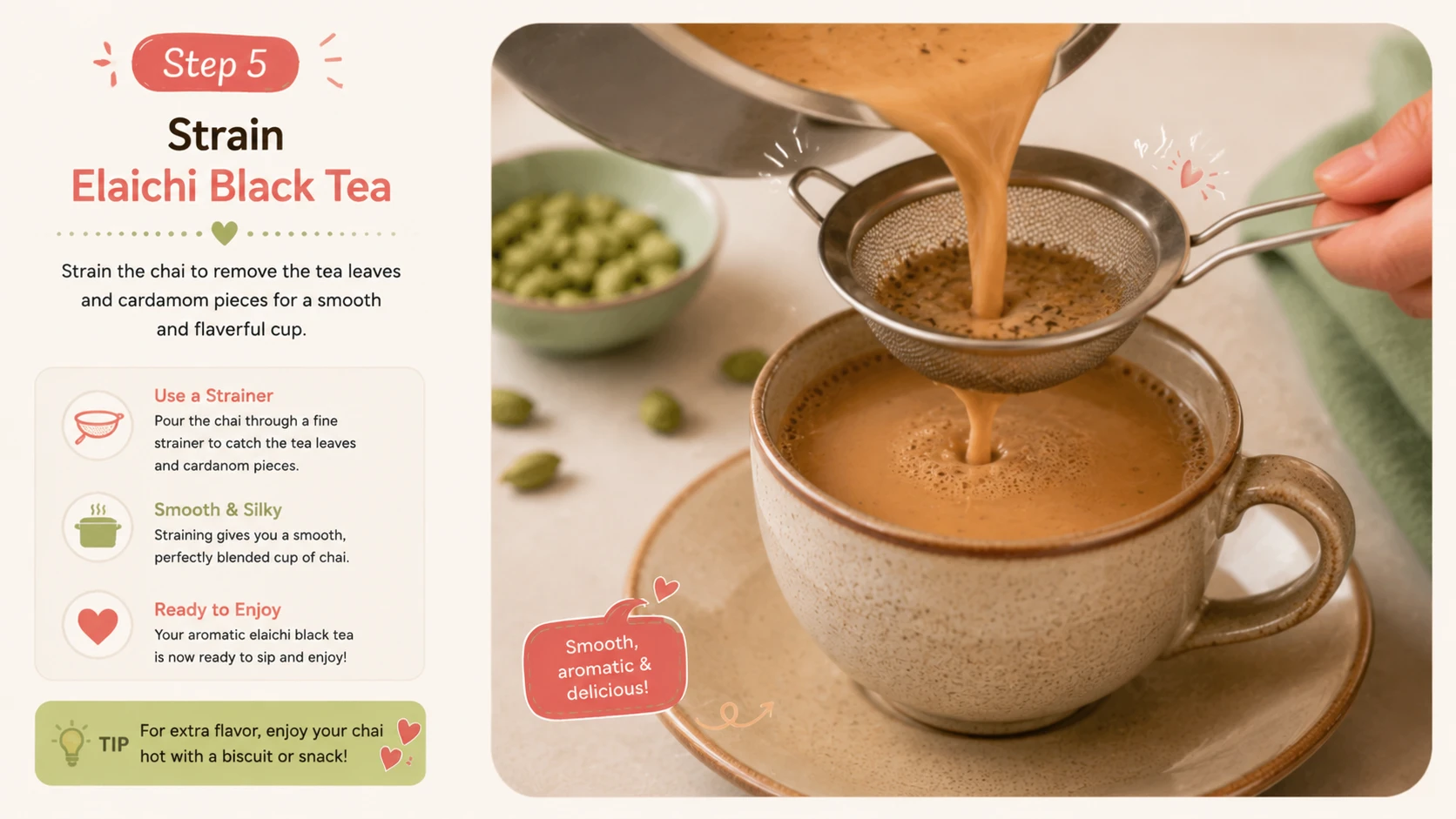
Sweeten and strain
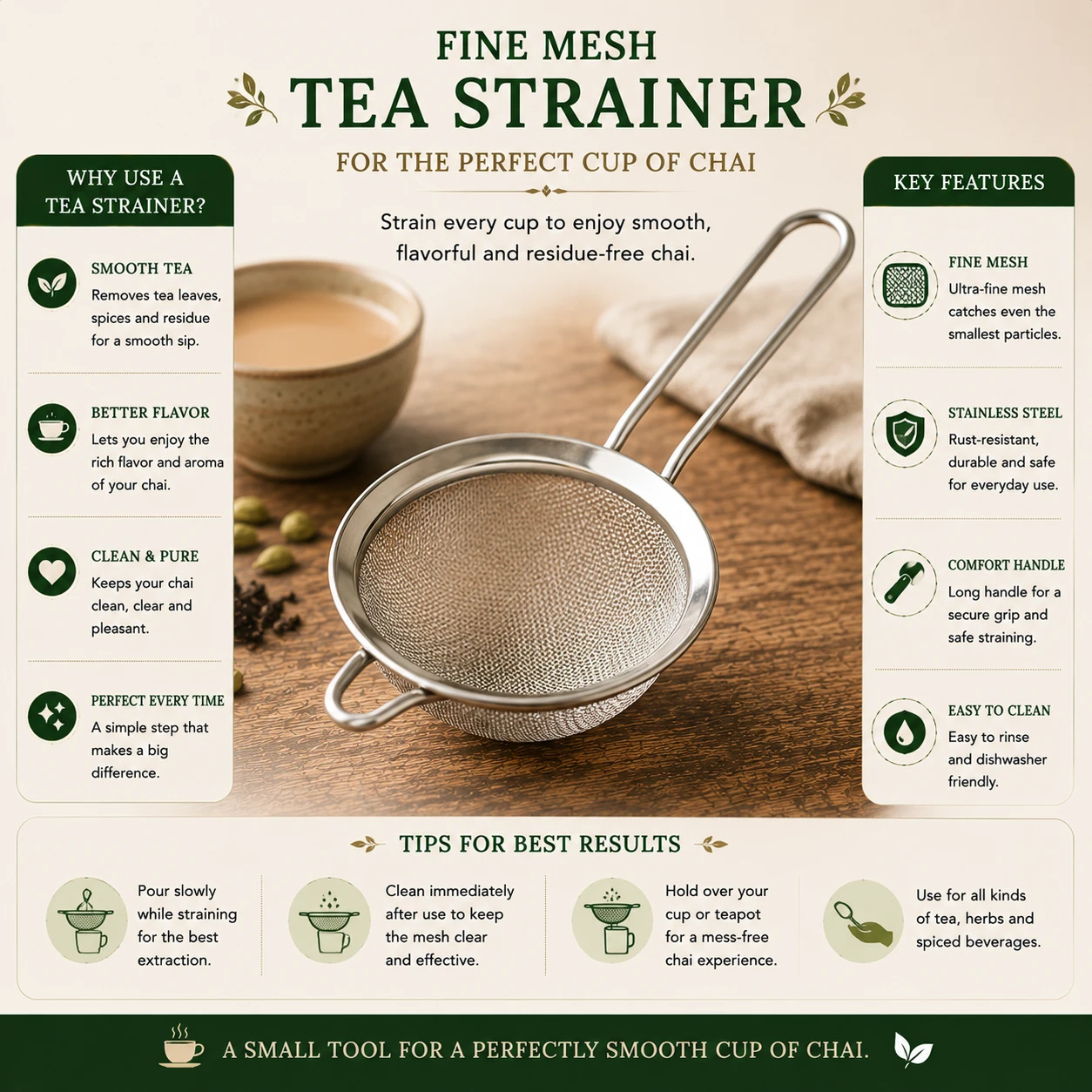
Stir in 2–3 teaspoons of sugar or jaggery, tasting as you go since Assam’s natural bitterness varies by batch. Strain immediately through a fine tea strainer into your cups — don’t let the brewed chai sit over the tea leaves and cardamom pods, since they’ll keep steeping and can turn the cup bitter within a few extra minutes.
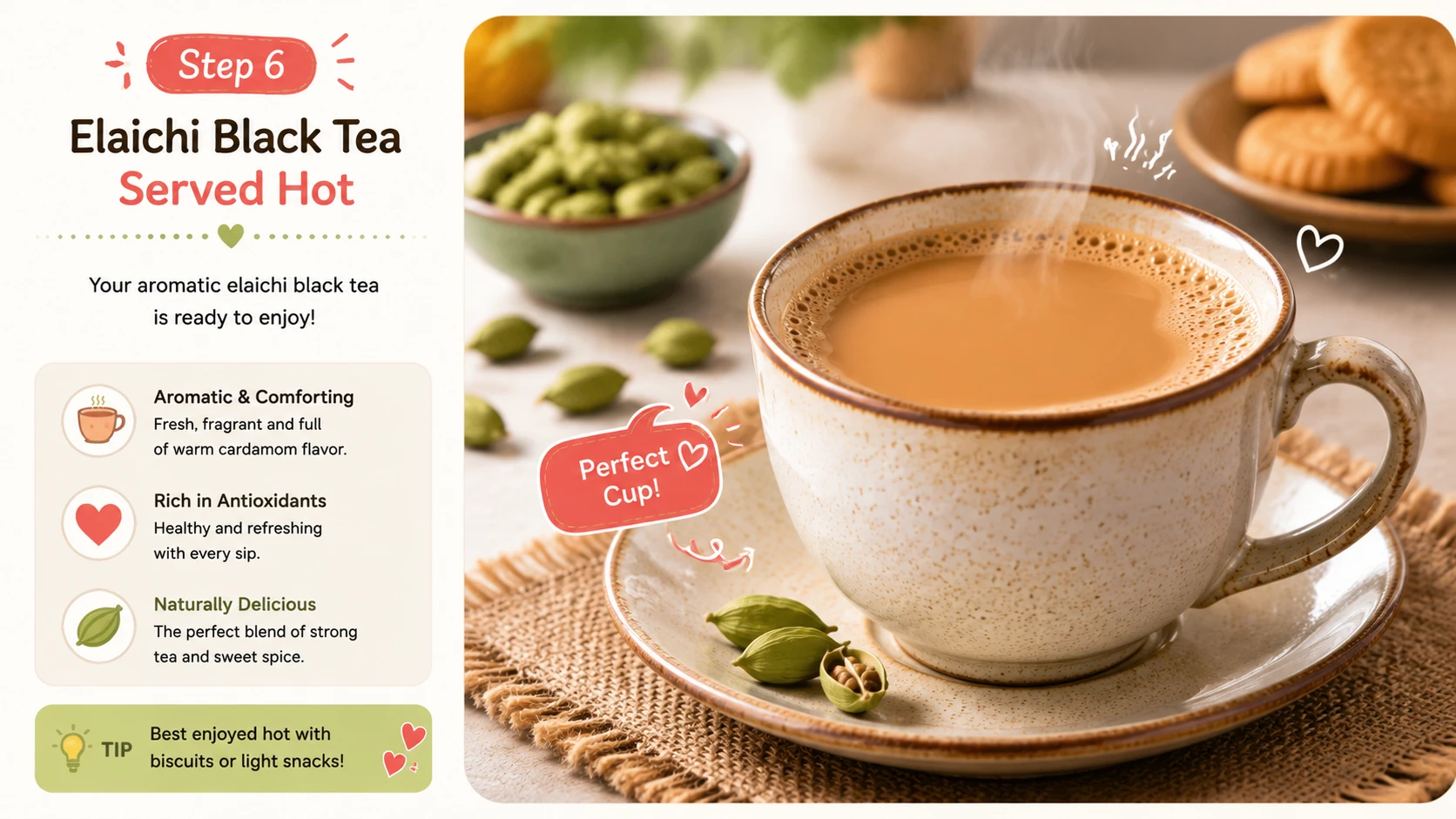
Serve hot
Serve immediately while hot — elaichi chai is meant to be drunk fresh within a few minutes of straining, while the aroma is still at its peak. If you’re serving a crowd, keep the pan covered and warm on the lowest heat setting rather than reheating individual cups later.
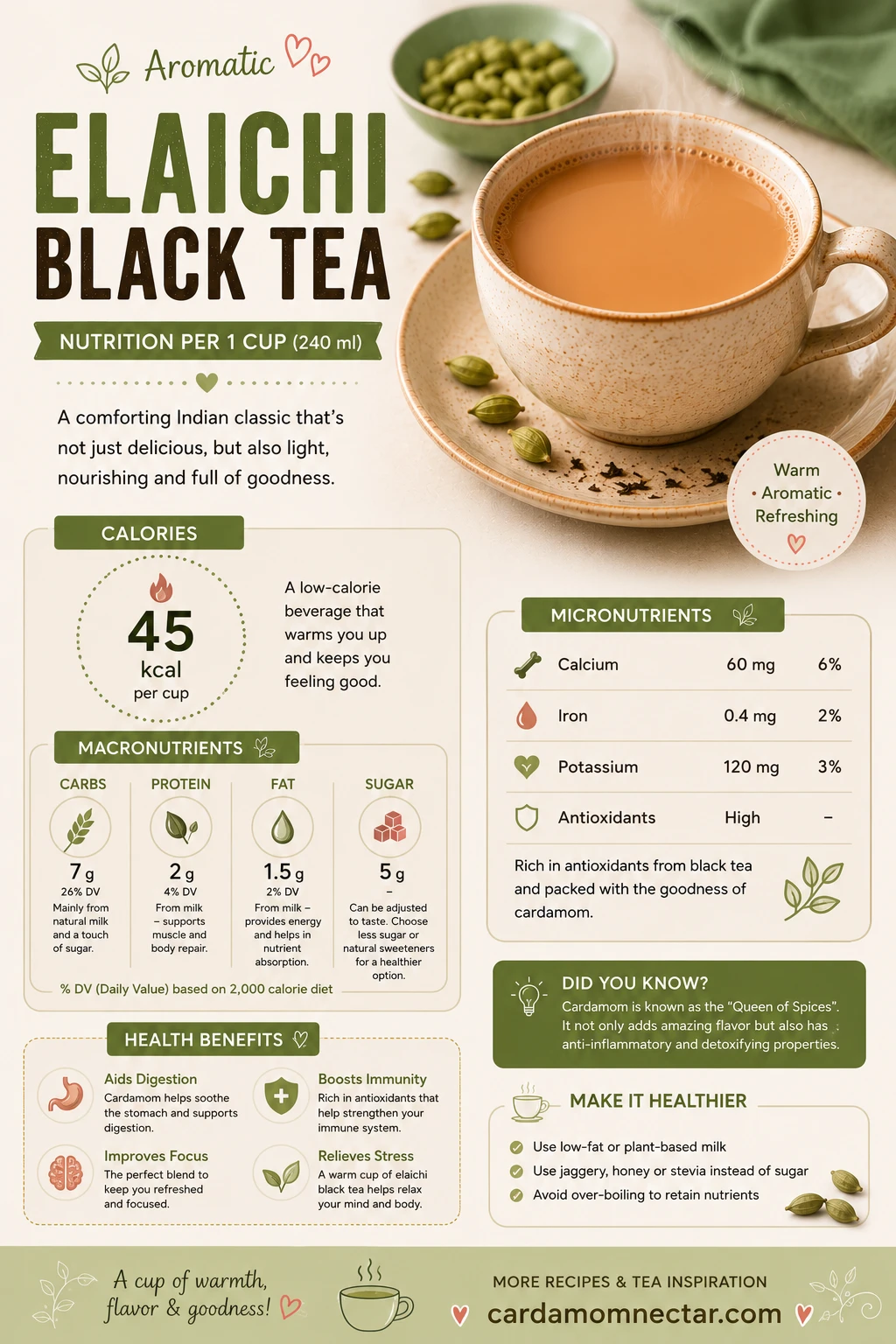
Values calculated per cup, 2 cups per batch, using whole milk and granulated sugar. Figures are estimates and will vary with exact ingredients used.
What Readers Are Saying
“Simmering the cardamom for the full 3–4 minutes before adding the tea makes a huge difference — this tastes exactly like my nani’s chai.”
“First time making elaichi tea from scratch instead of a tea bag. Crushing the pods fresh instead of using pre-ground cardamom really was worth it.”
“Good classic recipe. I used two tea bags instead of loose Assam and it still came out strong.”
8 Pro Tips for Perfect Elaichi Black Tea
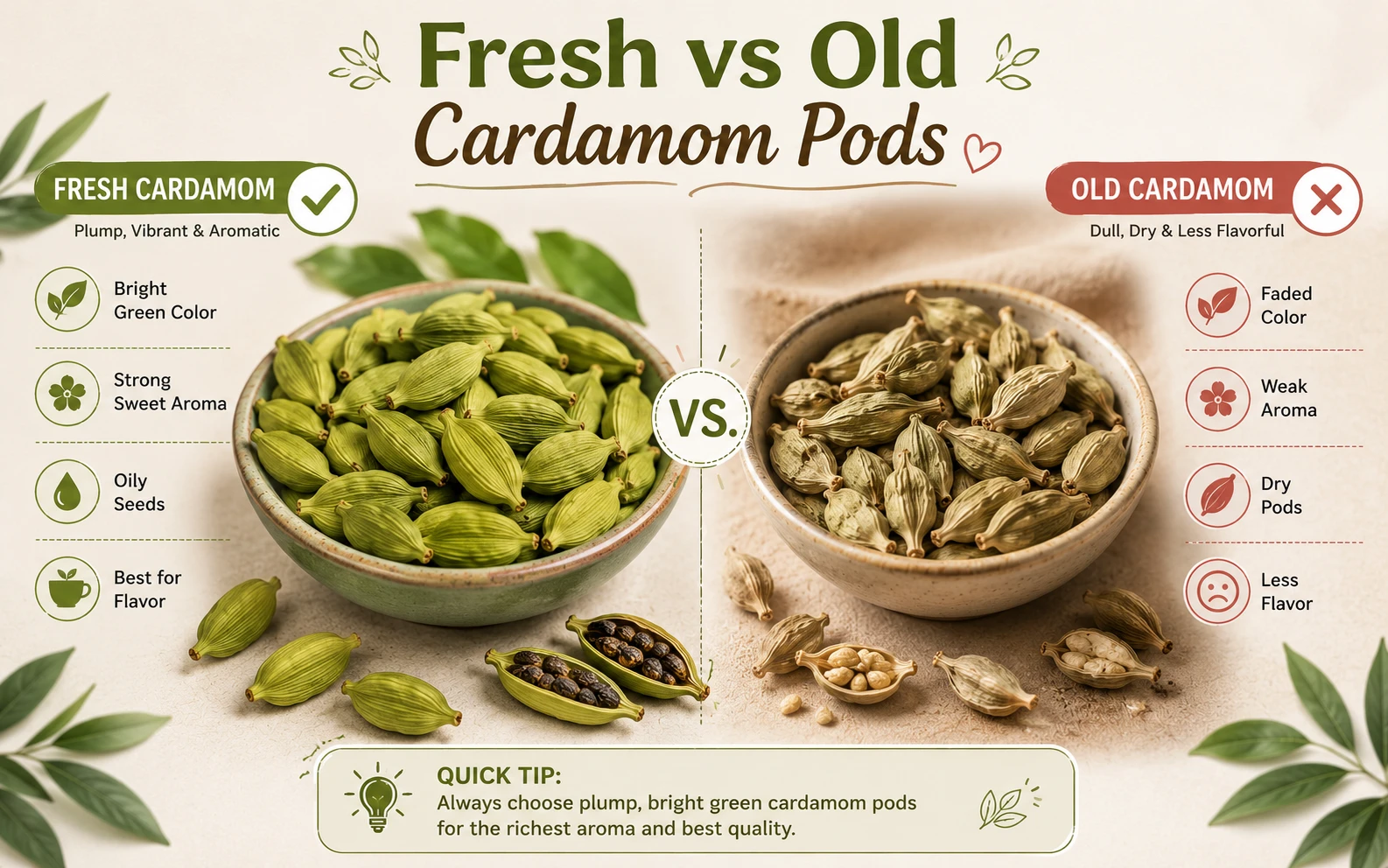
1. Buy Plump, Fresh Pods
Look for green cardamom pods that are plump and slightly sticky, not dry and papery. Dry pods have already lost much of their aromatic oil and will give a noticeably flatter cup no matter how long you simmer them.
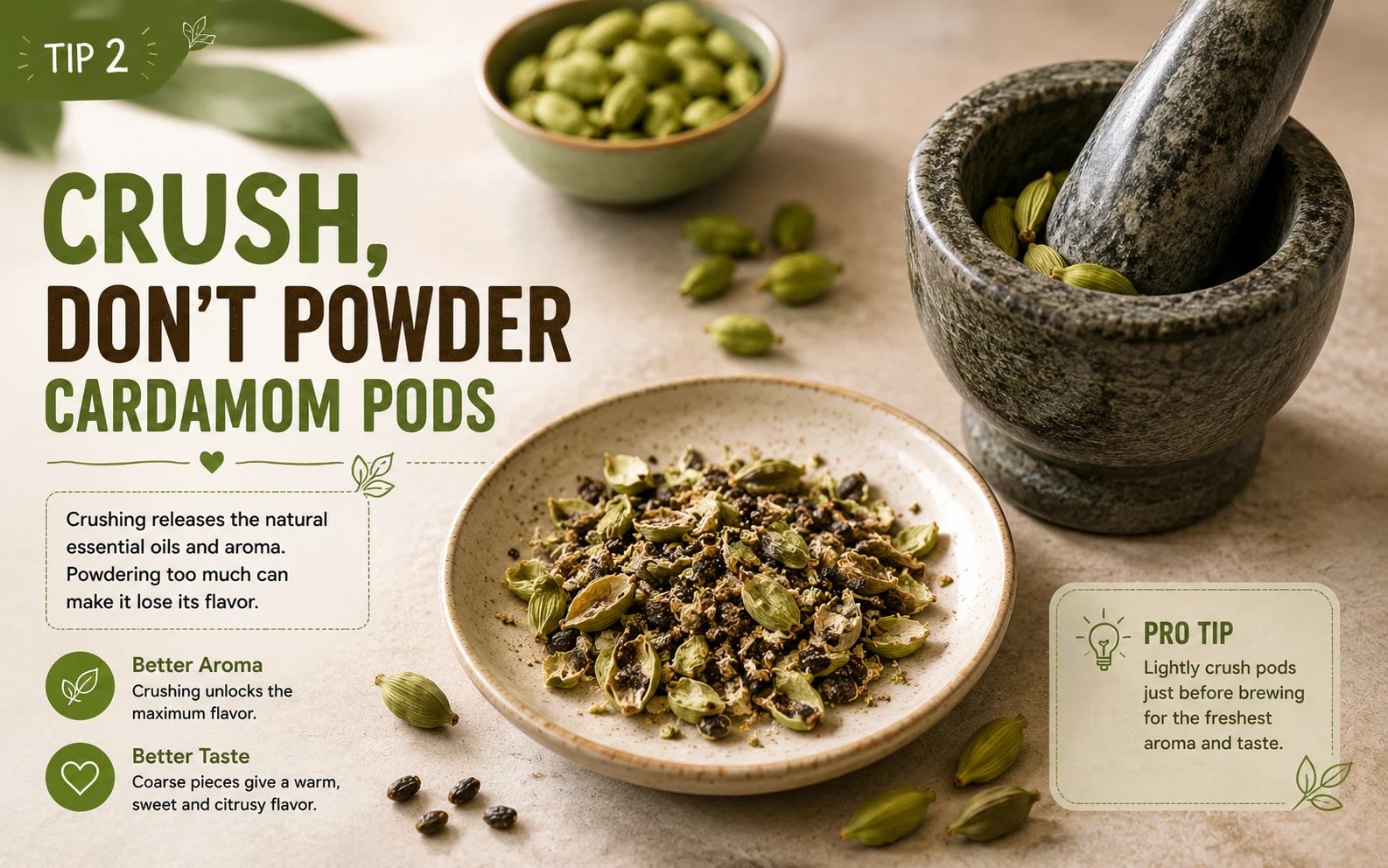
2. Crush, Don’t Powder
A rough crack from a mortar and pestle or the flat of a knife is enough. Fully powdering the pods releases the oils too fast and leaves gritty sediment in the cup.
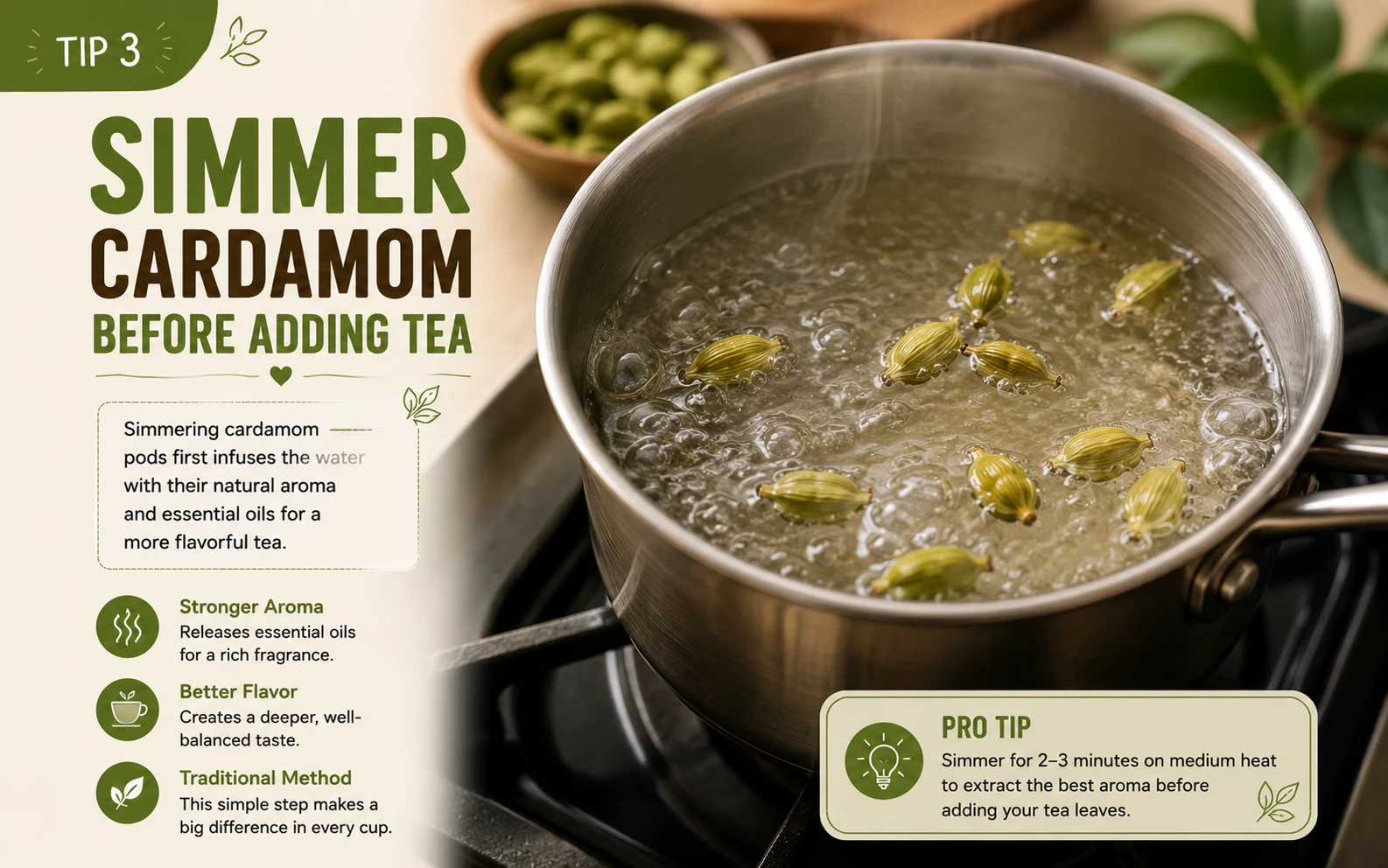
3. Never Skip the Head Start
Cardamom needs its own 3–4 minutes in plain simmering water before the tea goes in. Adding everything at once is the single most common reason home-brewed elaichi tea tastes weak.
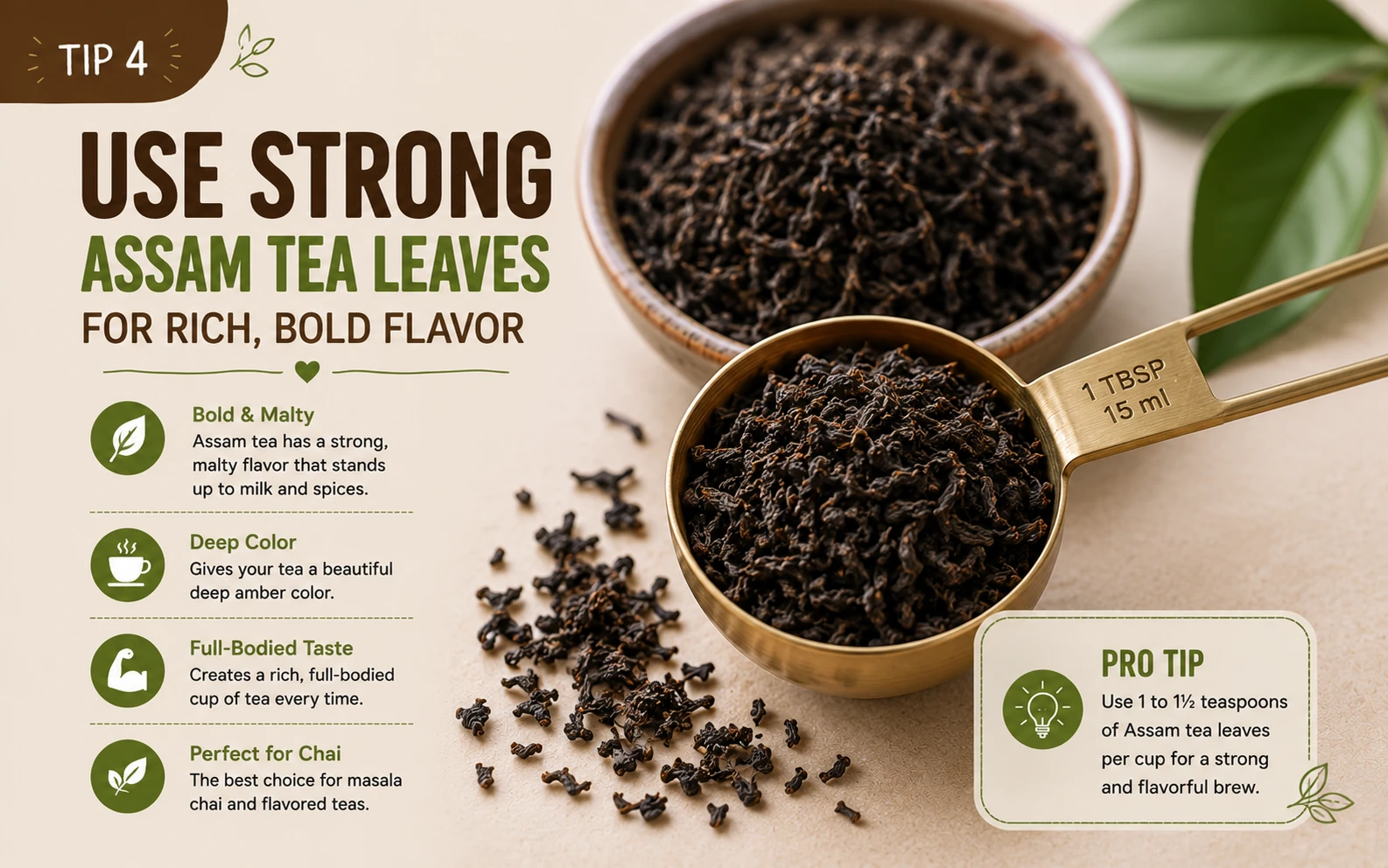
4. Choose a Strong Black Tea
Assam is the traditional base because it’s malty and robust enough to stand up to milk without disappearing. A delicate tea like Darjeeling gets lost in this recipe.
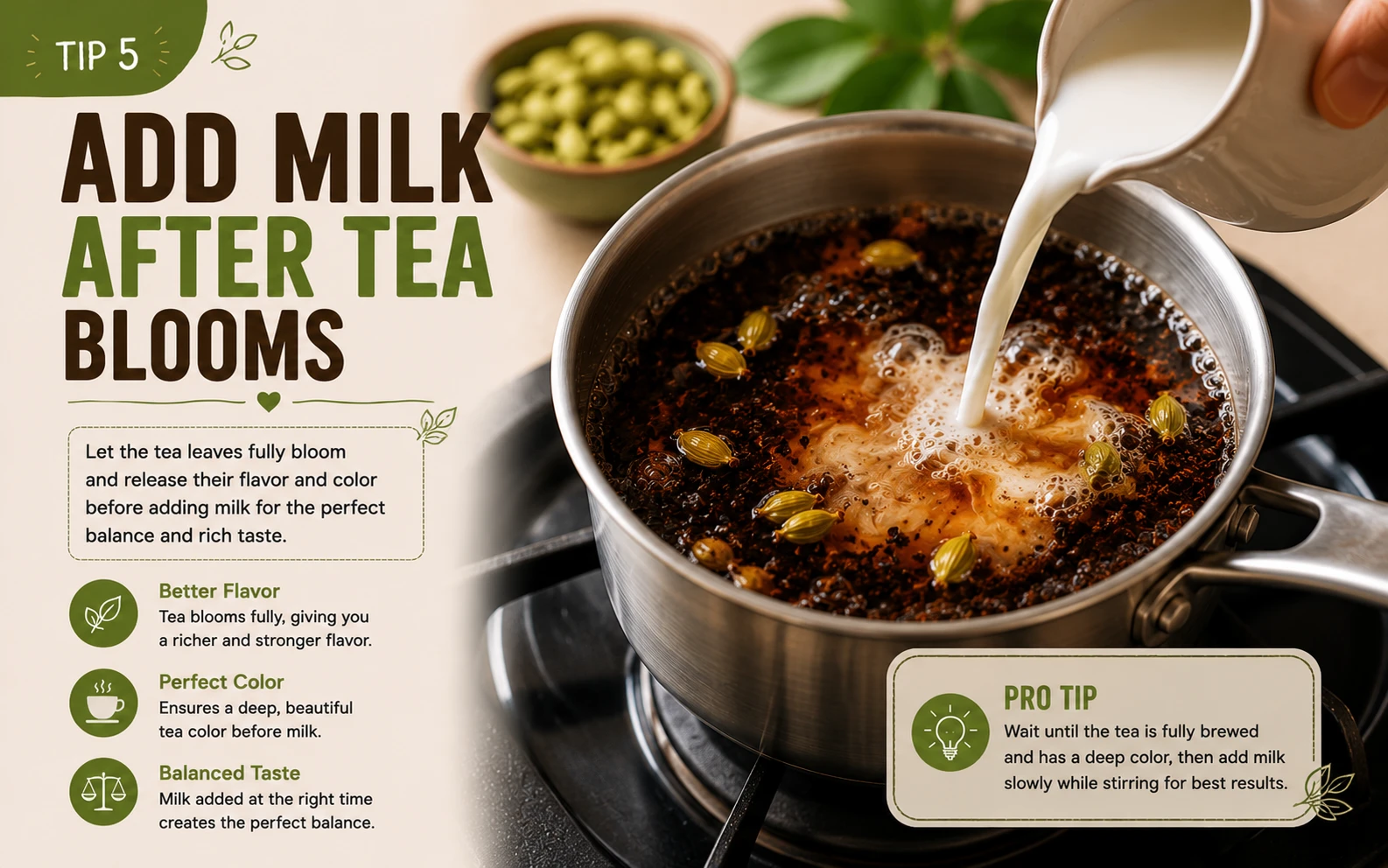
5. Wait for the Tea to Bloom
Add milk only once the water has turned a deep reddish-brown from the tea. Adding it too early mutes both the tea’s strength and the cardamom’s aroma.
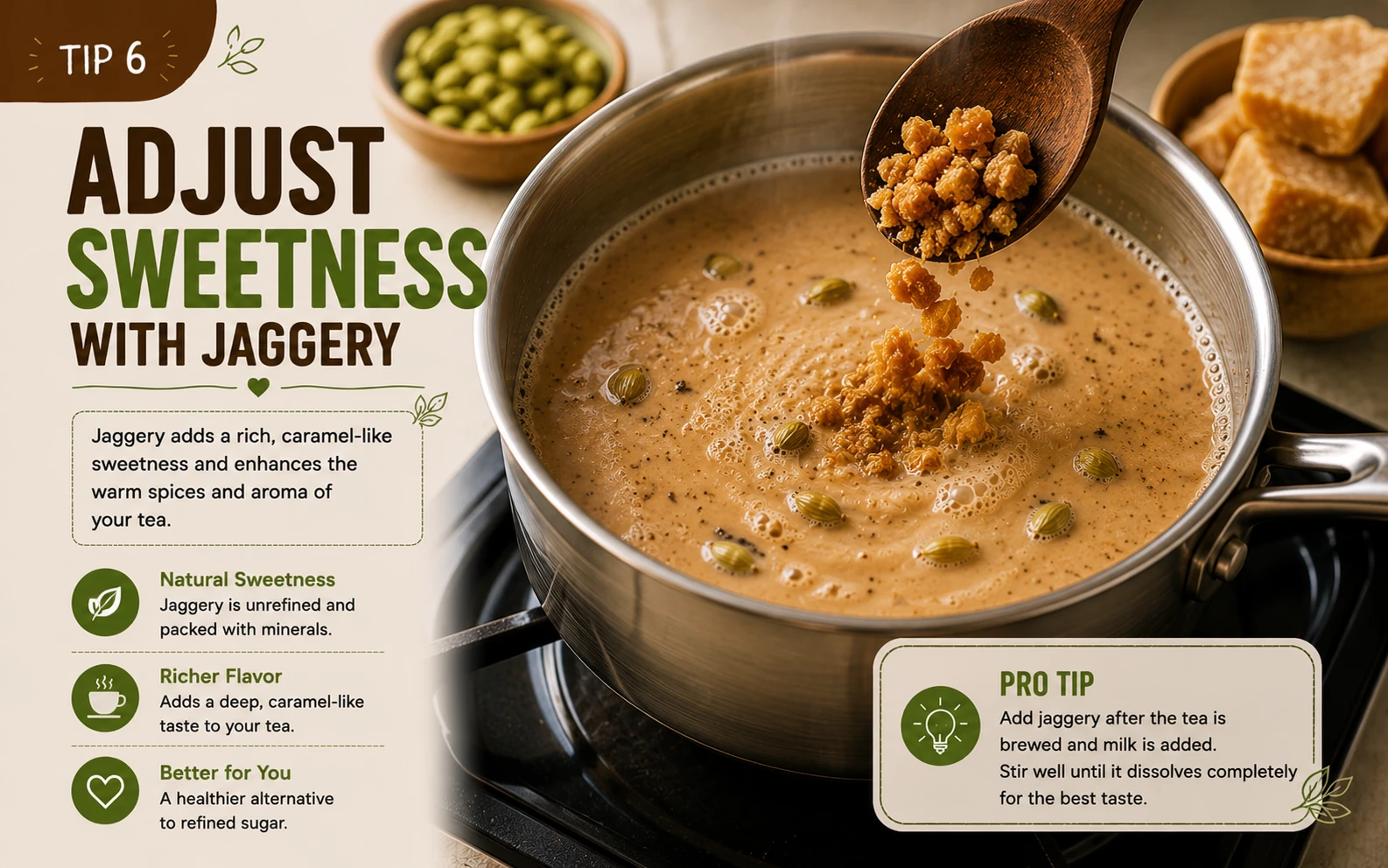
6. Try Jaggery Instead of Sugar
Jaggery dissolves a little slower than white sugar but adds a warm, faintly caramel note that pairs especially well with cardamom’s floral profile.

7. Double the Batch for a Thermos
This recipe scales cleanly — double every ingredient for a 4-cup batch and pour straight into a thermos to keep it hot for a few hours while it’s fresh.
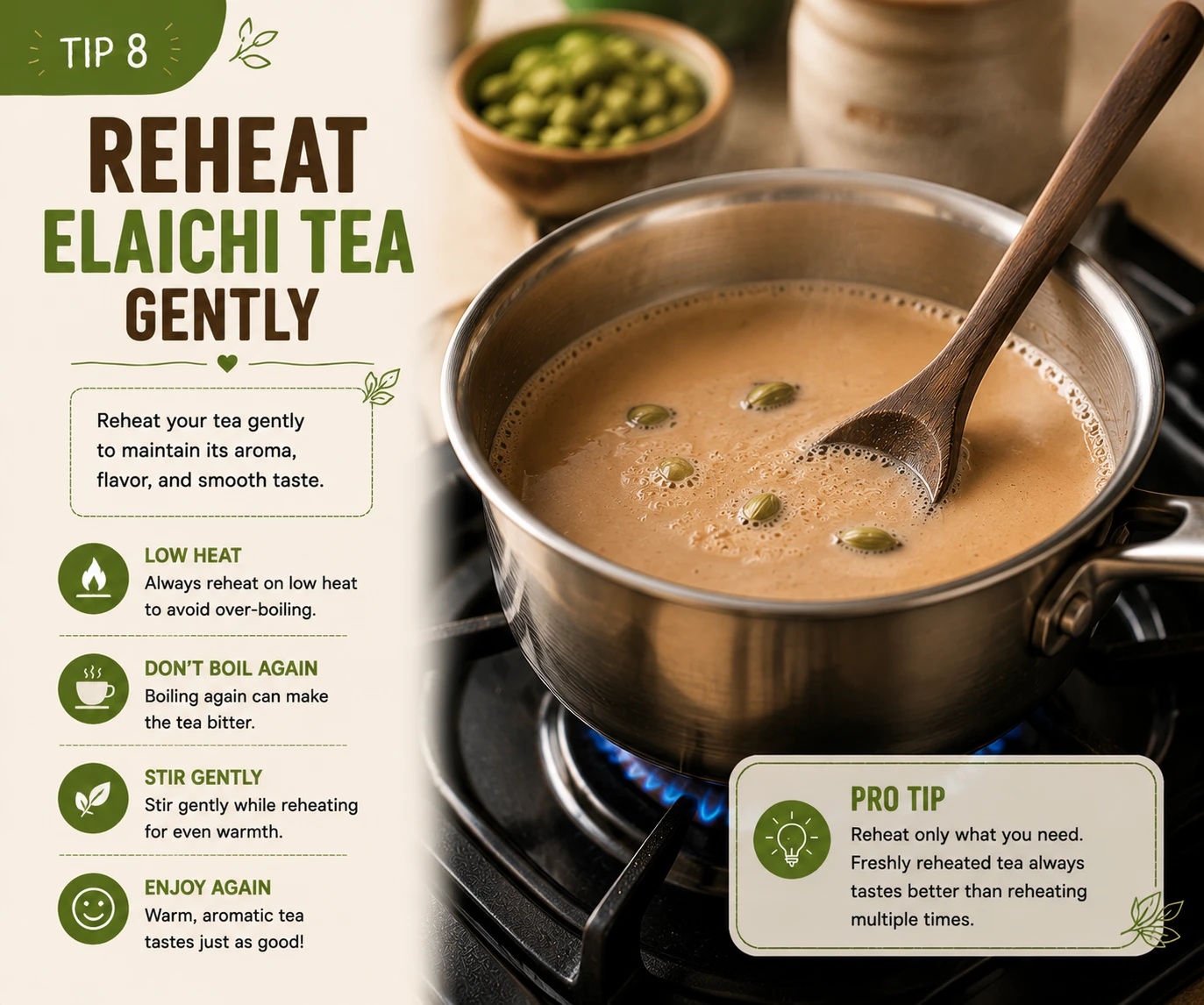
8. Reheat Gently, Never Re-Boil
If you have leftovers, warm them slowly over low heat rather than bringing them back to a boil — a hard reboil scorches the milk a second time and turns the cup bitter.

Masala Chai
Cardamom joined by ginger, cinnamon, cloves, and black pepper.
View recipe →
Karak Chai
Strong, evaporated-milk chai with cardamom and a thread of saffron.
View recipe →
Cardamom Tea Hub
All variations, benefits, and the caffeine guide in one place.
See the hub →More Cardamom Tea Recipes
Elaichi black tea is the classic starting point. Here’s every other variation in the Cardamom Tea collection, plus the full guide.
Masala Chai
Cardamom joined by ginger, cinnamon, cloves, and black pepper.
View recipe →Karak Chai
Strong, evaporated-milk chai with cardamom and a thread of saffron.
View recipe →
Honey Lemon Tea
A soothing herbal cardamom brew with honey and fresh lemon.
View recipe →
Cinnamon Honey Tea
Cardamom and cinnamon simmered together, sweetened with honey.
View recipe →
Cardamom Green Tea
A lighter, milk-free pairing of cardamom with green tea.
View recipe →
Iced Cardamom Tea
The same cardamom brew, chilled and served over ice.
View recipe →Cardamom Tea Hub
All variations, benefits, and the caffeine guide in one place.
See the hub →Ingredient Substitutions
| Ingredient | Best Substitute | Impact |
|---|---|---|
| Whole cardamom pods | ¾ tsp freshly ground cardamom (2-cup batch) | Slightly less clean; grind fresh, not from an old jar |
| Assam black tea | Any strong CTC black tea or 2 English Breakfast bags | Very close result — Assam is preferred but not essential |
| Whole milk | Oat milk or full-fat coconut milk | Slightly thinner body; coconut milk adds its own sweetness |
| Sugar | Jaggery, honey (off heat), or a sugar substitute | Jaggery deepens flavor; add honey only after straining |
| Caffeinated black tea | Decaf Assam or rooibos | Removes nearly all caffeine while keeping the cardamom flavor |
How to Store Elaichi Black Tea
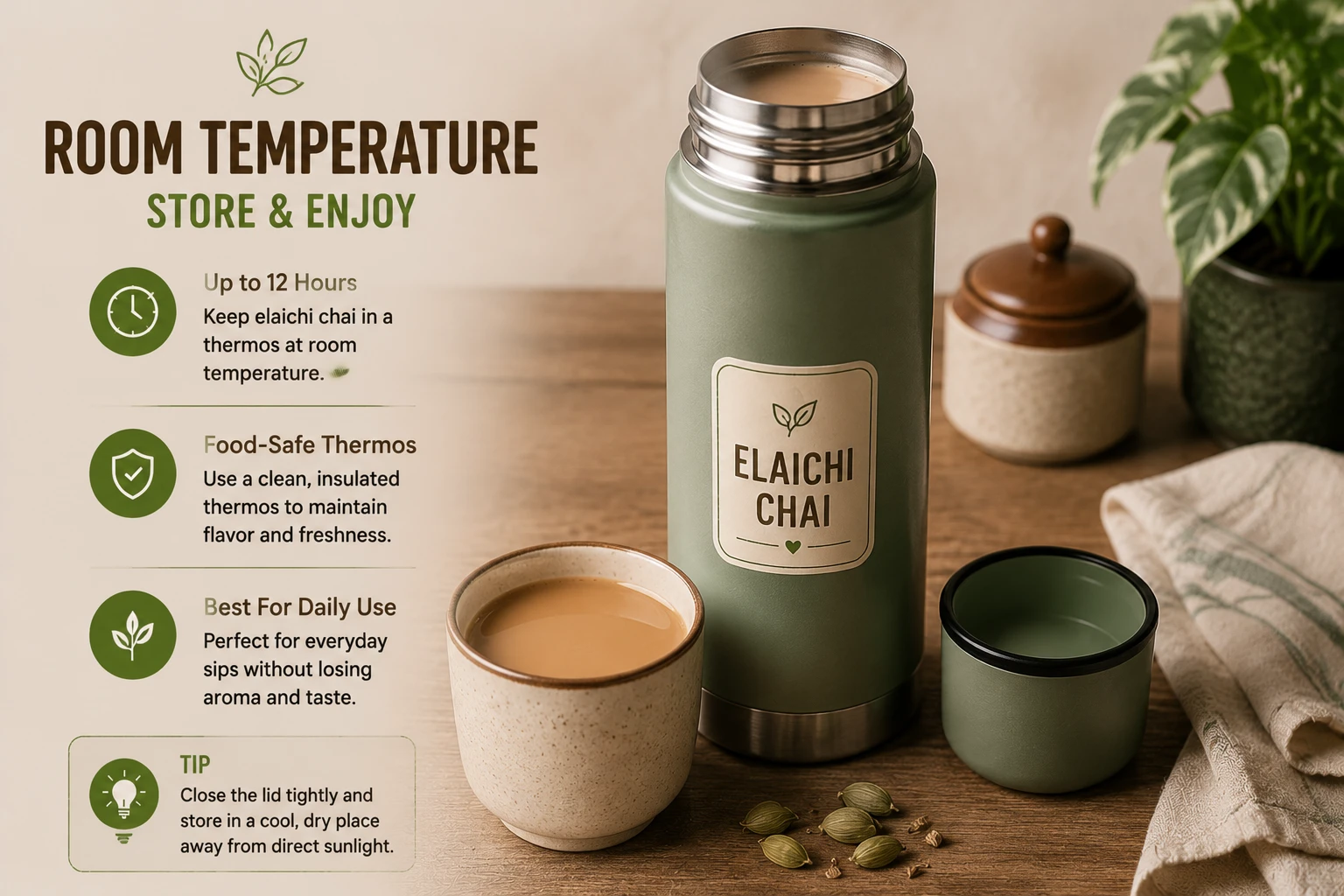
🌡️ Thermos — Same Day
Pour hot into a preheated thermos to keep it warm for 3–4 hours. Not recommended for longer than a day since milk-based tea sours.
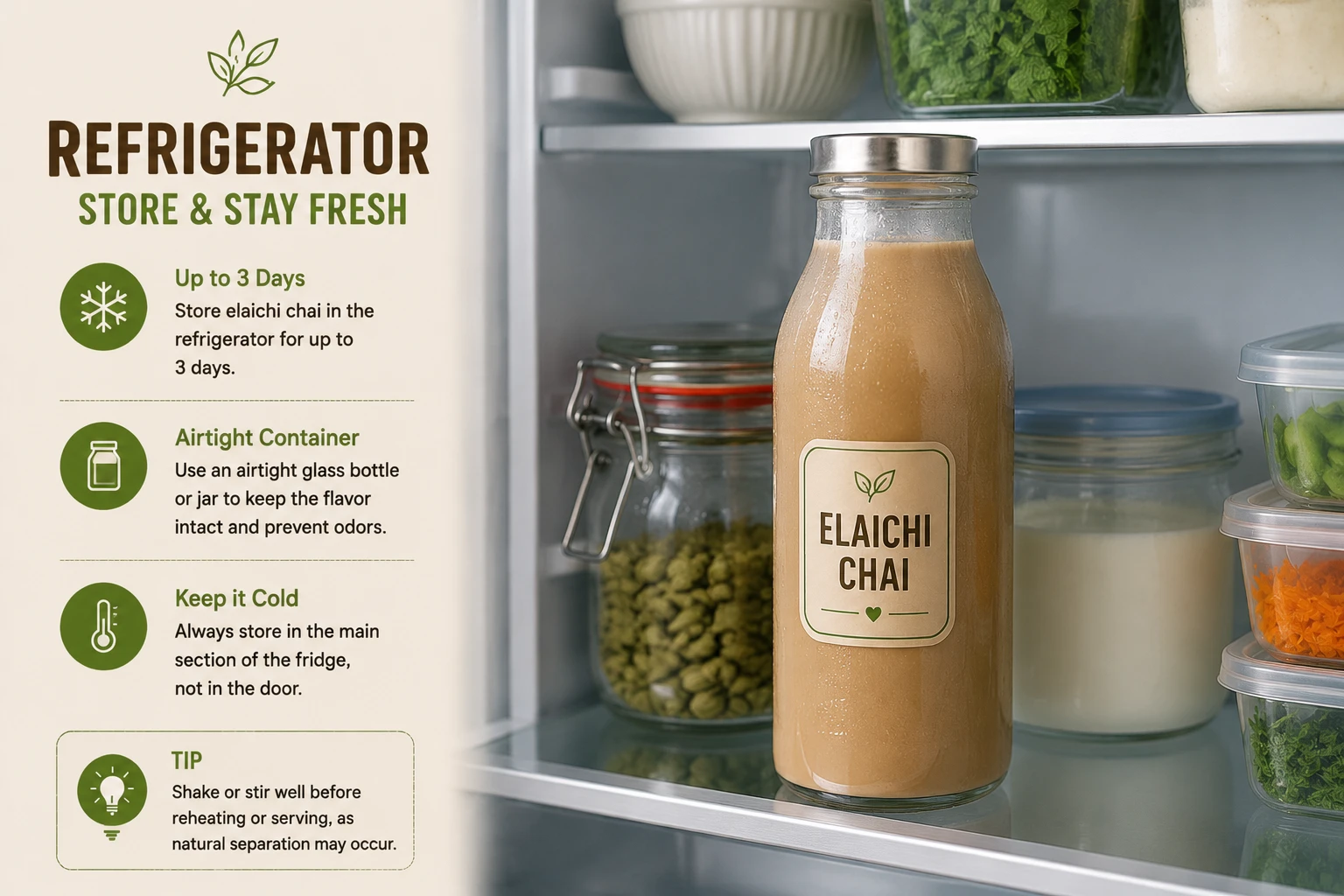
❄️ Refrigerator — 2 Days
Store in a sealed jar and reheat gently on the stove — never in a hard boil, which scorches the milk.
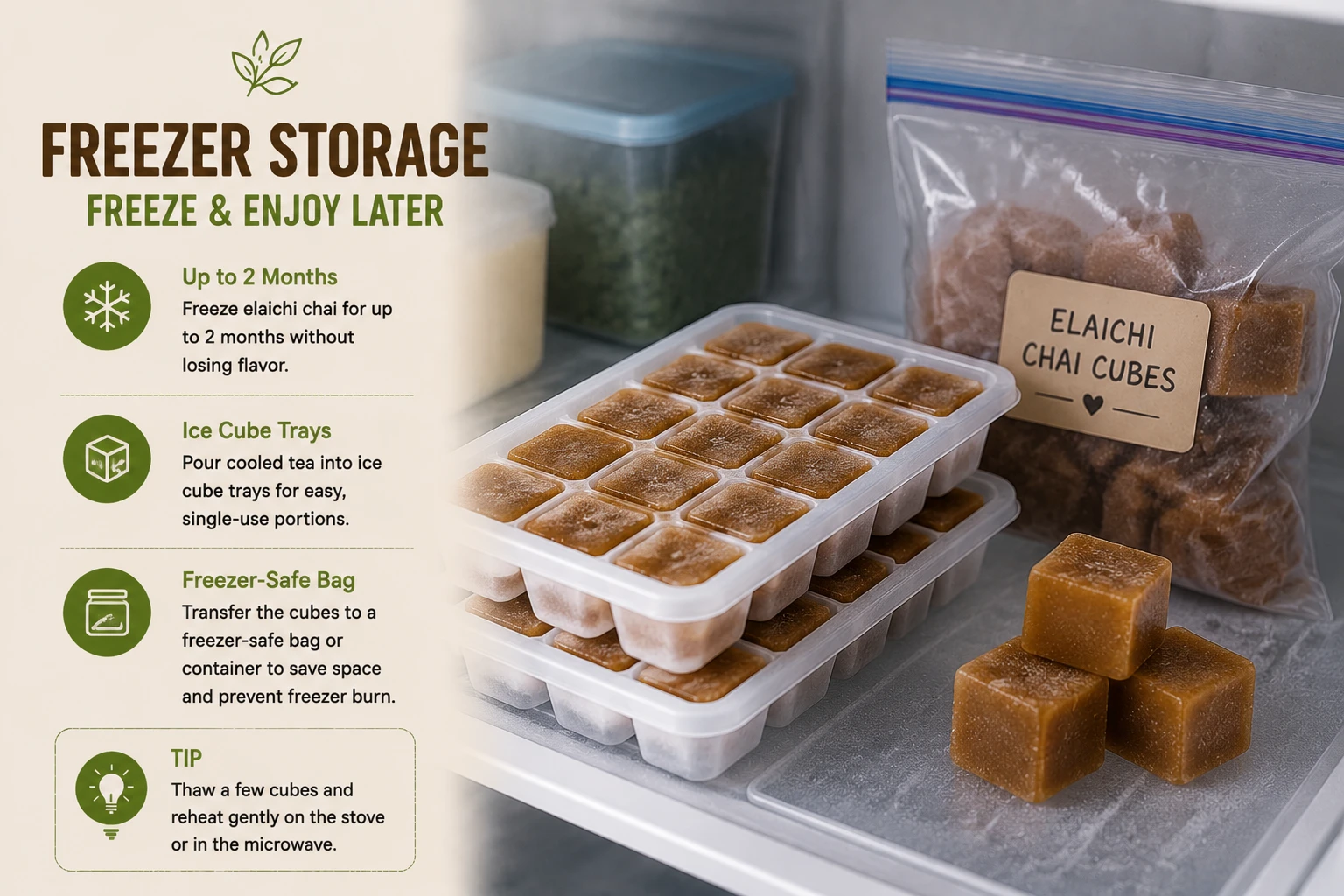
🧊 Freezer — 1 Month
Freeze the cardamom-tea base (before adding milk) in ice cube trays, then thaw and add fresh milk when ready to drink.
Elaichi Black Tea — Frequently Asked Questions
Yes. Cardamom itself has zero caffeine, but this recipe uses Assam black tea leaves, so a cup carries roughly 40–60mg of caffeine — about the same as a standard cup of black tea.
Elaichi black tea is the South Asian name for cardamom chai — crushed green cardamom pods simmered with black tea leaves, water, and milk. “Elaichi” is simply the Hindi/Urdu word for green cardamom.
Use 3–4 crushed green cardamom pods per cup, or 6–8 for this 2-cup recipe. Crush them, don’t powder them, so the flavor releases gradually while simmering.
Yes — use about ¾ teaspoon of freshly ground cardamom for this recipe. Whole crushed pods still give a cleaner cup without any gritty sediment.
Elaichi chai uses only cardamom as its spice. Masala chai adds a full spice blend — typically ginger, cinnamon, cloves, and black pepper alongside the cardamom — for a spicier, more layered cup.
Elaichi chai is made with regular milk and a light hand on the spice. Karak chai is deliberately stronger — brewed longer, made with evaporated or condensed milk, and often finished with a thread of saffron.
Yes — skip the milk step and simmer the cardamom and tea in water only for a lighter, still-caffeinated black tea. It won’t have the same body, but the cardamom flavor still comes through clearly.
Yes — elaichi (also spelled ilaichi) is the Hindi/Urdu name for green cardamom, Elettaria cardamomum. When a recipe just says “cardamom” without specifying a color, it means green cardamom.
Yes, though the result changes significantly — it becomes a lighter, more delicate cup that no longer needs milk. That’s essentially our separate Cardamom Green Tea recipe.
The most common cause is skipping the initial simmer — cardamom needs 3–4 minutes alone in the water before the tea and milk go in to release its full aroma.
No — black cardamom is smoky and savory, meant for curries and rice dishes, not tea. Only green cardamom (elaichi) belongs in this recipe.
3–4 minutes is the sweet spot. Simmering much longer than that doesn’t add more flavor and can start to taste slightly medicinal or bitter.
Not ideal — this recipe’s Assam black tea base contains caffeine. For an evening cup, brew the same recipe with decaf tea or skip the tea leaves entirely for a caffeine-free cardamom milk drink.
Yes — this recipe scales cleanly. Double or triple every ingredient in the same ratios, and keep it warm on low heat rather than reheating from cold later.
“Elaichi” is the Hindi and Urdu word for cardamom. When unspecified, it refers to green cardamom (choti elaichi); black cardamom is called “badi elaichi,” or big cardamom.
This usually happens when the tea liquid is too acidic or too hot when the milk is added. Reduce the heat slightly before pouring in the milk, and stir immediately as it goes in.
Was this guide helpful?
Your feedback helps us improve CardamomNectar for everyone.
💬 Leave a Comment
Made this recipe? Tell us how it turned out.
No comments yet — be the first to share how it turned out! 🍵