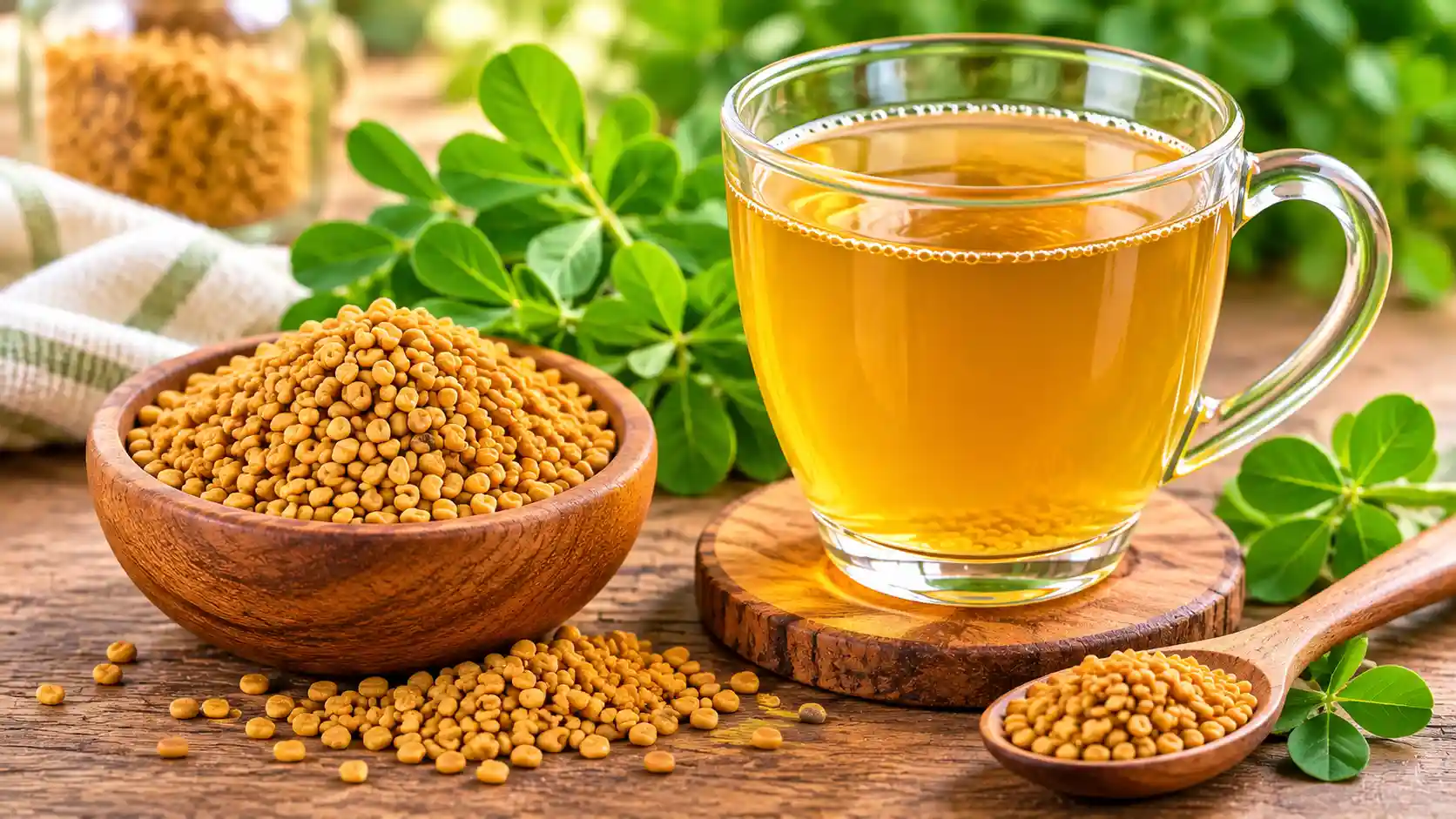
Fenugreek Water Benefits: What the Research Says About Methi Paani
Soaking methi dana overnight releases galactomannan, the gel-forming fibre behind most of fenugreek water’s effects. Here is what trials show for blood sugar, digestion, lactation and weight, how to make it, and who should be careful.


⚡ Quick Answer: What Are the Benefits of Fenugreek Water?
Fenugreek water (methi paani) is made by soaking 1 to 2 teaspoons of whole fenugreek seeds in a cup of water for 8 to 12 hours and drinking it, usually with the seeds, in the morning. Its best-studied benefit is blood sugar support in people with diabetes, based on trials of fenugreek seed (mostly 5 g or more per day). Evidence for digestion, fullness, cholesterol, lactation and menstrual comfort is smaller or mixed. It is generally safe in small daily amounts, but it can lower blood sugar further alongside diabetes medicine and is not advised in medicinal amounts during pregnancy.
What Is Fenugreek Water?
A simple traditional drink, and what science can and cannot say about it
Fenugreek water, called methi dana paani in Urdu and Hindi, is one of the simplest herbal preparations in South Asian, Middle Eastern and North African traditional practice. It needs only fenugreek seeds (Trigonella foenum-graecum) and water, prepared overnight.
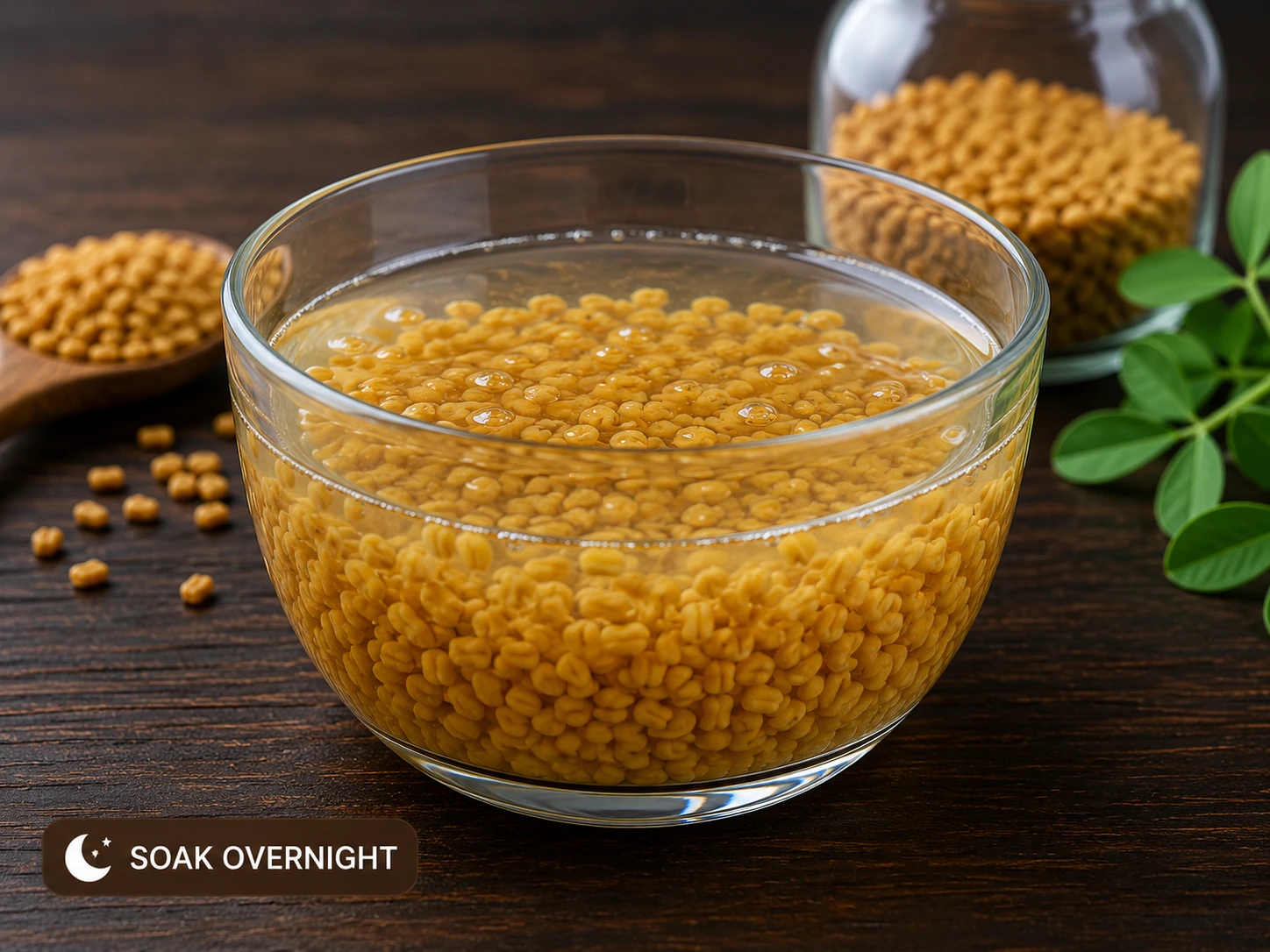
Fenugreek seeds are rich in galactomannan, a soluble fibre that swells into a gel as the seeds hydrate. That gel is why the soaking water turns slightly thick and golden and why the softened seeds feel slippery. Galactomannan is thought to be behind much of fenugreek’s effect on blood sugar and fullness, along with other compounds such as 4-hydroxyisoleucine and trigonelline.
Why Soak the Seeds?
Soaking softens the hard seeds, takes some of the edge off their bitterness and starts the gel-forming process. Soaking also tends to lower phytic acid in seeds generally, but how much it changes in fenugreek water has not been measured, so treat that as a possible extra rather than a proven benefit.
Important context: almost all clinical research used fenugreek seed powder, extracts or seeds eaten in meals, not soaking water. Fenugreek water is a reasonable, low-cost way to take in the same seeds, but results from trials may not carry over exactly. For food forms, see also fenugreek sprouts and the difference between fenugreek leaves and seeds.
12 Fenugreek Water Benefits and How Strong the Evidence Is
Each benefit is labeled so you can see what is studied and what is traditional
Supports Blood Sugar Control
Galactomannan forms a gel that slows digestion and glucose absorption, and fenugreek compounds are studied for effects on insulin. A 2014 meta-analysis of 10 trials found fenugreek seed lowered fasting glucose by about 0.96 mmol/L and HbA1c by 0.85% in people with diabetes, mainly at 5 g or more per day. Most trials were low quality and did not use soaking water. It is not a replacement for diabetes treatment.
✓ Best-Studied (Seed Trials)May Increase Fullness and Support Weight Management
Fenugreek fibre swells in the stomach, and small short-term trials report greater satiety after fenugreek fibre, although results are inconsistent. Drinking it before a meal is the usual approach. Any effect on body weight is likely small and depends on your overall diet. It is a supporting habit, not a weight loss treatment.
◎ Limited EvidenceMay Ease Bloating and Support Regularity
Soluble fibre can soften stool and feed gut bacteria, and fenugreek has long been used for digestive complaints in Ayurvedic and Unani practice. Controlled trials on fenugreek water specifically are lacking. Some people also notice gas or bloating in the first week, so start with 1 teaspoon.
◈ Traditional + MechanismMay Modestly Improve Cholesterol
Fenugreek fibre and saponins bind bile acids in the gut, prompting the liver to draw on cholesterol to make more. Some small trials report modest improvements in total or LDL cholesterol, while others show little change, and trials used seed powder in varying amounts. There is no established dose for fenugreek water.
◎ Mixed EvidenceIs Used to Support Breast Milk Supply
Fenugreek is among the most popular herbal galactagogues, and some small trials report more milk after use. However, a 2020 Cochrane review found only low-certainty evidence for oral galactagogues overall, and the Academy of Breastfeeding Medicine has cited insufficient evidence to recommend any specific herbal one. It can also cause a maple syrup smell in sweat and urine. Talk to a lactation consultant first.
◎ Mixed / Low-CertaintyMay Reduce Menstrual Pain
One small randomized trial in Iran found that fenugreek seed powder, taken for the first three days of menstruation, reduced pain severity and the need for pain relief. Fenugreek contains plant compounds studied for hormonal effects, but there is no reliable evidence that fenugreek water regulates cycles or treats PCOS.
◎ Small TrialsContributes a Small Amount of Iron
Dry fenugreek seeds contain 33.5 mg of iron per 100 g (USDA), but a teaspoon is only about 3 to 4 g, which supplies roughly 1 mg. That is a modest contribution, and it is non-heme iron that absorbs better with vitamin C, which is why lemon is a sensible add-in. Fenugreek water is not a treatment for iron-deficiency anaemia.
✓ Nutritional, Small AmountMay Have Anti-Inflammatory Effects
Fenugreek contains flavonoids, saponins and polyphenols that reduce inflammatory markers in laboratory and animal studies. Human trials of fenugreek for inflammatory conditions such as arthritis are limited, so this is a plausible but unproven benefit of the drink.
◈ Laboratory + Animal StudiesTraditionally Used for Hair
Fenugreek is a long-standing ingredient in hair care across South Asia and the Middle East. Drinking it provides protein and a little iron, and cooled fenugreek water is used as a rinse, but trials of fenugreek for hair growth are few. See our guide to fenugreek for hair growth for how it is applied.
◈ Traditional UseMay Affect Testosterone-Related Measures in Men
Some trials of standardized fenugreek extracts (often 500 to 600 mg a day) report modest changes in testosterone-related measures or sexual function, while others show little effect. Soaking water supplies far less than an extract, so it is unlikely to produce the same results.
◎ Mixed EvidenceTraditionally Used for Skin
Fenugreek has antioxidant compounds, and cooled fenugreek water is used traditionally as a skin toner. There are no good trials showing that drinking or applying it improves skin, so treat it as a gentle traditional practice.
◈ Traditional UseTraditionally Used for Liver and Kidney Wellness
Traditional systems describe fenugreek water as a gentle diuretic and liver-supportive drink, and animal studies show some protective effects of fenugreek extract on the liver. There is no human evidence that it detoxifies the liver or kidneys, and it should not replace medical care.
◈ Traditional + Animal StudiesNot medical advice. These benefits describe research findings and traditional use. Fenugreek water does not treat or cure any condition. Talk to a healthcare professional before using it for a health goal.
How to Make Fenugreek Water Correctly
Four simple steps; the details below keep it palatable and safe
Measure the Seeds
Start with 1 teaspoon (about 3 to 4 g) of whole fenugreek seeds. Regular users can go up to 2 teaspoons. Use whole seeds, not powder, so they hydrate slowly and form the gel around the seed.
💡 Beginners: start with 1 tsp to let digestion adjustRinse Briefly
Rinse the seeds once in cold water to remove dust, then drain.
Soak for 8 to 12 Hours
Add 1 to 1.5 cups (240 to 360 ml) of room-temperature water, cover loosely and soak overnight. In hot weather, soak in the refrigerator so the water does not ferment.
⏰ About 8 hours is milder; 12 hours is thicker and more bitterDrink in the Morning, Seeds Included
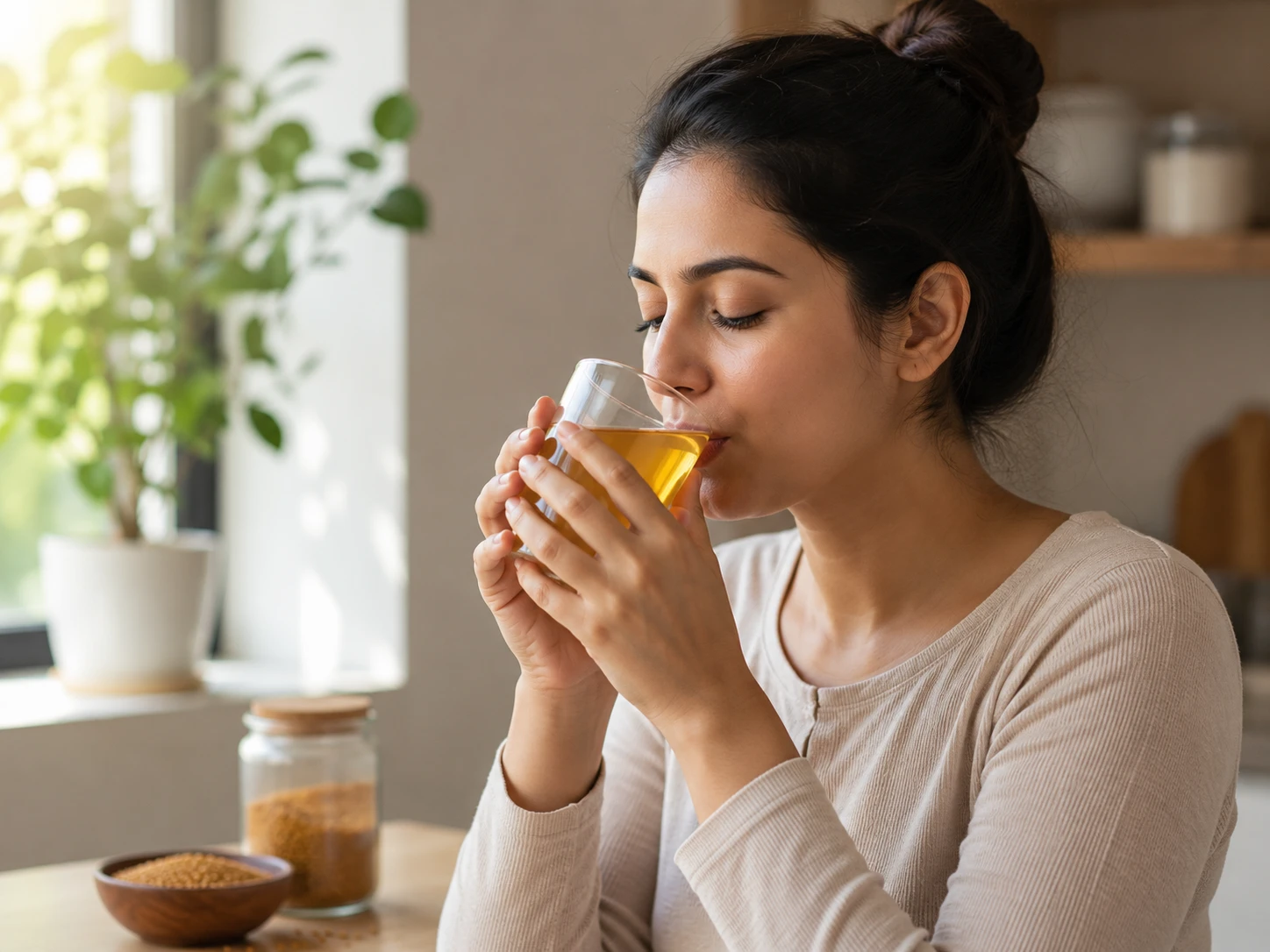
Drink the water and chew or swallow the softened seeds, ideally 20 to 30 minutes before breakfast. If the seeds are too bitter, strain them and drink just the water. Lemon, a slice of ginger or a little honey can make it easier to drink.
Common mistakes: using powder instead of whole seeds, soaking for more than about 12 hours in warm weather (it ferments), starting with a large amount, and combining it with diabetes medicine without telling your doctor.
Fenugreek Water Variations
Four easy ways to change the taste
Classic Fenugreek Water
1 tsp seeds soaked in 1 cup of water, drunk with the seeds. Plain and simplest, and closest to how fenugreek has been studied.
Fenugreek Lemon Water
Add the juice of half a lemon. Vitamin C helps the body absorb the plant iron in the seeds, and the acidity softens the bitterness.
Fenugreek Ginger Water
Soak the seeds with a thin slice of fresh ginger. Ginger adds warmth and is traditionally used to settle the stomach.
Fenugreek Honey Water
Stir in ½ tsp honey after straining for a milder taste. Honey adds sugar, so skip it if you are managing blood sugar.
Fenugreek Water Dosage by Goal
What studies used and what traditional practice suggests. Always start at the lower end
| Goal | Amount of Seeds | Evidence | Notes |
|---|---|---|---|
| General daily wellness | 1 tsp (about 3–4 g) in 1 cup | Traditional use | A sensible starting point; build up slowly |
| Blood sugar (adults with diabetes) | Trials that lowered glucose used at least 5 g of seed per day (about 1.5–2 tsp) | Moderate; trials mostly low quality | Only with your doctor if you take diabetes medicine; monitor glucose |
| Digestion | 1 tsp in 1 cup, in the morning | Traditional + mechanism | If bloating gets worse, drop to ½ tsp |
| Fullness / appetite | 1–2 tsp in 1 cup, 20–30 min before a meal | Limited | Works only alongside your overall diet |
| Breastfeeding | 1–2 tsp as water or tea is common practice; trial doses vary | Low-certainty | Talk to a lactation consultant; see the fenugreek dosage guide |
| Period pain | One small trial used seed powder (about 5–8 g a day) for the first 3 days of the period | Small trial | Do not copy trial doses without medical advice |
| Cholesterol | No established dose for fenugreek water; trials used seed powder | Mixed | Have levels checked by your doctor |
| Hair | 1 tsp to drink; cooled water as a rinse | Traditional | See fenugreek for hair |
Important: if you take medicine for diabetes, blood pressure or blood thinning, talk to your doctor before making fenugreek water a daily habit. Amounts larger than about 2 teaspoons a day should be taken only with medical advice. For teaspoon-to-gram conversions, see fenugreek seeds teaspoon to grams.
Fenugreek Water Starting-Amount Finder
A conservative starting amount by goal and experience
Choose your goal and experience level to see a cautious starting amount, water volume and timing.
Quick Goal Presets
⚠️ For information only, not medical advice. Check with your doctor before therapeutic use, especially with medication, pregnancy or breastfeeding.
When Will You See Results?
A realistic timeline: what people report versus what trials measured
Some people notice they feel fuller before meals or that their bowels change within the first few days. Gas or bloating can also appear at first, which usually settles. Individual responses vary.
Some breastfeeding parents report a change within a few days, but trial evidence is low-certainty, and frequent milk removal matters most. A maple syrup smell in sweat and urine is harmless and is explained in our maple syrup smell guide.
If fenugreek suits you, digestion often feels more regular after a few weeks of consistent use. There are no controlled trials on this specific effect of fenugreek water.
Trials of fenugreek seed on blood sugar ranged from one week to several months. If you are monitoring glucose or cholesterol, ask your doctor to test before and after about 8 to 12 weeks of consistent use.
Any menstrual or hormonal benefit is uncertain and would take several cycles to judge. Track symptoms across at least 2 to 3 cycles and discuss persistent problems with a clinician.
Hair cycles are slow, so any change in shedding takes months to judge, and nutritional causes such as low iron should be checked by a clinician rather than assumed.
Soaked Fenugreek Water vs Boiled Fenugreek Tea
Two ways to prepare the same seeds; no trial has shown one to be better
| Property | Soaked Water (Cold) | Boiled Tea (Hot) |
|---|---|---|
| Preparation | 8–12 h soak, room temperature | Simmer 5–10 minutes |
| Gel-forming fibre | Forms gradually as seeds hydrate | Hot water releases the gum faster |
| Evidence of benefit | Trials used seed powder or whole seeds | Tea is the form used in many lactation studies |
| Heat-sensitive vitamins | Not exposed to heat | Small amounts may be lost |
| Taste | Bitter, earthy, thick | More aromatic |
| Convenience | Prepare the night before | Ready in minutes |
| Best for | An easy daily routine | Flavour, a warm drink |
Verdict: choose the version you will drink consistently. For a warming tea, you can simmer the seeds with a crushed green cardamom pod; see our cardamom tea guide for ideas.
Side Effects and Who Should Be Careful
Mostly mild and dose-dependent; start low
⚡ Common Side Effects
- Gas and bloating in the first week as your gut adjusts to the fibre
- Loose stools at higher amounts
- Nausea if taken on a very empty stomach; try it with a light snack
- Maple syrup smell in sweat and urine (harmless; see the explanation)
⚠️ Medication Interactions
- Diabetes medicine: fenugreek may lower blood sugar further; monitor glucose and tell your doctor
- Blood thinners (such as warfarin): fenugreek may affect clotting; check with your doctor
- Blood pressure medicine: an additive effect is possible
- Other oral medicines: as a precaution with fibre, take medicines about 2 hours apart from fenugreek water
🔵 Who Should Avoid Medicinal Amounts
- Pregnant women: it may stimulate the uterus; avoid medicinal amounts
- Legume allergy: fenugreek is a legume, and people allergic to peanuts or chickpeas may react
- Before surgery: many clinicians advise stopping herbal supplements about 2 weeks before
- Young children: not enough safety data for medicinal amounts
More from the Fenugreek Guide
This article is part of the Cardamom Nectar fenugreek library
Fenugreek Complete Guide (Hub)
Seeds, leaves, benefits, dosage, uses and more. Start here.
Read GuideFenugreek Dosage
Exact amounts by goal and how to build up safely.
Read GuideFenugreek Sprouts Benefits
Nutrition, how to grow them and how to eat them safely.
Read GuideFenugreek for Hair Growth
Rinses, masks and what the evidence says.
Read GuideWhat Does Fenugreek Taste Like
Flavour of seeds, leaves and powder, and how to soften bitterness.
Read GuideFenugreek Maple Syrup Smell
Why fenugreek changes sweat and urine smell, and how long it lasts.
Read GuideAlso read: fenugreek leaves vs seeds, fenugreek vs methi, fenugreek vs fennel, fenugreek substitutes, kasuri methi nutrition and fenugreek in Arabic.
Frequently Asked Questions
17 most-searched questions about fenugreek water, answered
Fenugreek water, called methi paani or methi dana paani, is made by soaking 1 to 2 teaspoons of whole fenugreek seeds in a cup of water for 8 to 12 hours. The seeds release galactomannan, a gel-forming fibre, which makes the water slightly thick. It is usually drunk in the morning, often with the soaked seeds.
The best-studied benefit is blood sugar support in people with diabetes, based on trials of fenugreek seed. Digestion, fullness, cholesterol, lactation and menstrual comfort have smaller or mixed evidence, and hair, skin and detox benefits are mostly traditional. Most research used seed powder or extract rather than soaking water.
Most people drink it first thing in the morning, 20 to 30 minutes before breakfast. Taking the fibre before a meal is the logic behind its effect on blood sugar and fullness. If it upsets your stomach on an empty stomach, drink it with or after a light meal instead.
Start with 1 teaspoon (about 3 to 4 g) of seeds soaked in 1 cup (240 ml) of water once daily. After a week, you can go to 2 teaspoons if you tolerate it. Trials that lowered blood glucose generally used at least 5 g of fenugreek seed a day, but larger amounts should be taken only with medical advice. See the fenugreek dosage guide and fenugreek seeds teaspoon to grams.
It may help. A 2014 meta-analysis of 10 trials found fenugreek seed lowered fasting glucose by about 0.96 mmol/L and HbA1c by 0.85% in people with diabetes, mainly at doses of 5 g or more per day. Most trials were low quality, and they used seed powder or meals rather than soaking water, so results may differ.
It may support fullness, but it is not a weight loss solution. The galactomannan fibre forms a gel in the stomach, and small short-term trials of fenugreek fibre report greater satiety, though results are inconsistent. Any effect on weight is likely to be small and works only alongside diet and activity.
Rinse 1 to 2 teaspoons of whole seeds, add them to 1 to 1.5 cups of room-temperature water, cover and soak for 8 to 12 hours. In the morning, drink the water and eat the soft seeds if you tolerate them. In hot weather, soak in the refrigerator to prevent fermentation. Use whole seeds, not powder.
Eating the seeds gives you the most fibre, since the gel forms around the seed. The softened seeds are bitter but easy to chew or swallow with water. If you cannot tolerate them, drinking only the water still provides some of the soluble fibre and compounds.
There is little direct evidence. Fenugreek provides protein and a little iron, and iron deficiency can contribute to hair shedding, but a teaspoon of seeds supplies only a small amount. Cooled fenugreek water is also used as a hair rinse in traditional care. For application methods, see our guide to fenugreek for hair.
Small food amounts are usually considered low risk, but medicinal amounts of fenugreek are generally not advised in pregnancy because it may stimulate the uterus. Always check with your doctor or midwife before drinking fenugreek water regularly while pregnant.
One small randomized trial found that fenugreek seed powder taken for the first three days of menstruation reduced pain, but evidence overall is limited. Fenugreek contains plant compounds that are studied for hormonal effects, yet there is no reliable evidence that fenugreek water regulates cycles or treats PCOS.
Common effects are gas, bloating and loose stools, especially in the first week. Fenugreek can also lower blood sugar further when combined with diabetes medicine, may interact with blood thinners, can trigger allergy in people sensitive to legumes such as peanuts or chickpeas, and can give sweat and urine a maple syrup smell.
Possibly for some people, but the evidence is weak. A 2020 Cochrane review found only low-certainty evidence for oral galactagogues, and the Academy of Breastfeeding Medicine has cited insufficient evidence to recommend any specific herbal galactagogue. Frequent milk removal matters most; talk to a lactation consultant before using fenugreek.
It varies. Fullness or bowel changes can be noticed within days. Blood sugar trials of fenugreek ran from one week to several months, and any effect on cholesterol or hormones needs weeks to months and is not guaranteed. Track measurable markers, such as glucose, with your doctor rather than relying on how you feel.
Fenugreek water tastes mildly bitter and earthy with a faint maple-like sweetness, and the water turns slightly thick and golden. A squeeze of lemon, a slice of ginger or a little honey makes it easier to drink. Soaking for about 8 hours gives a milder taste than 12 or more. See also what does fenugreek taste like.
Neither has been shown to be better. No trial has directly compared them. Cold soaking is gentler and simple; simmering releases the gum faster and gives a more aromatic drink. Choose the one you will actually drink consistently, and keep to the same safety limits for both.
Yes. Fenugreek water is suitable for most healthy adults regardless of sex, and the effects on blood sugar and digestion are not sex-specific. Some trials of standardized fenugreek extracts report modest changes in testosterone-related measures, but results are mixed and soaking water is unlikely to match an extract.
Meet the Authors
The writer and reviewer behind this guide
Dr. Harrington writes Cardamom Nectar’s health and nutrition guides, researching how spices and herbs are used in traditional and modern diets and citing the published evidence behind each claim.
View profile →Dr. Mitchell reviews Cardamom Nectar’s health content for accuracy, safety wording and the clear separation of research findings from medical advice.
View profile →Sources and References
Medical disclaimer: this article is for information only and is not medical advice. Always consult a qualified healthcare professional before using fenugreek therapeutically, especially if you have a medical condition, are pregnant or breastfeeding, or take medication.