Kabuli Pulao Recipe with Black Cardamom Char Masala
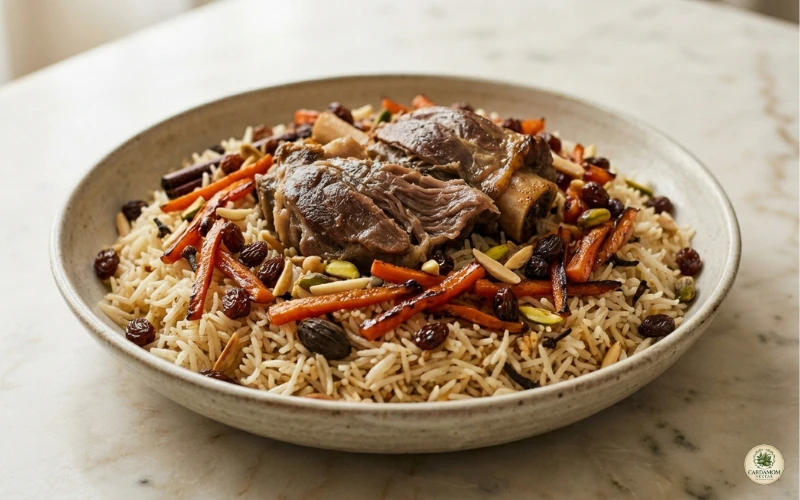
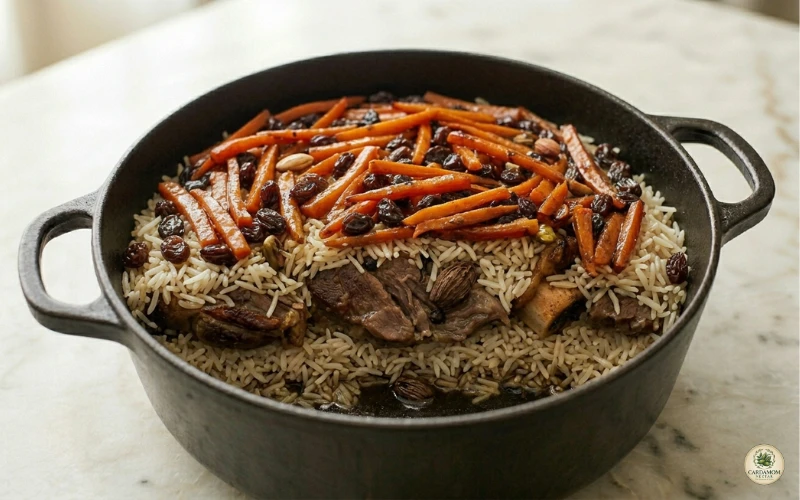
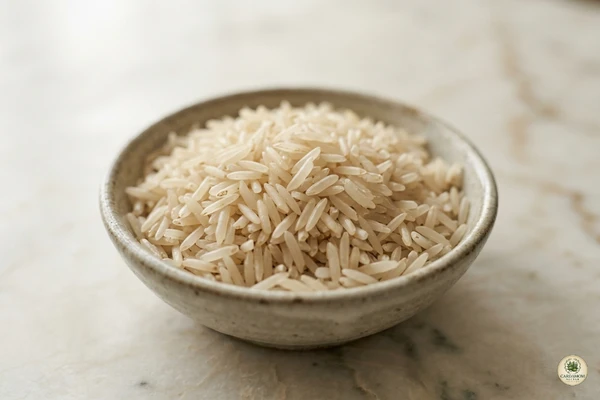
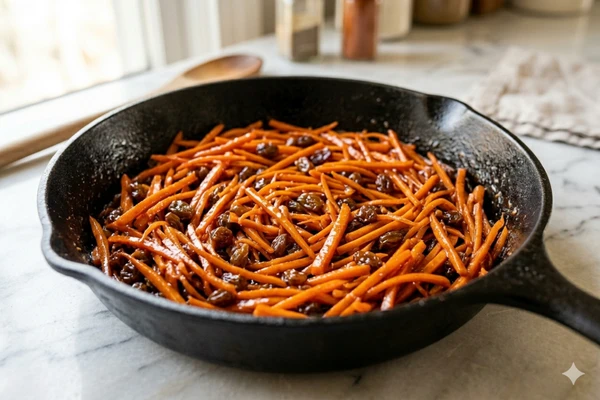
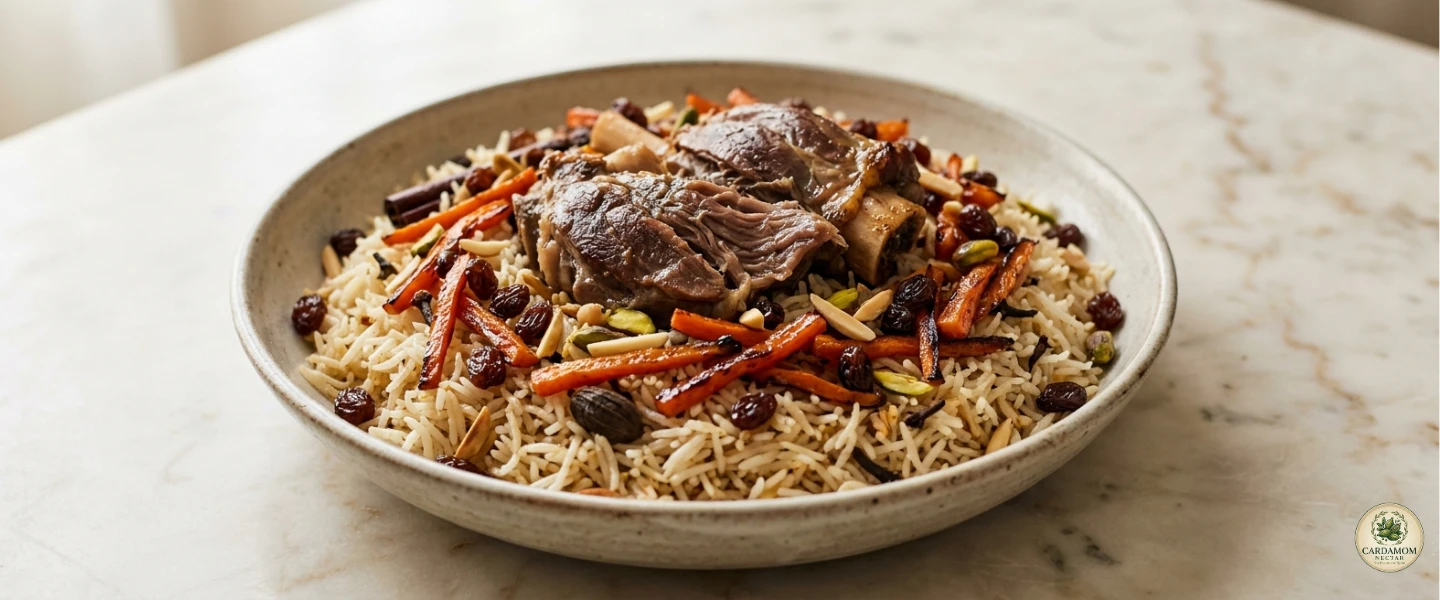
Afghanistan’s national dish — tender slow-braised lamb, sella basmati cooked in two-stage spiced stock, topped with caramelised carrots and raisins. Black cardamom does double work here: first in the meat broth, again in the rice water. This is how it’s meant to be made.


What is Kabuli Pulao?
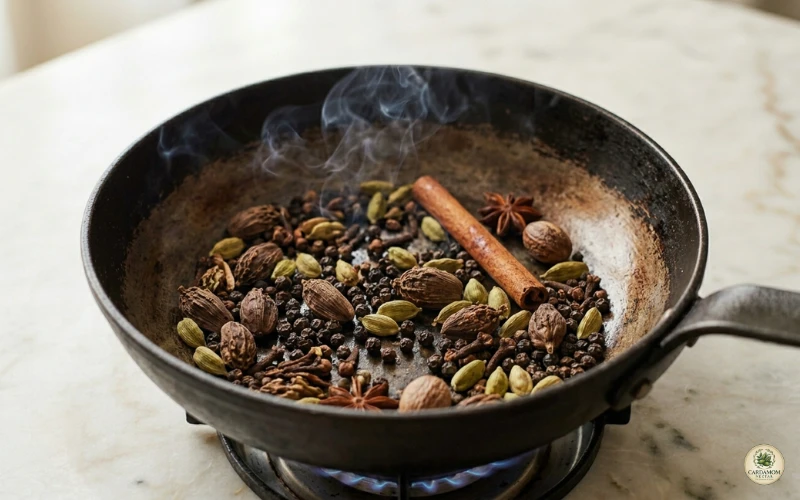
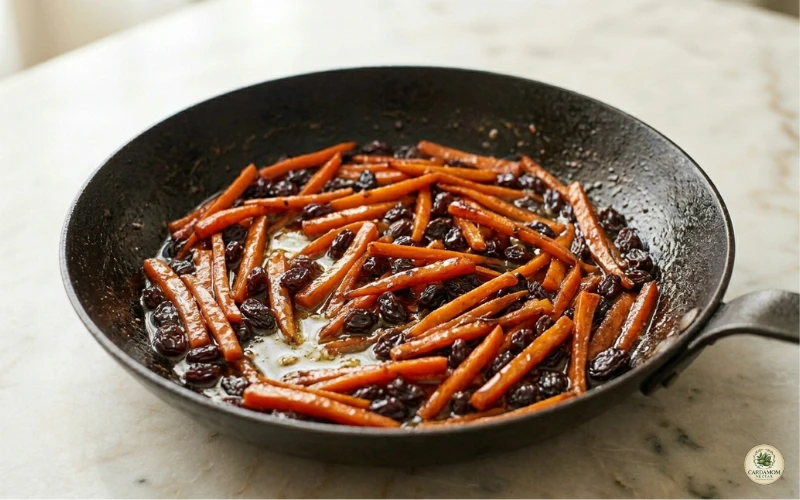
Kabuli Pulao (also spelled Qabuli Palaw or Qabeli Pilau) is Afghanistan’s national dish — a fragrant pilaf of long-grain basmati rice cooked in spiced lamb broth, topped with caramelised julienned carrots, plump raisins, and toasted almonds. Unlike biryani, it relies on a restrained four-spice blend called char masala, which centres on black cardamom, cumin, cinnamon, and black pepper. The dish is simultaneously savoury, earthy, and lightly sweet — a balance that defines Central Asian rice cookery.
Why Black Cardamom is Non-Negotiable in Kabuli Pulao
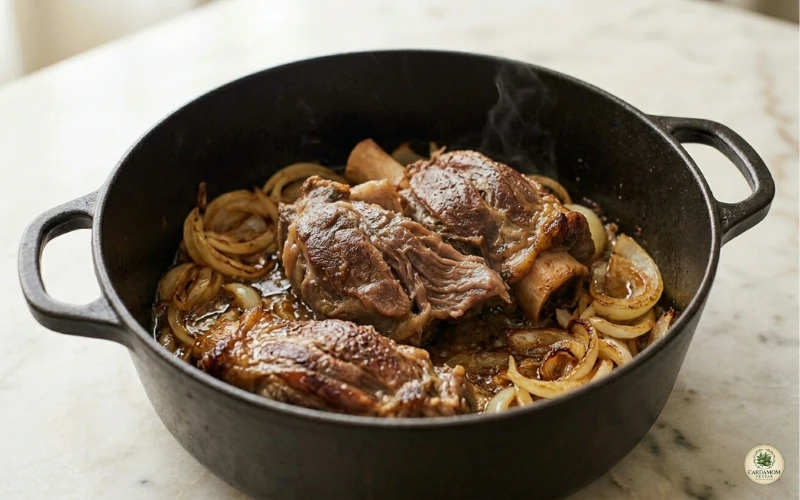
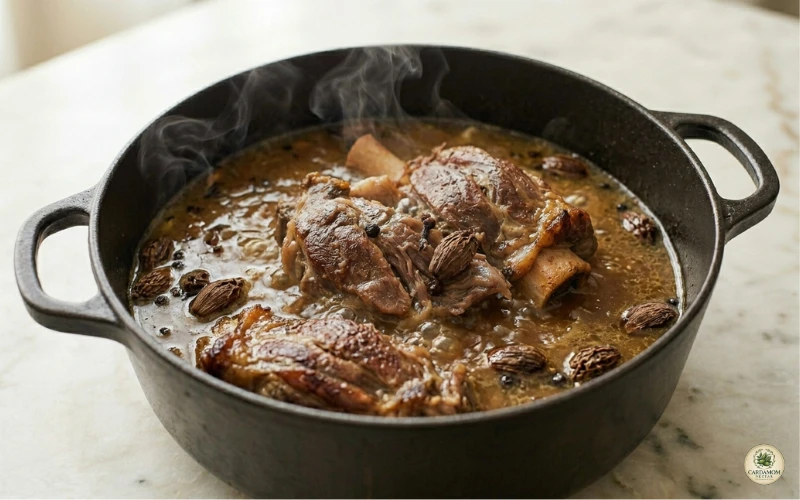
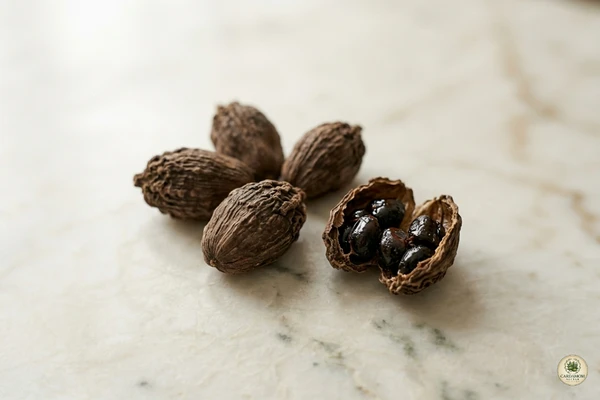
Kabuli Pulao is deceptively simple on the surface — rice, meat, a handful of spices. But its depth comes entirely from how those spices are used, and black cardamom (badi elaichi) is the spice that does the heaviest work. Its camphor-forward volatile oils — specifically 1,8-cineole and α-terpineol — are heat-stable and fat-soluble. When the whole pods are added to the simmering meat broth, these compounds extract into the stock over 90 minutes of slow cooking, building a smoky, resinous base that you simply cannot replicate with any other single spice.
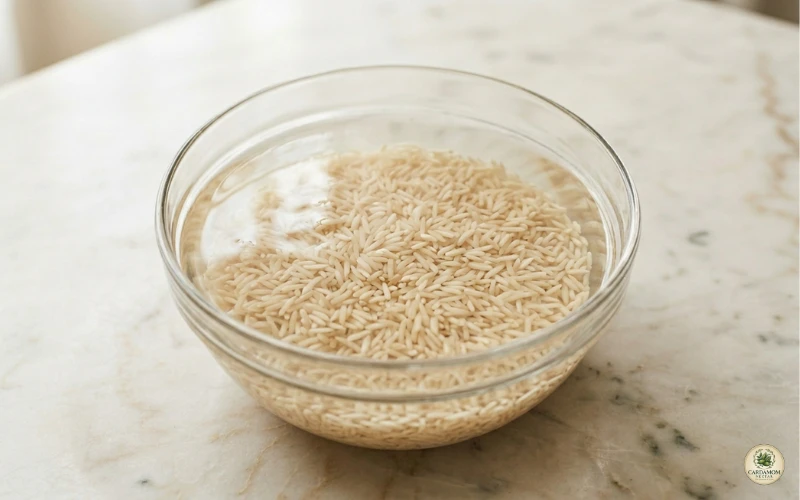
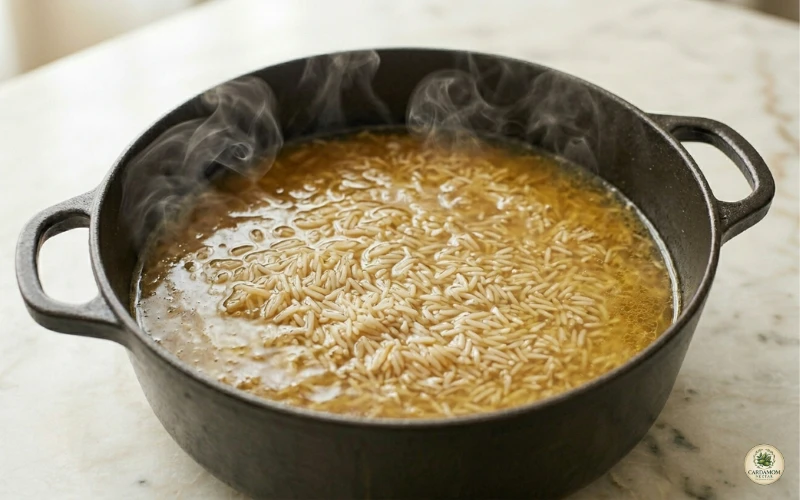
In this recipe, black cardamom appears twice: two pods go into the lamb qorma (the braising broth), and a third whole pod goes into the water used to parboil the rice. This dual extraction — fat-phase first, water-phase second — means the smoky depth penetrates both the meat and the individual rice grains. It’s the same technique used in haleem, where black cardamom is added at two different stages for two different reasons. No other spice in char masala behaves this way.
Kabuli Pulao is Afghanistan’s national dish and has been served at weddings and celebrations for centuries. The name references Kabul, though the dish is eaten across Central Asia — called Qabeli Polo in Persian, Palov in Uzbek. What sets the Afghan version apart from Uzbek or Iranian variants is the caramelised carrot-and-raisin topping and the specific char masala spice profile in which black cardamom dominates. If you have been making this dish without whole black cardamom pods, you have been missing its soul. See our guide on green vs black cardamom if you want to understand exactly why green cardamom is not a substitute here.
Kabuli Pulao vs Biryani — How They Actually Differ
Two iconic rice dishes, often confused — here is exactly where they diverge.
| Feature | Kabuli Pulao | Biryani (South Asian) |
|---|---|---|
| Origin | Afghanistan / Central Asia | India / Pakistan / Bangladesh |
| Flavour profile | Mild, savoury-sweet, earthy | Complex, aromatic, spicy |
| Topping | Caramelised carrots, raisins, almonds | Fried onions, fresh coriander, mint |
| Spice blend | Char masala (4 spices: cumin, black cardamom, cinnamon, pepper) | Garam masala or biryani masala (12+ spices) |
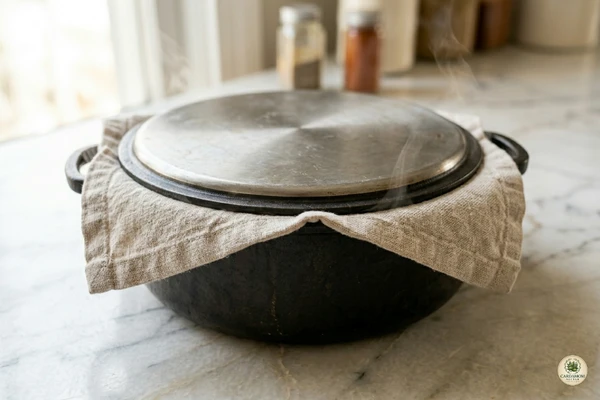
| Cooking method | Rice cooked in strained meat stock, then layered for final dum | Par-cooked rice layered directly with meat masala, dum together |
| Sweetness | Intentional — from caramelised veg and raisins | Absent or minimal (except Kolkata biryani with potato) |
| Rice type | Sella basmati (parboiled) preferred | Aged long-grain basmati |
| Black cardamom role | Lead spice — defines the whole dish | Supporting spice — one of many |
| Heat level | Low to none | Medium to high (depends on recipe) |
| Occasion | Weddings, Eid, celebrations — served whole on platter | Everyday through festive — served in pot or individual portions |