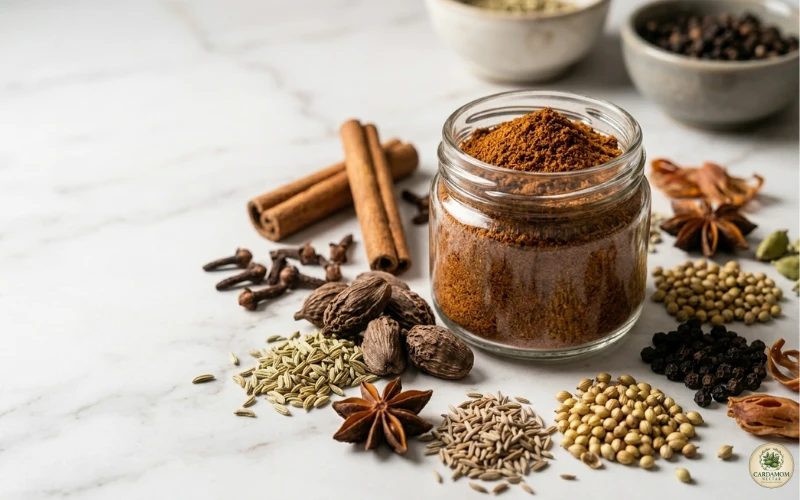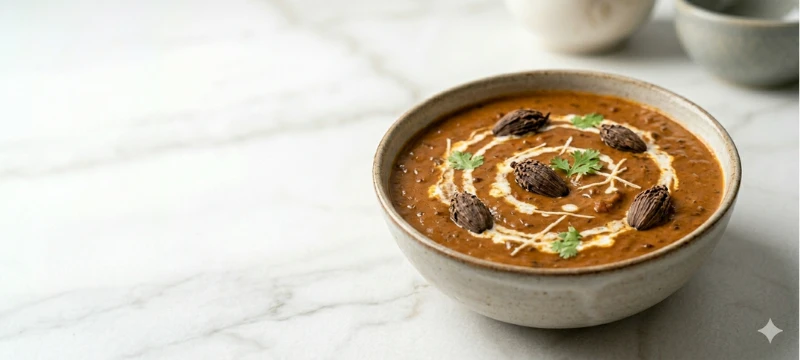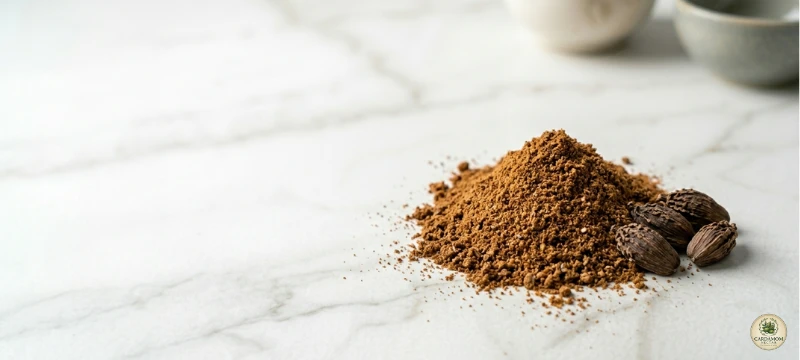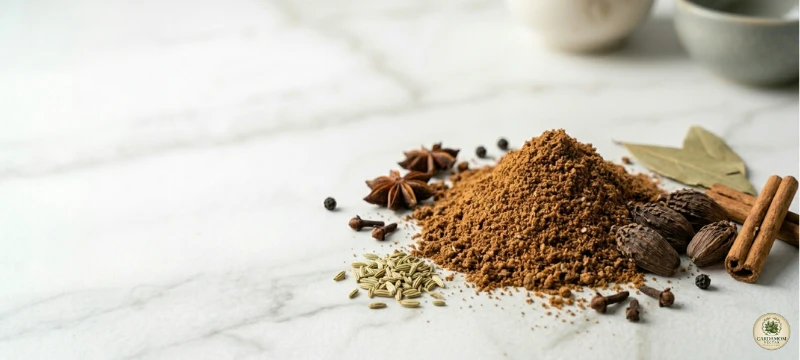
Nihari masala spice blend with whole black cardamom pods, fennel seeds, cinnamon, cloves and star anise on dark stone surface
Spice Blend · Pakistani Kitchen Science

Nihari Masala Recipe — Black Cardamom as the Structural Base

Fifteen spices. One 13-minute batch. Store for 6 months. This is the masala that drives Pakistan’s most iconic slow-cooked stew — and black cardamom’s camphor-resinous volatiles are what hold the whole blend together through 8 hours of cooking.


Prep Time5 min
Toast Time6 min
Total Time13 min
Yield~80g
DifficultyBeginner
Shelf Life6 months
Published: 1 May 2026 Updated: 1 May 2026 ✅ Fact-checked by Dr. Michael Bennett
Emily Rhodes, Culinary Writer and Spice Researcher
Written by
Covers South Asian spice culture and kitchen science. Market visits to Kerala, Karachi, and Dubai.
Dr. Michael Bennett, Food Scientist and Phytochemist
Reviewed by
Specialist in volatile oil composition and spice phytochemistry. All technical claims peer-reviewed.
Quick Answer

What is Nihari Masala?

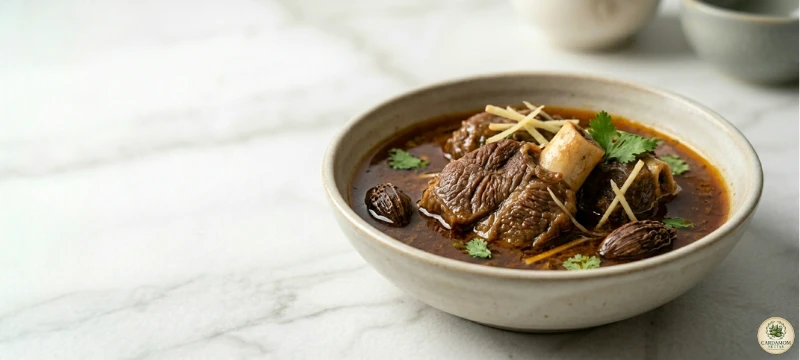
Nihari masala is the proprietary spice blend that defines Pakistan and North India’s slow-cooked bone stew, nihari. It is built on approximately 15 whole and ground spices — black cardamom as the structural base, fennel seeds and long pepper as the signature notes — dry-toasted, ground fine, and added in two stages during cooking. Unlike garam masala, nihari masala is specifically engineered for 6–8 hours of sustained heat. Its heat-stable volatile compounds, led by black cardamom’s 1,8-cineole, survive long cooking and continue releasing depth into the broth throughout the entire slow cook.

What Makes Nihari Masala Different from Every Other Spice Blend

Most spice blends are designed to be added near the end of cooking — that is how garam masala works, and it is why freshly ground garam masala tastes floral and bright. Nihari masala is engineered for the opposite: it goes into a pot that will simmer for 6–8 hours at low heat, sometimes overnight. The spices must survive that environment and keep releasing compounds into the broth the entire time, not burn out in the first hour.

This is precisely why black cardamom (badi elaichi) is the structural backbone of nihari masala rather than green cardamom. Black cardamom’s primary volatile compound, 1,8-cineole (also called eucalyptol), has a boiling point of 176°C — well above the 100°C of simmering water. It is also fat-soluble, meaning it binds to the rendered bone fat in the nihari broth and remains there as a stable flavour carrier throughout the entire cook. Green cardamom’s α-terpinyl acetate, by contrast, breaks down within the first hour of sustained heat. See our detailed comparison in the green vs black cardamom guide for the full chemistry.

The second key difference is the two-stage addition method. Nihari masala is split — half goes in at the start with the raw meat, the other half is mixed into the atta (wheat flour) slurry added in the final 20 minutes. The early addition extracts slowly into the fat and braising liquid. The late addition stays relatively fresh and provides a brighter aromatic top note when the stew is served. This technique — not found in biryani or curry masala recipes — is what produces nihari’s characteristic layered depth. The full recipe for nihari details how to use this masala in context.

Every Spice in Nihari Masala — Role, Science & Can You Skip It?

Ranked by structural importance. No filler — every spice earns its place.

SpiceUrdu / Hindi NameRole in NihariKey CompoundSkip?
Black Cardamom StructureBadi ElaichiThe structural base — smoky, camphor-forward. Heat-stable and fat-soluble. Defines the broth’s deep character throughout the long cook. Lead spice.1,8-Cineole (eucalyptol)Never — the dish loses its identity
Fennel Seeds SignatureSaunfThe most recognisable single note in nihari masala — sweet, anise-forward, and aromatic. Fennel’s anethole is stable at low simmer heat. Mandatory in all authentic versions.Trans-anetholeNever — nihari without fennel is unrecognisable
Long Pepper HeatPippali / PeepliThe Mughal-era heat spice — more complex than black pepper with floral overtones. Traditional nihari from Old Delhi and Lucknow always includes it. Many Pakistani recipes omit it for availability reasons.Piperine + PiperlongumineOptional — add extra black pepper if skipping
Dry Ginger SignatureSaunth / Adrak PowderOne of nihari masala’s most important ingredients — heat-stable in a way that fresh ginger is not. Saunth slowly releases its shogaols (formed from gingerols during drying) throughout the long braise, building warming depth without the sharp bite of raw ginger.Shogaols, GingerolsNo — use ground ginger but increase slightly
Coriander Seeds DepthDhaniaEarthy, citrus-adjacent backbone that rounds sharp spice edges. Works as a bulking base spice that allows the more aromatic compounds to stand out. High proportion relative to other spices.Linalool, α-PineneCan reduce, not eliminate
Green Cardamom DepthChoti ElaichiAdds herbal sweetness and brightness. Loses most of its delicate floral compounds during the long cook, but leaves a residual warmth that complements the black cardamom base. Not a substitute for black cardamom — a complement.α-Terpinyl acetateYes — but adds welcome complexity
Black Cumin SignatureShah Zeera / Kala ZeeraDarker, more resinous than regular cumin — provides a woody depth that regular cumin cannot. A marker of authentic nihari masala versus generic curry powder. Often used alongside regular cumin for a fuller profile.Thymol, CuminaldehydeSubstitute with regular cumin (double the amount)
Cinnamon / Cassia DepthDalchiniSweet-woody warmth that sits underneath the sharper spices. Cassia (more common in Pakistan) has more cinnamaldehyde than Ceylon cinnamon — stronger, slightly astringent. Either works.CinnamaldehydeNo — use half if unavailable
Cloves HeatLaungIntense numbing-pungent note from eugenol. Used sparingly — cloves can easily overpower the blend. Their antiseptic properties also help with fat stability in long-cooked bone broths.EugenolCan reduce — do not increase
Black Pepper HeatKali MirchBackground heat that builds over the long cook. Also functions as a bioavailability enhancer — piperine improves absorption of curcumin from the turmeric in the blend.PiperineReduce — do not skip entirely
Mace SignatureJavitriThe lacy outer covering of nutmeg — more delicate and floral than nutmeg itself. A Mughal-era signature spice that appears in nihari, biryani masala, and korma. Adds luxury and complexity that nutmeg alone cannot.Myristicin, SafroleSubstitute with nutmeg (use less)
Star Anise DepthBadiyan / Phool ChakriSupports fennel’s anise note — both share trans-anethole. In nihari masala, star anise is used in smaller amounts than in Chinese or pho cooking, acting as a supporting rather than lead note. Too much overpowers the blend.Trans-anetholeYes — reduces sweetness slightly
Bay Leaf DepthTej PattaBackground floral and slightly bitter note. Also known to reduce the gamey character of bone-in mutton and beef. More impactful in whole-spice braises than as a ground component, but included in masala powder for mild effect.1,8-Cineole, EugenolYes — marginal impact in powder form
Kashmiri Chilli HeatDeghi MirchAdded as a ground powder (not toasted). Provides deep red colour and mild fruity heat. Unlike regular chilli, it contributes colour without excessive burn — essential for nihari’s characteristic dark reddish-brown appearance.Capsaicinoids, CarotenoidsSub with sweet paprika + pinch of cayenne
Nutmeg DepthJaifalWarm, slightly sweet and narcotic depth. Use freshly grated — pre-ground nutmeg loses its volatile oils rapidly. A little goes a long way; too much makes the masala taste medicinal.MyristicinUse mace instead, or skip

Nihari Masala Recipe Card

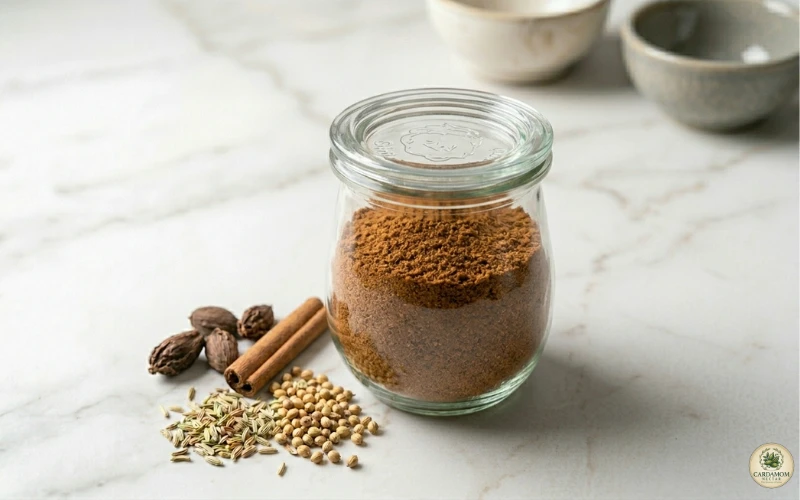
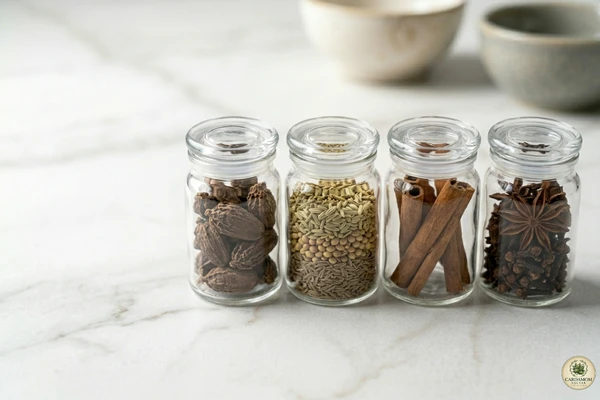
Nihari masala spice powder in glass jar surrounded by whole spices — black cardamom, fennel, cinnamon

Nihari Masala (Homemade)

★★★★★
4.9 out of 5 (142 ratings)
Prep5 min
Toast6 min
Total13 min
Yield~80g
Shelf Life6 months
DifficultyBeginner

15 spices dry-toasted and ground in one batch. Engineered for 6–8 hours of slow cooking — black cardamom’s heat-stable volatiles ensure the blend keeps releasing into the broth from start to finish.

Key Spices
4 black cardamom pods 2 tbsp fennel seeds Long pepper Dry ginger powder Coriander seeds Black cumin Mace + nutmeg

Full Ingredients

Makes ~80g · Use 4 tbsp per 1kg bone-in meat · Enough for five 1kg batches of nihari

Whole Spices — Toast First
2 tbsp
Fennel seeds (Saunf)The most prominent single note — do not skip or reduce
1 tbsp
Coriander seeds (Dhania)
8 pods
Green cardamom (Choti Elaichi)Lightly crush before toasting
1 tsp
Black cumin / Shah ZeeraMore resinous than regular cumin — substitute with 2 tsp regular cumin if needed
1 tsp
Cumin seeds (Safed Zeera)
1 tsp
Black peppercorns (Kali Mirch)
1 stick
Cinnamon / cassia bark (Dalchini), 2-inch piece
6 whole
Cloves (Laung)Do not increase — can overpower
3
Bay leaves (Tej Patta)
2
Star anise (Badiyan)
¼ tsp
Mace (Javitri)
¼ tsp
Nutmeg (Jaifal), freshly gratedAdd to grinder after cooling — do not toast
2–3
Long pepper / Pippali (optional)Traditional Mughal ingredient — sub with ½ tsp extra black peppercorns
Ground Spices — Add After Grinding (Do Not Toast)
1 tsp
Dry ginger powder (Saunth)Heat-stable form of ginger — essential, not optional
1 tsp
Kashmiri red chilli powder (Deghi Mirch)For colour and mild heat — sub with sweet paprika
½ tsp
Turmeric powder (Haldi)
Usage dosage: 4 tbsp per 1kg bone-in meat (beef/mutton shank). 3 tbsp per 1kg boneless. Split: half at the start with meat, half in the atta slurry added in the final 20 minutes. This two-stage addition is the technique that separates deep base flavour from fresh aromatic top notes.

No Black Cardamom? Find Your Substitute

Black cardamom is the structural lead in nihari masala — here is the least-bad replacement for each scenario.

Using Green Cardamom

Use half the pod count of green cardamom (2 pods instead of 4) plus a generous pinch of smoked paprika. Green cardamom provides warmth and floral notes but its primary volatiles will largely burn off during the long nihari cook. The smoked paprika approximates the surface smokiness but cannot replicate black cardamom’s fat-soluble camphor depth. Your nihari masala will still be aromatic but the broth will taste notably lighter and less complex at the 6-hour mark.

Using Star Anise

Add 1 extra star anise (total 3) to the toasting pan. Star anise has some heat stability and its trans-anethole is long-lasting in fat. It will partially compensate for the missing smoky depth but introduces a stronger licorice note that shifts the masala profile noticeably. Do not use more than 3 star anise total or it will dominate everything else. Best combined with the smoked paprika option: 3 star anise + ½ tsp smoked paprika added with the ground spices.

Using Cloves + Cumin

Add 4 extra whole cloves (total 10) and 1 extra tsp black cumin. The eugenol in cloves provides some of the pungent warmth that black cardamom normally anchors, and the extra black cumin adds resinous depth. This is the closest you can get within the same spice family without introducing star anise or paprika. The result is punchier and more clove-forward — reduce the cinnamon by half to prevent the blend from tasting medicinal.

Smoked Paprika Only (Last Resort)

Add ½ tsp smoked paprika to the ground spice mix (do not toast it). This adds a surface layer of smokiness and dark colour to the masala but contributes nothing to the structural fat-soluble depth that black cardamom provides. The nihari will be pleasant but notably one-dimensional at the finish. Order whole black cardamom pods before your next batch — the improvement in the final stew is dramatic enough to taste in the first spoonful.

Skip It Entirely

If no substitute is available, proceed without black cardamom but increase the fennel seeds to 3 tbsp and add 2 extra cloves and 1 extra tsp coriander to maintain body. The masala will still be functional and the nihari will still be good — but you will notice the absence clearly after 4+ hours of cooking, when the broth starts to taste thin and slightly flat compared to a properly made batch. Store-bought nihari masala (Shan or National brand) also contains black cardamom and is a better option than omitting it entirely.

Step-by-Step Instructions

6 steps · 13 minutes total · Works for any batch size

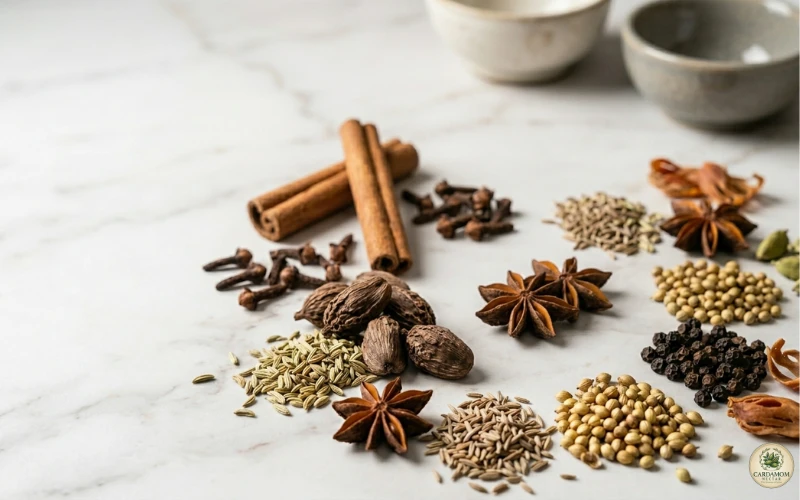
All whole spices for nihari masala measured and laid out on dark surface before toasting
1

Measure Everything Before You Touch the Heat

Measure all whole spices into a single small bowl: black cardamom (lightly cracked with flat of knife), green cardamom (cracked), fennel seeds, coriander seeds, black cumin, regular cumin, peppercorns, cinnamon stick, cloves, bay leaves, star anise, mace, and long pepper if using. Keep the ground powders (dry ginger, Kashmiri chilli, turmeric) in a separate bowl — they are not toasted and go in later. Freshly grate the nutmeg now and add it to the ground powder bowl.

💡 Why this matters: Toasting happens fast — 5 to 6 minutes from cold to done. If you are measuring spices mid-toast, individual components will over-toast and burn. Mise en place (everything measured before starting) is the single most important practice for making any spice blend correctly. Burnt black cardamom tastes acrid and cannot be fixed once it’s in the blend.
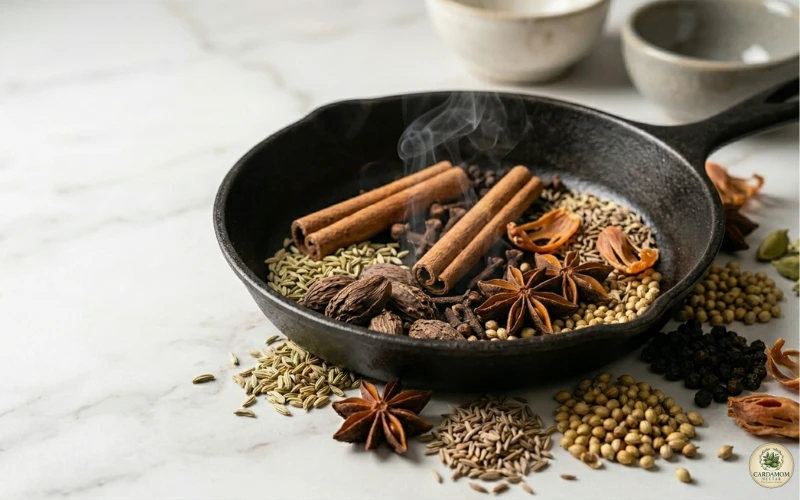
Dry toasting nihari masala whole spices in pan — black cardamom releasing aromatic smoke
2

Toast the Whole Spices Together

Add all whole spices to a cold, dry heavy pan — stainless or cast iron works best. Place over medium-low heat. Do not add any oil. Shake or stir every 45–60 seconds. Toast for 5–6 minutes total. The blend is ready when: the black cardamom seeds begin to pop audibly inside the husk, the cumin seeds turn one shade darker, and the kitchen smells intensely aromatic. Remove from heat immediately at this point — do not wait for smoke.

💡 Why this matters: Dry heat ruptures the cell walls of each spice, releasing the volatile aromatic oils onto the surface of the seeds and pods. This process — called pyrolysis — is not just about aroma: it also initiates Maillard-type reactions in the outer seed coats that create new flavour compounds not present in raw spice. Starting in a cold pan allows even, gradual temperature build-up. A pre-heated pan will scorch the smaller spices (cloves, pepper) before the larger ones (black cardamom) have had time to warm through.
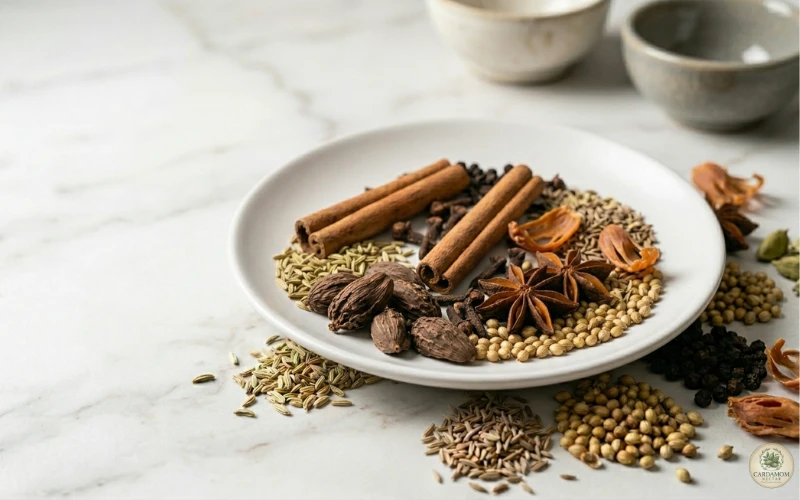
Freshly toasted nihari masala spices spread on wide plate to cool before grinding
3

Cool on a Wide Plate — Do Not Rush This

Immediately tip the toasted spices onto a wide, flat plate or tray. Spread them in a single layer. Leave to cool at room temperature for 8–10 minutes. Do not transfer to a closed container or small bowl while hot. Do not put in the freezer to speed up cooling.

💡 Why this matters: Hot spices placed in a closed container or small bowl continue to steam and self-cook in their residual heat — effectively over-toasting them. Spreading them on a wide surface allows heat to dissipate quickly and evenly. Grinding hot spices also generates steam inside the grinder, which introduces moisture into the powder — moisture is the biggest enemy of shelf life, causing the masala to clump and go rancid in days rather than months.
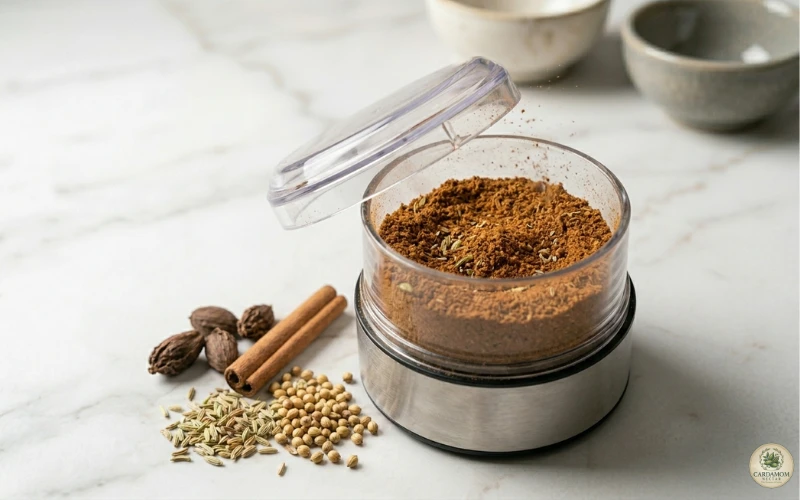
Grinding cooled nihari masala spices in electric spice grinder to fine powder
4

Grind in Short Pulses

Transfer the cooled whole spices to a spice grinder (a dedicated coffee grinder works perfectly). Add the freshly grated nutmeg at this point. Grind in 20-second pulses — run for 20 seconds, open the lid to check, stir or tap down any spice clinging to the sides, run for another 20 seconds. Repeat 3–4 times until the mixture is a uniformly fine powder with no visible seed fragments. Fennel seed husks are the most resistant — they may need an extra pulse.

💡 Why this matters: Short pulses prevent motor overheating which can warm the powder, volatilising the most delicate aromatic compounds before they even go into the jar. 20-second pulses also allow you to check the texture between rounds — over-grinding fennel seeds specifically creates a paste-like texture rather than powder, because their high oil content causes the fine particles to clump. Checking between pulses catches this early.
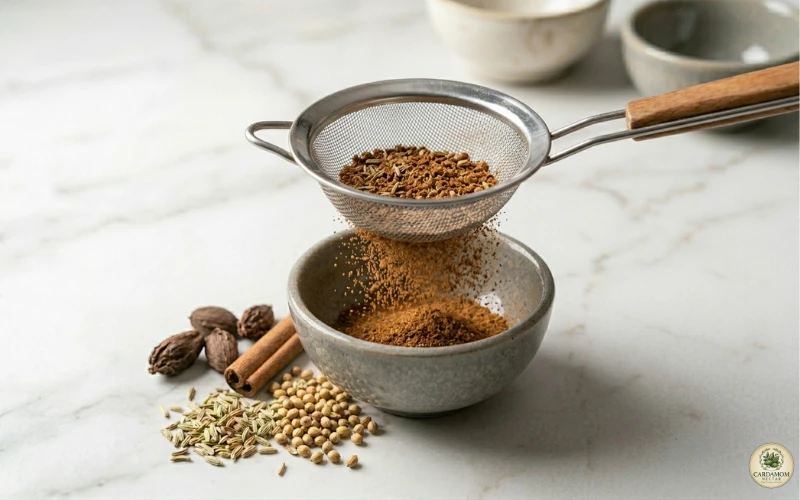
Sieving freshly ground nihari masala through fine mesh sieve to remove fibrous fennel husks
5

Sieve, Then Add the Ground Powders

Pass the entire ground blend through a fine-mesh sieve into a clean bowl. Press with a spoon to push as much through as possible. Discard the fibrous residue left behind — this is primarily fennel husk. Now add the ground powders that were held back: dry ginger powder, Kashmiri chilli powder, and turmeric. Stir thoroughly with a dry spoon until evenly combined — about 1 minute of vigorous stirring. The final colour should be a warm dark brown with a reddish tint from the chilli.

💡 Why this matters: Fennel seeds are unusually fibrous — their outer husk does not fully grind even in a high-powered spice grinder. Left in the masala, these threads will float in the nihari broth and create an unpleasant texture on the palate. Sieving is not optional for a smooth restaurant-quality result. The ground powders (ginger, chilli, turmeric) must be added post-grind because toasting ground powders scorches them almost instantly — adding them raw to the final blend avoids this.
Storing finished nihari masala in sealed glass airtight jar with label showing date
6

Store Correctly — Glass, Airtight, Dated

Transfer the finished nihari masala to a clean, completely dry glass jar with an airtight lid. Tap the jar gently to settle the powder. Seal and label with today’s date and the expiry date (3 months room temperature / 6 months refrigerated). Always use a completely dry spoon when measuring from the jar — even one drop of moisture starts a degradation chain. Store away from direct sunlight and heat sources. This batch yields approximately 80g — enough for five separate 1kg nihari batches.

💡 Why this matters: Glass is essential — plastic containers are slightly gas-permeable, and the volatile aromatic compounds in the masala (especially black cardamom’s cineole) will slowly escape through plastic. Glass seals completely. The airtight seal prevents oxidation of the natural oils, which is the primary mechanism of rancidity in ground spices. Refrigeration slows this oxidation by roughly 50% — the extra 3 months of shelf life from refrigeration are meaningful if you only make nihari occasionally.
Expert Tips

4 Things That Make the Difference

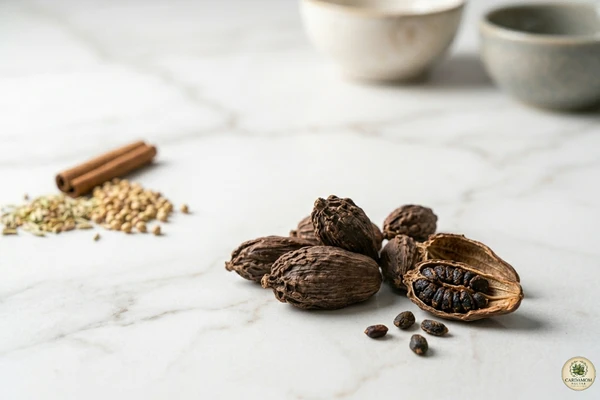
Whole and split black cardamom pods — the structural lead spice in nihari masala

Crack the Black Cardamom — Don’t Crush It

Before adding black cardamom to the toasting pan, place each pod flat on a cutting board and press the flat of your knife blade gently until you hear the husk split. This opens the pod just enough to allow heat to reach the seeds inside. A full crush destroys the pod’s internal structure and causes the seeds to scatter — some will burn before others even start to warm. A gentle crack is the correct technique. The cracked pod also grinds more evenly later because the husk has already been compromised.

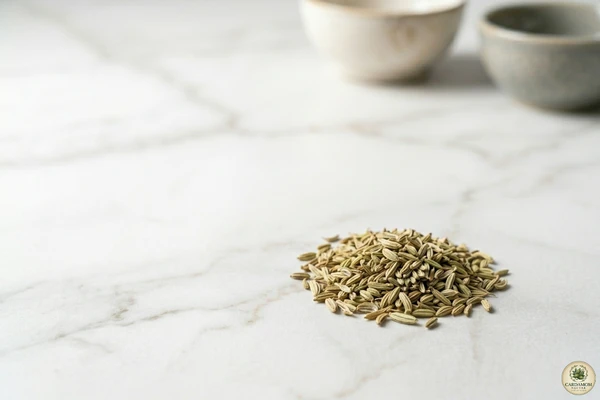
Fennel seeds close-up — the signature flavour compound in authentic nihari masala

Use More Fennel Than You Think — Then Sieve

Most home cooks under-use fennel in nihari masala because they are nervous about it tasting too anise-forward. In the full context of a 6–8 hour braise, fennel’s trans-anethole mellows considerably — what tastes overwhelming in the raw masala becomes a rounded, recognisable undertone in the finished stew. Use the full 2 tbsp, then sieve rigorously after grinding to remove the fibrous husk. The sieved powder is smooth and the anise note is well-integrated, not harsh.

Airtight glass spice storage jars for keeping nihari masala fresh for 6 months

Make a Triple Batch and Refrigerate It

Making nihari masala takes the same effort whether you make one batch or three. A triple batch from this recipe yields enough masala for 15 separate nihari cooks — about one year’s supply for most households. Divide into three identical glass jars: one for the pantry (use within 3 months), two for the refrigerator. The refrigerated batches maintain their black cardamom potency for the full 6 months. Freshly made masala genuinely outperforms store-bought Shan or National brand — the triple batch effort pays for itself in quality.

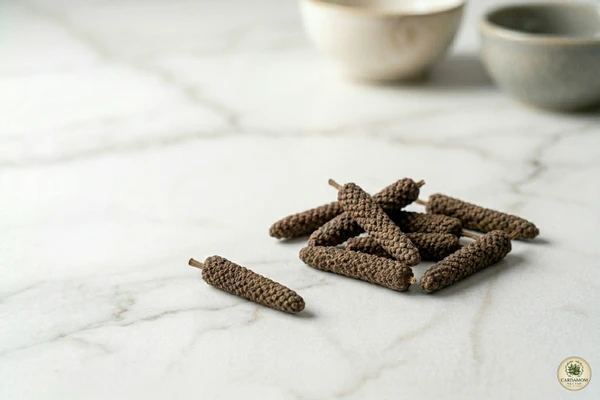
Long pepper pippali whole spice — the traditional Mughal ingredient for authentic nihari masala

Source Long Pepper (Pippali) — It Changes the Whole Blend

Long pepper (pippali) is available at specialist South Asian grocery stores and online in small quantities. It is worth sourcing. The piperine content of long pepper is roughly double that of black pepper, and it carries additional compounds (piperlongumine, methysticin) that black pepper does not. In nihari masala specifically, long pepper adds a slow-building heat with floral undertones that black pepper simply cannot replicate. It is the one ingredient that most clearly marks a masala as authentically Mughal-tradition versus a modern simplification.

Difficulty Level

Difficulty Meter
🌶 🌶 🌶 🌶 🌶
Beginner — 1 of 5
Who Is This For?

If you can measure spices and operate a spice grinder, you can make this masala. The only skill required is knowing when to stop toasting — and the cue (black cardamom seeds begin to pop, cumin darkens) is easy to recognise once you know what to look for. First-time spice blend makers should read the full recipe once before starting and set a 6-minute timer when the pan goes on the heat. The complete batch takes 13 minutes from opening the spice jars to sealing the storage jar.

StageTimeType
Measuring spices3–4 minActive
Toasting whole spices5–6 minActive (watch)
Cooling on plate8–10 minPassive
Grinding in pulses2–3 minActive
Sieving + mixing2 minActive
Transfer to jar1 minActive
Skills Required
  • Can recognise when spices are toasted by smell and colour
  • Has a spice grinder or powerful blender
  • Has a fine-mesh sieve
  • Has airtight glass storage jars

Nutrition Information

Per 1 tablespoon (approx. 4g) · Estimates only — spice blends contribute negligible calories per serving when used in cooking

12kcalCalories
2.1gper tbspCarbs
0.5gper tbspProtein
0.6gper tbspTotal Fat
1.4gper tbspFibre
4mgper tbspSodium

Frequently Asked Questions

The standard ratio is 4 tablespoons (approximately 16g) of nihari masala per 1kg of bone-in meat. For boneless cuts, reduce to 3 tablespoons as flavour concentrates faster without bone. Always split the masala — add half at the start with the meat, and the remaining half in the atta flour slurry added in the final 20 minutes. This two-stage method builds both deep-extracted base flavour and a fresher aromatic finish.
Nihari masala and garam masala share some spices (black cardamom, cinnamon, cloves) but differ fundamentally in purpose and composition. Nihari masala is heavy on fennel seeds and long pepper — neither of which appear in standard garam masala. It also contains dry ginger powder (saunth), which is heat-stable and designed to survive 6–8 hours of slow cooking. Garam masala is added at the end of cooking for freshness; nihari masala is added at the start for deep extraction. You cannot substitute one for the other without significantly changing the dish.
Yes — nihari masala works well in any slow-braised meat dish. It is excellent in haleem, paya (trotters), slow-cooked beef brisket, and bone broth. Use 2 tbsp per kg for dishes with shorter cook times (under 2 hours) since the spices won’t have as long to mellow. Avoid using it in quick-cook dishes like stir-fries — the fennel and long pepper can taste medicinal if not given time to integrate through sustained low heat.
Long pepper (pippali) is a spike-shaped relative of black pepper with approximately double the piperine content plus additional heat compounds. It is a traditional nihari ingredient from the Mughal-era spice tradition. You can skip it — the masala will still be excellent. As a substitute, add an extra ½ tsp of black peppercorns and a small pinch of dried chilli flakes to approximate the additional heat. Long pepper is available at specialist South Asian grocers and online.
In an airtight glass jar at room temperature away from light: 3 months. Refrigerated in a sealed jar: 6 months. The biggest enemy is moisture — even one drop of water in the jar causes clumping and accelerates rancidity. Always use a dry spoon. The volatile oils in black cardamom degrade fastest — by month 4 at room temperature, the camphor-smoky character begins to fade noticeably. Making smaller, fresher batches produces better nihari than one large stale batch made months ago.
The two-stage addition serves two distinct purposes. The first addition (at the start with the meat) goes through 6–8 hours of slow cooking — spices fully extract into the fat and braising liquid, building deep base flavour. The second addition is mixed into the atta (wheat flour) slurry in the final 20 minutes — these spices remain relatively fresh and provide a brighter aromatic top note when the stew is served. Single-stage addition produces a flat, one-dimensional result. The two-stage technique is specific to nihari and is what separates restaurant-quality broth from home cooking.
About the Authors
Emily Rhodes, Culinary Writer and Spice Researcher
Recipe Author Emily Rhodes Culinary Writer & Spice Researcher

Emily covers South Asian spice culture, recipe development, and market sourcing. She has visited spice markets in Kerala, Karachi, and Dubai and writes all recipe content on CardamomNectar. Her research into traditional masala blends draws on direct conversations with Pakistani spice merchants and home cooks across Lahore, Karachi, and Rawalpindi.

View Profile →
Dr. Michael Bennett, Food Scientist and Phytochemist
Fact Reviewer Dr. Michael Bennett Food Scientist & Phytochemist

Dr. Bennett reviews all scientific and technical content on CardamomNectar. His expertise in volatile oil composition and spice phytochemistry ensures all data meets peer-reviewed standards. He verified the 1,8-cineole boiling point data, the two-stage volatile extraction claims, and the heat stability comparison between black and green cardamom discussed in this article.

View Profile →

Similar Posts