⚕️ This is a health information article. It does not replace advice from your doctor, obstetrician, or midwife. View sources
Pregnancy Nutrition · Botanist Reviewed
Is Cardamom Safe During Pregnancy? Safety, Benefits & How Much Is Safe
Everything a pregnant woman needs to know about cardamom (elaichi) during pregnancy — from morning sickness relief to safe daily amounts, first trimester guidance, and what to avoid.
Medical notice: This article is for informational and educational purposes only. It is not a substitute for professional medical advice, diagnosis, or treatment. Pregnancy is a sensitive medical condition — always consult your doctor, obstetrician, or midwife before making any dietary changes, including changes to spice or herbal consumption.
Yes — cardamom (elaichi) is safe during pregnancy in normal culinary amounts. Using 1–2 green cardamom pods in tea, or a small pinch in cooking, is widely considered safe and can actively help with nausea, indigestion, and bloating during pregnancy. However, medicinal doses, concentrated supplements, and cardamom essential oil should be avoided. There is no scientific evidence that culinary cardamom causes miscarriage or fetal harm. Always check with your doctor or midwife before making significant dietary changes during pregnancy.
Safety Overview
Is Cardamom Safe During Pregnancy?
The short answer is yes — cardamom is safe during pregnancy when used as a culinary spice in normal cooking amounts. Cardamom, known as elaichi in Urdu and Hindi, has been a staple in South Asian, Middle Eastern, and Scandinavian kitchens for centuries — consumed regularly by pregnant women without any documented harm.
In South Asian households, elaichi has been part of pregnancy diets for generations — in chai, warm milk, rice dishes, and desserts — without any documented adverse outcomes. Current research supports that moderate consumption during pregnancy is generally safe and can offer meaningful health benefits. Cardamom is rich in essential minerals and antioxidants, which are vital during pregnancy for both maternal health and fetal development.
The critical distinction is between culinary use and medicinal/supplemental use. WebMD notes that cardamom is commonly consumed in foods during pregnancy, but that it is possibly unsafe to take larger amounts as medicine.[1] The amounts used in everyday cooking — a pod or two in tea, a pinch in rice — are far below any threshold of concern.
✅
Safe in culinary amounts: 1–2 whole pods per serving, a pinch of ground cardamom in recipes, or cardamom tea made with 1–2 pods is considered safe during pregnancy by most healthcare professionals. This is the elaichi you add to chai and biryani every day.
⚠️
Use with caution: More than 3–4 pods daily, or any concentrated cardamom supplements, extracts, or essential oils during pregnancy. Research on very high doses is limited — keep intake to culinary levels. If you have a known sensitivity to spices or Zingiberaceae family plants, check with your doctor first.
❌
Avoid entirely: Cardamom supplements, capsules, medicinal tinctures, or concentrated cardamom essential oil taken internally during pregnancy. Research indicates cardamom compounds can cross the placenta at high concentrations — extra caution with concentrated forms is warranted during pregnancy and lactation.[2]
💊
Evidence-Based Benefits
Benefits of Cardamom During Pregnancy
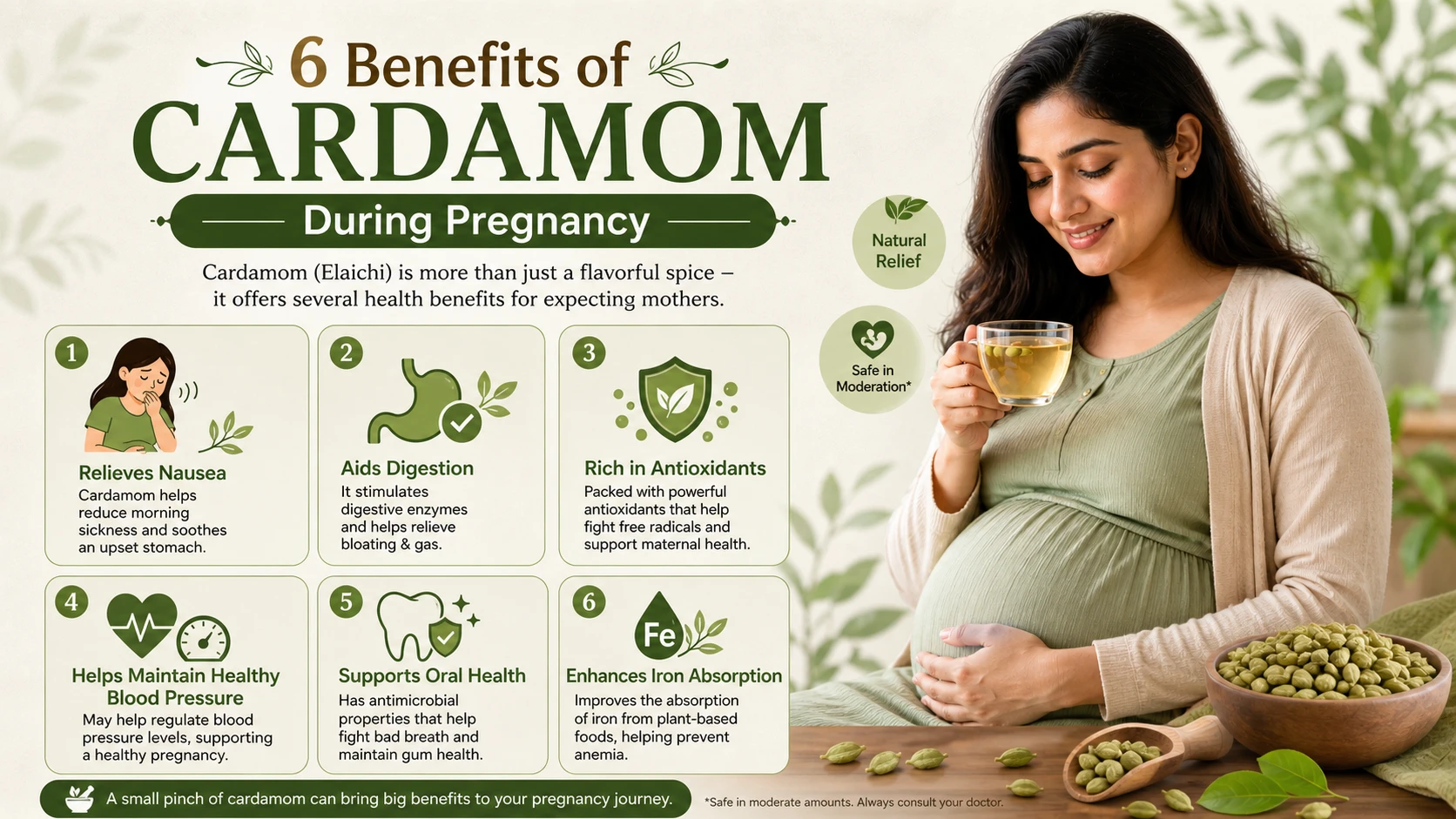
Cardamom is not just safe in moderation — it can be genuinely helpful during pregnancy. Many of the challenges pregnant women face — nausea, bloating, indigestion, and even oral health changes — are exactly what cardamom has traditionally been used to address. For a full breakdown, see our complete cardamom health benefits guide.
🫁
Relieves Nausea & Morning Sickness
The volatile oils in cardamom — particularly 1,8-cineole — soothe the stomach lining and reduce nausea signals from the gut. Many pregnant women find that smelling a crushed elaichi pod or sipping cardamom tea settles a queasy stomach within minutes. A 2015 clinical study found cardamom powder significantly reduced nausea and vomiting in pregnant women.[3]
Source: Complementary Medicine Journal, 2015; DOI: 10.22037/jnms.2015.18.4.5
🔥
Supports Digestion & Reduces Bloating
Pregnancy hormones slow digestion, leading to bloating, gas, and constipation. Cardamom is a carminative spice — it stimulates bile flow and relaxes intestinal smooth muscle. In Ayurveda it is described as a “cooling” (tridoshic) spice especially beneficial when women experience more heat and digestive discomfort in pregnancy. See our cardamom tea for digestion guide.
Source: Ayurvedic Pharmacopoeia of India + digestive research
🛡️
Antioxidant Protection
Pregnancy increases oxidative stress. The antioxidants in cardamom help combat this — important since oxidative stress can impair placental function and fetal development. Cardamom’s ORAC (antioxidant capacity) value is higher than most common kitchen spices, including cinnamon and cloves.[4]
Source: USDA ORAC Database; Spice Unity, 2024
❤️
Blood Pressure Support
High blood pressure is a serious concern in pregnancy (preeclampsia risk). Some studies suggest cardamom can help regulate blood pressure due to mild diuretic properties and vasodilatory effects.[5] However, if you have blood pressure concerns during pregnancy, always consult your doctor before using cardamom therapeutically.
Source: Indian Journal of Biochemistry & Biophysics, 2009
🦷
Oral Health During Pregnancy
Pregnancy hormones increase the risk of gum inflammation (pregnancy gingivitis). Cardamom has natural antimicrobial properties and has been used in Ayurvedic oral hygiene for centuries. Chewing a pod after meals freshens breath and may reduce oral bacteria — particularly useful when pregnancy nausea makes brushing uncomfortable.
Source: Ayurvedic Pharmacopoeia of India
⚡
Rich in Pregnancy-Friendly Minerals
Cardamom contains small amounts of calcium, potassium, magnesium, and iron — all important during pregnancy. While culinary amounts contribute modestly, every micronutrient source adds up across the day. It pairs well with iron-rich foods — for more spice pairings see our complete cardamom guide.
Source: USDA FoodData Central
🤢
Morning Sickness Relief
Can Cardamom Help with Morning Sickness?
This is one of the most common questions pregnant women ask — and the answer is an encouraging yes. Morning sickness, clinically known as Nausea and Vomiting of Pregnancy (NVP), affects up to 80% of pregnant women, mostly in the first trimester, and natural remedies are often the first line of comfort.
Cardamom’s ability to settle nausea comes from its essential oil content. When you crush a pod or sip cardamom tea, the volatile compounds — primarily 1,8-cineole — interact with receptors in the gut and nervous system that regulate nausea signals. This mechanism has parallels with how some anti-nausea medications work, but in a much gentler, food-safe form.
🔬
Research backing: A 2015 Iranian clinical study (Sahraei et al., Complementary Medicine Journal, Vol. 5, No. 4) found that cardamom powder significantly reduced nausea and vomiting in pregnant women compared to placebo. While the study used concentrated powder, the findings confirm real biological mechanisms behind cardamom’s anti-nausea effects.[3]
Quickest Ways to Use Cardamom for Nausea
Smell a crushed elaichi pod (Safe Sniff Test) — the fastest method. Crack one pod and inhale slowly 3–4 times. Relief can come within minutes. Completely safe at any trimester.
Sip warm cardamom tea — 1 pod in hot water, steep 5 minutes. Sip slowly, ideally before your first meal. See our full cardamom tea guide for recipes.
Elaichi doodh (warm cardamom milk) — 2 pods simmered in warm milk is a traditional South Asian remedy for pregnancy nausea, especially effective before bed. See our cardamom milk guide.
Carry a pod in your bag — when nausea strikes unexpectedly (on public transport, at work), a quick sniff of a cardamom pod can take the edge off without any medication.
🏥
Note on severe NVP (hyperemesis gravidarum): For women experiencing severe morning sickness — vomiting 3+ times daily, losing weight, unable to keep liquids down, or needing IV fluids — this is a serious medical condition called hyperemesis gravidarum. Cardamom can be a gentle complement to treatment, not a replacement. Always follow your doctor’s protocol first. Seek urgent medical help if you are unable to stay hydrated.
⚖️
Comparison Guide
Cardamom vs Ginger for Morning Sickness — Which Is Better?
Both cardamom and ginger are traditional remedies for pregnancy nausea — but they work differently and suit different women. Here’s a practical comparison to help you choose or combine them.
Factor
Green Cardamom (Elaichi)
Ginger (Adrak)
Clinical evidence
1 clinical study (2015, NVP-specific)
Stronger — multiple RCTs for NVP
Flavour
Mild, sweet, floral — easier to tolerate
Spicy, pungent — may irritate sensitive stomachs
Best for
Women sensitive to ginger; aromatic relief
Women who tolerate spice; GERD caution
Safe amount
1–2 pods per cup tea; 3–4 pods/day
1g/day (about ½ tsp fresh grated)
Aromatherapy
Very effective — sniffing pod gives fast relief
Less effective as aromatherapy
GERD/heartburn
Soothing — cooling carminative
Can worsen heartburn in some women
Recommended by
South Asian & Middle Eastern traditional medicine
NHS, ACOG, most Western guidelines
💡
Best approach: Use ginger as your primary nausea remedy (more clinical evidence) and cardamom as a complementary option — especially when ginger feels too harsh, or for aromatic relief. A chai made with both 1 cardamom pod + a small slice of fresh ginger is a traditional and effective pregnancy remedy across South Asia.
🫖
Tea Safety
Cardamom Tea During Pregnancy — Is It Safe?
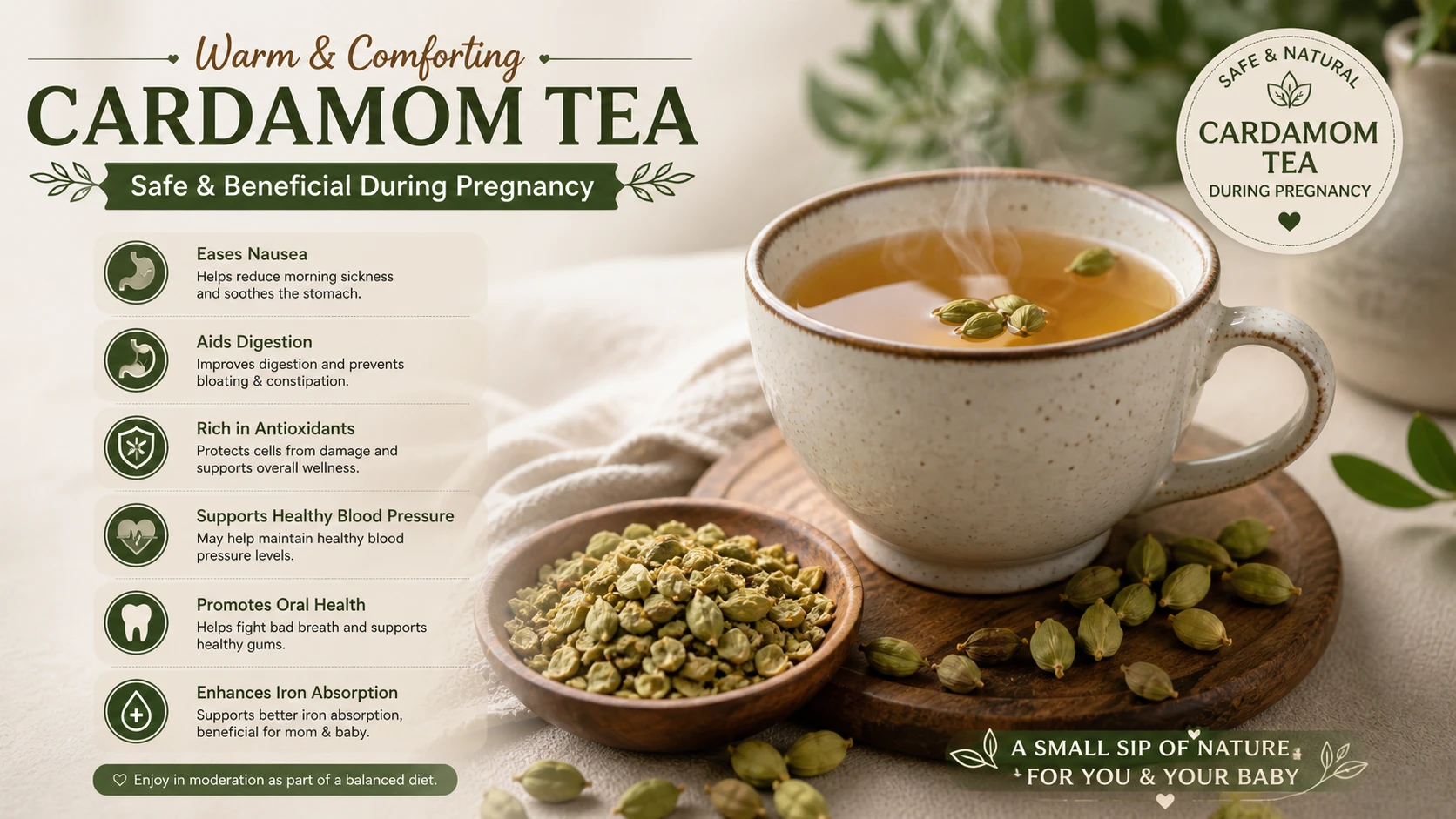
Yes — cardamom tea is one of the safest and most beneficial ways to enjoy cardamom during pregnancy. It is gentle, warming, and particularly helpful for nausea and indigestion. For a full recipe collection including pregnancy-safe options, see our cardamom tea guide.
How to Make Pregnancy-Safe Cardamom Tea
Crush 1–2 green cardamom pods (lightly — just crack them open)
Add to 1 cup of freshly boiled water
Steep for 5 minutes, covered
Strain and sip slowly
Add a small amount of honey if desired (safe after first trimester)
Cardamom in Chai — What About Caffeine?
Many pregnant women in South Asian cultures drink elaichi in their morning chai — black or green tea with 2–3 pods. This is generally fine, provided you keep total daily caffeine under 200mg — the limit recommended by the NHS, WHO, and American College of Obstetricians and Gynecologists (ACOG) for pregnancy.[6]
☕
Caffeine note: Cardamom itself contains zero caffeine — it is the tea base that matters. One cup of black tea chai with cardamom contains approximately 40–70mg caffeine. Two cups per day keeps you safely under the 200mg daily limit. For a completely caffeine-free option (perfect for evening), try our warm cardamom milk recipe. Source: NHS, 2023.[6]
No official medical body has published a precise maximum safe dose of cardamom for pregnant women — primarily because culinary amounts have never been shown to cause harm. The guidance below is based on what practitioners and published research consider safe and reasonable.
Form
Safe Amount
Frequency
Notes
🌿 Whole pods (elaichi)
1–2 pods
Per serving / per cup
Max 3–4 pods per day total
🫙 Ground powder
¼ tsp
Per recipe
Fresh-ground preferred; check labels
🫖 Cardamom tea
1–2 cups
Daily
1–2 pods per cup; caffeine-free base is safest
🍽️ In cooking
Normal recipe amount
Any meal
Standard culinary use — entirely fine
💊 Supplements / capsules
❌ Avoid
—
Concentrated dose — not safe in pregnancy
💧 Essential oil (ingested)
❌ Avoid
—
Never ingest essential oils in pregnancy
💡
Rule of thumb: If you are cooking with cardamom or adding elaichi to tea in the amounts you would normally use — you are in safe territory. Concerns arise only with therapeutic doses that are 10–20× higher than normal cooking use. Not sure which form is freshest? Our cardamom storage guide explains pods vs ground powder freshness.
📅
Trimester Guide
Cardamom by Trimester — What Changes?
Your relationship with cardamom can shift across the three trimesters of pregnancy. Here is a practical guide for each stage.
First Trimester · Weeks 1–12
Most Useful, Most Caution
NVP (morning sickness) peaks here — cardamom is most beneficial
Stick to 1 elaichi pod in tea, 1–2 times daily
Sniffing a crushed pod is completely safe at any stage
Avoid medicinal doses — fetal organ development is active
Consult your midwife if you have any concerns
Second Trimester · Weeks 13–26
Most Comfortable Period
Nausea usually eases — cardamom still helps digestion
Normal culinary use is fine throughout
Heartburn often begins — cardamom tea after meals helps
Elaichi in biryani, chai, and desserts — all fine
Continue to avoid supplements and concentrated forms
Third Trimester · Weeks 27–40
Digestive Focus
Growing baby compresses stomach — GERD and bloating increase
Cardamom tea after meals relieves digestive discomfort
Culinary use remains completely fine in all trimesters
Anecdotal concern about uterine stimulation at very high doses — unproven, but avoid excessive intake as a precaution
Cardamom aroma can ease pregnancy-related fatigue and anxiety
🌿
Type Comparison
Green vs Black Cardamom During Pregnancy
Not all cardamom is the same. Green and black cardamom are completely different plant species with very different flavour profiles and safety considerations in pregnancy. For a full comparison, see our green vs black cardamom guide.
🟢
Green Cardamom
Safe ✓
Elettaria cardamomum — the common culinary spice
Sweet, floral, gentle flavour profile
Widely studied and used in pregnancy traditions
Ideal for tea, chai, rice, milk, and desserts
1–2 pods per cup — well-established as safe
This is what all pregnancy research refers to
⬛
Black Cardamom
Use with caution
Amomum subulatum — a completely different species
Smoky, camphor-like, very intense flavour
Not studied specifically for pregnancy safety
Contains guaiacol — a more potent compound
Best avoided or minimised (1 pod in shared biryani is not a concern)
Never use black cardamom in tea or medicinal form during pregnancy
When this article (or any pregnancy guide) says “cardamom is safe,” it refers specifically to green cardamom (elaichi) — the green pods used in chai, elaichi doodh, and South Asian and Middle Eastern cooking. One black cardamom pod in a large shared pot of biryani is not a concern — but do not use it daily or medicinally during pregnancy.
For the vast majority of pregnant women, cardamom (elaichi) in culinary amounts causes no side effects at all. However, it is worth knowing what to watch for — particularly if you are consuming it regularly.
🤢
Digestive Discomfort at High Doses
Like any spice, very large amounts of cardamom can cause stomach irritation, loose stools, or — ironically — nausea. This only applies to medicinal-level doses, not to 1–2 pods in tea or cooking.
🤧
Allergic Reaction (Rare)
Some people are allergic to Zingiberaceae family plants (cardamom, ginger, turmeric). If you have a known ginger allergy, use cardamom cautiously. Symptoms: skin rash, itching, or swelling. Stop immediately and consult a doctor if this occurs during pregnancy.
💓
Uterine Stimulation — Theoretical Only
Some sources suggest high doses might theoretically stimulate the uterus. Scientific evidence for this is very limited and has not been demonstrated at normal culinary amounts. Normal cooking use — including elaichi in chai daily — is not a documented concern.
💊
Drug Interactions
Cardamom has mild blood-thinning and blood-pressure-lowering properties. If you are on prescribed anticoagulants (blood thinners), antihypertensives, or iron supplements, mention your regular cardamom intake to your doctor — even at culinary amounts it is worth noting.
🚨 When to Call Your Doctor or Midwife
You experience any unusual reaction (rash, swelling, difficulty breathing) after consuming cardamom
You have been consuming cardamom in very large amounts and have concerns
Your pregnancy is classified as high-risk (preterm labour history, preeclampsia, placenta previa)
You are on blood pressure medications or anticoagulants
Your morning sickness is severe — vomiting 3+ times daily, unable to stay hydrated (possible hyperemesis gravidarum)
You have any doubt at all — your doctor or midwife is always the right person to ask
👩⚕️
High-risk pregnancy note: If your pregnancy is classified as high-risk — due to preterm labour history, blood pressure issues, placenta previa, or other complications — speak to your obstetrician before consuming cardamom regularly, even in culinary amounts. Harm from culinary use is not documented, but your specific situation may require extra caution and individualised advice.
🍽️
Practical Guide
Best Ways to Consume Cardamom During Pregnancy
Here are six safe, practical ways to enjoy cardamom (elaichi) while pregnant — all well within safe culinary amounts.
🫖
Cardamom Tea
1–2 crushed pods in hot water, steeped 5 minutes. Best for nausea and morning sickness. Full recipes here →
1–2 pods · 1–2 cups/day
🥛
Elaichi Doodh (Warm Milk)
2–3 pods simmered in warm milk — a traditional South Asian remedy for pregnancy nausea. Soothing before bed. Full recipe →
2–3 pods · Once daily
🍚
In Rice & Curries
Add 2–3 elaichi pods to rice while cooking. Used in biryani, pulao, and curries. Safe throughout all trimesters.
2–3 pods · Per pot
🥣
In Porridge / Oats
A pinch of ground cardamom in morning oats adds flavour and can help settle early-morning nausea before your first meal.
⅛ tsp powder · Per bowl
☕
Cardamom Coffee
A pinch of ground cardamom in your morning qahwa or coffee is traditional and fine. Monitor total caffeine carefully. Guide here →
⅛ tsp · Watch caffeine
👃
Aromatherapy (Safe Sniff)
Crush a pod and inhale slowly 3–4 times. A fast, medication-free nausea remedy. Do not use concentrated cardamom essential oil during pregnancy.
1 pod · As needed
🔄
If a recipe calls for cardamom but you prefer to limit elaichi during pregnancy, our cardamom substitutes guide covers safe, mild alternatives with exact ratios for 50+ dishes.
Yes — cardamom (elaichi) is safe during pregnancy in normal culinary amounts. Using 1–2 pods in tea or a pinch in cooking has not been shown to cause harm. The key is to stick to culinary amounts and avoid supplements or medicinal doses. Always consult your doctor or midwife about any dietary concerns during pregnancy.
Yes — cardamom tea made with 1–2 crushed green cardamom pods is considered safe during pregnancy and can help with nausea and indigestion. Limit to 1–2 cups per day. If you use black tea or green tea as the base, ensure total daily caffeine stays under 200mg (NHS guideline). Plain cardamom pod tea — just pod and water — is completely caffeine-free. See our full tea guide for more recipes.
1–2 whole pods per serving, up to 3–4 pods per day, or up to ¼ teaspoon of ground cardamom per recipe is considered safe. These are normal culinary amounts — the amounts used in everyday South Asian cooking. Avoid exceeding this without speaking to your doctor, and never take cardamom in supplement, concentrated extract, or essential oil form during pregnancy.
There is no scientific evidence that cardamom in normal cooking amounts causes miscarriage. Some sources note that very large, medicinal doses might theoretically affect the uterus, but the amounts used in everyday cooking are far below any concerning threshold. No documented cases of cardamom-induced miscarriage exist in the medical literature. If you have concerns, speak with your obstetrician.
Yes — cardamom is a traditional remedy for Nausea and Vomiting of Pregnancy (NVP). A 2015 clinical study found it significantly reduced nausea and vomiting in pregnant women. The volatile oils in cardamom (1,8-cineole) soothe the digestive tract. Sipping cardamom tea or smelling a crushed pod are both safe and effective methods. For severe NVP (hyperemesis gravidarum), cardamom is a complement to — not a replacement for — medical treatment.
Elaichi in small culinary amounts is generally considered safe in the first trimester — and particularly useful because that is when morning sickness (NVP) is worst. Stick to 1 pod per cup of tea and avoid concentrated forms. The first trimester is when extra caution is warranted for all herbal spices, so consult your midwife if you are unsure. Sniffing a crushed pod is a zero-risk option at any trimester.
Green cardamom (Elettaria cardamomum) is the safe and recommended type during pregnancy — well-studied, gentle, and widely used across South Asian and Middle Eastern culinary traditions. Black cardamom (Amomum subulatum) is a different species with a smoky, intense flavour and stronger compounds. It has not been studied for pregnancy safety and is best avoided or kept minimal. For full details, see our green vs black cardamom comparison.
Yes — cardamom’s carminative and cooling properties make it genuinely helpful for the heartburn and acid reflux (GERD) that many women experience from the second trimester onward. Sipping warm cardamom water or adding a pod to warm elaichi doodh after meals can help settle acid. Unlike ginger, which can worsen heartburn in some women, cardamom is a cooling spice that tends to soothe. If heartburn is severe or persistent, consult your doctor — there are safe prescription options for pregnancy heartburn.
About This Guide
Who Wrote & Reviewed This
Emily Rhodes
Author · Nutrition & Herbal Specialist
Emily Rhodes is a nutrition writer and herbal beverage specialist focused on evidence-based dietary guidance. She researched this article using peer-reviewed studies on cardamom’s effects during pregnancy, traditional Ayurvedic and South Asian dietary guidance, and clinical research on NVP. She writes for pregnant women seeking practical, trustworthy information about natural foods and spices.
Dr. Michael Bennett is a plant scientist specialising in the Zingiberaceae family — the botanical group that includes cardamom, ginger, and turmeric. He reviewed this article for botanical accuracy, verified compound information (1,8-cineole, guaiacol), and assessed citations on cardamom’s perinatal effects. Note: this is a botanical review, not a clinical obstetric medical review.
Editorial scope: This article is reviewed for botanical and nutritional accuracy by Dr. Michael Bennett (botanist, Zingiberaceae specialist). It is not a clinical obstetric review and does not replace advice from your obstetrician, midwife, or GP. The review covers plant chemistry and traditional use — not clinical pregnancy outcomes. Always consult a qualified healthcare professional for pregnancy-specific dietary decisions.
👩⚕️
Always consult your doctor or midwife. This guide provides general botanical and nutritional information about cardamom during pregnancy. Every pregnancy is different. Before making significant dietary changes — including changing how much elaichi you consume — please speak with your obstetrician, midwife, or GP. This is especially important if your pregnancy is classified as high-risk, or if you are taking any prescription medications.
📚 Sources & References
[1] WebMD. Cardamom: Uses, Side Effects, Interactions, Dosage. Reviewed by registered nutritionist. webmd.com
[2] National Library of Medicine. Safety of Herbal Medicines in Pregnancy. LactMed/Drugs & Lactation Database. ncbi.nlm.nih.gov
[3] Sahraei Z, et al. Effect of cardamom on nausea and vomiting of pregnancy. Complementary Medicine Journal, Vol. 5, No. 4, 2015. DOI: 10.22037/jnms.2015.18.4.5