Fenugreek Dosage:
Exact Amounts for Every Goal
Seeds · Powder · Capsules — science-backed doses for blood sugar, breast milk, hair, testosterone, bodybuilding, PCOS and weight loss. With live calculator. Looking for tsp-to-gram conversions instead? See our measurement conversion guide.
General wellness: 1 tsp (5g) seeds or 500mg extract daily · Blood sugar: 2–3 tsp (10–15g) seeds daily · Breast milk: 1,725mg extract 3× daily · Testosterone / bodybuilding: 500–600mg standardised extract daily · Hair growth: 1–2 tsp soaked seeds daily · PCOS: 500mg extract twice daily · Weight loss: 5–8g before main meals
🌿 Fenugreek Dose Calculator
Select your health goal and fenugreek form — get your clinically referenced dose in seeds, teaspoons, grams and capsules instantly.
Quick Goal Presets
⚠️ For informational purposes only. Not medical advice. Consult your doctor before therapeutic use, especially with existing medications or during pregnancy.
Master Fenugreek Dosage Table — All Goals
Doses drawn from clinical studies, the German Commission E monograph, Examine.com meta-analyses, and ESCOP recommendations. Seed doses = whole seeds by weight; extract doses = standardised 50% saponin extract.
| Health Goal | Seeds (g/day) | Seeds (tsp/day) | Extract (mg/day) | Timing | Duration | Evidence |
|---|---|---|---|---|---|---|
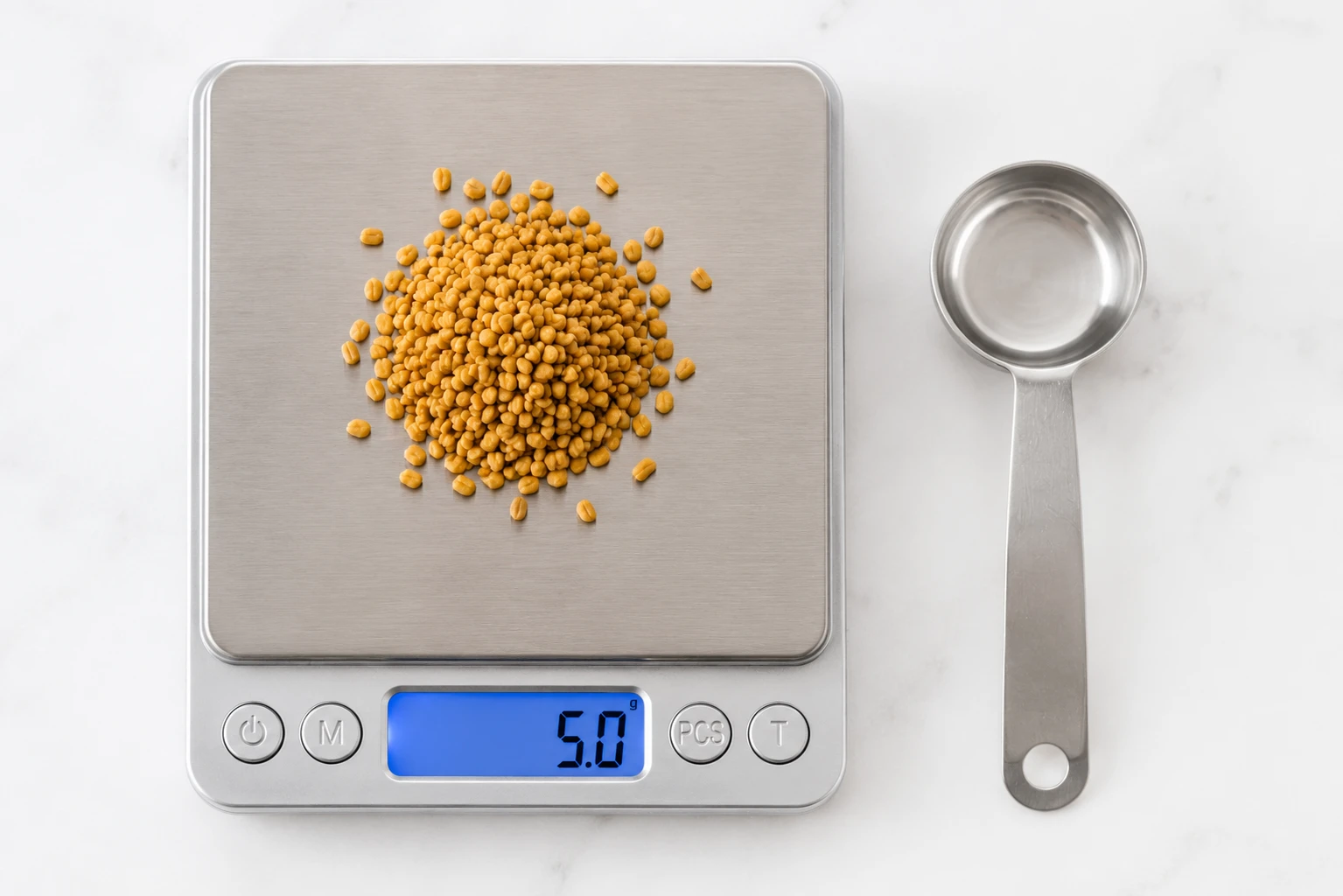
| General wellness | 5g | 1 tsp | 500mg once | Morning, with food | Ongoing | Traditional |
| Blood sugar (Type 2) | 10–15g | 2–3 tsp | 500–2,000mg | 30 min before meals | 4–8 weeks | Strong RCT |
| Breast milk / lactation | 5–10g | 1–2 tsp | 1,725mg × 3/day | Morning + before feeds | 24–72 hrs onset | Good RCT |
| Hair growth | 5–10g | 1–2 tsp soaked | Not studied | Morning soaked water | 8–12 weeks | Observational |
| Testosterone / bodybuilding | Not studied | — | 500–600mg Testofen | Split — AM & PM | 8–12 weeks | Good RCT |
| PCOS / hormonal | 5g | 1 tsp | 500mg twice daily | Morning & evening | 2–3 months | Moderate RCT |
| Weight loss | 5–8g | 1–1.5 tsp | 500mg before meals | 30 min before meals | 4–6 weeks | Good RCT |
| Cholesterol | 5–25g | 1–5 tsp | 1,000mg daily | With meals (split) | 8–12 weeks | Strong RCT |
| Digestion / IBS | 5g | 1 tsp | 500mg once | Morning, empty stomach | 1–2 weeks | Traditional + mechanism |
| Menstrual cramps | 3×3g/day | ~3 tsp day 1–3 | 1,800–2,700mg × 3 | First 3 days of cycle | Each cycle | Good RCT |
| Erectile function | Not studied | — | 600mg daily | Split — AM & PM | 6 weeks+ | Preliminary |
| ⚠️ Maximum safe dose (adults) | ≤21g/60kg body weight | ≤4 tsp | ≤3,000mg | — | Do not exceed | Safety ceiling |
Need exact spoon-to-gram conversions? That full breakdown — seeds, powder, tablespoons and quarter-teaspoon amounts — now lives on its own page: Fenugreek Seeds: Teaspoon to Grams Conversion Guide.
Seeds vs Powder vs Extract — Which Form Is Right?
The form of fenugreek significantly affects both the dose you need and the benefits you get. Note that every dose on this page refers to fenugreek seeds — the leaves (fresh methi or dried kasuri methi) are used differently in cooking and are not interchangeable at these doses; see our fenugreek leaves vs seeds guide if you’re unsure which part you have. Here is a complete breakdown of the seed-based forms:
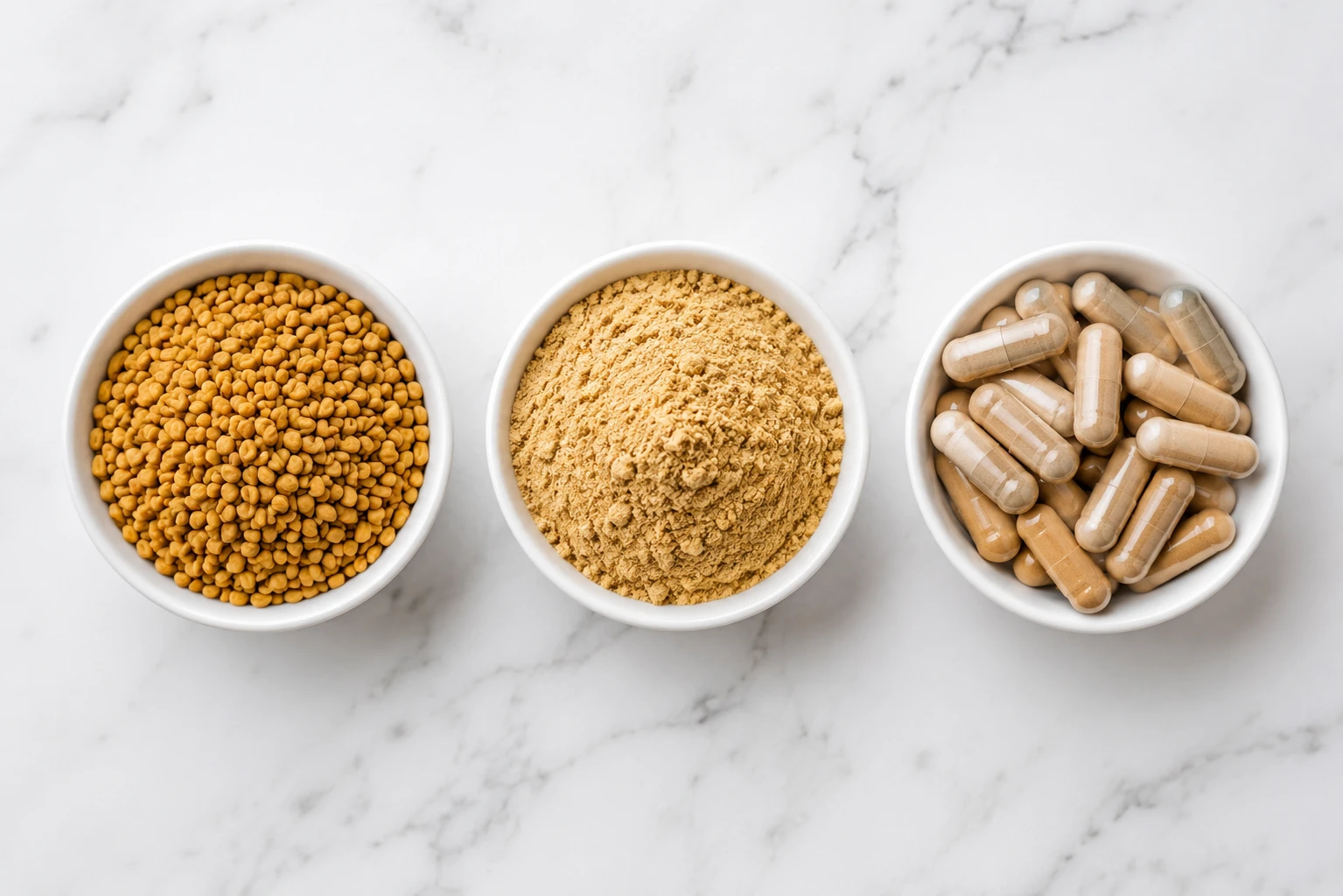
Most versatile and cheapest form. Can be soaked (for fenugreek water), dry-roasted, ground fresh, or added to cooking. Galactomannan content is fully intact. Best for blood sugar, digestion, and general wellness. Potency varies by seed quality — older seeds lose volatile compounds. Best for: blood sugar, digestion, cholesterol, general health.
Easier to incorporate into food, smoothies, and water. Slightly denser than seeds — 1 tsp powder ≈ 3.5–4g. Loses potency faster than whole seeds once opened (6–12 months). Good for cooking-based dosing. Less precise for therapeutic use. Best for: adding to food, cooking, hair masks, mixing into drinks.
Most precise form for therapeutic goals. Standardised to 50% saponins (Fenuside/Furostanolic saponins) ensures consistent potency. Equivalent to much larger seed quantities in terms of active compounds. Most studies on testosterone and PCOS used this form specifically. Best for: testosterone, bodybuilding, PCOS, breast milk (1,725mg × 3/day), hormonal goals.
There is a fourth, less common form — sprouted fenugreek seeds, which have a milder flavour and slightly different nutrient profile than raw or soaked seeds. Also double-check what’s in your spice cupboard: fenugreek seeds are frequently confused with fennel seeds at the grocery store — they look similar but are unrelated botanically and have very different dosage guidance. See fenugreek vs fennel seeds if you’re not sure which one you have.
🩸 Fenugreek Dosage for Blood Sugar
This is fenugreek’s best-evidenced application. A 2022 meta-analysis of 12 RCTs in the Journal of Ethnopharmacology confirmed that fenugreek supplementation significantly reduced fasting blood glucose by 14–23 mg/dL in people with type 2 diabetes. The mechanism is galactomannan — the soluble fibre that slows glucose absorption.
Clinical dose: 10–15g of fenugreek seed powder daily, divided across meals. Equivalent to 2–3 teaspoons whole seeds. For seeds: soak overnight then eat with your meal. For powder: 5g (1 tsp) with breakfast + 5g with dinner.
Prediabetes prevention: A 3-year study showed 10g per day (2 tsp) divided into two 5g doses before meals reduced progression from prediabetes to type 2 diabetes by 56% compared to placebo. This is one of the most compelling long-term fenugreek studies available.
Medication interaction: If you take metformin, insulin, glipizide, or any hypoglycaemic medication — monitor blood sugar closely when starting fenugreek. The combination can cause hypoglycaemia. Consult your doctor before starting therapeutic doses with diabetes medication.
🤱 Fenugreek Dosage for Breast Milk
Fenugreek is the most widely used herbal galactagogue (milk-stimulating herb) globally. A controlled trial found breast milk volume increased from 34ml to 73ml per pumping session in the fenugreek group — more than doubling output. The Academy of Breastfeeding Medicine includes it in its galactagogue protocol.
Clinical dose: 1,725mg of fenugreek seed extract, three times daily (total 5,175mg/day). As whole seeds: 5–10g (1–2 tsp) daily as soaked seeds or fenugreek water. Results typically appear within 24–72 hours. A maple-syrup scent in urine and sweat confirms absorption — this is harmless.
Signs it is working: Increased milk volume during pumping, baby feeding more contentedly, maple-syrup smell in mother’s (and sometimes baby’s) urine. When to stop: If baby shows signs of GI upset (unusual fussiness, green watery stools) — discontinue and GI symptoms resolve within 24–48 hours.
💇 Fenugreek Dosage for Hair Growth
Fenugreek supports hair health through two distinct pathways: internally via iron, protein, and nicotinic acid that nourish hair follicles from within, and externally via lecithin and saponins that coat the hair shaft and strengthen it. The iron provided by fenugreek is particularly significant — iron deficiency is the leading nutritional cause of hair loss in women.
Internal dose: 1–2 tsp (5–10g) soaked fenugreek seeds daily as fenugreek water. Drink on an empty stomach in the morning for maximum iron absorption. External (topical): Blend soaked fenugreek seeds with water or coconut oil into a paste. Apply to scalp 20–30 minutes before washing. 2–3 times per week.
For significant hair growth results, consistency over 8–12 weeks is essential — hair growth cycles take time. Combining internal fenugreek water with weekly topical application shows the most consistent user-reported results in observational data.
For a full hair-specific guide with recipes and application methods, see our dedicated fenugreek for hair page.
💪 Fenugreek Dosage for Testosterone & Bodybuilding
The most studied form for testosterone is Testofen — a fenugreek extract standardised to 50% Fenuside (furostanolic saponins). In a 2011 double-blind RCT of 60 healthy men aged 25–52, 600mg Testofen daily for 6 weeks significantly improved sexual function scores and maintained free testosterone levels compared to placebo. A 2016 study confirmed 12% improvement in free testosterone with 300mg twice daily for 8 weeks.
Testosterone dose: 500–600mg standardised fenugreek extract (50% saponins) daily. Split as 300mg AM + 300mg PM. Use for 8–12 weeks. Whole seeds at culinary doses do not provide consistent enough saponin concentrations for this specific goal — use a standardised extract.
Bodybuilding & Gym Use
Bodybuilders take fenugreek at the same dose used in the testosterone studies above — 500–600mg standardised extract daily — rather than a separate “bodybuilding dose.” The interest comes from two overlapping mechanisms: the modest free-testosterone support noted above, and galactomannan’s role in blunting post-meal blood sugar spikes, which some lifters use around high-carb refeed meals. There is no clinical evidence that fenugreek meaningfully increases muscle mass or strength on its own — treat it as a secondary support supplement, not a replacement for training, protein intake, or sleep.
Fenugreek for Erectile Function
A small preliminary study using 600mg of standardised fenugreek extract daily for 6 weeks reported improvements in self-reported sexual function and energy in healthy men, likely linked to the same modest free-testosterone effect rather than a direct vascular mechanism. Evidence here is limited — fenugreek should be viewed as a mild supportive supplement, not a treatment for diagnosed erectile dysfunction, which should be evaluated by a doctor.
Phytoestrogen note: Fenugreek’s phytoestrogens at typical supplement doses (500–600mg extract) do not cause feminising effects in men — the concentration is far too low. This is a common concern that clinical data does not support at standard doses.
🌸 Fenugreek Dosage for PCOS
PCOS (polycystic ovary syndrome) involves insulin resistance, elevated androgens, and hormonal dysregulation — all areas where fenugreek has mechanistic relevance. Its galactomannan fibre improves insulin sensitivity, and its steroidal saponins (diosgenin) modulate oestrogen activity. A 2015 study found a significant reduction in cyst size and hormonal markers in women with PCOS taking fenugreek seed extract for 90 days.
PCOS dose: 500mg standardised fenugreek extract twice daily (1,000mg total). As seeds: 1 tsp soaked seeds morning + evening. Consistency for 2–3 months is key — hormonal benefits accumulate gradually. Combine with a low-glycaemic diet for maximum insulin-sensitising effect.
Fenugreek’s insulin-sensitising and hormone-modulating effects are the same mechanisms behind its use for general blood sugar and cholesterol management — see the blood sugar dosage section above for the shared galactomannan mechanism.
⚖️ Fenugreek Dosage for Weight Loss
A 2015 randomised study found that 8g of fenugreek fibre consumed before a meal reduced subsequent fat intake by 17% and total calorie intake significantly. The mechanism is galactomannan expanding in the stomach, creating satiety signals before glucose from food arrives. This makes timing critical — fenugreek water or seeds must be taken 20–30 minutes before eating, not with or after food.
Weight loss dose: 5–8g (1–1.5 tsp) of whole seeds or seed powder, taken 20–30 minutes before your two largest meals. As fenugreek water (soaked overnight): drink 1 cup on an empty stomach in the morning. For appetite suppression: 1 tsp seeds in 500ml water before lunch and dinner.
⏰ Fenugreek Dosage Timing — By Goal
Galactomannan needs time to form its gel in the stomach before food arrives. Split daily dose across breakfast and dinner for best glucose control.
Soaked fenugreek water on an empty stomach — 15–30 min before breakfast. Maximum absorption of iron and galactomannan. Best for hair and general wellness.
1,725mg extract three times daily — morning, midday and before the evening feed. Consistency matters more than exact timing. Do not skip doses.
500–600mg total split as 250–300mg morning + 250–300mg evening. Splitting extract doses maintains more consistent serum levels throughout the day.
Must be taken before eating for appetite suppression to work. Drink fenugreek water before breakfast; take seeds before lunch and/or dinner.
3g three times daily during the first three days of menstruation only. Targeted short-term dosing — not continuous daily use for this specific purpose.
⚠️ Side Effects & Safety Limits
⚡ Common Side Effects
- Maple-syrup odour in urine & sweat (harmless — sotolone excretion)
- Bloating, gas, flatulence in first week (fibre adjustment)
- Mild diarrhoea at doses above 15g/day
- Nausea on a completely empty stomach — take after a glass of water
- Bitter taste — improves with soaking or capsule form
⚠️ Medication Interactions
- Diabetes drugs — additive glucose lowering (monitor closely)
- Warfarin / blood thinners — mild anticoagulant effect; consult doctor
- Thyroid medication — galactomannan may reduce absorption (take 2h apart)
- Phenytoin / antiepileptics — may reduce drug levels
- Sildenafil (Viagra) — may reduce plasma levels
🔵 Who Should Avoid Therapeutic Doses
- Pregnant women — uterine-stimulant effects at high doses; avoid >culinary amounts
- Peanut / chickpea allergy — cross-reactive legume; allergy possible
- Pre-surgery — stop 2 weeks before (blood sugar + anticoagulant effects)
- Children under 2 — insufficient safety data for medicinal doses
- Legume allergy — soybean, lentil, green pea cross-reactivity documented
Generally safe: Fenugreek seed powder is possibly safe when taken for up to 3 years (WebMD/NLM). The absolute safe upper limit is 350mg/kg body weight per day (≈21g for a 60kg adult). Most therapeutic doses are well below this ceiling.
Fenugreek Dosage — FAQs Answered
It depends entirely on your goal. For general wellness: 1 tsp (5g) seeds or 500mg extract daily. For blood sugar: 10–15g seeds (2–3 tsp) per day. For breast milk: 1,725mg extract three times daily. For testosterone or bodybuilding: 500–600mg standardised extract daily. For hair growth: 1–2 tsp soaked seeds in fenugreek water daily. For PCOS: 500mg extract twice daily. Always start at the lowest dose and increase gradually over 1–2 weeks to allow your digestive system to adjust to the increased fibre intake.
No reliable clinical evidence supports this. Fenugreek contains mild phytoestrogens (plant compounds that weakly interact with oestrogen receptors), which is where the claim originates, but no controlled trial has measured actual breast tissue growth or cup-size change from any fenugreek dose — seeds, powder, or extract. Some people report temporary fullness, which is more consistent with water retention or a placebo response than tissue growth. Fenugreek is well-studied for blood sugar, lactation support, and hormonal balance in PCOS — but breast enlargement is not one of its evidence-backed uses, and it should not be taken with that expectation.
There is no separate “bodybuilding dose” — lifters use the same protocol studied for testosterone support: 500–600mg of standardised fenugreek extract (50% saponins) daily, split as 300mg in the morning and 300mg in the evening, for 8–12 weeks. This is associated with modest free-testosterone and strength-training performance improvements in RCTs, alongside general metabolic support around high-carb meals. It is not a muscle-building compound on its own and works best alongside consistent training, adequate protein, and sleep — not as a substitute for them.
Evidence is limited but suggestive. A small study using 600mg of standardised fenugreek extract daily for 6 weeks found improvements in self-reported sexual function and energy in healthy men, likely tied to the same modest free-testosterone support seen in bodybuilding studies rather than a direct effect on blood flow. Fenugreek is not a validated treatment for diagnosed erectile dysfunction — if ED is persistent, see a doctor to rule out cardiovascular, hormonal, or medication-related causes before relying on a supplement.
Yes — 1 teaspoon (approximately 5g) of fenugreek seeds per day is an effective dose for general wellness, digestive health, mild blood sugar support, and as a starting dose for most health goals. For more specific therapeutic purposes (significant blood sugar reduction, breast milk increase, testosterone), clinical studies have used higher doses of 10–15g seeds or 500–1,725mg standardised extract. One teaspoon is an excellent, sustainable starting dose that can be maintained indefinitely for general health.
The clinical dose for breast milk is 1,725mg of fenugreek seed extract taken three times daily (total 5,175mg per day). This is equivalent to approximately 1–2 teaspoons (5–10g) of whole seeds daily, though extract is more reliable for this specific goal. Results typically appear within 24–72 hours of starting. A maple-syrup smell in urine confirms the fenugreek is being absorbed. If baby shows GI disturbance, reduce the dose by half and see if it resolves.
Testosterone studies used 500–600mg of standardised fenugreek extract (50% saponins) per day for 8–12 weeks. The most studied branded form is Testofen (300mg twice daily). Whole seeds at culinary doses do not provide consistently measurable testosterone effects because saponin concentration varies too much by seed source and storage. If testosterone is your primary goal, a standardised extract is significantly more reliable than seeds. Effects at 8–12 weeks include improved free testosterone levels, libido scores, and energy.
For most standard 500mg capsules: 1 capsule daily for general wellness. 1–2 capsules twice daily for blood sugar, PCOS, or testosterone goals. 3 capsules (1,725mg) three times daily for breast milk. The total varies by capsule size — always check the mg per capsule on your supplement’s label and match to the clinically studied dose for your goal. Most therapeutic goals require 500–1,500mg total per day, with breast milk being the highest at approximately 5,000mg/day.
The toxicological safe upper limit is 350mg per kg of body weight per day (approximately 21g for a 60kg adult). Practically, exceeding 3 teaspoons (15g) of seeds or 3,000mg extract daily regularly is not recommended. At high doses: diarrhoea and cramping from excessive fibre, hypoglycaemia (especially with diabetes medication), and mouth ulcers. Pregnant women should avoid therapeutic doses entirely — stick to small culinary amounts. Do not take more than label-recommended doses without medical supervision.
Morning (empty stomach) is best for: fenugreek water, hair growth, general wellness, and weight loss. The galactomannan is absorbed fastest on an empty stomach and iron absorption is highest in the morning. Before meals (30 min) is best for: blood sugar and weight management — galactomannan needs time to form its gel before food arrives. Split AM and PM is best for: testosterone, bodybuilding and PCOS (maintains more even serum levels). Three times daily is required for: breast milk production (clinical protocol). For most people, consistency in their chosen timing matters more than the specific time chosen.
The most studied dose for weight management is 5–8g (1–1.5 tsp) of fenugreek seeds or powder taken 20–30 minutes before your largest meal. The 2015 RCT showing 17% fat intake reduction used 8g of fenugreek fibre before a single meal. For daily use: 1 tsp seeds in soaked water before breakfast, and 1 tsp in water before lunch or dinner. Weight loss results require consistent daily use over 4–6 weeks combined with a caloric deficit — fenugreek supports but does not replace dietary changes.
The clinically validated dose for blood sugar is 10–15g of fenugreek seed powder daily (2–3 teaspoons), ideally split across two main meals. For extract: 500–2,000mg standardised extract per day. The German Commission E and ESCOP both recommend fenugreek as an adjunct for type 2 diabetes management. At 15g/day over 4–8 weeks, meta-analyses show fasting glucose reduction of 14–23 mg/dL and HbA1c reduction of 0.6–1.2%. If you take diabetes medication, blood glucose monitoring is essential when starting therapeutic fenugreek doses.
Timeline varies by goal: Digestion: 3–5 days. Appetite suppression: from first dose (taken before meals). Breast milk: 24–72 hours. Blood sugar: measurable reduction in 4–8 weeks. Cholesterol: 8–12 weeks. Testosterone / bodybuilding: 8–12 weeks. PCOS / hormonal: 2–3 months. Hair growth: 8–12 weeks (combined internal + topical). Consistency is the single biggest predictor of results — skipping days prevents cumulative benefits from building. Track your starting markers (blood tests, photos for hair) to measure progress objectively.
It depends on your goal. Seeds (whole, soaked) are best for blood sugar, digestion, cholesterol, and hair — galactomannan is fully intact and you benefit from the complete fibre matrix. Powder is convenient for adding to food and making face/hair masks but loses potency faster. Standardised extract capsules (50% saponins) are best for testosterone, bodybuilding, PCOS, and breast milk — the active compounds are concentrated and consistent. For most general health goals, seeds are the most cost-effective and nutritionally complete form.
Yes — daily fenugreek use at moderate doses is safe for most healthy adults. NLM/WebMD rates fenugreek seed powder as “possibly safe for up to 3 years” of daily use. Many people across South Asia take fenugreek water every morning as a lifelong health practice. Avoid daily medicinal doses during pregnancy. People on medication for diabetes, blood pressure, or blood thinning should check with their doctor before making high-dose fenugreek a daily routine.
The most-studied dose for PCOS is 500mg standardised fenugreek extract twice daily (total 1,000mg per day), taken consistently for 2–3 months. As seeds: 1 teaspoon of soaked fenugreek seeds morning and evening. A 2015 study using a specific fenugreek seed extract (FenuSEEDS) found significant reduction in ovarian cyst size and LH:FSH ratio over 90 days. PCOS benefits come from insulin sensitisation (via galactomannan) and hormonal modulation (via steroidal saponins) — both mechanisms require consistent long-term use to show effect.
For most health goals (blood sugar, digestion, cholesterol, general wellness), the dosage is the same for men and women. Where it differs: Testosterone and bodybuilding (men): 500–600mg standardised extract daily for 8–12 weeks. Breast milk and PCOS (women only): specific doses above. Menstrual cramps (women): 3g × 3 times/day only during first 3 days of cycle. The phytoestrogens in fenugreek at standard dietary doses do not cause hormonal effects in men — concentrations are too low for measurable oestrogenic activity, and equally do not cause breast tissue changes in women.
Methi dana (fenugreek seeds) is safe in the following daily amounts for adults: General health: 1 tsp (5g). Therapeutic: up to 3 tsp (15g). Maximum ceiling: 4 tsp (20g) — approximately 350mg per kg body weight. Beyond 15g daily, GI side effects (flatulence, diarrhoea) become more common. The German Commission E monograph recommends 6g daily as a standard therapeutic dose — approximately 1.2 teaspoons. At culinary amounts used in Indian cooking (a pinch to ½ tsp in recipes), fenugreek is completely safe for everyone including pregnant women. (Fenugreek goes by many regional names — see fenugreek in Arabic for the Middle Eastern naming and traditional dosing context.)
Fenugreek generally combines well with other supplements with a few cautions. Safe combinations: Iron supplements (fenugreek enhances absorption), zinc, magnesium, B vitamins, vitamin D, ashwagandha. Use caution with: Chromium picolinate or berberine (additional blood sugar lowering — monitor glucose), garlic or omega-3 supplements (additional anticoagulant effect). Avoid or space apart: Thyroid medication — take 2+ hours apart as galactomannan may reduce absorption. Diabetes medication — monitor blood sugar closely as effects are additive.
Fenugreek smells and tastes like maple syrup once cooked or soaked — caused by the compound sotolone (also found in actual maple syrup, lovage, and aged spirits). Raw seeds are intensely bitter first. The stronger the maple-syrup scent in your urine and sweat after taking fenugreek, the more sotolone your body is excreting — a practical indicator that you are absorbing it at your current dose. The scent is entirely harmless but can startle people who don’t expect it. For more detail, see our what does fenugreek taste like guide.
Week 1: Start with ½ teaspoon (2.5g) of whole seeds soaked overnight and consumed in the morning as fenugreek water. This allows your gut microbiome to adjust to the galactomannan without the bloating and gas that comes from a sudden large fibre increase. Week 2: Increase to 1 teaspoon (5g). Week 3+: Increase to your goal-specific therapeutic dose if needed, adding 1 tsp per week. If you experience significant GI discomfort at any stage, stay at the lower dose for another week before increasing. Most people are completely comfortable at 1 tsp daily within 2 weeks of starting.
More Fenugreek Guides
Who Wrote & Reviewed This Guide

Dr. Laura Harrington is a botanist and herbal wellness researcher passionate about medicinal plants, traditional remedies, and evidence-based natural health. Through CardamomNectar, she shares science-backed insights on herbs, spices, and holistic nutrition in a simple and practical way for everyday readers.

Dr. Sarah Mitchell is a botanist and herbal medicine researcher who reviews scientific accuracy at CardamomNectar. She verified all clinical dosage data, drug interaction information, and safety limits in this guide against peer-reviewed literature and pharmacological databases on Trigonella foenum-graecum.
Neelakantan N et al. (2014) — Effect of fenugreek on glycaemia and insulin resistance. Nutrition Journal. PubMed PMID:26702122
Poole C et al. (2010) — The effect of a commercially available botanical supplement on strength, body composition, power output and hormonal profiles in resistance-trained males. J Int Soc Sports Nutr. (Testofen study)
Sreeja S et al. (2010) — Phytoestrogen activity of fenugreek seed extract. Indian J Physiol Pharmacol.
Younesy S et al. (2014) — Fenugreek for dysmenorrhea randomised trial. J Reprod Infertil.
German Commission E Monograph — Fenugreek seeds (Bockshornsame). 6g daily recommended therapeutic dose.
Examine.com (2026) — Fenugreek evidence-based supplement page. Accessed July 2026.
WebMD/NLM — Fenugreek safety: possibly safe when powder taken for up to 3 years.
Consensus meta-analysis (2025) — Fenugreek dosage for blood pressure and metabolic syndrome. 10–15g/day, up to 12 weeks.
Medical Disclaimer: This guide is for informational purposes only and does not constitute medical advice. Always consult a qualified healthcare professional before using fenugreek therapeutically, especially if pregnant, breastfeeding, or taking medication for diabetes, blood pressure, blood thinning, or thyroid conditions.