Black Cardamom Simple Syrup
The master recipe every cardamom cocktail starts with. 2:1 sugar to water, 4–6 crushed pods, 48-hour cold steep. The camphor-smoke syrup that turns a standard old fashioned into something a bartender would charge $18 for.


How to Make Black Cardamom Simple Syrup
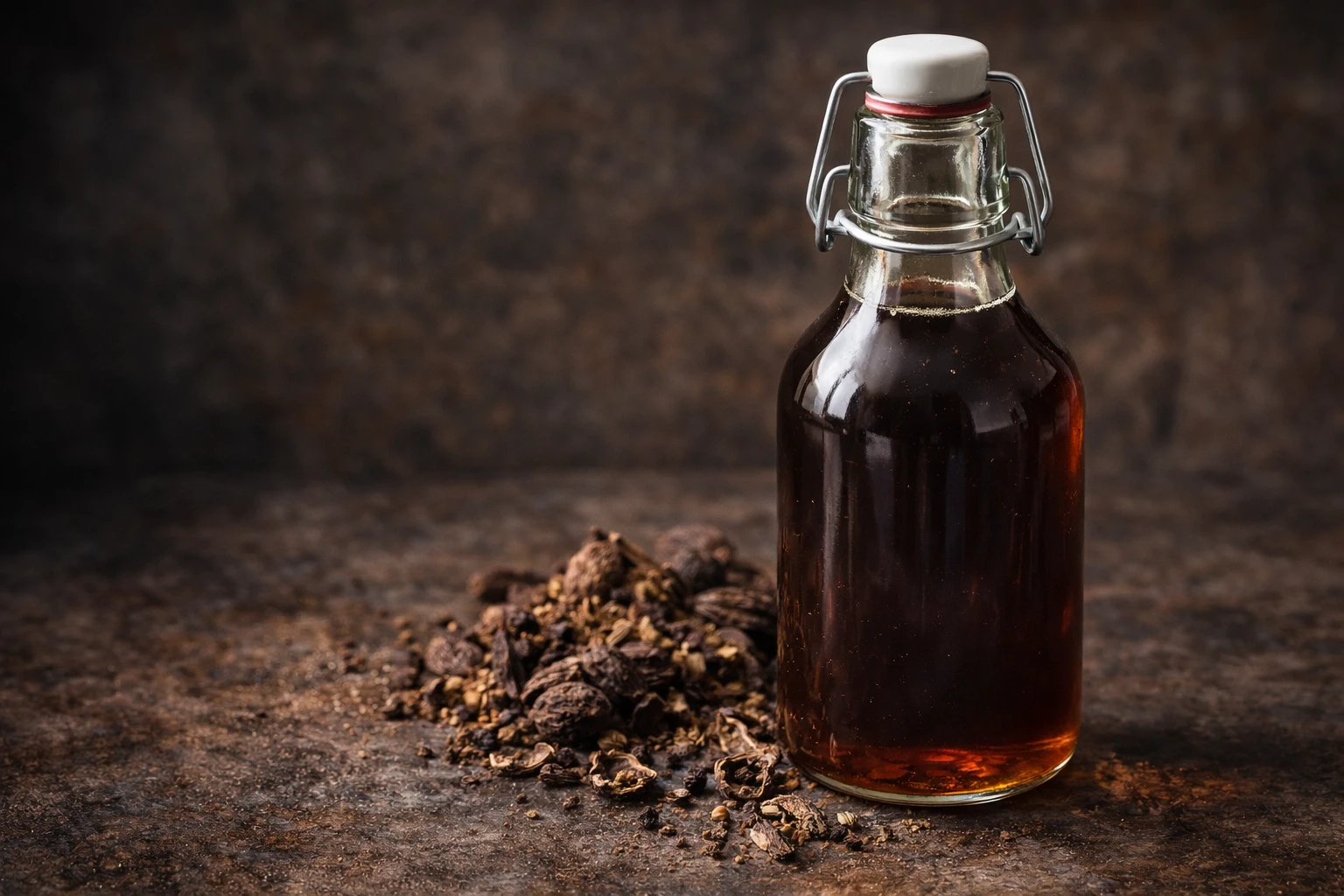
Black cardamom simple syrup is made at a 2:1 sugar-to-water ratio with 4–6 lightly crushed pods cold-steeped for 48 hours. The result is a dark amber syrup with a deep camphor-smoke flavour that no other spice replicates.
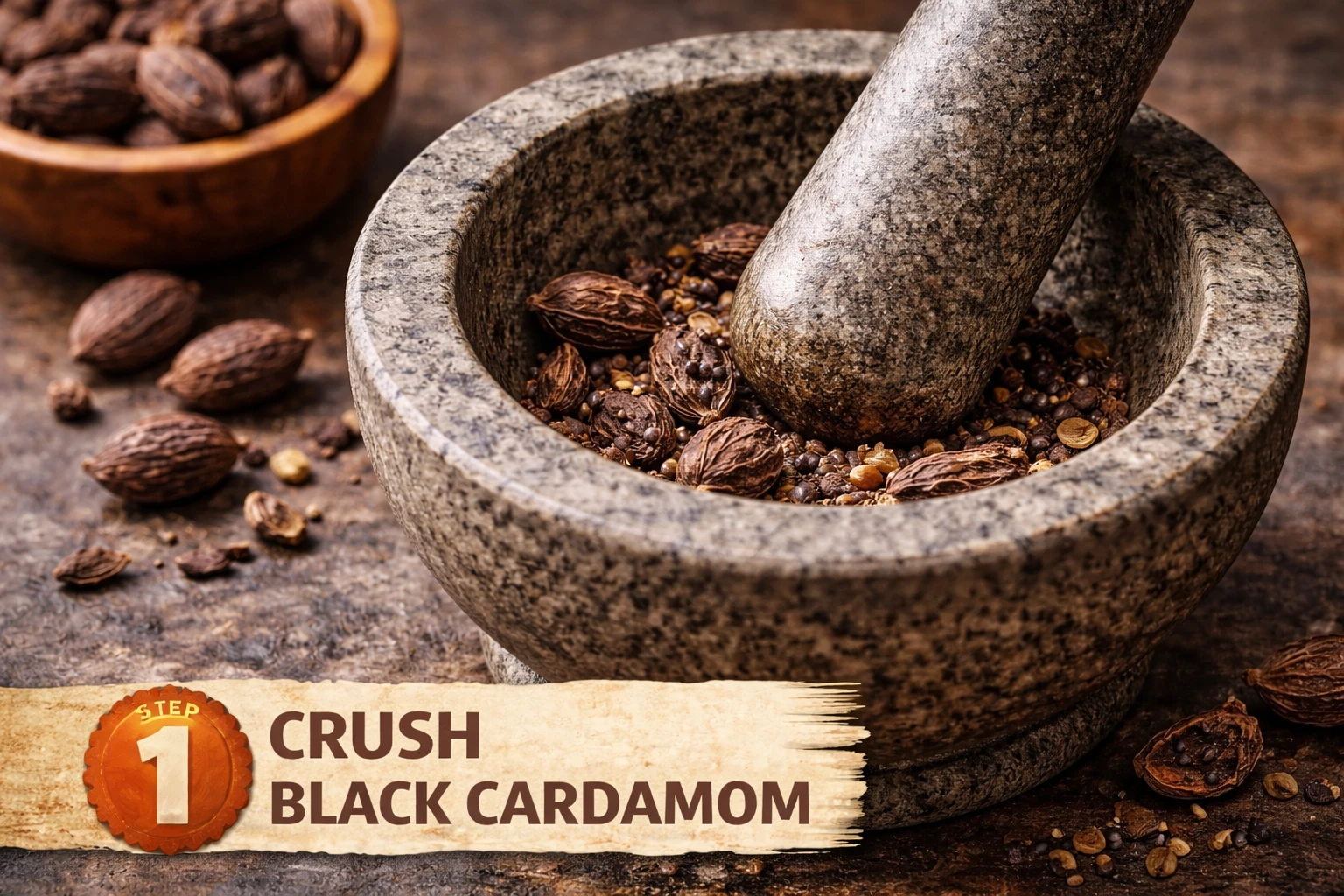
- 1Crush 4–6 black cardamom pods lightly — split the husk, expose the seeds, do not pulverise
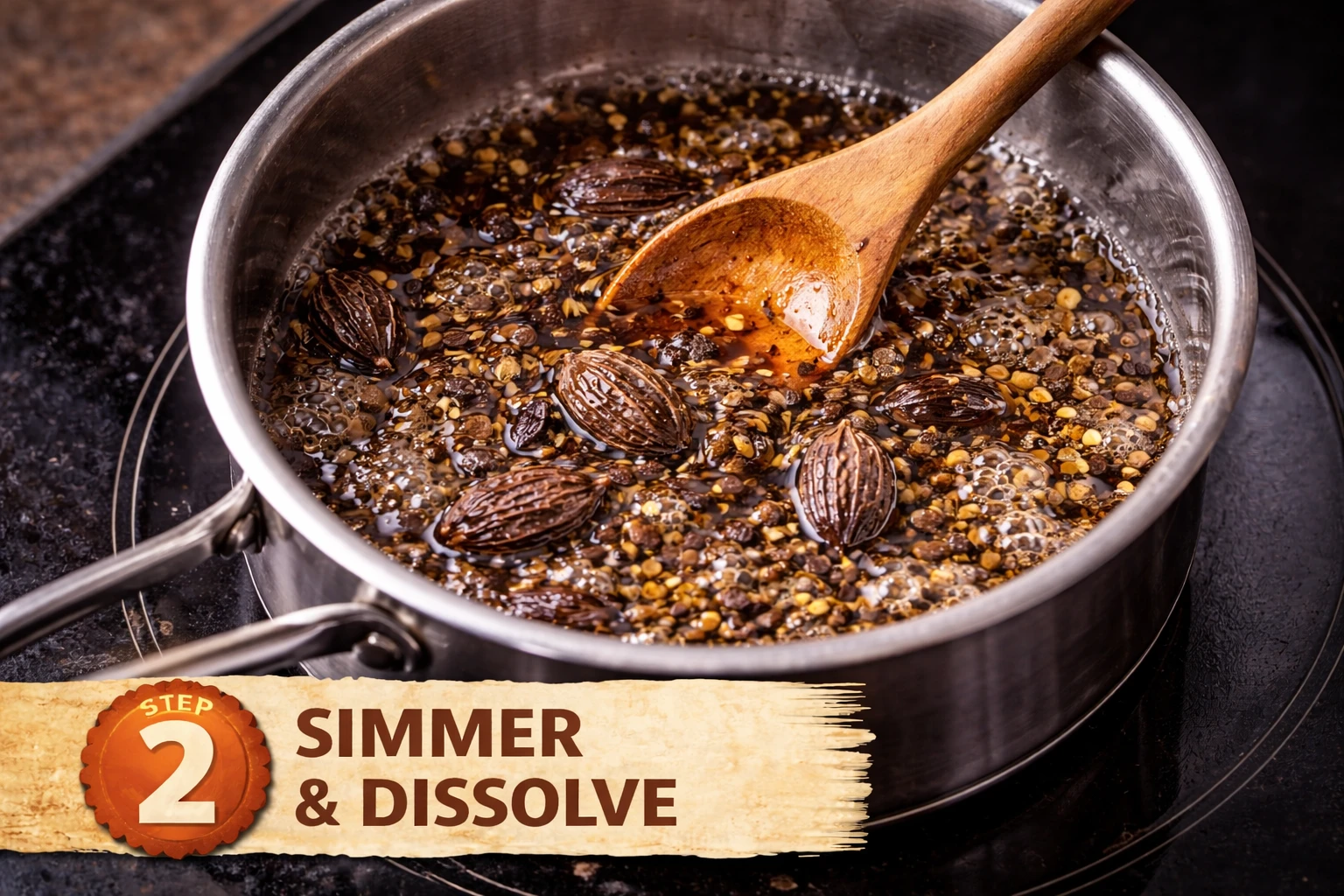
- 2Dissolve 200g sugar in 100ml water over low heat until clear — do not boil
- 3Add crushed pods to warm syrup, cool to room temperature, seal and refrigerate
- 4Steep 48 hours — syrup turns deep amber and develops smoky camphor aroma
- 5Strain through fine mesh, bottle, label — use within 3–4 weeks
Why This Syrup Is Different From Every Other Cardamom Syrup Recipe
Every cardamom syrup recipe on the internet uses green cardamom — the small, sweet, floral pods you find in chai and Scandinavian pastries. None of them use black cardamom (badi elaichi), and the reason is simple: black cardamom is unfamiliar to Western audiences and almost never appears in English-language cocktail writing. That gap is an opportunity, because black cardamom produces a syrup that is categorically different — darker, smokier, and more complex than anything green cardamom can make.
The science behind it: black cardamom contains cineole and camphor as its primary volatile compounds, where green cardamom contains linalool and terpinyl acetate. When steeped in hot syrup and left to cold-infuse for 48 hours, these compounds dissolve into the sugar solution and create a deep resinous, slightly mentholated sweetness that pairs exceptionally well with aged whiskey, dark rum, mezcal, and strong coffee.
This page covers the master recipe, the rationale behind the 2:1 ratio, 48-hour steep timing, and five specific cocktail applications. If you want to understand the compound difference between the two cardamoms, see our green vs black cardamom guide.
↑ Back to topThe 2:1 Ratio — Why It Matters for Cocktails
The ratio determines viscosity, sweetness intensity, dilution effect, and shelf life.
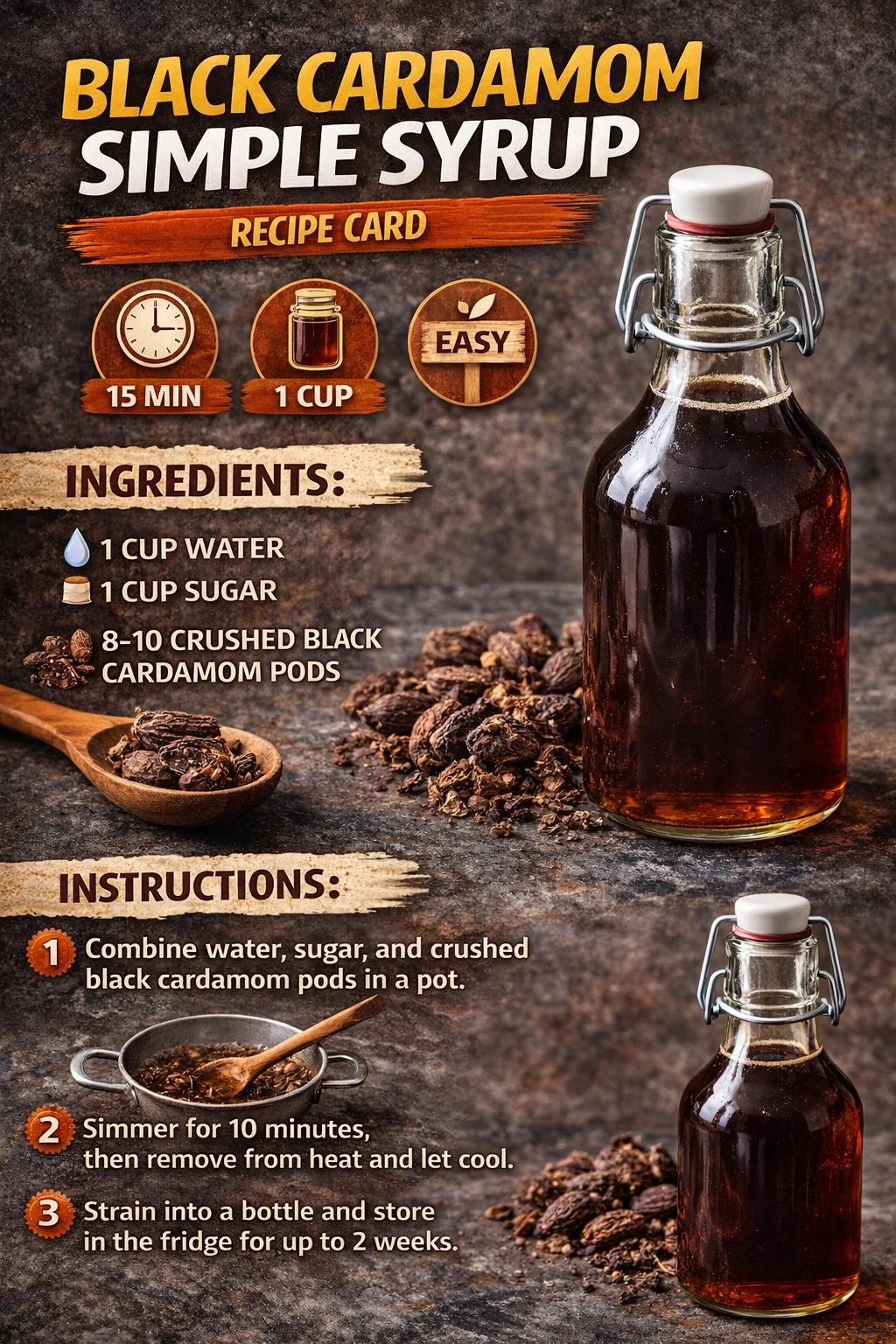
2:1 master recipe — the camphor-smoke syrup base for every cardamom cocktail on this site. 4–6 pods, 48-hour cold steep, deep amber colour, intensely aromatic.
Ingredients
Yields ~240ml (approx. 16–20 cocktail servings at ¼–½ oz per drink)
Step-by-Step Instructions
4 active steps · 15 minutes hands-on · 48 hours passive steep
-
 1
1Crush the Pods — Split, Don’t Pulverise
Place 4–6 black cardamom pods in a mortar and pestle or on a chopping board. Apply enough pressure to crack the outer husk and expose the seeds inside. The goal is maximum surface area for infusion without breaking the husk into fine powder. Each pod should be visibly split open but still in one piece.
💡 Why this mattersOver-crushed pods release tannins from the husk wall into the syrup during the 48-hour steep, producing a bitter, astringent aftertaste that overwhelms the camphor-smoke sweetness. A light crack exposes the seeds — where the volatile compounds are concentrated — while keeping the husk intact enough to prevent tannin leaching. -
2
Dissolve Sugar in Water — Low Heat, No Boil
Combine 200g caster sugar and 100ml filtered water in a small heavy-bottomed saucepan over low heat. Stir continuously until fully clear — 3–5 minutes. Remove from heat the moment the syrup is completely clear with no visible sugar granules. Do not allow the mixture to reach a full boil.
💡 Why this mattersBoiling a 2:1 syrup causes water to evaporate, throwing off the ratio and producing a syrup that crystallises in the bottle. The low-heat dissolution also means the syrup is at a gentler temperature (~70–80°C) when you add the cardamom pods, producing a cleaner initial flavour. -
3
Add Pods to Warm Syrup, Cool, Then Refrigerate
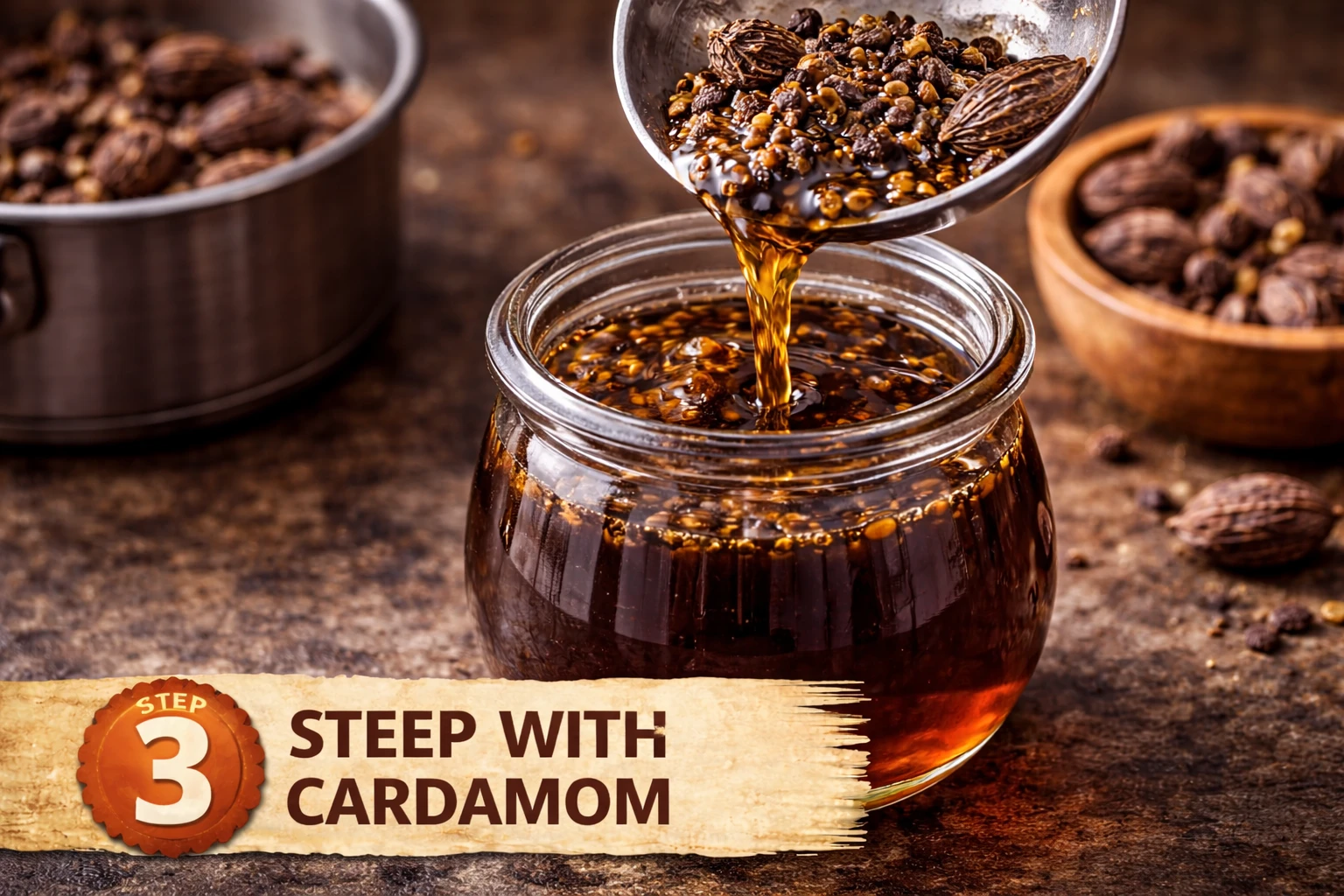
Transfer the hot syrup to a clean glass jar. Add the crushed cardamom pods immediately. Stir once to submerge. Leave the jar uncovered on the counter for 20–25 minutes until cool to room temperature. Once cool, seal the jar and refrigerate. Steep for exactly 48 hours from this point.
💡 Why this mattersThe 20-minute room-temperature steep performs the first extraction at a higher temperature for faster volatile compound release. Sealing immediately while hot traps condensation and dilutes the ratio. Cooling uncovered then sealing preserves the exact 2:1 ratio. The 48-hour cold steep that follows extracts aromatic compounds slowly without over-extracting tannins. -
4
Strain, Bottle, Label — Ready to Use
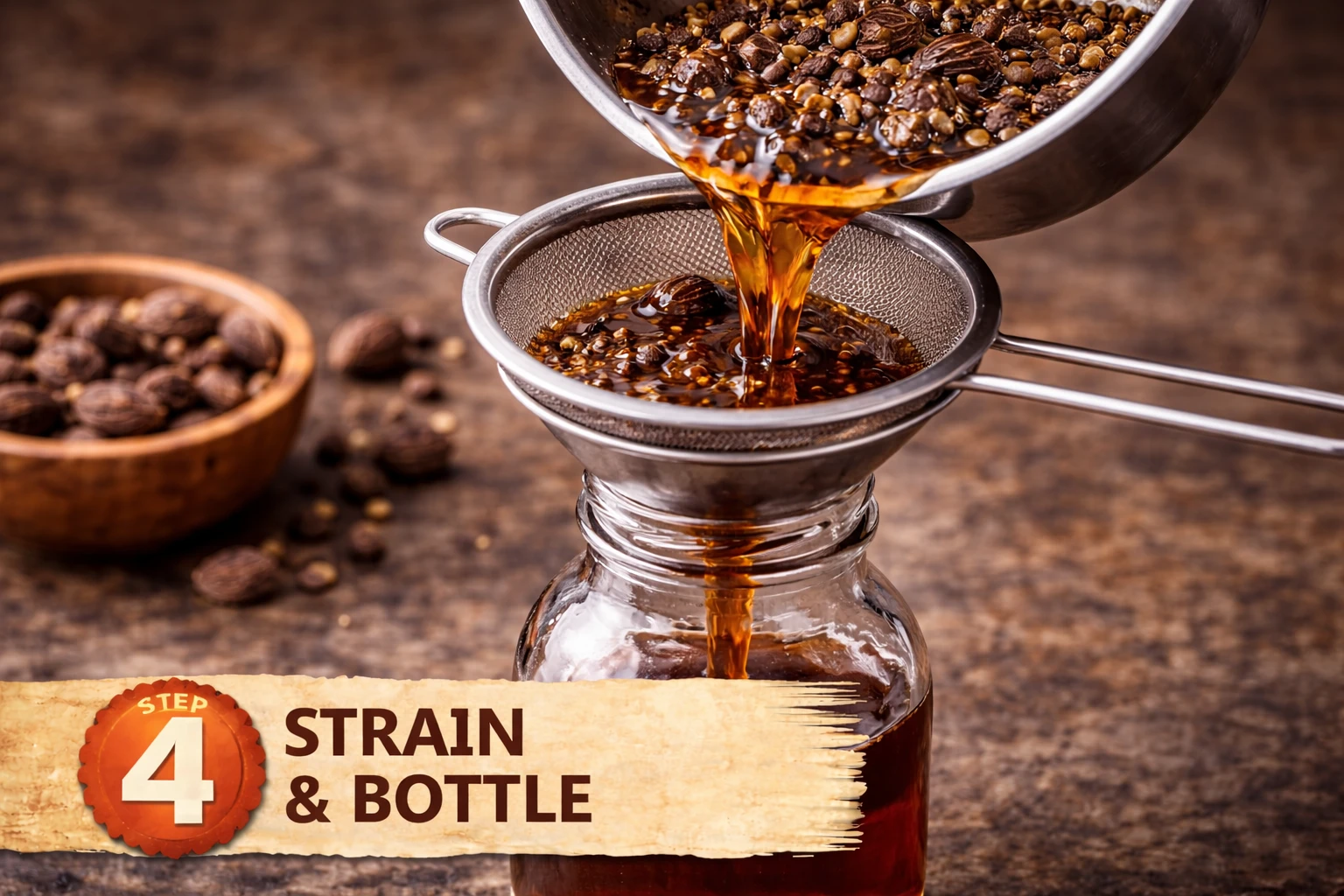
After 48 hours, smell the syrup first — pronounced camphor-smoke, resinous-sweet aroma means it’s ready. Strain through a fine-mesh strainer into a clean glass bottle, pressing the pods lightly with a spoon. Discard spent pods. Seal, label with the date. Add 1 tsp vodka now if using as preservative. Immediately ready to use.
💡 Why this mattersPressing the pods lightly recovers the last 15–20% of syrup absorbed by the pod material — the most concentrated in cardamom flavour. Do not press hard or squeeze, which forces bitter compounds through the strainer. If the aroma at 48 hours is faint, steep for an additional 12 hours before straining.
What to Make With This Syrup
Each recipe uses the same master syrup — adjust quantity to taste. Recipes are for a single serving.
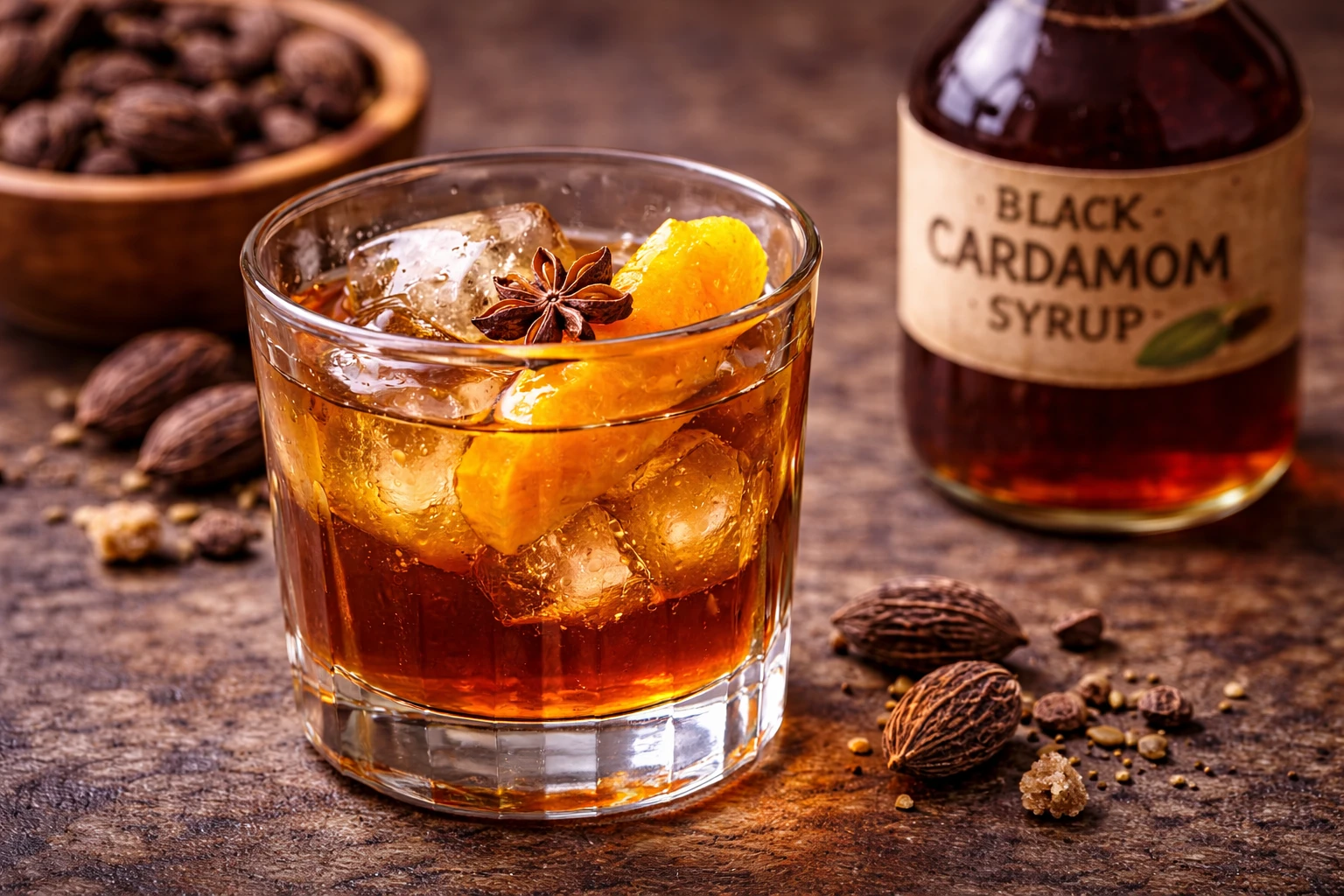
The canonical application — and the reason this syrup exists. The camphor-smoke compounds from black cardamom map directly onto the vanilla-caramel-oak profile of aged bourbon or rye whiskey. The result is an old fashioned that tastes like it was made at a craft bar that sources unusual bitters. No bitters are even required if you use the orange-peel version of the syrup.
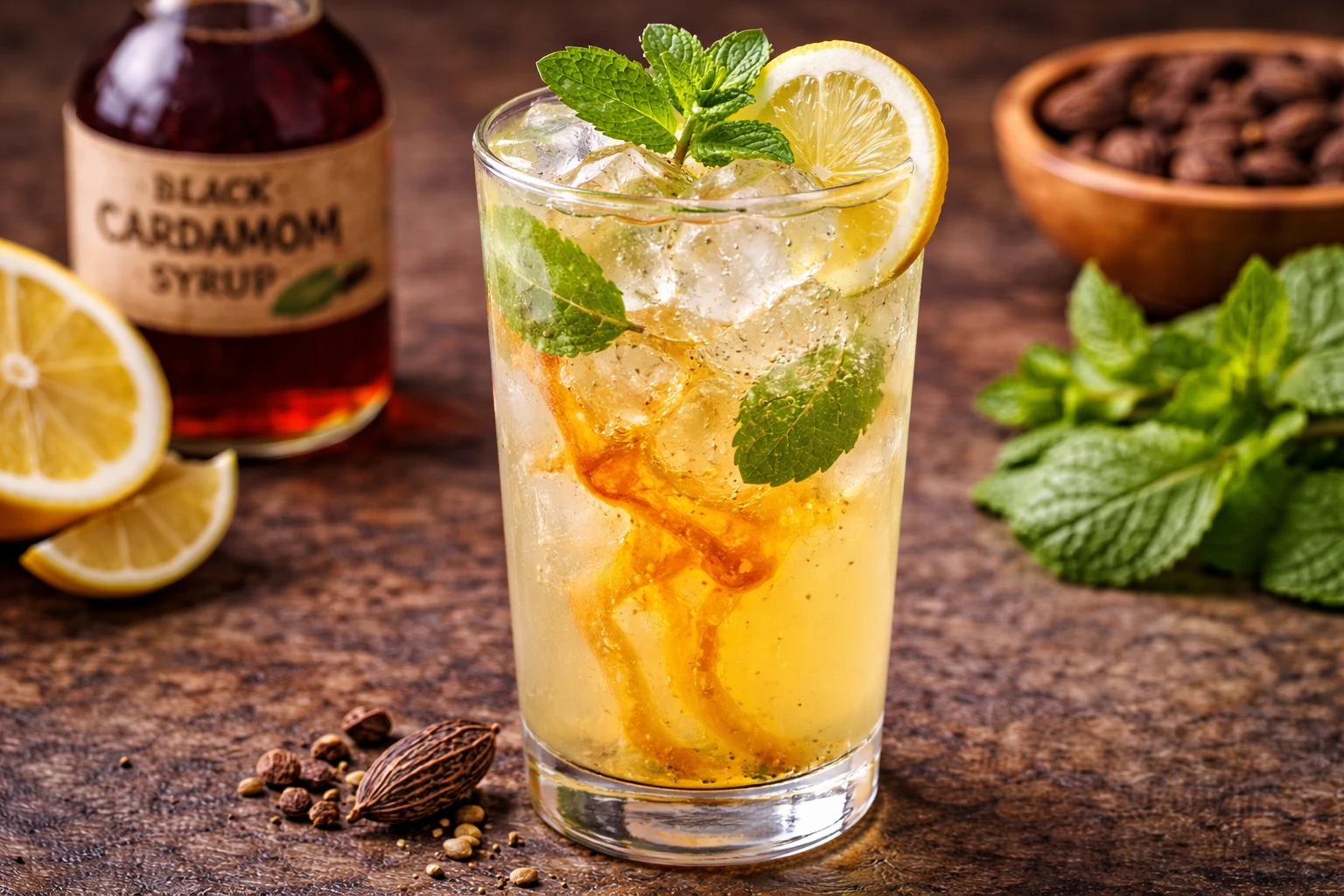
Use 1:1 syrup dilution in fresh lemonade. The camphor note from black cardamom transforms standard lemonade — it tastes like something a high-end restaurant would serve as a signature mocktail. Works equally well alcoholic with a 1 oz pour of mezcal.
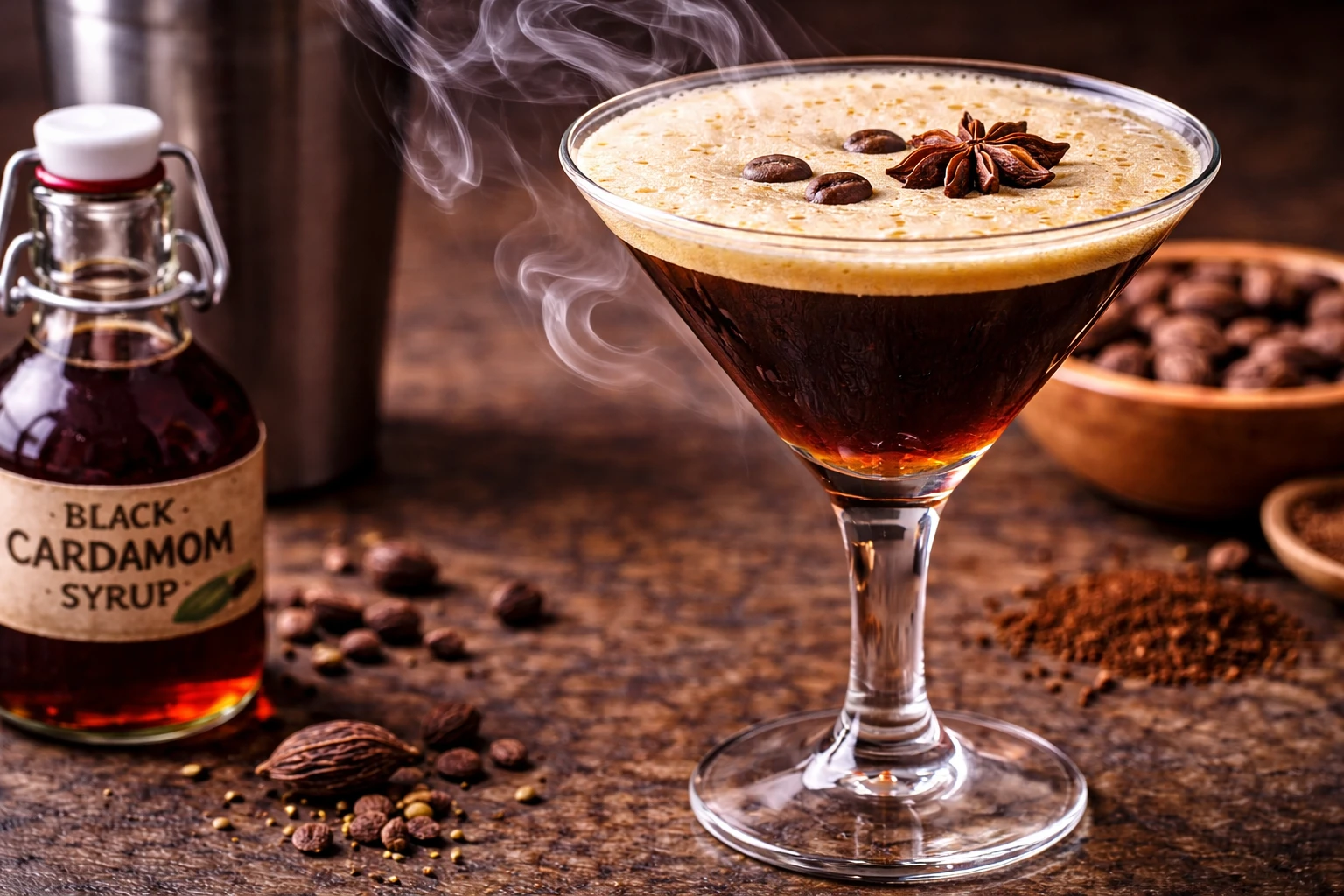
Black cardamom and coffee is a classic flavour combination across Middle Eastern and Ethiopian traditions. The camphor note cuts through the bitterness of espresso and adds a resinous depth that standard simple syrup cannot provide.
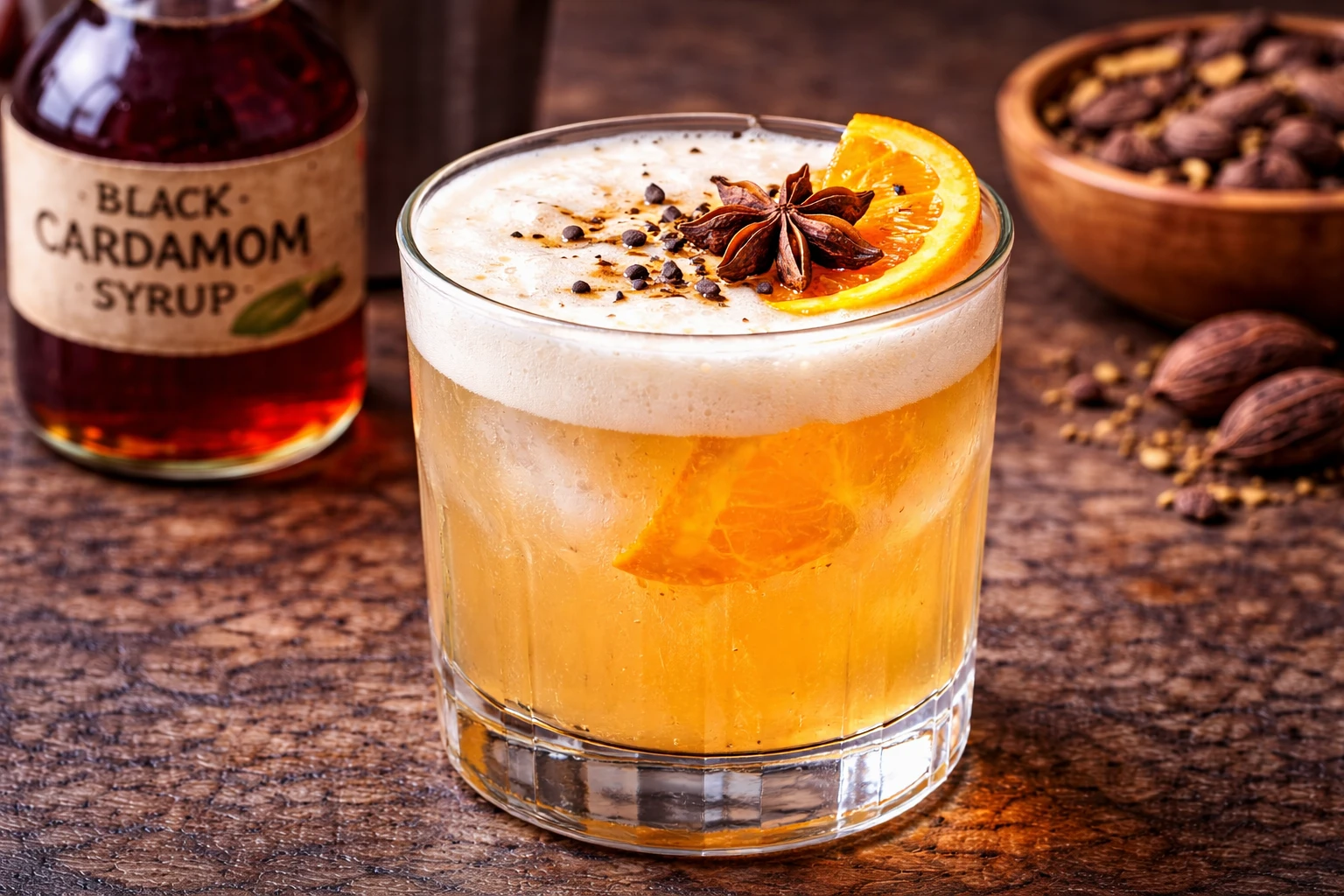
The sour format is the most versatile application of any flavoured syrup. Black cardamom adds smokiness beneath the citrus brightness — the camphor note is particularly noticeable on the finish. Use bourbon for sweetness balance or rye for assertive spice.
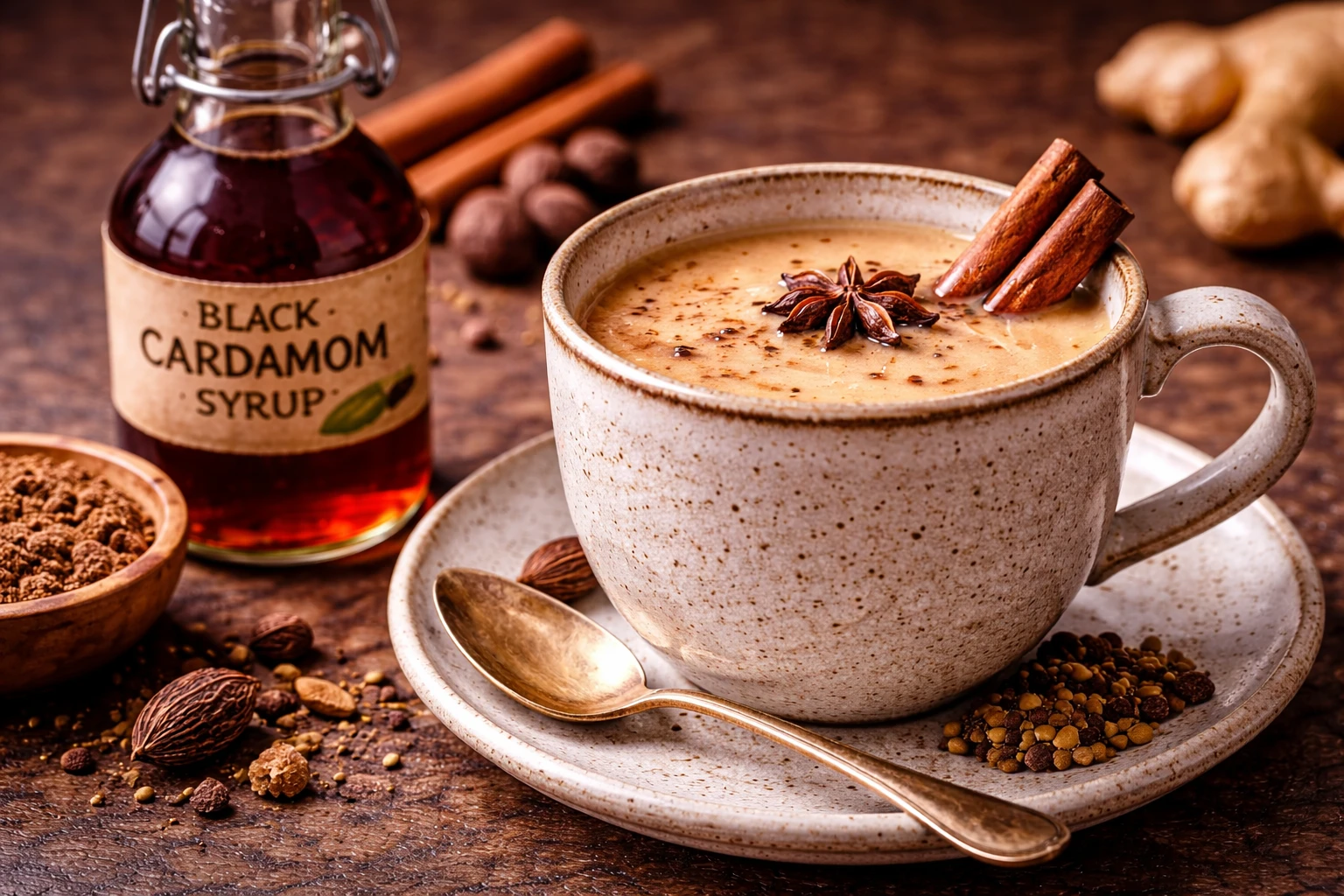
Replace regular sugar in any masala chai or black tea with this syrup. Pakistani and Indian chai already uses whole black cardamom pods in the brew; this syrup concentrates that flavour into a sweetener that can be added to any tea instantly. Also excellent in black coffee.
Select what you’re out of — get exact swap quantities and what changes.
Closest substitute: 3–4 green cardamom pods + ¼ tsp smoked paprika dissolved in the syrup. Approximates some spice warmth without the camphor note. Syrup will be lighter in colour and less smoky.
Reality check: There is no exact substitute — the camphor and cineole compounds are unique to black cardamom. A bag of 20 pods costs under $5 and makes 4–5 batches →
Substitute: Regular granulated white sugar at the same weight (200g) — takes 2–3 minutes longer to dissolve. Avoid brown sugar for the master recipe as molasses notes compete with the cardamom.
Using tap water: Fine for most areas. In regions with high chlorine or mineral content the syrup can take on off-notes. If your tap water tastes or smells of chlorine when cold, use bottled still water.
Skip it entirely: Orange peel is optional — for cocktail use only. The master recipe without it is a cleaner, more neutral syrup that works across a wider range of applications. Substitute with ½ tsp dried orange zest, or use lemon peel for the sour and lemonade applications.
Storage & Shelf Life
The 2:1 ratio acts as a mild preservative. Container and temperature matter significantly.
| Storage Method | Container | Shelf Life | Notes | Rating |
|---|---|---|---|---|
| Refrigerated — sealed glass | Glass bottle, airtight lid | 3–4 weeks | Best flavour retention · glass does not absorb aromatic compounds | Recommended |
| Refrigerated + vodka preservative | Glass bottle, 1 tsp vodka added | 6–8 weeks | Vodka does not affect flavour at this concentration · best for batch making | Best Life |
| Refrigerated — plastic container | Plastic bottle or container | 2–3 weeks | Plastic absorbs volatile cardamom compounds · camphor note fades faster | Acceptable |
| Frozen — ice cube trays | Silicone tray → zip bag | 3 months | Freeze in ¼ oz or ½ oz portions · thaw single cubes as needed | Recommended |
| Room temperature | Any container | 3–5 days | Not recommended — bacterial growth risk · always refrigerate | Not Recommended |
Signs of spoilage: New cloudiness after bottling, off smell, visible mould, or fermented/sour taste. When in doubt, discard — ingredients cost under $2.
↑ Back to topSelect your target yield — ingredient quantities update automatically.
What Separates a Good Batch from a Great One
The volatile camphor and cineole compounds will slowly permeate through plastic container walls during the 48-hour steep. A syrup steeped in glass and one steeped in plastic will taste noticeably different. Use a mason jar or any glass container with a lid. This single choice makes a measurable flavour difference.
Open the jar and smell it at the 24-hour mark. If the aroma is strong and camphor-forward, your pods are fresh and potent — strain at 48 hours as planned. If the aroma at 24 hours is faint, your pods may be older — extend to 60 hours. Your nose is the most accurate instrument for this recipe.
Pour the finished syrup into silicone ice cube trays in measured ¼ oz or ½ oz portions, freeze solid, transfer to a sealed zip-lock bag. Pull out one cube per cocktail, thaw for 10 minutes. This extends effective shelf life to 3 months and means you always have fresh syrup available without waste.
200g of caster sugar is the reliable measure. Cup measurements vary with packing density by 20–30g. At a 2:1 ratio, this variation is significant and can produce a syrup that crystallises in the bottle or doesn’t hold well in cocktails. A kitchen scale is the only way to maintain the ratio consistently batch after batch.
Difficulty Level & Time Breakdown
Anyone. This is the simplest recipe on this site — 15 minutes of active work, then patience. A first-time cocktail enthusiast can make this perfectly on the first attempt. The only variable that matters is pod freshness, evaluated with a smell test. No cooking experience required beyond being able to stir a pot over low heat.
Frequently Asked Questions
From the Black Cardamom Recipes Hub
The same camphor-smoke compound used across different cooking methods — same spice, different applications.



Emily covers South Asian spice culture, recipe development, and market sourcing. She has visited spice markets in Kerala, Karachi, and Dubai and writes all recipe content on CardamomNectar. Her approach