Ajwain in English is
“Carom Seeds”
The complete guide to ajwain’s name in 40+ languages — Arabic, Hindi, Tamil, Urdu, French, Spanish & more. With interactive translator.
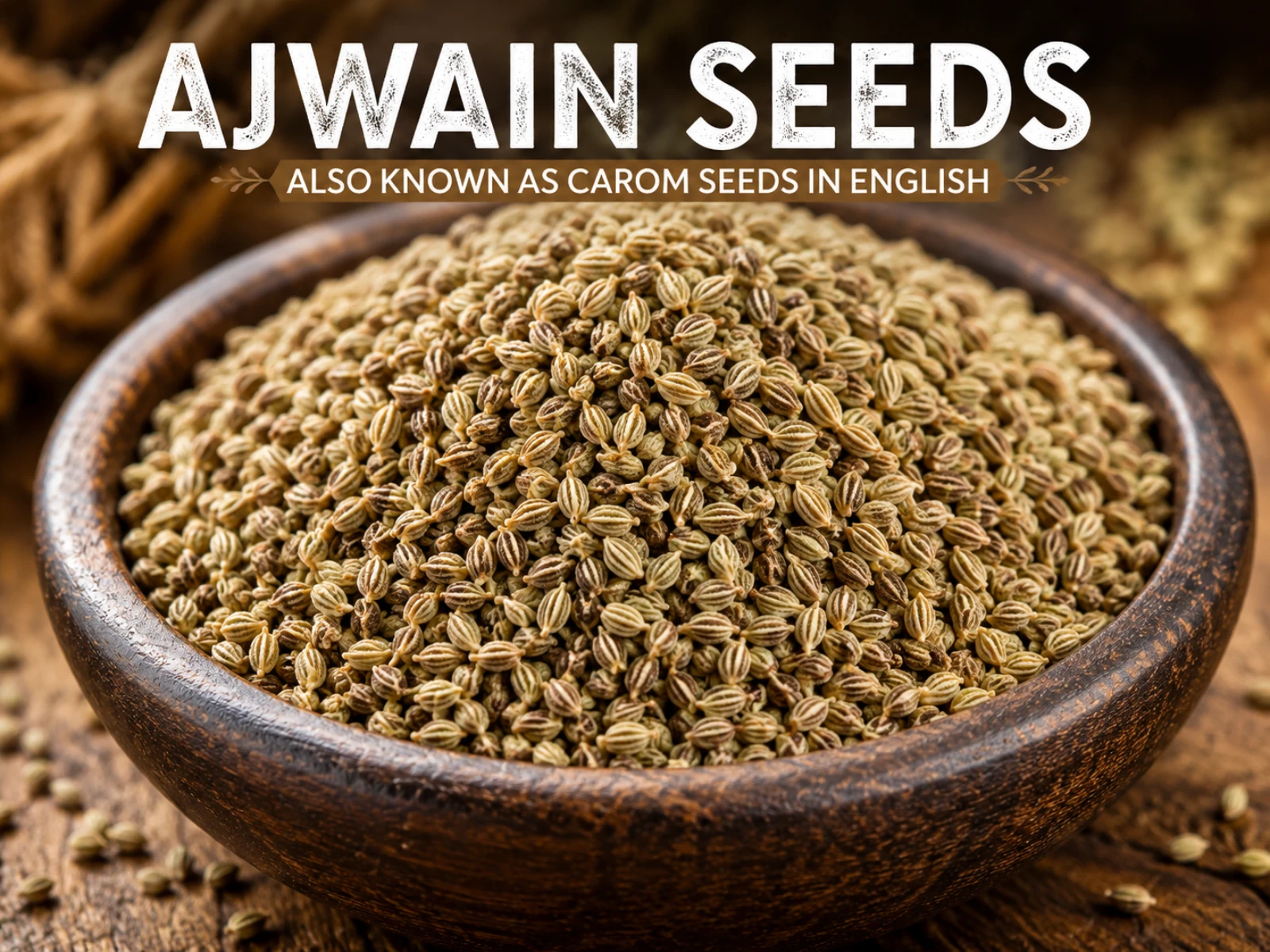
Ajwain is called “Carom Seeds” in English. Also known as Bishop’s Weed, Ajowan Caraway, or Thymol Seeds. Botanical name: Trachyspermum ammi.
Pronunciation
How to Pronounce Ajwain
Say it as: AJ + wine
Stress on first syllable. The ‘j’ is soft as in ‘jam’.
Also accepted: AJ-won · AJ-o-wan
Definition
What Is Ajwain?
Ajwain (pronounced AJ-wine) is a seed spice native to the Indian subcontinent and the Eastern Mediterranean. In English, it is most commonly called carom seeds, though you may also find it sold as bishop’s weed, ajowan, or thymol seeds in international spice markets.
💡 The seed vs. fruit distinction: What we call “ajwain seeds” are technically the seed-like fruits of the Trachyspermum ammi plant — small, ridged, and oval-shaped. Botanically they are dried fruits, not seeds, but both terms are used interchangeably worldwide.
The spice is a member of the Apiaceae (parsley) family — the same family as cumin, fennel, coriander, and dill. This botanical kinship explains why ajwain seeds look similar to cumin or caraway, causing frequent confusion.
All English Names
Ajwain’s Other Names in English
Ajwain goes by several names in English, depending on the country and context:
| English Name | Where Used | Origin of Name | Common? |
|---|---|---|---|
| Carom Seeds | Globally (most common) | Derived from the French/Latin carème | Most Common |
| Bishop’s Weed | UK, formal/botanical | Historical European botanical term | Common |
| Ajowan / Ajwan | Spice shops, international | Romanized variant of Hindi ‘ajwain’ | Common |
| Thymol Seeds | Scientific, pharmaceutical | Named after thymol content | Rare |
| Ajowan Caraway | Specialty food shops | Describes its caraway-like appearance | Rare |
| Ethiopian Cumin | Ethiopian/African context | Used in Ethiopian spice blends (berbere) | Regional |
Global Translation Hub
Ajwain in 40+ Languages
Search any language or region. Click Copy to copy the native script — useful for shopping in local markets.
Showing 40 languages
🔍 No results found. Try a different language name.
Common Confusions
Ajwain vs Similar Spices — Are They the Same?
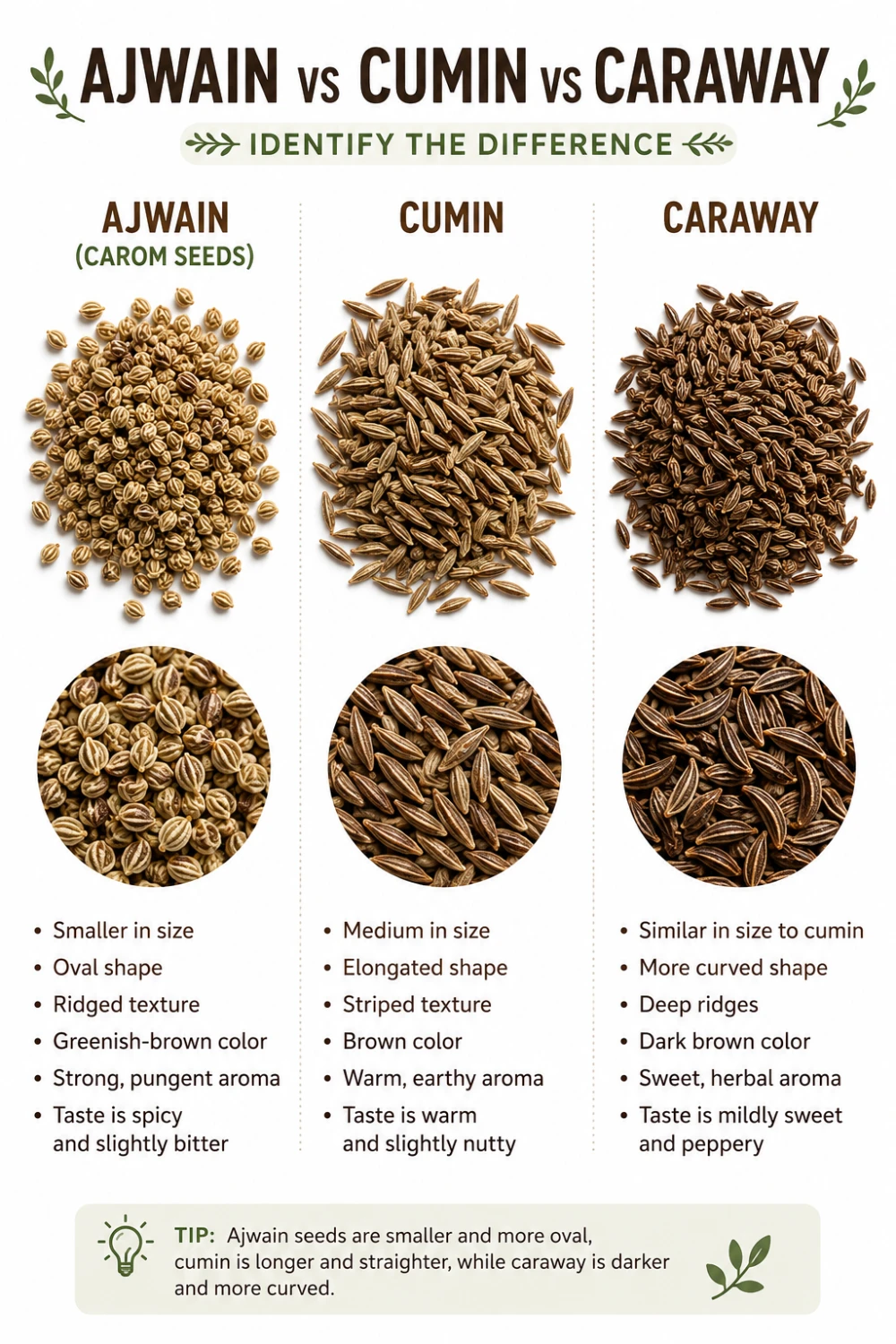
Ajwain is frequently confused with other seeds due to similar appearance. Here’s the complete comparison:
| Spice | Same as Ajwain? | Family | Taste Difference | Substitute? |
|---|---|---|---|---|
| Carom Seeds | Same Thing | Apiaceae | Identical — it’s just the English name | — |
| Bishop’s Weed | Same Thing | Apiaceae | Identical — another English name | — |
| Thyme (herb) | Different | Lamiaceae | Both contain thymol but thyme is milder, fresher | In small amounts |
| Cumin | Different | Apiaceae | Cumin is earthier, warmer; ajwain is more bitter-pungent | Not ideal |
| Caraway Seeds | Different | Apiaceae | Caraway is sweeter, anise-like; ajwain is sharper | Possible |
| Celery Seeds | Different | Apiaceae | Celery seeds taste of celery; no thyme notes | In cooking, partly |
| Nigella (Kalonji) | Different | Ranunculaceae | Nigella is onion-peppery; completely different | No |
Finding Ajwain
Where to Find Carom Seeds (Ajwain) Near You
Now that you know ajwain’s English name — carom seeds — here’s where to find them:
Frequently Asked Questions
Ajwain in English — FAQs
Ajwain is called Carom Seeds in English. It is also known as Bishop’s Weed, Ajowan Caraway, and Thymol Seeds. The most commonly used English name in grocery stores and recipes is “carom seeds”. The botanical/scientific name is Trachyspermum ammi.
Yes, carom seeds and ajwain are exactly the same thing. “Ajwain” is the Hindi and Urdu word for this spice, while “carom seeds” is its English name. Both terms refer to the dried fruits of the Trachyspermum ammi plant. You’ll find both names used interchangeably in recipes and on spice packaging.
Ajwain is called نانخواه (Nānkhwāh) in Farsi-influenced Arabic, or الكمون الملوكي (Al-Kamun Al-Muluki — “Royal Cumin”) in classical Arabic. In everyday usage across Arab countries, it may also be written as أجوين (Ajwayn). In some regions it’s known as Taleb el Koubs or Nakhwah.
Ajwain is called ஓமம் (Omam) in Tamil. It is also sometimes called Asamtavoman in some Tamil-speaking communities. In Andhra Pradesh (Telugu), it is known as Vamu (వాము). In Malayalam (Kerala), it is called Ayamodakam.
No, ajwain and thyme are not the same. However, both contain thymol — the same aromatic compound — which gives them a similar smell. The key difference: ajwain is a seed spice used primarily in Indian and Middle Eastern cooking, while thyme is a fresh or dried herb used in Mediterranean and European cuisine. In an emergency, a tiny amount of ajwain can substitute for thyme (use ⅓ the amount), but they are different plants.
Ajwain is pronounced AJ-wine or AJ-won. The phonetic transcription from Cambridge Dictionary is /ˈædʒəwɒn/. The stress is on the first syllable. The ‘j’ is pronounced softly as in “jam”. You may also hear it called AJ-o-wan in some regional English accents.
Ajwain in Urdu is written as اجوائن (Ajwāin). It is the same word as the Hindi/Urdu name since both languages share much of the same vocabulary for spices. In Pakistan (where Urdu is the official language), you’ll find it labelled as اجوائن دیسی (Desi Ajwain) or simply اجوائن in markets.
The word “ajwain” has no direct meaning in English — it is borrowed from Hindi अजवाइन (ajvāin), which itself traces back to the Sanskrit word yavānī (यवानी), related to the word “yavana” meaning Greek — possibly reflecting ancient trade routes from the Mediterranean. In English, the spice is called “carom seeds” (carom) or “bishop’s weed” (bishop’s weed being a historical botanical designation).
Ajwain (carom seeds) is most widely known for its digestive benefits. It relieves bloating, gas, indigestion, and stomach cramps. It is also used as a natural remedy for colds and respiratory congestion (inhaling steam with ajwain is a traditional practice). Modern research has identified antimicrobial, anti-inflammatory, and antifungal properties in ajwain’s active compound, thymol. In cooking, it adds a pungent, thyme-like flavour to breads, lentils, and fried foods.
No, ajwain and caraway are not the same, though they look similar. Both are small oval seeds in the Apiaceae family, but they taste quite different. Caraway (Carum carvi) has a sweet, mild, anise-like flavour used in European rye bread and sauerkraut. Ajwain (Trachyspermum ammi) is much more pungent and bitter — closer to thyme in aroma due to its high thymol content. They are not interchangeable in recipes.
Carom seeds are called अजवाइन (Ajwain) in Hindi. It is one of the most commonly used spices in North Indian kitchens, used in bread (parathas), dal tadka, samosas, and pickles. In some regional Hindi dialects you may also hear it called Ajmo (Gujarati influence) or Jowan. The Hindi word Ajwain and the English “carom seeds” refer to exactly the same spice.
Yes, ajwain can substitute for thyme in a pinch — but use much less. Because ajwain contains concentrated thymol (35–60% of its essential oil versus thyme’s 20–30%), it is significantly more potent. As a rule, use ⅓ the amount of ajwain compared to thyme called for in a recipe. Crush or lightly toast the seeds first to release their aroma. This works well in soups, stews, marinades, and breads — but the flavour profile will be more bitter and pungent than fresh thyme.
Ajwain (carom seeds) is believed to have originated in the Eastern Mediterranean or Middle East — possibly Egypt or Persia — before spreading to the Indian subcontinent through ancient trade routes. Today, India is by far the world’s largest producer and consumer of ajwain, particularly the states of Rajasthan, Gujarat, and Madhya Pradesh. Iran, Egypt, Pakistan, and Afghanistan also cultivate it commercially. The spice has been used in Ayurvedic medicine in India for over 3,000 years.
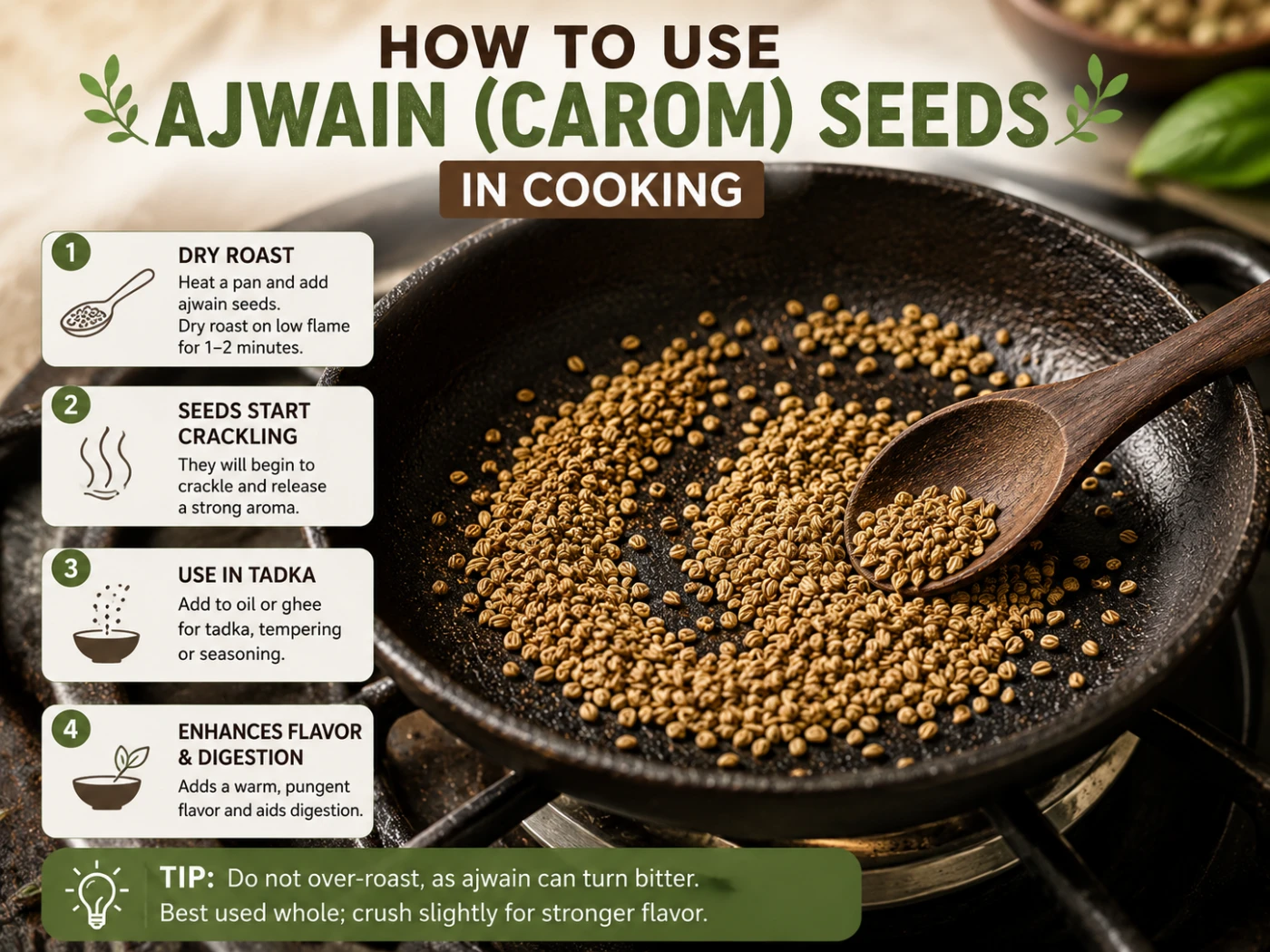
Ajwain has a strong, pungent, slightly bitter flavour with a sharp, thyme-like aroma. Raw ajwain seeds taste quite intense and medicinal — they are rarely eaten raw. When dry-roasted or fried in oil (tadka), the bitterness mellows and a warm, earthy, herb-like flavour develops. The taste is often described as a combination of thyme, oregano, and anise — but more powerful than any of them. Even a small amount significantly changes a dish’s flavour.
Ajwain is generally safe for most people when consumed in normal culinary amounts. However, consuming very large amounts (e.g., as a supplement) every day may cause side effects including heartburn, acid reflux, or mouth sores in some individuals. Pregnant women should avoid large medicinal doses of ajwain as it may stimulate uterine contractions, though small cooking amounts are generally considered safe. People with liver disease or those taking blood-thinning medications should consult a doctor before using ajwain medicinally.
Ajwain water (अजवाइन का पानी in Hindi) is made by soaking or boiling ajwain seeds in water, then straining and drinking the liquid. It is a traditional Ayurvedic remedy widely used across South Asia for digestive relief — particularly for bloating, gas, acidity, and indigestion. To make it: boil 1 tsp ajwain seeds in 1 cup water for 5 minutes, strain, and drink warm (optionally with honey). Many mothers in India give diluted ajwain water to infants for colic relief, though this should be done only under medical guidance.
Ajwain seeds are the whole dried fruits of the Trachyspermum ammi plant — these retain their flavour and potency for longer (up to 2–3 years if stored well). Ajwain powder is ground ajwain seeds — more convenient but loses potency faster (6–12 months). In cooking: whole seeds are used for tadka (tempering in hot oil/ghee) where they splutter and release flavour. Powder is mixed directly into dough, batters, or spice blends. Whole seeds are almost always preferred for maximum flavour.
Yes, bishop’s weed and ajwain are the same spice. “Bishop’s weed” is one of the formal English botanical names for Trachyspermum ammi — the same plant that produces ajwain/carom seeds. The name “bishop’s weed” was given by European herbalists and botanists who catalogued this spice from India. Note: confusingly, “bishop’s weed” is also sometimes used for a completely different plant (Aegopodium podagraria, a garden weed). When referring to the edible spice, “carom seeds” or “ajwain” is always clearer and safer to use.
Store ajwain seeds in an airtight glass or ceramic jar in a cool, dark, dry place — away from heat, moisture, and direct sunlight (not above the stove). Properly stored whole seeds stay fresh for 2–3 years. To check freshness: crush a few seeds between your fingers — they should smell strongly of thyme/oregano. If the aroma is faint or absent, the seeds have lost their potency. Ground ajwain (ajwain powder) has a shorter shelf life of 6–12 months. Never store in clear glass jars exposed to light.
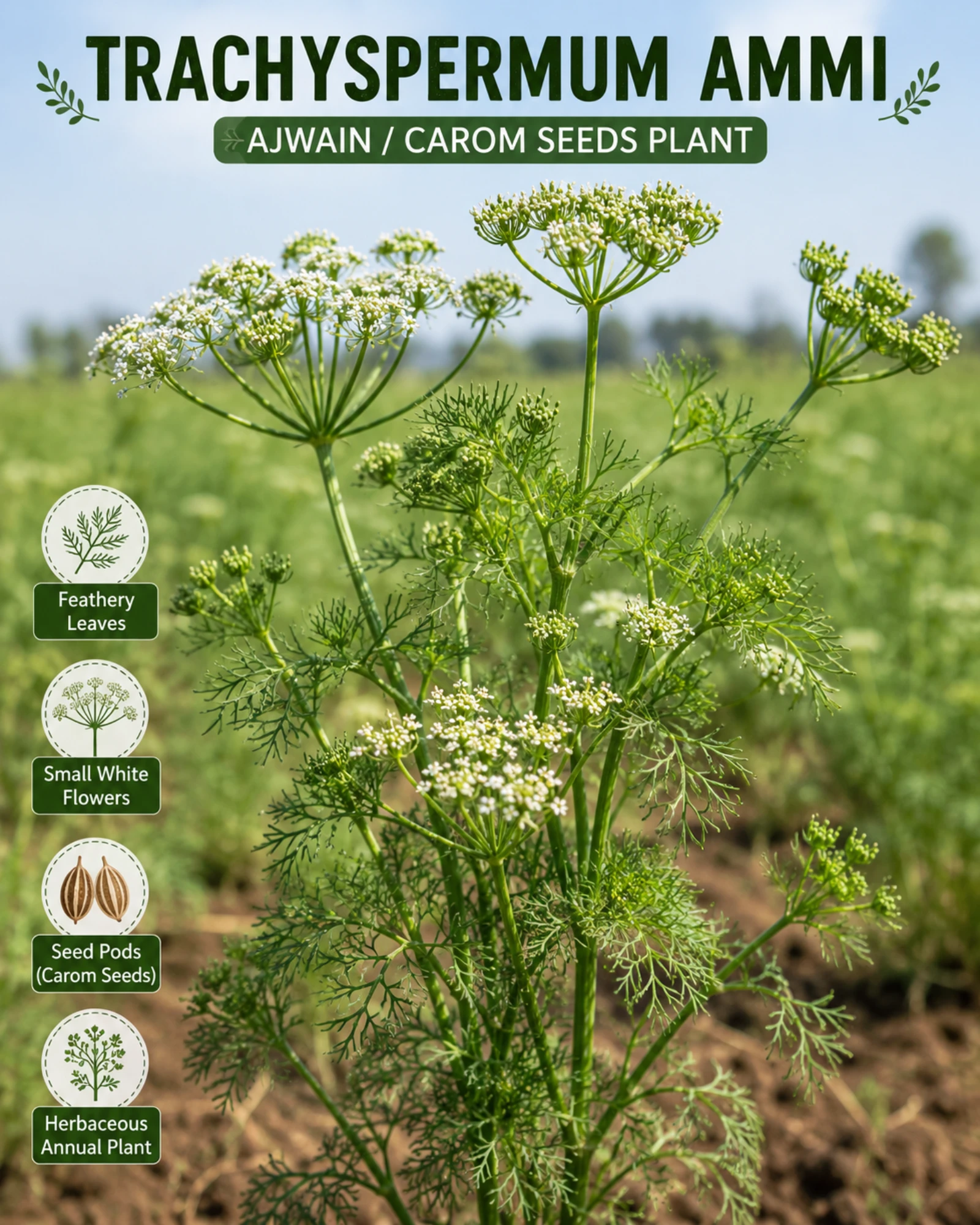
The botanical (scientific) name of ajwain is Trachyspermum ammi (L.) Sprague. It belongs to the family Apiaceae (also called Umbelliferae or the parsley/carrot family). Older botanical names you may encounter include Carum copticum and Ptychotis ajowan — these are now considered synonyms of Trachyspermum ammi. The name Trachyspermum comes from Greek: trachys (rough) + sperma (seed), describing the ridged texture of the seeds. Ammi is an ancient Greek/Latin genus name from the same plant family.
About the Authors
Who Wrote & Reviewed This Guide

Emily is a food writer and culinary researcher with over 8 years of experience covering South Asian and Middle Eastern spices. She has lived in India and Pakistan, where she developed a deep understanding of traditional spice use — from Punjabi kitchens to Ayurvedic practice. Emily manages the spice content library at CardamomNectar.com and has written guides covering over 60 spices and herbs.

Dr. Michael Bennett holds a PhD in Ethnobotany from the University of Edinburgh and has spent 15 years researching the medicinal and culinary applications of traditional spices across Asia and the Middle East. He serves as the scientific reviewer at CardamomNectar.com, ensuring all botanical names, health claims, and traditional uses are accurate and evidence-aligned. Dr. Bennett has contributed to peer-reviewed publications on Apiaceae family spices.