What Is Cumin?
The World’s Most Ancient Spice
كمون (Kammūn) · जीरा (Jeera) · Comino · Kamoun
⚡ Quick Answer
Cumin (Cuminum cyminum) is the dried seed of an annual herb in the parsley family (Apiaceae), native to Central Asia. It has a warm, earthy, nutty flavour with a hint of citrus. Known as jeera in Hindi/Urdu, كمون (kammūn) in Arabic, and comino in Spanish, cumin is the world’s second-most traded spice after black pepper. It is used whole or ground in Indian, Middle Eastern, Mexican, and North African cuisines, and has been part of human cooking for over 5,000 years.


Cumin — the small, ridged, brown seed that smells of ancient spice markets — is one of the oldest and most universally loved spices on earth. From the tarka of an Indian dal, to the baharat of an Arab lamb dish, to the chili powder in a Mexican taco, cumin shows up in virtually every major cooking tradition in the world. And yet, many home cooks have only a vague idea of what cumin actually is, where it comes from, and how to use it properly.
This guide covers everything about cumin: its botanical identity, flavour profile, Arabic and multilingual names, health benefits backed by clinical research, how seeds differ from ground powder, the best substitutes, storage methods, and the cuisines that rely on it most. By the end, you will know cumin as well as the spice traders of ancient Alexandria did.
What Is Cumin? Botanical Identity & Definition
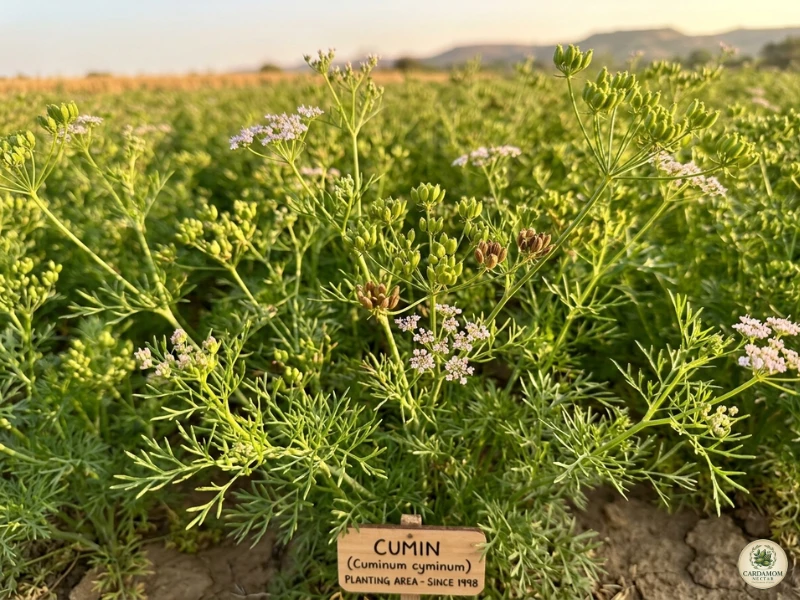
Cumin (Cuminum cyminum) is the dried fruit — commonly called a seed — of a slender annual herb in the family Apiaceae (the parsley or carrot family). This puts cumin in excellent botanical company: its relatives include fennel, caraway, coriander, dill, and parsley. The plant grows to 30–50 cm tall, bears lacy white or pale pink flowers, and produces small, elongated, ridged seeds that are yellowish-brown to warm brown in colour, about 4–5 mm long.
Technically what we call a “cumin seed” is a mericarp — one half of the dried fruit. Each fruit splits into two halves at maturity, each containing a single true seed. The seeds have eight distinct ridges and oil canals that hold the essential oils responsible for cumin’s characteristic aroma.
What does cumin taste like?
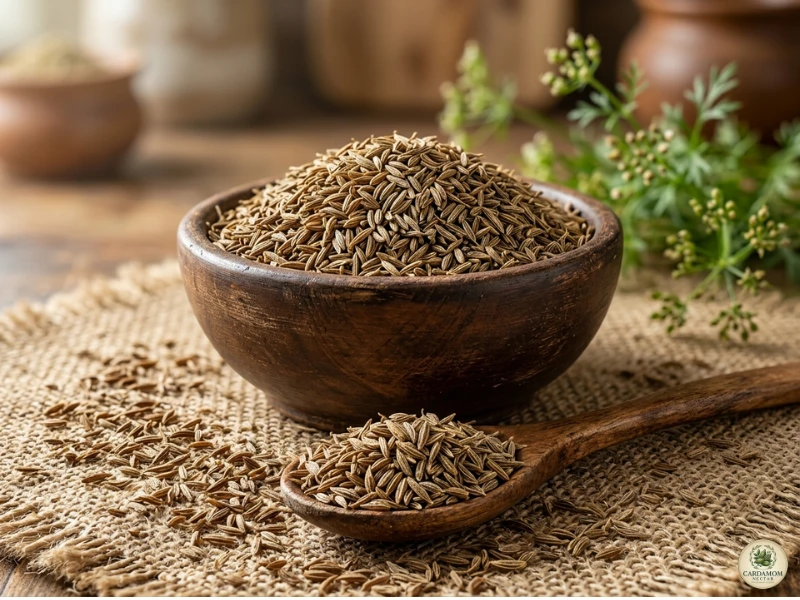
Cumin has a complex, multi-layered flavour that changes depending on how it is used. Raw whole seeds taste pungent, sharp, and slightly bitter with an almost menthol quality. When toasted dry in a pan, the seeds develop a deep, smoky, nutty warmth — this is the flavour most people associate with cumin. When bloomed in hot oil, cumin becomes rich, earthy, and warming, with a background note of citrus or lemon zest.
How do you pronounce cumin?
English speakers disagree on this, and all three pronunciations are considered correct by Merriam-Webster: KUH-min (traditional British and older American), KYOO-min (now the most common American pronunciation), and KOO-min (also widely heard in the US). The word entered English from Latin cuminum, which came from Greek kyminon, which itself was borrowed from a Semitic root — ultimately traceable to Akkadian kamūnu and possibly even earlier Sumerian gamun.
Cumin in Arabic & Its Name in Every Major Language
Cumin’s Arabic name is كمون, romanised as kammūn. This is not a borrowed modern word — it is one of the oldest Arabic spice terms in existence, cognate with Hebrew kammōn (כמון), Aramaic kamuna, and Old Akkadian kamûnu. The English word “cumin” and Arabic “kammūn” are effectively cousins from the same ancient Semitic root.
In Arab cooking, cumin (كمون) is a cornerstone spice in baharat (the Gulf spice blend), tagine dishes from Morocco and Algeria, hummus, falafel, and shawarma seasoning. Moroccan tradition even involves placing a small bowl of coarse cumin salt alongside roasted meats at the table — a practice that echoes the Ancient Greek custom of keeping cumin at the dining table in its own container.
Important: Cumin vs. Fennel in Arabic
Do not confuse كمون (kammūn / cumin) with شمر (shamar / fennel). These are completely different spices. Cumin is also not the same as حبة البركة (habba al-baraka / black seed, Nigella sativa).
Origin, History & Where Cumin Is Grown Today
Cumin is one of the oldest cultivated spices on earth. The earliest confirmed evidence comes from a submerged Neolithic settlement (Atlit-Yam, dated to the 6th millennium BC), and cumin seeds were also excavated in Syrian sites from the second millennium BC. Ancient Egyptians used cumin as a food spice, a medicine, and as a mummification ingredient — it has been found in the tombs of pharaohs. Greek households kept cumin on the dining table like salt and pepper. Romans used it extensively, and Pliny the Elder called cumin “the best appetizer of all condiments.”
Where is cumin grown today?
India dominates global cumin production, accounting for approximately 70% of the world’s supply. The northwestern Indian states of Gujarat and Rajasthan produce the finest cumin, with their warm, semi-arid climate and sandy loam soils being ideal for the drought-tolerant crop. India produced over 856,000 tonnes of cumin seed in 2020–21. Other major producers include Syria (13%), Turkey (5%), UAE (3%), and Iran.
The cumin plant thrives in tropical and subtropical climates with a long frost-free growing season of at least 120 days. Optimal temperatures are 25–30°C (77–86°F). The plant is harvested by hand when the seed pods turn brown and the stems begin to wither, typically 3–4 months after sowing.
A spice with biblical references
Cumin appears in both the Old Testament (Isaiah 28:27) and the New Testament (Matthew 23:23), reflecting its central role in ancient Middle Eastern agriculture and trade. During the Middle Ages in Europe, cumin was used not only as a spice but as currency, rent payment, and a charm — it was believed to prevent chickens and lovers from wandering if kept close.
Cumin Seeds vs Ground Cumin: Which Should You Use?
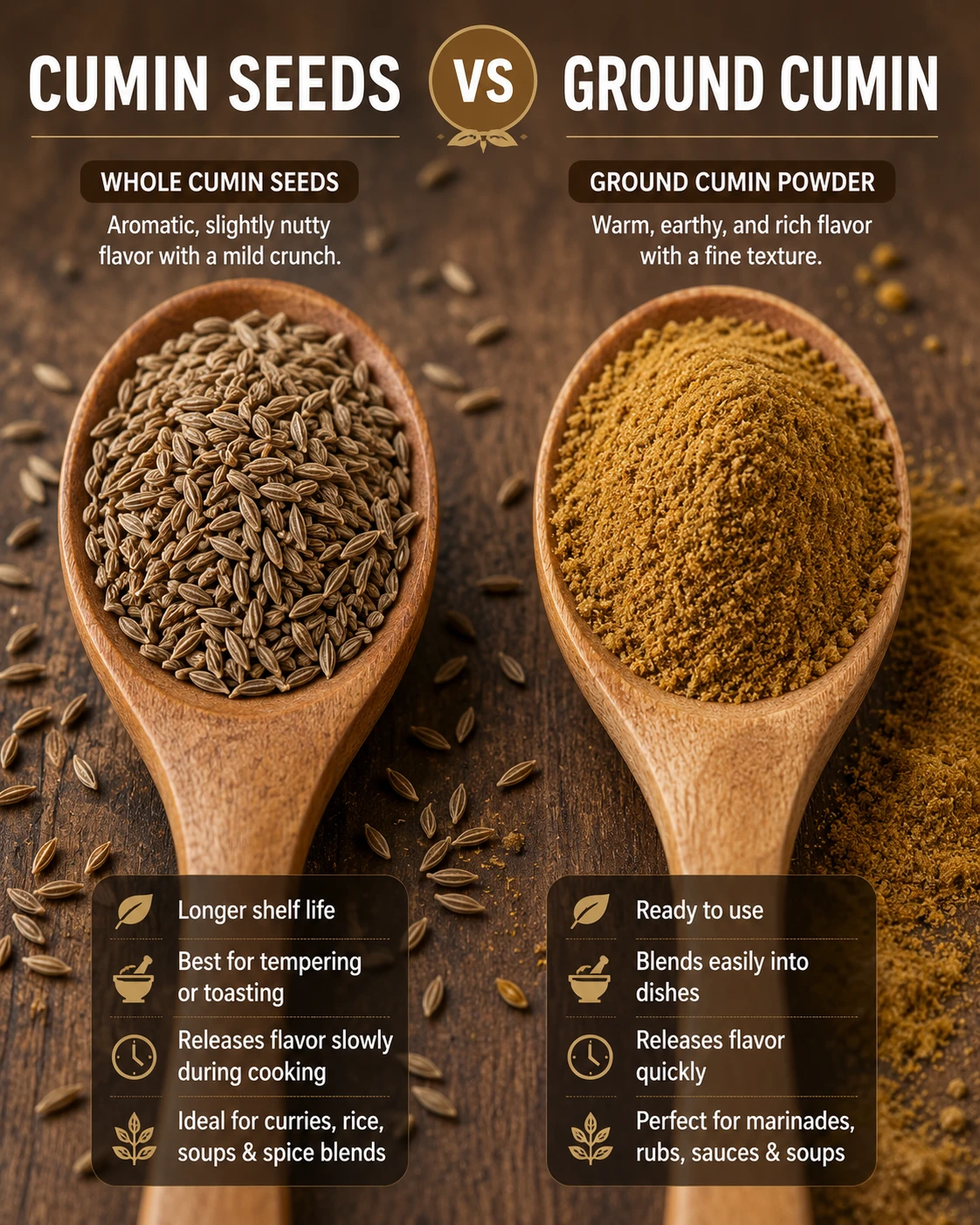
Both whole cumin seeds and ground cumin powder come from the same plant, but they behave differently in the kitchen. Understanding which form to use — and when — can make a significant difference to the flavour of your dishes.
| Feature | Whole Cumin Seeds | Ground Cumin |
|---|---|---|
| Flavour intensity | Milder, nuttier, more nuanced | Stronger, more immediate |
| Shelf life | 2–4 years (airtight, cool, dark) | 4–6 months before losing potency |
| Best use | Tempering, tarka, whole-spice frying, rice dishes | Marinades, spice rubs, sauces, soups |
| Conversion | 1 tsp seeds | ≈ ¾ tsp ground |
| Freshness check | Rub seeds — should release oily, citrusy aroma | Smell — should be earthy, not dusty or flat |
| Recommended for | Biryani, dal tadka, jeera rice, roasted meats | Curry paste, taco seasoning, hummus, spice blends |
How to Toast Cumin Seeds (Step-by-Step)
Toasting is the single most impactful thing you can do to improve the flavour of cumin seeds. Heat triggers Maillard reactions in the seeds, transforming the sharp, raw bitterness into deep, smoky, nutty warmth. This is the technique behind the intense flavour of restaurant-quality Indian and Middle Eastern cooking.
- 01
Heat a dry pan
Place a heavy-bottomed skillet or cast iron pan over medium heat. Let it warm for 60 seconds. No oil — this is a dry toast.
- 02
Add seeds in a single layer
Add whole cumin seeds in a single, even layer. Do not crowd the pan or they will steam rather than toast.
- 03
Shake constantly for 1–2 minutes
Shake the pan or stir with a wooden spoon every 20–30 seconds. The seeds are ready when they turn a shade darker and release a rich, smoky, almost chocolate-like aroma.
- 04
Transfer immediately
Tip the seeds onto a plate or cool surface right away. The residual heat of the pan will continue to cook (and burn) them if left inside. Burnt cumin tastes acrid and bitter.
- 05
Use whole or grind fresh
Use toasted seeds whole (for texture) or grind in a spice grinder for roasted cumin powder (bhuna jeera in Indian cooking), which is used as a garnish and finishing spice.
How to Use Cumin in Cooking: Cuisines & Applications
Cumin is one of the few spices that is simultaneously essential in Indian, Arab, Mexican, and North African cuisines — four of the world’s great spice traditions. The way each cuisine uses cumin differs significantly.
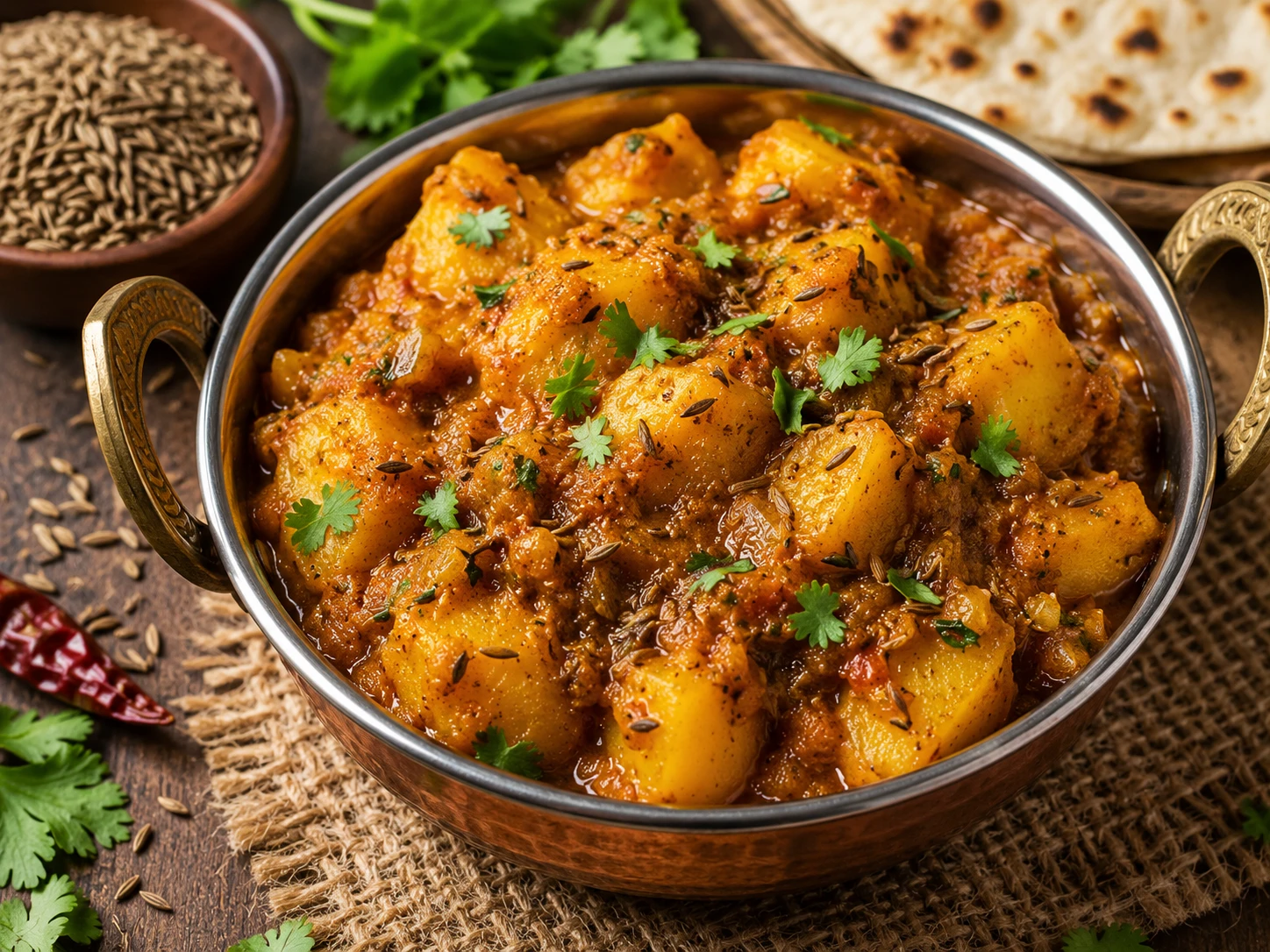
Indian & Pakistani Cooking
Cumin is used in three key ways: whole seeds tempered (tarka) in hot ghee, ground into masalas, and dry-roasted as a finishing spice. It is foundational in dal, biryani, jeera rice, raita, and garam masala. India consumes more cumin than any other country.
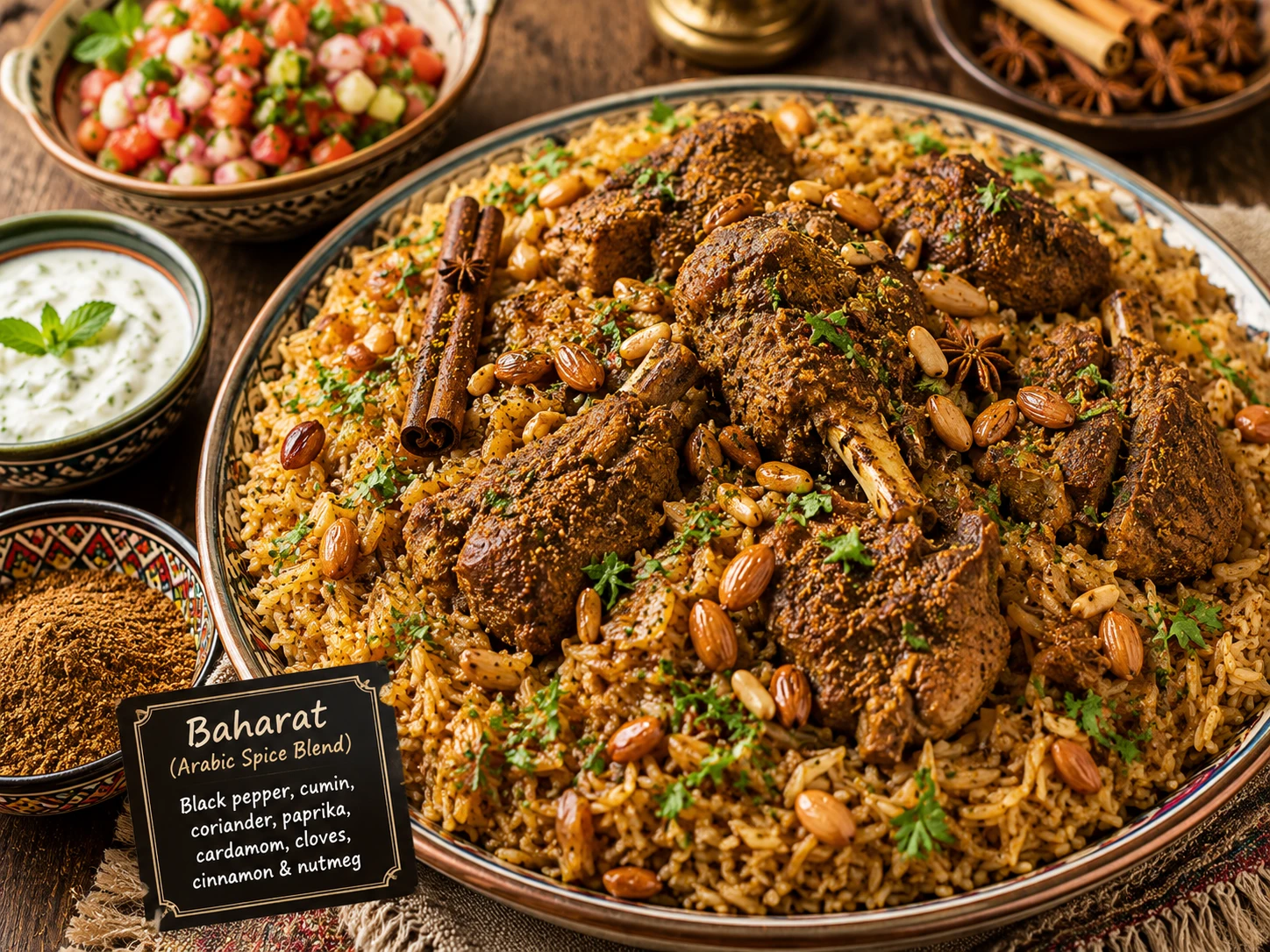
Middle Eastern & Arabic Cooking
كمون is essential in baharat (Gulf spice blend), Moroccan tagine, Yemeni zhoug, hummus, falafel, and shawarma. Moroccan custom places a bowl of cumin salt on the table with roasted meats — a 3,000-year-old tradition.
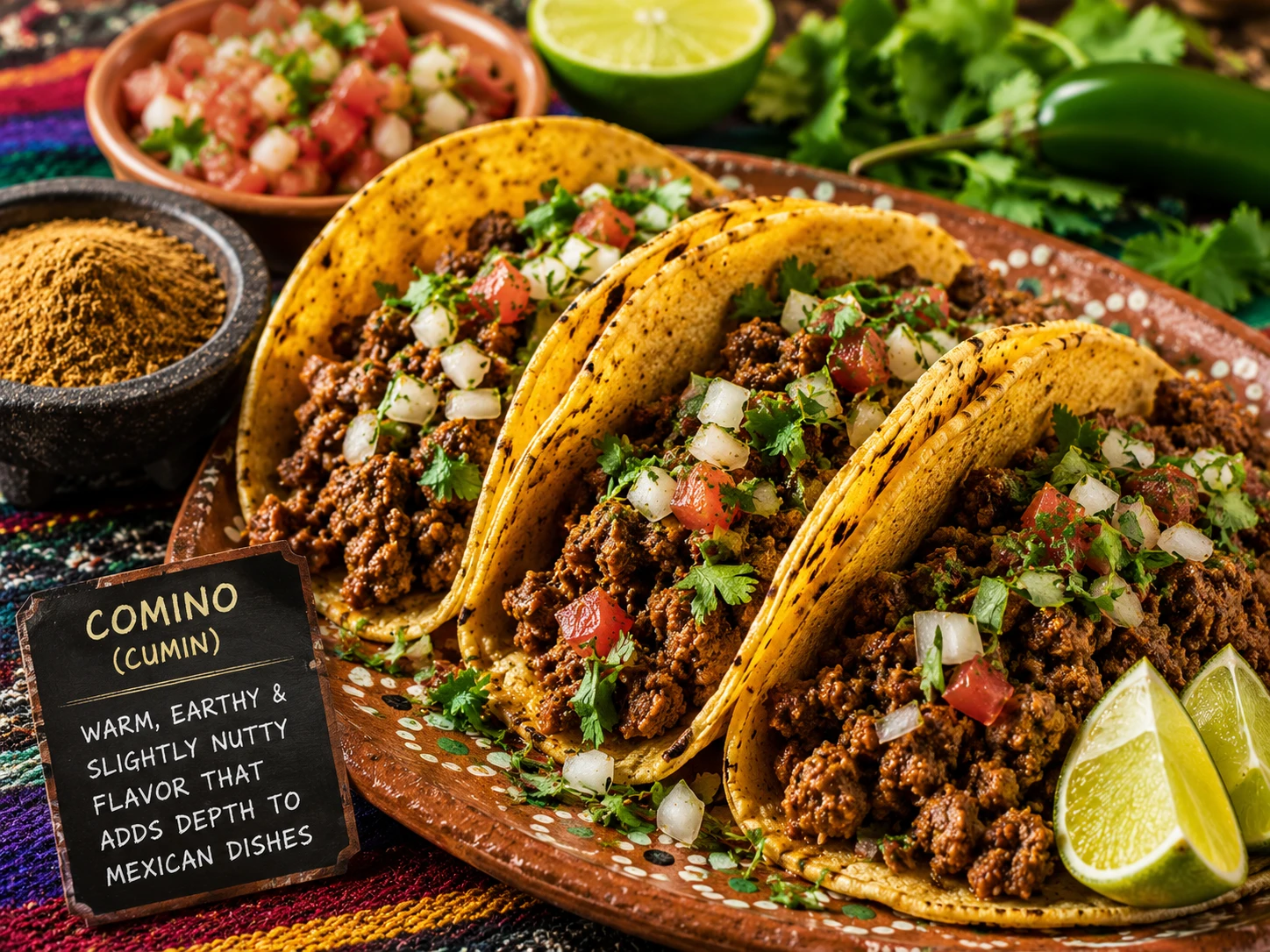
Mexican & Latin American Cooking
Comino is indispensable in chili con carne, taco seasoning, achiote blends, adobo, and sofrito. Spanish colonists introduced cumin to the Americas in the 16th century, where it became a pillar of New World cooking.
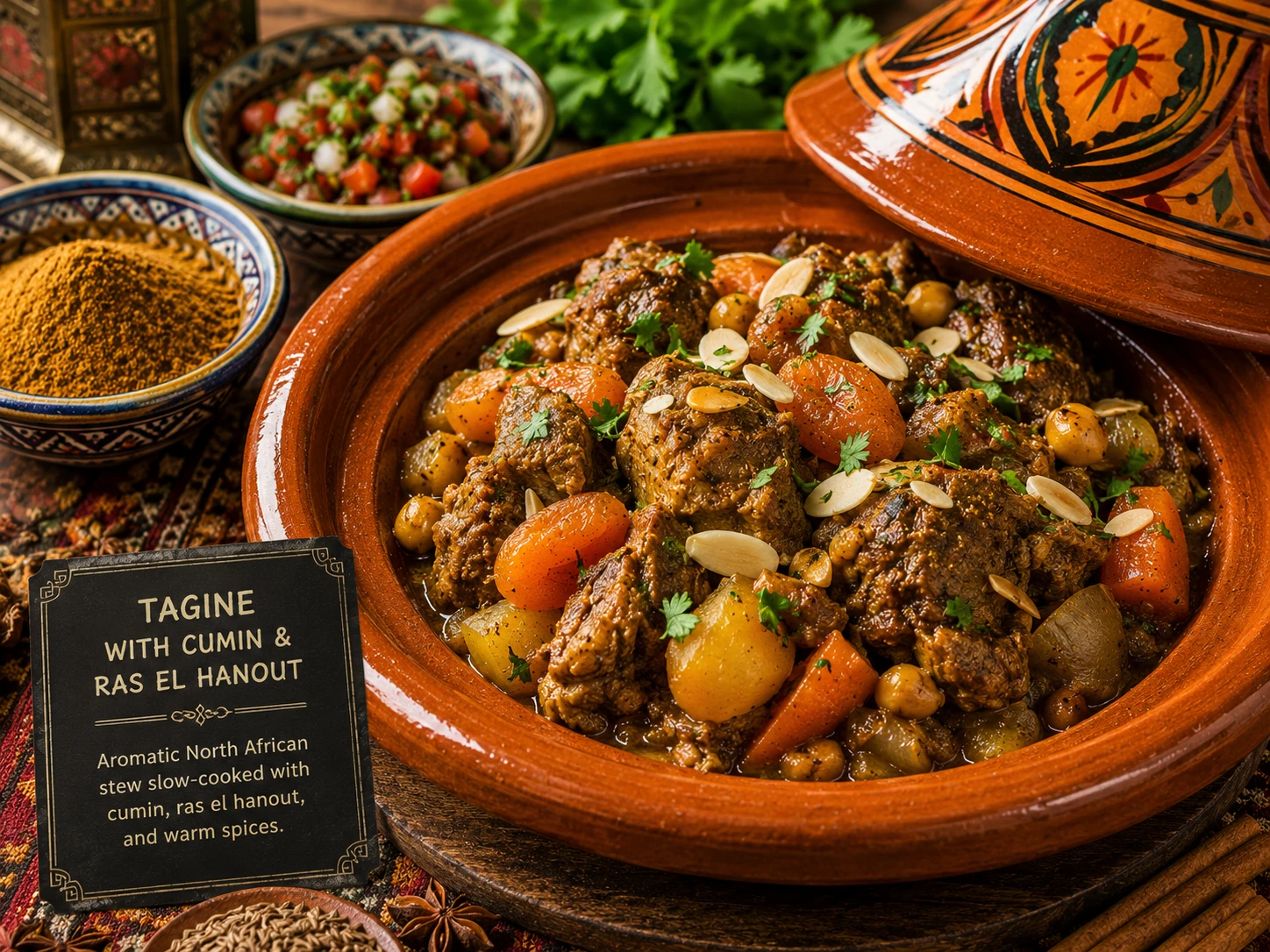
North African Cooking
Cumin is central to Moroccan and Algerian cuisine via ras el hanout and couscous spice mixes. It flavours the slow-cooked lamb tagines, merguez sausage, and the chickpea-based harira soup eaten to break the Ramadan fast.
Spice blends that contain cumin
Cumin’s earthy warmth makes it a natural anchor in complex spice blends. You will find cumin as a primary or key ingredient in: garam masala, curry powder, baharat, ras el hanout, chili powder, taco seasoning, shawarma spice, za’atar (some versions), adobo, berbere (Ethiopian), dukkah, and chermoula.
What pairs well with cumin?
Cumin has a natural affinity with: coriander seeds (its most classic pairing — together in dhana jeera powder), cardamom, cinnamon, cloves, turmeric, fennel, fenugreek, paprika, chili, garlic, ginger, and sumac. For vegetables, cumin particularly elevates carrots, cauliflower, chickpeas, lentils, and potatoes.
Cumin vs Caraway vs Black Cumin: Clearing Up the Confusion
Cumin is one of the most frequently confused spices in the world. Here is a definitive breakdown.
| Spice | Botanical name | Taste | Arabic name | Common confusion |
|---|---|---|---|---|
| Cumin (regular) | Cuminum cyminum | Earthy, warm, nutty, citrusy | كمون (kammūn) | Often confused with caraway |
| Caraway | Carum carvi | Anise-like, rye-bread flavour, sharper | كراويا (karawya) | Looks almost identical to cumin |
| Black cumin (shahi jeera) | Bunium persicum | Sweeter cumin with lemony, caraway notes | كمون أسود (kammūn aswad) | Confused with black seed / kalonji |
| Black seed (kalonji) | Nigella sativa | Bitter, oniony, oregano-like | حبة البركة (habba al-baraka) | Called “black cumin” in English, wrongly |
| Fennel seeds | Foeniculum vulgare | Sweet, liquorice / anise flavour | شمر (shamar) | Confused with cumin due to similar shape |
How to tell cumin from caraway at a glance
Cumin seeds are slightly longer and thinner, with a warm yellow-brown colour. Caraway seeds are slightly shorter, more curved, and darker brown. Crucially, the smell test never lies: crush a seed between your fingers. Cumin smells earthy and warm with citrus. Caraway smells of rye bread and anise. They are not interchangeable.
Cumin Health Benefits: What the Science Actually Shows
Cumin has been used medicinally for thousands of years in Ayurvedic, Chinese, and Arabic traditional medicine. Modern clinical research is increasingly validating many of these traditional uses — though it is important to understand that most studies use cumin supplements or concentrated extracts, not the culinary amount in a teaspoon of ground cumin.
Supports digestion & relieves IBS
Cumin stimulates digestive enzyme production and increases bile release from the liver. A clinical study of 57 IBS patients found significant symptom improvement after two weeks of concentrated cumin supplementation. Traditionally used for bloating, gas, and indigestion.
May help manage blood sugar
A 2017 randomised trial found cumin essential oil (100mg/day for 8 weeks) significantly reduced fasting blood sugar, insulin levels, and HbA1c in adults with type 2 diabetes. A 2025 meta-analysis confirmed cumin supplementation affects fasting blood sugar components of metabolic syndrome.
May support weight management
A 2014 study of women with overweight who consumed 3g of cumin powder daily in yogurt for 3 months showed significant reductions in body weight, waist size, and body fat — comparable to a weight-loss medication in a concurrent trial arm.
Antioxidant & anti-inflammatory
Cumin contains cuminaldehyde, thymol, and various flavonoids. Research shows cumin seeds suppress the TLR4-mediated NF-κB inflammatory pathway in macrophages. Its antioxidant activity helps neutralise free radicals that contribute to cellular ageing.
Cholesterol & heart health
A 2014 study found women consuming 3g cumin/day for 3 months showed significant decreases in total cholesterol, LDL cholesterol, and triglycerides, alongside increases in HDL (“good”) cholesterol.
Antimicrobial properties
Cumin’s essential oils — particularly cuminaldehyde and p-cymene — show antimicrobial activity against several food-borne pathogens in laboratory studies. This partially explains its traditional use as a food preservative in arid climates.
Cumin nutrition: what’s in one teaspoon?
Per 1 teaspoon (≈2.1g) ground cumin. Source: USDA FoodData Central.
Best Cumin Substitutes (and When to Use Each)
If you have run out of cumin, here are the best alternatives ranked by how closely they replicate cumin’s flavour profile.
- 1st
Caraway seeds — closest in flavour
Use ½ the amount. Caraway shares the earthy, warm character of cumin but with a more pronounced anise note. Best in meat dishes, soups, and stews. Grind if substituting for ground cumin.
- 2nd
Ground coriander — lighter, more citrusy
Use ½ the amount. Coriander and cumin are botanical cousins and are often paired together. Coriander is milder, more citrusy, and slightly sweet — it will not deliver cumin’s smokiness but works well in most Indian and Middle Eastern dishes.
- 3rd
Chili powder or taco seasoning — contains cumin
Use 1:1. Since cumin is a primary ingredient in both, these blends deliver cumin flavour alongside chili heat. Best for Mexican and Tex-Mex dishes. Be aware they add other spices and colour.
- 4th
Garam masala or curry powder — complex blends
Use ½ the amount. Both contain cumin as a key ingredient, but also add many other spices. Best for Indian dishes where complexity is welcome. Curry powder will add turmeric’s yellow colour.
- 5th
Fennel seeds — different but works in a pinch
Use ½ the amount. Fennel seeds are in the same botanical family and have a somewhat similar appearance, but their flavour is sweeter and more anise-like. Works in some Mediterranean dishes. Not ideal for Indian curries.
Also see: Complete Guide to Fennel Seeds | Cardamom Substitutes
How to Store Cumin Seeds & Ground Cumin
Cumin’s flavour lives in its volatile essential oils. The moment those oils oxidise, cumin loses its power. Proper storage is not optional — it is the difference between a spice drawer that makes food taste amazing and one that makes you wonder why your curry is always flat.
For whole cumin seeds
Store in a sealed glass or dark ceramic jar, away from direct heat, light, and moisture. A cool kitchen cupboard — not above the stove, not on the counter next to the window — is ideal. Whole seeds stay fully potent for 2–4 years when stored correctly.
For ground cumin
Ground cumin oxidises much faster. Even in a sealed jar, commercially ground cumin begins losing its key volatile compounds (cuminaldehyde, β-pinene) within 4–6 months. Sniff test: if it smells dusty or flat rather than earthy and warm, it is past its best. For long-term storage of ground cumin, the freezer works well and extends life to about 10 months.
Spotting adulterated cumin
Cumin’s high price makes it a target for adulteration with rice bran, wheat flour, or starch fillers. Check: (1) Pure cumin seeds are a uniform warm brown — pale specks indicate fillers. (2) Drop seeds in water — real cumin sinks, rice fillers float. (3) Real seeds rubbed between fingers leave oily residue and intense aroma. Buy from high-turnover Indian grocery stores and inspect whole seeds before purchasing ground.
20 Cumin Questions, Answered
What is cumin?▾
What is cumin called in Arabic?▾
Is cumin the same as jeera?▾
What does cumin taste like?▾
What is the difference between cumin seeds and ground cumin?▾
Is cumin the same as black cumin?▾
What is cumin in Spanish?▾
What are the best substitutes for cumin?▾
Is cumin good for digestion?▾
How much iron is in cumin?▾
Can cumin help with weight loss?▾
How do you pronounce cumin?▾
Where does cumin come from originally?▾
How do you store cumin seeds?▾
What cuisines use cumin most?▾
Can you eat cumin seeds raw?▾
What is the difference between cumin and caraway seeds?▾
How do you toast cumin seeds?▾
Is cumin anti-inflammatory?▾
What is the conversion ratio between cumin seeds and ground cumin?▾