Growing Cardamom in Australia:
State-by-State Guide & Zone Finder
From tropical Cairns to cool Melbourne — find out exactly what’s possible in your part of Australia, which growing strategy to use, and when to plant for your climate zone.
Can You Really Grow Cardamom in Australia?
The short answer is yes — across large parts of the country. The nuance is in the method. Cardamom (Elettaria cardamomum) is a tropical rainforest understory plant that evolved in Kerala's Western Ghats. It demands consistent warmth, high humidity, and filtered shade. Give it those conditions and it rewards you with fragrant canes, orchid-like flowers, and eventually, pods.
In Far North Queensland, Darwin and the Kimberley, those conditions exist naturally. In Brisbane and northern NSW, a sheltered spot and heavy mulch bridge the gap. In Sydney, Perth and Adelaide, a smart container strategy does the work. In Melbourne, Hobart or Canberra, a grow light and humidifier make it work indoors year-round.
The state-by-state breakdowns below cover the regions Australians ask about most — but this page is really the hub for every Australian climate zone. Wherever you are, use the zone suitability finder to get matched to the right method, then use the state cards to see exactly how growers near you are doing it. If your city isn't one of the ones featured, the zone table and finder below still give you an exact answer. Note: this guide follows the Southern Hemisphere calendar — Australian spring is September–November and winter is June–August.
Cardamom in Australia — Quick, Reliable Answers
The core facts every Australian grower needs, stated plainly and backed by real sources- Can cardamom grow in Australia?
- Yes. Cardamom (Elettaria cardamomum) grows across large parts of the country, though the method changes by climate: in-ground outdoors in tropical and subtropical zones, in a container with indoor overwintering in temperate cities, and indoors in alpine or cold zones. 📎 Source: Daleys Fruit Tree Nursery
- What is the best Australian region for growing cardamom?
- Far North Queensland (Cairns, Daintree, Atherton Tablelands), Darwin NT, and the Kimberley WA offer the closest match to cardamom's native tropical climate and produce the most reliable outdoor pod harvests. 📎 Source: Bureau of Meteorology
- What temperature kills a cardamom plant?
- Cardamom foliage dies back around 10°C, and the plant will not flower the following season after cold exposure — established rhizomes are seriously damaged below this point. 📎 Source: Daleys Fruit Tree Nursery
- How long does an Australian-grown cardamom plant take to flower?
- Roughly 2–3 years from a rhizome division to first flowering in tropical and subtropical zones; longer from seed, and longer again in temperate cities without greenhouse conditions. 📎 Source: Daleys Fruit Tree Nursery
- Does cardamom need full sun or shade in Australia?
- Cardamom needs filtered or dappled shade, not full sun. Australian afternoon sun is significantly more intense than the filtered rainforest canopy it evolved under, and leaves scorch quickly without protection. 📎 Source: ABC Gardening Australia
- Is cardamom grown commercially in Australia?
- No. Commercial cardamom production remains concentrated in India, Guatemala and Sri Lanka. In Australia, cardamom is grown almost exclusively by home gardeners. 📎 Source: Jerry Coleby-Williams
- What humidity does cardamom need in Australian homes?
- 60–80% relative humidity — well above ambient levels in most Australian homes, especially in Perth, Adelaide and during southern winters, which is why a humidifier is necessary for most indoor and container growers. 📎 Source: ABC Gardening Australia
- Can cardamom survive winter outdoors in Australia?
- Reliably only in the tropical north (FNQ, Darwin, Kimberley) and, with mulching, subtropical SE Queensland and northern NSW. Everywhere else — Sydney, Melbourne, Adelaide, Perth, Tasmania — cardamom must be container-grown and moved indoors or under cover through winter. 📎 Source: Bureau of Meteorology
Australian Climate Zones for Cardamom — The Key Facts
Understanding the numbers before you plant anywhere in Australia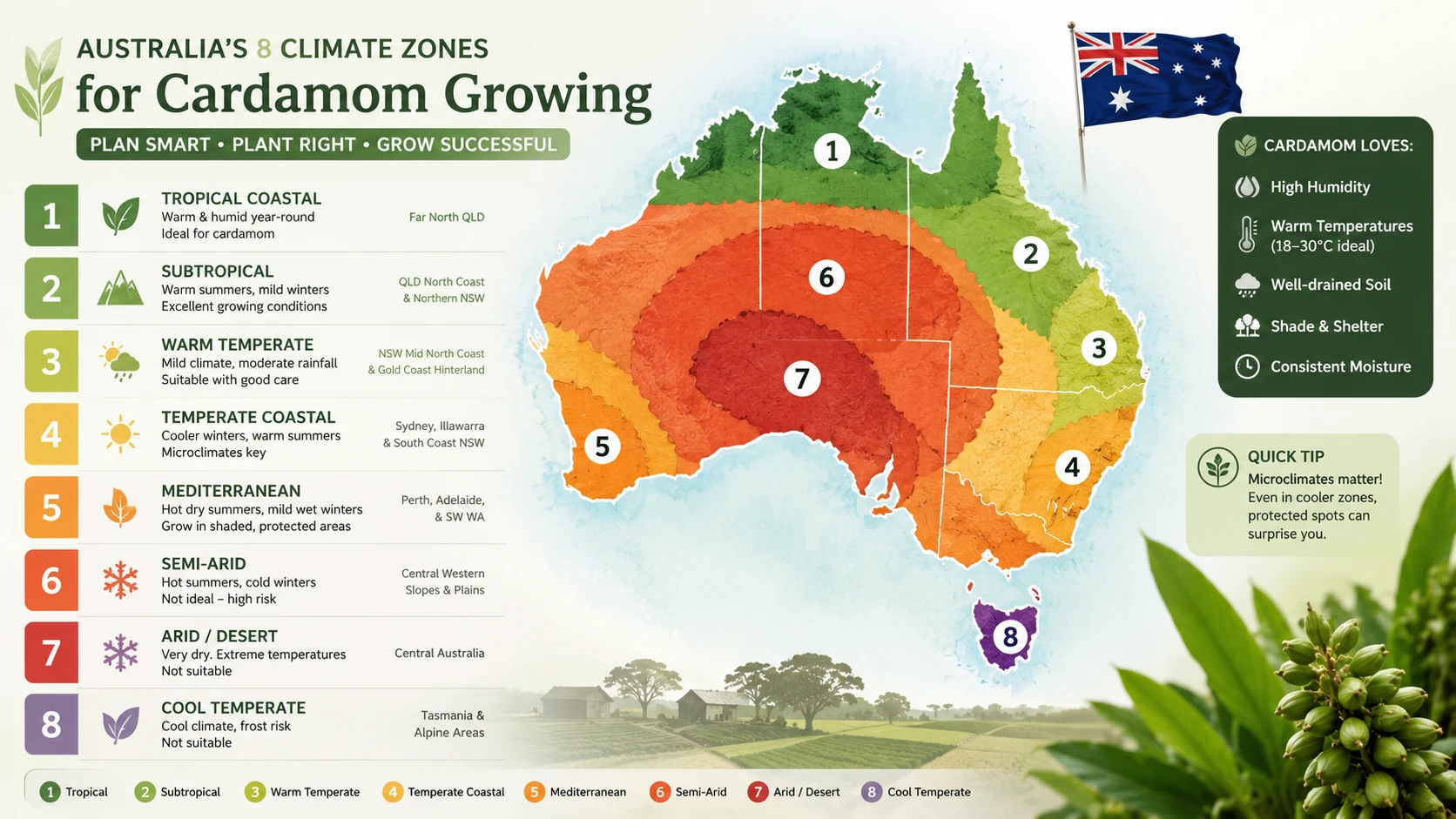
Every Australian Zone — What's Possible for Cardamom
Zone-by-zone reference with example cities and strategiesA clear reference covering every Australian climate zone, with example cities and the recommended growing strategy for each region.
| Zone | Min Winter Temp | Example Cities | Outdoor | Best Strategy |
|---|---|---|---|---|
| 1 | 20°C+ | Cairns, Daintree, Darwin, Broome, Kununurra | ✓ Year-round | Plant in-ground, year-round care |
| 2 | 10–15°C | Brisbane, Gold Coast, Sunshine Coast, Byron Bay | ✓ Reliable | In-ground with mulch through the cooler months |
| 3–4 | 5–15°C, very dry | Toowoomba, Longreach, Alice Springs, Kalgoorlie | ⚠ With care | Container with shade cloth and humidity support |
| 5 | 8–12°C | Perth, coastal SW WA | ⚠ Container | Container, sheltered position, misting in summer |
| 6 | 5–10°C | Sydney, coastal NSW, Adelaide | ⚠ Container | Container outdoors Oct–May, indoors June–Sept |
| 7 | 2–8°C | Melbourne, Canberra | ✕ Not viable | Container, sheltered spot Nov–Mar only, indoors rest of year |
| 8 | Below 5°C, frosts | Hobart, alpine VIC/NSW, ACT highlands | ✕ Not possible | Year-round indoor or heated greenhouse with grow light |
How Australian Regions Compare
Side-by-side comparison across the regions this guide covers mostThis comparison only makes sense at the hub level — each region's own dedicated notes go deep on that one location, but only here can you see how they stack up against each other.
| Region | Zone | Min Winter Temp | Humidity Challenge | Best Planting Window | Strategy |
|---|---|---|---|---|---|
| Far North QLD | 1 | 20°C+ | Low — naturally humid | Dry season (May–Sep) | In-ground |
| Darwin NT | 1 | 18–20°C | Low in wet season, moderate in dry | Dry season (May–Sep) | In-ground on raised mounds |
| Brisbane / SE QLD | 2 | 5–10°C | Low — subtropical humidity | Sep–Oct (spring) | In-ground, sheltered + mulched |
| Perth WA | 5 | 8–12°C | High — dry Mediterranean summer | Oct–Nov | Container + misting |
| Sydney NSW | 6 | 5–10°C | Moderate | Oct–Nov | Container, indoor overwinter |
| Melbourne VIC | 7 | 2–8°C | Very high — dry winter air indoors | Nov only | Indoor / greenhouse-led |
Australian Cardamom Zone Suitability Finder
Select your region and setup — get a personalised cardamom growing plan instantlyFind Your Exact Growing Strategy
Select your Australian region, growing setup and goal — get a personalised planting calendar, strategy verdict, and location-specific tips.
✅ Your Growing Progress
Tick these off as you go — your progress is saved on this device
Cardamom by Australian Region — Detailed Growing Guides
Far North Queensland · Darwin NT · Brisbane / SE Queensland · Perth WA · Sydney NSW · Melbourne VICSpecific guidance for the most common locations where Australian growers try to grow cardamom — what works, what to avoid, and the strategies that consistently succeed.
Far North Queensland
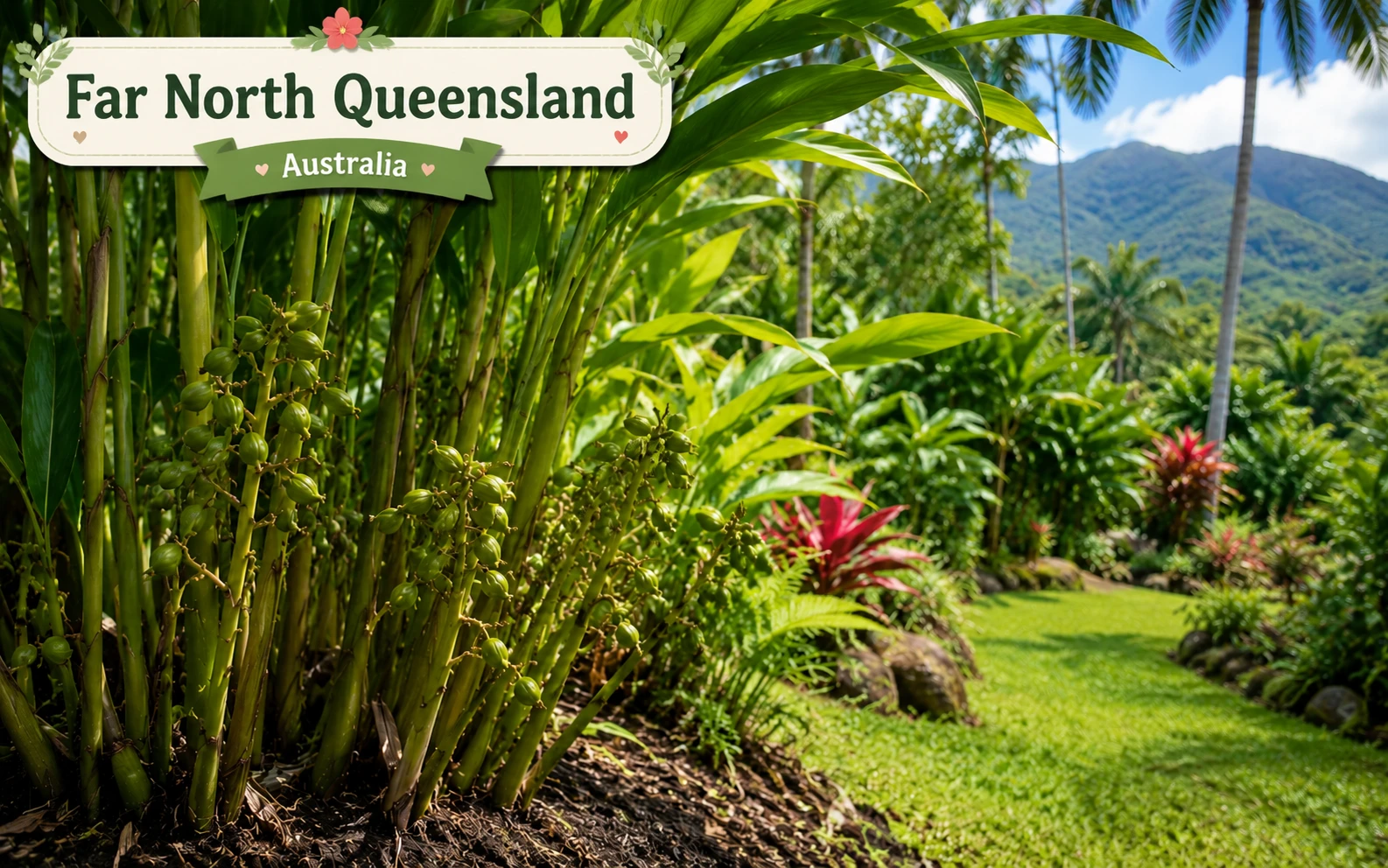
Cairns, the Daintree, and the Atherton Tablelands are the best places in Australia to grow cardamom outdoors. Monsoonal rainfall, year-round warmth above 20°C, and high humidity closely mirror Kerala's conditions. Compared to Darwin — the only other region in this tier — FNQ's rainforest-adjacent soils and native tree canopy make dappled shade easier to find. Daleys Fruit Tree Nursery documents successful growing reports from FNQ customers on "coastal sub-tropical" red loam.
Darwin & Northern Territory
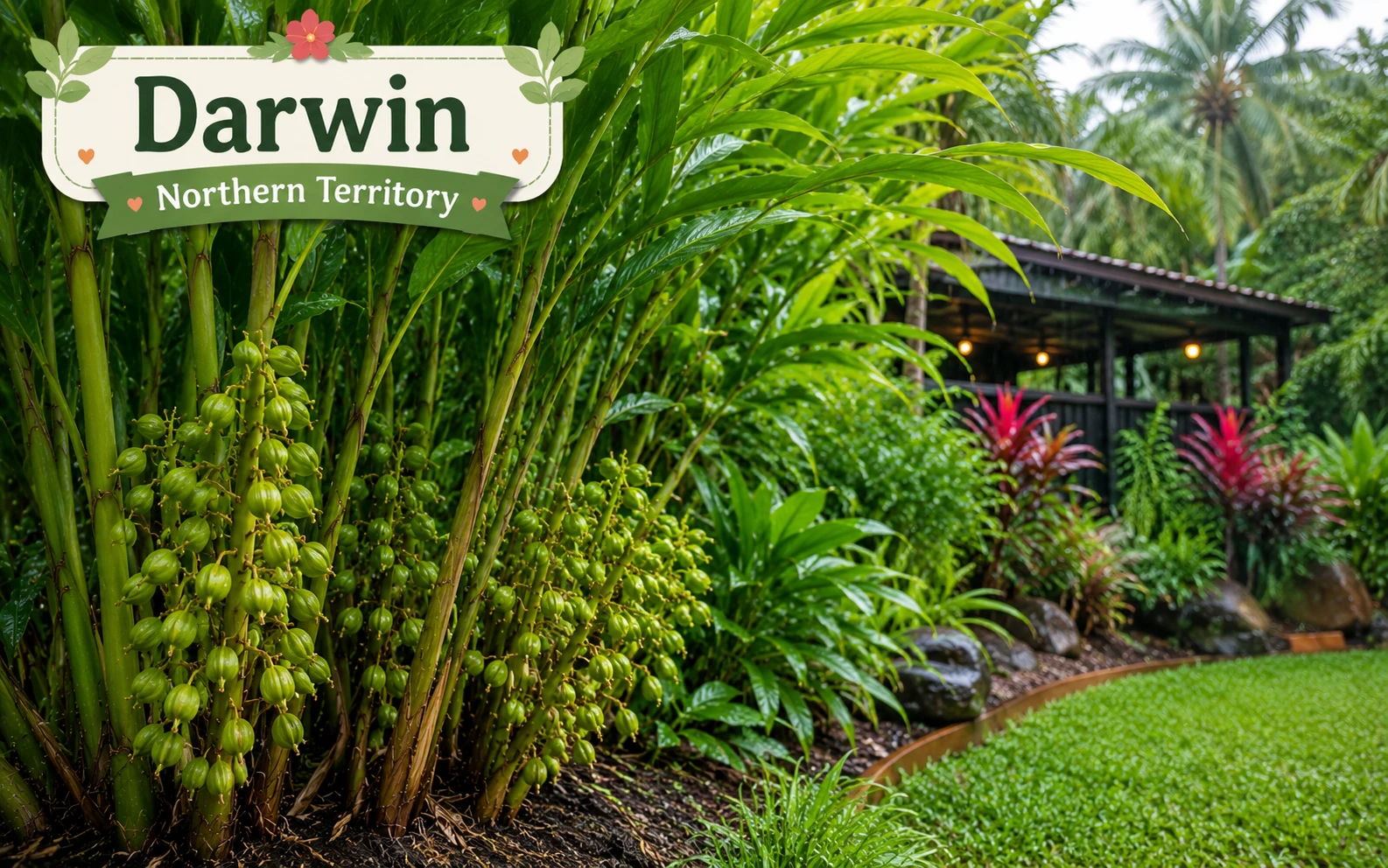
Darwin's monsoonal tropical climate suits cardamom exceptionally well, with hot year-round conditions and a dramatic wet/dry season split. The wet season (November–April) provides the humidity surge that triggers flowering — similar to monsoon onset in Kerala. The dry season demands supplemental irrigation every 5–7 days plus regular misting, the main difference from naturally humid FNQ.
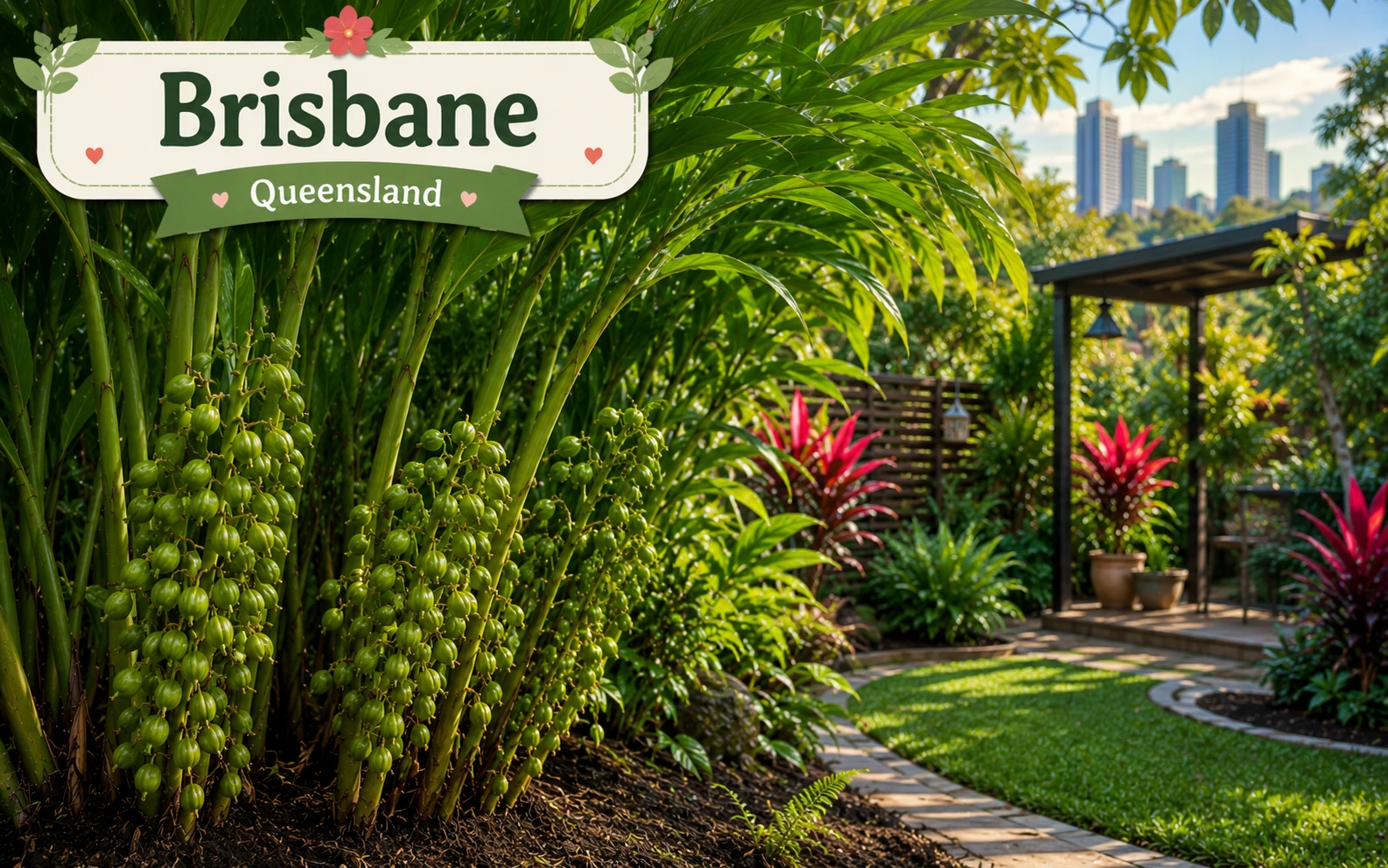
Brisbane & South-East Queensland
Brisbane, the Gold Coast and the Sunshine Coast fall in Australia's subtropical zone 2 — warm humid summers and mild winters that rarely dip below 5°C. Compared to FNQ and Darwin, SE Queensland occasionally sees a July–August cold snap that causes minor leaf dieback, but plants recover fully by spring with a sheltered, north-facing position and heavy mulch.
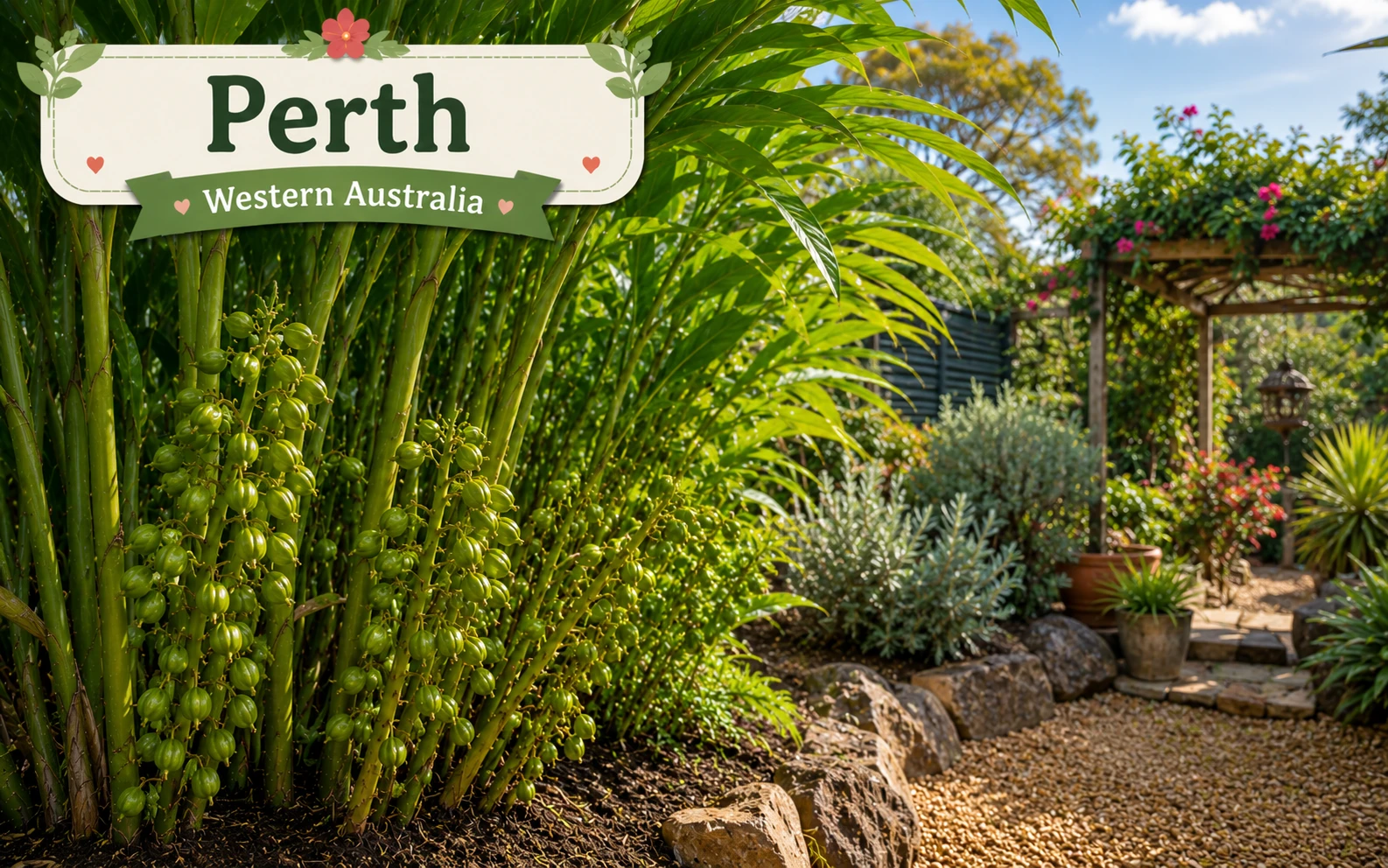
Perth & South-West WA
Perth's Mediterranean climate — hot dry summers, mild wet winters — is the opposite of cardamom's preferred humid conditions, making it the driest of the container-viable regions on this page, even drier than Sydney's summer. Container growing with a humidifier or daily misting in summer, moved under cover June–August, gives the best results. Water restrictions apply in Perth, so a drip system on designated watering days is the practical approach.
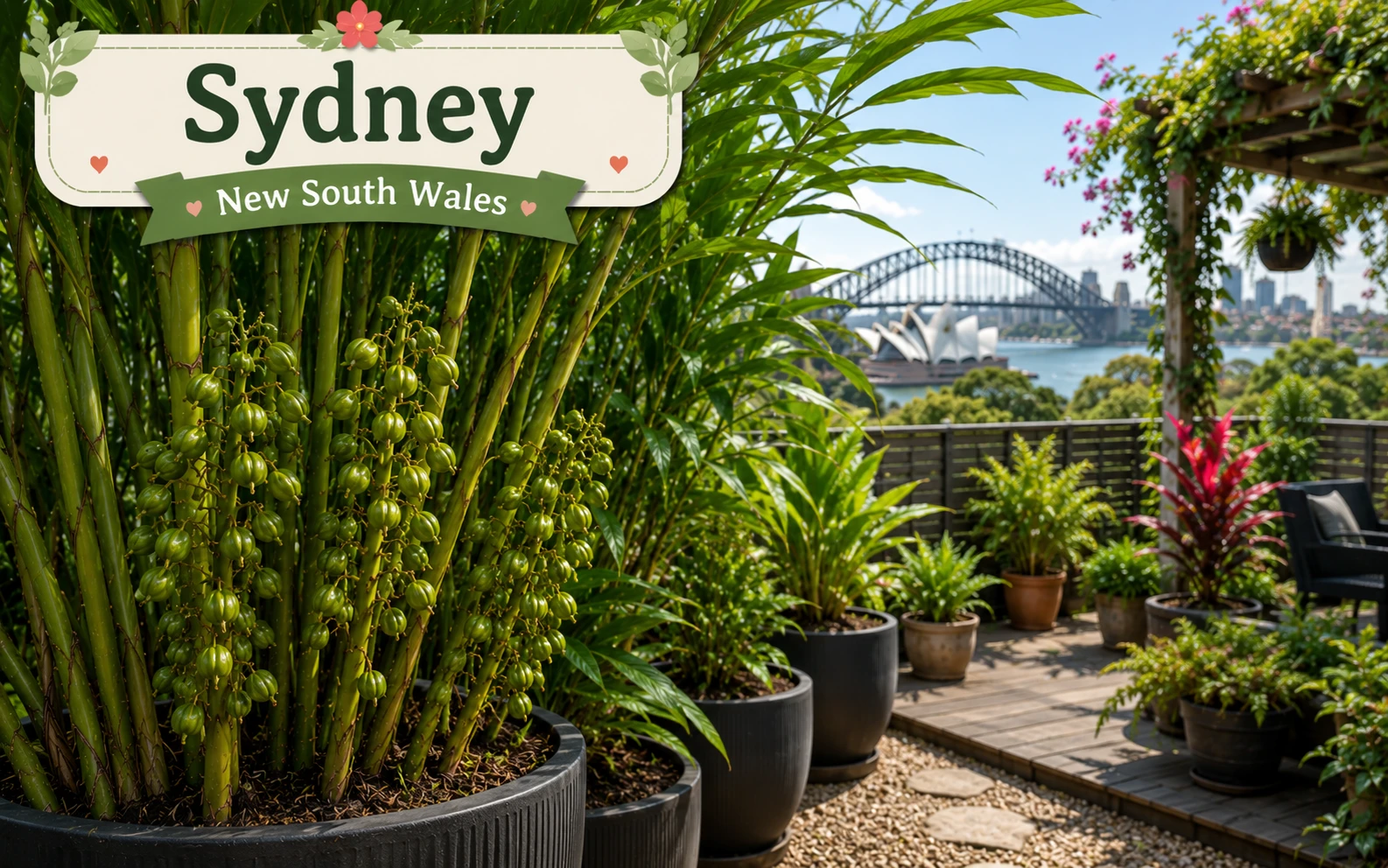
Sydney & NSW Coast
Sydney's temperate coastal climate has warm summers suited to outdoor cardomom and cool winters that require protection — container growing is the standard approach. Outdoors October–May, indoors June–September. Compared to Perth and Melbourne, sheltered inner Sydney gardens and the Northern Beaches occasionally let cardamom overwinter outdoors with heavy mulching, which is not reliable further south.
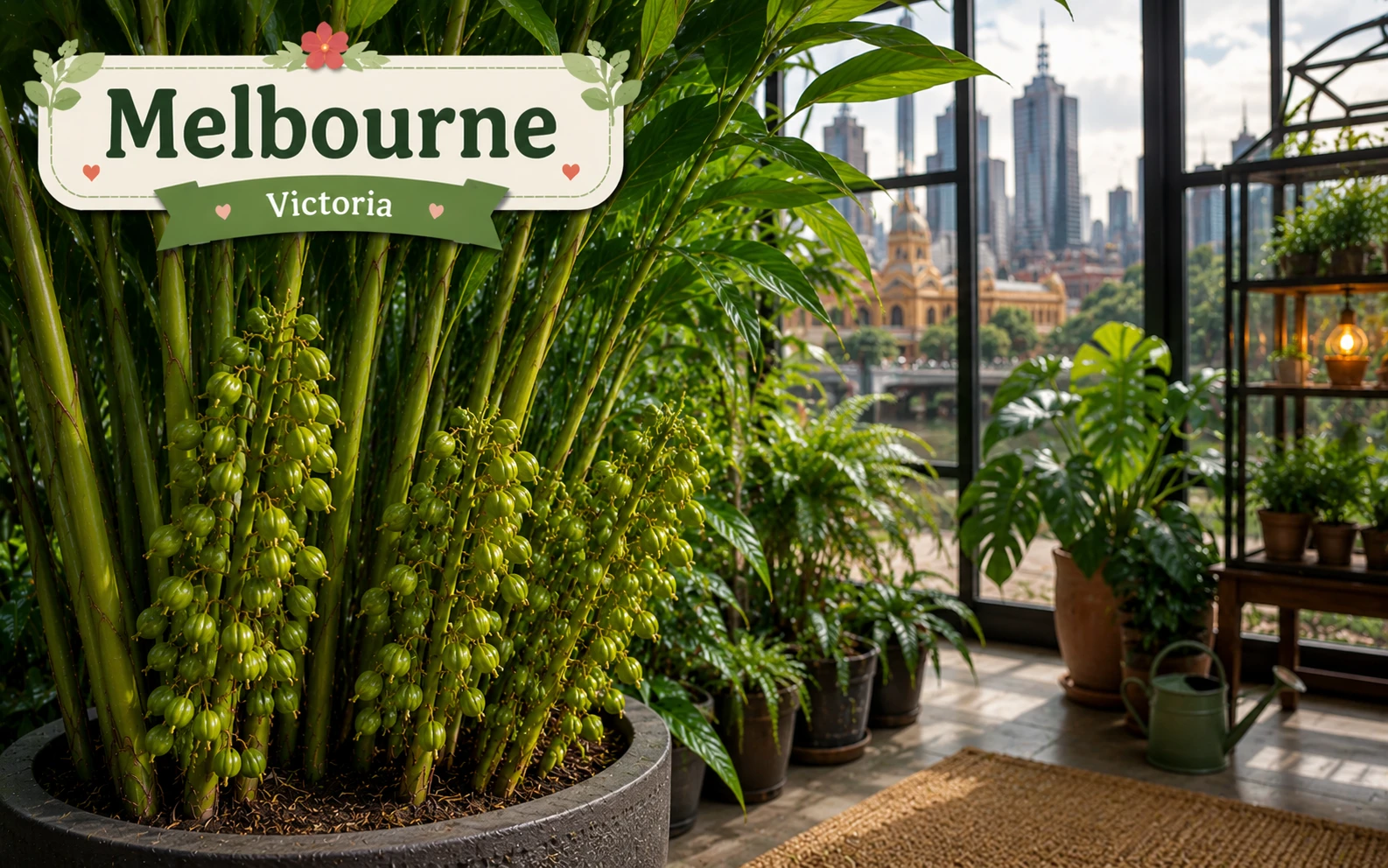
Melbourne & Victoria
Melbourne's cold, often wet winters are the most challenging in mainland Australia for cardamom — in-ground outdoor growing is not viable here, unlike every other region on this page. Container growing works well: outdoors November–March only in a very sheltered north-facing position, indoors April–October. A heated conservatory is the single biggest upgrade for Melbourne growers chasing pods rather than foliage.
Growing Cardamom Indoors Anywhere in Australia
Every state and territory — the complete indoor setup checklist for every climateYou don't need to live in Cairns or Darwin to grow cardamom. With the right setup, it grows as a beautiful long-term houseplant from Hobart to the Alice Springs desert — here's exactly how. For the full step-by-step setup, see our dedicated indoor growing guide.
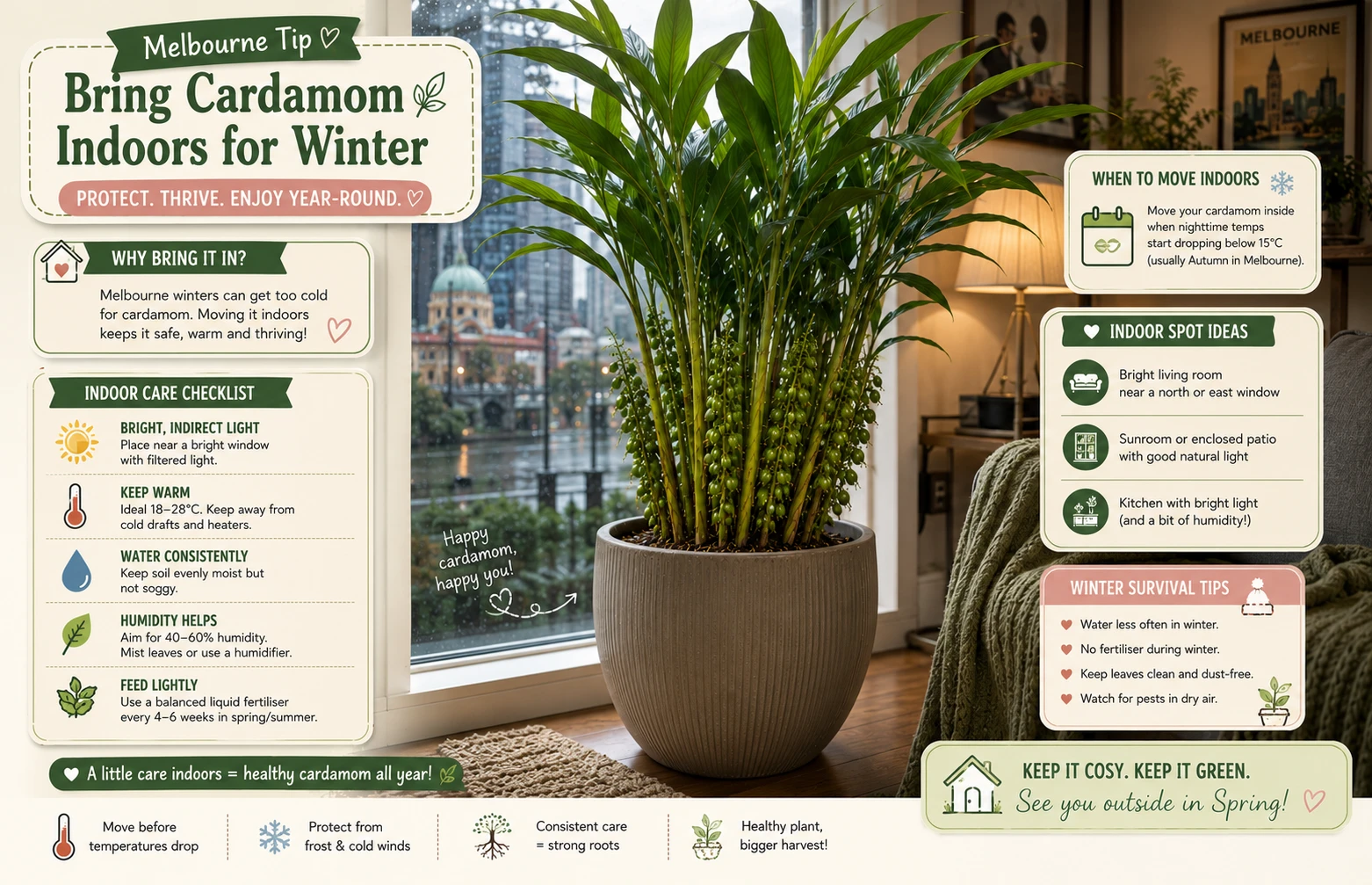
Essential Indoor Setup Checklist
- Bright window — east or west facing. North-facing in winter is fine in the Southern Hemisphere; add a sheer curtain in summer to filter intense direct sun.
- Full-spectrum LED grow light. 14 hours per day, especially April–September (Australian autumn–winter). This separates thriving plants from struggling ones in southern cities.
- Dedicated humidifier. Central heating and Australia's naturally dry air drop indoor humidity well below cardamom's 60–80% requirement. A hygrometer helps verify real levels.
- Temperature: 18–30°C year-round. Keep above 12°C minimum at all times, away from cold window drafts in winter and AC vents in summer — both are damaging.
- Summer outdoor placement. Moving to a shaded patio or deck from November–March gives genuine tropical conditions and dramatically improves annual growth.
- 40–50 litre pot minimum for a mature clump. Cardamom grows large — a small pot limits it significantly. Repot every 12–18 months.
- Monthly feeding September–April with balanced liquid NPK such as Seasol. Stop completely over winter without exception.
The Container Method — Growing Cardamom in Any Australian Zone
The universal solution for temperate and semi-arid zones — exact strategies from successful Australian growersContainer growing is the universal solution for Sydney, Melbourne, Adelaide, Perth and semi-arid zones, and it works brilliantly. Here's the exact approach used by successful cardamom growers across southern and inland Australia. Choosing the right pot matters — see our best pots for cardamom guide for size and material comparisons.
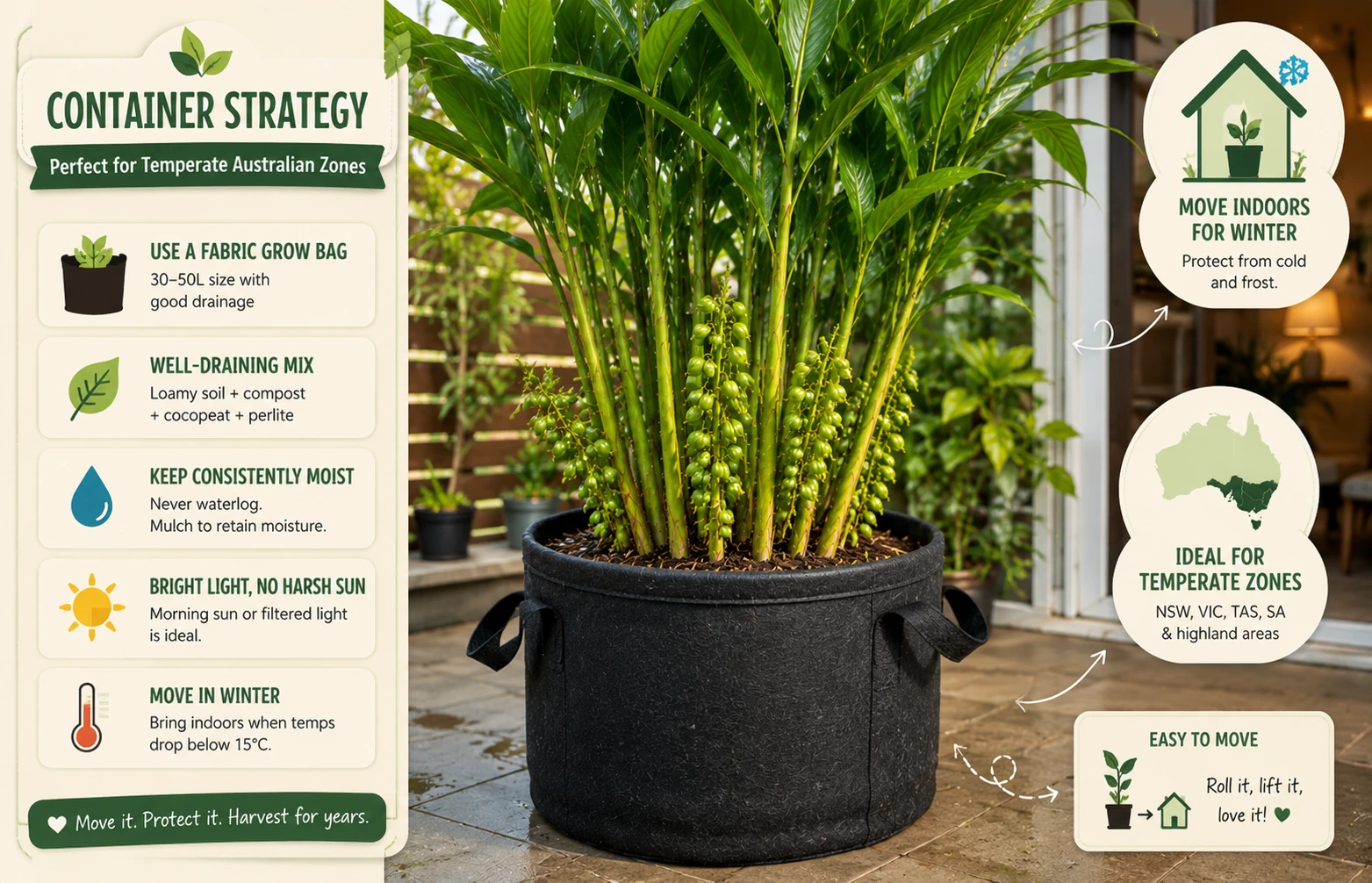
Use a 40–50 litre fabric grow bag or large terracotta pot with drainage holes. Fabric bags offer better aeration and prevent root circling. Handles on the container make the autumn move indoors much easier — a proven container mix for Australian growers is 40% quality potting mix, 30% coco coir and 30% perlite.

Place containers against a north-facing wall (the Southern Hemisphere's warmest aspect) during the growing season. Brick and masonry absorb heat through the day and radiate it at night, raising local temperature noticeably in Sydney and Adelaide winters. This extra warmth extends the outdoor season significantly.
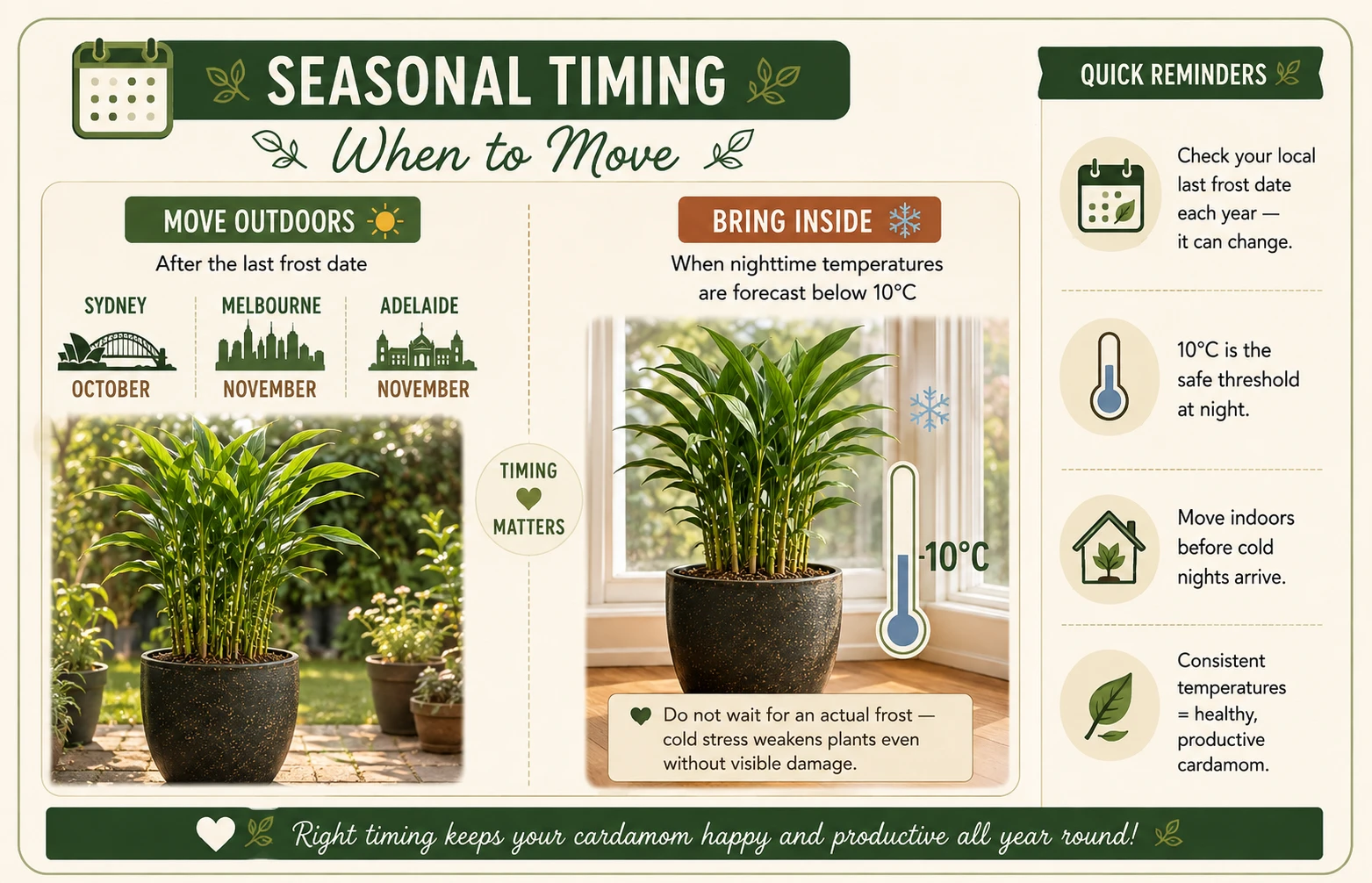
Move cardamom outdoors after the last frost date — typically October in Sydney, November in Melbourne and Adelaide. Bring inside when nighttime temperatures are forecast below 10°C. Do not wait for an actual frost — cold stress weakens plants even without visible damage.
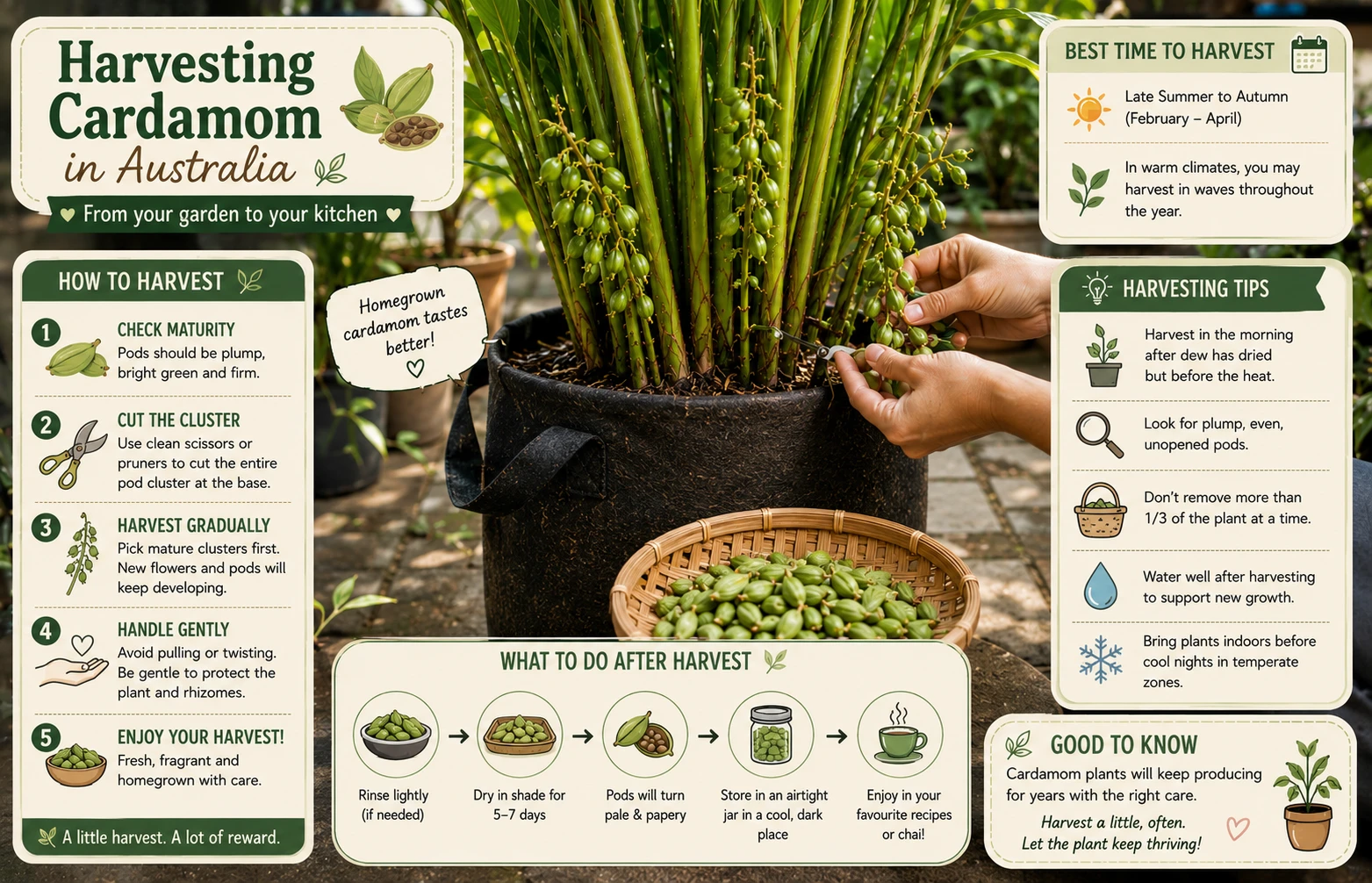
Container-grown cardamom in Sydney can produce pods, especially with a warm humid summer. The keys are a mature plant (3+ years old), consistent summer humidity, and hand-pollination of every open flower in the morning — there are no natural pollinators indoors. Expect fewer pods than tropical outdoor plants but identical quality. Full technique in our flowering & hand-pollination guide.
When to Plant Cardamom — Australian Regional Planting Calendar
Zone 1–2 · Zone 3–4 · Zone 5–7 · Zone 8 · Southern Hemisphere timing for every regionPlanting timing varies significantly by region — and follows the Southern Hemisphere calendar, roughly six months out of phase with UK, US or Indian guides. Use this calendar to find your optimal window. If you're starting from seed rather than a rhizome, timing shifts slightly — see our growing from seed guide.
🌱 What to Expect — Your Cardamom's First 2 Years
Drag the slider to see what's normal at each stage. Every zone on this page follows roughly this same arc.
Australian Growers' Care Essentials — Quick Reference
Short answers here; full step-by-step detail lives on our dedicated care guidesOnce your cardamom is planted using the right zone strategy above, ongoing care is what keeps it alive through Australian summers and winters. Here's a quick snapshot of each topic — tap through to the full guide for exact schedules and troubleshooting.
Watering in Australian Climates
Dry southern air, water restrictions in Perth and Adelaide, and intense afternoon sun all pull moisture from cardamom fast. Australian growers generally need to water more often than growers in naturally humid climates.
Full watering & care guide →Starting From Seed vs Rhizome
Daleys Fruit Tree Nursery and Australian Etsy sellers ship both — seed takes longer to establish and needs an extra 1–2 years to first pods; rhizome divisions fruit sooner.
Seed-starting guide →Common Australian Growing Problems
Yellowing leaves from alkaline bore water, spider mites in dry southern summers, and wet-season root rot in the tropics are the three issues Australian growers report most.
Diagnose plant problems →Getting Cardamom to Flower
Flowering needs a mature clump, high humidity, and warmth — the exact bar every Australian zone strategy on this page is built to clear. Native stingless bees do the pollinating for you in the tropics.
Flowering guide →Get the Printable Australian Zone Cheat Sheet
Every zone, every strategy, every planting window on this page — condensed onto one printable page you can keep by your growing station. No fluff, just the numbers.
What Does a Cardamom Plant Actually Need? — The Complete Tool
Watering · Sunlight · Soil & Pot · General Care — everything a plant needs to reach maturity, in one placeEvery requirement your cardamom plant needs to grow, flower and fruit — condensed into one quick-reference tool. Click a tab for exact numbers on that topic.
Complete Australian Cardamom Care Requirements
Tap a tab to see exactly what your plant needs — from first watering to full maturity.
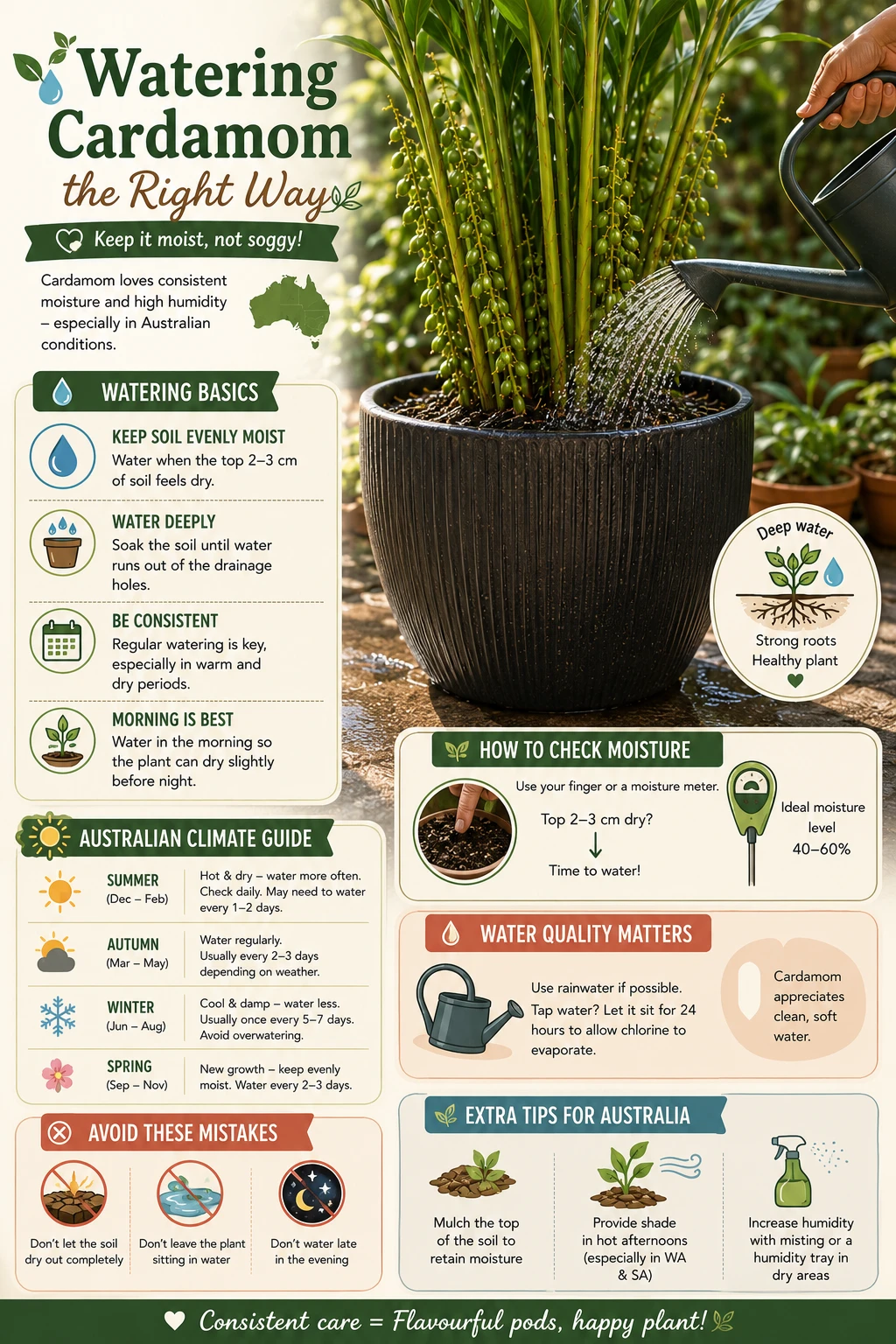
Watering Requirements
Getting the water schedule right matters more in Australia than almost anywhere else cardamom is grown — dry southern air, water restrictions in Perth and Adelaide, and long summer heatwaves all push against what this rainforest plant actually needs.
- Water when the top 2–3cm of soil feels dry — every 2–3 days outdoors in summer for most zones, every 5–7 days in the tropical dry season.
- Use rainwater tanks where possible. Hard bore water in parts of WA and inland Australia raises soil pH over time and causes yellowing new leaves.
- Never let a pot sit in standing water — waterlogged roots are the single most common cause of death in Australian container-grown plants, and the top wet-season risk in FNQ and Darwin.
- Mist foliage in dry climates (Perth, Adelaide, indoor heating) to support the humidity cardamom needs alongside root watering.
- Reduce watering frequency by 40–50% once a container plant is moved indoors for winter, since growth slows and evaporation drops.
Sunlight Requirements
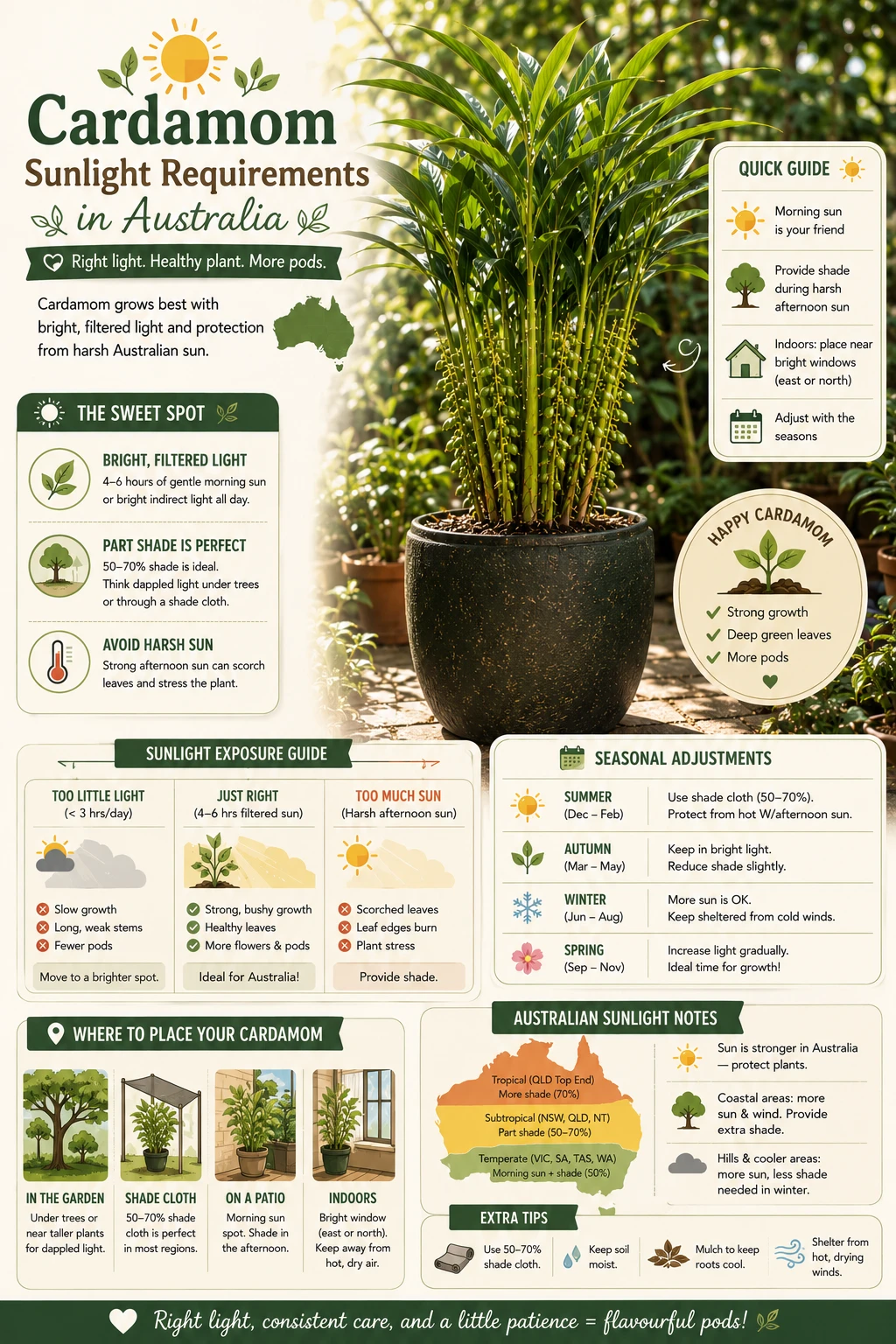
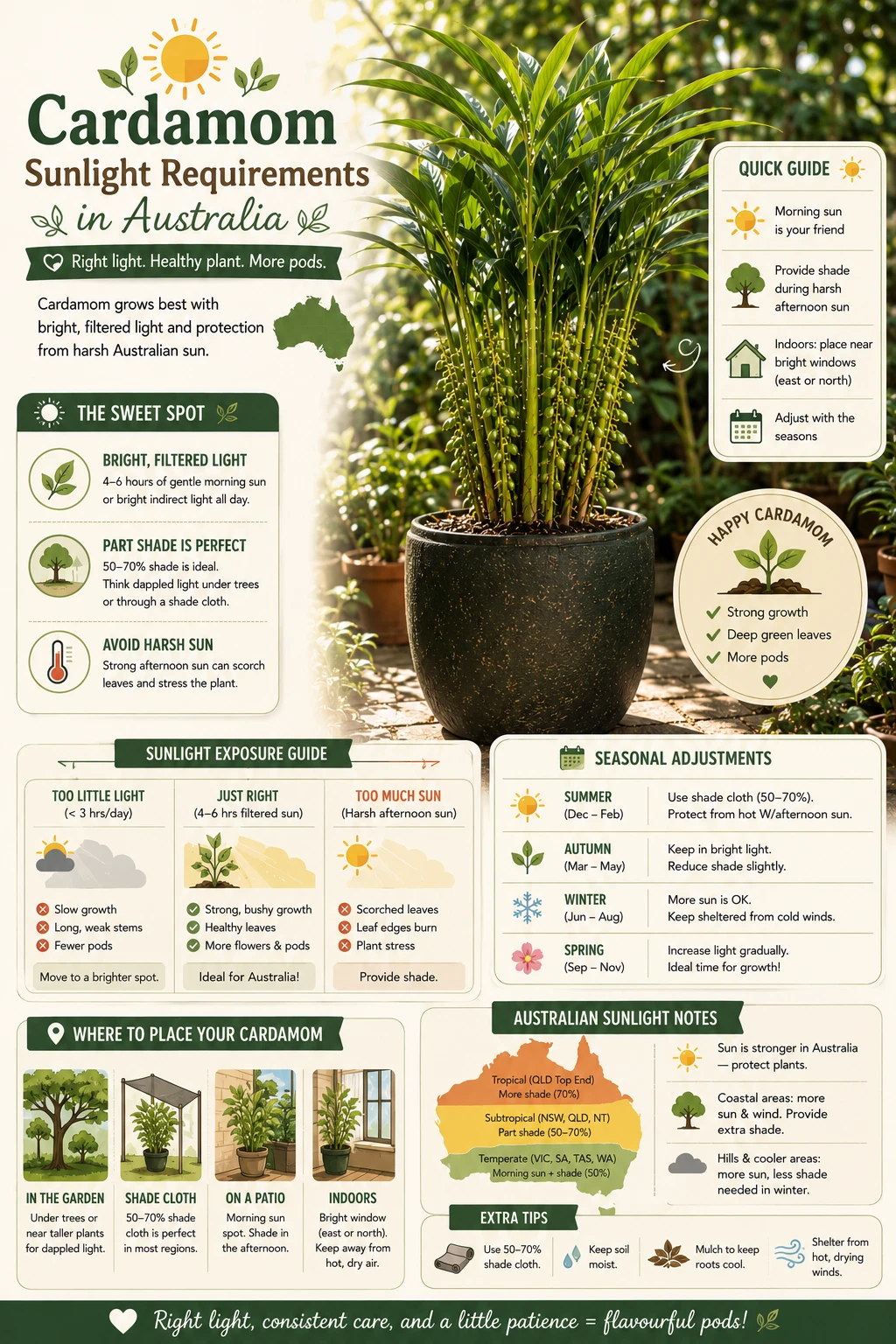
Light is the requirement Australian growers get wrong most often — either too much direct sun in the harsh Australian afternoon, or too little through a Melbourne or Hobart winter. Both stunt the plant in different ways.
- Outdoors: filtered or dappled shade — 30–50% shade cloth or existing tree canopy. Cardamom is a rainforest understory plant, not a full-sun plant.
- Indoors: bright east or west-facing window, plus a full-spectrum LED grow light for 14 hours daily in the cooler months.
- Australian afternoon sun is significantly more intense than the filtered canopy light cardamom evolved under — always provide shade after 12pm.
- East-facing positions that get morning sun and afternoon shade are ideal across all Australian climates.
- Too little light causes leggy, pale growth and prevents flowering — balance is everything.
Soil & Pot Requirements
Soil and pot choice set the ceiling for everything else on this page — Australian soils vary enormously by region, and even perfect watering and light can't compensate for compacted soil or a pot that's too small for a spreading rhizome clump.
- Rich, loose, well-draining soil — slightly acidic, pH 5.5–6.5. FNQ and Darwin's red clay-loam soils are naturally well-suited with minor amendment; Perth's sandy soils need 30–40% organic matter.
- Pot size: 40–50 litres minimum for a mature clump. Under-potting is the top growth-limiter for Australian container growers.
- Drainage holes are non-negotiable — cardamom hates wet feet as much as it loves humid air.
- Container mix: 40% quality potting mix (Osmocote or Richgro), 30% coco coir, 30% perlite — the standard Australian growers' blend.
- Repot every 12–18 months as the rhizome clump spreads outward.
- Test soil pH annually — hard bore water in WA and inland areas pushes pH alkaline; correct with agricultural sulfur.
General Care to Reach Maturity
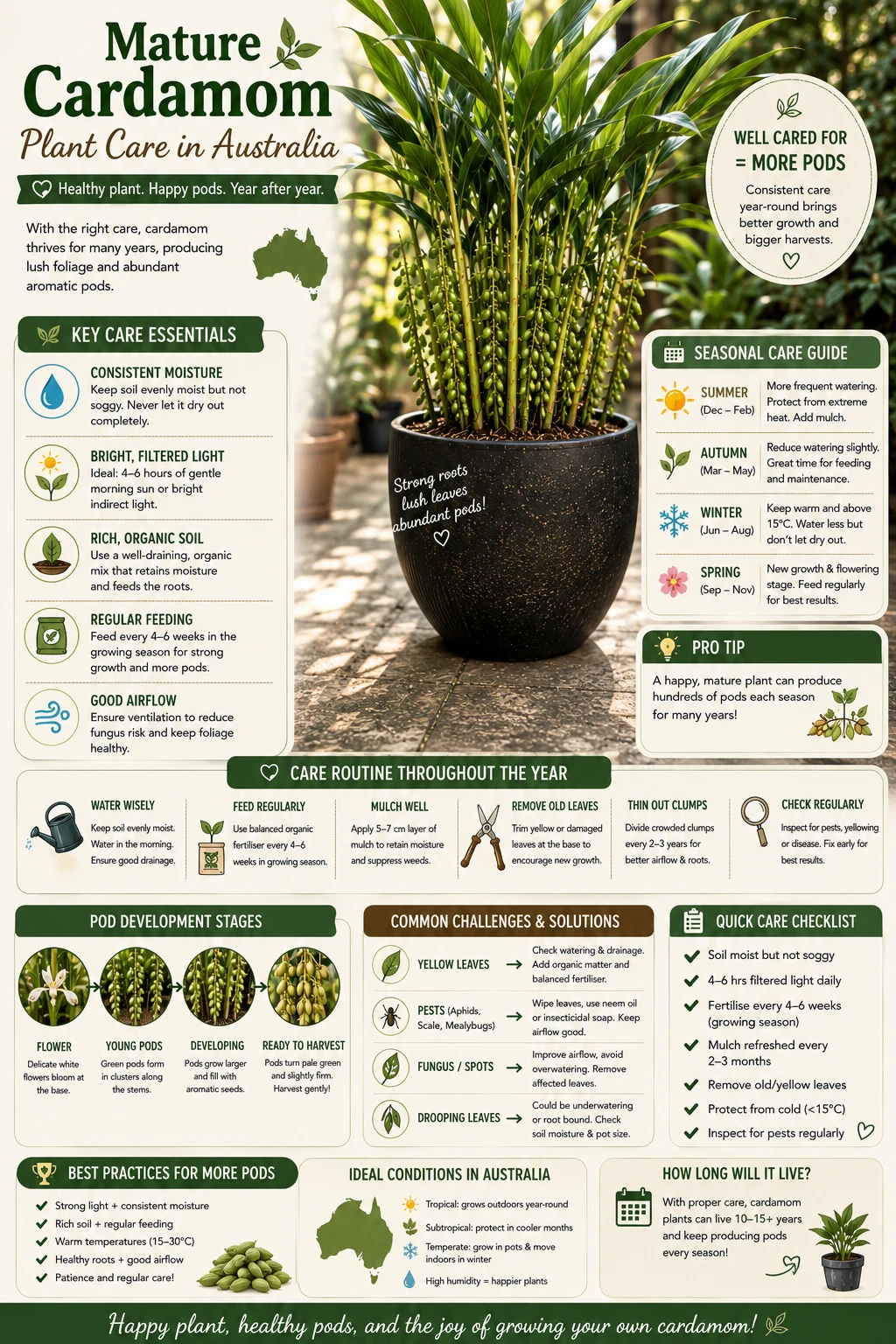
Once watering, light and soil are right, the rest of care is about consistency over years, not any single clever trick. Here's everything a plant needs to go the distance to full maturity in an Australian climate.
- Cardamom takes 2–3 years to reach flowering maturity in tropical and subtropical zones — patience matters more than any single technique.
- Feed monthly with Seasol liquid seaweed plus Osmocote slow-release granules in spring. Stop feeding completely over winter.
- Humidity of 60–80% is non-negotiable — use a humidifier or regular misting in Perth, Adelaide and indoor settings.
- Never expose to temperatures below 10°C — foliage dies back and the plant skips flowering the following year.
- Divide congested clumps every 3–4 years to keep the plant vigorous and productive.
- Inspect regularly for spider mites (dry southern summers) and thrips (tropical Queensland) — the two most common Australian pest issues.
What Does It Cost to Grow Cardamom in Australia?
A realistic starter budget in AUD, container/indoor setup vs. in-ground tropical zonesCosts vary a lot by strategy — an in-ground plant in Far North Queensland or Darwin needs almost no equipment, while a container or indoor setup in southern cities needs a small one-time gear investment. Here's a realistic breakdown for both, in Australian dollars.
| Rhizome or starter plant (Daleys Nursery) | $25–55 |
| 40–50L fabric grow bag or pot | $20–45 |
| Potting mix, coco coir & perlite | $20–35 |
| Full-spectrum LED grow light | $45–120 |
| Humidifier | $55–140 |
| Hygrometer (humidity meter) | $12–20 |
| Seasol + Osmocote (year supply) | $20–35 |
Temperate and cold zones (Sydney, Melbourne, Adelaide, Perth, Tasmania) — one-time setup cost; ongoing cost is mainly electricity and fertiliser refills.
| Rhizome or starter plant (Daleys Nursery) | $25–55 |
| Compost / soil amendment | $15–25 |
| Sugar cane or bark mulch | $8–15 |
Tropical/subtropical zones only (FNQ, Darwin, Kimberley, Brisbane, northern NSW) — no grow light or humidifier needed since the climate already provides both.
From the Australian Growing Community
Real notes and lessons shared by cardamom growers across different Australian climates"Raised mounds saved my plants in the first wet season — before that, water sat around the roots for days and I lost two clumps to rot."
"Dry season is the tricky bit here, not the wet — everyone assumes tropical means easy year-round, but I mist daily from May to October or the leaves crisp up."
"Mulch made the single biggest difference for me — once I went 10–15cm deep against a north-facing fence, the July cold snap barely touched the plant."
"Container growing through summer felt like extra work at first, but once I moved it to an east-facing courtyard with daily misting, it stopped scorching completely."
"Indoor-only here. Took two winters to get the humidity right, but once I added a proper humidifier instead of misting, leaf tip browning basically stopped."
🧠 Test Your Cardamom Knowledge
Five quick questions covering everything on this page — see how much you've picked up
Growing Cardamom in Australia — Expert Answers
The most common questions from Australian gardeners, answered preciselySources
The government agencies, nurseries and references this guide draws on- Bureau of Meteorology — Köppen Climate Classification of Australia
- Daleys Fruit Tree Nursery — Elettaria cardamomum growing notes and Australian grower reports
- Department of Agriculture, Fisheries and Forestry — Biosecurity and Trade
- ABC Gardening Australia — general growing guidance and regional advice
- Jerry Coleby-Williams — Seeking True Cardamom (species identification, NSW/QLD growing notes)
This page summarizes and interprets guidance from the sources above; for exact wording and full context, follow the links to the original publications.
About the Author & Reviewer
Written by a spice horticulturist · Reviewed by a culinary specialist
Olivia writes all growing guides on CardamomNectar, with expertise in tropical spice cultivation across different climate zones. Her BSc in Horticulture informs every zone-specific recommendation on this page, cross-referenced against BOM climate data and Daleys Nursery growing guidelines.
View Profile →
Danial reviews all CardamomNectar content before publication. All Australian climate zone classifications, region-specific growing recommendations, and cardamom species identification guidance on this page have been cross-referenced against the Bureau of Meteorology, Daleys Fruit Tree Nursery documentation and Australian grow-zone databases.
View Profile →


