Fenugreek Water Benefits: 12 Proven Reasons to Drink It Every Morning
Soaking methi dana overnight unlocks galactomannan — the soluble fibre behind fenugreek water’s blood sugar, weight, digestion, and hormone benefits. Evidence-based, expert-reviewed.
Fenugreek water (methi dana paani) is made by soaking 1–2 tsp of fenugreek seeds in water overnight. Drinking it on an empty stomach in the morning provides galactomannan fibre that lowers blood sugar, suppresses appetite, aids digestion, and supports hormonal balance. Safe for daily use; avoid medicinal doses during pregnancy.


· 11 min read · Evidence-based
What Is Fenugreek Water?
A simple ancient remedy with a surprisingly powerful modern science backing
Fenugreek water — called methi dana paani in Urdu and Hindi — is one of the simplest herbal preparations in South Asian, Middle Eastern, and North African traditional medicine. It requires nothing more than fenugreek seeds and water, prepared overnight.
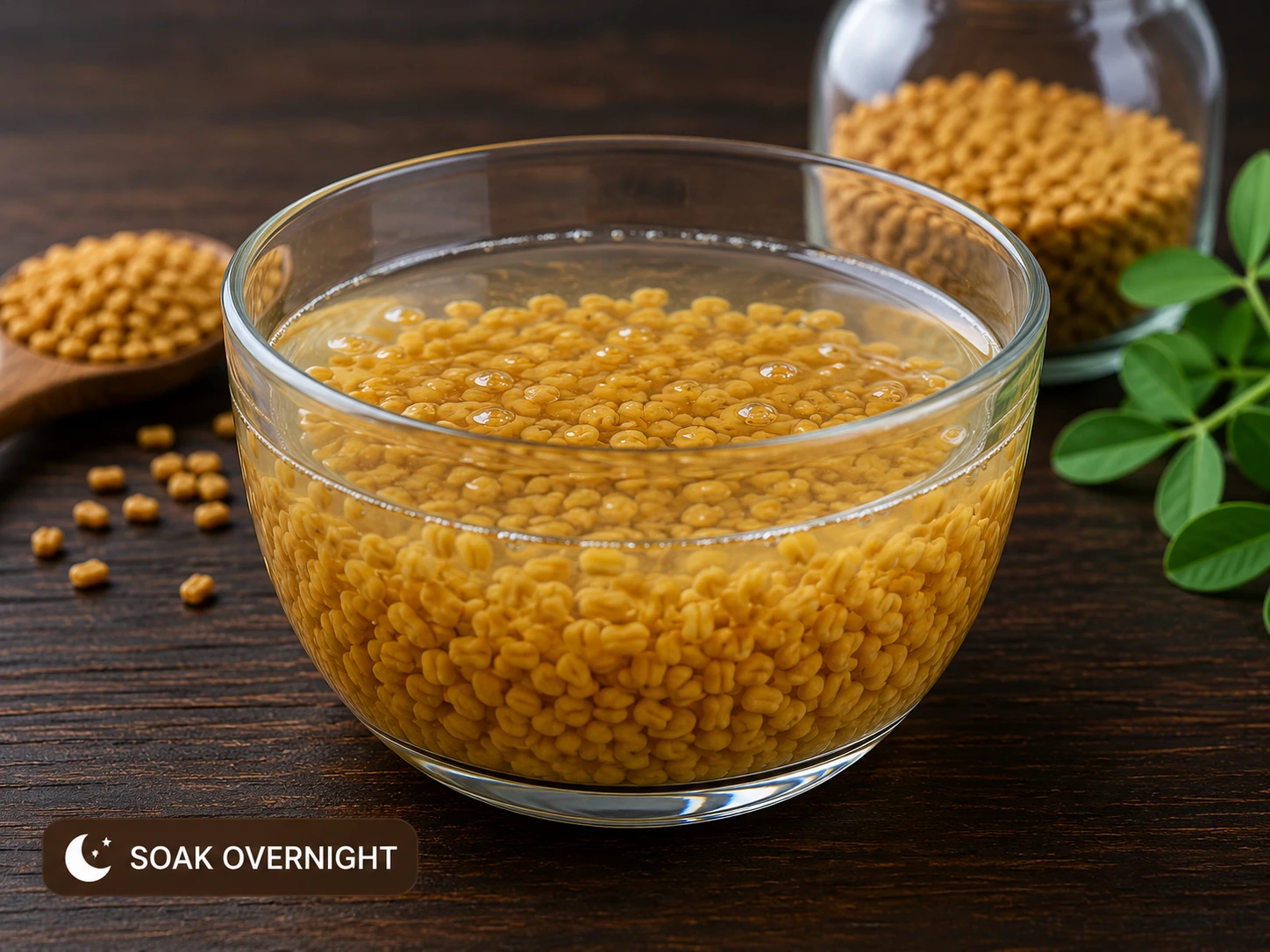
What makes fenugreek water effective is what happens during soaking. As seeds hydrate, they release galactomannan — a viscous soluble fibre that coats the seeds in a gel-like layer and turns the soaking water slightly golden and thick. This galactomannan is the key active compound responsible for most of fenugreek water’s metabolic benefits.
Why Soaking Matters
Raw fenugreek seeds contain phytic acid — an anti-nutrient that reduces absorption of minerals like iron and zinc. Overnight soaking breaks down phytic acid by up to 40%, dramatically improving mineral bioavailability. Soaking also reduces the seeds’ characteristic bitterness, making them far easier to consume.
Unlike boiled fenugreek tea, soaked fenugreek water preserves galactomannan’s viscous structure intact — which is critical for its blood sugar-lowering mechanism. Heat degrades this structure, making cold-soaked water superior for metabolic benefits.
Key distinction: Always drink both the soaking water AND the soaked seeds. The gel coating around the seeds is concentrated galactomannan — the most beneficial component. Discarding the seeds loses most of the benefit.
12 Science-Backed Benefits of Fenugreek Water
Ranked by strength of clinical evidence — from strong RCTs to traditional use
Lowers Blood Sugar & Improves Insulin Sensitivity
Galactomannan in fenugreek water forms a viscous gel in the stomach, slowing gastric emptying and glucose absorption from subsequent meals. Multiple RCTs show 10–15g soaked seeds daily reduces fasting glucose by 10–15% over 4–8 weeks. The amino acid 4-hydroxyisoleucine also directly stimulates pancreatic beta-cell insulin secretion.
✓ Strong Clinical EvidenceSuppresses Appetite & Supports Weight Management
Galactomannan expands significantly in the stomach, promoting satiety and delaying hunger signals. A 2015 randomised study found 8g fenugreek fibre consumed before a meal reduced subsequent fat intake by 17% and total calorie intake significantly. Drinking fenugreek water 30 minutes before the largest meal of the day maximises this effect.
✓ Good EvidenceRelieves Bloating, Constipation & Digestive Discomfort
The mucilaginous gel from soaked fenugreek seeds coats the stomach and intestinal lining, soothing acid reflux and reducing irritation. Galactomannan acts as a prebiotic, feeding beneficial gut bacteria and improving bowel regularity. Traditional Ayurvedic and Unani medicine have used fenugreek water for gastric complaints for thousands of years.
✓ Good EvidenceReduces LDL Cholesterol
Galactomannan binds bile acids in the gut, preventing their reabsorption and forcing the liver to convert more cholesterol into new bile acids. Studies show regular fenugreek consumption can reduce total cholesterol by 14–25% and LDL specifically by 10–18% over 8–12 weeks. Fenugreek’s saponins also inhibit intestinal cholesterol absorption directly.
✓ Good EvidenceSupports Breast Milk Production
Fenugreek is the most widely studied herbal galactagogue. Nursing mothers who drink fenugreek water or tea report increased milk production within 24–72 hours. One clinical trial showed milk volume increased from 34ml to 73ml per pumping session in the fenugreek group versus no change in the placebo group. The Academy of Breastfeeding Medicine includes it in its galactagogue protocol.
✓ Good EvidenceReduces Menstrual Pain & Supports Hormonal Balance
Fenugreek contains phytoestrogens — plant compounds that mildly mimic oestrogen — and potent anti-inflammatory compounds. A clinical study found fenugreek seed powder significantly reduced menstrual pain scores and reduced need for painkillers during the first three days of menstruation. Regular drinking may also help regulate irregular cycles by supporting oestrogen balance.
◎ Moderate EvidenceProvides High-Absorbability Iron
Fenugreek seeds contain 33.5mg of iron per 100g — 186% of the daily value — making them one of the richest plant sources of iron. Crucially, soaking reduces phytic acid, dramatically improving this iron’s bioavailability. Iron deficiency is the leading cause of hair loss and fatigue in women. Drinking fenugreek water daily can meaningfully contribute to correcting iron-deficiency symptoms.
✓ Strong Nutritional EvidenceReduces Inflammation
Fenugreek seeds contain multiple anti-inflammatory compounds including flavonoids, saponins, and polyphenols. Animal and in vitro studies demonstrate significant reduction in inflammatory markers (TNF-α, IL-6, COX-2). While robust human clinical trials are limited, traditional use for inflammatory conditions like arthritis is widespread and biologically plausible.
◎ Emerging EvidenceImproves Hair Health When Used Topically
Cooled fenugreek water applied to the scalp and hair delivers lecithin (natural emollient), nicotinic acid (follicle stimulant), and proteins that coat and strengthen the hair shaft. Use as a post-wash hair rinse — leave for 10 minutes then rinse. The iron provided by drinking fenugreek water internally also addresses one of the most common nutritional causes of hair thinning.
◈ Traditional + NutritionalSupports Testosterone Levels in Men
Fenugreek’s steroidal saponins (particularly protodioscin) inhibit aromatase and 5-alpha reductase — enzymes that convert testosterone to oestrogen and DHT respectively. Clinical studies using standardised extract at 500–600mg/day showed 12–18% improvement in free testosterone over 8–12 weeks. Soaked fenugreek water provides lower concentrations than extract but contributes meaningfully as a dietary approach.
◎ Moderate EvidencePromotes Healthy Skin
Fenugreek seeds are rich in antioxidants including vitamin C, flavonoids, and polyphenols that combat free-radical skin damage. The anti-inflammatory compounds may reduce acne and skin redness. Cooled fenugreek water can be applied topically as a skin toner — it has a mildly astringent effect and may help clear blemishes. Internal consumption supports skin from within through improved iron and antioxidant levels.
◈ Traditional + NutritionalSupports Kidney & Liver Detoxification
Traditional Ayurvedic medicine classifies fenugreek water as a diuretic and liver-supportive herb. Animal studies show fenugreek extract reduces liver enzyme levels and protects against drug-induced liver injury via antioxidant mechanisms. The high fibre content also promotes toxin elimination through improved bowel transit. Human clinical evidence specifically for fenugreek water is limited but mechanistically supported.
◈ Traditional + Animal StudiesHow to Make Fenugreek Water Correctly
The method matters — small mistakes reduce benefits significantly
Measure the Seeds
Start with 1 teaspoon (about 3–4g) of whole fenugreek seeds if new to this. Regular users can use 2 teaspoons (6–8g). Do not use ground fenugreek powder — whole seeds release galactomannan slowly and steadily during soaking, creating the gel coating that is central to the benefit.
💡 Beginners: always start with 1 tsp to allow digestion to adjustRinse Briefly
Place seeds in your glass and add cold water. Swirl and drain immediately. This removes surface dust and any processing residue. Do this once only — do not soak during the rinse.
Soak Overnight — Room Temperature
Add 1 to 1.5 cups (240–360ml) of room-temperature water. Cover the glass loosely and leave at room temperature for 8–12 hours. Do not refrigerate during soaking — cold temperatures significantly slow galactomannan release. Overnight is the simplest — prepare before bed, drink in the morning.
⏰ 8 hours = milder taste · 12 hours = maximum benefitDrink Everything — Seeds and Water
In the morning, drink the water and chew/swallow the soaked seeds on an empty stomach. The gel layer on the seeds is concentrated galactomannan — the most beneficial part. Do not strain out the seeds. Wait 20–30 minutes before eating breakfast for maximum blood sugar benefit.
🍋 Optional: add a squeeze of lemon or ½ tsp honey to improve palatability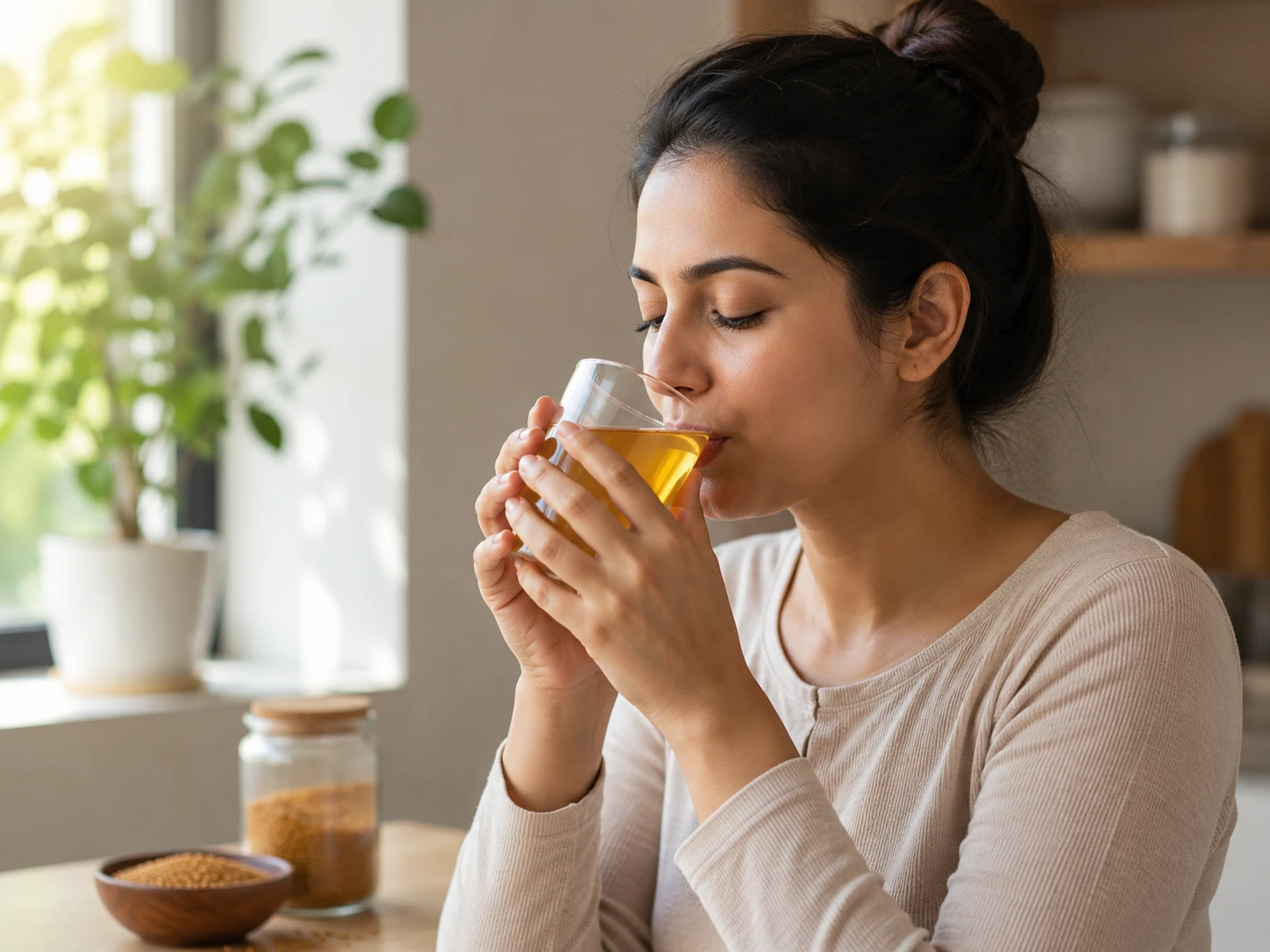
Common mistakes to avoid: Refrigerating during soak (slows galactomannan release), discarding seeds (loses half the benefit), using boiling water (destroys galactomannan structure), using ground powder instead of whole seeds.
Fenugreek Water Variations
Four ways to drink fenugreek water based on your goal and taste preference
Classic Fenugreek Water
1 tsp seeds soaked overnight in 1 cup water. Drink with seeds in the morning. Plain, simple, most studied. Best for blood sugar management and digestion.
Fenugreek Lemon Water
Add juice of half a lemon to your morning fenugreek water. Lemon enhances iron absorption from the seeds (vitamin C effect) and improves the bitter taste. Best for iron deficiency and hair health.
Fenugreek Ginger Water
Soak seeds with a thin slice of fresh ginger overnight. Ginger adds anti-nausea and anti-inflammatory compounds, makes the taste more pleasant, and enhances digestive benefits.
Fenugreek Honey Water
Add ½ tsp raw honey after straining. Honey’s antimicrobial compounds complement fenugreek’s anti-inflammatory effects. Best for skin and immunity. Avoid if managing blood sugar closely.
Fenugreek Water Dosage by Health Goal
Clinical and traditional dosages — always start at the lower end
| Health Goal | Seeds Per Day | Water Amount | Timing | Duration for Results |
|---|---|---|---|---|
| Blood Sugar (Type 2 Diabetes) | 10–15g (2–3 tsp) | 1.5–2 cups | 30 min before breakfast | 4–8 weeks |
| Weight Management | 5–8g (1–2 tsp) | 1 cup | 30 min before largest meal | 4–6 weeks |
| Digestive Health | 3–5g (1 tsp) | 1 cup | Empty stomach, morning | 3–7 days |
| Breast Milk Supply | 5–10g (1–2 tsp) | 1–1.5 cups | Morning + before feeds | 24–72 hours |
| Hormonal Balance / Periods | 5g (1 tsp) | 1 cup | Morning on empty stomach | 1–3 months |
| Cholesterol Management | 15–25g (3–5 tsp) | 2 cups (split doses) | Before 2 main meals | 8–12 weeks |
| General Wellness (Daily Habit) | 3–5g (1 tsp) | 1 cup | Morning on empty stomach | Ongoing |
Important: If you take medication for diabetes, blood pressure, or blood thinning — consult your doctor before starting fenugreek water. It can have additive effects with these medications and may require dose adjustments.
Personalised Fenugreek Water Dose Finder
Get your recommended starting dose based on your goal
Select your health goal and experience level to see how many fenugreek seeds to soak, how much water to use, and when to drink it.
Quick Goal Presets
⚠️ For informational purposes only. Not medical advice. Consult your doctor before therapeutic use, especially with existing medications.
When Will You See Results?
Expected timeline for fenugreek water’s key benefits — based on clinical evidence
Most people notice reduced bloating and improved bowel regularity within the first few days. The satiety effect — feeling fuller for longer after meals — is also felt from the first use when consumed before eating.
Breastfeeding mothers typically notice increased milk volume within 24–72 hours of starting fenugreek water. The effect is usually accompanied by a mild maple-syrup scent in mother’s and baby’s urine — this is harmless and confirms the fenugreek is being absorbed.
As iron levels improve (especially in women with iron deficiency), fatigue typically reduces noticeably around the 2–4 week mark. More stable blood sugar from galactomannan also reduces mid-morning and mid-afternoon energy crashes.
Measurable reductions in fasting blood glucose and LDL cholesterol typically appear at the 4–8 week mark in clinical studies. These require consistent daily use. Have these checked by your doctor before and after to confirm improvement.
Hormonal benefits — reduced menstrual cramps, more regular cycles, reduced PCOS symptoms — typically require 2–3 months of consistent daily use as phytoestrogen effects accumulate gradually. Weight reduction supporting hormonal balance also becomes more apparent at this stage.
Hair growth cycles take time. Reduced shedding typically becomes noticeable after 8–12 weeks of daily use combined with topical fenugreek water application. Results are more pronounced in women whose hair loss was linked to iron deficiency.
Soaked Fenugreek Water vs Boiled Fenugreek Tea
Not the same — choose the right one for your goal
| Property | Soaked Water (Cold) | Boiled Tea (Hot) |
|---|---|---|
| Preparation | 8–12h soak, room temp | Simmer 5–10 min |
| Galactomannan Intact | ✓ Fully preserved | ⚠ Partially degraded |
| Blood Sugar Benefit | ✓ Maximum | ⚠ Reduced |
| Digestive Benefit | ✓ Strong | ✓ Strong |
| Lactation Support | ✓ Good | ✓ Good |
| B Vitamins Preserved | ✓ Yes | ⚠ Partially lost |
| Phytic Acid Reduction | ✓ Up to 40% | ⚠ Some reduction |
| Aroma / Palatability | Bitter, earthy | More aromatic |
| Best For | Blood sugar, weight, iron | Flavour, lactation, tradition |
Verdict: For metabolic benefits, always choose cold-soaked water. For flavour and lactation, boiled tea is a fine alternative.
Side Effects & Who Should Be Careful
Mostly mild and dose-dependent — start low to minimise them
⚡ Common Side Effects
- Maple-syrup odour in urine & sweat (harmless — caused by sotolone excretion)
- Bloating & flatulence in first week (fibre adjustment)
- Loose stools or mild diarrhoea at high doses
- Nausea if taken on a very empty stomach — start small
⚠️ Medication Interactions
- Diabetes medication — fenugreek water + metformin/insulin may cause hypoglycaemia; monitor glucose
- Blood thinners (warfarin) — fenugreek has mild anticoagulant properties; consult doctor
- Thyroid medication — galactomannan may reduce absorption; take 2h apart
- Blood pressure medication — additive lowering effect possible
🔵 Who Should Avoid Therapeutic Doses
- Pregnant women — avoid large amounts; mild uterine-stimulating effect at high doses
- Peanut / chickpea allergy — cross-reactive legume; allergy possible
- Before surgery — stop 2 weeks prior due to blood sugar and clotting effects
- Children under 2 — insufficient safety data for medicinal doses
More from the Fenugreek Guide
This article is part of the CardamomNectar Fenugreek silo — complete your reading
Fenugreek Complete Guide (Hub)
Everything about fenugreek — seeds, leaves, benefits, dosage, side effects, uses. Start here.
Read HubFenugreek Benefits for Women
PCOS, periods, menopause, hormones, hair, and fertility — a dedicated women’s guide.
Read GuideFenugreek for Hair Growth
Hair masks, rinses, oils and internal use — the complete fenugreek hair guide.
Read GuideFenugreek for Diabetes
Deep-dive into the clinical evidence, dosage protocols, and safety for blood sugar management.
Read GuideFenugreek Side Effects
Complete safety guide — interactions, contraindications, and what to watch for.
Read GuideCardamom Complete Guide
Our flagship spice guide — elaichi benefits, growing, types, and recipes.
Read GuideFrequently Asked Questions
15 most-searched questions about fenugreek water — answered
Fenugreek water (methi dana paani) is made by soaking 1–2 teaspoons of fenugreek seeds in a glass of water overnight (8–12 hours). The seeds release galactomannan — a soluble fibre that turns the water slightly viscous and golden. Both the water and the soaked seeds are consumed on an empty stomach in the morning.
Key benefits: lower fasting blood sugar (galactomannan slows glucose absorption), improved digestion and reduced bloating, reduced appetite for weight management, hormonal balance in women, improved breast milk supply in nursing mothers, anti-inflammatory effects, high bioavailable iron, and hair health improvement. Most benefits link to galactomannan released during soaking.
The best time is first thing in the morning on an empty stomach. This allows galactomannan to coat the stomach lining before food arrives, maximising the blood sugar and digestive benefits. For blood sugar management specifically, drink 20–30 minutes before breakfast. For appetite control, drink 30 minutes before the largest meal of the day.
Start with 1 teaspoon (3–4g) of seeds soaked in 1 cup of water — once daily in the morning. After 1–2 weeks if well-tolerated, increase to 2 teaspoons (6–8g). Clinical studies showing blood sugar benefits typically used 10–15g (2–3 tsp) daily. Do not exceed 3 teaspoons without medical guidance.
Yes — this is fenugreek water’s best-evidenced benefit. Galactomannan forms a viscous gel that slows gastric emptying and glucose absorption. Multiple clinical trials show 10–15g soaked fenugreek seeds daily reduces fasting blood glucose by 10–15% over 4–8 weeks. If you take diabetes medication, monitor glucose closely as the combination may cause hypoglycaemia.
It supports weight management primarily through appetite suppression — galactomannan expands in the stomach, promoting satiety. A 2015 randomised study found 8g fenugreek fibre before meals reduced fat intake by 17%. It also improves insulin sensitivity, reducing fat storage. It is a supporting tool within a caloric-deficit diet, not a standalone solution.
Measure 1–2 tsp whole seeds, rinse briefly, add to 1–1.5 cups room-temperature water, cover and soak 8–12 hours at room temperature (not refrigerated). In the morning, drink the water and eat the soaked seeds on an empty stomach. Do not boil — this degrades galactomannan. Do not discard the seeds — the gel coating is the most beneficial part.
Internally, drinking fenugreek water provides highly bioavailable iron, protein, and nicotinic acid — nutrients linked to follicle health. Correcting iron deficiency (a leading cause of hair loss in women) via fenugreek water can reduce shedding. Topically, cooled fenugreek water applied as a hair rinse delivers lecithin and proteins that coat and strengthen the hair shaft.
Small culinary amounts are generally safe. However, drinking therapeutic quantities — especially in the first trimester — should be avoided. Fenugreek contains compounds with mild uterine-stimulating effects at high doses. After delivery, fenugreek water is widely used and supported for boosting breast milk supply. Always consult your doctor or midwife before therapeutic use during pregnancy.
Fenugreek’s phytoestrogens and anti-inflammatory compounds may reduce menstrual cramp severity and support oestrogen balance. For PCOS, fenugreek’s insulin-sensitising properties are particularly relevant as insulin resistance is central to PCOS pathology. A clinical study found fenugreek reduced menstrual pain scores significantly. Consistent daily use for 2–3 months is typically needed for hormonal effects.
Common: maple-syrup odour in urine and sweat (harmless), bloating or flatulence especially in the first week, mild diarrhoea at high doses. Moderate concern: may lower blood sugar excessively with diabetes medication; may interact with blood thinners. Rare: allergic reaction in people with peanut or chickpea allergy. Start with 1 tsp and increase gradually.
Digestion improvement — 3–5 days. Appetite reduction — from first use. Blood sugar reduction — 4–8 weeks. Breast milk increase — 24–72 hours. Hormonal balance / menstrual relief — 1–3 months. Hair improvement (combined internal and topical) — 8–12 weeks. Consistency is key — skip days and results plateau.
Fenugreek water has a mildly bitter, earthy, slightly maple-like taste. The soaking water becomes slightly viscous and golden. Many people add lemon juice, a little honey, or a piece of ginger to improve palatability. Soaking for exactly 8 hours rather than longer produces a milder taste. Most people find they adjust to the flavour within 1–2 weeks.
No — soaked (cold) fenugreek water is superior for most metabolic benefits. Boiling degrades galactomannan and reduces blood sugar-lowering properties. Boiling also destroys heat-sensitive B vitamins. For maximum benefit, soak at room temperature overnight. Boiled fenugreek tea is still beneficial for digestion and lactation and has better flavour, but is not equivalent for blood sugar management.
Yes — fenugreek water benefits men equally for blood sugar, digestion, and cholesterol management. Men may also benefit from fenugreek’s testosterone-supporting saponins. The phytoestrogens in fenugreek at typical dietary doses do not cause feminising effects in men — concentrations are far too low. Fenugreek water is safe and beneficial for men as a daily wellness drink.
Meet the Authors
Expert writers and reviewers behind this guide

Emily writes evidence-based spice and herb guides at CardamomNectar, specialising in South Asian and Middle Eastern food traditions and their intersection with modern nutritional science.
View all articles →Olivia reviews all health and nutrition content at CardamomNectar for scientific accuracy, checking claims against peer-reviewed literature and clinical databases before publication.
View all articles →Sources & References
Medical Disclaimer: This article is for informational purposes only and does not constitute medical advice. Always consult a qualified healthcare professional before using fenugreek therapeutically, especially if you have a medical condition, are pregnant, breastfeeding, or take medication.