How to Store Cardamom — Pods, Seeds & Powder
The complete evidence-based guide to cardamom storage — exact shelf life by form, best containers ranked, the fridge vs freezer question answered, freshness testing, revival techniques, and the mistakes that silently destroy your elaichi.
Store cardamom in an airtight dark glass jar in a cool, dark pantry at 10–21°C (50–70°F), away from heat, light, and moisture. Whole pods last 12–18 months. Ground powder loses 80% potency in 60–90 days. Never refrigerate — moisture ruins the spice. For long-term storage, vacuum-seal and freeze whole pods for up to 3 years.


· 12 min read · Botanist reviewed
Why Proper Cardamom Storage Matters
The science of volatile oil preservation — and why most people get it wrongCardamom’s extraordinary flavour and aroma come from volatile essential oils — primarily 1,8-cineole (26–44%) and α-terpinyl acetate (28–40%) — that evaporate rapidly when exposed to heat, air, light, and moisture. Once these oils are gone, no amount of extra cardamom rescues your dish.
The intact pod shell is cardamom’s natural packaging — it reduces oil-exposed surface area by approximately 90% compared to ground powder. This is why whole pods last 12–18 months while ground powder becomes flavourless in 60–90 days.
“The intact pod shell reduces oxidation-exposed surface area by ~90% vs ground powder. This is why whole pods outlast pre-ground cardamom by 5–6x — the shell is a natural sealed container for the aromatic seeds inside.” — Dr. Michael Bennett, Ph.D. · Botanical Reviewer
4 enemies of cardamom freshness:
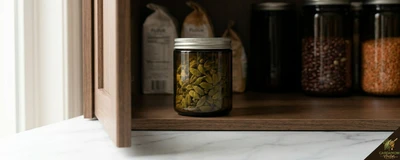
Cardamom Shelf Life — By Form & Storage Method
How long does cardamom last? Exact timelines for every form and condition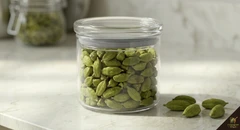
Airtight dark glass, cool pantry. Best value — shell protects seeds naturally.
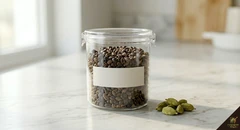
Small airtight jar. Extract only when needed — no shell = faster oxidation.
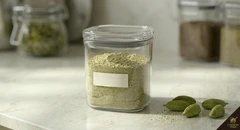
80% potency lost within 90 days of opening. Buy whole pods instead.
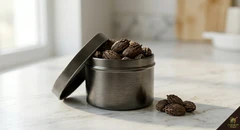
Smoky guaiacol compounds are more stable than green cardamom esters.
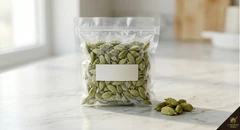
Best long-term method. Vacuum-seal in portions. Thaw 30 min before use.
| Form | Pantry (Recommended) | Refrigerator | Freezer |
|---|---|---|---|
| 🫛 Whole pods | 12–18 months ✓ | Not recommended ✗ | 2–3 years ✓ |
| 🌑 Loose seeds | 6–12 months ✓ | Not recommended ✗ | 12–18 months |
| 🟤 Ground powder | 60–90 days ⚠ | Not recommended ✗ | 6–8 months |
| ⬛ Black cardamom | 12–18 months ✓ | Not needed | 18–24 months |
How to Store Cardamom Pods — 6 Steps
The correct method for whole green cardamom pods — 12–18 months shelf life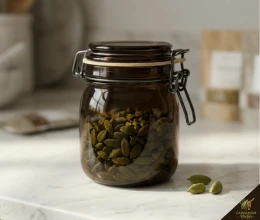
Choose an Airtight Dark Glass Jar
Select a dark glass jar with a rubber-gasket or screw-top lid. Glass does not absorb essential oils like plastic does. Dark glass blocks UV light that degrades cineole and terpene bonds.
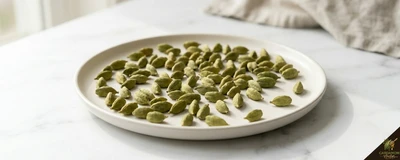
Check Pods Are Completely Dry
Any trapped moisture grows mould within weeks in a sealed jar. If pods feel damp from transit, spread on a dry cloth for 30–60 minutes first. Even moisture from your fingers can cause problems.
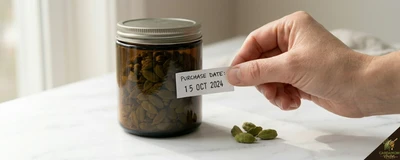
Seal and Label With Purchase Date
Fill the jar, seal firmly with no air gaps, and write the purchase date on a label. This one habit prevents the most common mistake — unknowingly cooking with stale cardamom for months.
Store in a Cool, Dark Location (10–21°C)
A pantry or cupboard away from the stove, oven, and windows at 10–21°C (50–70°F). Feel the cupboard wall during cooking — surprising warmth means a bad location.
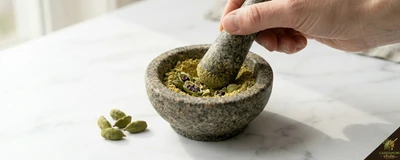
Grind Fresh — Never in Advance
Only crack or grind pods immediately before use. Once a pod is cracked, the volatile oil evaporation clock starts ticking. Never pre-grind and store — even for one week.
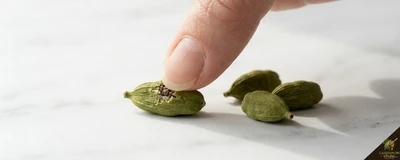
Test Freshness Monthly
Once a month, scratch a pod with your fingernail. A strong, immediate sweet-floral burst = fresh and potent. Weak, dusty, or no aroma = time to replace your stock immediately.
How to Store Cardamom Seeds & Ground Powder
Seeds last 6–12 months · Ground powder: only 60–90 days after openingStoring Loose Seeds (Extracted)
Once seeds are extracted from pods, their shelf life drops from 12–18 months to about 6–12 months. Without the protective outer shell, the seeds’ surface area is directly exposed to oxygen — and aromatic oils begin evaporating immediately.
The Golden Rule: Only extract seeds from pods when you need them. Leave remaining pods whole — doing so is the difference between 18 months and 6 months of shelf life. Never pre-extract seeds “for convenience.”
Storing Ground Cardamom Powder
Ground cardamom powder is the most perishable form. The grinding process exposes all volatile oils to oxygen at once. Research shows ground cardamom loses 80% of aromatic potency within 60–90 days of opening.
The Sniff Test: Open your jar and inhale. Fresh ground cardamom hits you immediately with strong, complex floral-spicy aroma. If you have to sniff hard — or smell almost nothing — replace it immediately.
| Condition | Potency Retained | Recipe Adjustment |
|---|---|---|
| Freshly ground from whole pods | 95–100% | None |
| Shop-bought, unopened, sealed | 60–80% | +10% |
| Opened, <3 months | 50–70% | +20–30% |
| Opened, 3–6 months | 25–45% | +40–50% |
| Opened, 6–12 months | <25% | +80% or replace |
| No smell at all | ~0% | Replace immediately |
Shop-bought ground cardamom at 6 months old may need 50–80% more volume to achieve the same flavour as freshly ground seeds from whole pods. This is why professional chefs always grind whole pods immediately before critical dishes — chai, kheer, kardemummabullar, and garam masala.
Can We Store Cardamom in the Fridge? Fridge vs Freezer Explained
The most-searched cardamom storage question — definitively answeredRefrigerator — Not Recommended ❌
Refrigerating cardamom is not recommended for most home cooks. Here is why:
- Moisture: Every time you open the refrigerator, moist air enters the container if not perfectly sealed. Cardamom absorbs this moisture, causing mould on whole pods and clumping in ground powder.
- Odour absorption: Cardamom readily absorbs the smells of other foods stored in the fridge — onions, leftovers, cheese — which ruins its delicate floral aroma irreversibly.
- Condensation: When you take cold cardamom out of the fridge and open the jar in a warm kitchen, condensation forms on the spice, introducing moisture directly.
- No significant benefit: A proper pantry at 10–21°C provides adequate conditions. The marginal temperature reduction from refrigeration does not offset the moisture risk.
Exception: In climates consistently above 30°C with no air conditioning, refrigeration may be considered — but only if the cardamom is in a completely airtight glass jar and you open the jar infrequently. Even then, freezing is superior.
Freezer — The Gold Standard ✅
Freezing is the single best storage method for long-term cardamom preservation. Properly frozen whole pods retain almost full potency for 2–3 years.
| Method | Whole Pods | Verdict |
|---|---|---|
| Dark pantry (10–21°C) | 12–18 months | ✓ Best everyday |
| Refrigerator | 12 months (if sealed) | ⚠ Risky |
| Freezer (vacuum-sealed) | 2–3 years | ✓ Best long-term |
| Counter / open shelf | 2–4 weeks | ✗ Avoid |
How to freeze cardamom pods correctly:
(1) Ensure pods are completely dry. (2) Portion into weekly-use amounts. (3) Vacuum seal or press all air from zip-lock bags. (4) Label with date. (5) Store at back of freezer. (6) Thaw at room temp 20–30 min before use. Never refreeze after thawing.
Best Containers for Storing Cardamom — Ranked
Your container choice matters more than most people realise
✓ BestThe gold standard. Glass is non-reactive and does not absorb essential oils into its walls. Dark glass blocks UV light that degrades cineole and terpinyl acetate. Rubber-gasket or screw-top lid provides an airtight seal. Choose 100–200ml size for a near-full jar (less dead air = slower oxidation).
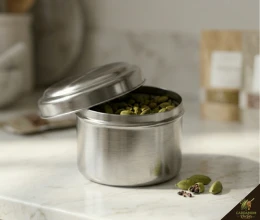 ✓ Excellent
Traditional spice storage used across South Asia for centuries. Metal completely blocks all light (no UV degradation), is non-reactive, and provides an excellent airtight seal. The traditional Indian masala dabba design is ideal for kitchen use. Particularly suited to larger quantities of whole pods.
Plastic is the most common cardamom storage mistake. Polymer surfaces physically adsorb (absorb into the walls) the volatile essential oils from cardamom — literally stripping flavour over time. Even food-grade plastic is not truly airtight due to micro-permeability. Over 3 months in plastic, cardamom can lose 20–35% potency from oil absorption alone.
Cardamom Storage Mistakes — Dos & Don’ts
The most common errors that silently destroy cardamom’s potencyBuy whole pods and grind fresh only when needed. The pod shell preserves ~90% more aromatic oils than any other form.
Use dark glass or metal airtight containers — they don’t absorb oils and block UV light that degrades essential oil compounds.
Store in a cool, dark pantry at 10–21°C (50–70°F) — away from all heat sources, stoves, and windows at all times.
Label containers with purchase or opening date — you will not remember when you bought it without a label. Takes 5 seconds.
Freeze surplus pods in vacuum-sealed bags — frozen whole pods last 2–3 years, the single best shelf life extension available.
Test freshness monthly with the scratch test — scratch a pod, smell it. Takes 3 seconds and saves your dish.
Buy small quantities frequently and replenish every 6–12 months for whole pods. Fresh cardamom is in a completely different flavour league.
Don’t store near the stove — heat above 30°C accelerates terpinyl acetate evaporation: 50–70% potency loss in 4–6 weeks.
Don’t use transparent jars on open spice racks — UV light breaks down cineole and terpene ester bonds: 30–40% faster degradation.
Don’t pre-grind and store — ground powder loses 80% of aromatic potency within 60–90 days. Always grind immediately before use only.
Don’t use plastic containers — polymer surfaces absorb essential oils from cardamom, causing 20–35% potency loss over 3 months.
Don’t refrigerate casually — fridges introduce moisture and food odours. Use pantry storage at room temperature instead.
Don’t store near cloves, garlic, or onion powder — cardamom readily absorbs strong volatile compounds, ruining its sweet-floral profile.
Don’t skip the date label — unlabelled jars are a major cause of cooking with flavour-dead cardamom for months without realising it.
⚠️ Estimates based on published spice volatility studies and IISR storage data. Actual results depend on specific conditions.
Interactive Tool
Is Your Cardamom Still Fresh?
Answer 5 quick questions — we’ll tell you if your cardamom is still potent or time to replace.
🌿 Cardamom Freshness Checker
Select the answer that best matches your cardamom right now
Your Cardamom is Fresh!
All signs point to potent, flavour-rich elaichi. Keep storing it in the same conditions and run this test again in 4 weeks.
Time to Replace Your Cardamom
Your cardamom has lost significant potency. Safe to eat but contributes very little to cooking. Fresh whole pods will make a dramatic flavour difference immediately.
How to Revive Stale Cardamom
When your elaichi has faded — and when it’s too far gone to saveCardamom that has faded but is not completely flat can be partially revived using dry-toasting. The heat coaxes remaining volatile oils to the surface, temporarily boosting aroma by 20–30%.
The Dry-Toast Revival Method
- Heat a small dry skillet over low heat
- Add whole pods in a single layer without crowding
- Toast for 60–90 seconds maximum, shaking constantly
- Remove immediately when you smell the aroma intensifying
- Allow to cool completely before using
Revival has limits. This technique works only for cardamom that still has something to give — some residual aroma when scratched. If toasting produces minimal or no fragrance, the cardamom is past revival. Replace it. Do not over-toast — burning destroys what little aroma remains.
Adjust Recipe Quantities for Stale Cardamom
| Age / Condition | Increase Quantity By |
|---|---|
| 1–3 months old (ground) | +15–20% |
| 3–6 months old (ground) | +30–40% |
| 6–12 months old (ground) | +50–80% |
| Whole pods 12–18 months, still aromatic | +20–25% + dry-toast |
| No smell at all | Replace — do not use |
- Revive: Faint aroma on scratching, pods still vibrant green, seeds still dark
- Replace: No aroma at all, grey-yellow pods, pale seeds, any mould or musty smell
- Replace for critical dishes: Kheer, chai, kardemummabullar — where cardamom is the primary flavour. Never use revived spice for these.
How to Store Black Cardamom (Badi Elaichi)
Different species, different oils — but similar storage principlesBlack cardamom (Amomum subulatum, badi elaichi) is stored similarly to green cardamom — airtight container, cool dark pantry — but has important differences in shelf life and behaviour:
| Property | Green Cardamom | Black Cardamom |
|---|---|---|
| Main volatile compounds | 1,8-cineole, α-terpinyl acetate (delicate) | Guaiacol, sabinene (more robust) |
| Pantry shelf life | 12–18 months | 12–18 months |
| Potency stability | Degrades relatively quickly | More stable due to smoky compounds |
| Freezing required? | Yes, for storage beyond 18 months | Less urgent |
| Container type | Dark glass jar (airtight) | Dark glass jar or metal tin |
Black cardamom’s smoky guaiacol compounds are more chemically stable than green cardamom’s delicate terpene esters. This means badi elaichi is generally more forgiving of storage conditions — though the same principles of airtight, cool, and dark still apply.
Important: Never substitute black cardamom for green in desserts, tea, or chai. Badi elaichi’s smoky camphor character is completely wrong for sweet dishes. They are used in entirely different culinary contexts despite sharing the “cardamom” name.
How to Store Cardamom — 20 FAQs Answered
Every cardamom storage question — answered with evidenceStore cardamom in an airtight dark glass jar in a cool, dark pantry at 10–21°C (50–70°F), away from heat, light, and moisture. Whole pods last 12–18 months. Never store near the stove, in transparent containers, or in the refrigerator. For long-term storage, vacuum-seal whole pods and freeze for up to 3 years.
Shelf life by form: Whole green pods last 12–18 months in the pantry or 3 years frozen. Loose seeds last 6–12 months. Ground powder loses 80% potency within 60–90 days of opening. Black cardamom pods last 12–18 months. These timelines assume proper airtight storage in a cool, dark location away from heat and moisture.
No — refrigerating cardamom is not recommended. Fridges introduce moisture every time you open the door, and cardamom absorbs competing food odours easily. Moisture causes mould on whole pods and ruins ground powder. A properly sealed airtight jar in a cool pantry is far superior to refrigeration. For long-term storage, freeze vacuum-sealed whole pods instead.
Yes — freezing is the best long-term method. Place completely dry whole pods in a vacuum-sealed bag or airtight glass jar. Frozen whole pods retain almost full potency for 2–3 years. Thaw at room temperature for 20–30 minutes before use. Do not refreeze after thawing. Never freeze ground cardamom — freeze-thaw cycles destroy volatile oils faster than room-temperature storage.
A dark glass jar with an airtight rubber-gasket or screw-top lid is the best container. Glass does not absorb essential oils unlike plastic. Dark glass blocks UV light. A nearly-full 100–200ml jar is ideal — less dead air = slower oxidation. Airtight metal tins are the second-best option. Never use plastic containers — they absorb cardamom’s essential oils over time.
Grinding exposes cardamom’s volatile aromatic oils — primarily 1,8-cineole and α-terpinyl acetate — to oxygen. These oxidize rapidly. Within 60–90 days of opening, up to 80% of the original aroma is lost. The whole pod acts as a natural sealed capsule protecting these oils until you crack it open. Always buy whole pods and grind immediately before use.
Use the 5-point test: (1) Scratch a pod with your fingernail — fresh cardamom gives an immediate strong sweet-floral burst; (2) Fresh pods are vibrant bright green, stale pods turn yellow-grey; (3) Fresh pods snap crisply, stale pods crumble; (4) Fresh pods feel dense and heavy; (5) Fresh seeds are dark brown-black and plump, stale seeds are pale grey and dry. If you need to hold the pod to your nose to detect any smell, replace it.
Ground cardamom loses most potency within 60–90 days of opening. At 3 months, approximately 50–60% of aromatic compounds remain. At 6 months, less than 30% remain. After 12 months, ground cardamom is effectively flavourless. Always buy whole pods and grind fresh immediately before use. If using pre-ground from a jar, increase quantity by 25–50% to compensate for potency loss.
Always buy and store whole pods. The pod shell reduces oil-exposed surface area by approximately 90% compared to ground powder. Whole pods last 12–18 months; ground powder loses 80%+ potency within 60–90 days. The rule: buy whole pods, grind only what you need, immediately before use. This gives maximum potency and the best value per gram.
Transfer extracted seeds immediately to a small airtight glass jar. Store in a cool, dark pantry. Extracted seeds last 6–12 months — significantly less than whole pods because the protective shell is removed. The best approach: extract seeds only when needed, cracking pods immediately before each recipe. If you must extract in bulk, freeze seeds in a small sealed glass jar for up to 18 months.
Cardamom rarely becomes unsafe — it doesn’t spoil in the traditional sense. What degrades is its aromatic potency. Old cardamom is safe to eat but contributes almost nothing to your dish. The only reasons to discard cardamom are visible mould (moisture damage) or a distinctly musty, off smell. Use the monthly scratch test: if no immediate sweet-floral aroma, replace your stock.
To revive faded (but not completely flat) cardamom: dry-toast whole pods in a small skillet over low heat for 60–90 seconds, shaking constantly. Heat coaxes remaining volatile oils to the surface, boosting aroma by 20–30% temporarily. This works only for cardamom with some residual aroma when scratched. If toasting produces no fragrance at all, replace it — it is beyond revival.
Yes — heat is one of the four main enemies of cardamom freshness. Temperature above 30°C (86°F) accelerates evaporation of the terpene compounds that give cardamom its aroma. Even brief repeated exposure from a nearby stove causes significant potency loss over weeks. Never store cardamom in cupboards above the stove, beside the oven, or near dishwashers. Ideal storage temperature is 10–21°C (50–70°F).
Store black cardamom in an airtight container in a cool, dark place — same principles as green cardamom. However, black cardamom is more robust: its smoke-derived guaiacol compounds are more stable than the delicate terpene esters in green cardamom. Black cardamom pods last 12–18 months in the pantry. Its smoky camphor aroma is more persistent than green cardamom’s sweet-floral notes.
Moisture is one of the most damaging enemies of cardamom. Wet whole pods can develop mould within days in a sealed container. Wet ground cardamom clumps and the water accelerates oxidation of volatile oils. If pods have gotten damp, spread on a dry cloth for 30–60 minutes before sealing. A small silica gel packet inside the storage jar absorbs residual moisture effectively going forward.
No — plastic is the worst container for cardamom storage. Polymer surfaces physically adsorb (absorb into the container walls) the volatile essential oils from cardamom, stripping flavour over time. Even food-grade plastic is not truly airtight due to micro-permeability. Over 3 months in plastic, cardamom can lose 20–35% of its potency from oil absorption alone. Always use dark glass jars or airtight metal tins.
Adjust based on age: 1–3 months old ground = +15% more. 3–6 months = +25–30%. 6–12 months = +40–50%. Over 12 months old = replace entirely. For whole pods past 18 months but still aromatic: dry-toast first and increase quantity by 20–25%. These adjustments apply to pre-ground cardamom; freshly ground whole pod seeds need no adjustment.
Cardamom readily absorbs strong aromas from neighbouring spices — particularly cloves, garlic powder, onion powder, and fenugreek. To prevent contamination: store cardamom in a fully sealed glass or metal container (not loosely covered), keep it physically separated from strong-smelling spices in your pantry, and never store in a shared spice blend container. If your cardamom has picked up off-flavours, dry-toasting can help burn off some surface contamination.
In a properly sealed airtight dark glass jar in a pantry at 10–21°C: whole green cardamom pods (elaichi) last 12–18 months. Loose seeds last 6–12 months. Ground elaichi powder loses most potency within 60–90 days. Black cardamom (badi elaichi) lasts 12–18 months. If your pantry runs warm above 25°C in summer, expect 20–30% shorter shelf life — consider freezing whole pods for bulk storage.
Yes — cardamom past its best-by date is safe to eat. The date indicates peak quality, not safety. Use the scratch test: if you get a strong immediate floral-citrus aroma, it is still good. If the aroma is very faint or absent, it contributes little to your dish. For whole pods past date but still aromatic, dry-toast before use and increase quantity by 20–25%. Replace immediately if there is any mould or genuinely musty smell.
About the Authors
Written by a spice specialist · Reviewed by a botanical Ph.D.Emily writes evidence-based spice and herb guides at CardamomNectar, specialising in South Asian and Middle Eastern food traditions and their intersection with modern food science.
View full profile →Dr. Bennett holds a Ph.D. in Botanical Sciences specialising in Zingiberaceae phytochemistry. He verifies all storage data against IISR benchmarks and peer-reviewed literature on Elettaria cardamomum volatile oil composition.
View full profile →Medical / Safety Disclaimer: This article is for informational purposes only. Cardamom is generally safe in culinary amounts. If you have specific health conditions, consult a qualified healthcare professional before using spices therapeutically.