
Nihari Masala Recipe — Black Cardamom as the Structural Base
Fifteen spices. One 13-minute batch. Store for 6 months. This is the masala that drives Pakistan’s most iconic slow-cooked stew — and black cardamom’s camphor-resinous volatiles are what hold the whole blend together through 8 hours of cooking.


What is Nihari Masala?
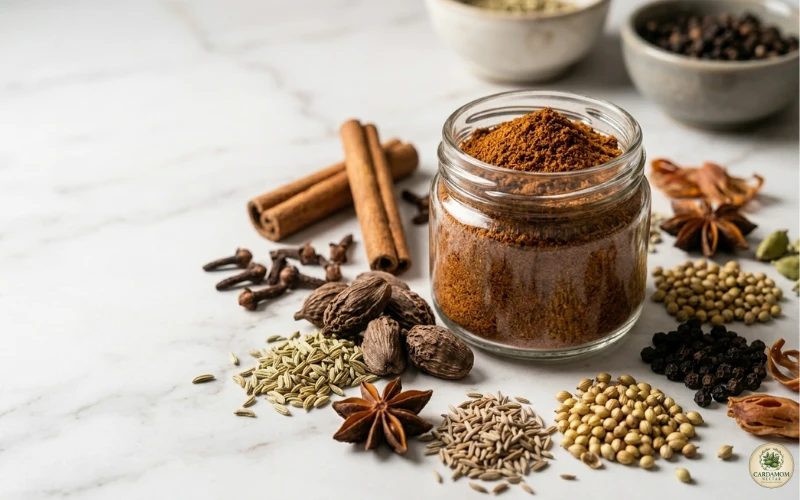
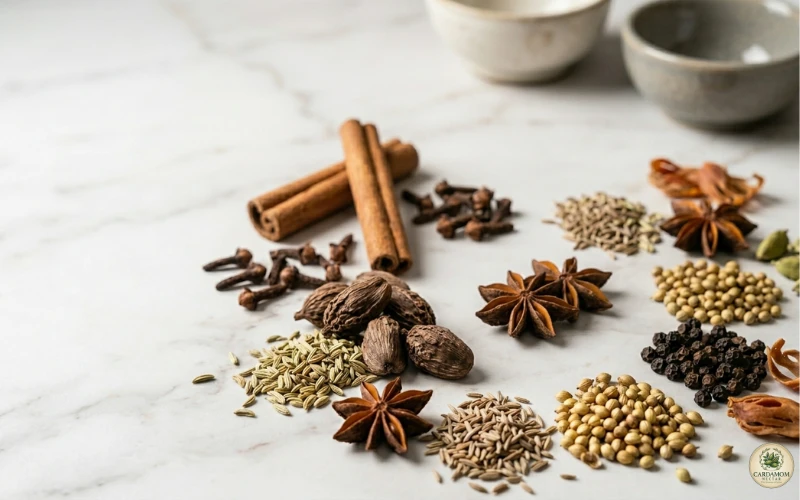
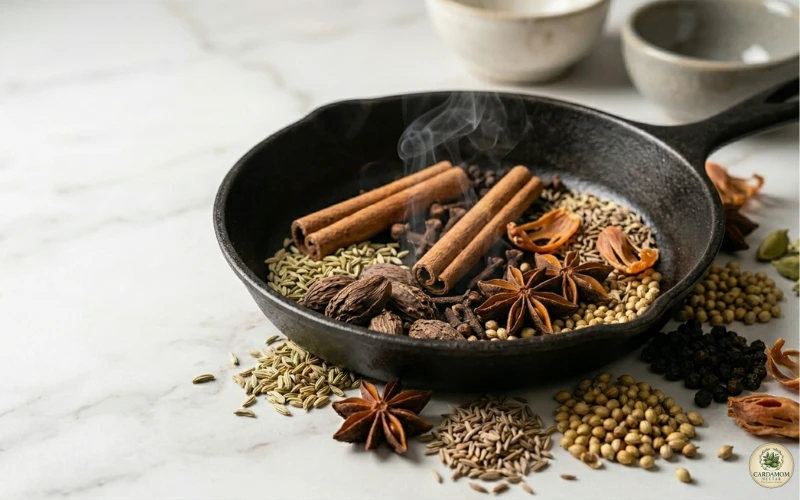
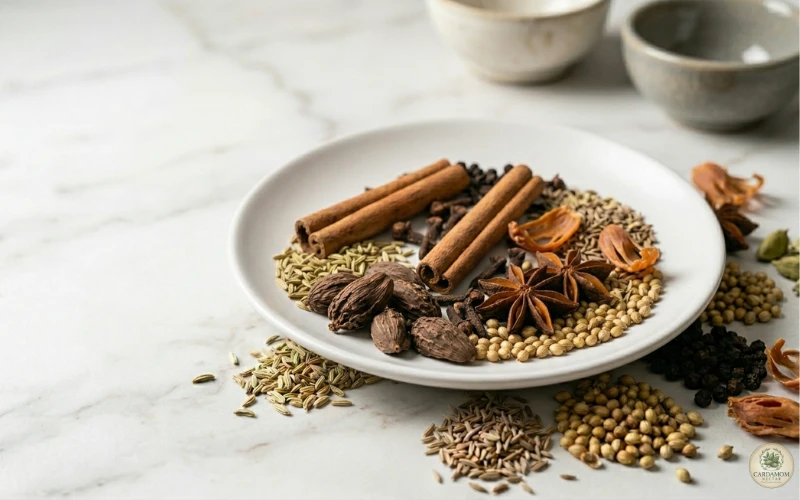
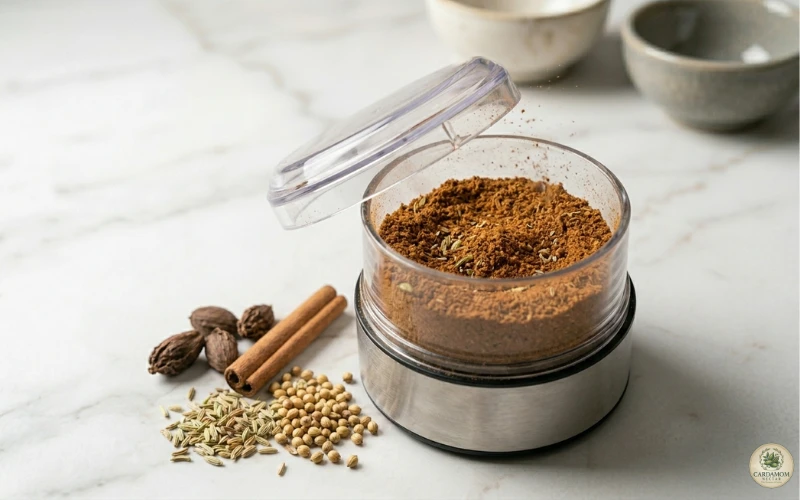
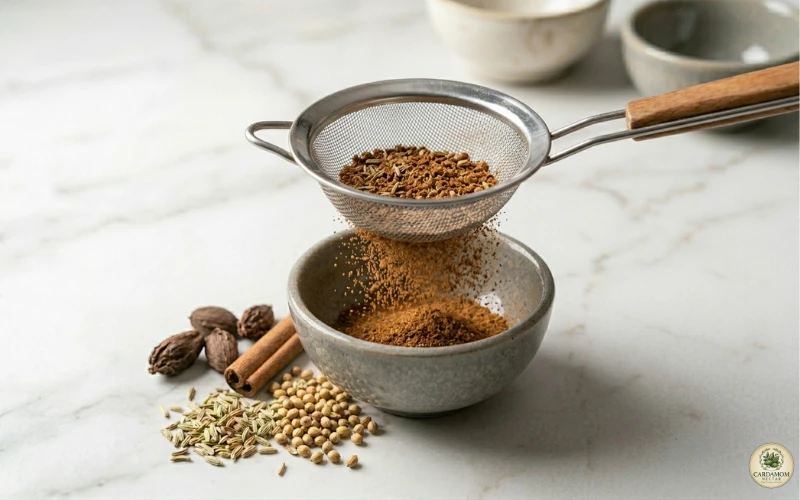
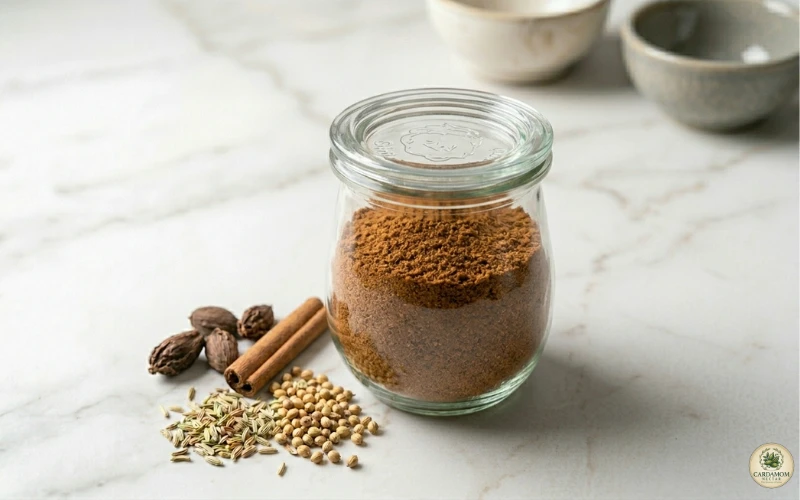
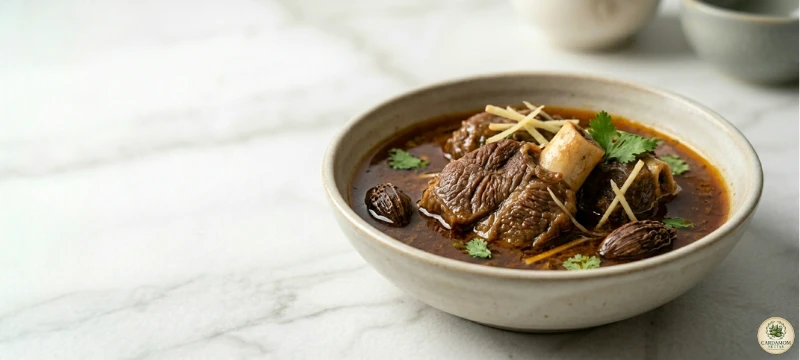
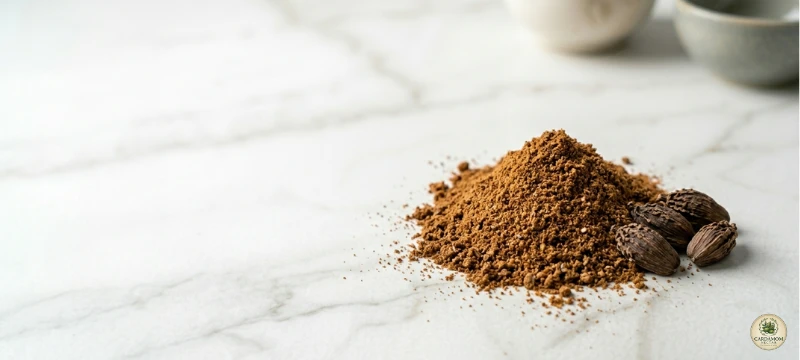
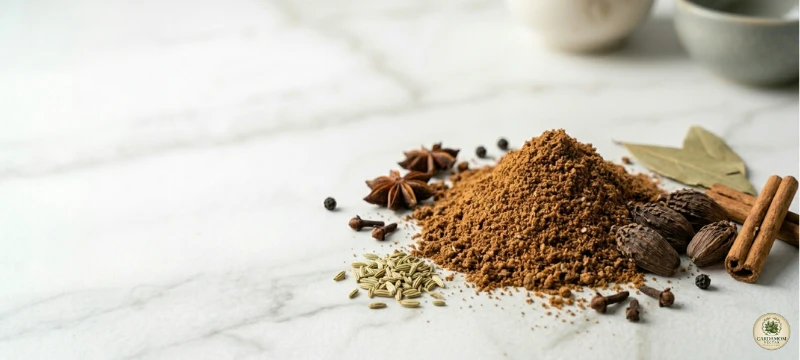
Nihari masala is the proprietary spice blend that defines Pakistan and North India’s slow-cooked bone stew, nihari. It is built on approximately 15 whole and ground spices — black cardamom as the structural base, fennel seeds and long pepper as the signature notes — dry-toasted, ground fine, and added in two stages during cooking. Unlike garam masala, nihari masala is specifically engineered for 6–8 hours of sustained heat. Its heat-stable volatile compounds, led by black cardamom’s 1,8-cineole, survive long cooking and continue releasing depth into the broth throughout the entire slow cook.
What Makes Nihari Masala Different from Every Other Spice Blend
Most spice blends are designed to be added near the end of cooking — that is how garam masala works, and it is why freshly ground garam masala tastes floral and bright. Nihari masala is engineered for the opposite: it goes into a pot that will simmer for 6–8 hours at low heat, sometimes overnight. The spices must survive that environment and keep releasing compounds into the broth the entire time, not burn out in the first hour.
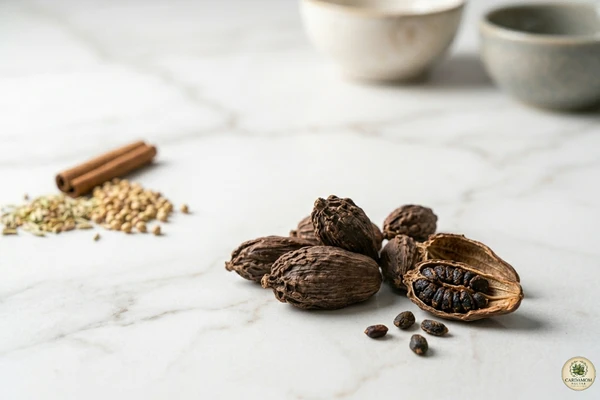
This is precisely why black cardamom (badi elaichi) is the structural backbone of nihari masala rather than green cardamom. Black cardamom’s primary volatile compound, 1,8-cineole (also called eucalyptol), has a boiling point of 176°C — well above the 100°C of simmering water. It is also fat-soluble, meaning it binds to the rendered bone fat in the nihari broth and remains there as a stable flavour carrier throughout the entire cook. Green cardamom’s α-terpinyl acetate, by contrast, breaks down within the first hour of sustained heat. See our detailed comparison in the green vs black cardamom guide for the full chemistry.
The second key difference is the two-stage addition method. Nihari masala is split — half goes in at the start with the raw meat, the other half is mixed into the atta (wheat flour) slurry added in the final 20 minutes. The early addition extracts slowly into the fat and braising liquid. The late addition stays relatively fresh and provides a brighter aromatic top note when the stew is served. This technique — not found in biryani or curry masala recipes — is what produces nihari’s characteristic layered depth. The full recipe for nihari details how to use this masala in context.
Every Spice in Nihari Masala — Role, Science & Can You Skip It?
Ranked by structural importance. No filler — every spice earns its place.
| Spice | Urdu / Hindi Name | Role in Nihari | Key Compound | Skip? |
|---|---|---|---|---|
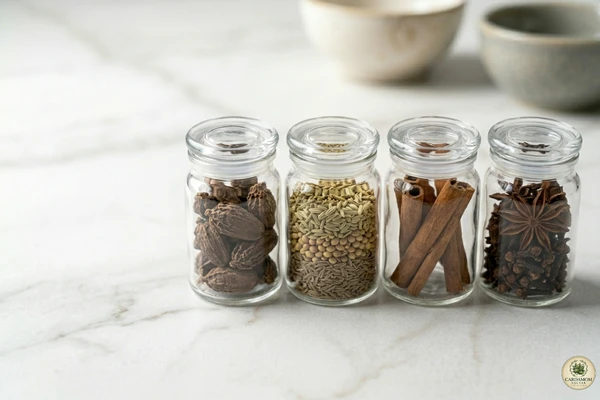
| Black Cardamom Structure | Badi Elaichi | The structural base — smoky, camphor-forward. Heat-stable and fat-soluble. Defines the broth’s deep character throughout the long cook. Lead spice. | 1,8-Cineole (eucalyptol) | Never — the dish loses its identity |
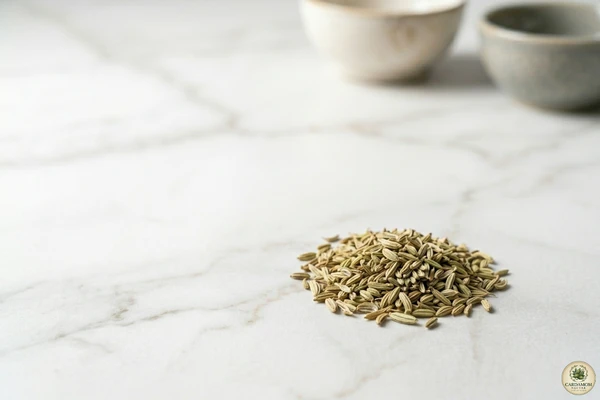
| Fennel Seeds Signature | Saunf | The most recognisable single note in nihari masala — sweet, anise-forward, and aromatic. Fennel’s anethole is stable at low simmer heat. Mandatory in all authentic versions. | Trans-anethole | Never — nihari without fennel is unrecognisable |
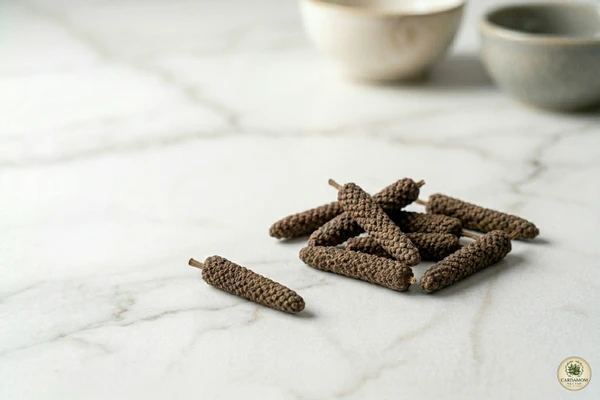
| Long Pepper Heat | Pippali / Peepli | The Mughal-era heat spice — more complex than black pepper with floral overtones. Traditional nihari from Old Delhi and Lucknow always includes it. Many Pakistani recipes omit it for availability reasons. | Piperine + Piperlongumine | Optional — add extra black pepper if skipping |
| Dry Ginger Signature | Saunth / Adrak Powder | One of nihari masala’s most important ingredients — heat-stable in a way that fresh ginger is not. Saunth slowly releases its shogaols (formed from gingerols during drying) throughout the long braise, building warming depth without the sharp bite of raw ginger. | Shogaols, Gingerols | No — use ground ginger but increase slightly |
| Coriander Seeds Depth | Dhania | Earthy, citrus-adjacent backbone that rounds sharp spice edges. Works as a bulking base spice that allows the more aromatic compounds to stand out. High proportion relative to other spices. | Linalool, α-Pinene | Can reduce, not eliminate |
| Green Cardamom Depth | Choti Elaichi | Adds herbal sweetness and brightness. Loses most of its delicate floral compounds during the long cook, but leaves a residual warmth that complements the black cardamom base. Not a substitute for black cardamom — a complement. | α-Terpinyl acetate | Yes — but adds welcome complexity |
| Black Cumin Signature | Shah Zeera / Kala Zeera | Darker, more resinous than regular cumin — provides a woody depth that regular cumin cannot. A marker of authentic nihari masala versus generic curry powder. Often used alongside regular cumin for a fuller profile. | Thymol, Cuminaldehyde | Substitute with regular cumin (double the amount) |
| Cinnamon / Cassia Depth | Dalchini | Sweet-woody warmth that sits underneath the sharper spices. Cassia (more common in Pakistan) has more cinnamaldehyde than Ceylon cinnamon — stronger, slightly astringent. Either works. | Cinnamaldehyde | No — use half if unavailable |
| Cloves Heat | Laung | Intense numbing-pungent note from eugenol. Used sparingly — cloves can easily overpower the blend. Their antiseptic properties also help with fat stability in long-cooked bone broths. | Eugenol | Can reduce — do not increase |
| Black Pepper Heat | Kali Mirch | Background heat that builds over the long cook. Also functions as a bioavailability enhancer — piperine improves absorption of curcumin from the turmeric in the blend. | Piperine | Reduce — do not skip entirely |
| Mace Signature | Javitri | The lacy outer covering of nutmeg — more delicate and floral than nutmeg itself. A Mughal-era signature spice that appears in nihari, biryani masala, and korma. Adds luxury and complexity that nutmeg alone cannot. | Myristicin, Safrole | Substitute with nutmeg (use less) |
| Star Anise Depth | Badiyan / Phool Chakri | Supports fennel’s anise note — both share trans-anethole. In nihari masala, star anise is used in smaller amounts than in Chinese or pho cooking, acting as a supporting rather than lead note. Too much overpowers the blend. | Trans-anethole | Yes — reduces sweetness slightly |
| Bay Leaf Depth | Tej Patta | Background floral and slightly bitter note. Also known to reduce the gamey character of bone-in mutton and beef. More impactful in whole-spice braises than as a ground component, but included in masala powder for mild effect. | 1,8-Cineole, Eugenol | Yes — marginal impact in powder form |
| Kashmiri Chilli Heat | Deghi Mirch | Added as a ground powder (not toasted). Provides deep red colour and mild fruity heat. Unlike regular chilli, it contributes colour without excessive burn — essential for nihari’s characteristic dark reddish-brown appearance. | Capsaicinoids, Carotenoids | Sub with sweet paprika + pinch of cayenne |
| Nutmeg Depth | Jaifal | Warm, slightly sweet and narcotic depth. Use freshly grated — pre-ground nutmeg loses its volatile oils rapidly. A little goes a long way; too much makes the masala taste medicinal. | Myristicin | Use mace instead, or skip |