Fennel Seeds
in Arabic
The most complete bilingual guide to fennel seeds in Arabic — covering every dialect from Cairo to Riyadh, Shamar tea recipes, health benefits, and the Urdu name Saunf used across Pakistan and India.


Fennel Seeds in Arabic — All Dialect Names
Arabic has distinct regional names for fennel. From the most widely understood Egyptian term to classical Fusha — here is every form you will encounter across the Arab world.
Egyptian Arabic — Most Common · الأكثر شيوعاً
The most widely understood Arabic name for fennel. In Egyptian souks (markets), asking for Shamar (شمر) gets immediate results from every spice vendor. Google Search Console data shows Egypt at position 5.3 — the closest Arab country to page 1 for this term.
Used in Ramadan drinks, digestive teas, traditional Egyptian cooking, and by mothers treating infant colic for generations. Also spelled Shumar or Shoumar in some transliterations.
🏪 Market Word · كلمة السوقGulf Arabic — Saudi, UAE, Kuwait, Bahrain, Qatar
In GCC countries — Saudi Arabia, UAE, Kuwait, Bahrain, and Qatar — the word Shamaar (شمار) is used, with a slightly longer vowel sound. SC data shows “shammar seed” has 316 impressions at position 3.6 — almost on page 1 already.
Found in Gulf bahaarat (spice) shops and used heavily in Arabic coffee blends, machboos rice dishes, and traditional Gulf herbal medicine (Tibb al-Nabawi).
🌴 Gulf Markets · أسواق الخليجLevantine Arabic — Lebanon, Syria, Jordan
In the Levant — Lebanon, Syria, Jordan, and Palestine — fennel is called Shamraa (شمرا) or Shoumar (شومر). The Levantine form reflects the region’s distinctive dialect pattern, where final vowels are often added.
Used extensively in Levantine mezze cuisine and traditional herbal medicine. The fennel bulb (not just seeds) is also very popular in Levantine cooking — braised, grilled, or raw in salads.
🫒 Mezze Cuisine · مطبخ المشوياتIraq, Yemen & North Africa
In Iraq and Yemen, Shamar (شمر) matches Egyptian usage. In Morocco, Algeria, and Tunisia (the Maghreb), fennel is called Bizbaaz (بسباس) — a completely different word from Eastern Arab vocabulary.
Critical distinction: if you’re buying fennel in Morocco, ask for Bizbaaz. In Iraq or Yemen, Shamar is immediately understood. The Maghrebi word Bizbaaz also refers to the whole fennel plant, not just the seeds.
🌍 Regional Variant · لهجة إقليميةClassical / Formal Arabic (فصحى)
In classical Arabic (Fusha) and formal texts, fennel appears as Razianaj (رازيانج) — a word borrowed from Persian Razianeh. This term appears in Ibn Sina (Avicenna)’s famous medical encyclopedia Al-Qanun fi al-Tibb (The Canon of Medicine).
Rarely used in everyday spoken Arabic, but appears in Islamic medicine (Tibb al-Nabawi), classical herbalism, and formal pharmacological references across the Arab world.
📚 Classical Texts · النصوص الكلاسيكيةFennel Tea — Arabic Name
Fennel tea is called Shay al-Shamar (شاي الشمر) in Arabic — literally “shamar tea.” It is among the most common home remedies in the entire Arab world, passed down through generations.
Used for: bloating and gas (القولون), infant colic (مغص الرضع), menstrual pain (آلام الدورة الشهرية), insomnia, and as a calming evening drink. Arab mothers have trusted it for their children for centuries.
🍵 Home Remedy · علاج منزليFennel Seeds in Urdu
— Saunf (سونف)
In Urdu and Hindi — the primary languages of Pakistan and India — fennel seeds are called Saunf (سونف). This is the exact same seed as Arabic Shamar. Only the language is different; the botanical species, nutritional profile, and health benefits are identical.
Saunf is one of the most versatile ingredients in Pakistani and Indian kitchens, used in:
- Cooking — biryani, pulao, dal tadka, fish curries, curry tempering
- Mukhwas — after-meal mouth freshener (often sugar-coated, coloured)
- Saunf Qahwa — fennel seed herbal tea with ginger and cardamom
- Unani medicine — classified as Muqawwi-e-Meda (stomach strengthener)
- Paan masala — betel leaf preparation with fennel, cardamom and lime
The variant Moti Saunf (موٹی سونف) refers to larger Florence fennel seeds, while regular Saunf denotes the common small variety most familiar in cooking.
Saunf vs Shamar — Same or Different?
Saunf (سونف) and Shamar (شمر) are 100% the same seed — Foeniculum vulgare. Same botanical species, same nutritional profile, same health benefits. Only the language differs: Arabic vs Urdu.
Yansoon (يانسون) — NOT the Same
Note: Yansoon (يانسون) is anise — a different plant (Pimpinella anisum). Shamar (fennel) and Yansoon (anise) taste similar but are not interchangeable in traditional medicine. Always confirm which seed you need.
الشمر — دليل شامل للقارئ العربي
الشمر (Foeniculum vulgare) من أقدم التوابل في العالم، يُستخدم في الطب التقليدي منذ آلاف السنين. في مصر القديمة استُخدم علاجاً للهضم وتخفيف الانتفاخ. وفي الطب النبوي، يُذكر الشمر ضمن الأعشاب المباركة.
فوائد الشمر (بذور الشمار) الصحية
- يساعد على الهضم وتخفيف الانتفاخ والغازات (القولون)
- مفيد للنساء: يخفف آلام الدورة الشهرية بفعالية مشابهة للإيبوبروفين
- يدعم إنتاج حليب الأم عند المرضعات (الفيتواستروجين)
- يحتوي على مضادات الأكسدة القوية: كيرسيتين وحمض الروزماريك
- يعالج مغص الرضع بشكل آمن (بجرعة مخففة ومستشار طبي)
- يحسن رائحة الفم بعد الطعام — بديل طبيعي لمعجون الأسنان
- غني بالحديد والكالسيوم والمغنيسيوم وفيتامين C
- خصائص مضادة للالتهابات والبكتيريا والفطريات
أسماء الشمر في اللهجات العربية
يُسمى الشمر بأسماء مختلفة حسب المنطقة: شمر في مصر والشام والعراق، شمار في الخليج العربي (السعودية والإمارات والكويت)، شمرا في لبنان وسوريا، رازيانج في الفصحى والنصوص الطبية الكلاسيكية، بسباس في المغرب والجزائر وتونس.
⚠️ تحذير طبي مهم
هذه المعلومات للتثقيف الصحي فقط. استشر طبيبك قبل استخدام الشمر كعلاج طبي، خاصةً خلال الحمل أو الرضاعة أو عند تناول أدوية. المرجع: المعهد الوطني الأمريكي للصحة NIH NCCIH.
وصفة شاي الشمر التقليدي
🌿 للهضم العام: ملعقة إلى ملعقتين يومياً
👶 للرضع: ملعقتان صغيرتان مخففتان فقط — استشر الطبيب
⚠️ الحد الأقصى: ٣ ملاعق صغيرة يومياً للبالغين
Shamar / Saunf Health Benefits
Modern research confirms what Arab and South Asian traditional medicine has known for centuries — fennel seeds (Shamar / Saunf) are one of nature’s most powerful herbal remedies.
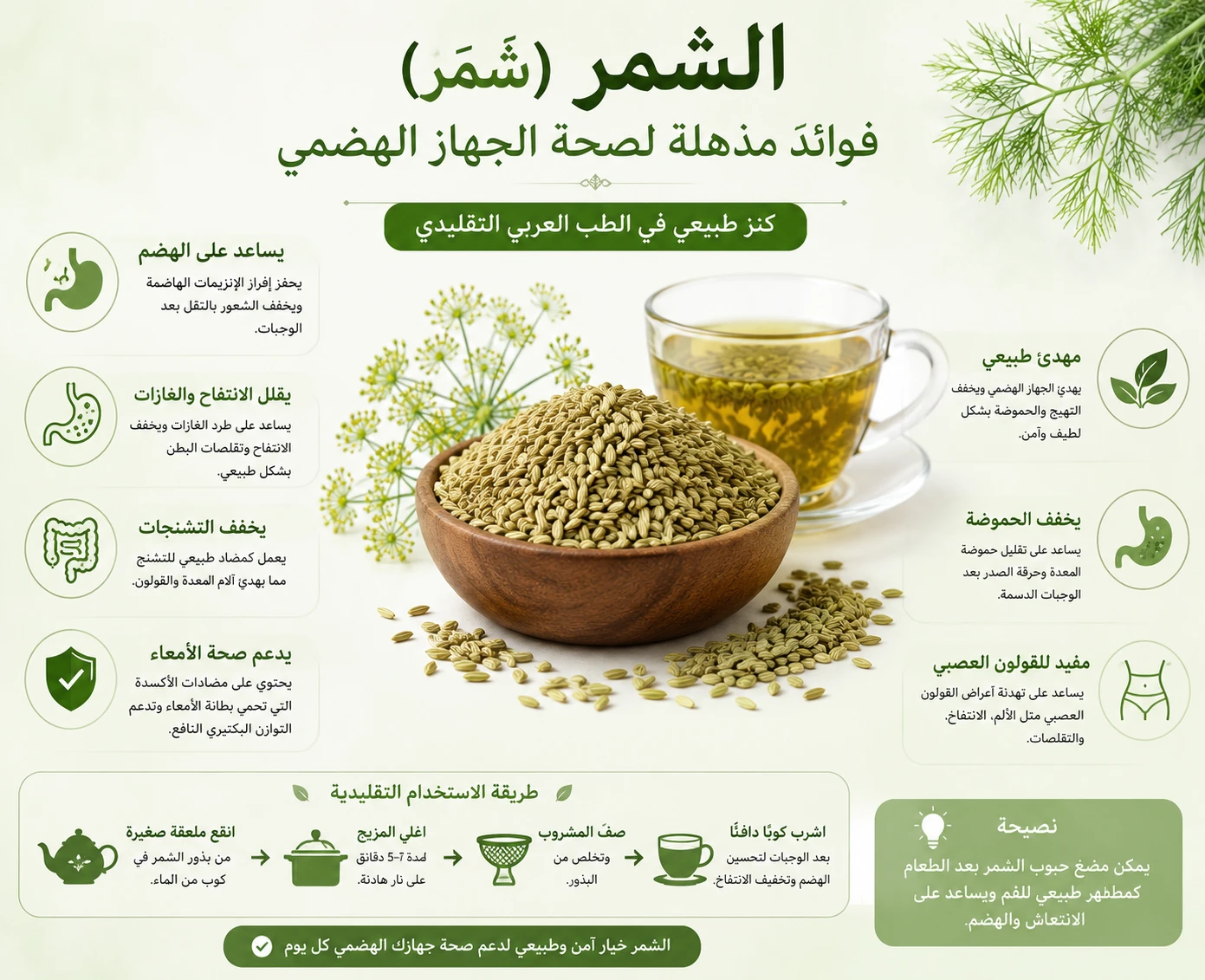
Digestive Aid — الهضم وتخفيف الانتفاخ
The essential oil anethole relaxes intestinal smooth muscles, relieving bloating, gas, and IBS-type discomfort. This is exactly why Shamar tea (شاي الشمر) is the instinctive choice across the Arab world after heavy or spicy meals.
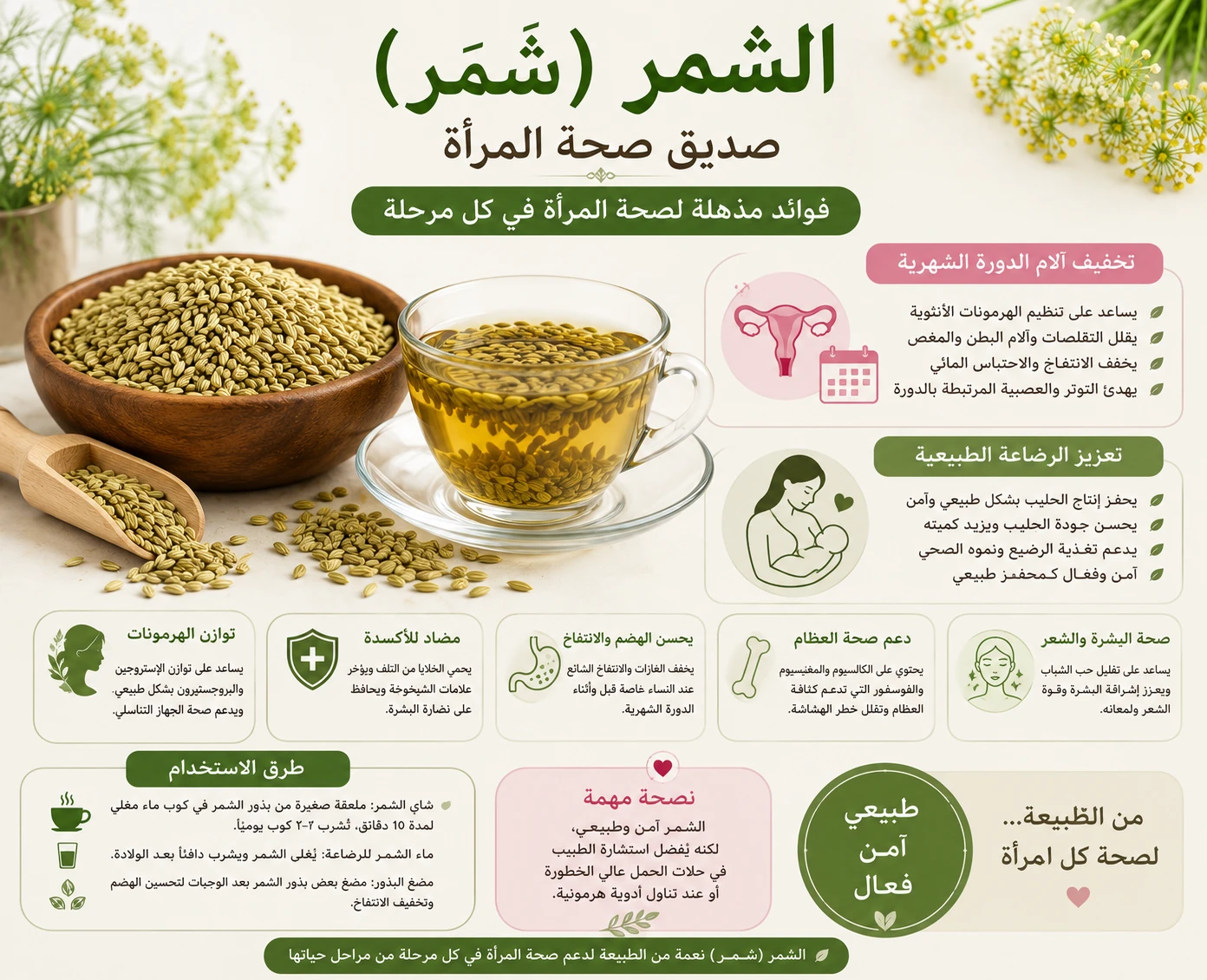
Women’s Health — صحة المرأة والدورة والرضاعة
Phytoestrogens in Shamar seeds ease menstrual cramps, support breast milk production in nursing mothers, and help manage menopausal symptoms. A 2021 clinical study found fennel extract comparable to ibuprofen for dysmenorrhoea — validating centuries of Arab women’s knowledge.
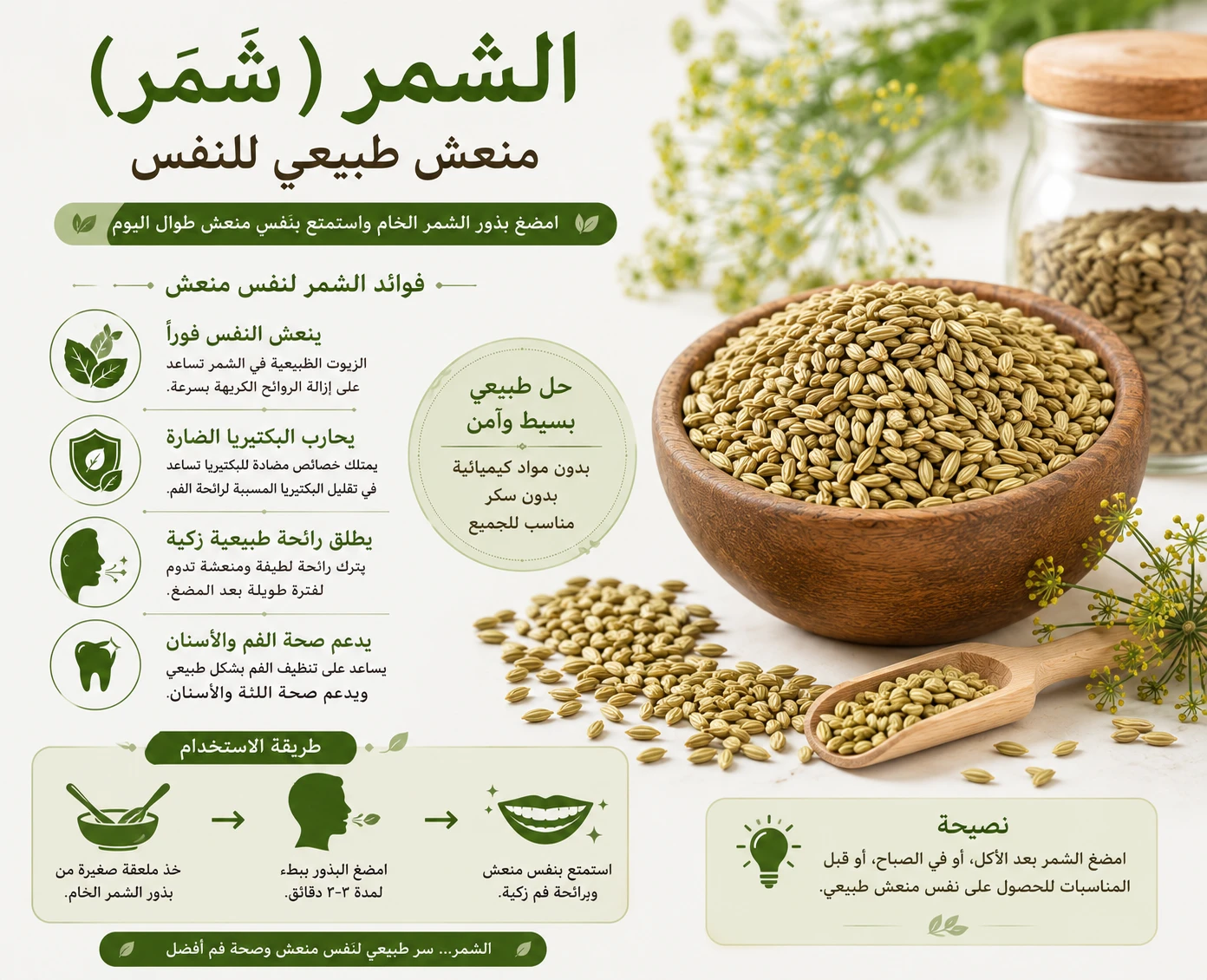
Breath Freshener — تطهير الفم بعد الطعام
Chewing raw Shamar or Saunf seeds after meals is a deeply rooted tradition across Arab and South Asian cultures. The volatile oils (anethole, fenchone) kill odour-causing bacteria while stimulating saliva production — nature’s best post-meal breath freshener.
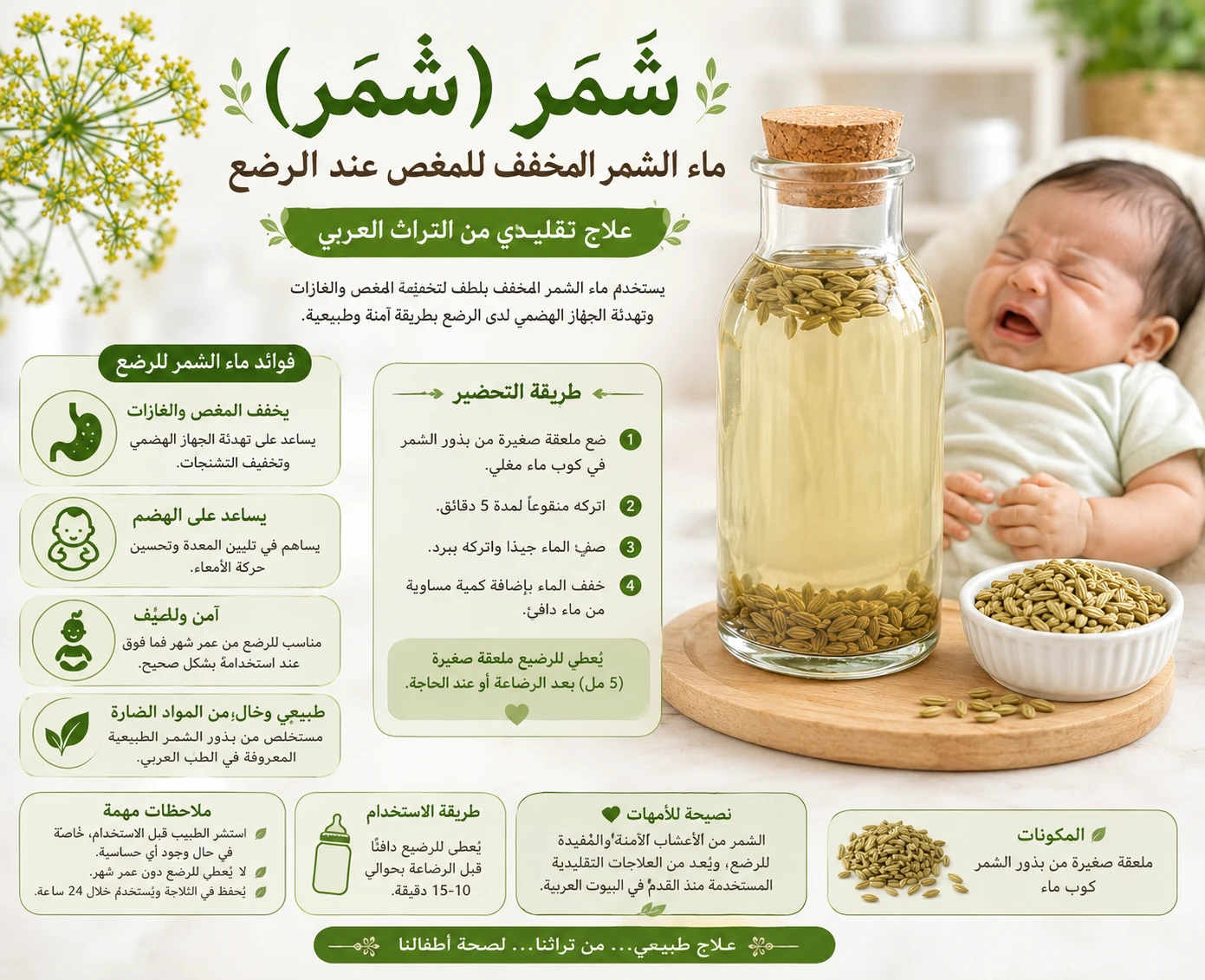
Infant Colic — مغص الرضع والأطفال
Diluted Shamar water (ماء الشمر) has soothed infant colic across Arab households for generations. Modern studies confirm fennel extract’s effectiveness. Always prepare at very low concentration (2-3 seeds per 200ml) and consult your paediatrician before use.
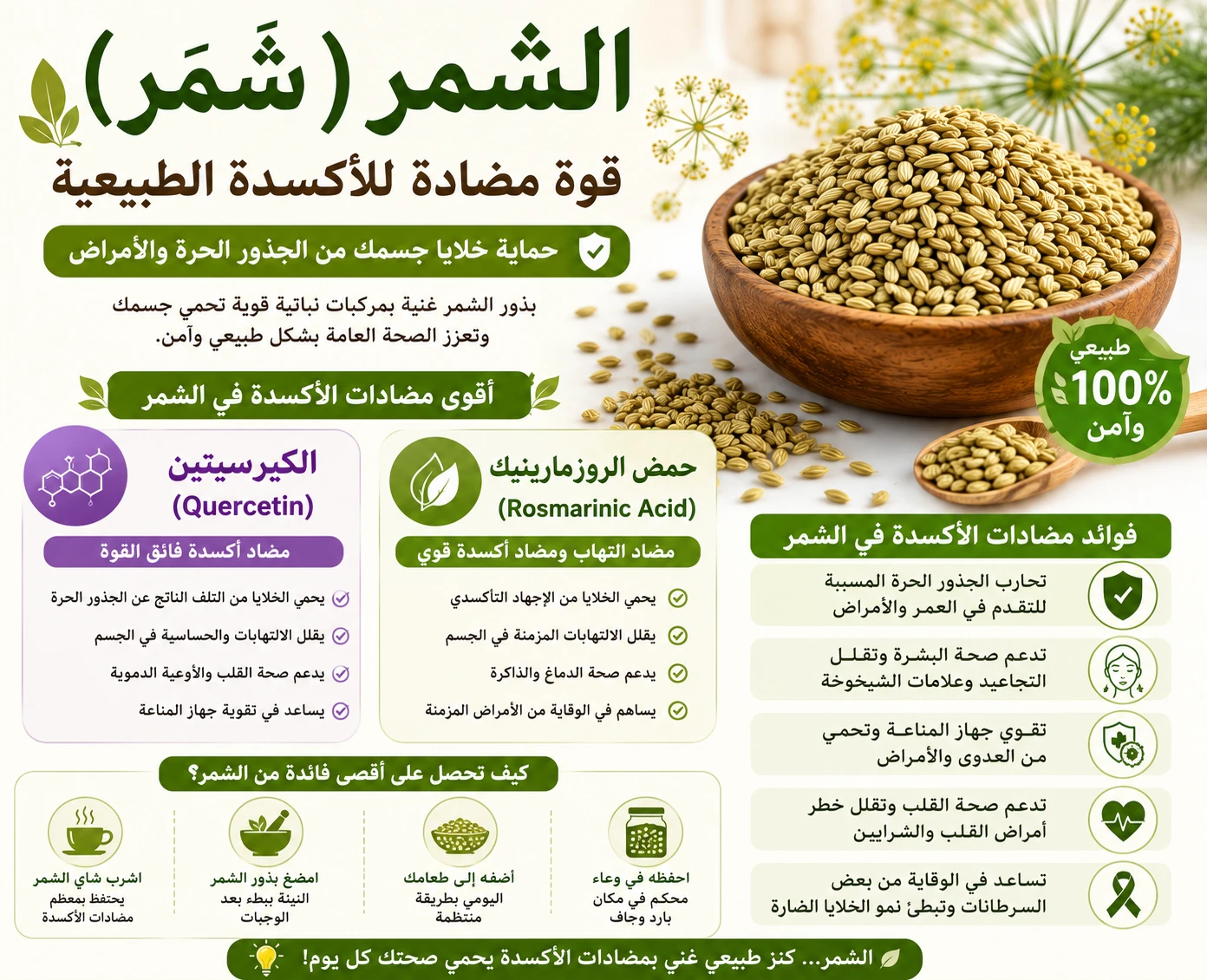
Antioxidant Rich — مضادات الأكسدة والوقاية
Quercetin, rosmarinic acid, and chlorogenic acid found in Shamar seeds are among the most powerful plant antioxidants known to science. These compounds combat chronic inflammation — the root cause of cardiovascular disease, diabetes, and joint disorders prevalent in the Arab world.
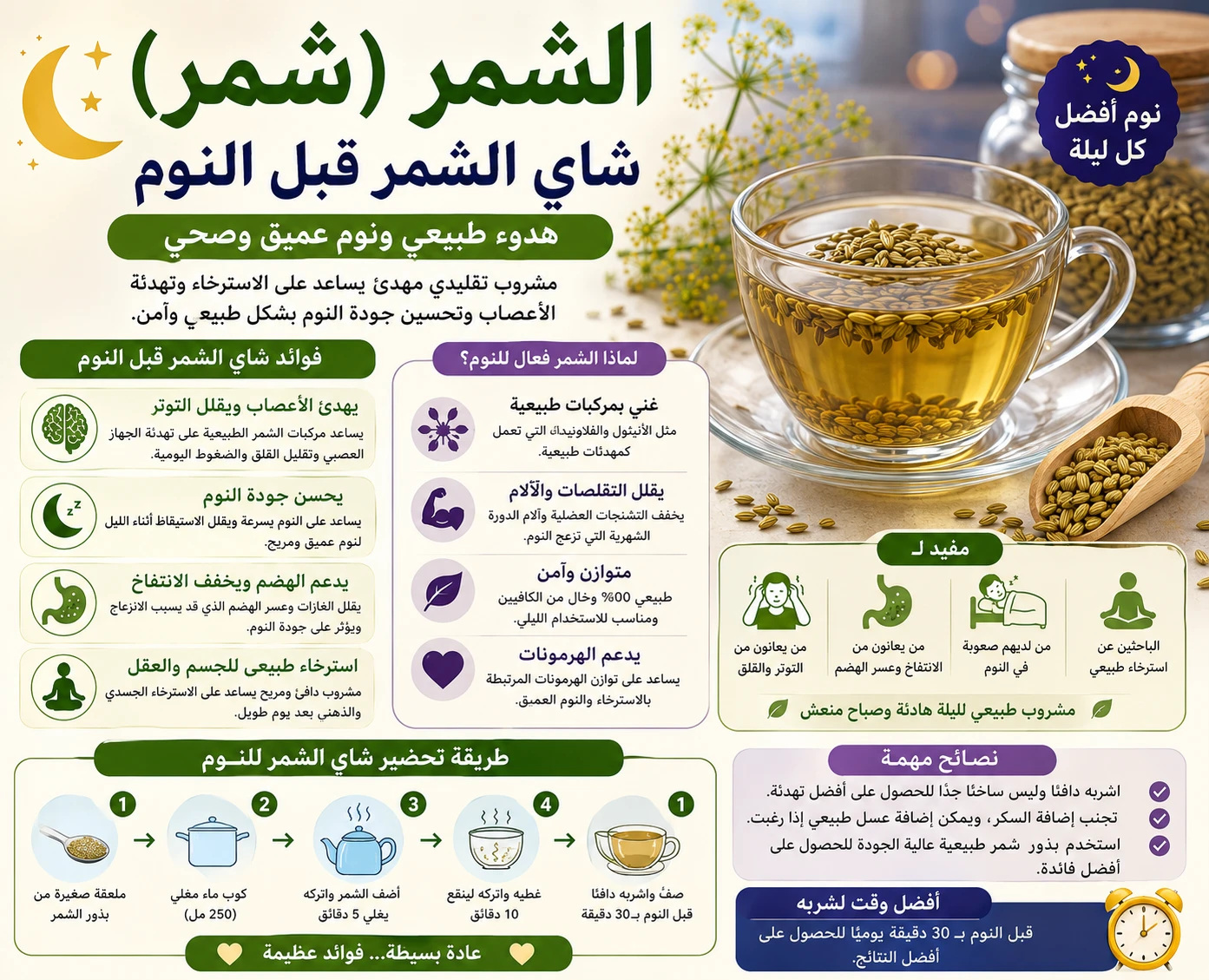
Calming Effect — التهدئة وتحسين النوم
Shamar tea before bed is a classic Arab remedy for anxiety and mild insomnia. The mild sedative effect of anethole and its action on GABA receptors in the nervous system is the likely mechanism behind this widely trusted calming tradition across the Arab world.
How to Make Shamar Tea (شاي الشمر)
Three traditional recipes — classic Arabic, Pakistani Saunf Qahwa, and a modern cold brew for summer. All the same fennel seeds; different traditions, different occasions.
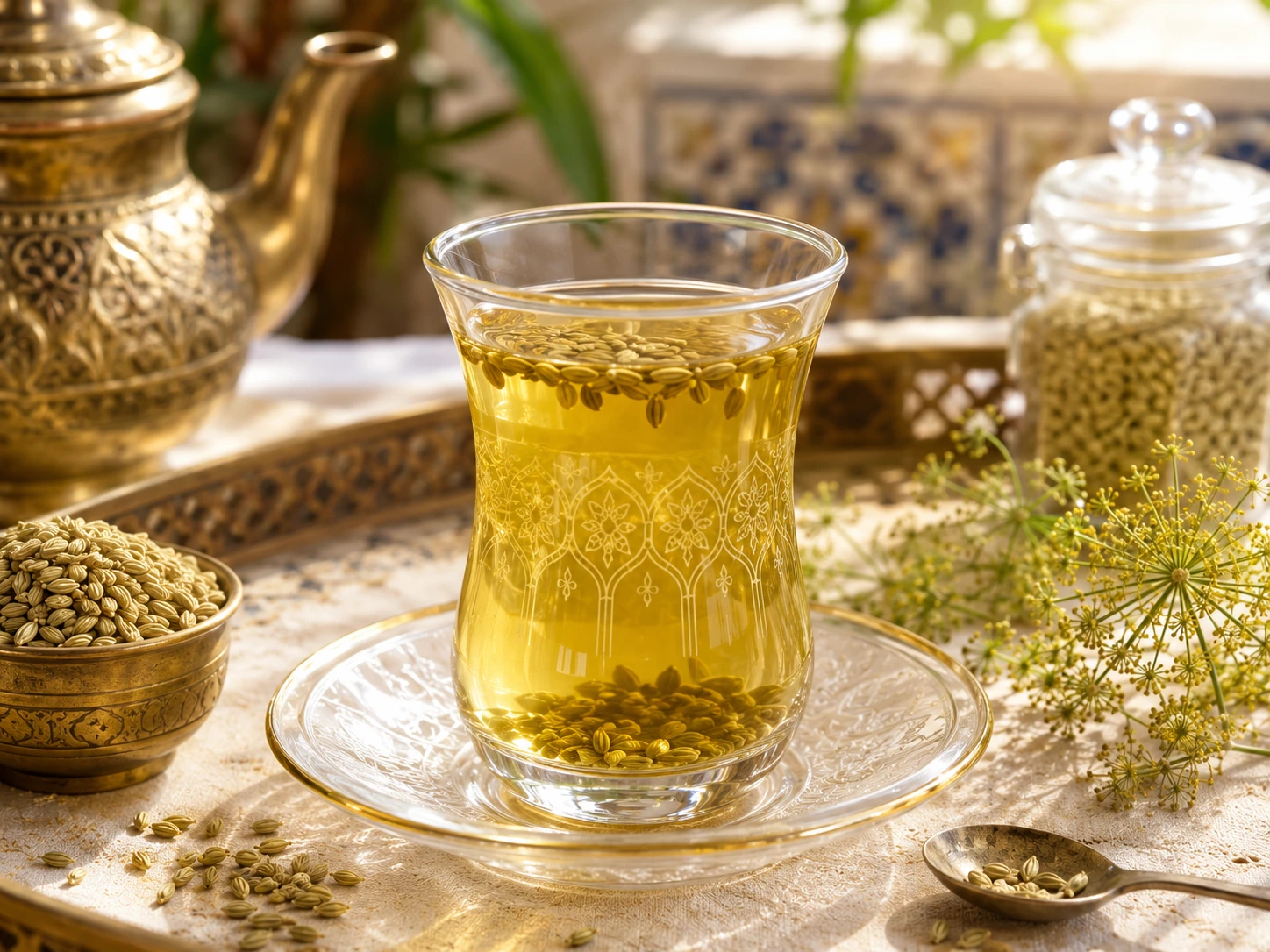
Classic Arabic Shamar Tea
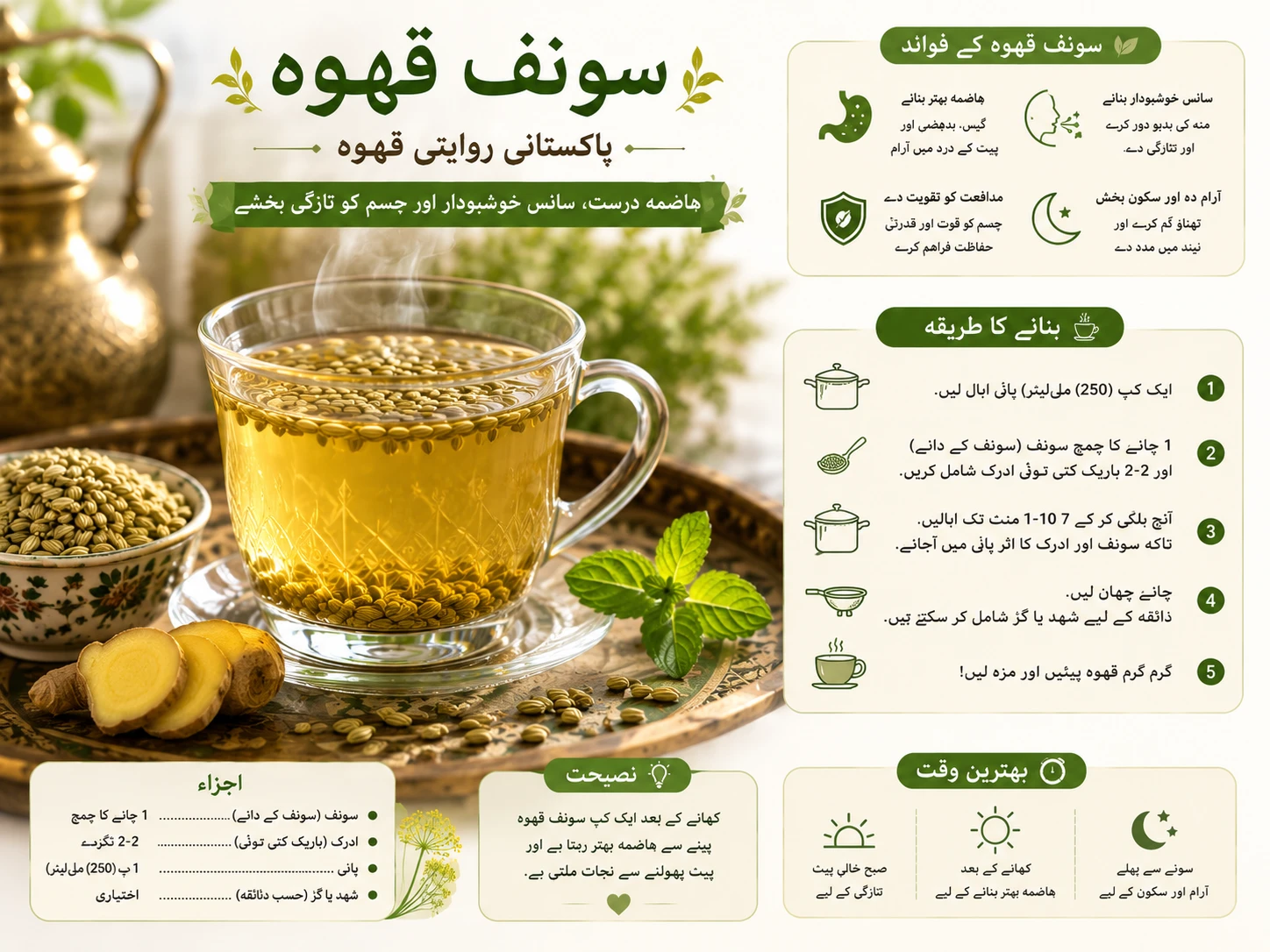
Saunf Qahwa — Pakistani Style
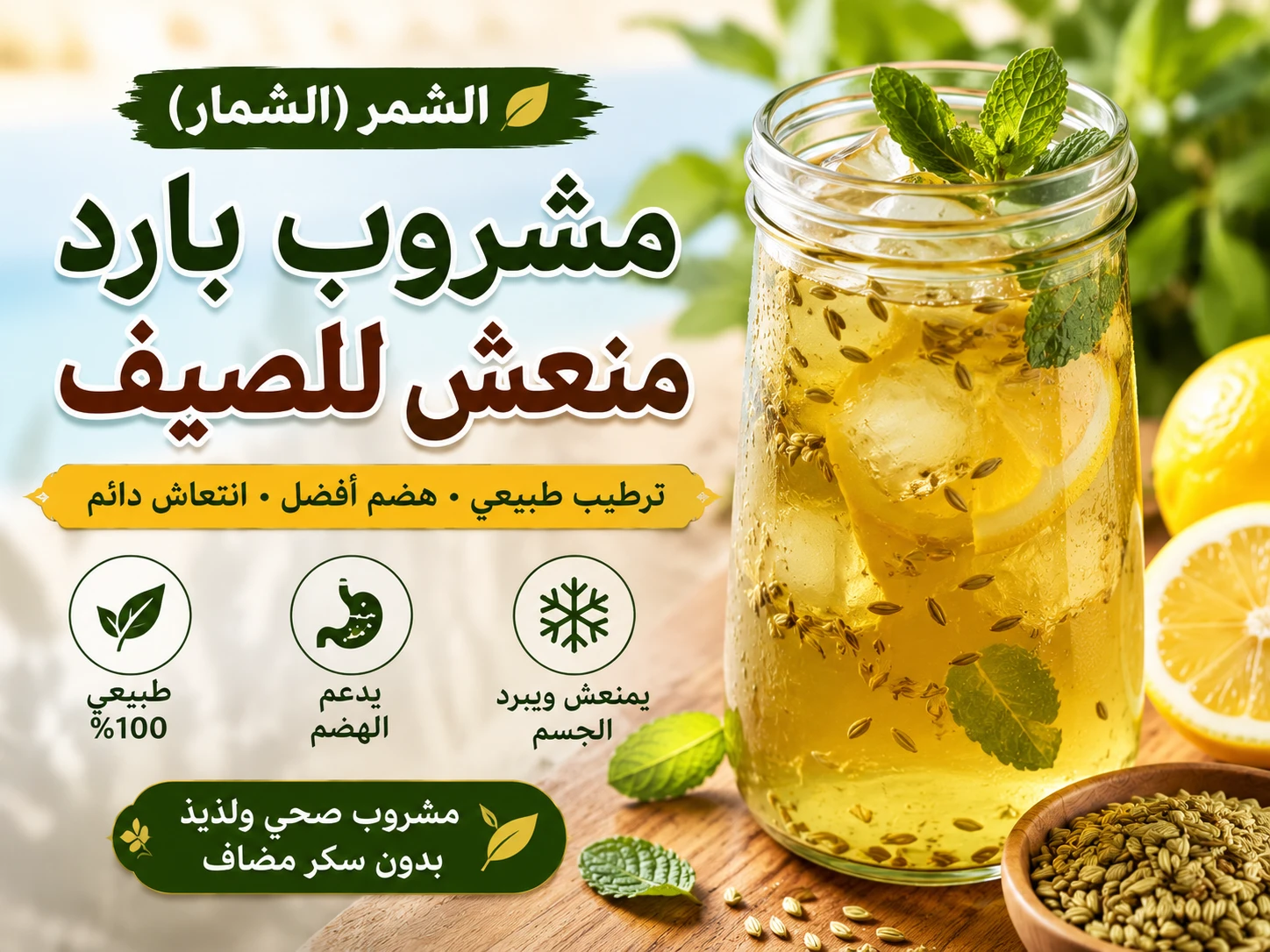
Shamar Cold Brew
Traditional Fennel Recipes from the Arab World
Shamar seeds are far more than a tea ingredient — they are a central spice in Arab, Mediterranean, and South Asian cuisines. Here are four classic ways to cook with Shamar.
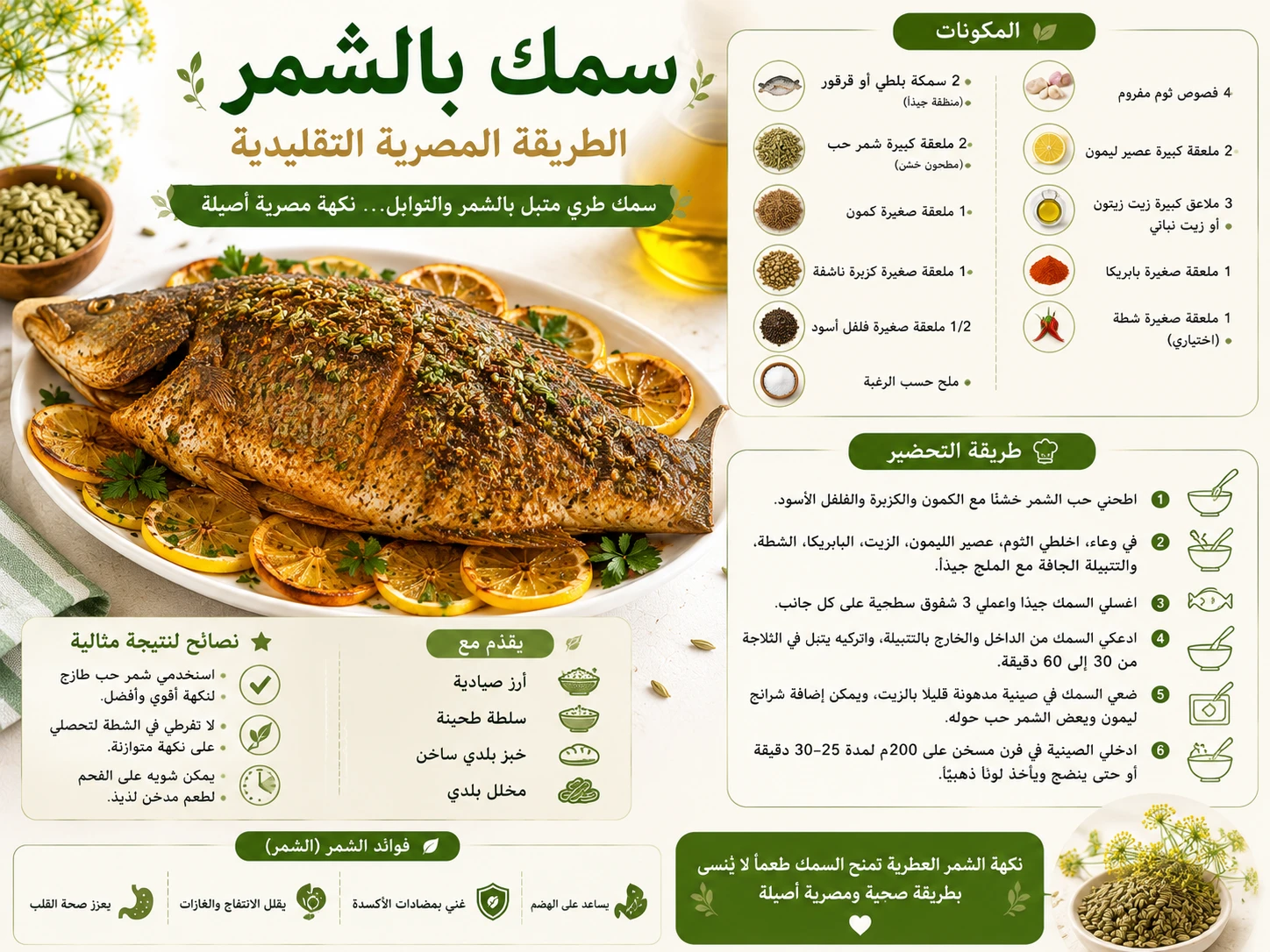
Egyptian Shamar Spiced Fish
سمك بالشمر على الطريقة المصريةA classic Egyptian street food preparation — whole fish marinated overnight in a paste of crushed Shamar seeds, cumin, coriander, garlic, and lemon. Grilled over charcoal or baked until crisp. The Shamar infuses the flesh with a gentle anise warmth.
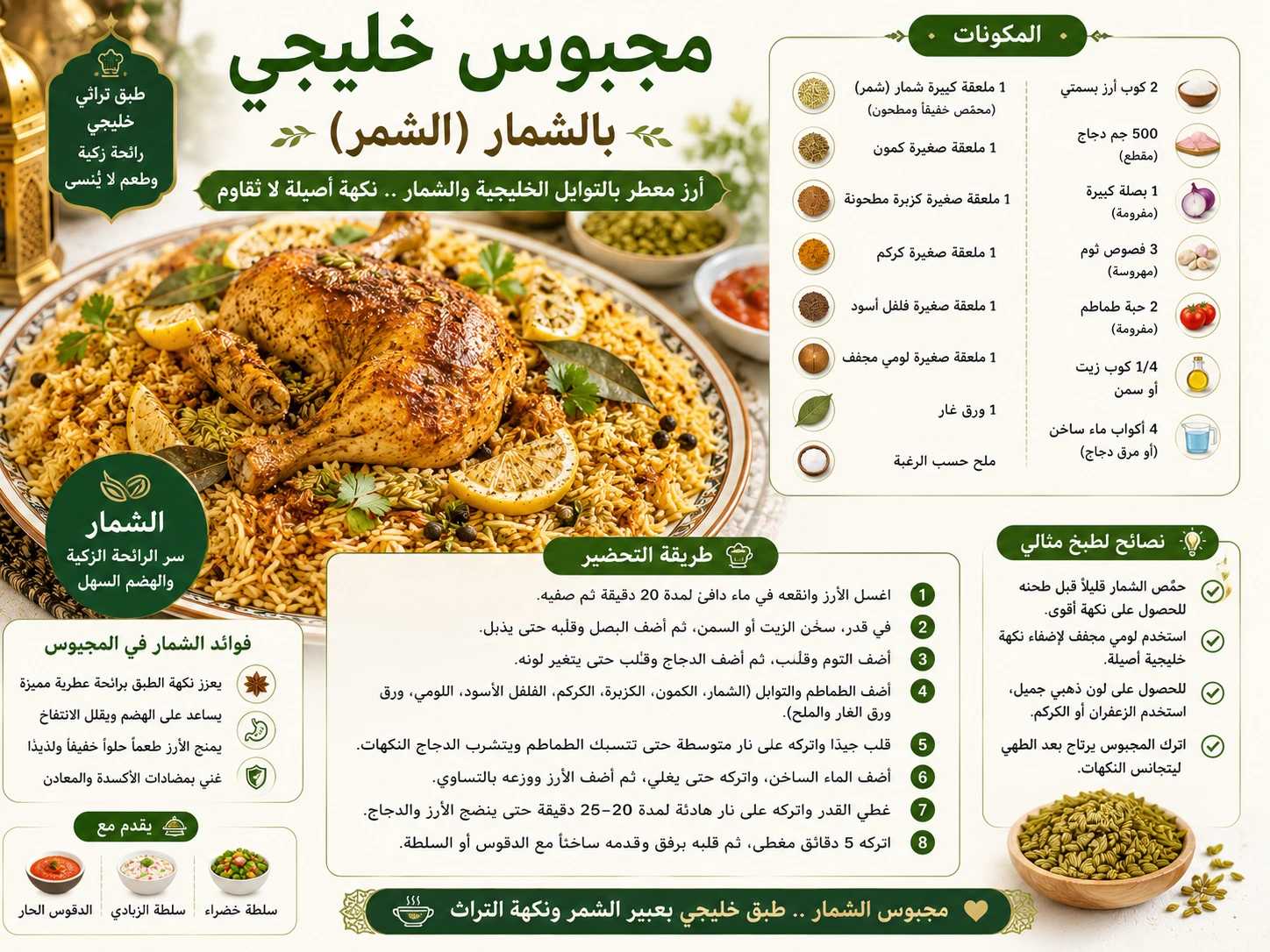
Gulf Machboos with Shamaar
مجبوس بالشمار الخليجيThe Gulf’s beloved rice dish (مجبوس) is incomplete without Shamaar. Whole seeds are fried in ghee at the start with loomi (dried lime), cardamom, and cloves — releasing their fragrant oils before the rice and meat are added. The result is deeply aromatic, distinctively Gulf.
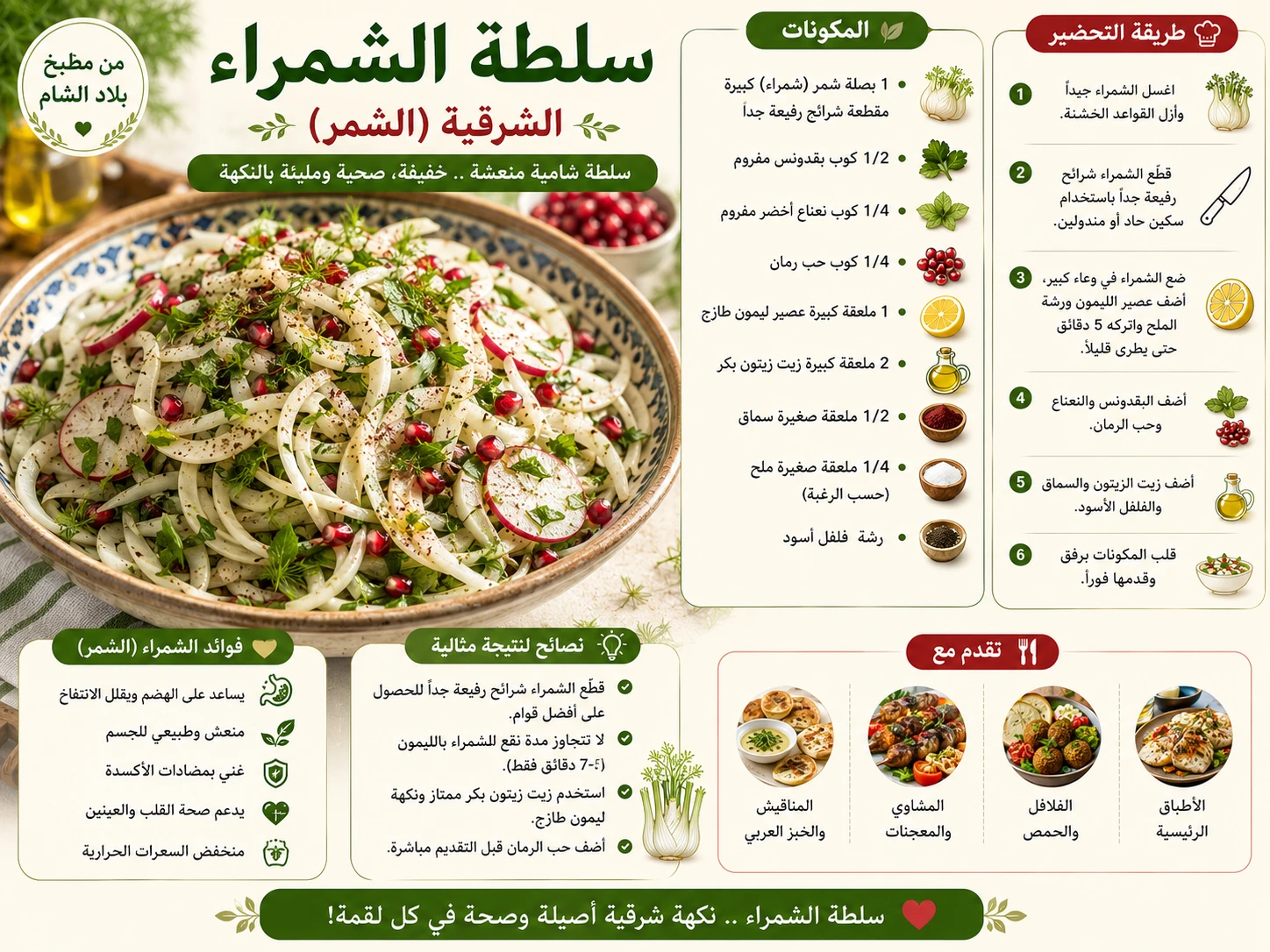
Levantine Shamraa Salad
سلطة الشمرا اللبنانيةIn Lebanon, the fennel bulb (Shamraa) is thinly sliced raw and tossed with orange segments, pomegranate seeds, fresh mint, olive oil, and lemon juice. Fennel seeds are toasted and scattered over the top. Light, citrusy, and deeply aromatic — a mezze staple.
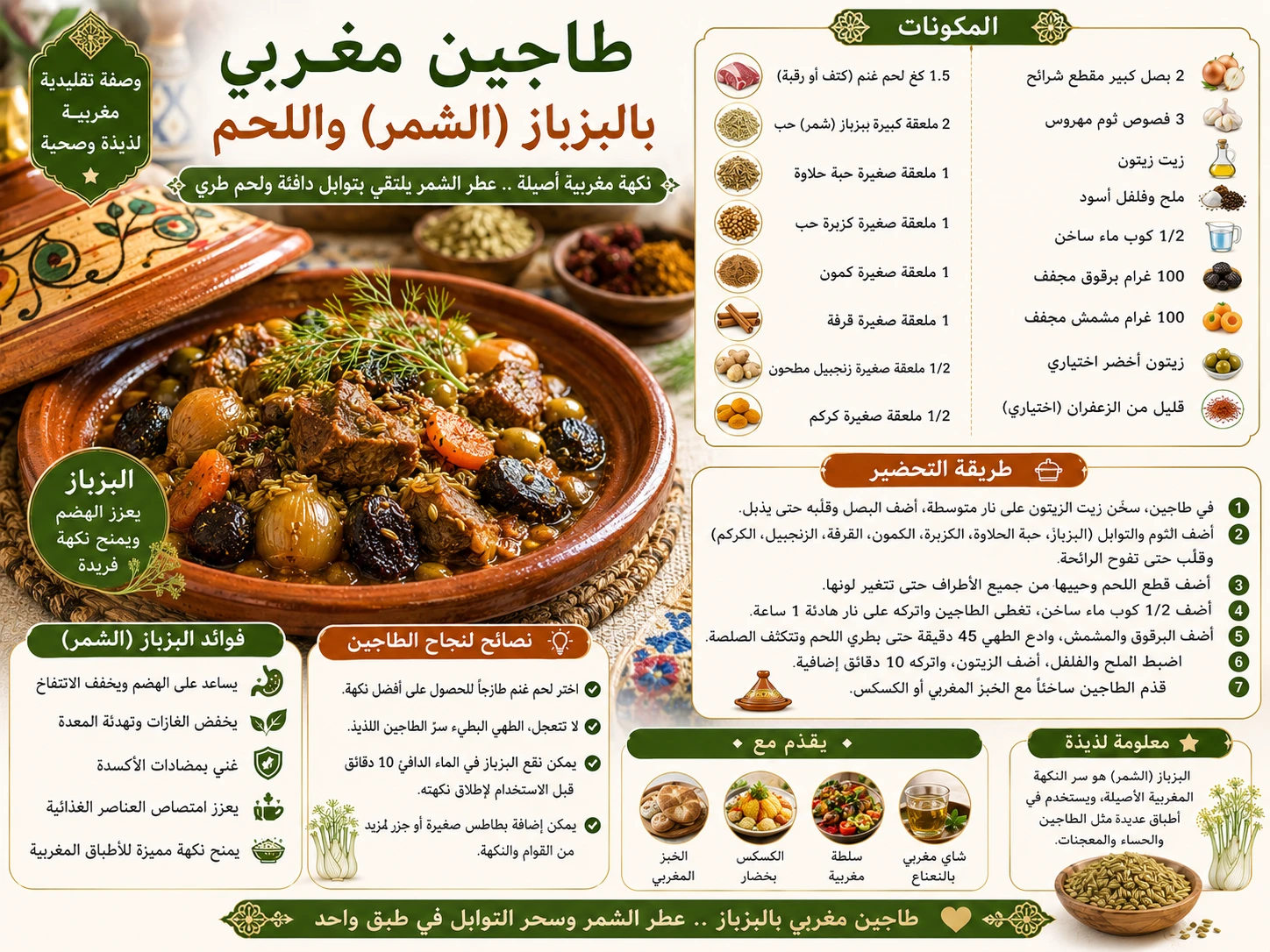
Moroccan Bizbaaz Lamb Tagine
طاجين الحمل بالبسباس المغربيIn Morocco, Bizbaaz (fennel seeds) are ground into a spice paste with ras el hanout, cumin, and paprika for slow-cooked lamb tagine. The fennel seeds provide a sweet, aromatic backbone that balances the rich lamb fat and preserved lemon tang. A Maghrebi kitchen essential.
Shamar Arabic Toolkit
Two practical tools to help you find the right Arabic name for fennel in any country — and calculate the correct daily dosage for your needs.
Find Your Regional Name
Dosage Calculator
Fennel Seeds in All Languages
What are fennel seeds called around the world? Complete multilingual reference — all referring to the same plant, Foeniculum vulgare, with the same health benefits.
| Language | Native Script | Romanization | Region | Search Volume |
|---|---|---|---|---|
| Arabic — Egyptian | شمر | Shamar | Egypt, most of Arab world | 🔴 Very High |
| Arabic — Gulf | شمار | Shamaar | Saudi Arabia, UAE, Kuwait, Qatar | 🔴 High |
| Arabic — Levant | شمرا / شومر | Shamraa / Shoumar | Lebanon, Syria, Jordan, Palestine | 🔴 High |
| Arabic — Morocco | بسباس | Bizbaaz | Morocco, Tunisia, Algeria | 🟡 Medium |
| Arabic — Classical | رازيانج | Razianaj | Classical texts, Unani medicine | 🟡 Medium |
| Urdu | سونف | Saunf | Pakistan, India (Urdu speakers) | 🔴 Very High |
| Hindi | सौंफ | Saunf / Moti Saunf | India (Hindi speakers) | 🔴 High |
| Persian / Farsi | رازیانه | Razianeh | Iran, Afghanistan | 🟡 Medium |
| Turkish | Rezene | Rezene tohumu | Turkey | 🟡 Medium |
| Spanish | Hinojo | Semillas de hinojo | Spain, Latin America | 🟡 Medium |
| Italian | Finocchio | Semi di finocchio | Italy | 🟡 Medium |
| French | Fenouil | Graines de fenouil | France, North Africa (French) | 🟡 Medium |
| Chinese | 小茴香 | Xiǎo huíxiāng | China, Taiwan | 🟡 Medium |
| Bengali | মৌরি | Mouri | Bangladesh, West Bengal | 🟡 Medium |
All names above refer to the same plant: Foeniculum vulgare. Whether you call it Shamar, Saunf, Hinojo, or Finocchio — same seed, same benefits.
Frequently Asked Questions About Fennel Seeds in Arabic
The most searched questions about Shamar, fennel seeds, and Arabic herbal medicine — answered fully, with Arabic context.