Fenugreek: Benefits, Uses, Seeds & Everything Else
The definitive guide to Trigonella foenum-graecum — from ancient Ayurvedic medicine to your kitchen today.
Fenugreek (methi) is an annual herb whose seeds and leaves are used as both a spice and traditional medicine. It is backed by clinical evidence for blood sugar regulation, increasing breast milk supply, and digestive relief. Both the seeds and leaves are edible — the seeds have a bitter, maple-like taste; the leaves (fresh or dried as kasuri methi) are milder and used widely in South Asian cooking.


What Is Fenugreek?
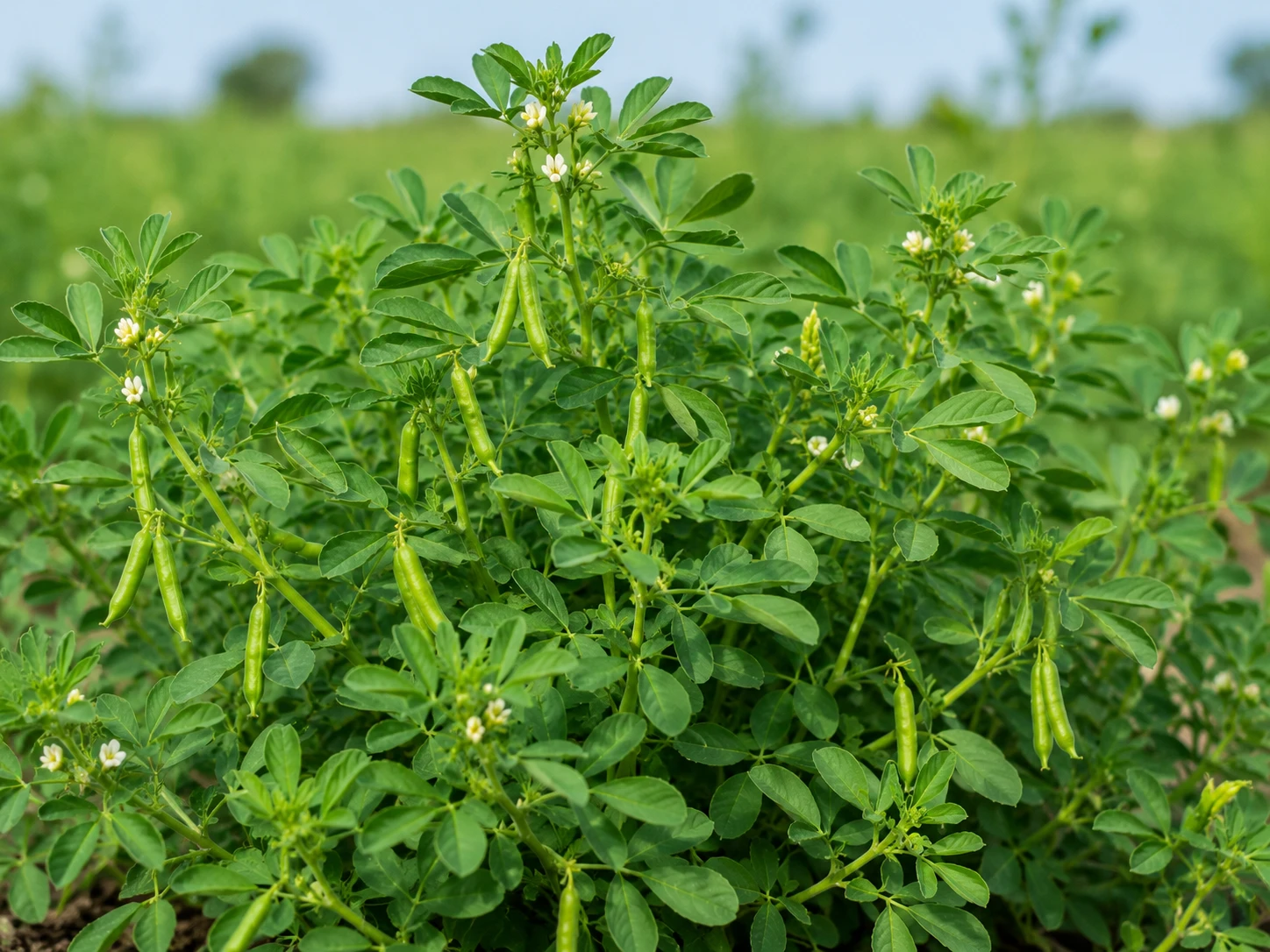
Fenugreek (Trigonella foenum-graecum) is an annual leguminous herb in the Fabaceae family, native to the Mediterranean basin, the Middle East, and South Asia. It has been cultivated for at least 6,000 years — archaeobotanical evidence from Neolithic sites in Iraq dates its use to around 4,000 BCE.
In South Asia, it is universally known as methi (Hindi, Urdu, Punjabi, Gujarati). In Arabic-speaking regions it is called hilba or hulba (حلبة). The plant grows 30–60 cm tall with small white flowers that develop into long, narrow seed pods, each containing 10–20 small, golden-brown seeds.
Every part of the plant is useful. The leaves (methi saag) are eaten as a vegetable. Dried leaves (kasuri methi) are a finishing herb in Indian cuisine. The seeds are a key ingredient in curry blends, pickling spice, and traditional medicine across cultures from Ethiopia to India.
Fenugreek Nutrition Facts
Source: USDA FoodData Central — Fenugreek seeds, raw (per 100g serving)
| Nutrient | Per 100g | % DV |
|---|---|---|
| Calories | 323 kcal | — |
| Protein | 23.0 g | 46% |
| Total Fat | 6.4 g | 8% |
| Carbohydrates | 58.4 g | 21% |
| Dietary Fibre | 24.6 g | 88% |
| Iron | 33.5 mg | 186% |
| Magnesium | 191 mg | 45% |
| Potassium | 770 mg | 16% |
| Calcium | 176 mg | 14% |
| Manganese | 1.2 mg | 52% |
| Vitamin B6 | 0.6 mg | 35% |
| Folate | 57 mcg | 14% |
| Zinc | 2.5 mg | 23% |
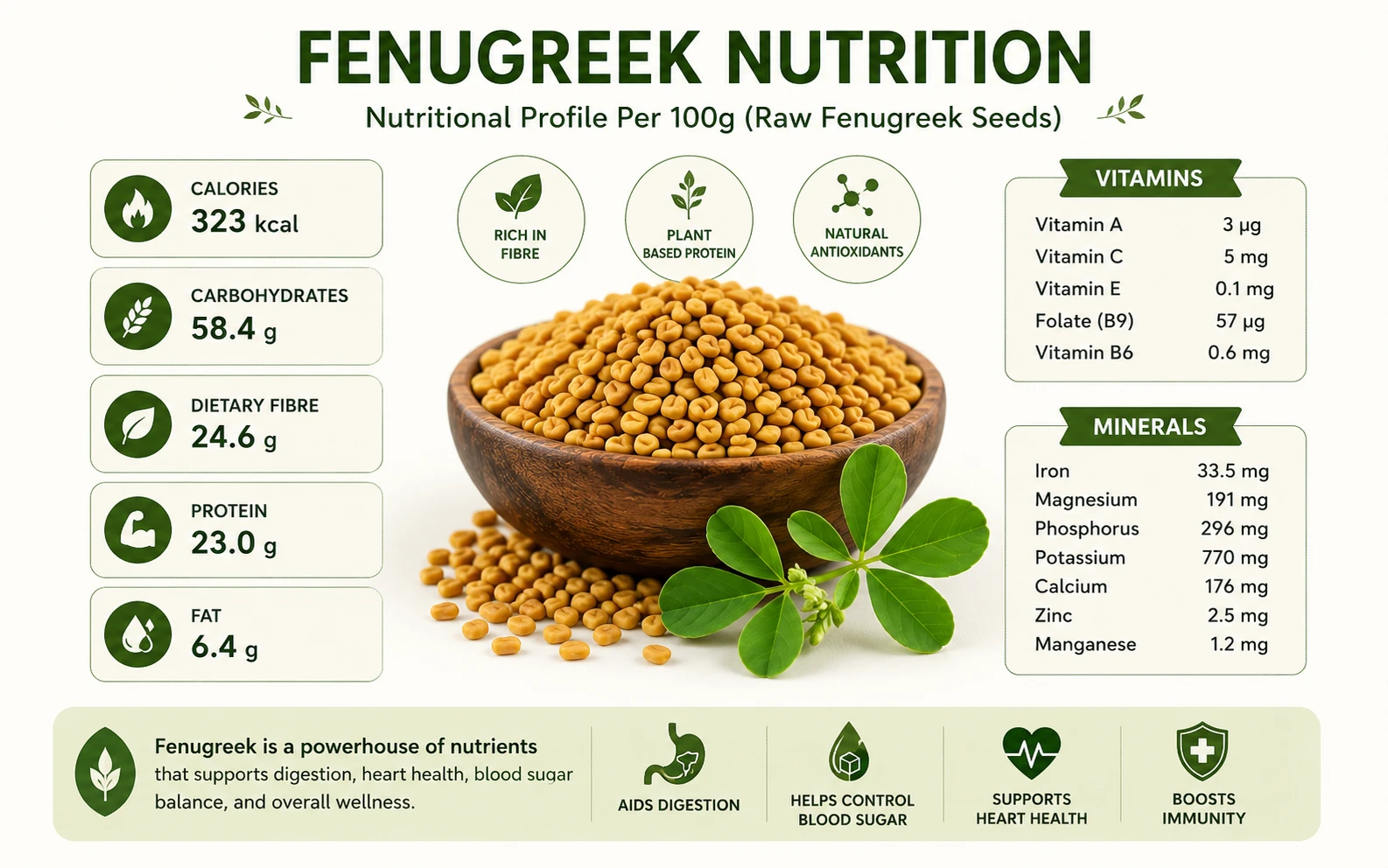
Key bioactive compounds: Galactomannan (soluble fibre), diosgenin (saponin), 4-hydroxyisoleucine (unique amino acid), trigonelline (alkaloid, also found in coffee), and sotolone (the compound responsible for the characteristic maple-syrup aroma).
Fenugreek Health Benefits
Fenugreek has been used medicinally for millennia. Modern clinical research has validated several traditional uses — while others remain promising but require more evidence. Below are the benefits most supported by human clinical data.
Blood Sugar Regulation
Galactomannan fibre slows intestinal glucose absorption. The amino acid 4-hydroxyisoleucine may stimulate insulin release. Multiple RCTs show significant reduction in fasting blood glucose in type-2 diabetics at 10g/day.
Strong EvidenceIncreases Breast Milk
One of the most studied galactagogues. Clinical trials show nursing mothers produce significantly more milk within 24–72 hours of supplementation. Mechanism involves phytoestrogens and sweat gland stimulation.
Strong EvidenceTestosterone Support
Double-blind trials suggest 500mg/day extract helps maintain testosterone during resistance training. Diosgenin is structurally related to steroid precursors. Results are modest but consistent.
Moderate EvidenceDigestive Relief
Reduces bloating, acid reflux, and constipation. The soluble fibre forms a gel in the gut that soothes the intestinal lining. Traditional use as a carminative is well-documented across cultures.
Moderate EvidenceCholesterol Management
Galactomannan binds bile acids in the gut, preventing cholesterol reabsorption. Some trials show modest reductions in LDL and total cholesterol. Effect is enhanced when combined with dietary changes.
Moderate EvidenceAnti-Inflammatory
Flavonoids and alkaloids (trigonelline, diosgenin) demonstrate anti-inflammatory activity in cell and animal studies. Human evidence is limited but traditional use as a topical anti-inflammatory is widespread.
Emerging EvidenceAppetite & Weight
8g fenugreek fibre at breakfast significantly reduced hunger and calorie intake at lunch in a 2015 randomised study. The satiety effect comes from the viscous gel formed by galactomannan in the stomach.
Moderate EvidenceHair & Scalp Health
Topical fenugreek paste is a traditional Ayurvedic hair treatment. Lecithin and proteins may strengthen hair. One 2016 study found a fenugreek supplement reduced hair loss in both men and women.
Limited Evidence Full hair-growth guide →⚕️ Medical Disclaimer: This information is for educational purposes only. Fenugreek is not a substitute for prescribed medical treatment. If you have diabetes, are pregnant, or take blood-thinning medication, consult your doctor before using fenugreek supplements. See our full medical disclaimer.
Fenugreek Seeds: The Basics
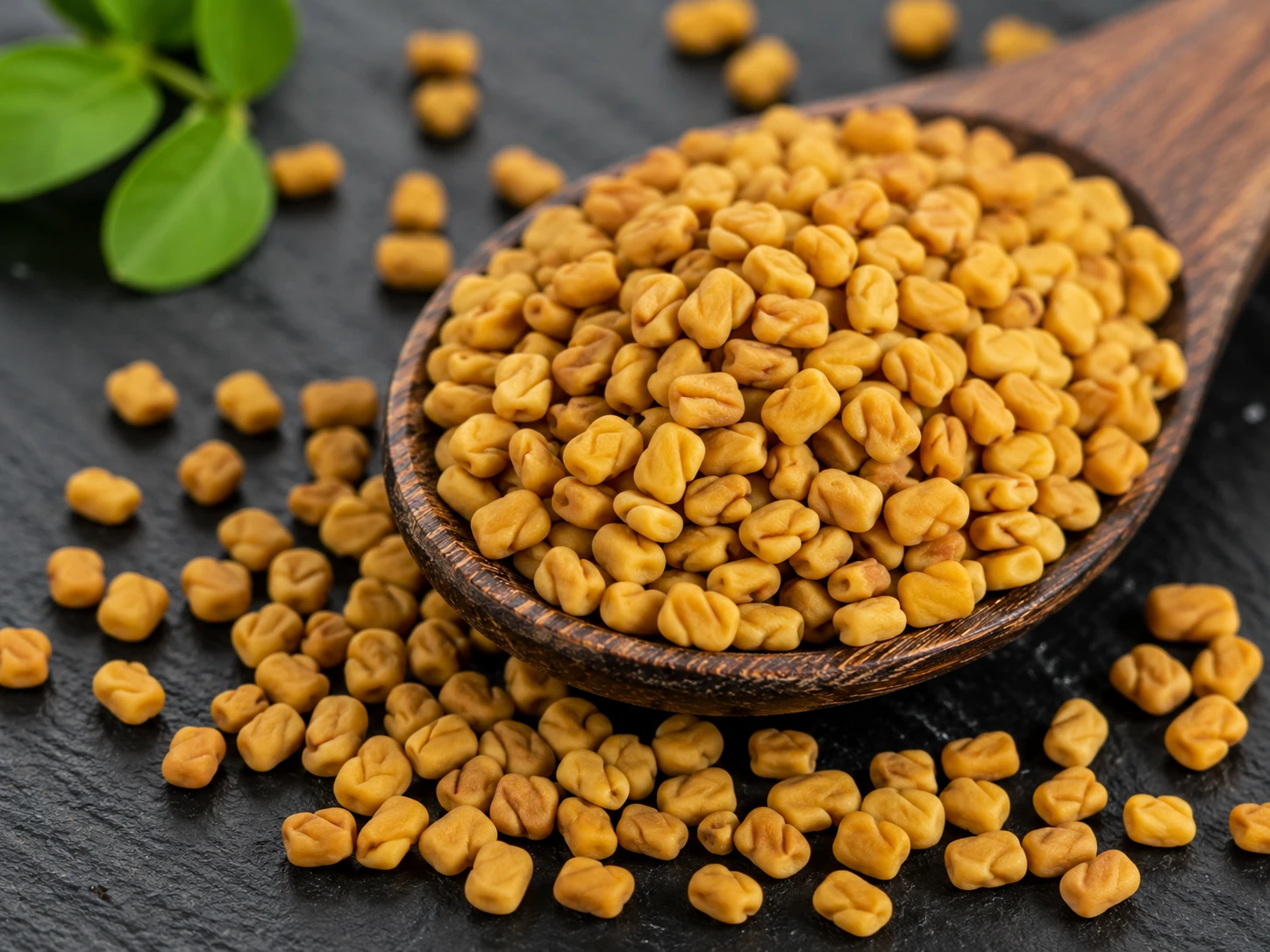
Fenugreek seeds are small, angular, and yellow-brown — approximately 3–5 mm in length. They are exceptionally hard and must be soaked or roasted before consumption to soften and reduce raw bitterness.
Raw, the seeds are intensely bitter; roasting or cooking develops a warm, maple-syrup sweetness instead. Curious exactly what that shift tastes like, and how it compares to fennel? Read the full taste breakdown →
How to use fenugreek seeds:
- Dry-roast in a pan for 2–3 min until golden — reduces bitterness
- Soak overnight in water — makes seeds softer and easier to digest
- Grind to powder — use in spice blends and curries
- Sprout — 3–5 days, milder flavour, great in salads (see sprouting benefits below)
- Make tea — simmer crushed seeds for 5–10 minutes
→ Not sure whether to reach for the seed or the leaf? Fenugreek Seeds vs Leaves: Complete Comparison
Fenugreek Leaves: Fresh Methi & Kasuri Methi
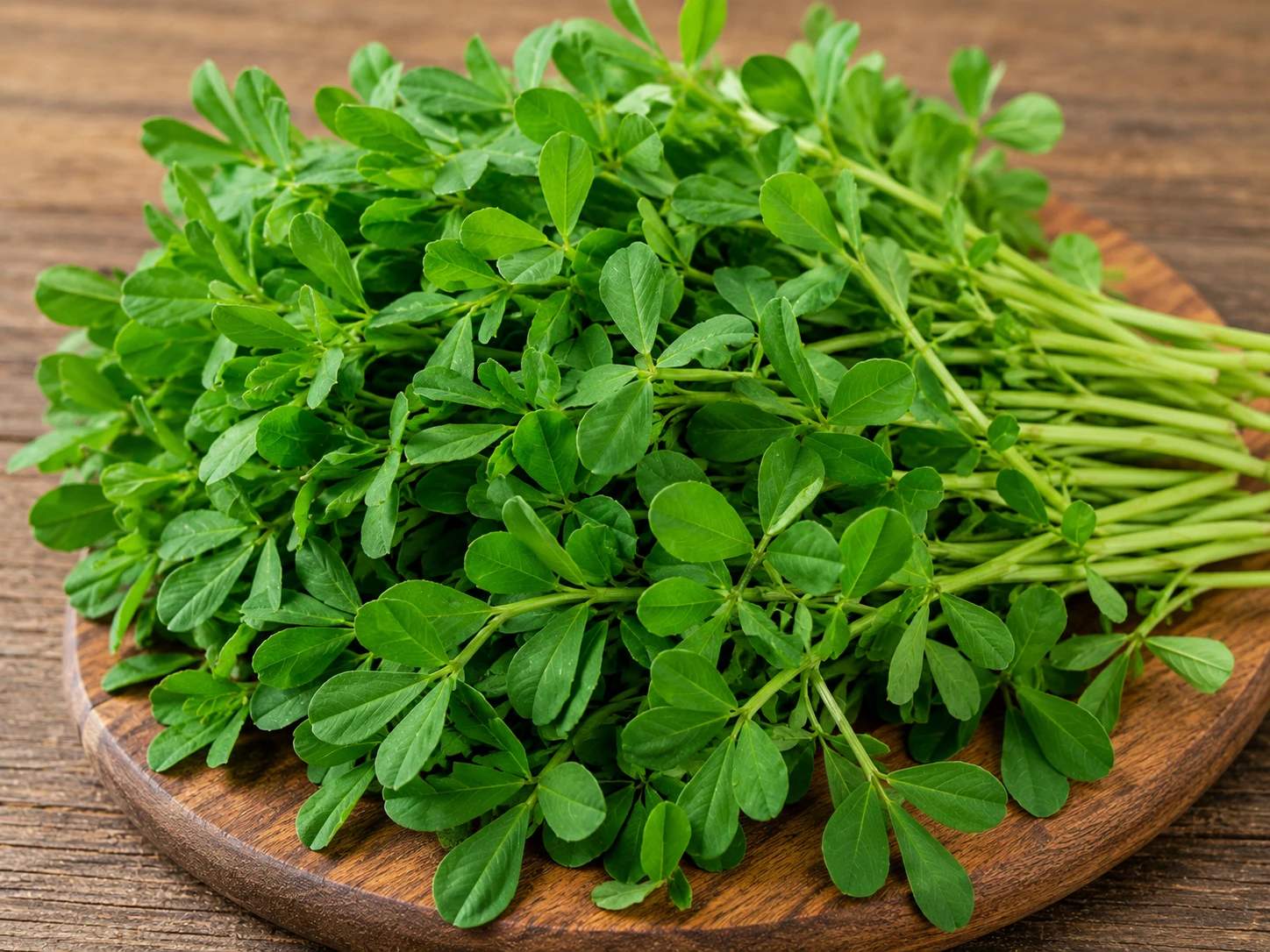
The leaves of the fenugreek plant — called methi in South Asian languages — are one of the most widely used leafy greens in Indian, Pakistani, and Bangladeshi cooking. They are harvested while the plant is young, before the seed pods form.
Fresh methi has a slightly bitter, grassy flavour similar to spinach with a herbal edge. It is used in: aloo methi (potatoes with fenugreek), methi paratha (flatbread), methi chicken, and as a stir-fried vegetable.
Kasuri methi (dried fenugreek leaves) is named after the Kasur region of Punjab — historically renowned for the highest quality dried methi. It has a more concentrated, slightly smoky flavour. Use just 1–2 teaspoons, crushed between your palms, added in the final 2 minutes of cooking to release maximum aroma.
Kasuri methi is the secret ingredient in butter chicken, dal makhani, and many Mughal-style gravies — it adds depth without overpowering.
→ Wondering if “methi” and “fenugreek” are even the same thing? Fenugreek vs Methi: Cleared Up
Fenugreek vs Fennel & Fenugreek vs Methi
Two mix-ups come up constantly with this spice. Here’s the one-line answer to each, with a full breakdown if you want the details.
Fenugreek vs Fennel
Despite the similar names, these are two completely different plants — different families, different flavours, different uses. They are not interchangeable in a recipe.
See the full comparison →Fenugreek vs Methi
This one isn’t a mix-up at all — “methi” is simply the Hindi/Urdu name for fenugreek. Same plant, same seeds, same leaves.
Read the full explainer →Want the full picture on fennel itself, beyond how it differs from fenugreek? See our Complete Fennel Guide →
⚖️ Fenugreek Measurement Converter
Convert between grams, teaspoons, tablespoons, and cups — instantly. Optimised for seeds and ground fenugreek powder.
Enter a value above to see conversions
Quick Presets
Fenugreek in the Kitchen
Fenugreek is one of the most versatile spices in world cuisine — used from the Horn of Africa to Southeast Asia. Its bitter-sweet flavour profile and aromatic qualities make it irreplaceable in dozens of iconic dishes.
Indian Curries & Dals
Seeds used in tadka/tarka tempering. Powder adds depth to sambar, rasam, and fish curries. Leaves used in methi chicken and methi dal.
Breads & Flatbreads
Fresh methi leaves folded into paratha dough. Ethiopian injera traditionally uses fenugreek. Middle Eastern breads add seeds for flavour.
Spice Blends
Key ingredient in panch phoron (Bengali five-spice), sambar powder, berbere (Ethiopian), and ras el hanout (North African).
Pickling & Preserves
Seeds are an essential part of South Asian mango achaar (pickle). Their bitter notes balance the sour, sweet, and spicy pickle profile.
Herbal Tea
Simmered seeds make a digestive tea common across the Arab world (شاي الحلبة) and South Asia. Often combined with ginger or honey.
Cheese & Dairy
Used to flavour certain cheeses in Switzerland and Germany. The maple-like compound sotolone in fenugreek is used commercially as an artificial maple flavour.
Fenugreek Side Effects & Safety
Fenugreek is generally safe in food amounts. Side effects are more likely with high-dose supplements. Here is what the clinical evidence shows:
🫁 Digestive Issues
Gas, bloating, and diarrhoea are the most common side effects, especially when starting supplementation or consuming large amounts of seeds. Start with small amounts and gradually increase.
🍁 Maple Odour
Sotolone is excreted through sweat and urine, causing a distinctive maple-syrup odour. This is harmless but can be mistaken for a metabolic condition (Maple Syrup Urine Disease) in infants whose mothers are supplementing.
💊 Drug Interactions
May interact with: diabetes medications (additive hypoglycaemia), blood thinners (warfarin, aspirin), and thyroid medication (reduced absorption). Take fenugreek 2+ hours apart from medications.
🤰 Pregnancy Caution
Large medicinal doses may stimulate uterine contractions (oxytocic effect). Avoid high-dose supplements during pregnancy. Culinary amounts in food are generally considered safe.
🌾 Allergy Risk
Fenugreek is in the Fabaceae family — cross-reactivity is possible with peanuts, chickpeas, and other legumes. Rare but serious allergic reactions (anaphylaxis) have been reported. Patch test topical applications first.
Fenugreek Dosage: The Headline Numbers
Studied doses vary a lot by purpose and form. The two uses with the strongest clinical backing:
Blood Sugar (Type 2 Diabetes)
Seed powder · 🟢 Strong evidence
Breast Milk Supply
Capsules or seed · 🟢 Strong evidence
⚕️ Always consult a healthcare professional before using fenugreek as a supplement, especially if you have diabetes, are pregnant, breastfeeding, or take prescription medication.
→ Testosterone support, digestion, cholesterol, appetite, and topical hair doses are all covered in detail here: Complete Fenugreek Dosage Guide (by purpose & form) →
Fenugreek Water & Fenugreek Sprouts
Fenugreek water — seeds soaked overnight and the liquid drunk in the morning — is a common South Asian home remedy, often used as a gentler alternative to the seeds themselves for digestion and blood sugar support.
Full fenugreek water benefits guide →Sprouted fenugreek seeds have a milder, less bitter flavour than the raw or roasted seed, and are eaten fresh in salads and sandwiches — some nutrients change during sprouting compared to the whole dry seed.
Full fenugreek sprouts benefits guide →Fenugreek: Frequently Asked Questions
Fenugreek (Trigonella foenum-graecum) is an annual herb in the Fabaceae family, native to the Mediterranean, Middle East, and South Asia. Both its leaves (called methi) and seeds are used as food and medicine. The seeds have a distinctive bitter, maple-like flavour due to the compound sotolone.
Evidence-supported fenugreek benefits include: (1) blood sugar regulation via galactomannan fibre; (2) increased breast milk production in nursing mothers; (3) modest testosterone support; (4) digestive relief — reduces bloating and acid reflux; (5) anti-inflammatory effects from diosgenin and flavonoids. Most human evidence is strongest for blood sugar and lactation.
It depends heavily on the purpose and form — studied doses range from a couple of grams per meal for digestion up to 10g/day for blood sugar support. See our complete dosage guide for exact amounts by purpose. Always start low and consult a doctor if on diabetes medication.
Common side effects: gas, bloating, diarrhoea at high doses; maple-syrup odour in sweat and urine. Potential drug interactions with diabetes and blood-thinning medications. Rare: allergic reactions in those sensitive to peanuts or chickpeas. Avoid large medicinal doses in pregnancy.
Culinary amounts in food are considered safe. Medicinal doses (supplements) should be avoided, particularly in the first and second trimester, as fenugreek has demonstrated uterine-stimulating (oxytocic) properties in animal studies. After delivery, it is widely used to increase breast milk supply.
Raw seeds are intensely bitter; roasted or cooked, they develop a maple-syrup sweetness. Fresh leaves (methi) are milder and grassy. See the full taste breakdown for how it compares raw vs roasted vs leaves vs kasuri methi.
Yes — fenugreek is one of the most studied galactagogues. Several clinical trials show nursing mothers taking 1,725–3,500mg fenugreek seed extract daily produced significantly more milk within 24–72 hours. The mechanism involves phytoestrogens stimulating sweat glands, of which mammary glands are a modified type.
Multiple controlled trials support fenugreek for type-2 diabetes management. Soluble fibre (galactomannan) slows intestinal glucose absorption. The amino acid 4-hydroxyisoleucine may stimulate insulin secretion. A 2009 study found 10g daily seed powder significantly reduced fasting blood glucose over 8 weeks. It should supplement — not replace — prescribed treatment.
Seeds are the primary medicinal form and have a stronger, more bitter flavour. Leaves (fresh = methi, dried = kasuri methi) are milder and used fresh in dishes like aloo methi and methi paratha. See the full seeds vs leaves comparison for nutrition, uses, and substitution ratios.
Fenugreek seeds contain lecithin and proteins that may strengthen hair, and topical seed paste is a traditional Ayurvedic remedy. It may improve hair quality but is not a proven treatment for androgenetic alopecia. See the full hair-growth guide for the evidence, recipes, and how to use it.
Fenugreek’s soluble fibre (galactomannan) expands in water and promotes satiety. A 2015 randomised study found 8g fenugreek fibre with breakfast significantly reduced hunger and calorie intake at lunch. However, it is not a standalone weight-loss supplement — it works best as part of a balanced diet with regular activity.
Per 100g fenugreek seeds (USDA): Calories: 323 kcal | Protein: 23g | Fat: 6.4g | Carbohydrates: 58g | Dietary Fibre: 24.6g | Iron: 33.5mg (186% DV) | Magnesium: 191mg | Potassium: 770mg. Fenugreek is exceptionally rich in iron, fibre, and plant protein relative to most herbs and spices.
Fenugreek may interact with: (1) diabetes medications — additive glucose-lowering, risk of hypoglycaemia; (2) blood thinners (warfarin, aspirin) — mild anticoagulant properties; (3) thyroid medications — galactomannan may reduce absorption. Always take fenugreek supplements 2+ hours apart from other medications.
Fenugreek is called حلبة (hilba or hulba) in Arabic. See our full naming guide for regional variations across the Gulf and North Africa.
Explore the Full Fenugreek Guide
This hub is the starting point. Each topic below has a complete, in-depth article.
Explore Other Spice Guides on CardamomNectar
About the Authors
Emily Rhodes
Emily is a certified herbalist and food writer with 12 years of experience researching traditional medicinal plants. She specialises in South Asian and Middle Eastern herb traditions and has written extensively on spice science for CardamomNectar.
View full profile →Dr Michael Bennett
Dr Michael Bennett is a registered nutritionist (RNutr) with a Masters in Human Nutrition from the University of Sheffield. He reviews all health and nutrition content at CardamomNectar to ensure accuracy, clinical balance, and compliance with evidence-based standards.
View full profile →📚 Sources & References
- Kassaian, N. et al. (2009). Effect of fenugreek seeds on blood glucose and lipid profiles in type 2 diabetic patients. PubMed
- Wilborn, C. et al. (2010). Effects of fenugreek supplementation on strength and body composition. Journal of the International Society of Sports Nutrition.
- Reeder, C. et al. (2013). Comparison of fenugreek with other galactagogues concerning the stimulation of breast milk production. International Journal of Pharmaceutical Compounding.
- Mathern, J. et al. (2009). Effect of fenugreek fiber on satiety, blood glucose and insulin response. Phytotherapy Research.
- USDA FoodData Central — Fenugreek seeds, raw. fdc.nal.usda.gov
- Nagulapalli Venkata K.C. et al. (2017). A small plant with big benefits — Fenugreek: A review. Pharmacognosy Reviews.