Fenugreek for Hair Growth — Science, 8 Benefits & 6 DIY Recipes
Complete science-backed guide: how methi dana blocks DHT, rebuilds hair follicles, and conditions hair from root to tip — with an honest evidence review, safety self-check, and personalized hair type checker tool.
Fenugreek (methi dana) shows genuine, though still limited, promise for hair growth because it contains diosgenin — a natural compound linked to blocking DHT (the hormone responsible for follicle shrinkage). Combined with nicotinic acid (scalp circulation), iron (follicle oxygenation), protein (keratin building), and lecithin (deep conditioning), fenugreek addresses several root causes of hair loss at once. Small clinical trials show measurable improvement, but large-scale research is still catching up — see the honest evidence breakdown below.
 Written by Dr. Laura Harrington
 Reviewed by Dr. Sarah Mitchell
Does Fenugreek Actually Help Hair Growth?
Yes — with important nuance. Fenugreek is not a miracle drug, but it is one of the more scientifically credible natural remedies for hair health, and evidence has grown since 2025–2026. A randomised, controlled study published in International Journal of Current Research found that a 10% fenugreek seed extract hair tonic produced results comparable to 2% minoxidil in hair growth activity tests. A separate 6-month clinical trial in 30 participants recorded a 25% increase in hair density versus placebo. Multiple studies confirm its DHT-related diosgenin, circulation-boosting niacin, and protein content work through distinct and complementary pathways — see the full “What the Research Actually Shows” section below for the honest, study-by-study picture.
It works best for hair loss driven by scalp inflammation, nutrient deficiency, and mild DHT sensitivity — not for advanced genetic baldness where follicles have permanently miniaturised.
Why Methi Dana Has Stayed in Every Pakistani and Arab Grandmother’s Hair Ritual for Centuries
If there is one kitchen ingredient shared between South Asian dadi homes and Egyptian attar shops for hair care, it is fenugreek. Known as methi dana (میتھی دانہ) in Urdu and الحلبة (hulba) in Arabic, these small golden seeds have been soaked, ground, and massaged into scalps long before the modern hair care industry arrived with its sulphates and silicones.
What makes fenugreek different from most “natural hair remedies” is that the science actually backs it up — partially. This guide covers exactly which compounds work, how they work, what the actual clinical evidence says (including its limits), who should be cautious, and the most effective ways to use fenugreek — based on published research and traditional practice combined.
“Fenugreek’s value for hair health is not purely anecdotal. The diosgenin-DHT interaction is pharmacologically plausible and increasingly documented. The nicotinic acid vasodilation effect is measurable. The protein content is real. What is still missing is large-scale, long-duration human trials — the mechanistic evidence is genuinely encouraging, but I always tell readers to hold it as complementary, not a replacement for medical care.”
Dr. Laura Harrington — Health & Nutrition Writer
Why Fenugreek Works for Hair — 6 Active Compounds
Trigonella foenum-graecum: the phytochemical profile behind every hair benefitFenugreek is effective for hair not because of one magic ingredient, but because of a synergistic combination of six distinct compounds that each target a different root cause of hair problems. Understanding these helps you use fenugreek more strategically.
A steroidal saponin proposed to inhibit 5-alpha reductase — the enzyme converting testosterone to DHT. DHT is the primary driver of androgenetic alopecia in both men and women. Diosgenin’s mechanism echoes pharmaceutical finasteride, at lower potency and without the same side-effect profile.
Vitamin B3 (niacin) is a documented vasodilator — it widens blood vessels and increases circulation to the scalp. Applied topically, it delivers more oxygen and nutrients to hair follicles, extending the anagen (active growth) phase. The mild warming sensation felt during application is real vascular response.
At 23g protein per 100g, fenugreek supplies lysine, leucine, and cysteine — the amino acids critical for keratin synthesis. Hair is primarily keratin. Protein deficiency is one of the leading nutritional causes of diffuse shedding, especially in women following crash diets or post-partum.
At 33.5mg iron per 100g, fenugreek is among the richest plant iron sources. Hair follicles have the highest cell turnover rate in the body and are among the first to suffer when iron is insufficient. Sprouted fenugreek has significantly better iron bioavailability due to reduced phytic acid.
A phospholipid that coats the hair shaft, filling in cuticle damage, locking in moisture, improving slip (detangling), and adding natural lustre. This is why fenugreek paste feels slippery — the lecithin and soluble galactomannan fibre create natural conditioning without synthetic ingredients.
Quercetin, vitexin, and kaempferol suppress inflammatory signalling pathways (NF-κB) on the scalp. They also exhibit antifungal activity against Malassezia — the yeast responsible for dandruff. Chronic scalp inflammation is a major, underdiagnosed driver of hair thinning.
A study published in the International Journal of Current Research tested a 10% fenugreek seed extract hair tonic vs. 2% minoxidil in a controlled hair growth activity test. Result: the fenugreek tonic showed statistically significant results comparable to minoxidil (p<0.05). The study also noted mild irritation potential, reinforcing the importance of patch testing before use. (Hanwate et al., 2025)
What the Research Actually Shows — Fenugreek Hair Loss Evidence Review
Study-by-study breakdown, graded by evidence strength — not marketing claimsMost articles on fenugreek and hair either overstate the science or bury it in vague “may help” language. We would rather be precise. Here is what named, published research actually found — graded honestly by evidence strength, so you know exactly how much confidence to put in each claim.
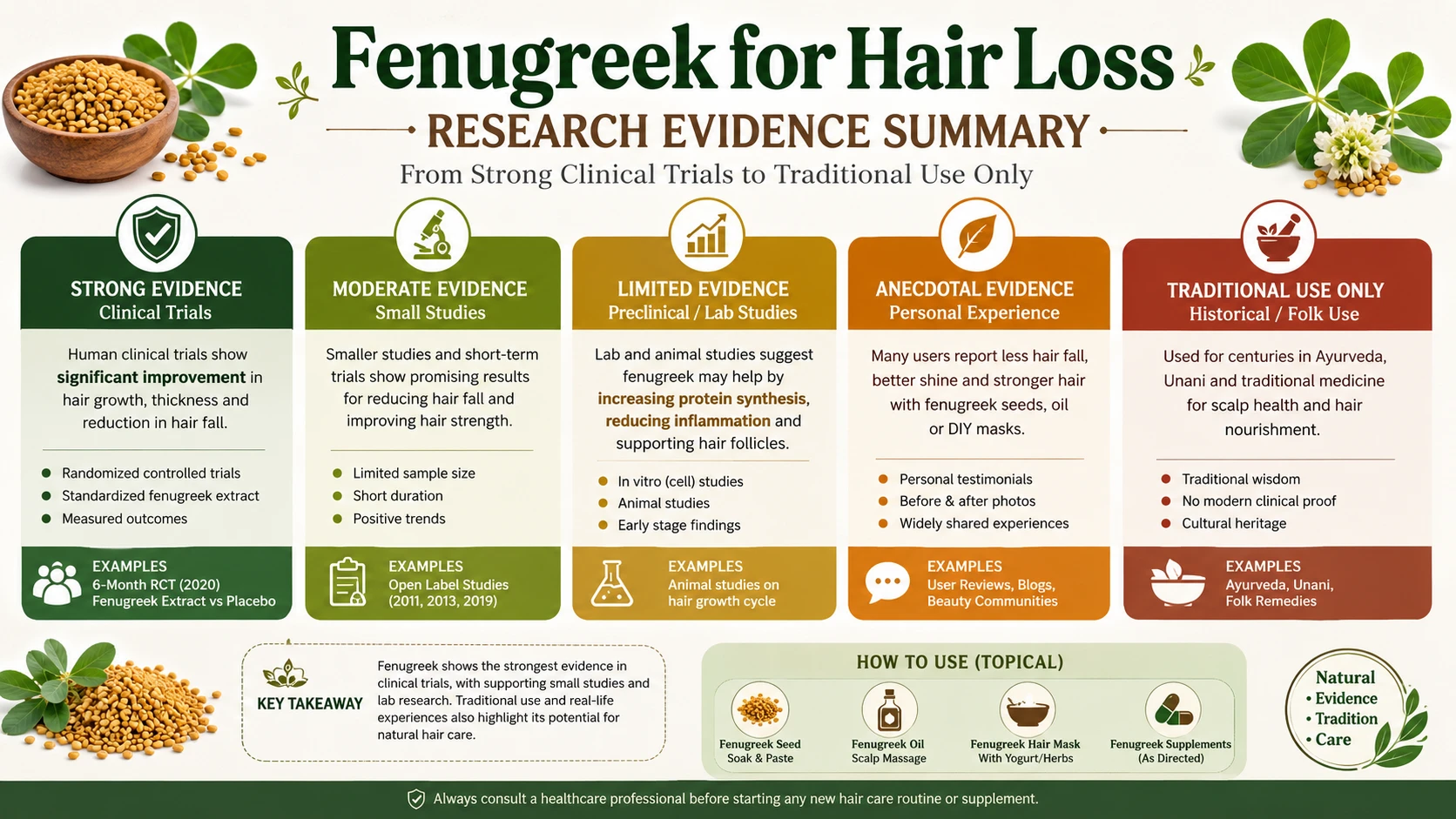
Evidence-strength summary: what’s clinically tested vs. traditionally assumed
10% Fenugreek Extract vs. 2% Minoxidil (Hanwate et al., 2025)
A controlled hair growth activity test found a 10% fenugreek seed extract tonic produced results statistically comparable to 2% minoxidil (p<0.05). Promising, but this was a single formulation study, not a large multi-site human trial — treat it as a strong early signal, not a final verdict.
6-Month Trial, 30 Participants — 25% Density Increase
A clinical trial applying a topical fenugreek extract solution twice daily for six months in participants with mild-to-moderate hair loss recorded a 25% increase in hair density compared to placebo. Encouraging, but a 30-person sample is small by clinical research standards.
Self-Reported Supplement Study — 83% Improvement
A separate study on a fenugreek-based oral supplement found roughly 83% of participants self-reported improved hair volume and thickness. Self-reported outcomes are more subject to expectation bias than objective density measurements, so this counts as preliminary rather than confirmatory.
Anti-Inflammatory & Antifungal Mechanism
Fenugreek’s anti-inflammatory activity (reducing inflammatory mediators including IL-1 and IL-6) and antifungal action against Malassezia yeast are well replicated across laboratory and animal studies. This is the most robustly supported mechanism — directly relevant to dandruff and scalp-inflammation-driven shedding.
Diosgenin and 5-Alpha Reductase Pathway
Multiple phytochemical reviews (including a 2026 cosmetic-ingredient review) describe diosgenin derivatives as proposed regulators of hormonal and inflammatory pathways tied to hair follicle activity. The mechanism is pharmacologically plausible and increasingly documented, but head-to-head human DHT-suppression trials specific to fenugreek remain limited.
“Fenugreek Reverses Grey Hair” / “Regrows Bald Patches”
These are common folk claims with no controlled clinical support. Fenugreek’s antioxidant content may help slow oxidative-stress-driven greying and its nutrient profile supports follicle health generally — but there is no evidence it reverses existing grey hair or regrows follicles that have fully miniaturised or gone dormant for years.
8 Science-Backed Hair Benefits of Fenugreek
Methi dana benefits for hair fall, growth, dandruff, conditioning, and more1Reduces Hair Fall and Excessive Shedding
The combination of DHT-related blocking (diosgenin), scalp inflammation reduction (flavonoids), and improved follicle nutrition (protein, iron, niacin) addresses three of the most common causes of excessive shedding simultaneously. Most people report measurable reduction in hair fall within 4–6 weeks of twice-weekly topical use. Results are most pronounced for shedding related to scalp inflammation, nutritional deficiency, and mild androgenetic alopecia.
2Stimulates Hair Growth in Thinning Areas
By improving scalp blood circulation (nicotinic acid), supporting follicles against DHT-driven miniaturisation (diosgenin), and supplying the protein required for keratin production, fenugreek creates conditions for genuine hair regrowth. The minoxidil-comparable study result is significant — it suggests fenugreek may have a real growth-stimulating effect, not merely a hair-loss-prevention effect. Hair grows approximately 1–1.5cm per month; fenugreek works with that cycle, not against it.
3Controls Dandruff and Scalp Fungal Infections
Dandruff is primarily caused by Malassezia yeast overgrowth combined with scalp inflammation. Fenugreek’s saponins and flavonoids directly target the yeast while anti-inflammatory compounds calm the scalp response. People with chronic dandruff typically report significant improvement within 3–4 weeks of weekly fenugreek paste application. The natural conditioning effect of lecithin simultaneously normalises sebum production — both oily and dry scalps benefit.
4Deep Conditions and Softens Hair
Lecithin, galactomannan fibre, and the protein content make fenugreek a genuinely effective natural conditioner. Unlike silicone-based conditioners that merely coat hair superficially, fenugreek’s proteins can partially penetrate the cortex layer of damaged or high-porosity hair — providing structural conditioning. Hair feels softer, more elastic, and less prone to breakage after treatment. This is particularly noticeable in coarse, South Asian, or African hair textures.
5Strengthens Hair Shaft and Reduces Breakage
Hair breakage (the shaft snapping, as distinct from root shedding) is a structural problem. Fenugreek’s protein content provides amino acids needed to repair and reinforce the keratin structure of the hair shaft. More critically, fenugreek improves hair elasticity — the ability to stretch and return without snapping. Elastic hair survives combing, styling, and environmental stress. Brittle, low-elasticity hair snaps before it can reach its full growth potential.
6Moisturises Dry, Frizzy, and High-Porosity Hair
The galactomannan in fenugreek behaves as a humectant — drawing moisture from the air and locking it into the hair shaft. This is why fenugreek has become especially popular in the natural hair community (4C, 3C, kinky-coily textures) — the galactomannan provides exceptional slip and moisture retention for hair types that struggle to retain moisture. Lecithin seals the cuticle after the galactomannan humectant effect, creating a layered moisture strategy in a single ingredient.
7Delays Premature Greying
Premature greying is driven by oxidative stress on the melanocytes — the pigment-producing cells in hair follicles. Fenugreek’s antioxidant flavonoids (quercetin, kaempferol) protect melanocytes from free radical damage. Additionally, fenugreek supplies iron and Vitamin B6, both linked to melanin synthesis. While fenugreek cannot reverse existing grey hair, consistent use may slow its progression — particularly in cases driven by nutritional deficiency and oxidative stress rather than pure genetics.
8Soothes Itchy, Irritated, and Inflamed Scalp
Scalp itchiness — whether from dryness, product build-up, eczema, psoriasis, or inflammation — creates a chronically stressed follicular environment. Fenugreek’s anti-inflammatory compounds combined with the cooling, mucilaginous texture of the paste on an irritated scalp provide genuine relief. Many users with scalp conditions find fenugreek one of the few natural remedies that calms itching without drying the scalp further — the conditioning compounds work synergistically with the anti-inflammatory ones.
Personalised Fenugreek Hair & Scalp Recipe Finder
Ingredients
Fenugreek Nutrition Facts for Hair Health — What’s in Every Seed
Per 100g raw seeds, sourced from USDA FoodData CentralEvery hair benefit discussed above traces back to fenugreek’s raw nutrient profile. Here is the full breakdown per 100g of raw seeds, so you can see exactly which nutrients are doing the work.
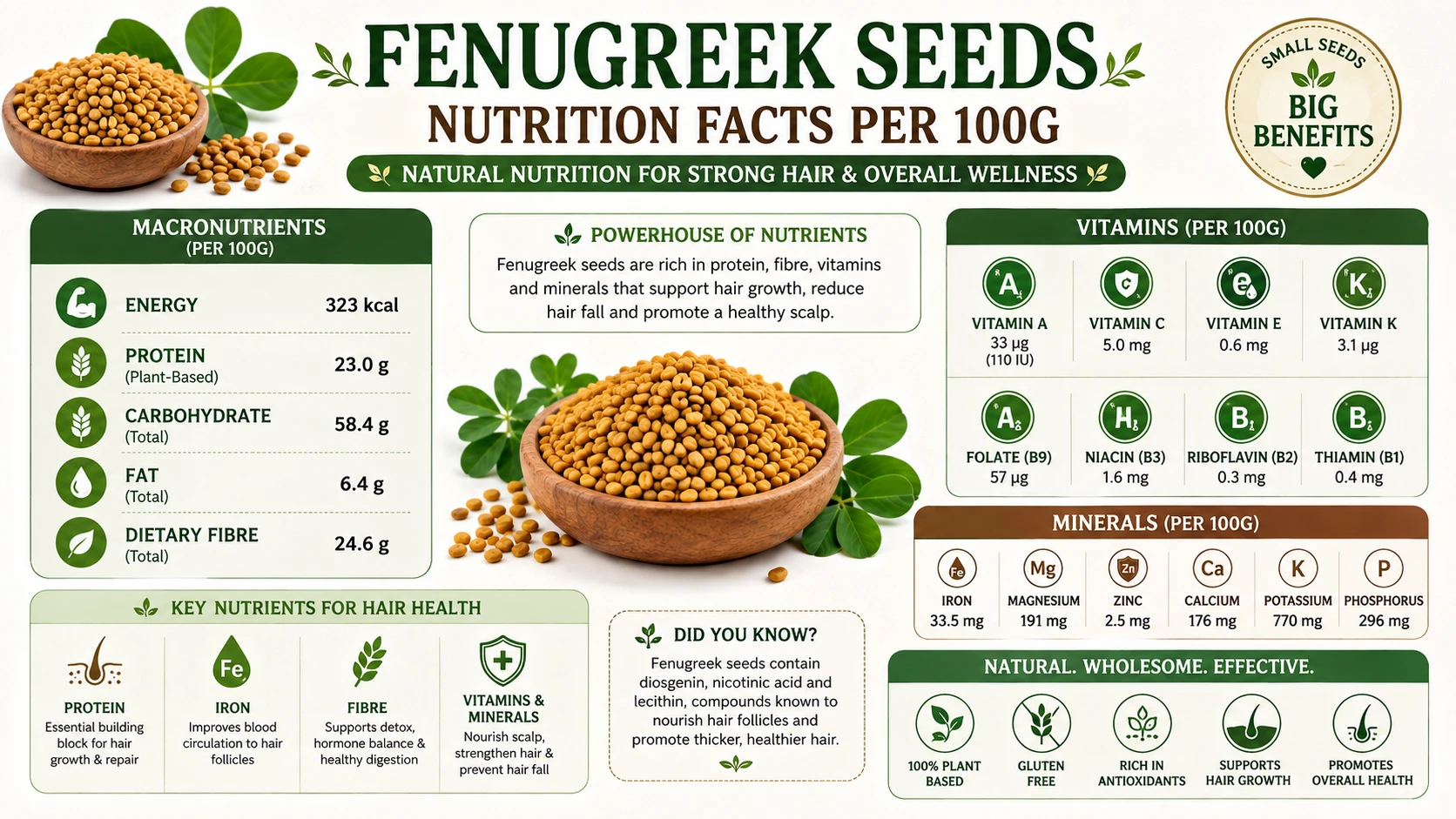
Fenugreek seed nutrition facts per 100g — the raw material behind every hair benefit
| Nutrient | Amount per 100g | Relevance to Hair |
|---|---|---|
| Protein | 23g | Keratin building blocks (lysine, leucine, cysteine) |
| Dietary Fibre | 24.6g | Includes galactomannan — the humectant behind fenugreek’s slip and conditioning |
| Iron | 33.5mg | Follicle oxygenation — among the richest plant sources |
| Folate (B9) | 57µg | Supports cell turnover in fast-growing follicle tissue |
| Niacin (B3) | 1.6mg | Vasodilation — improves scalp blood circulation |
| Vitamin C | 3mg | Antioxidant support, collagen-related scalp health |
| Potassium | 770mg | Cellular hydration balance in scalp tissue |
| Calcium | 176mg | Structural support for hair shaft mineral content |
| Fat (mostly unsaturated) | 6.4g | Carries fat-soluble compounds for topical absorption |
What to Expect — Fenugreek Hair Growth Timeline
Realistic week-by-week results for consistent twice-weekly topical useHair growth is a biological process that cannot be rushed. Fenugreek works cumulatively, not overnight. Here is what consistent use typically produces:
Fenugreek Forms for Hair — Visual Guide
Click any image to view full resolutionFenugreek can be used in multiple forms for hair — each with different preparation, application method, and benefit profile. Understanding which form of methi dana suits which hair concern helps you build a more targeted, effective routine.
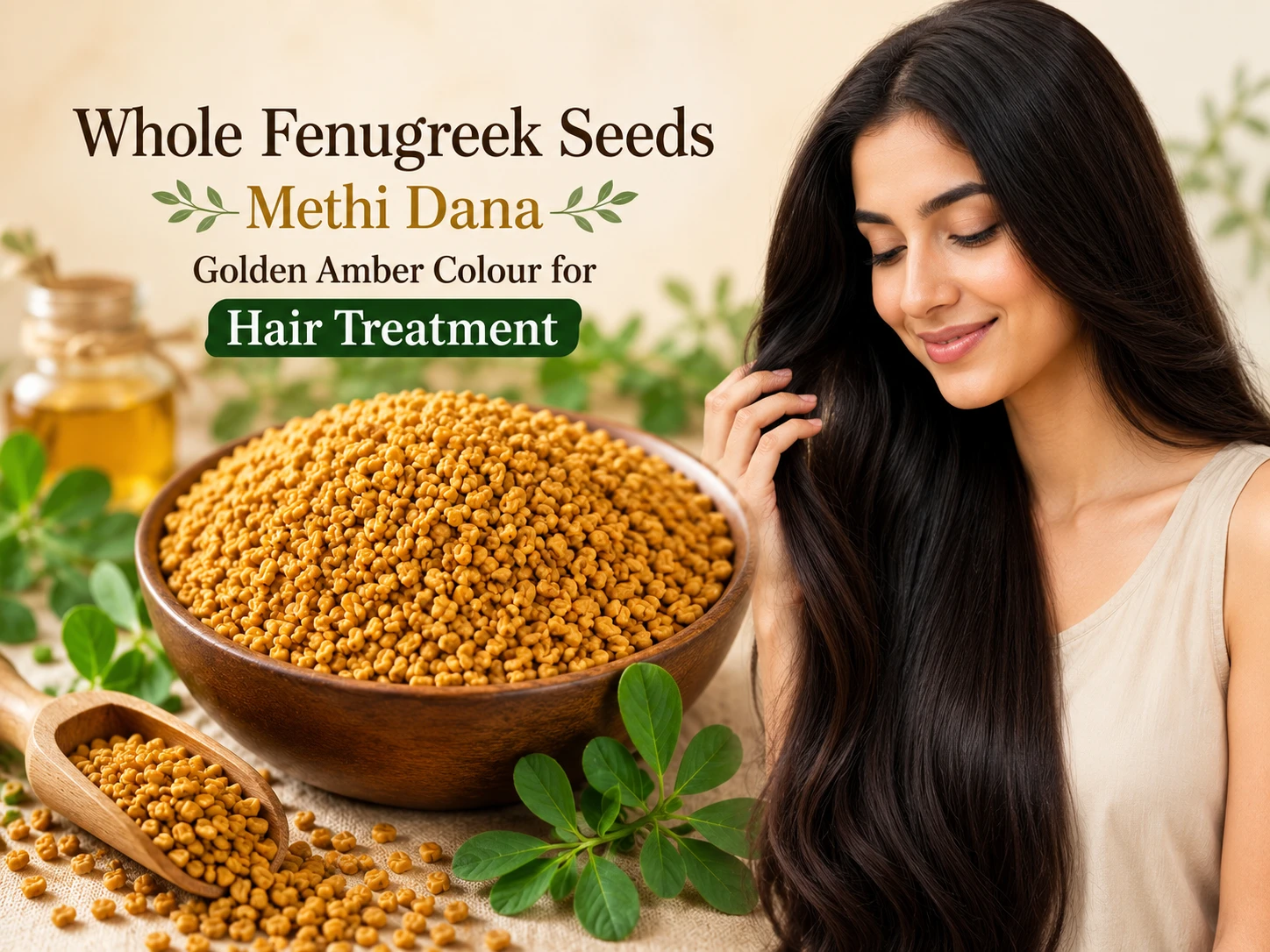
Whole Seeds — Overnight Soak
The base form for every fenugreek hair mask. Soaking 4 tbsp of seeds for 8–12 hours softens them and releases the mucilage that makes the paste slippery and conditioning.
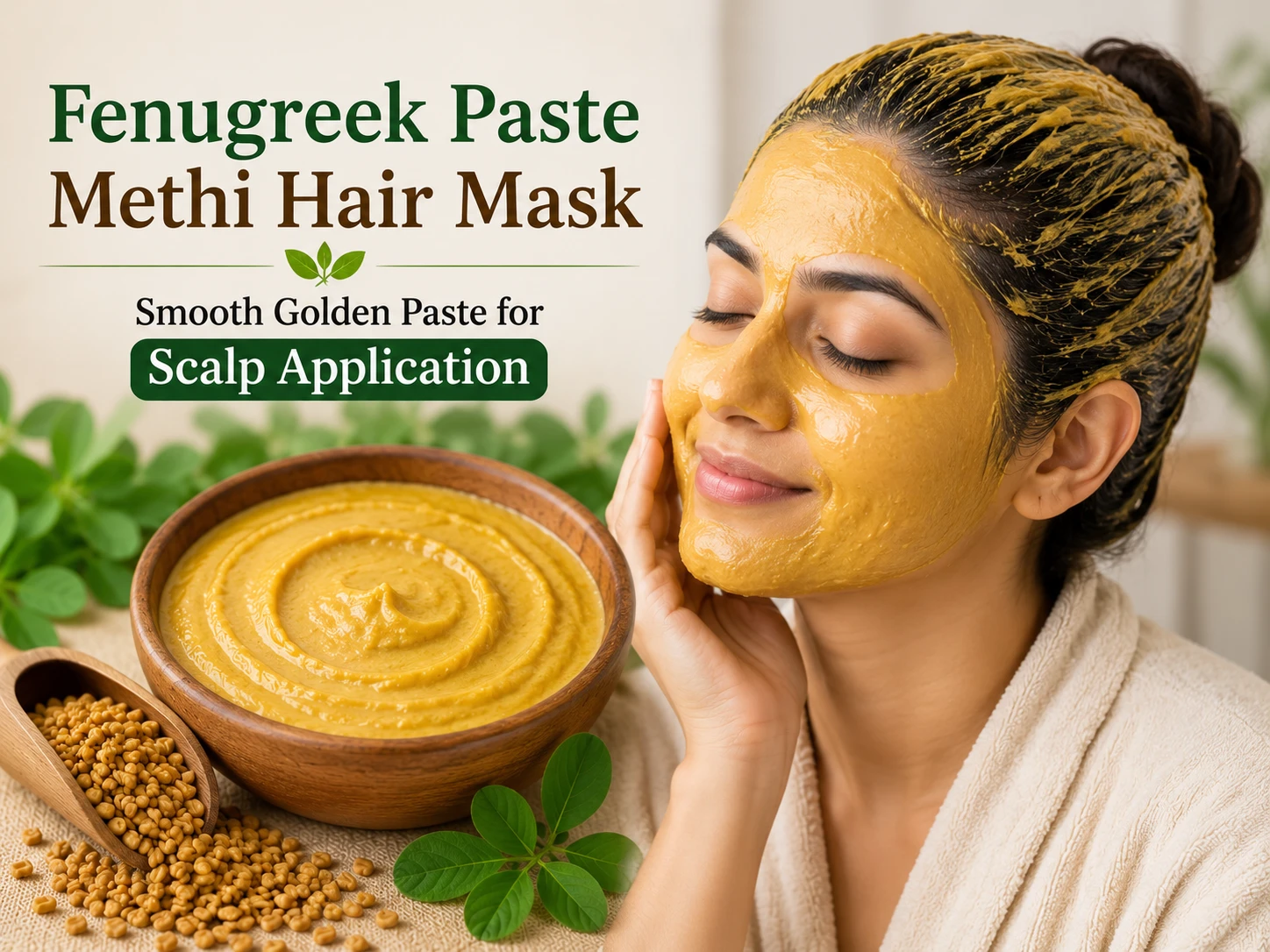
Fenugreek Paste — Hair Mask
Blended soaked seeds form a smooth, slightly slimy paste — the lecithin and galactomannan doing the conditioning work. Best applied directly to the scalp, 1–2 times a week.
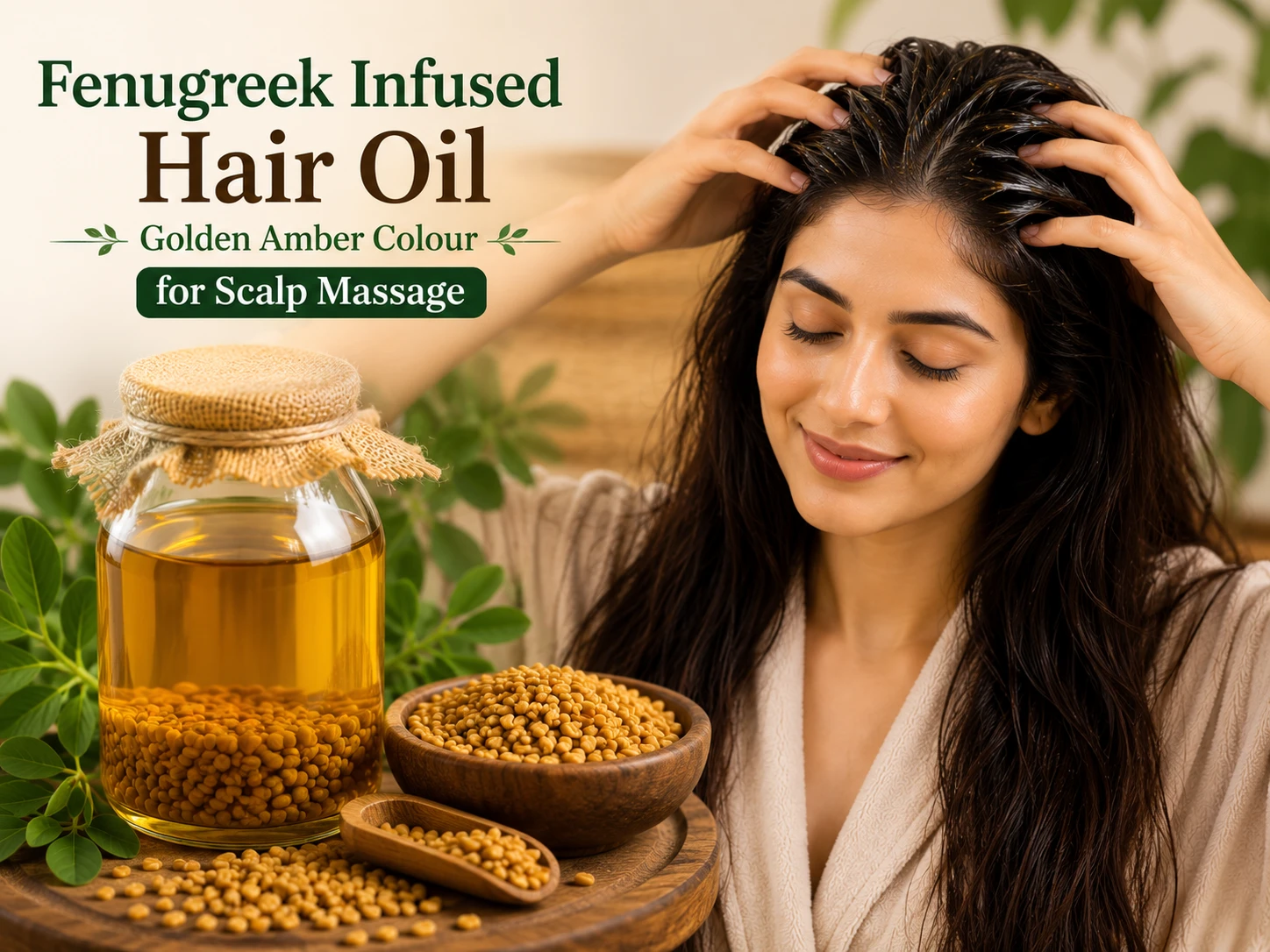
Fenugreek Infused Oil
Seeds infused in coconut or sesame oil for 1–2 weeks. Good for scalp massage 2–3 times a week — improves circulation without the mess of a wash-off paste.
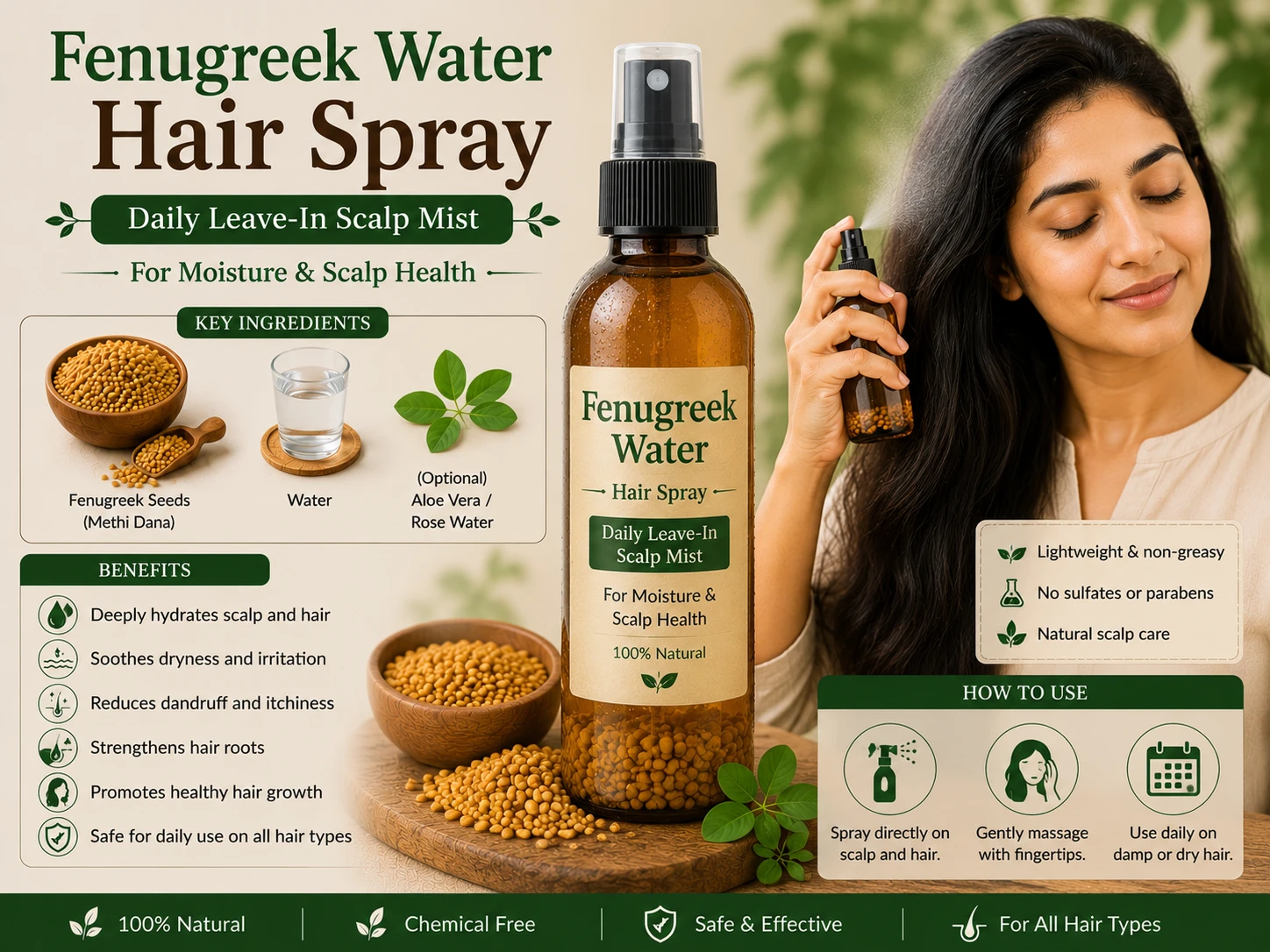
Fenugreek Water Spray
Strained soaking water in a spray bottle — light enough for daily use as a leave-in scalp mist. A low-effort way to keep up consistent fenugreek exposure.
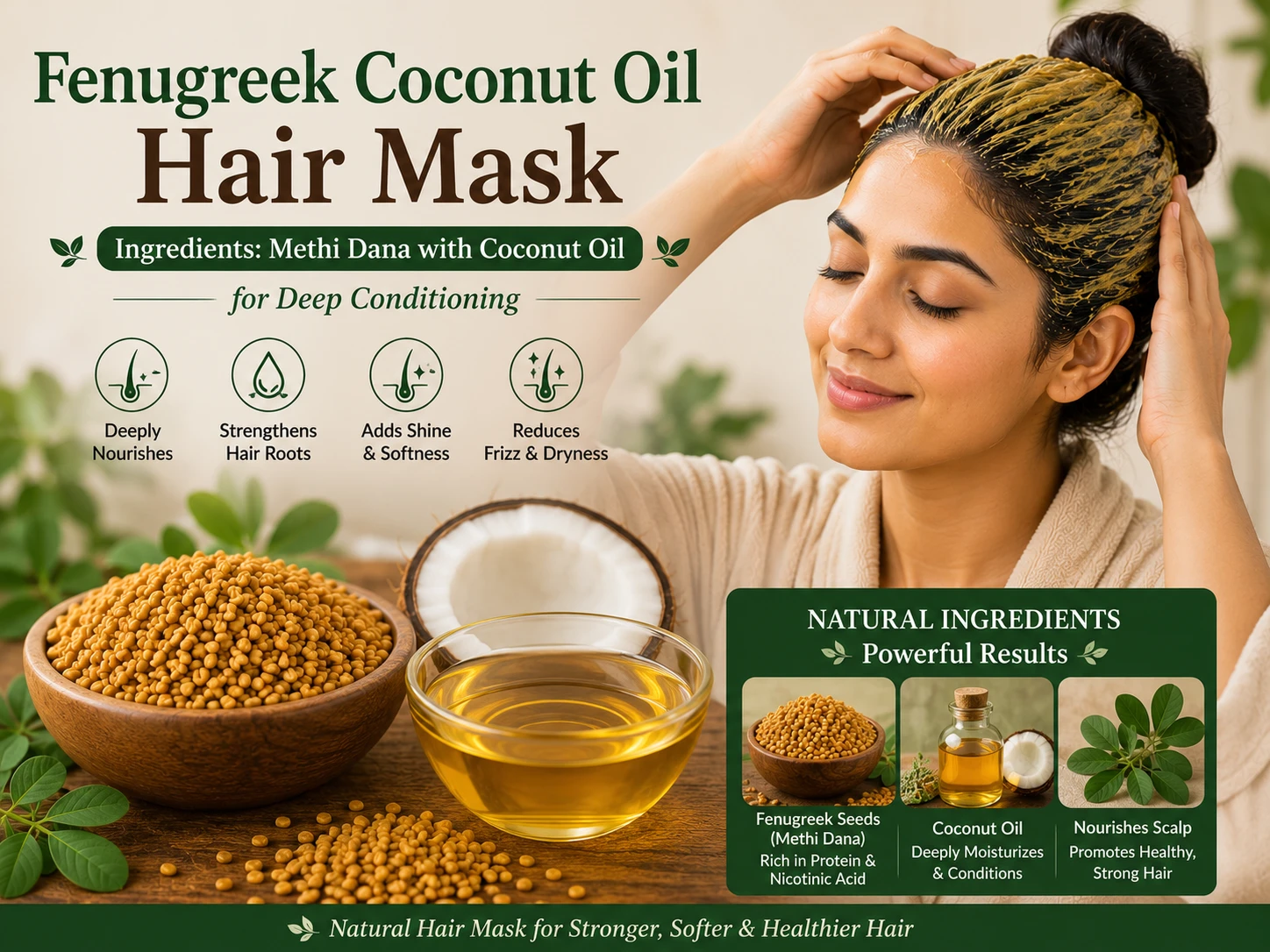
With Coconut Oil
Fenugreek paste combined with coconut oil for deep conditioning — best for dry, frizzy, or high-porosity hair that needs more moisture than a plain paste gives.
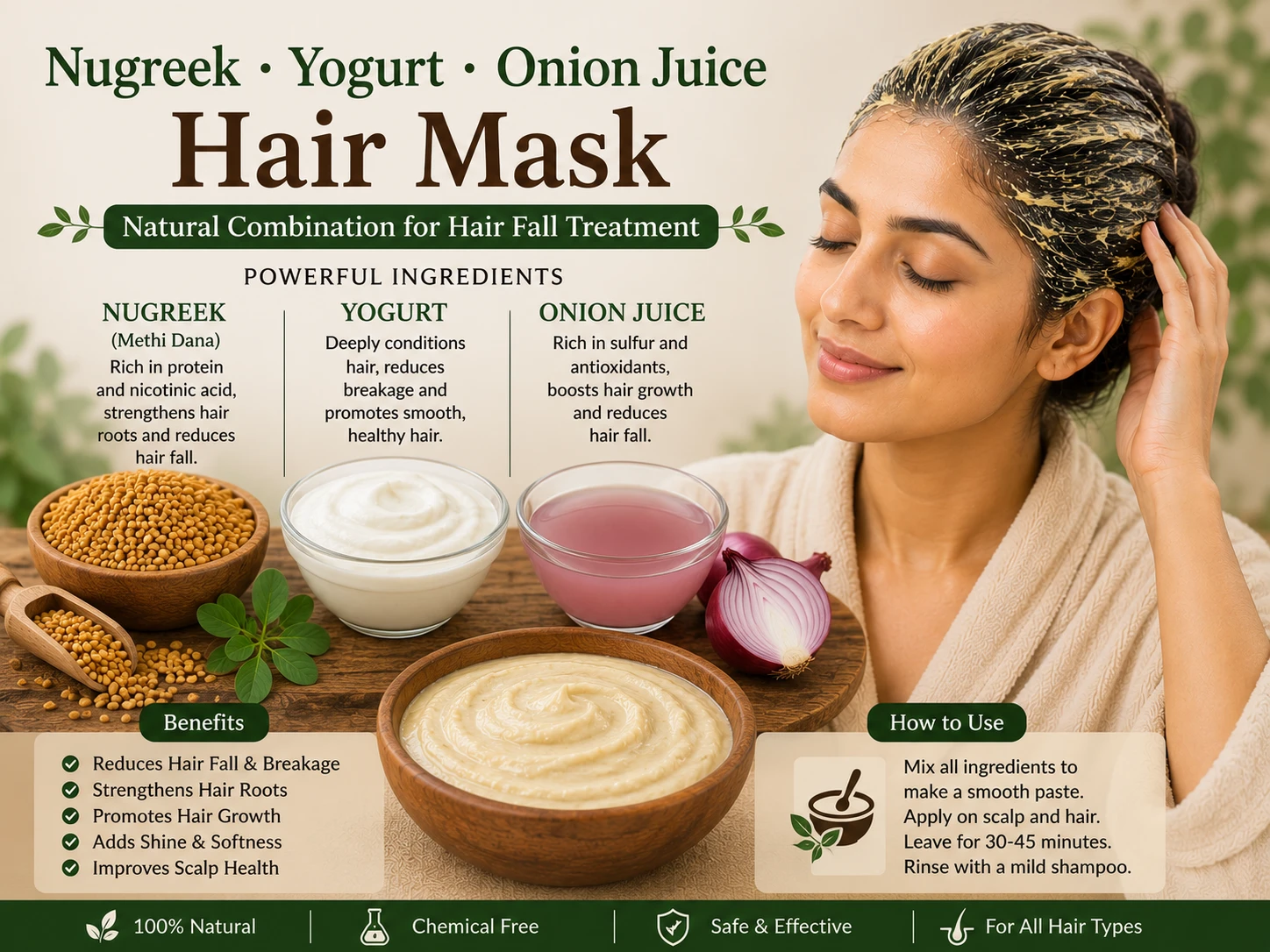
Yogurt + Onion Combo
The strongest combination in this guide — yogurt’s protein plus onion juice’s sulfur alongside fenugreek’s DHT-related activity. Reserved for significant hair fall.
6 DIY Fenugreek Hair Mask Recipes — Full Instructions
From basic paste to advanced onion + fenugreek hair fall treatment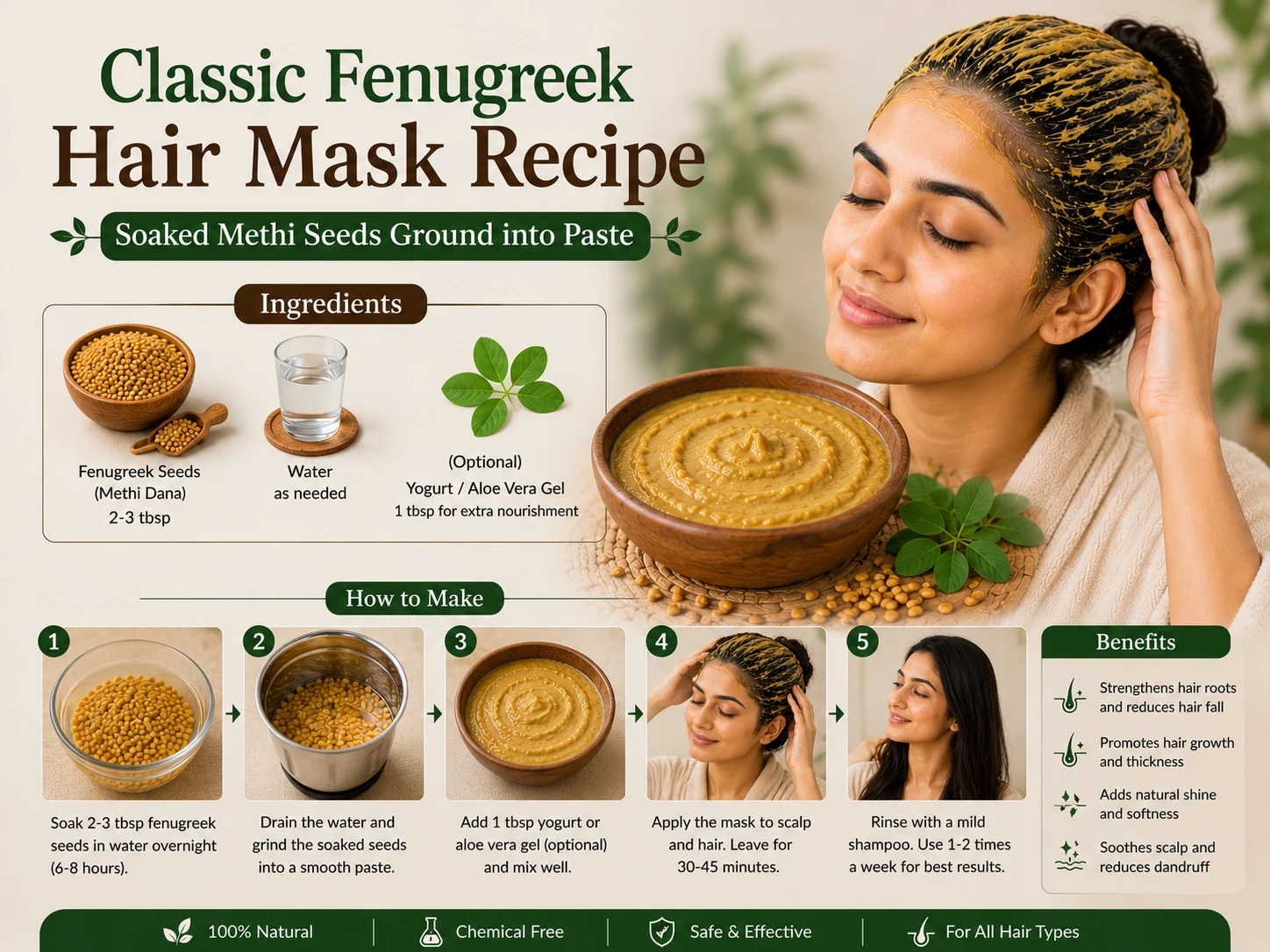
Classic Fenugreek Hair Mask
The simplest and most traditional recipe — suitable for all hair types as a starting point. Best for general hair fall, scalp conditioning, and maintaining hair health.
- 4 tablespoons whole fenugreek seeds (methi dana)
- Water for soaking + 1–2 tbsp for blending
- Optional: 5 drops rosemary essential oil
- Soak seeds in cold water overnight (8–12 hrs)
- Drain all soaking water. Blend with 1–2 tbsp fresh water until smooth paste forms (slightly slimy = correct)
- Section hair, apply paste directly to scalp. Massage 3–5 min in circular motions
- Cover with shower cap. Leave 30–45 min
- Rinse with lukewarm water. Shampoo with sulfate-free shampoo
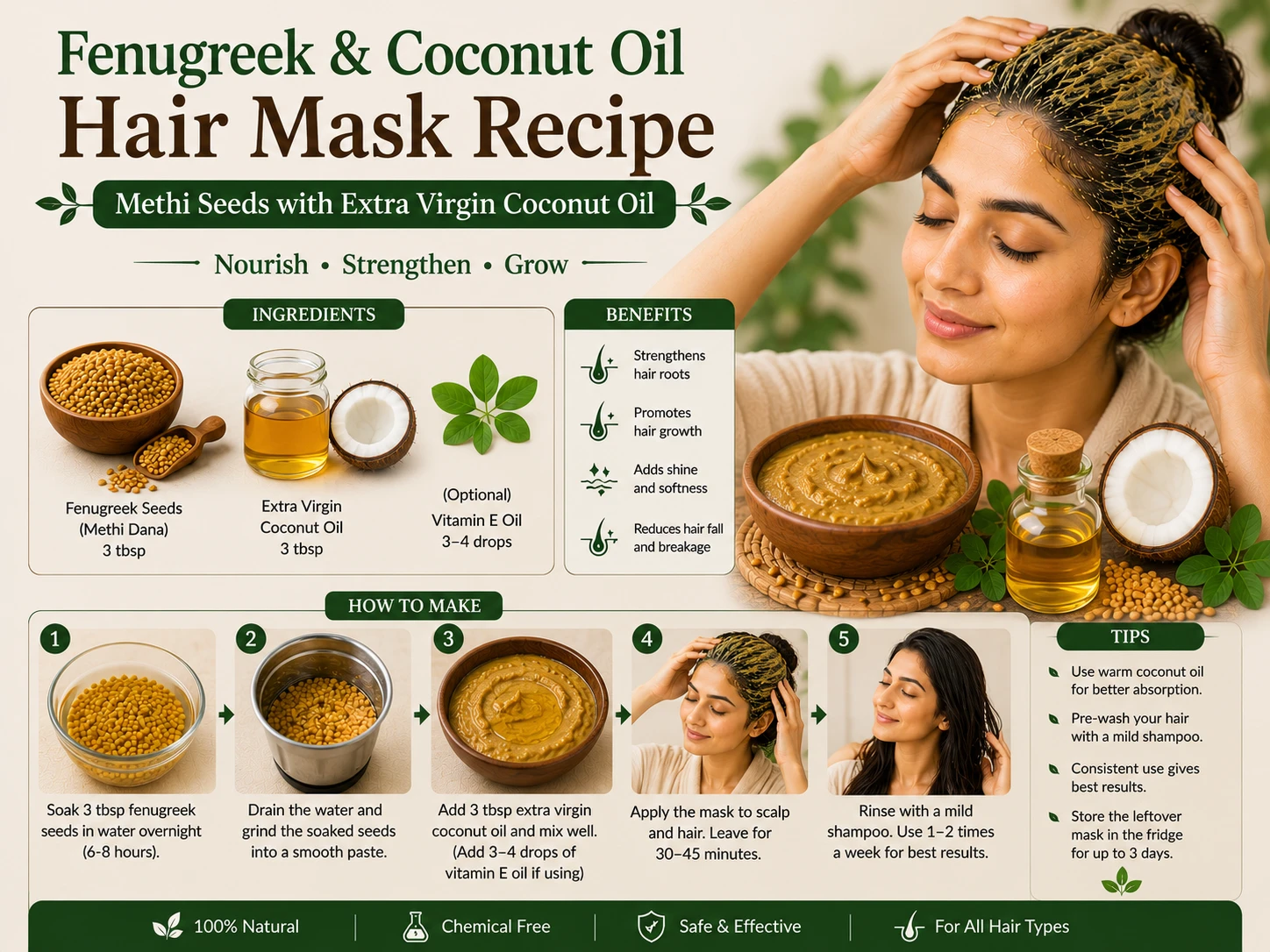
Fenugreek & Coconut Oil Mask
Coconut oil penetrates the hair shaft better than most oils. Combined with fenugreek’s lecithin, this is the most effective recipe for dry hair, breakage, and overall strength. Best for thick, coarse, South Asian, or African hair textures.
- 4 tbsp soaked fenugreek seeds
- 2 tbsp extra virgin coconut oil (warmed to liquid)
- Optional: 1 tsp castor oil for extra thickness
- Blend soaked seeds into fine paste
- Mix in warmed (not hot) coconut oil — paste will loosen slightly
- Apply to scalp and hair lengths, massage well into roots
- Wrap in warm towel over shower cap for heat penetration
- Leave 45–60 min or overnight. Shampoo twice if needed
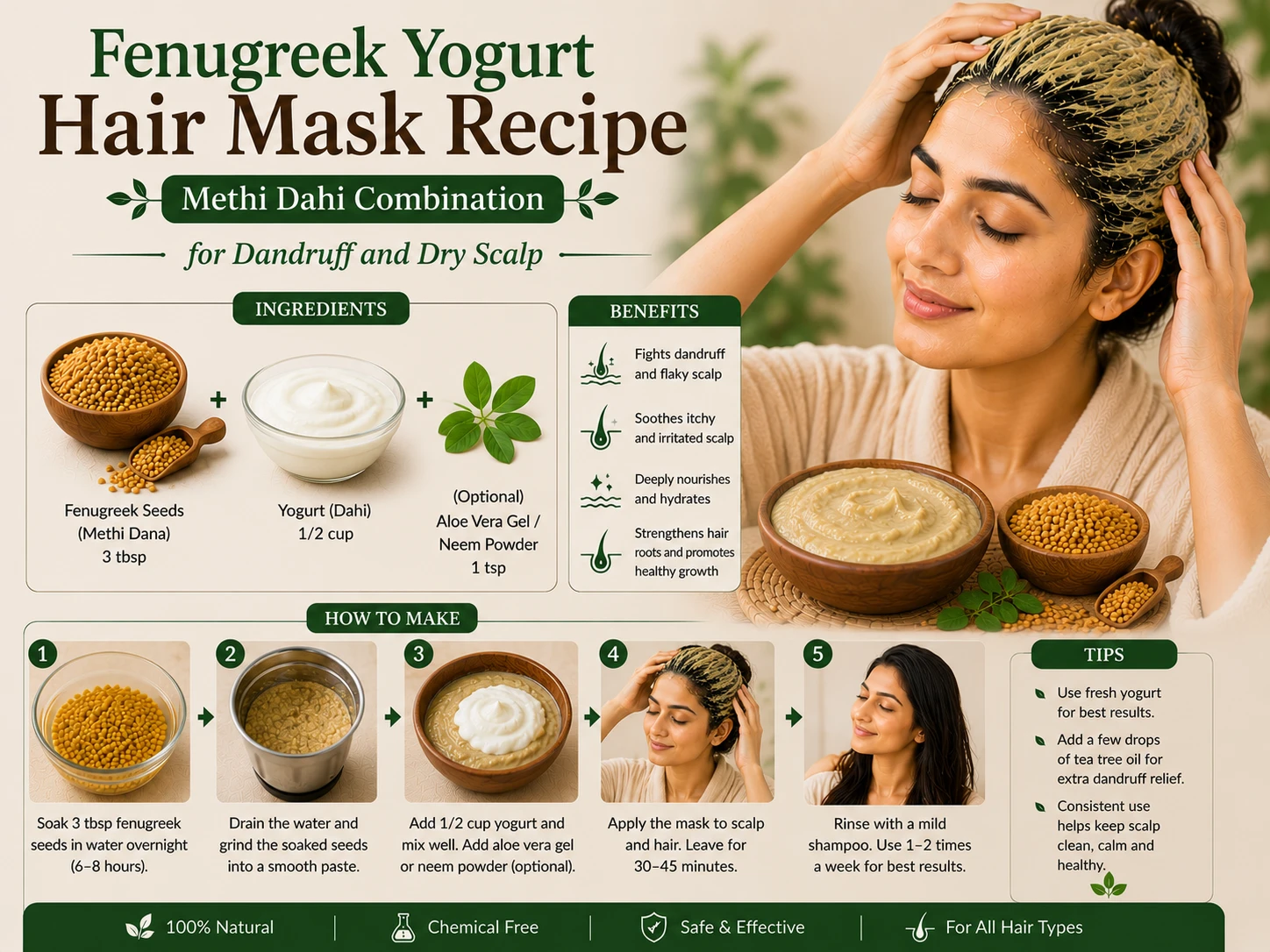
Fenugreek & Yogurt Mask
Yogurt provides lactic acid (gentle scalp exfoliation), probiotics (microbiome balance), and additional protein. Combined with fenugreek’s antifungal saponins, this is the most effective recipe for dandruff, itchy scalp, and oily hair conditions.
- 4 tbsp soaked fenugreek seeds
- 3 tbsp plain full-fat yogurt (dahi)
- Optional: 1 tsp fresh lemon juice
- Blend soaked seeds into smooth paste
- Mix with yogurt until creamy. Add lemon juice if using
- Apply generously to scalp, ensuring full coverage
- Leave exactly 30 min (lactic acid can over-dry beyond 45 min)
- Rinse with cool water. Shampoo gently
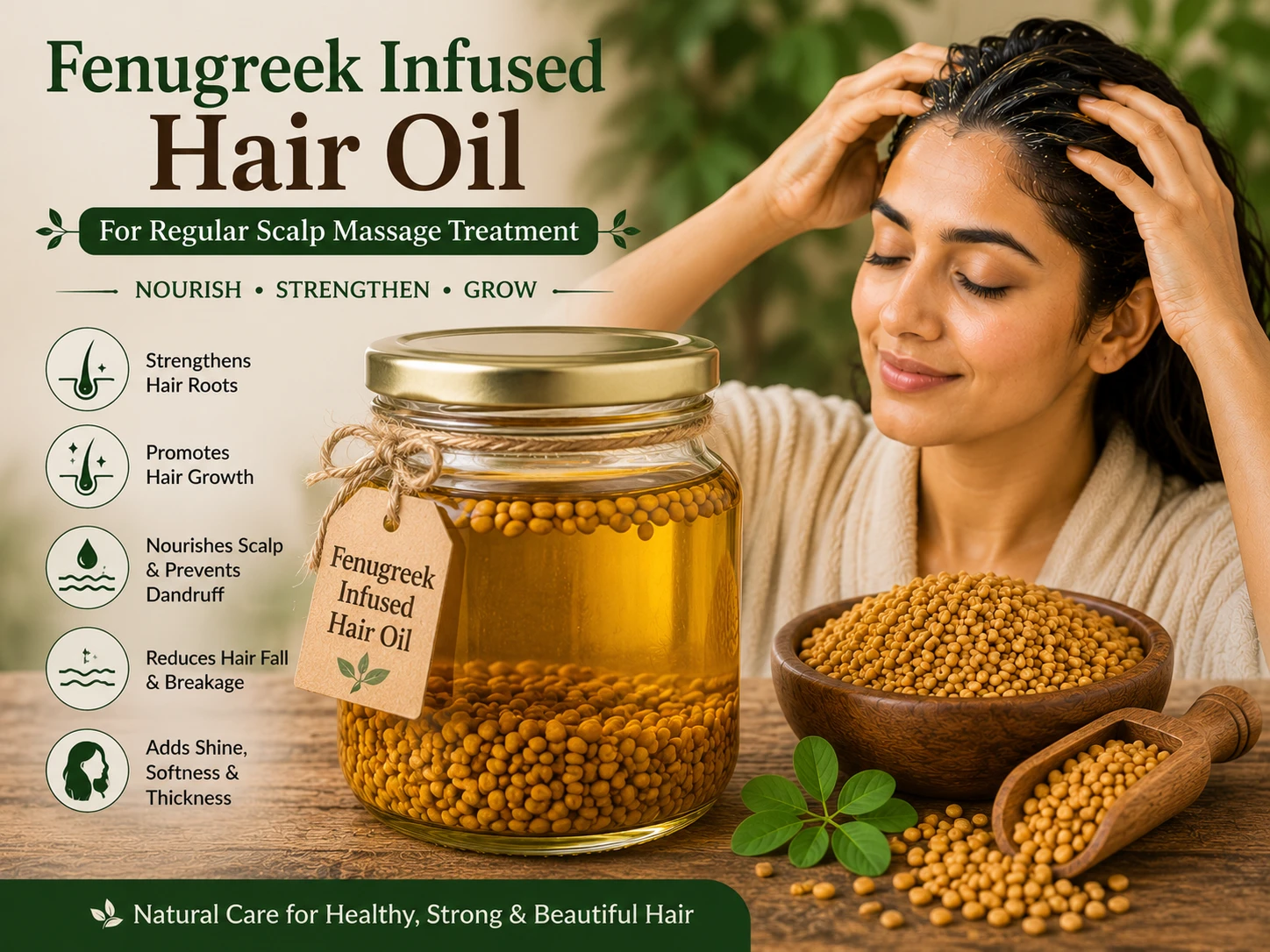
Fenugreek Infused Hair Oil
Most convenient form for regular use — takes time to prepare but lasts weeks. Use for daily scalp massage. Best carrier oils: coconut (penetrating), sesame (traditional South Asian), or mustard (warming — popular in Pakistani hair care).
- 3 tbsp whole fenugreek seeds
- 1 cup carrier oil (coconut, sesame, or mustard)
- Optional: curry leaves, dried amla (amplify growth)
- Place seeds (+ optional ingredients) in clean glass jar
- Cover with carrier oil. Seal jar
- Place in warm, sunny spot for 1–2 weeks. Shake daily
- Strain seeds. Oil turns golden-amber — ready to use
- Warm between palms, massage into scalp for 5–10 min
Fenugreek Water Leave-In Spray
Lightest-weight fenugreek treatment — applied daily without weighing hair down. Ideal for refreshing hair between washes, adding moisture, and maintaining scalp environment between mask sessions. Particularly effective for natural, curly, and coily hair types that need daily moisture.
- 2 tbsp fenugreek seeds
- 2 cups clean cold water
- Clean spray bottle
- Soak seeds in cold water overnight
- Strain water into spray bottle in morning
- Spray onto scalp and hair. Do not rinse
- Style as normal. Refrigerate remaining spray
- Use within 3–4 days. Make fresh batch after
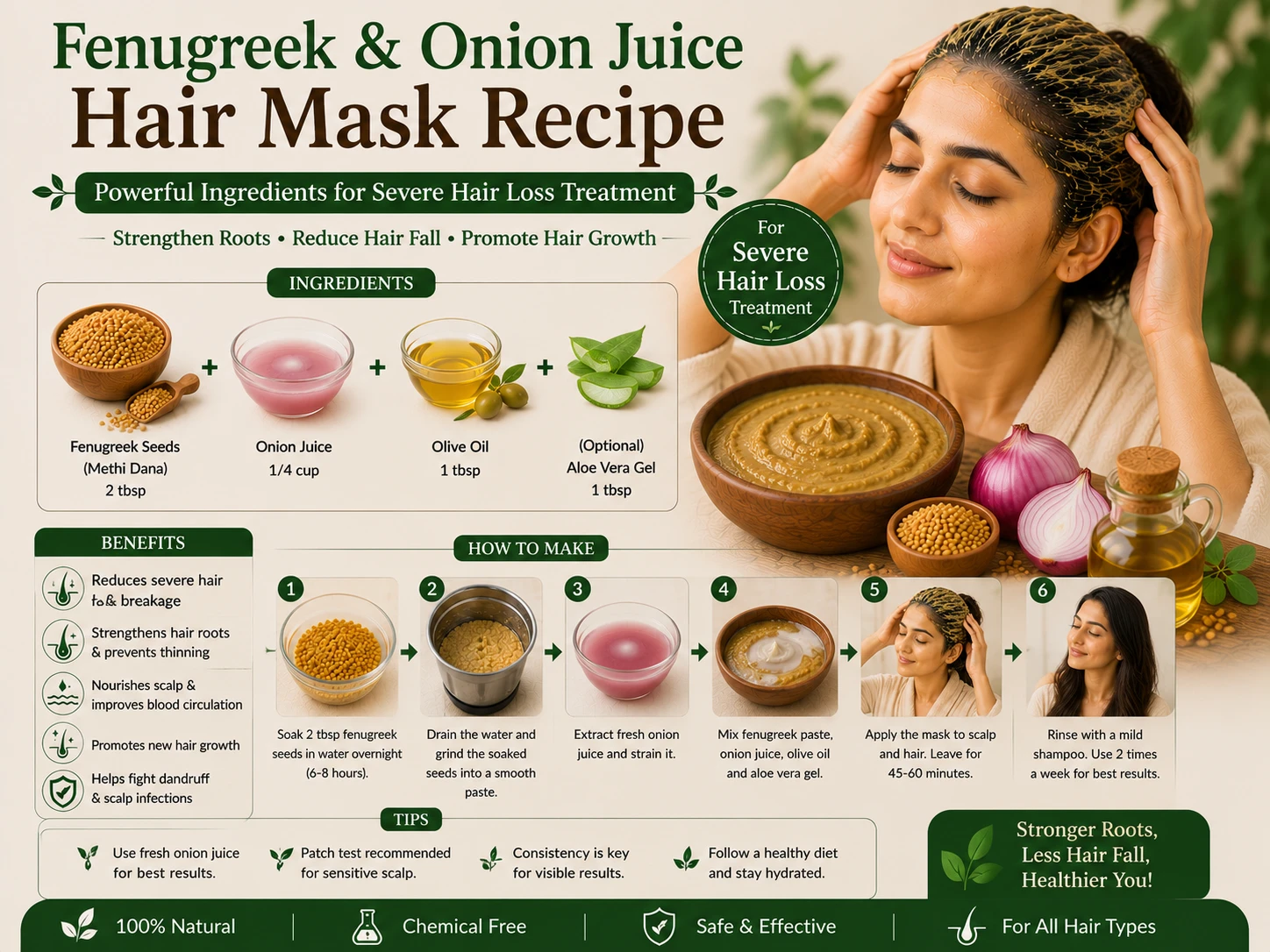
Fenugreek + Onion Juice + Olive Oil
Most potent combination for significant hair loss. Onion juice’s high sulfur supports keratin synthesis; its quercetin is a powerful antioxidant; its catalase enzyme helps neutralise hydrogen peroxide accumulation that contributes to follicle damage and greying. Combined with fenugreek’s DHT-related activity — this is the strongest natural hair loss intervention in this guide.
- 4 tbsp soaked fenugreek seeds
- 2 tbsp fresh onion juice (grate half onion, squeeze through cloth)
- 1 tbsp olive oil
- Optional: 1 tsp lemon juice (reduces onion smell)
- Blend soaked seeds into paste
- Mix in onion juice, olive oil, lemon juice
- Apply to scalp only (not hair lengths — onion dries ends)
- Leave exactly 30 min
- Rinse thoroughly. Shampoo twice. Add rosemary EO to lather to neutralise smell
Methods Comparison — Which Fenugreek Treatment Is Right for You?
Side-by-side comparison of all 6 methods by concern, frequency, and effort| Method | Best For | Frequency | Effort | Hair Type Suitability |
|---|---|---|---|---|
| Classic Paste Mask | General hair fall, all-round maintenance | 1–2x per week | Medium | All hair types ✓ |
| Coconut Oil Mask | Dry hair, breakage, strength, growth | Once per week | Medium | Thick, coarse, dry hair ✓ |
| Yogurt Mask | Dandruff, itchy scalp, oily hair | 1–2x per week | Low | Oily, dandruff-prone ✓ |
| Infused Oil | Regular scalp massage, long-term routine | 2–3x per week | Very Low (once prepared) | All types, especially South Asian ✓ |
| Water Spray | Daily moisture, natural/curly hair | Daily | Very Low | Natural, curly, coily ✓ |
| Onion + Fenugreek | Significant hair loss, thinning | Once per week | High | Any with significant hair loss ✓ |
| Dietary (consumed) | Iron, protein, DHT support from inside | Daily | Very Low | Everyone — amplifies all topical use ✓ |
Fenugreek vs Minoxidil, Onion Juice & Rosemary Oil
How methi dana stacks up against the other most-searched hair loss remediesFenugreek does not exist in a vacuum — most people researching it are also weighing it against pharmaceutical minoxidil or other popular natural remedies. Here is an honest side-by-side comparison.
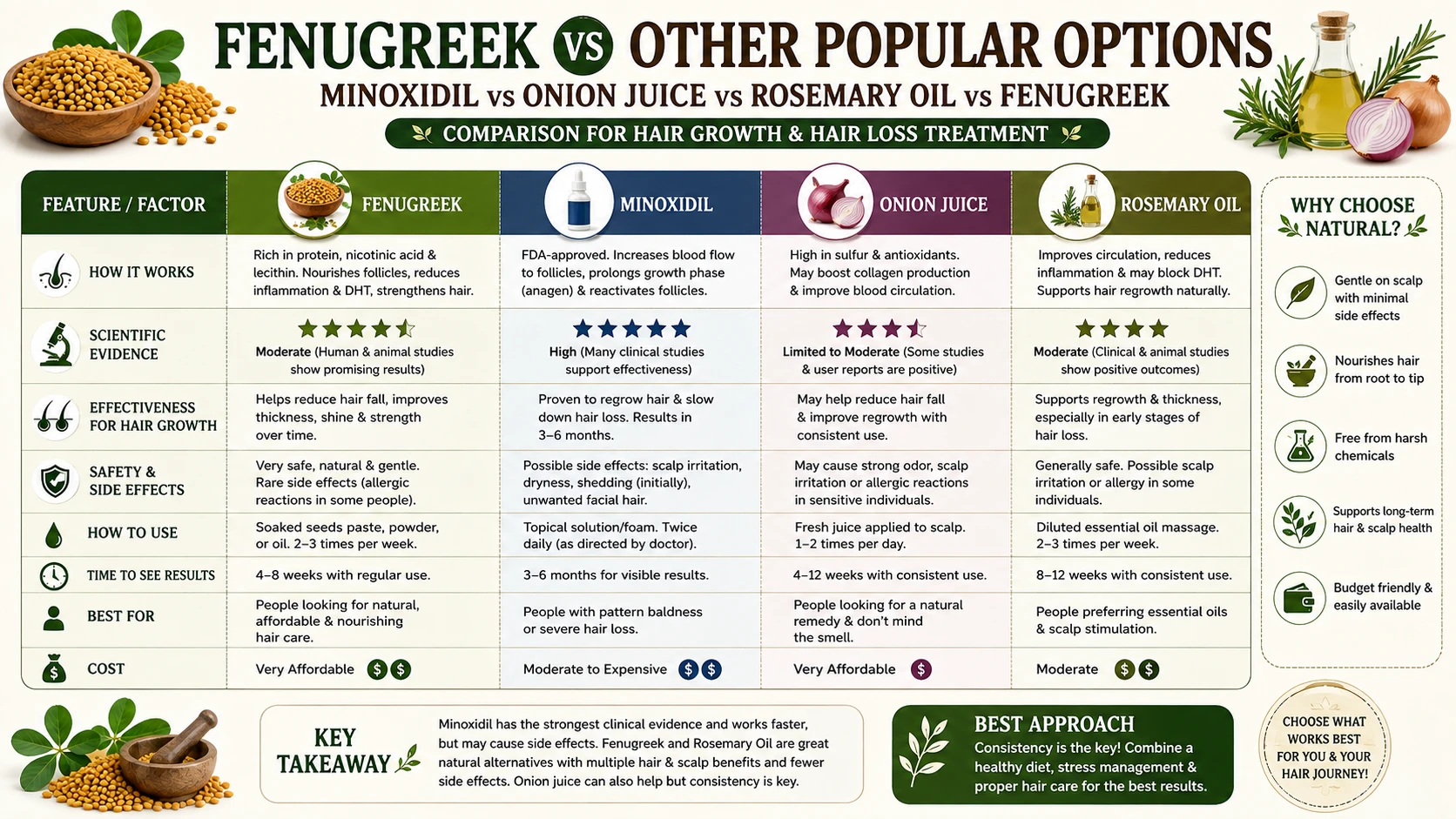
Fenugreek vs. minoxidil, onion juice, and rosemary oil — mechanism, evidence, and cost compared
| Treatment | Primary Mechanism | Evidence Strength | Typical Cost | Side Effects |
|---|---|---|---|---|
| Fenugreek (Methi) | Diosgenin (DHT-related), niacin (circulation), anti-inflammatory | Moderate — small trials, replicated mechanism | Very Low | Allergy risk (legume family), strong smell, mild irritation possible |
| Minoxidil 2–5% | Vasodilator — prolongs anagen phase directly | Strong — large-scale FDA-reviewed trials | Low–Medium | Scalp irritation, initial shedding phase, effect stops if discontinued |
| Onion Juice | Sulfur (keratin synthesis), antioxidant quercetin, catalase | Preliminary — a few small trials | Very Low | Strong odor, possible scalp irritation, eye irritation during application |
| Rosemary Oil | Circulation stimulation, comparable to low-dose minoxidil in one small trial | Moderate — one notable head-to-head trial vs. minoxidil | Low | Scalp irritation if undiluted, photosensitivity in rare cases |
Who Should Avoid Fenugreek for Hair — Full Risk Breakdown
Being honest about risk groups is as important as the benefitsFenugreek is “natural,” but natural does not mean risk-free for everyone. Raw plant material can be more unpredictable on skin and hormones than standardised formulations. Before starting a routine, check whether you fall into one of these groups.
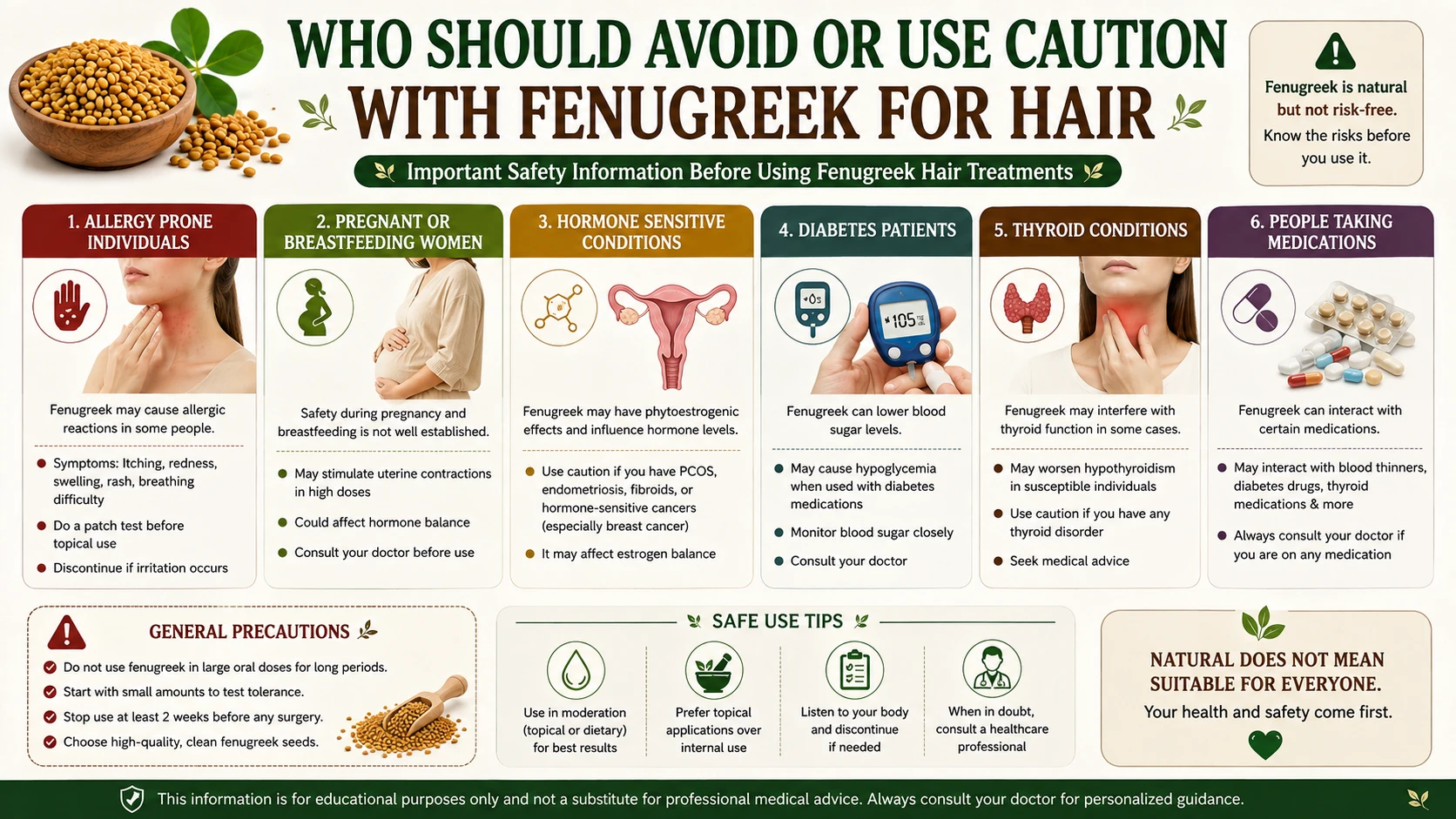
Six groups who should talk to a doctor before starting a fenugreek hair routine
🥜 Legume Allergy (Peanut, Chickpea, Lentil)
Fenugreek belongs to the Fabaceae family — the same botanical family as peanuts, chickpeas, and lentils. People with legume allergies have a meaningfully higher risk of an allergic reaction, even from topical use. A patch test is essential; a known severe legume allergy is a reason to avoid it altogether.
🤰 Pregnant or Breastfeeding
Topical use in small amounts (a scalp mask) is generally considered lower risk, but large therapeutic oral amounts should be avoided — diosgenin has uterine-stimulating properties at higher doses. Always consult a doctor or midwife before adding significant fenugreek to your routine during pregnancy, especially in the first trimester.
⚖️ Hormone-Sensitive Conditions (PCOS, Thyroid)
Fenugreek can interact with hormonal pathways. If you have PCOS, a thyroid disorder, or another hormone-sensitive condition, talk to a doctor before regular use — particularly before consuming it internally rather than just applying it topically.
💊 Blood Sugar Medication or Diabetes
Fenugreek is well documented to lower blood sugar. Combined with diabetes medication, this can push blood sugar down too far. If you take blood-sugar-lowering medication, monitor closely or consult your doctor before consuming fenugreek regularly, even though topical scalp use carries much lower systemic risk.
🩸 Blood-Thinning Medication
Fenugreek may have mild blood-thinning properties of its own. Combined with anticoagulant or antiplatelet medication, this could compound the effect. Anyone on blood thinners should check with their doctor before regular internal use.
🔥 Actively Inflamed or Broken Scalp Skin
On an already inflamed, broken, or eczema-affected scalp, the sticky, occlusive fenugreek paste can trap heat and moisture against the skin, sometimes worsening irritation rather than helping it. Treat active scalp inflammation or infection first, then reintroduce fenugreek once the skin barrier has calmed.
What About Men and Testosterone?
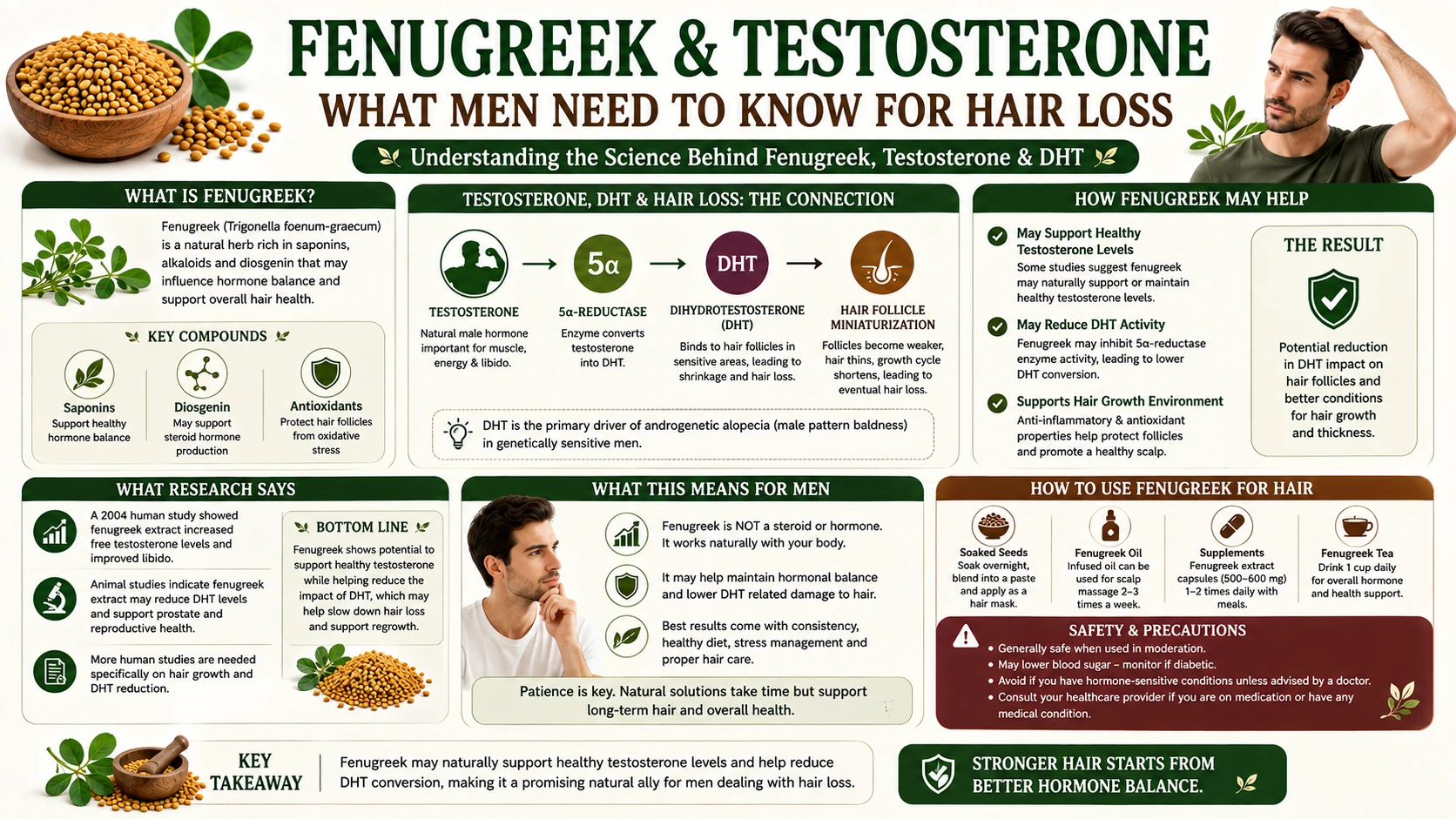
Fenugreek’s separate, dose-dependent effects on testosterone vs. DHT in men
A common point of confusion: fenugreek is sometimes marketed as a testosterone-support supplement and as a DHT-related hair remedy. These are related but distinct mechanisms. At typical doses, some small studies suggest fenugreek extract may modestly support testosterone levels within a healthy range — this is separate from diosgenin’s proposed action on the 5-alpha reductase enzyme that converts testosterone into DHT. In other words, fenugreek is not trying to suppress testosterone to help hair; it works (where it works) through the conversion pathway, not through lowering the hormone itself. Very high, unsupervised doses are where hormonal imbalance risk increases — stick to culinary or standard topical amounts unless a doctor has advised otherwise.
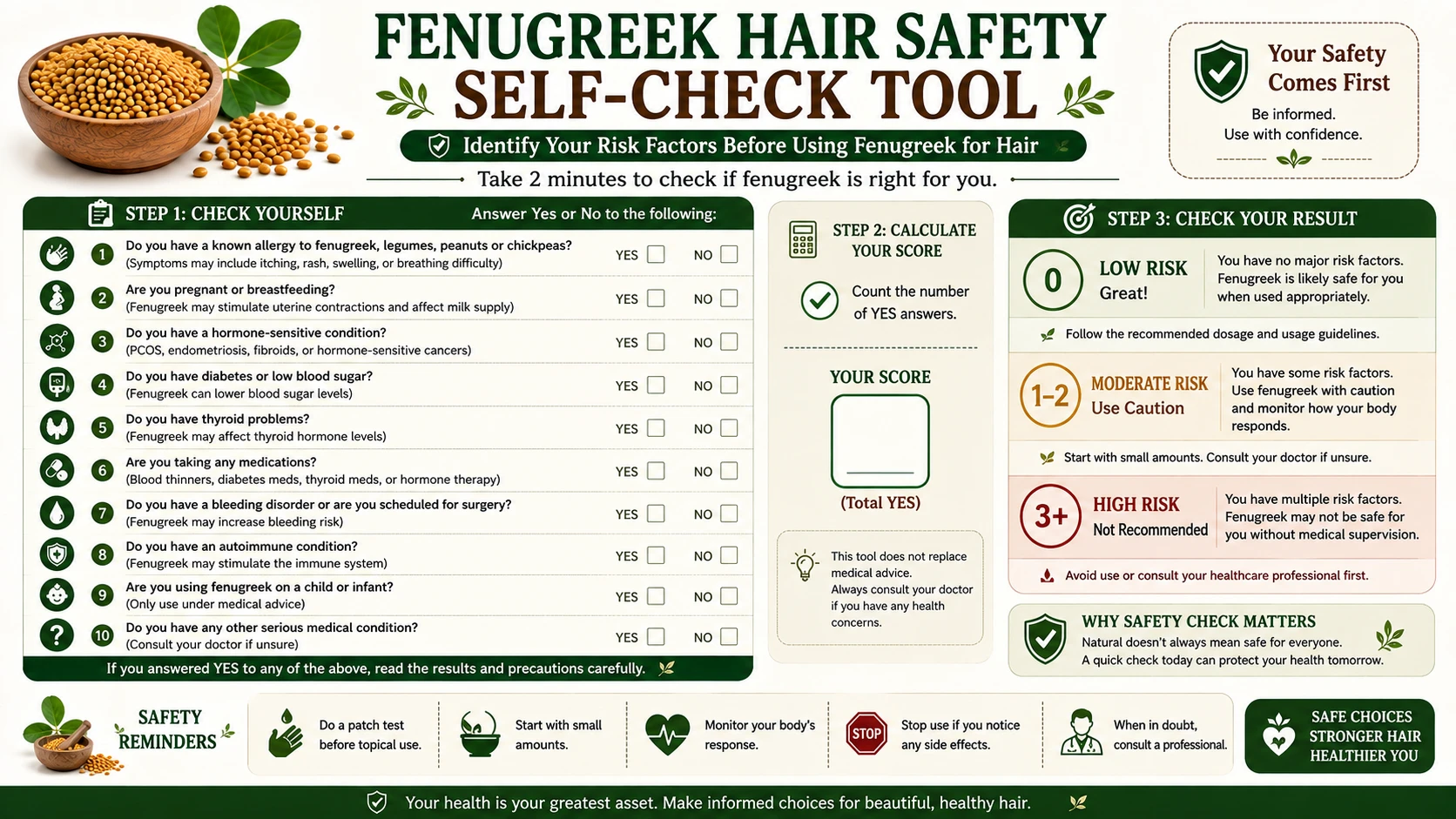
Fenugreek Hair Safety Self-Check
What Fenugreek Cannot Do for Hair — Honest Limitations
Realistic expectations and when to seek professional adviceBeing honest about limitations is as important as the benefits. Fenugreek is genuinely useful within its domain — but it has clear boundaries:
- ❌ Cannot reverse advanced genetic baldness. If follicles have been dormant for years and have fully miniaturised, no natural remedy — including fenugreek — can reactivate them. Fenugreek works best as prevention and early intervention.
- ❌ Cannot work overnight. Hair grows approximately 1–1.5cm per month. Any change will take 4–8 weeks minimum to become visible. Patience is not optional.
- ❌ Cannot treat alopecia areata. This autoimmune condition (immune system attacking follicles) requires medical treatment. Fenugreek may support the scalp environment as an adjunct, but is not a standalone solution.
- ❌ Cannot replace medical treatment for severe hair loss. Sudden, dramatic, or patchy hair loss warrants a dermatologist visit before relying on home remedies alone.
- ❌ Cannot compensate for severely poor nutrition or extreme hormonal disorders. Fenugreek improves the hair environment but cannot override chronic malnutrition, untreated thyroid disease, or severe PCOS without systemic treatment.
Fenugreek for Hair — 14 Frequently Asked Questions
Featured snippet-optimised answers to the most searched hair questionsThe evidence is promising but still limited. Fenugreek contains diosgenin (linked to blocking DHT — the primary driver of pattern hair loss), nicotinic acid (improves scalp blood circulation), protein and amino acids (keratin building blocks), and iron (supports follicle oxygenation). A 10% fenugreek extract hair tonic showed results comparable to 2% minoxidil in one controlled test, and a separate 6-month, 30-person trial found a 25% increase in hair density versus placebo. Sample sizes remain small, so treat it as a genuinely promising complementary option rather than a proven cure.
Most people notice reduced hair fall within 4–6 weeks of consistent use (1–2 treatments per week). Visible improvement in hair thickness and new growth takes 8–12 weeks minimum. Hair grows approximately 1–1.5cm per month, so results are cumulative and require patience. Fenugreek does not produce results overnight.
Fenugreek seeds contain diosgenin, a steroidal saponin whose derivatives are proposed to influence hormonal and inflammatory pathways involved in hair follicle regulation, including a possible mild 5-alpha reductase inhibiting effect. DHT (dihydrotestosterone) is the primary driver of androgenetic alopecia, progressively shrinking hair follicles until they stop producing hair. Fenugreek’s effect is considerably milder than pharmaceutical finasteride and is best used as a supportive, cumulative habit rather than a primary DHT-management tool.
For significant hair fall, the fenugreek + onion juice + olive oil mask is the most effective. Onion juice provides sulfur for keratin synthesis, quercetin as an antioxidant, and catalase enzyme to neutralise hydrogen peroxide. Combined with fenugreek’s DHT-related activity (diosgenin) and circulation boosting (nicotinic acid), this addresses hair loss from multiple angles simultaneously. Apply to scalp only, leave 30 minutes, shampoo twice.
The paste mask should be limited to 1–2 times per week — daily mask application can over-saturate the scalp. The fenugreek water spray or rinse can be used daily as it is very lightweight. The infused oil can be used for scalp massage 2–3 times per week. Dietary consumption (fenugreek water, seeds in food) can be daily without issue for most people.
Fenugreek is called methi dana (میتھی دانہ) in Urdu. For hair use, it is referred to as baalon ke liye methi (بالوں کے لیے میتھی). It is widely available in Pakistani grocery stores and kiryana shops in the spices section. In Arab culture, the same seeds are called الحلبة (al-hulba or helba) and have been used for hair in Egyptian, Yemeni, and Levantine traditions for centuries.
Yes — particularly for early-stage male pattern hair loss (androgenetic alopecia). Diosgenin’s proposed 5-alpha reductase interaction may help slow DHT-driven follicle shrinkage. Nicotinic acid improves scalp circulation to dormant follicles. Results are modest compared to pharmaceutical minoxidil or finasteride, but fenugreek carries a low side-effect profile and is suitable as a natural preventive treatment or early intervention for men noticing a receding hairline or crown thinning.
Yes. Fenugreek powder can be used directly — mix with warm water to form a paste without overnight soaking. It is faster and more convenient. However, pre-ground powder loses its volatile compounds faster than whole seeds. Use fresh powder (not older than 3 months), and store in an airtight container away from heat and light. For best results, buy whole seeds and grind fresh just before use.
Topical use of fenugreek in small amounts (hair mask applied to scalp) is generally considered low risk during pregnancy. Large therapeutic amounts consumed orally should be avoided — diosgenin has uterine-stimulating properties at high doses. Always consult your doctor or midwife before adding significant amounts of fenugreek to your diet during pregnancy, especially in the first trimester.
The maple-like smell comes from sotolon — an aromatic compound present in fenugreek seeds that is also responsible for the scent of maple syrup and burnt caramel. This is a natural, harmless characteristic of fenugreek. The smell intensifies when seeds are soaked, ground, or heated. It fades as the hair dries. Adding rosemary or peppermint essential oil to the mask significantly reduces the maple smell without affecting the treatment’s effectiveness.
No reliable clinical evidence supports fenugreek increasing breast size. The myth likely comes from fenugreek’s traditional use as a galactagogue (a substance believed to increase breast milk supply in nursing mothers) and its mild phytoestrogen-like compounds. These are different mechanisms from permanent breast tissue growth, and no controlled studies confirm this specific claim.
Some small studies suggest fenugreek extract may modestly support healthy testosterone levels within normal range at typical doses — this is different from lowering DHT. For hair loss specifically, fenugreek’s proposed benefit comes from diosgenin’s interaction with the 5-alpha reductase enzyme, not from suppressing testosterone. Very high, unsupervised doses could disrupt hormonal balance, so men with hormone-sensitive conditions should consult a doctor first.
Topical use in small amounts (a scalp mask) is generally considered lower risk, but anyone with PCOS, thyroid disorders, or another hormone-sensitive condition should talk to a doctor before regular use — especially oral consumption — since fenugreek can interact with hormonal and blood-sugar pathways. Use the safety self-check tool above for a quick personalised read.
Evidence is mixed but growing. A 10% fenugreek extract tonic performed comparably to 2% minoxidil in one controlled test. A separate 6-month, 30-person trial found a 25% increase in hair density versus placebo. A different self-reported study found about 83% of participants noticed improved hair volume and thickness. Most trials remain small and short in duration, so fenugreek is best viewed as a promising complementary option — see the full evidence review above for the study-by-study breakdown.
About the Author & Reviewer
Health & nutrition writing, medically reviewedDr. Laura Harrington covers evidence-based natural health and hair care for CardamomNectar, translating clinical research on ingredients like fenugreek into practical, honestly-caveated guides. This article was updated in August 2026 to reflect a fuller, more conservative reading of the current evidence base. Read full bio →
Dr. Sarah Mitchell reviewed this guide for clinical accuracy of the safety guidance, dosage, and risk-group callouts — including the pregnancy, PCOS, and allergy notes in the safety self-check tool — to make sure the evidence review and self-check results reflect current, conservative medical guidance.
More Fenugreek Guides — Complete Fenugreek Series
Deepen your knowledge: nutrition, Arabic names, taste, and health benefitsFenugreek Water Benefits
Complete guide to drinking fenugreek water daily
Fenugreek Sprouts Benefits
Grow at home in 5 days — more bioavailable than seeds
Fenugreek in Arabic — الحلبة
All regional Arabic names, pronunciation, and uses
What Does Fenugreek Taste Like?
Flavor profile, bitterness guide, and food uses
Fenugreek vs Fennel Seeds
7 key differences — they are not the same
Fenugreek — Complete Guide
Everything about methi dana: nutrition, uses, and more