Fenugreek Sprouts Benefits: Nutrition, Uses and How to Grow Them
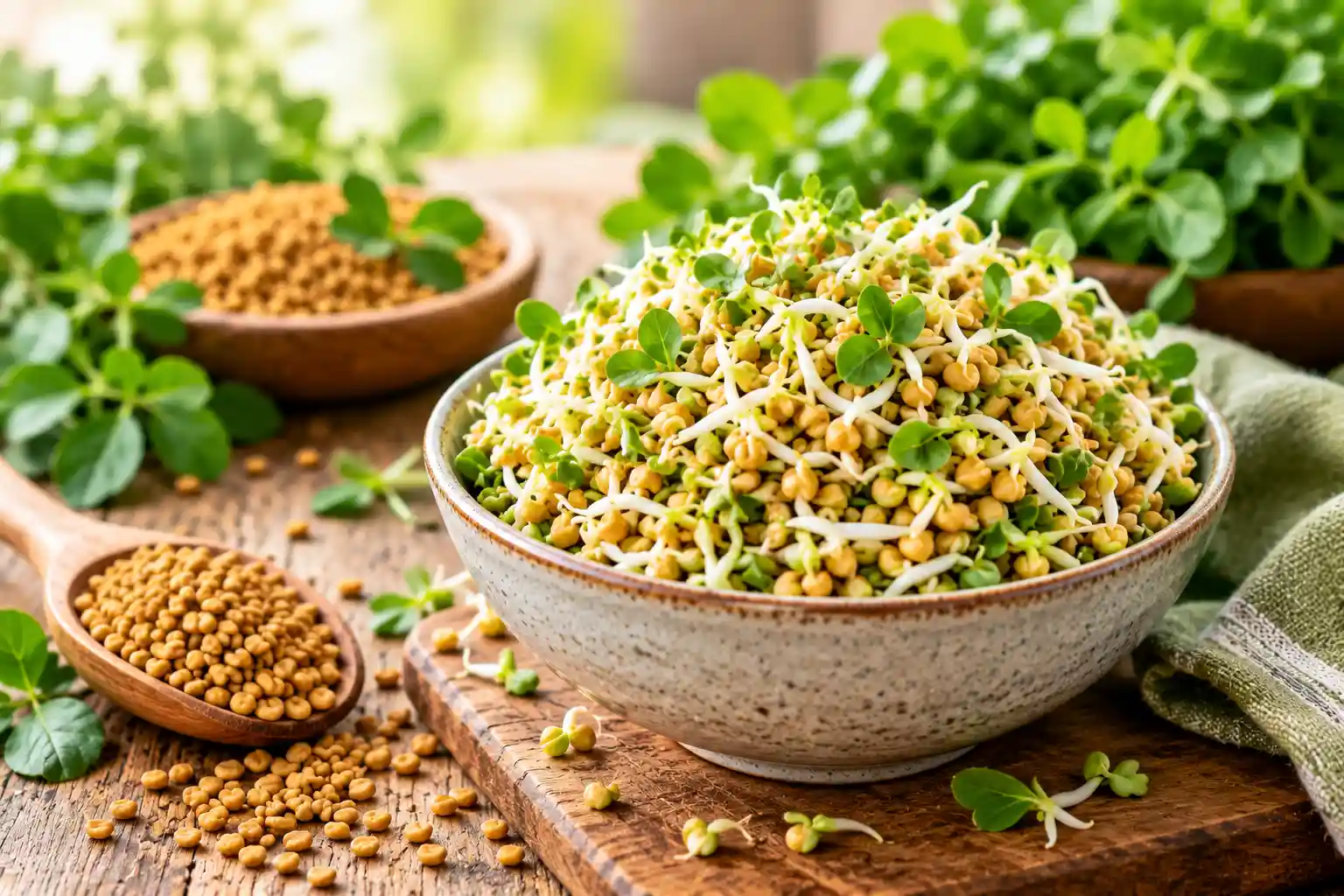
Fenugreek sprouts (methi ankur) are germinated fenugreek seeds eaten at 3 to 5 days. Here is what the research says about their nutrition and benefits, how they compare with dry seeds, how to grow them safely at home, and who should cook them instead of eating them raw.


⚡ Quick Answer: Are Fenugreek Sprouts Good for You?
Yes, for most healthy adults. Fenugreek sprouts are fenugreek seeds (Trigonella foenum-graecum) germinated for 3 to 5 days. They are milder and easier to digest than dry seeds and supply fibre, protein, vitamin C and antioxidants. Fenugreek research links the plant to blood sugar, digestive and cholesterol support, although most human trials used seed powder or extract, not sprouts. Raw sprouts carry a food-safety risk, so children, pregnant women, older adults and anyone with a weakened immune system should cook them thoroughly.
Fenugreek Sprouts — Facts at a Glance
Quick ReferenceSource: Cardamom Nectar, written by Dr. Laura Harrington and reviewed by Dr. Sarah Mitchell. Updated October 30, 2026.
What Are Fenugreek Sprouts?
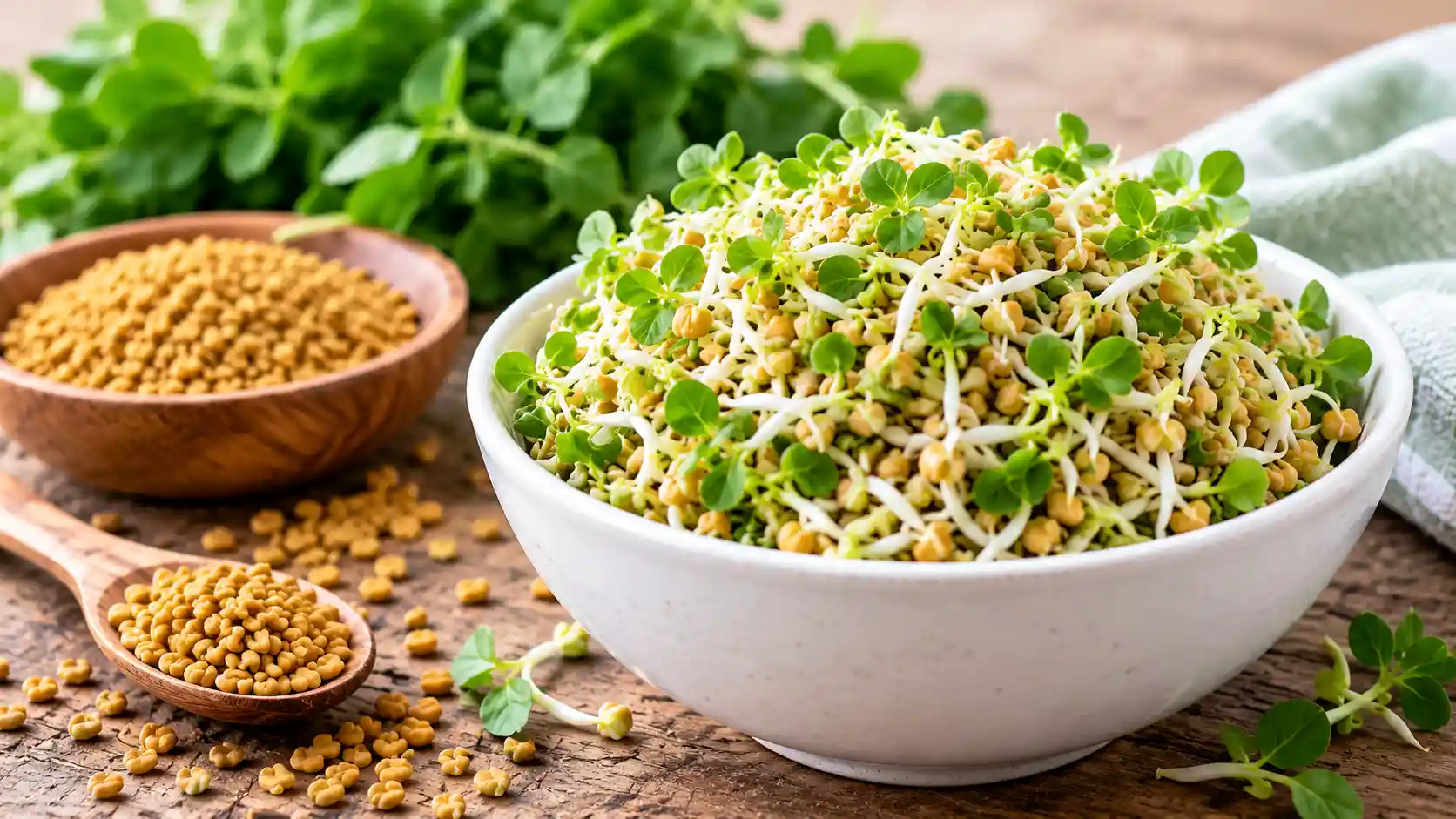
Fenugreek sprouts are the young seedlings that appear when fenugreek seeds (Trigonella foenum-graecum) are soaked and allowed to germinate. Within 8 to 12 hours of soaking, the seed coat softens, and a white root tip (the radicle) pushes out. Over the next 3 to 5 days a small green shoot rises and the first tiny leaves begin to open.
Sprouts are usually harvested when the shoot is 1 to 4 cm long, before the plant uses up its stored reserves. At this stage they are tender enough to eat whole, and much milder than the hard, intensely bitter dry seed. Fenugreek has been used in South Asian, Arab and North African cooking and traditional medicine for centuries; the sprouted form, called methi ankur or ankurit methi in Hindi and Urdu, is a simple, low-cost way to eat it as a fresh food.
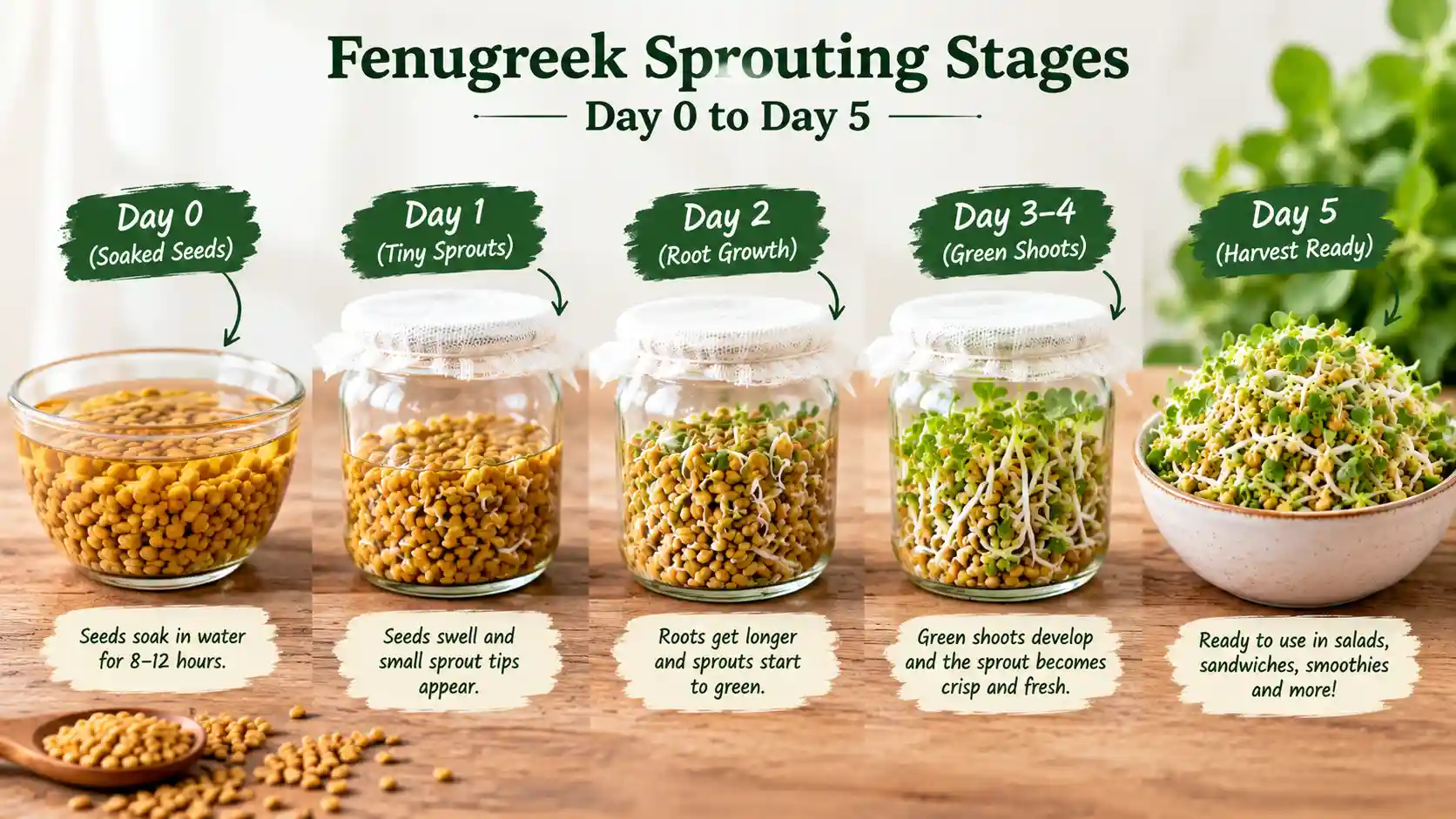
How Fenugreek Seeds Become Sprouts: Day by Day
| Day | What You See | Notes |
|---|---|---|
| Day 0 (soak) | Seeds swell to nearly double their size | Soak 8–12 hours, then discard the water |
| Day 1 | Tiny white root tips appear after 24–36 hours | Rinse and drain 2–3 times a day |
| Day 2–3 | Roots reach 1–2 cm; sprouts are tender and mild | A good harvest window for a gentler flavor |
| Day 4–5 | Green shoots rise and first leaves unfurl | Harvest here; stronger flavor, more green |
Fenugreek Sprouts in Other Languages: Methi Ankur, Ankurit Methi and More
Fenugreek sprouts go by many names, which is why searches range from “methi sprouts” to “ankurit methi” to “sprouted hulba”. Spellings vary by region.
| Language | Fenugreek | Sprouted Fenugreek |
|---|---|---|
| English | fenugreek, methi | fenugreek sprouts, sprouted fenugreek |
| Hindi | methi dana (मेथी दाना) | ankurit methi (अंकुरित मेथी) |
| Urdu | methi (میتھی) | methi ankur (میتھی انکر), ugi hui methi |
| Telugu | menthulu (మెంతులు) | sprouted menthulu |
| Tamil | vendhayam (வெந்தயம்) | mulai kattiya vendhayam (முளைகட்டிய வெந்தயம்) |
| Malayalam | uluva (ഉലുവ) | sprouted uluva |
| Arabic | hulba / helba (الحلبة) | الحلبة المنبتة (sprouted hulba) |
| Spanish | fenogreco, alholva | brotes de fenogreco |
| Malay | halba | cambah halba |
For the naming of the plant itself, see fenugreek vs methi and fenugreek in Arabic.
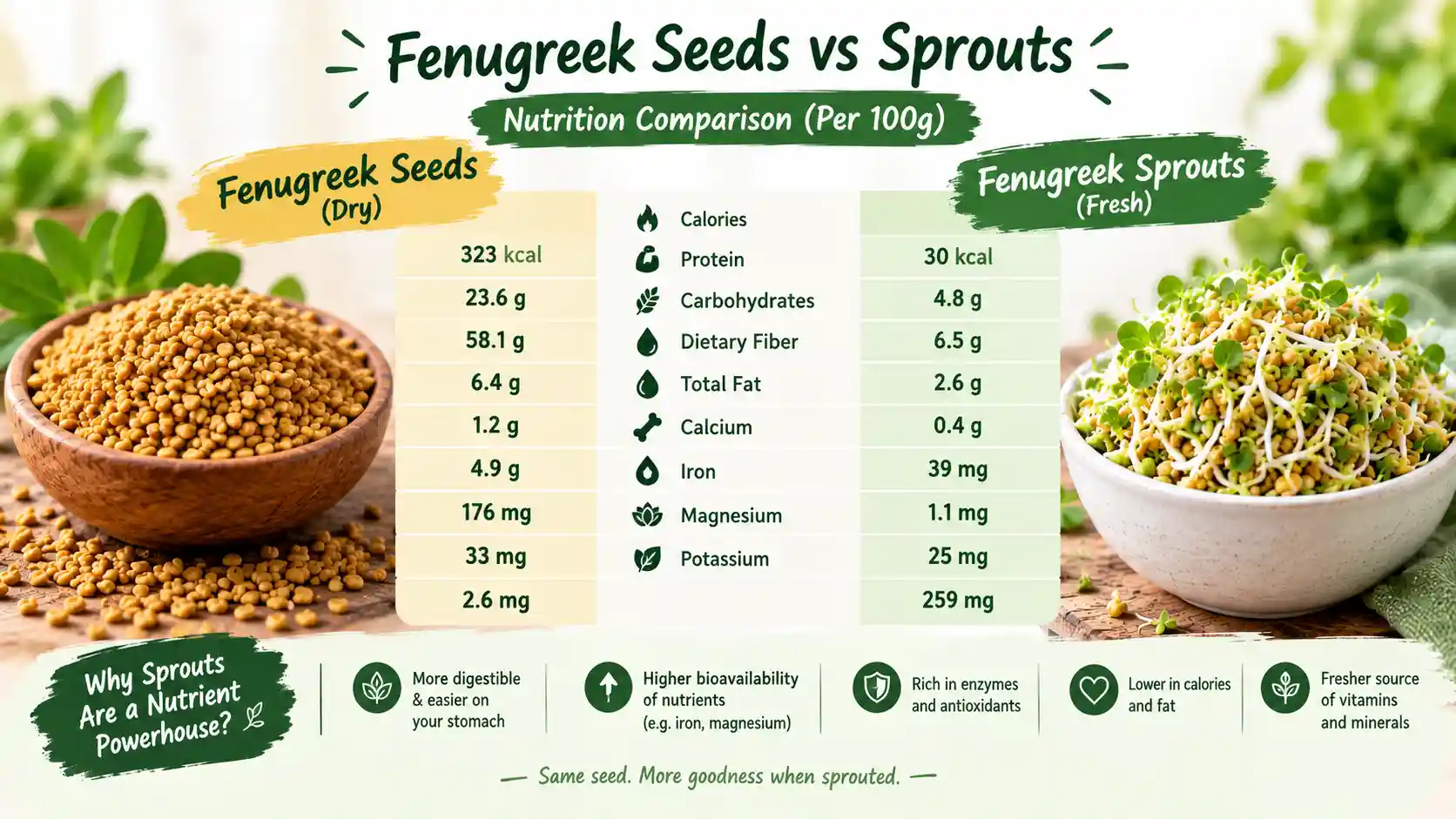
Fenugreek Sprouts Nutrition Per 100g: Seeds vs Sprouts
There is no official USDA entry for fenugreek sprouts, and published values vary with the seed variety, sprouting time and water content. The table below pairs the USDA values for dry seeds with what to expect from fresh sprouts, which are mostly water.
| Nutrient (per 100 g) | Dry Fenugreek Seeds (USDA) | Fresh Fenugreek Sprouts |
|---|---|---|
| Calories | 323 kcal | Roughly 30–60 kcal (estimate; mostly water) |
| Protein | 23 g | About 3–6 g; up to 5.75 g in the best genotype of a 30-genotype lab study |
| Dietary fibre | 24.6 g | Lower per 100 g fresh weight; still includes soluble galactomannan |
| Vitamin C | 3 mg | Higher than the seed; vitamin C is made during germination |
| Iron | 33.5 mg | Much lower per 100 g fresh, but phytate falls, so more can be absorbed |
| Calcium | 176 mg | Lower per 100 g fresh weight |
| Magnesium | 191 mg | Lower per 100 g fresh weight |
| Potassium | 770 mg | Lower per 100 g fresh weight |
| Folate (B9) | 57 mcg | Varies with sprouting time |
Seed values: USDA FoodData Central, “Spices, fenugreek seed”. Sprout values are estimates or from laboratory studies and vary widely. A 30 g handful of sprouts is typically only 10 to 20 kcal by this estimate.
Key Compounds in Fenugreek Sprouts
| Compound | What It Is | Why It Matters |
|---|---|---|
| Galactomannan | Soluble fibre that forms a gel in water | Slows glucose absorption and feeds gut bacteria |
| Diosgenin | Steroidal saponin (plant compound) | Studied for anti-inflammatory and hormone-related effects |
| Trigonelline | Alkaloid | Studied for blood sugar and nerve effects in preclinical work |
| 4-Hydroxyisoleucine | Unusual amino acid found in fenugreek seed | Studied for effects on insulin release |
| Quercetin, vitexin | Flavonoid antioxidants | Associated with antioxidant activity in sprouts |
| Phytic acid (phytate) | Mineral-binding compound | Falls during sprouting, improving mineral absorption |
What Changes When Fenugreek Sprouts: Phytate, Enzymes, Vitamin C and Flavor
Sprouting is a biochemical change, not just growth. Five things happen inside the seed during those 3 to 5 days.
Five Changes During Germination
1. Phytate falls
Phytic acid binds iron, zinc and calcium and limits how much the body absorbs. Germination activates the enzyme phytase, which breaks phytate down, so more of the seed’s minerals become available.
2. Enzymes wake up
Amylases, proteases and lipases begin breaking down the seed’s own starch, protein and fat. This pre-digestion is one reason sprouts feel gentler than raw seeds.
3. Vitamin C appears
Dry seeds contain only about 3 mg of vitamin C per 100 g. Germinating seeds make more of it, which also helps the body absorb plant (non-heme) iron.
4. Bitterness softens
Some of the saponins and alkaloids that make raw seeds bitter are used up by the growing plant, so sprouts taste milder, nutty and slightly sweet.
5. Antioxidant activity shifts
In a laboratory comparison of seeds and Day 1, Day 3 and Day 5 sprouts, the Day 3 sprout extract had the highest antioxidant activity, while the dry seed extract was strongest at inhibiting alpha-amylase, a carbohydrate-digesting enzyme (Kamshana et al., 2025). In other words, sprouting is not strictly “better”: it trades some concentration for digestibility and antioxidants.
10 Fenugreek Sprouts Benefits: What the Research Actually Shows
Fenugreek is one of the most studied culinary herbs, but most human trials used seed powder or extract, not sprouts. Each benefit below carries an evidence label so you can see how strong the support is.
1Blood Sugar Support
Evidence: human trials on seeds; lab studies on sproutsFenugreek’s soluble fibre, galactomannan, forms a gel that slows glucose absorption after meals, and compounds such as trigonelline and 4-hydroxyisoleucine are studied for insulin effects. In a 30-genotype laboratory study of sprouts (Çoban, 2025), extracts from China-origin genotypes inhibited alpha-amylase by 64.57%, an enzyme that breaks down starch into sugar. This is an in-vitro result, not proof in people. Most human trials used seed powder or extract, with modest effects. Sprouts are not a replacement for diabetes treatment.
2Digestive Health and Gut Support
Evidence: mechanism and limited human dataFenugreek sprouts supply both soluble and insoluble fibre. Soluble fibre acts as a prebiotic that feeds gut bacteria, and insoluble fibre adds bulk and supports regular bowel movements. The enzyme activity of germination also makes sprouts easier to digest than whole seeds, which can cause bloating in some people. Fenugreek-specific data on the microbiome are limited, so treat this as a general fibre benefit.
3Anti-Inflammatory Potential
Evidence: laboratory and animal studiesFenugreek contains diosgenin and flavonoids such as quercetin and kaempferol, which have shown anti-inflammatory activity in laboratory and animal research. Sprouting also raises antioxidant activity in some tests. Human evidence for fenugreek sprouts reducing inflammation is lacking, so this is a promising area rather than an established benefit.
4Iron Intake and Absorption
Evidence: mechanism; not proven in trialsDry fenugreek seed is a rich plant source of iron (33.5 mg per 100 g), but phytate limits absorption. Sprouting lowers phytate and adds vitamin C, which helps convert plant iron into a more absorbable form. Because sprouts are mostly water, a typical serving supplies far less iron than the same weight of seeds. They are a helpful addition for vegetarians, not a treatment for iron-deficiency anaemia.
5Cholesterol and Heart Health
Evidence: small human trials on seeds; animal studiesFenugreek saponins and fibre bind bile acids in the gut, which prompts the liver to use cholesterol to make more bile. Small human trials of fenugreek seed powder show modest improvements in some cholesterol measures, and animal studies show larger effects. There are no sprout-specific cholesterol trials, so the benefit is inferred from the seed.
6Hormonal Balance and Lactation
Evidence: mixedFenugreek is widely used as a galactagogue to support milk supply, and its diosgenin is studied for a role in women’s hormonal health, including PCOS symptoms. Results are mixed and mostly use seed capsules or tea rather than sprouts. If you are breastfeeding, remember that fenugreek can give sweat and urine a maple syrup smell.
7Appetite and Weight Management
Evidence: limitedFenugreek sprouts are low in calories and contain fibre and protein, which support fullness. Galactomannan absorbs water and expands in the stomach, and some trials of fenugreek seed report lower spontaneous calorie intake. Sprouts will not cause weight loss by themselves, but a small serving is an easy low-calorie addition to meals.
8Antioxidant Protection
Evidence: laboratorySprouts contain phenolic acids and flavonoids, including quercetin and vitexin, that neutralize free radicals in laboratory tests. Antioxidant activity changes during germination and in one study peaked around Day 3. Eating a variety of colorful plant foods is a stronger strategy than relying on any one sprout.
9Hair and Skin Support
Evidence: traditional use; limited researchFenugreek has a long traditional reputation for hair and skin. Sprouts provide protein, iron and folate, which support a healthy scalp, and vitamin C supports collagen. There are no sprout-specific hair trials, and results for fenugreek on hair are limited. Application methods are covered in our guide to fenugreek for hair growth.
10Cognitive and Nerve Health
Evidence: early laboratory onlyIn the 30-genotype study, South Sudan genotypes showed 14.44% acetylcholinesterase inhibition, the enzyme targeted by some Alzheimer’s drugs. That is a modest laboratory effect. It does not mean fenugreek sprouts prevent or treat cognitive decline; it points to areas for future research.
Fenugreek Sprouts vs Dry Seeds vs Fresh Leaves
Neither form is universally better; each suits a different purpose.
| Factor | Fenugreek Sprouts | Dry Seeds | Fresh Leaves (Methi) |
|---|---|---|---|
| Taste | Mildly bitter, nutty | Intensely bitter raw | Mildly bitter, herbal |
| Digestibility | Easier, enzymes active | Harder when raw | Easy |
| Phytate | Reduced | Intact | Low |
| Vitamin C | Higher than seed | Low (3 mg per 100 g) | Present |
| Galactomannan fibre | Present, lower per 100 g | Highest concentration | Low |
| Blood sugar signal (lab) | Good | Stronger in one lab comparison | Less studied |
| Shelf life | 3–5 days refrigerated | 12+ months | 3–5 days refrigerated |
| Best use | Salads, wraps, quick cooking | Tempering, spice blends, soaking | Saag, parathas, curries |
How to Grow Fenugreek Sprouts at Home: A 5-Day Guide
Growing fenugreek sprouts needs no soil and no special equipment, just a jar, water and a few minutes a day. The whole process takes 3 to 5 days.
What You Need
- 2 to 3 tablespoons of whole, raw, untreated fenugreek seeds (about how many grams in a teaspoon if you measure by weight)
- A wide-mouth glass jar or bowl
- Muslin cloth or a mesh sprouting lid, and a rubber band
- Clean cold drinking-quality water
Choosing the Best Fenugreek Seeds for Sprouting
- Choose whole, raw, food-grade seeds, ideally sold for sprouting; avoid roasted, cracked or seeds treated for gardening.
- Fresher seeds sprout better. Seeds that are many years old often fail to germinate.
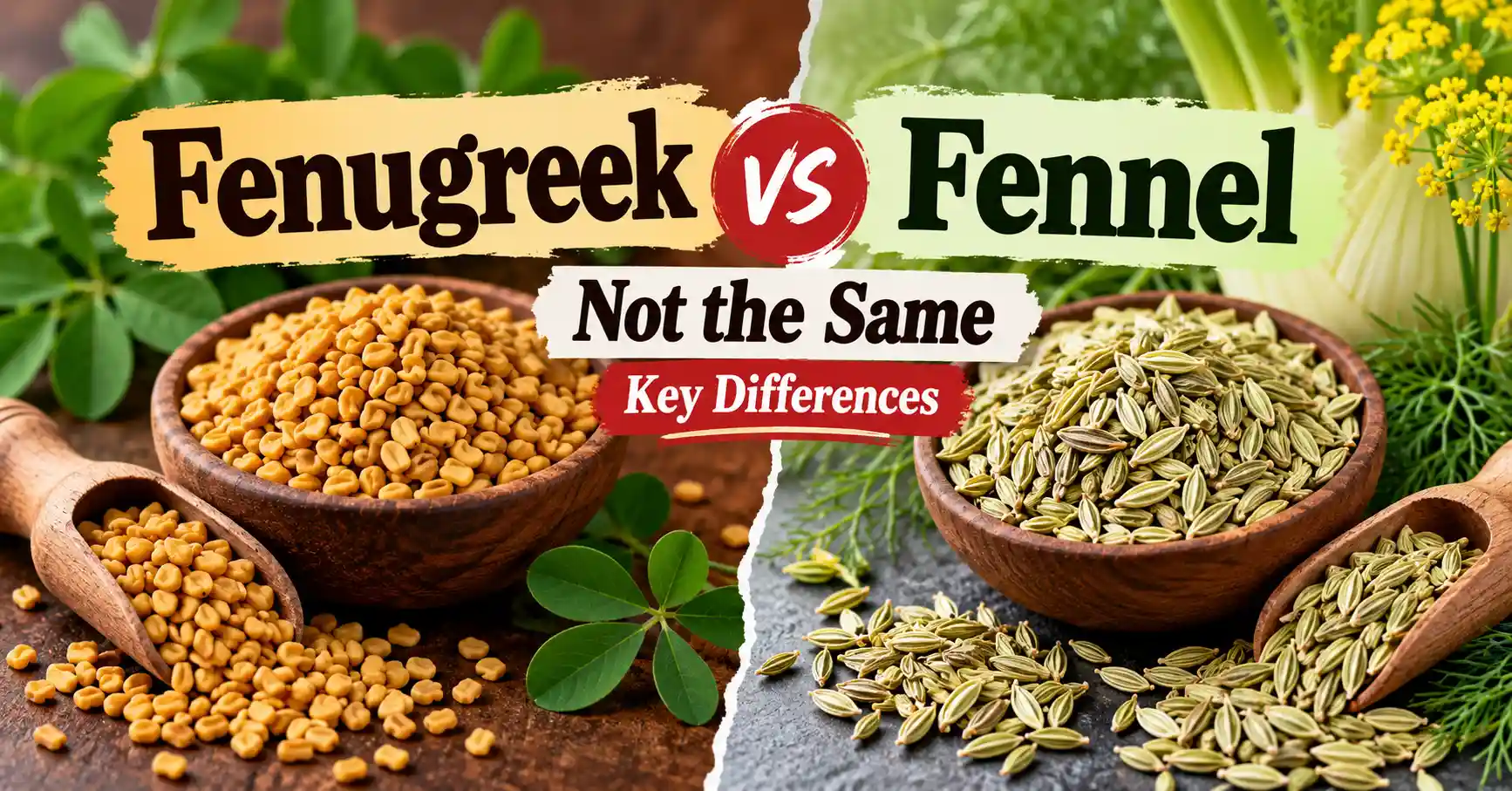
- Check the label: it must say fenugreek (methi dana), not fennel (saunf). The two look similar; see fenugreek vs fennel.
Step-by-Step Instructions
Rinse and Inspect
Place 2 to 3 tablespoons of whole, raw fenugreek seeds in a jar and rinse them under cold running water. Remove broken seeds and debris. Good seeds are firm, golden-amber and uniform; roasted, cracked or very old seeds will not sprout.
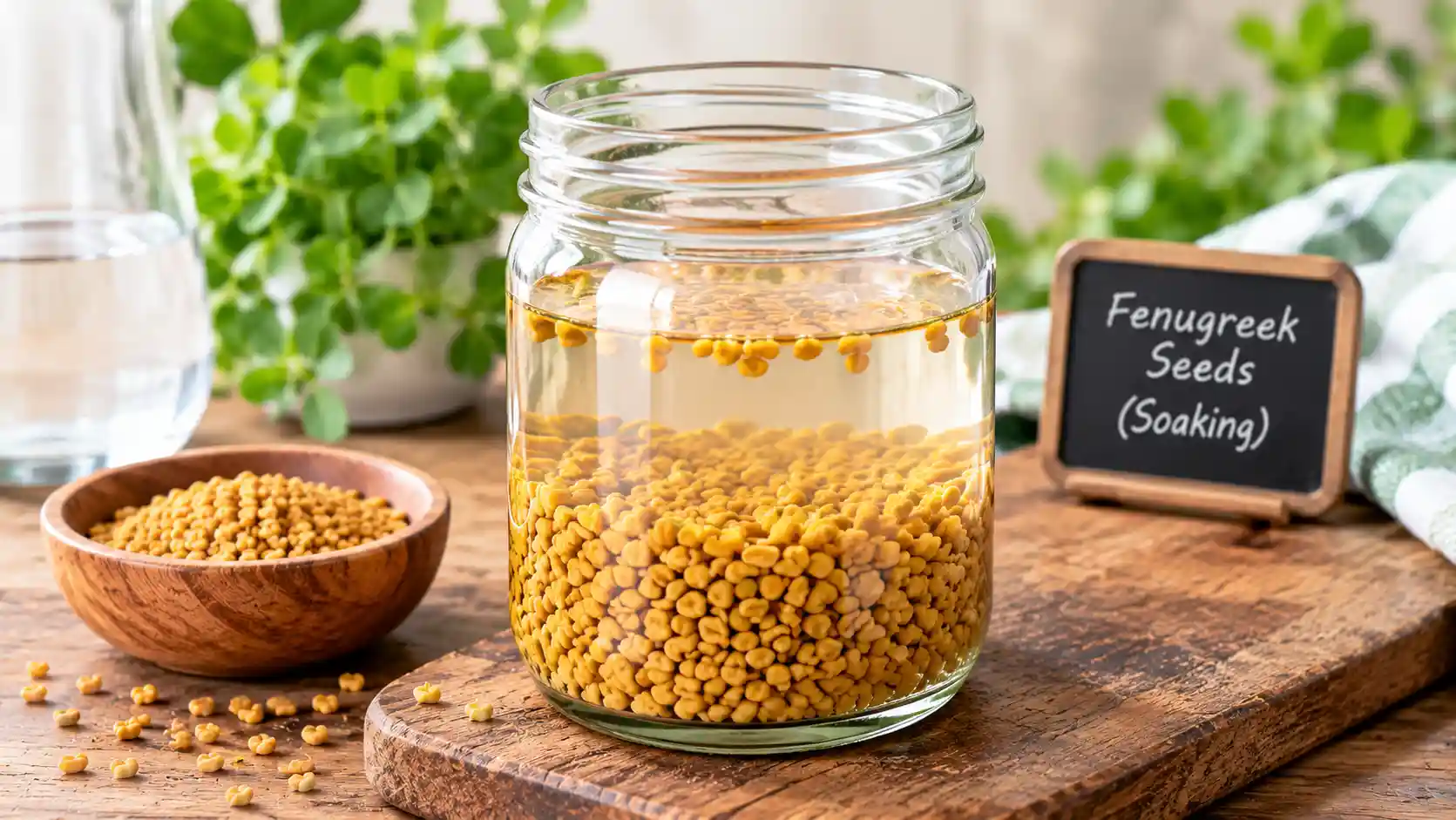
Soak for 8 to 12 Hours
Cover the seeds with 3 to 4 times their volume of clean cold water and leave at 18 to 25°C (65 to 75°F) overnight. The seeds swell to nearly double their size. Discard the soaking water, which carries saponins and compounds leached from the seed.
Drain and Set Up the Jar
Rinse the swollen seeds, drain completely, and cover the jar mouth with muslin or a mesh sprouting lid secured with a rubber band. Tilt the jar at an angle so water drains and air circulates. Keep it in indirect light at room temperature. Standing water causes mould.
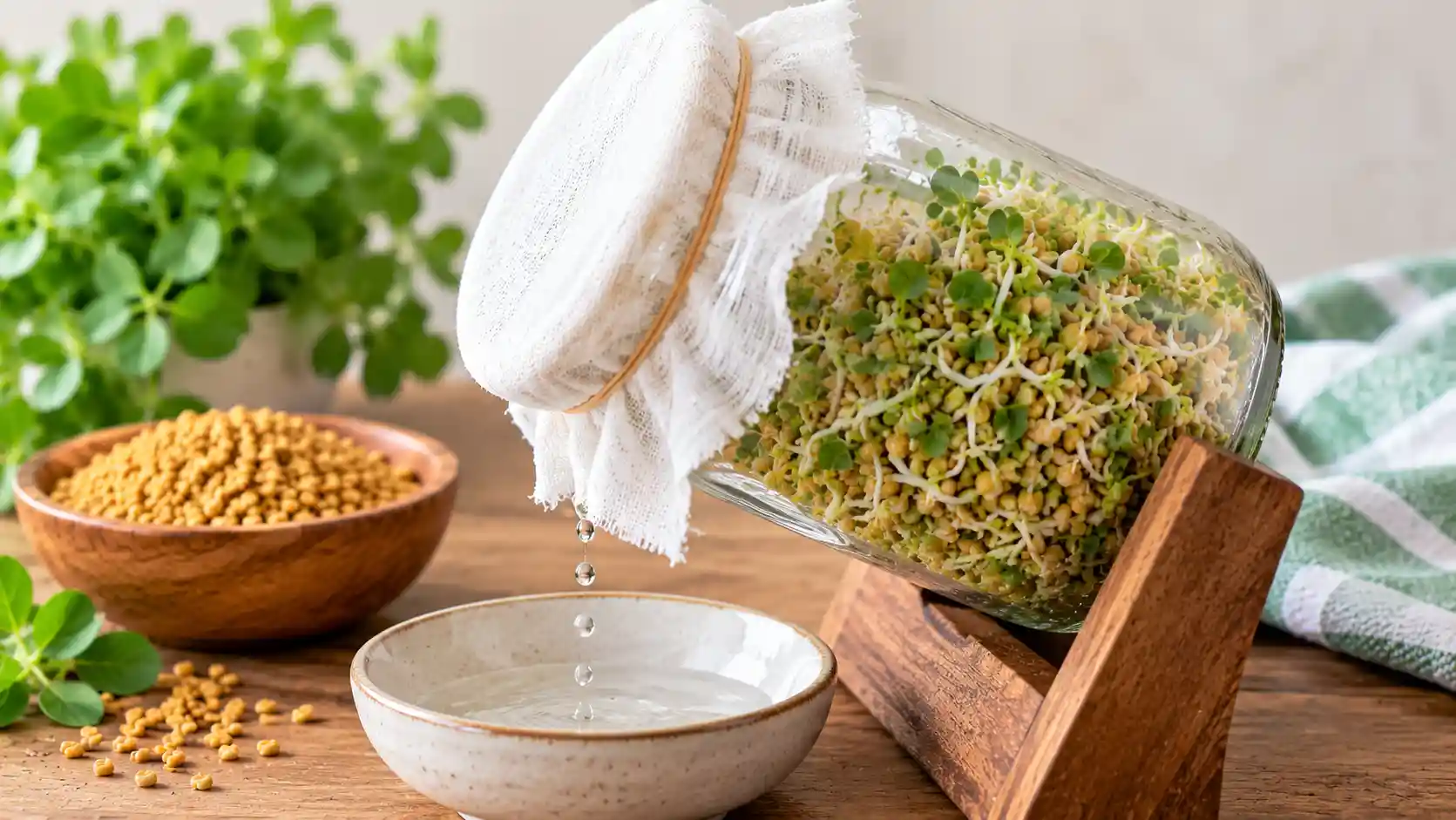
Rinse 2 to 3 Times a Day
Morning and evening (and midday in hot weather), add fresh cold water through the cloth, swirl, and drain completely. White root tips show within 24 to 36 hours, roots reach 1 to 2 cm by Day 2 to 3, and green shoots appear by Day 4 to 5.
Add Light Before Harvest (Optional)
On the last day, move the jar to bright indirect light for a few hours so the leaves turn green. Avoid direct strong sun, which can overheat the sprouts. The effect on nutrients is not well established; it mainly improves color.
Harvest, Dry and Store
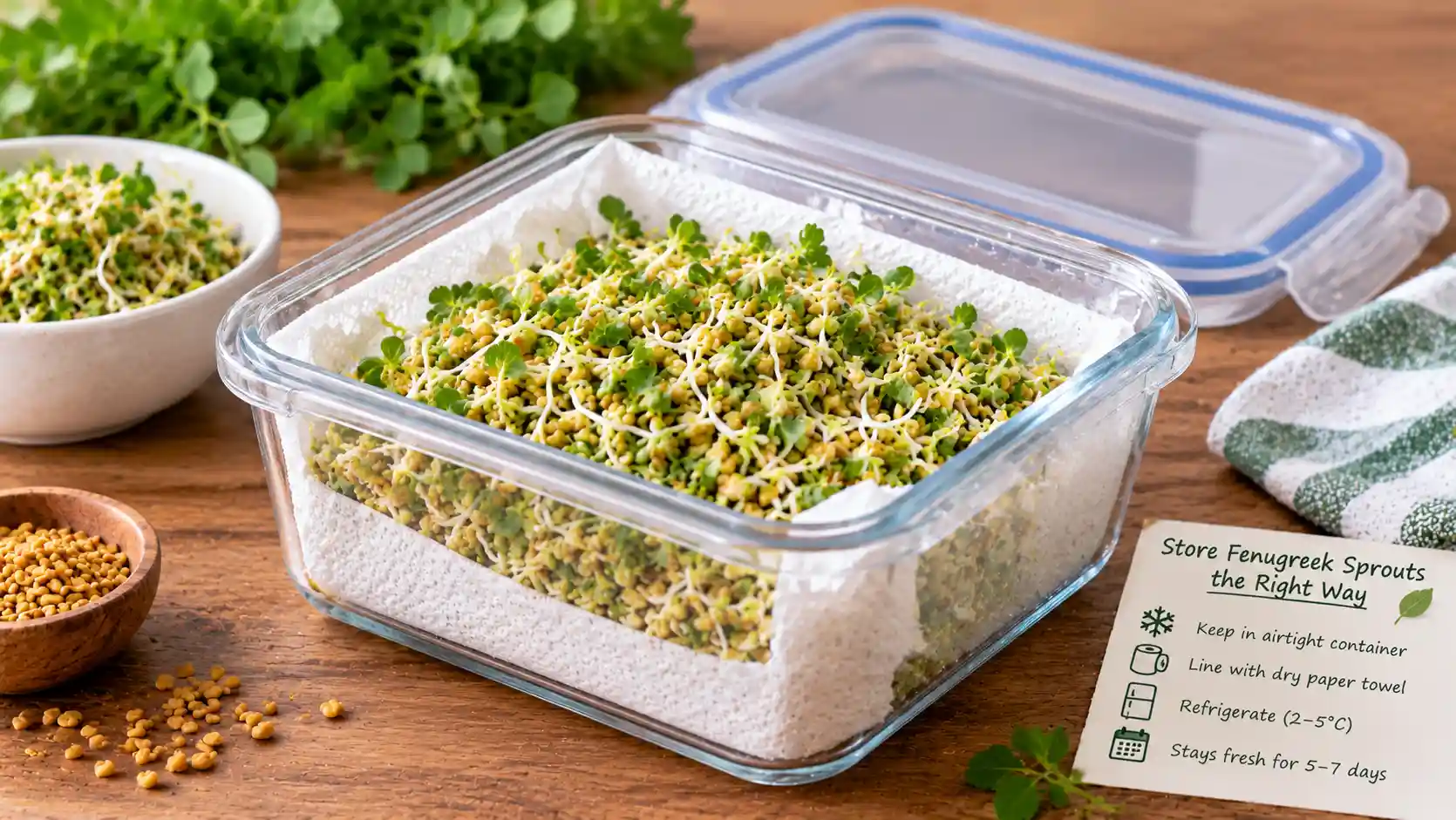
Give the sprouts a final rinse, spread them on a clean towel and pat dry, because surface moisture promotes mould. Transfer to an airtight container lined with a dry paper towel and refrigerate for 3 to 5 days.
Troubleshooting Your Fenugreek Sprouts
Most sprouting problems come down to water, warmth or seed quality. Here are the three most common.
Three Common Sprouting Problems and Fixes
Problem: Sprouts smell sour or feel slimy
Likely cause
Too little rinsing, standing water or temperatures above about 25°C let bacteria and mould grow.
What to do
Throw the whole batch away and start again with a clean jar. Do not rinse and eat them.
Problem: Seeds will not sprout
Likely cause
Old, roasted or cracked seeds, or water that is too cold or too hot.
What to do
Use fresh whole seeds and keep the jar at 18 to 25°C (65 to 75°F).
Problem: Sprouts taste too bitter
Likely cause
Harvested late (Day 5 or later) or soaking water was not discarded.
What to do
Harvest at Day 3 to 4, discard the soaking water, and pair with lemon, tomato or yogurt.
How to Eat Fenugreek Sprouts: Raw and Cooked Ideas
Sprouts are far more versatile than dry seeds, and their mild flavor means you can eat them with little preparation. If you are pregnant, elderly, a child or have a weakened immune system, choose the cooked options.
Raw Uses (Healthy Adults)
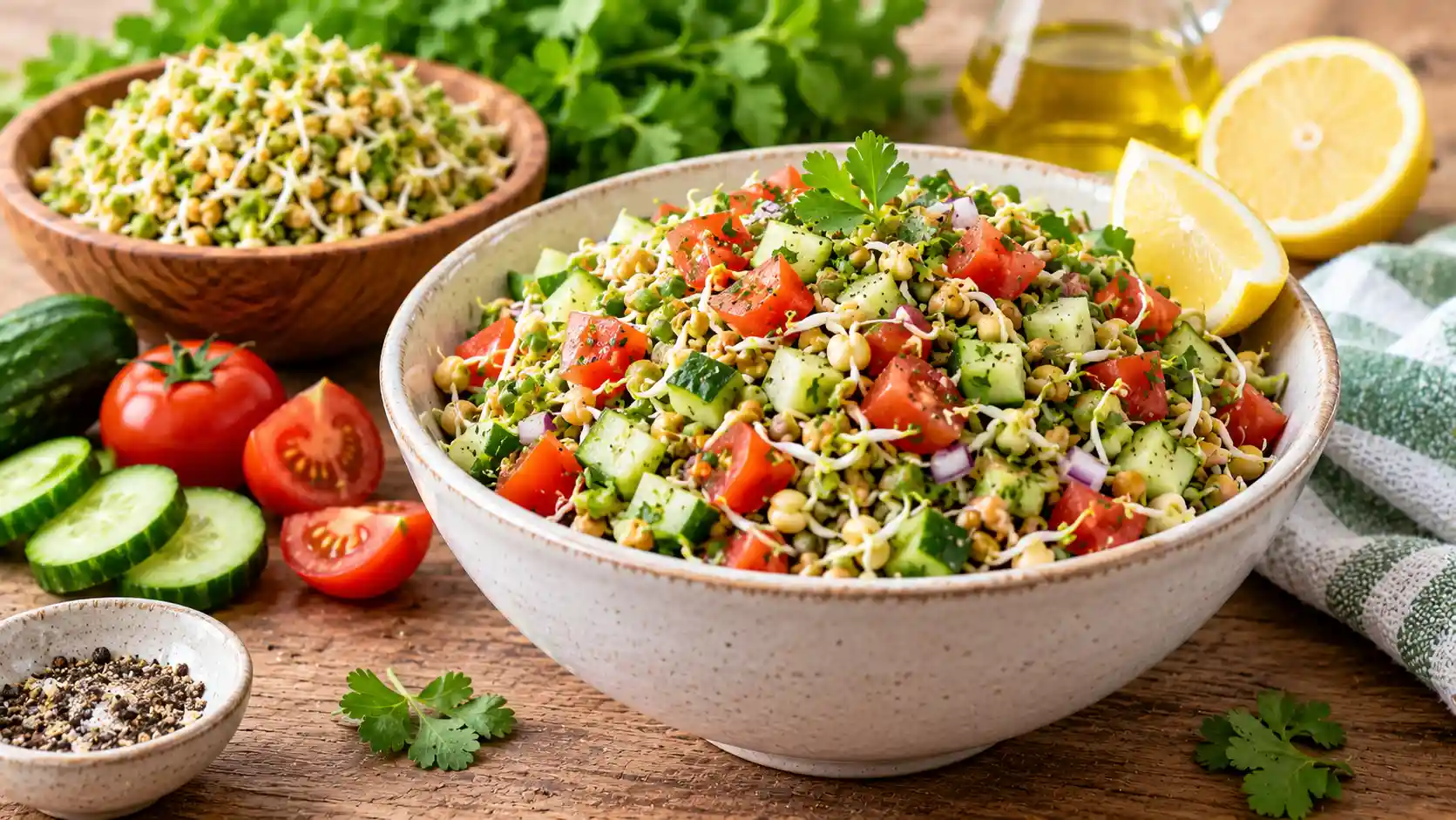
- Salads: toss with cucumber, tomato, red onion, lemon juice, salt and chilli for a quick kachumber-style salad.
- Wraps and sandwiches: layer into wraps like alfalfa sprouts; they pair well with avocado, hummus or roasted chicken.
- Smoothies: blend a small handful with spinach, banana and ginger; the flavor disappears behind stronger ingredients.
Cooked Uses (Safest Choice)
- Dal and curries: stir sprouts in during the last 2 to 3 minutes so they soften but keep some texture.
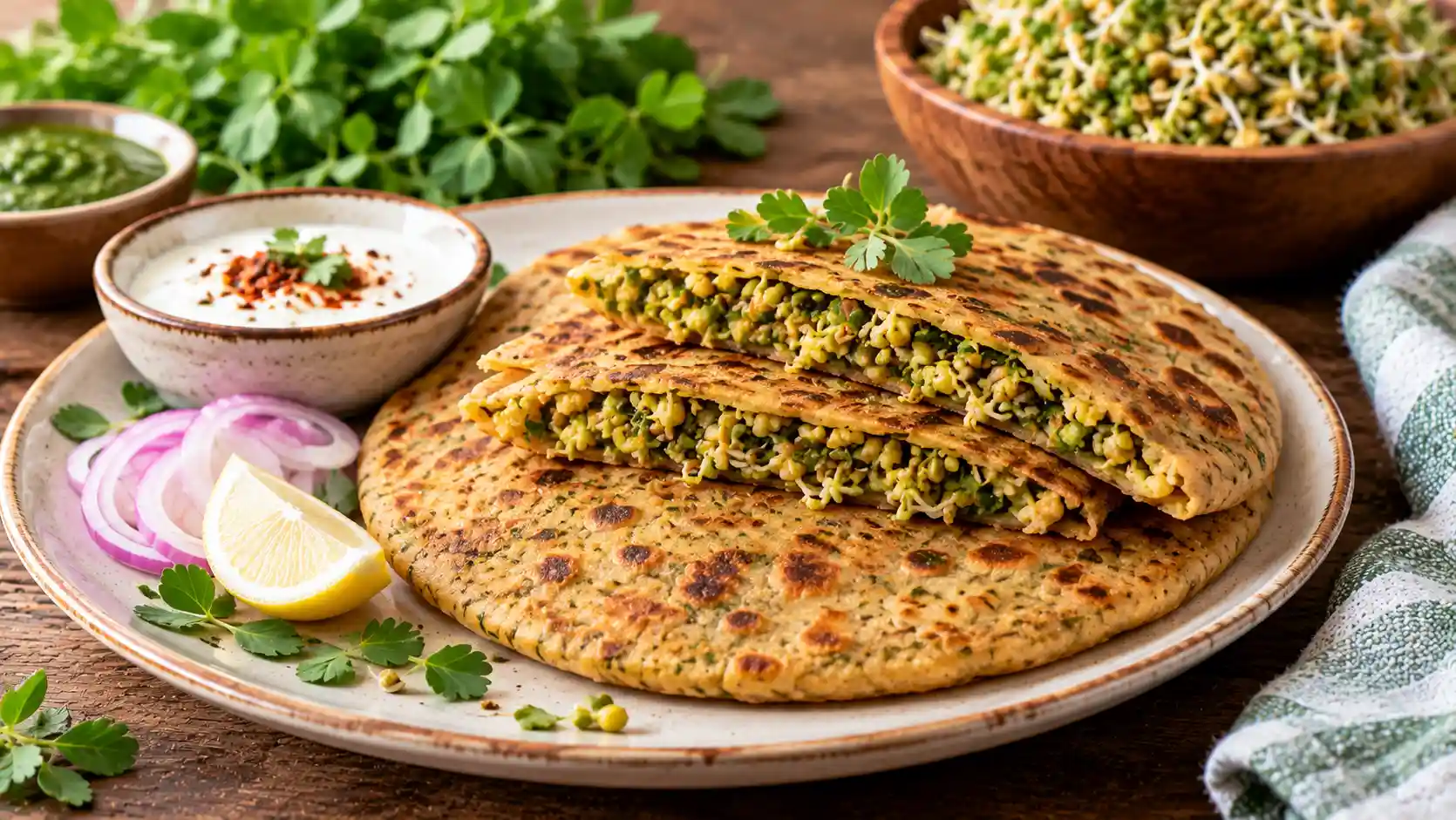
- Methi sprout paratha: fold chopped sprouts into whole wheat dough for a nutritious flatbread.
- Stir-fries: add to vegetables with garlic and ginger and cook until steaming hot throughout.
- Egg dishes: wilt a handful into scrambled eggs or an omelette.
- Soups: scatter over lentil or vegetable soup just before serving.
Flavor Tips to Reduce Bitterness
Acid and fat both soften bitterness on the palate. Pair sprouts with lemon, tamarind or tomato, or with creamy ingredients such as yogurt, avocado or tahini. For the full flavor profile, see what does fenugreek taste like.
How Much Fenugreek Sprouts Should You Eat?
There is no official recommended amount for fenugreek sprouts. As a general food portion, 1 tablespoon up to a small handful (2 to 3 tablespoons) per day is commonly used. Start with a small amount and see how your digestion responds, because fenugreek can cause gas, bloating or loose stools in some people.
Fenugreek Sprouts Side Effects and Safety
Fenugreek sprouts are safe for most healthy adults in normal food amounts. These are the points that matter most.
Food Safety: Raw Sprouts Carry a Risk
Who should avoid raw sprouts
The CDC and Health Canada advise that raw or lightly cooked sprouts are a known source of foodborne illness (including Salmonella and E. coli). Children, older adults, pregnant women and people with weakened immune systems should avoid raw sprouts entirely and eat them only thoroughly cooked. The CDC includes people with diabetes among those with weakened immunity.
How to lower the risk
- Cook sprouts thoroughly; heat kills the harmful bacteria.
- Rinsing does not remove bacteria inside the seed, so homegrown sprouts carry the same risk as commercial ones.
- Buy sprouts that are refrigerated and crisp, and avoid any that are dark, musty or slimy.
- Discard any sprouts that smell sour.
Pregnancy and Breastfeeding
Avoid raw sprouts in pregnancy for the food-safety reason above. Separately, medicinal amounts of fenugreek are generally not advised in pregnancy because it may stimulate the uterus. Check with your doctor or midwife first. Fenugreek is also used by breastfeeding parents, and can give sweat and urine a maple syrup smell.
Allergy and Medication
- Legume allergy: fenugreek is a legume, and people allergic to peanuts or chickpeas may react. Try a very small amount first.
- Diabetes medication: fenugreek can lower blood sugar. If you take insulin or metformin, talk to your doctor before eating large amounts.
- Blood thinners: check with your provider; fenugreek may interact with some medicines.
- Digestive effects: gas, bloating and loose stools are the most common side effects.
How to Store Fenugreek Sprouts
Moisture is the enemy of sprouts. Rinse them, pat them dry on a clean towel, and store them in an airtight container lined with a dry paper towel in the refrigerator at 4°C (40°F) or below. They keep for 3 to 5 days. Never store them wet, and discard them if they smell sour or turn slimy.
Sources and Further Reading
- Çoban F. Fenugreek Sprouts Around the World: Exploring Therapeutic and Nutritional Benefits. Food Science & Nutrition, 2025; 13:e4668 (30 genotypes; alpha-amylase and acetylcholinesterase inhibition; protein content).
- Kamshana K., Sivasinthujah S., Thuvaragan S. In vitro antioxidant potential and alpha amylase inhibition of seeds and sprouts of Trigonella foenum-graecum, Eastern University, Sri Lanka, 2025 (conference paper).
- USDA FoodData Central: Spices, fenugreek seed (fdc.nal.usda.gov).
- CDC: Advice to consumers on sprouts and foodborne illness.
- Health Canada: Risks of eating raw sprouts.
Fenugreek Sprouts Benefits — 17 Most-Asked Questions
Yes, for most healthy adults. Fenugreek sprouts provide fibre, protein, vitamin C and antioxidants, and they are milder and easier to digest than dry seeds. Most clinical research on blood sugar and cholesterol used seed powder or extract, not sprouts. Because raw sprouts carry a food-safety risk, cook them thoroughly if you are pregnant, elderly, a child or have a weakened immune system.
The best-supported benefits are blood sugar support, digestive health from soluble fibre, and antioxidant intake. Others, such as cholesterol, iron absorption, hormonal and lactation support, and appetite control, have limited or mixed evidence. Most studies used fenugreek seeds or extracts, so sprout-specific benefits are mainly laboratory findings.
Healthy adults can, but raw sprouts of any kind are a known source of food poisoning. The CDC and FDA advise children, older adults, pregnant women and people with weakened immune systems to avoid raw sprouts and cook them thoroughly. Rinsing does not remove bacteria already inside the seed, so cooking is the safest option.
Eat them raw in salads, wraps and smoothies if you are a healthy adult, or cook them in dal, curries, parathas, stir-fries and omelettes. Add them to cooked dishes in the last 2 to 3 minutes. Pair them with lemon, tomato, yogurt or avocado to soften the bitterness.
Fenugreek sprouts are ready in 3 to 5 days at room temperature (18 to 25°C / 65 to 75°F). Soak the seeds for 8 to 12 hours, then rinse them 2 to 3 times a day. Harvest when the shoots are 1 to 4 cm long and the first tiny leaves appear.
There is no official USDA entry for fenugreek sprouts. Fresh sprouts are mostly water, so they are far lower in calories than dry seeds (323 kcal per 100 g), roughly 30 to 60 kcal per 100 g by estimate. A laboratory study of 30 genotypes reported up to 5.75 g of protein per 100 g of sprouts.
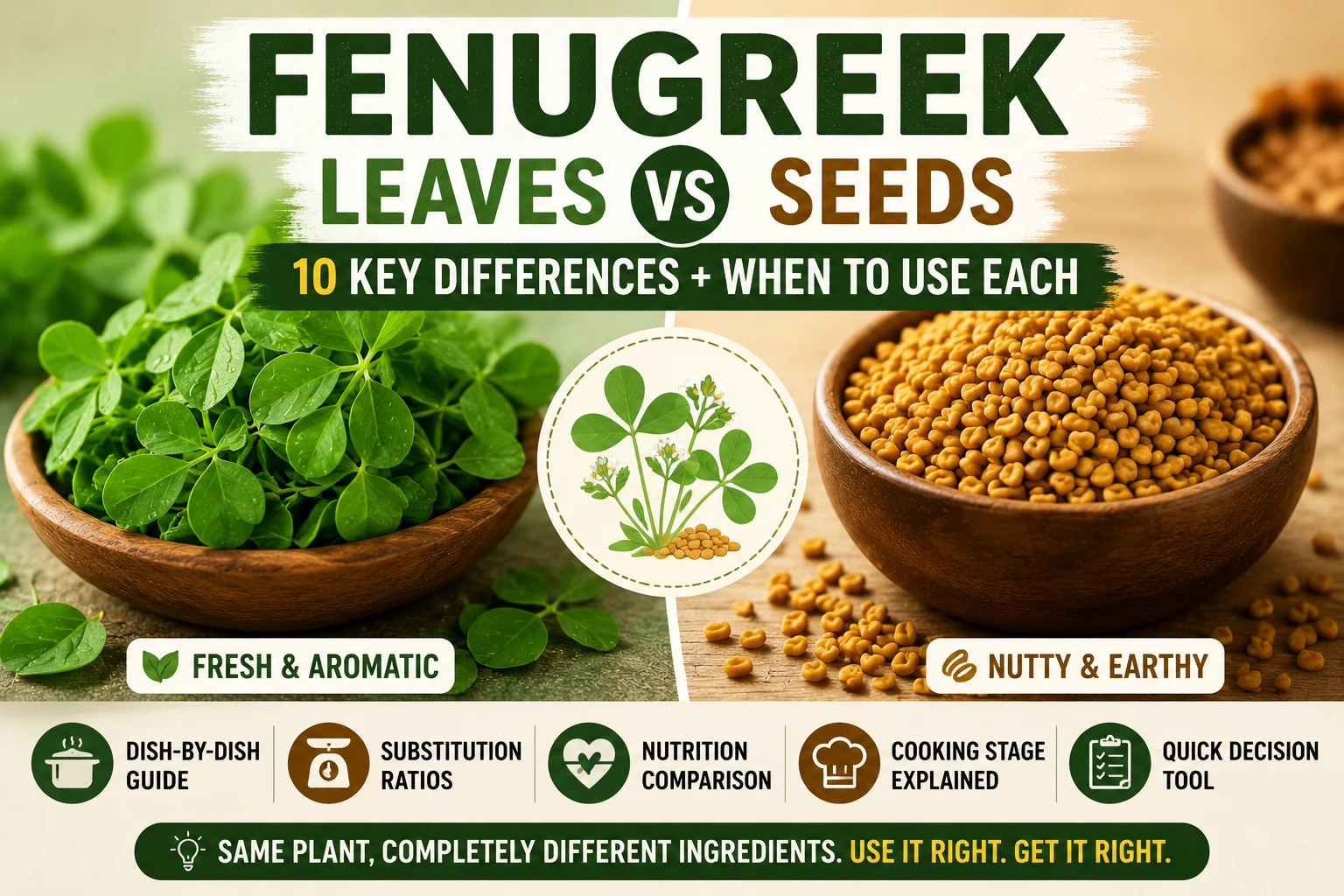
Neither is better overall. Sprouts are milder, easier to digest and have lower phytate and more vitamin C. Dry seeds are far more concentrated and showed stronger alpha-amylase inhibition (a blood sugar marker) than sprouts in one laboratory comparison. Many people use both: seeds for cooking and sprouts as a fresh food. See also fenugreek leaves vs seeds.
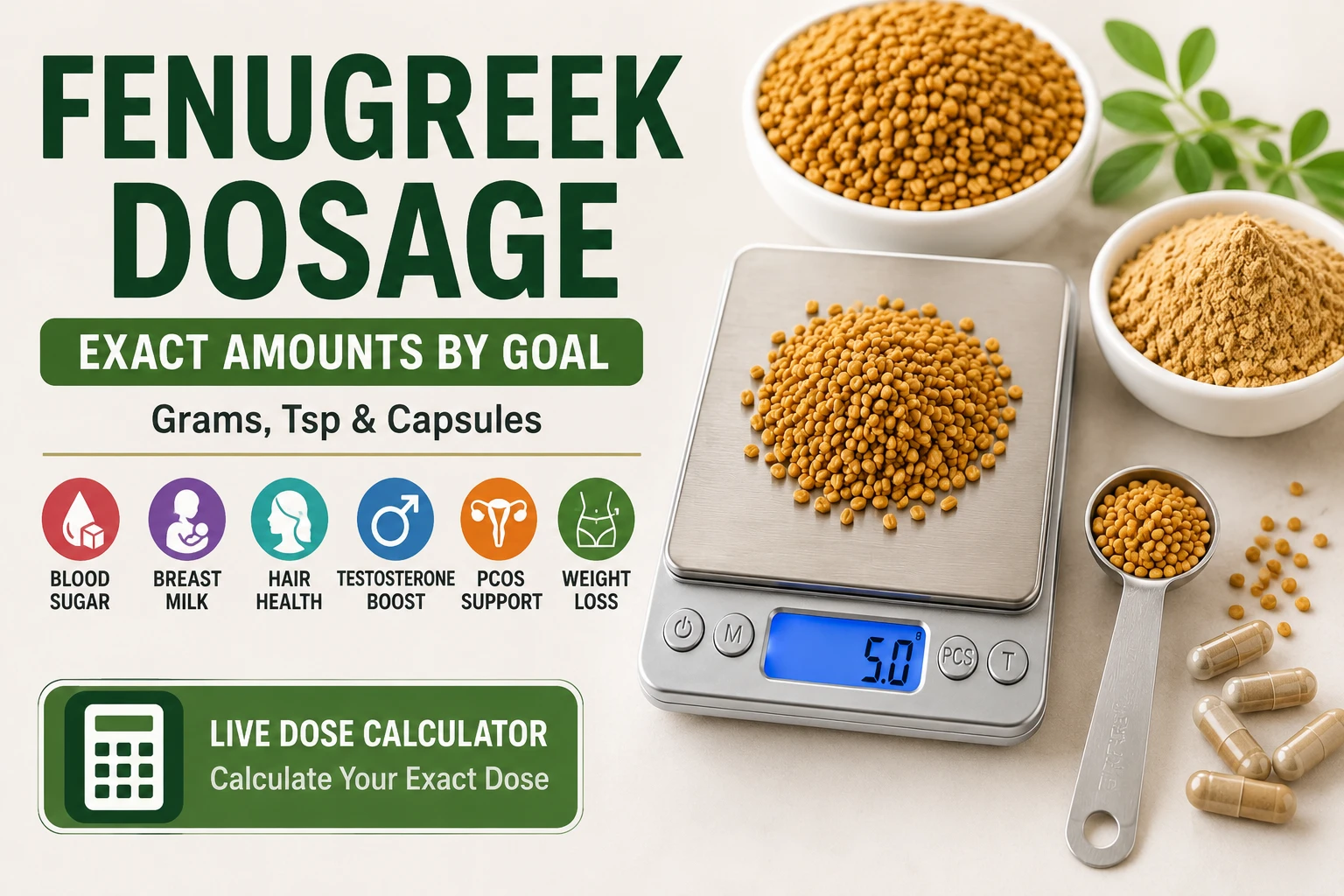
There is no official recommended amount. A common food portion is about 1 tablespoon up to a small handful (2 to 3 tablespoons) a day. Start small, because fenugreek can cause gas or loose stools. Supplement amounts are different from food amounts; see the fenugreek dosage guide.
Raw sprouts should be avoided during pregnancy because of the risk of Salmonella and E. coli, so any sprouts must be cooked thoroughly. Separately, medicinal amounts of fenugreek are generally not advised in pregnancy because it may stimulate the uterus. Check with your doctor or midwife before adding it to your diet.
Common side effects are gas, bloating and loose stools, especially in large amounts. Fenugreek can also lower blood sugar, trigger allergy in people sensitive to legumes such as peanuts or chickpeas, and give sweat and urine a maple syrup smell. Raw sprouts carry a food-poisoning risk.
Many people with diabetes eat fenugreek, and seed-based research suggests it may help blood sugar, but sprouts are not a replacement for medication. If you take insulin or metformin, fenugreek may lower blood sugar further, so talk to your doctor. The CDC also lists diabetes among conditions that can weaken immunity, so cook sprouts thoroughly.
Fenugreek is traditionally used for hair, and sprouts supply protein, iron and folate that support a healthy scalp, but there are no sprout-specific hair trials. Evidence for hair growth is limited, and most results come from seed-based products. See fenugreek for hair growth for application methods.
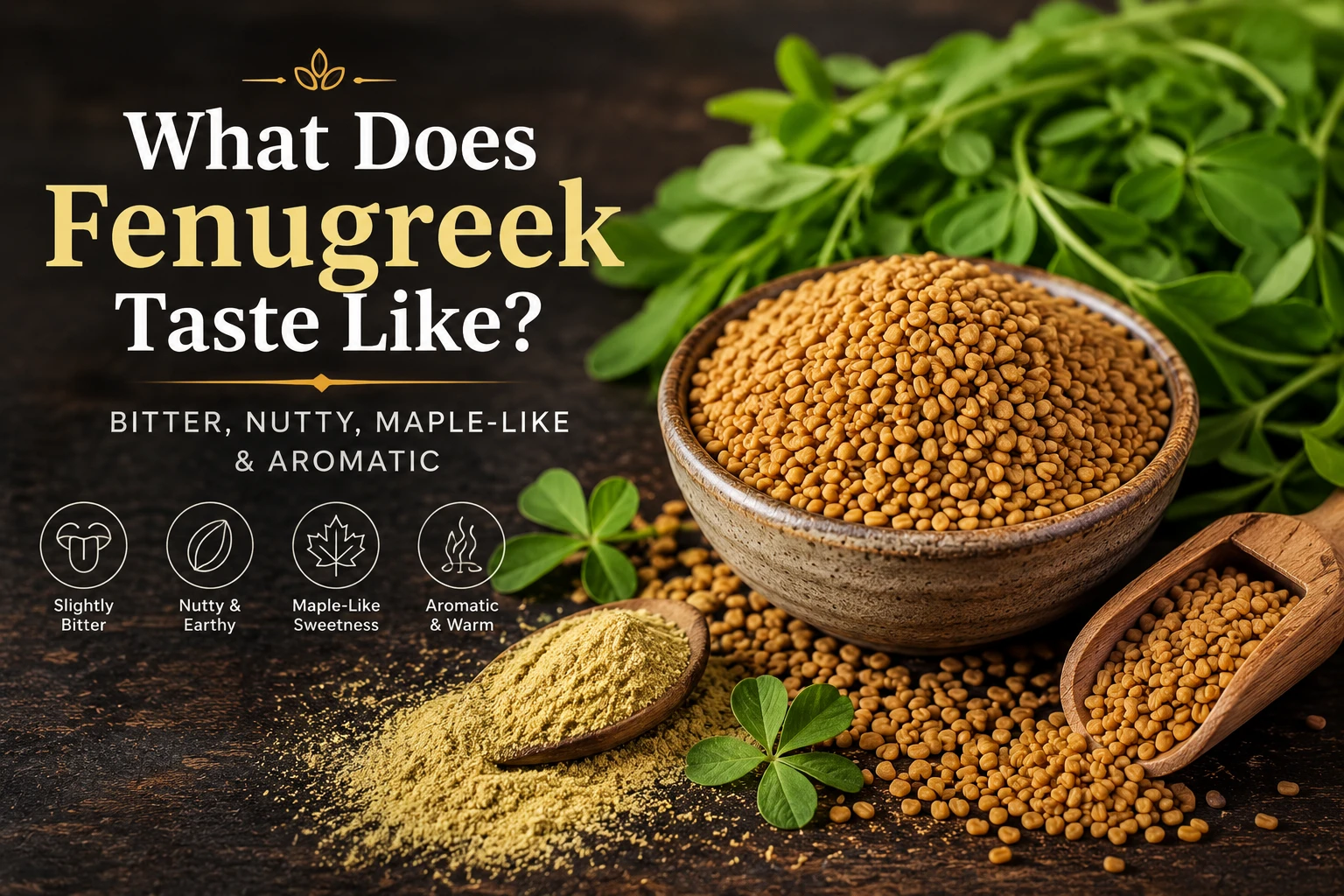
Fenugreek sprouts taste mildly bitter and nutty with a faint sweetness and a grassy, celery-like edge. They are milder than dry seeds, which are intensely bitter. Lemon, tomato, yogurt or avocado soften the bitterness. The full flavour profile is in what does fenugreek taste like.
Rinse the sprouts, pat them dry, and keep them in an airtight container lined with a dry paper towel in the refrigerator at 4°C (40°F) or below. They keep for 3 to 5 days. Discard them if they smell sour or look slimy.
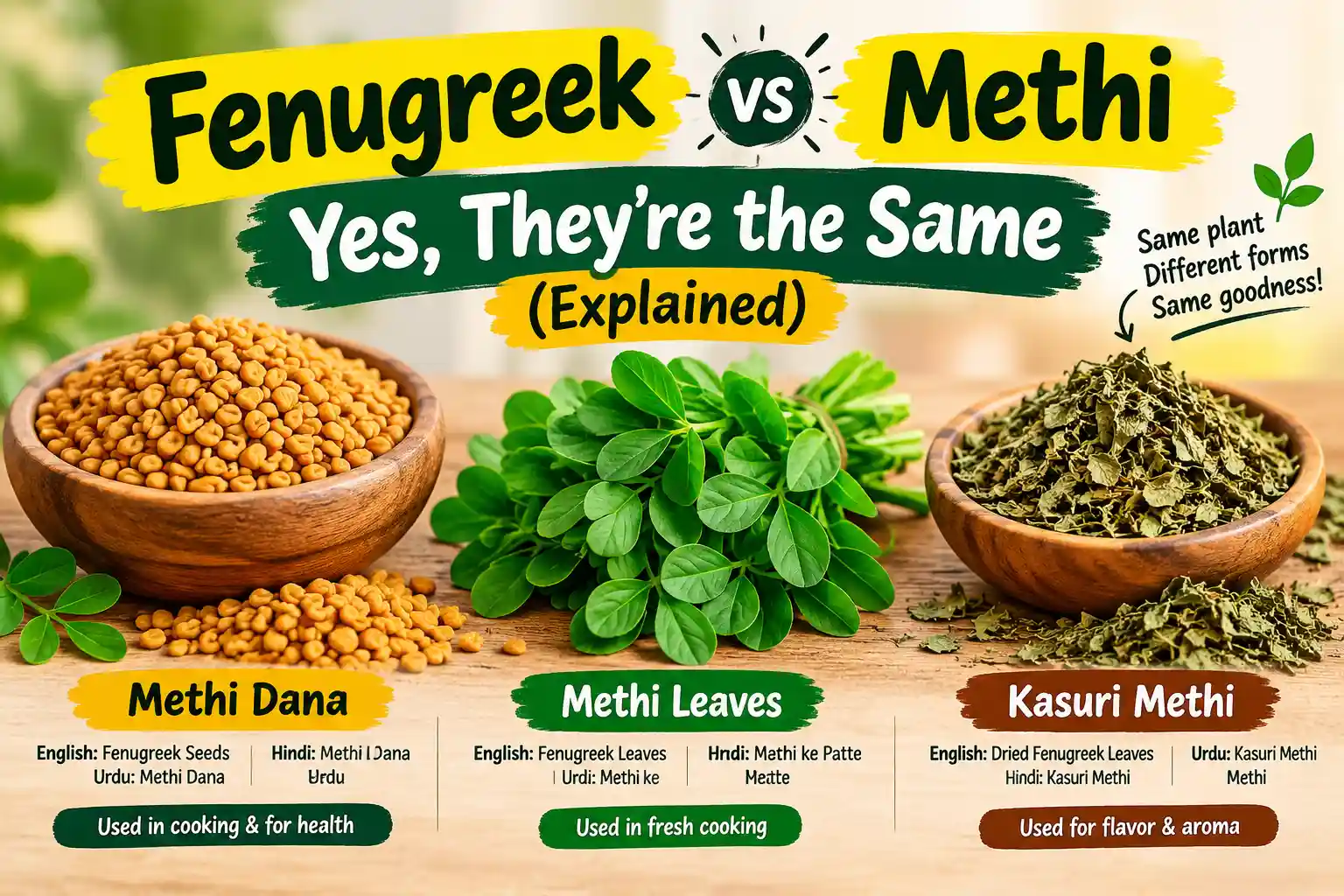
In Hindi they are ankurit methi, and in Urdu methi ankur (see fenugreek vs methi). Fenugreek itself is menthulu in Telugu, vendhayam in Tamil, uluva in Malayalam and hulba (الحلبة) in Arabic; see fenugreek in Arabic. Sprouted fenugreek is الحلبة المنبتة in Arabic and brotes de fenogreco in Spanish.
Usually yes, if they are whole, raw, untreated and fairly fresh. Roasted, cracked or old seeds will not sprout well. Make sure the packet says fenugreek (methi dana), not fennel (saunf), which looks similar; see fenugreek vs fennel. Food-grade seeds sold for sprouting are the safest choice.
They are different. Fenugreek water is made by soaking seeds, so it extracts soluble fibre and other compounds without eating the seed. Sprouts are the whole germinated seed eaten as food. Both come from the same seeds and can be used together. More on the drink in fenugreek water benefits.
Explore the Complete Fenugreek Guide Hub
Every fenugreek guide on Cardamom Nectar, in one place.


More fenugreek reads: fenugreek in Arabic, kasuri methi nutrition, fenugreek seeds teaspoon to grams, the fenugreek maple syrup smell and fenugreek substitutes.
🌿 Explore the Complete Fenugreek Guide
Discover everything about fenugreek: dosage, taste, hair benefits, water benefits, substitutes and nutrition facts.
→ Complete Fenugreek Guide