Best Fenugreek Substitutes: Seeds, Leaves & Powder — Exact Ratios for Every Dish
Out of fenugreek mid-recipe? Our interactive finder gives you the perfect substitute — with precise ratios for seeds, dried leaves (kasuri methi), fresh leaves and powder, plus expert-verified swaps for curry, dal, butter chicken, garam masala and 20+ more dishes.


⚡ Quick Answer — Best Fenugreek Substitute
For fenugreek seeds, the best substitute is yellow mustard seeds at a 1:1 ratio, with a small pinch of maple syrup added for fenugreek’s faint maple-like sweetness. For dried fenugreek leaves (kasuri methi), use curry leaves or dried mint. For fresh leaves, mustard greens or spinach are the closest stand-ins. Seeds and leaves are not interchangeable 1:1 — seeds are far more bitter and concentrated. Always start with less and taste as you go.
Fenugreek Substitute — Facts at a Glance
Quick ReferenceSource: Cardamom Nectar — reviewed by Dr. Michael Bennett, Ph.D. Updated August 21, 2026.
🔍 Smart Fenugreek Substitute Finder
Select your dish, calculate ratios, or find by flavour — instant substitutes with precise measurements
Tap your dish to instantly see the best substitute + exact ratio:
Which flavour quality do you need most in your dish?
🌰 Bitter / Earthy
Best for: curries, spice blends, meat rubs
→ Yellow Mustard SeedsUse 1 tsp per 1 tsp fenugreek seeds
82% flavour match
🍁 Maple / Sweet
Best for: aroma-only touch, glazes, dukkah
→ Maple Syrup (small amount)A few drops, combined with mustard seed
55% flavour match (aroma only)
🌿 Herbal / Leafy
Best for: saag, dal, curries needing greens
→ Mustard Greens or SpinachUse 1 cup per 1 cup fresh fenugreek leaves
68% flavour match
🍋 Aromatic / Citrusy
Best for: dried-leaf finishing, butter chicken
→ Curry Leaves (fried)Fry lightly, use in place of kasuri methi
60% flavour match
Fenugreek Seeds vs Leaves: They Need DIFFERENT Substitutes
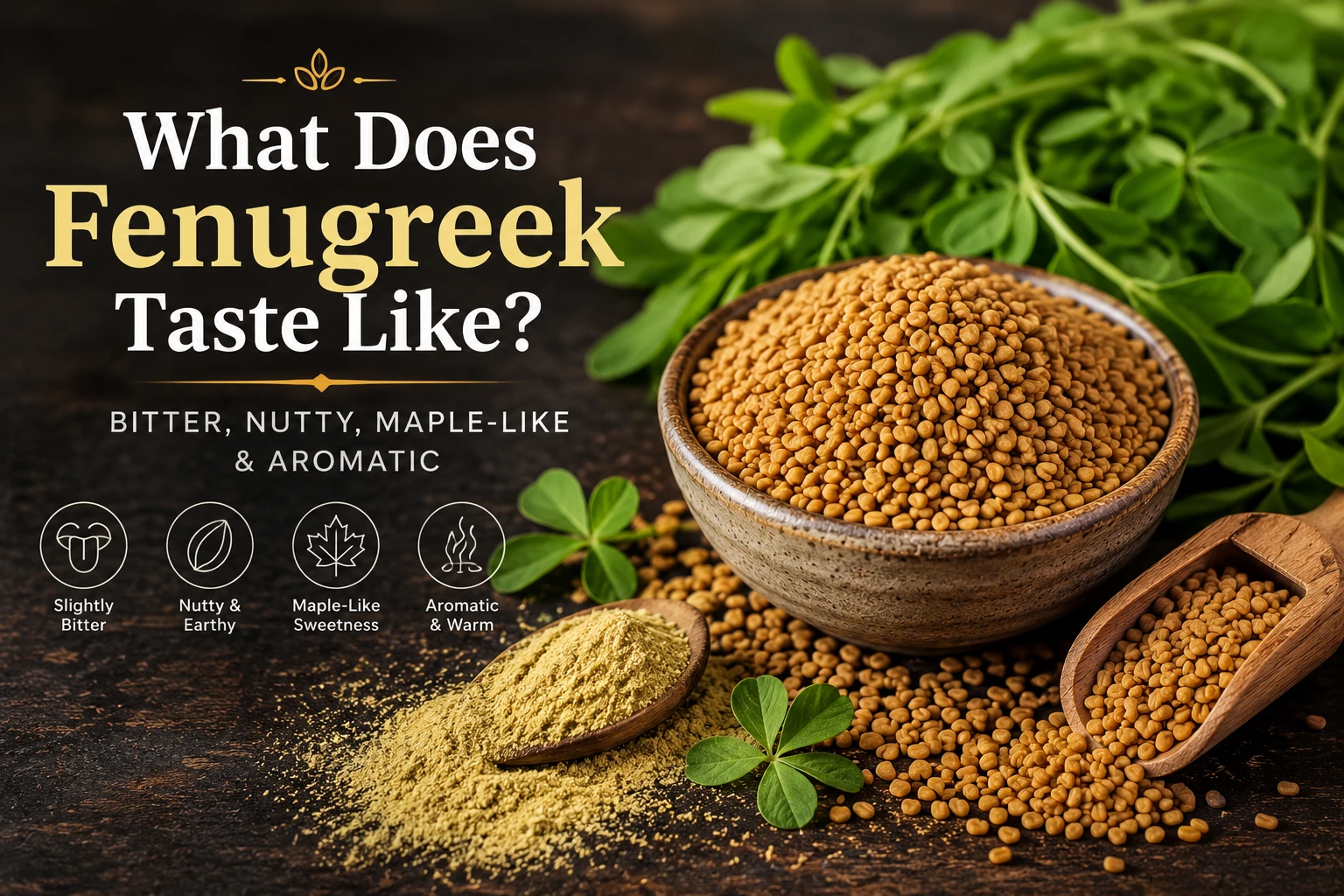
This is the point most guides skip. Fenugreek seeds and fenugreek leaves come from the same plant but play completely different roles in a dish — seeds bring concentrated bitterness, leaves (fresh or dried as kasuri methi) bring a milder, herbal aroma. Using a seed substitute where the recipe needs leaves (or vice versa) will throw off the dish.
Bitter · Nutty · Maple-Adjacent
Used in: curries, spice blends, pickles, meat rubs, tea
- ✅ Yellow Mustard Seeds — 1:1 ratio (best all-rounder)
- ✅ Fennel + Mustard Seed — ½ tsp each per 1 tsp
- ✅ Celery Seeds — 1:1 (herbal, earthy)
- ✅ Curry Powder — 1 flat tsp per 1 heaped tsp
- ✅ Cumin Seeds — 1:1 (warm, complex)
Herbal · Slightly Bitter · Aromatic
Used in: saag, dal, butter chicken, curries — fresh or dried (kasuri methi)
- ✅ Curry Leaves (fried) — best for dried leaves / kasuri methi
- ✅ Dried Mint — for aromatic lift in butter chicken
- ✅ Mustard Greens — 1:1 for fresh leaves
- ✅ Spinach — 1:1, milder and less bitter
- ✅ Kale — 1:1, bitter edge without sweetness
Can I Substitute Fenugreek Seeds for Leaves? (Or Leaves for Seeds?)
This is one of the most-searched fenugreek questions, and most guides never answer it directly. Here’s the honest breakdown for both directions:
🌰 → 🌿 Using Seeds Instead of Leaves
- ⚠️Use about ¼ the amount the recipe calls for in leaves — seeds are much more concentrated
- ⚠️Toast lightly first and add earlier in cooking so the bitterness has time to mellow
- ❌Won’t replicate the leafy texture or colour — poor swap for saag or salads
🌿 → 🌰 Using Leaves Instead of Seeds
- ⚠️Use roughly 4x the amount in dried leaves — they’re much milder
- ⚠️Add near the end of cooking — leaves lose aroma with prolonged heat
- ❌Won’t provide the same textural bite in pickles or tempering (tadka)
What Spice Is Closest to Fenugreek? — Similarity Ranked
No spice is identical to fenugreek’s complex bitter-sweet-nutty profile, but these four come closest based on shared flavour compounds and culinary role.
The best like-for-like swap — mild, bitter-sweet flavour with a touch of spice. Works in virtually any recipe that calls for fenugreek seeds.
Comes from wild celery — bolder and spicier than fenugreek, with an unrivalled level of bitterness. Best combined with a touch of maple syrup or brown sugar.
Shares the compound sotolone with fenugreek, giving both a caramel-like scent. But it’s wet and lacks bitterness entirely — use only as a small addition alongside mustard seed, never alone.
Unrelated to fenugreek despite the similar name — fennel is sweeter and anise-like. Best used blended with mustard seed to temper its licorice edge and add fenugreek’s signature sweetness.
Fenugreek Flavour Wheel — Which Substitute Covers Each Note
Fenugreek has several distinct flavour dimensions — bitterness, nuttiness, a faint maple-like sweetness (from the compound sotolone), and an earthy, celery-like base. No single substitute covers all of them.
Bitter
Sharp, raw bitterness — mellows with toasting
Maple-like
Faint caramel sweetness from sotolone
Earthy / Celery-like
Vegetal, grounding base note
Nutty
Toasted, roasted depth once cooked
Herbal (leaves)
Green, slightly bitter — from fresh/dried leaves
Warm / Spicy
Gentle heat once bloomed in oil
Aromatic lift (dried leaves)
Fragrant finishing note in sauces
Complexity
The layered, hard-to-replicate whole
10 Best Fenugreek Substitutes — Ranked by Versatility & Flavour Match
Each substitute ranked by how closely it mimics fenugreek’s bitter, nutty, faintly maple-like profile across different dish types.
#1 Yellow Mustard Seeds
82% matchThe best like-for-like swap for fenugreek seeds. Mild, bitter-sweet with a touch of spice and earthiness. Works in curries, spice blends, pickles and rubs. For a closer match, add a small pinch of maple syrup.
#2 Fennel + Mustard Seed
80% matchThe mustard brings bitterness, the fennel brings fenugreek’s signature sweetness — together the closest blended match. Lightly toast both before using for a rounder flavour.
#3 Celery Seeds
70% matchBolder and spicier than fenugreek, with strong bitterness. Best combined with a touch of maple syrup or brown sugar to round out the flavour. Great in pickling brines and spice blends.
#4 Curry Powder
75% matchA cheeky but effective substitute — most commercial curry powders already contain ground fenugreek along with complementary spices. The easiest one-jar solution for curries and stews.
#5 Cumin Seeds
68% matchWarm, nutty and savory with a hint of citrus. Doesn’t replicate fenugreek’s bitterness, but adds real complexity to curries, soups and stews where fenugreek would otherwise appear.
#6 Coriander Seeds (ground)
62% matchCitrusy and slightly sweet on its own — best paired with ground mustard (1 tsp mustard + ½ tsp coriander per 1 tsp fenugreek powder) to bring back the missing pungency.
#7 Curry Leaves (fried)
60% matchThe best textural match for dried fenugreek leaves — lightly fry in oil until crispy before adding for the closest aromatic result. Purely about texture, not flavour identity.
#8 Mustard Greens
65% matchSpicy, bitter-tasting leaf that closely mirrors fenugreek’s leafy pungency. Use raw or cooked in saag, aloo gobi and other vegetable curries.
#9 Maple Syrup
55% matchShares fenugreek’s sotolone compound (the source of its maple-like scent), but is far too sweet and wet to use alone. Add a small amount alongside mustard seed — never as a standalone dry-ingredient swap.
#10 Dried Mint
50% matchDoesn’t have fenugreek’s earthy curry background, but adds a similar fresh, aromatic finish. Best for dishes where fenugreek leaves are a minor finishing touch, like butter chicken.
Fenugreek Substitute for Every Dish — 20+ Recipes & Cuisines
| Dish | Cuisine | Best Substitute | Ratio | Key Tip |
|---|---|---|---|---|
| Butter Chicken | Indian | Dried Mint | 1:1 | Stir in near the end, off heat |
| Aloo Gobi / Saag | Indian | Mustard Greens | 1:1 | Use raw or cooked, same as fresh leaves |
| Dal / Lentil Soup | Indian | Cumin + Coriander | ½ tsp each per 1 tsp | Toast in oil before adding lentils |
| Sambar | South Indian | Yellow Mustard Seeds | 1:1 | Temper (tadka) in hot oil first |
| Methi Paratha | Indian | Spinach + Mustard Seed | 1 cup + ½ tsp per 1 cup leaves | Add mustard seed for the missing bitterness |
| Garam Masala Blend | Indian | Ground Mustard + Coriander | 1 tsp mustard + ½ tsp coriander | Also works: a store-bought curry powder |
| Mango Chutney | Indian | Yellow Mustard Seeds | 1:1 | Bloom in oil before adding mango |
| Panch Phoran (5-spice blend) | Bengali | Extra Mustard + Fennel | Increase both by ¼ tsp | Fenugreek is a minor note here — easy to omit |
| Achar Gosht (Pickled Meat Curry) | Pakistani | Mustard Seed + Fennel | 1:1 blend | Fry whole seeds in oil at the start |
| Fenugreek Tea | Universal | Fennel Tea | 1 tsp per cup | Different flavour, similar digestive-tea role |
| Mango Pickle (Achar) | Indian | Yellow or Black Mustard Seeds | 1:1 | Black mustard for a spicier pickle |
| Curry Base Sauce | Indian | Curry Powder | 1 flat tsp per 1 heaped tsp | Already contains fenugreek in most blends |
| Niter Kibbeh (Spiced Butter) | Ethiopian | Carom (Ajwain) Seeds | 1:1 | Similar raw bitterness; toast lightly first |
| Berbere Spice Blend | Ethiopian | Fennel + Mustard Seed | ½ tsp each per 1 tsp | Adjust chili levels separately to taste |
| Bread / Flatbread Seasoning | Middle Eastern | Celery Seed | 1:1 | Sprinkle before baking for texture and bite |
| Malai Paneer | Indian | Curry Powder | 1 tsp per 1 tsp | Balances the cream without overpowering |
| Mung Bean Curry | Indian | Cumin + Mustard Seed | ½ tsp each per 1 tsp | Temper in oil before adding lentils |
| Meat Rub / Marinade | Universal | Cumin + Coriander + Mustard | Equal parts, 1 tsp total per 1 tsp | Rub in 30+ min before cooking for best flavour |
| Kuku Sabzi (Persian Herb Omelet) | Persian | Maple Syrup (tiny amount) | A few drops per batch | Only for the faint aromatic note, not bitterness |
| Halva | Middle Eastern | Toasted Sesame + Maple | 1:1 sesame, drizzle of maple | Fenugreek’s role here is mostly aromatic |
Fenugreek Substitute Comparison — All at a Glance
| Substitute | Bitterness | Sweetness | Form | Availability | Curries | Pickles | Leafy Dishes | Ratio |
|---|---|---|---|---|---|---|---|---|
| Yellow Mustard Seeds | High | Low | Seed | Common | ✅ Best | ✅ Best | ❌ Avoid | 1:1 |
| Fennel + Mustard | Med | High | Seed | Common | ✅ Best | ✅ Good | ❌ Avoid | ½+½ tsp |
| Celery Seeds | High | Low | Seed | Common | ✅ Good | ✅ Best | ❌ Avoid | 1:1 |
| Curry Powder | Med | Med | Blend | Common | ✅ Best | ⚠️ Careful | ❌ Avoid | 1 flat:1 heaped |
| Cumin Seeds | Low | Low | Seed | Common | ✅ Good | ⚠️ Careful | ❌ Avoid | 1:1 |
| Curry Leaves (fried) | Low | Low | Leaf | Specialty | ✅ Good | ❌ Avoid | ✅ Best | 1:1 |
| Mustard Greens | Med | Low | Leaf | Common | ✅ Good | ❌ Avoid | ✅ Best | 1:1 |
| Spinach | Low | Low | Leaf | Common | ⚠️ Careful | ❌ Avoid | ✅ Good | 1:1 |
| Maple Syrup | Low | High | Liquid | Common | ❌ Avoid | ❌ Avoid | ❌ Avoid | Drops only |
| Dried Mint | Low | Low | Leaf | Common | ⚠️ Careful | ❌ Avoid | ✅ Good | 1:1 |
Fenugreek vs Fennel & Mustard Seed — Side-by-Side
The most-searched “fenugreek vs” questions, answered directly.
🆚 Fenugreek vs Fennel
🌰 Fenugreek
- Bitter, nutty, faintly maple-like
- Trigonella foenum-graecum — legume family
- Seeds are hard, angular, mustard-yellow
- Used for depth and bitterness in curries
🌿 Fennel
- Sweet, anise/licorice-like
- Foeniculum vulgare — carrot family
- Seeds are oval, ridged, pale green
- Used for sweetness and aromatic lift
Is fenugreek the same as fennel? No — despite the similar names and similar-looking seeds, they’re unrelated plants with very different flavours. See our full Fenugreek vs Fennel guide → for the complete breakdown.
🆚 Fenugreek vs Mustard Seed
🌰 Fenugreek
- More complex — bitter with maple-adjacent sweetness
- Softer texture once cooked
- Central to garam masala and panch phoran
🟡 Mustard Seed
- Simpler, sharper pungent bitterness
- Pops when tempered in hot oil
- Central to South Indian tadka and pickles
Mustard seed is the best single-spice substitute for fenugreek seeds, but the two aren’t identical — mustard is sharper and lacks fenugreek’s subtle sweetness. A pinch of maple syrup alongside mustard closes most of that gap.
Fenugreek Substitute — 15 Most-Asked Questions Answered
Yellow mustard seeds are the best like-for-like swap, used at a 1:1 ratio. For a closer flavour match, combine 1 tsp yellow mustard seeds with a small pinch of maple syrup — this recreates fenugreek’s earthy bitterness plus its faint maple-like sweetness.
Not directly at a 1:1 ratio. Fenugreek seeds are far more bitter and concentrated than the leaves. If substituting seeds for leaves, use about a quarter of the amount, toast lightly, and add earlier in cooking so the bitterness mellows. For fresh-leaf texture and colour, seeds are a poor match — a leafy green like spinach or mustard greens works better.
Yes, in a pinch, but use ground fenugreek seeds sparingly — about ⅛ to ¼ teaspoon per tablespoon of kasuri methi called for — since ground seeds are much stronger and lack the crumbly, herbal quality dried leaves add at the end of cooking.
Curry leaves are the closest textural substitute for dried fenugreek leaves, especially when lightly fried in oil before adding. Dried mint or mustard greens are also good stand-ins in curries, dals and butter chicken.
For curry, use a blend of ½ tsp yellow mustard seeds and ½ tsp fennel seeds per 1 tsp fenugreek seeds — the mustard brings the bitterness, the fennel brings the sweetness. Garam masala or curry powder also works since both typically already contain fenugreek.
Butter chicken usually calls for kasuri methi (dried fenugreek leaves) stirred in near the end. Substitute with dried mint leaves for a similar fragrant lift, or a small pinch of ground fenugreek seed added earlier for the same background bitterness.
When making garam masala from scratch, replace fenugreek seeds with an equal amount of ground mustard seed plus a smaller pinch of ground coriander seed — this mimics fenugreek’s bitter-sweet balance without dominating the blend.
Finely chopped mustard greens or spinach work well in saag and dal, at roughly a 1:1 ratio by volume. Neither has fenugreek’s characteristic bitterness, so add a small pinch of ground fenugreek seed or mustard seed alongside for a closer flavour match.
Only partially, and only for aroma. Maple syrup shares a compound called sotolone with fenugreek, which gives both their caramel-like scent — but maple syrup lacks fenugreek’s bitterness entirely and is wet, so it doesn’t work as a dry-ingredient swap. Best used in small amounts alongside mustard seed, not alone.
Use yellow mustard seeds at a 1:1 ratio for fenugreek seeds. If using black or brown mustard seeds, which are more pungent, reduce the amount slightly — about ¾ teaspoon of black mustard seed per 1 teaspoon of fenugreek seed.
No single spice fully replicates fenugreek, but yellow mustard seed is closest for bitterness, and celery seed is closest for the herbal, earthy undertone. A blend of mustard seed, celery seed and a touch of maple syrup covers the most ground.
No. Fenugreek (Trigonella foenum-graecum) is bitter, nutty and slightly maple-like. Fennel (Foeniculum vulgare) is sweet and anise-like. They are unrelated plants that are frequently confused because their names and seed shapes are similar.
Yes, in most curry and stew recipes. Use 1 flat teaspoon of curry powder per 1 heaped teaspoon of fenugreek called for. Most commercial curry powders already contain ground fenugreek along with other complementary spices.
For bread and pickles, celery seed or a mustard seed and coriander seed blend works best — both contribute the mild bitterness fenugreek adds without introducing a strong competing flavour.
Ground mustard combined with a smaller amount of ground coriander (roughly 2:1) is the closest substitute for fenugreek powder. Use the same total quantity the recipe calls for.
Explore the Complete Fenugreek Guide Hub
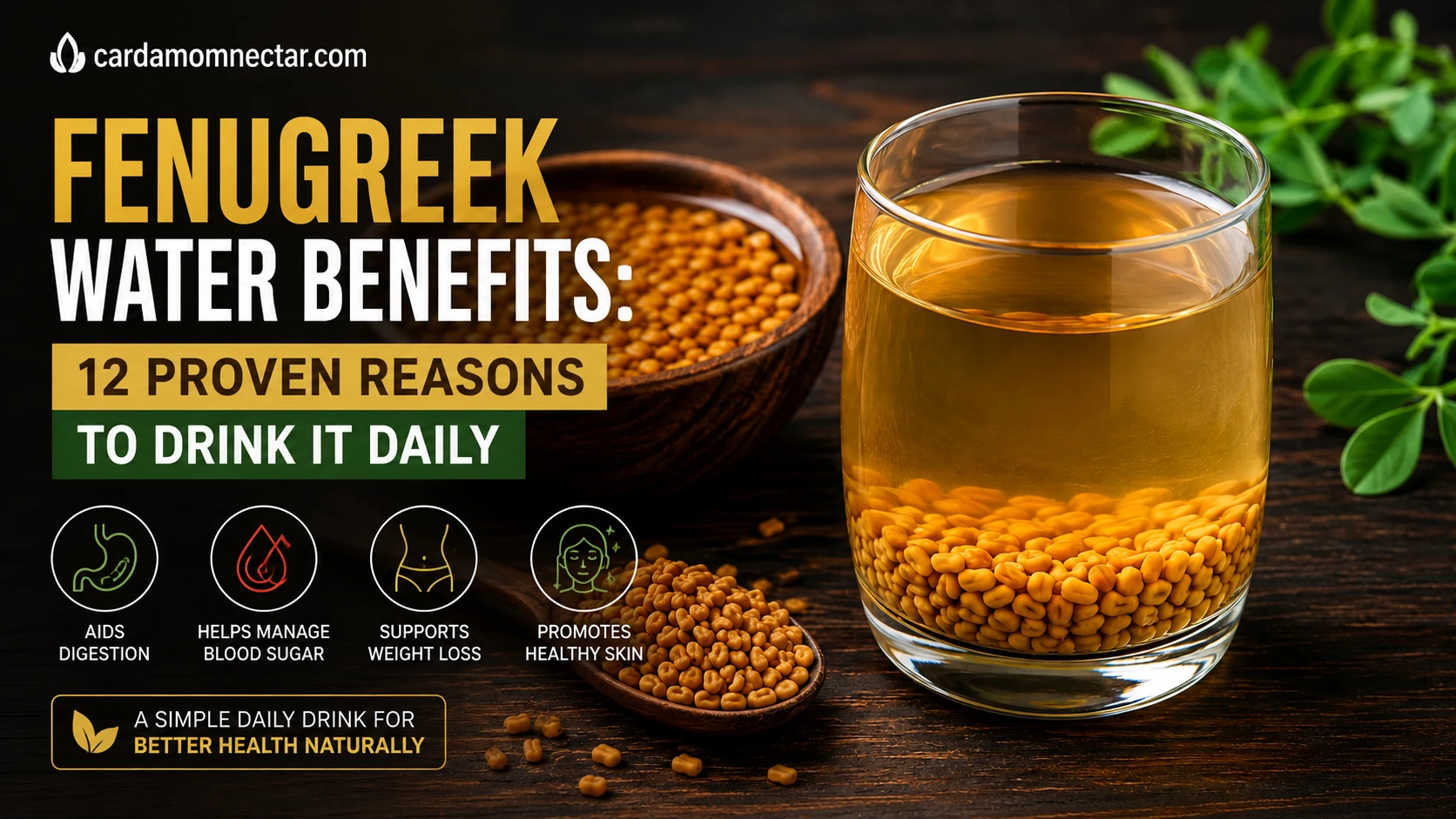
Every fenugreek guide on Cardamom Nectar, in one place — dosage, taste, hair benefits, water benefits, sprouts, Arabic name, English name and more.




Related Spice Substitute Guides
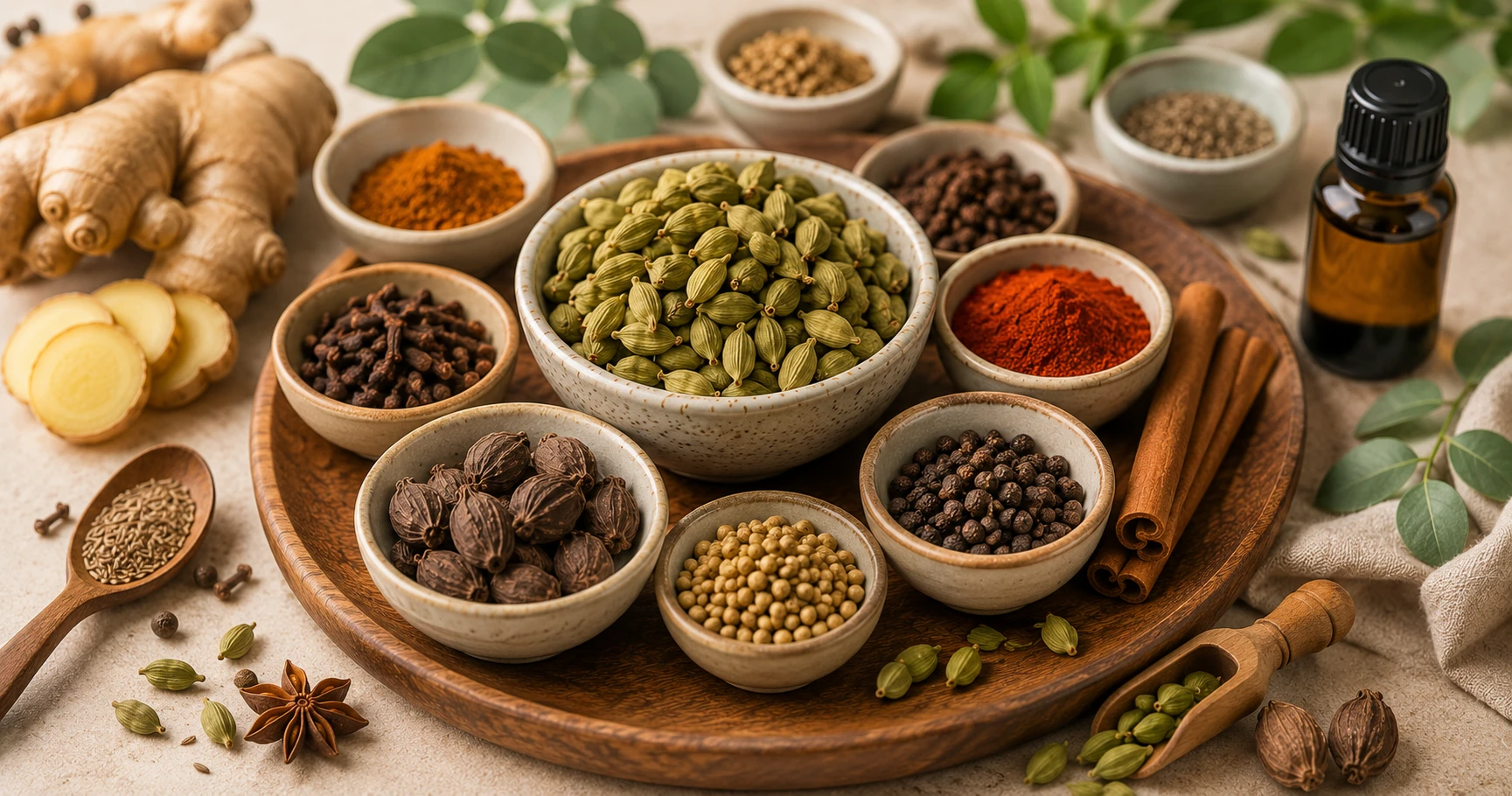
Out of another spice too? These sibling guides cover the exact same ratio-driven approach for cardamom and cumin.

🌿 Explore the Complete Fenugreek Guide
Discover everything about fenugreek — dosage, taste, hair benefits, water benefits, and the difference between seeds and leaves.
→ Complete Fenugreek Guide