Kasuri Methi Nutrition Facts: Calories, Protein & Full Breakdown
A clear, sourced nutrition breakdown for kasuri methi (dried fenugreek leaves) — per teaspoon, tablespoon and 100g — plus how it compares to fresh fenugreek leaves and fenugreek seeds, which are nutritionally distinct.


⚡ Quick Answer
1 teaspoon (about 2g) of kasuri methi has roughly 6-7 calories, with less than 1g each of protein, carbs and fat — it’s used in such small amounts that it contributes very little to daily calorie or macro totals. Per 100g, dried fenugreek leaves run approximately 280-300 calories, but this figure is rarely relevant since kasuri methi is a seasoning, not a food eaten in 100g portions. It is nutritionally distinct from both fresh fenugreek leaves and fenugreek seeds — see the comparison table below.
Kasuri Methi Nutrition — Facts at a Glance
Quick ReferenceSource: Cardamom Nectar — reviewed by Daniel Carter. Updated August 21, 2026.
Fresh Fenugreek Leaves vs Kasuri Methi vs Fenugreek Seeds — Per 100g
The three forms of fenugreek are nutritionally distinct — drying concentrates nutrients per gram, and seeds have an entirely different composition from leaves. Figures below are approximate, drawn from standard food-composition data and averaged across sources.
| Nutrient (per 100g) | Fresh Leaves | Kasuri Methi (Dried Leaves) | Fenugreek Seeds |
|---|---|---|---|
| Calories | ~49 kcal | ~280-300 kcal | ~323 kcal |
| Protein | ~4.4g | ~20-27g | ~23g |
| Carbohydrate | ~6g | ~50-70g | ~58g |
| Fiber | ~1g | ~10-24g | ~25g |
| Fat | ~0.9g | ~5-10g | ~6g |
| Iron | ~1.9mg | Present, moderate | ~34mg |
| Calcium | ~176mg | Present, moderate | ~176mg |
Kasuri Methi Nutrition — Per Teaspoon, Tablespoon & Realistic Serving
These are the serving sizes that actually matter for cooking — most recipes call for ½ to 1 teaspoon of kasuri methi, crumbled between the palms before adding.
1 Teaspoon (~2g)
6-7calories~1g carbs, <1g protein, <1g fat, <1g fiber. The most common recipe measurement.
1 Tablespoon (~5g)
15calories~2-3g carbs, ~1g protein, <1g fat. Used for a stronger finishing flavour, e.g. in a large batch of curry.
Typical Dish Portion (~1/2 tsp)
~3caloriesThe amount most home recipes actually use per serving — nutritionally negligible on its own.
Vitamins & Minerals in Kasuri Methi
Dried fenugreek leaves contain a range of micronutrients, though — as with the macros above — the amount contributed by a typical culinary pinch is small. These are listed here for completeness, not as a supplement dosing guide.
| Nutrient | Role | Contribution at Culinary Use |
|---|---|---|
| Iron | Oxygen transport, red blood cell formation | Minor |
| Calcium | Bone and teeth structure, muscle function | Minor |
| Phosphorus | Bone health, energy metabolism | Minor |
| Potassium | Fluid balance, nerve and muscle function | Minor |
| Vitamin A | Vision, immune function | Minor |
| Vitamin C | Antioxidant, collagen synthesis | Minor |
| Folic Acid (Folate) | Cell division, DNA synthesis | Minor |
How Much Kasuri Methi Is Safe Daily?
Kasuri methi is used as a seasoning, not a supplement, so “daily amount” questions are best answered in culinary terms rather than dosage terms.
- Typical culinary use is ½ to 1 teaspoon per dish, crumbled and added near the end of cooking.
- There is no established upper limit for kasuri methi specifically at normal cooking amounts — it is widely used across South Asian, Middle Eastern and North African cuisines at this scale.
- Kasuri methi is not the same as fenugreek seed extract or capsules, which are studied and dosed very differently in research on blood sugar and other health markers. Don’t apply seed-extract dosing guidance to the dried leaf.
Why Kasuri Methi Nutrition Figures Vary Between Sources
If you’ve searched for kasuri methi nutrition before, you’ve likely noticed the numbers don’t agree — some sources say 7 calories per tablespoon, others say 15; some list 270 calories per 100g, others list 380. This isn’t a data error on any one site — it reflects real variation in what’s being measured:
- Moisture content varies — commercially dried kasuri methi ranges from fully dehydrated to slightly moist depending on the brand and drying method, which changes the per-gram calorie density.
- Leaves vs whole plant confusion — some databases list figures for the whole fenugreek plant or a mixed leaf-and-stem product rather than pure dried leaflets.
- Branded products vs generic data — a specific brand’s tested nutrition panel can differ meaningfully from a generic food-database estimate.
Treat the figures on this page — and any kasuri methi nutrition figures generally — as reasonable estimates for a seasoning ingredient rather than precise values, since exact figures depend on the specific product in your pantry.
Kasuri Methi Nutrition — 6 Most-Asked Questions
One teaspoon (about 2g) of kasuri methi has roughly 6-7 calories. One tablespoon (about 5g) has roughly 15 calories. Per 100g, dried fenugreek leaves have approximately 280-300 calories — figures vary between sources depending on moisture content and processing.
Relative to its weight, yes — dried fenugreek leaves run roughly 20-27% protein by dry weight, which is high for a leafy herb. In practical terms, a typical pinch or teaspoon used to season a dish contributes only a small fraction of a gram of protein, since kasuri methi is used in very small quantities.
Drying concentrates nutrients per gram since water is removed, so kasuri methi shows higher calories, protein and mineral content per 100g than fresh leaves. However, because kasuri methi is used in much smaller quantities per serving (a pinch versus a cup of fresh leaves), the actual nutrient contribution per dish is often similar or lower.
No. Fenugreek seeds are notably higher in protein, fiber and fat than the dried leaves, and contain concentrated compounds like the soluble fiber galactomannan that the leaves have in much smaller amounts. Seeds and leaves should be treated as nutritionally distinct forms of the same plant.
Kasuri methi is typically used in small culinary amounts — roughly ½ to 1 teaspoon per dish — and is considered safe at normal cooking quantities for most people. It is not a supplement dose and should not be substituted for fenugreek seed extracts or capsules, which are studied and dosed differently.
Used in typical culinary amounts (under 1 teaspoon per serving), kasuri methi contributes a negligible amount of carbohydrate to a dish and fits easily into low-carb or keto eating patterns.
Explore the Complete Fenugreek Guide Hub
Every fenugreek guide on Cardamom Nectar, in one place.


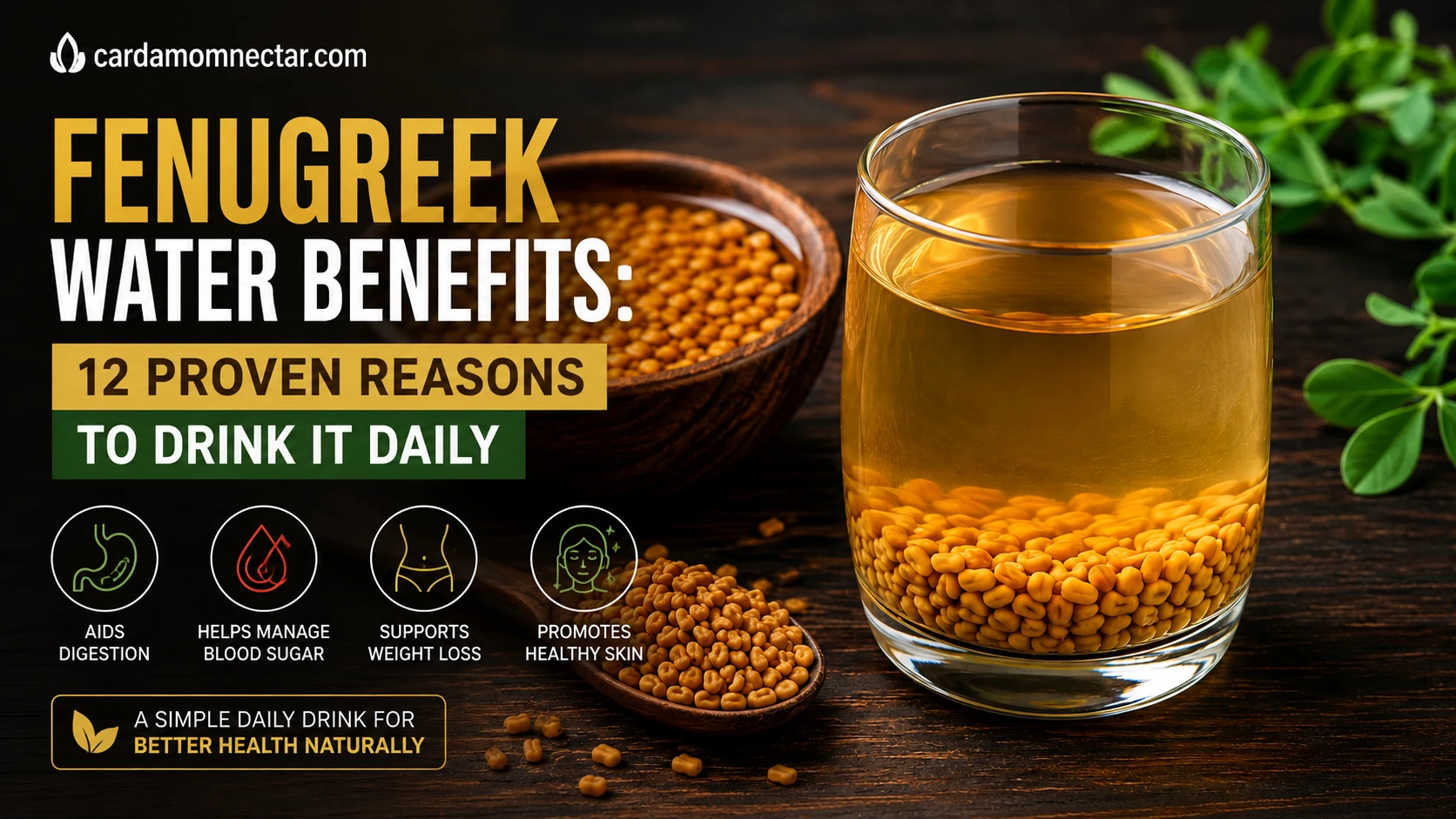


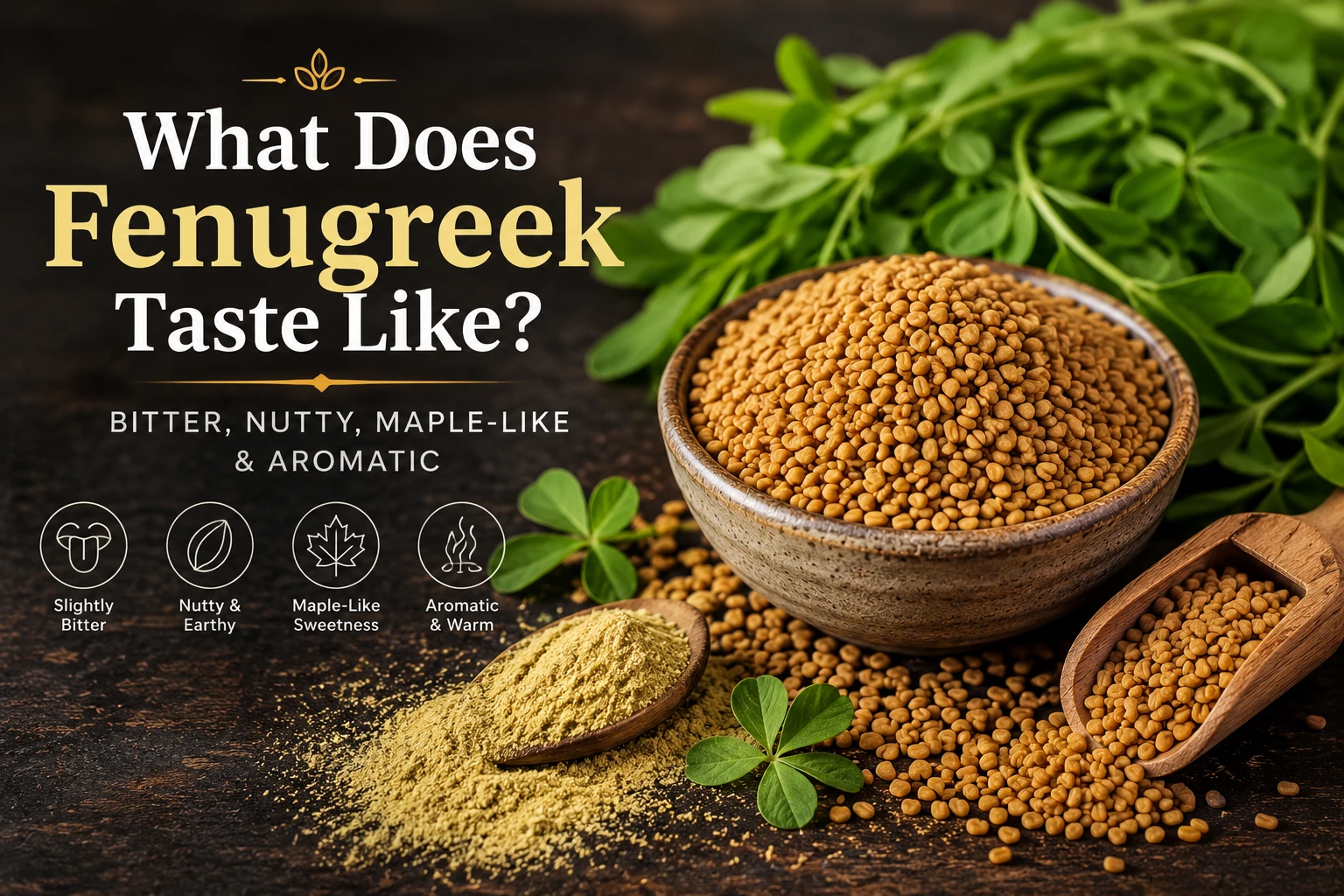
🌿 Explore the Complete Fenugreek Guide
Discover everything about fenugreek — dosage, taste, hair benefits, water benefits, substitutes, and the difference between seeds and leaves.
→ Complete Fenugreek Guide