Black Cardamom Espresso Martini
The Smokiest Coffee Cocktail You’ll Make
One ingredient changes everything. Black cardamom simple syrup — badi elaichi steeped in 2:1 sugar — adds a camphor-smoke layer beneath the espresso’s bitterness that no green cardamom, no vanilla vodka, no coffee bitters can replicate. The most distinctive spiced espresso martini in your rotation.


Add ½ oz black cardamom simple syrup to shaker → add 2 oz vodka + ¾ oz coffee liqueur + 1 oz espresso → fill with ice → shake hard 20–25 seconds until frosted → double strain into chilled coupe → wait 10 seconds → place three espresso beans on the foam. The black cardamom syrup replaces standard simple syrup entirely. The camphor-smoke of badi elaichi sits beneath the coffee bitterness in a separate register — every person who tries this spiced espresso martini asks you what you changed.
- Why black cardamom transforms an espresso martini
- The espresso martini’s origin — and why smoke improves it
- The flavour science — camphor meets coffee
- Recipe card — classic black cardamom espresso martini
- Step-by-step with method explanations
- How to make it without an espresso machine
- ☕ Smoke & Bitterness Balance Calculator
- Vodka guide — which works best
- Coffee liqueur guide — Mr. Black vs Kahlúa vs others
- Why three coffee beans — the full story
- 5 variations to try next
- Batch recipe — for 8 people
- Non-alcoholic version
- FAQ — 12 questions answered
- More black cardamom cocktails
Why Black Cardamom Transforms an Espresso Martini
The espresso martini is the most searched cocktail in the UK and among the top five globally — 1.4 million searches per month and growing 34% year-on-year as of 2025. Every bar has one. Every home bartender has made one. And almost every version uses the same formula: vodka, Kahlúa, fresh espresso, occasionally a dash of vanilla syrup.
There are hundreds of espresso martini variations online — chocolate, salted caramel, Baileys, pumpkin spice. Every single one of them adds sweetness. None of them adds smoke. That gap is where black cardamom lives.
What Black Cardamom Does That Nothing Else Does
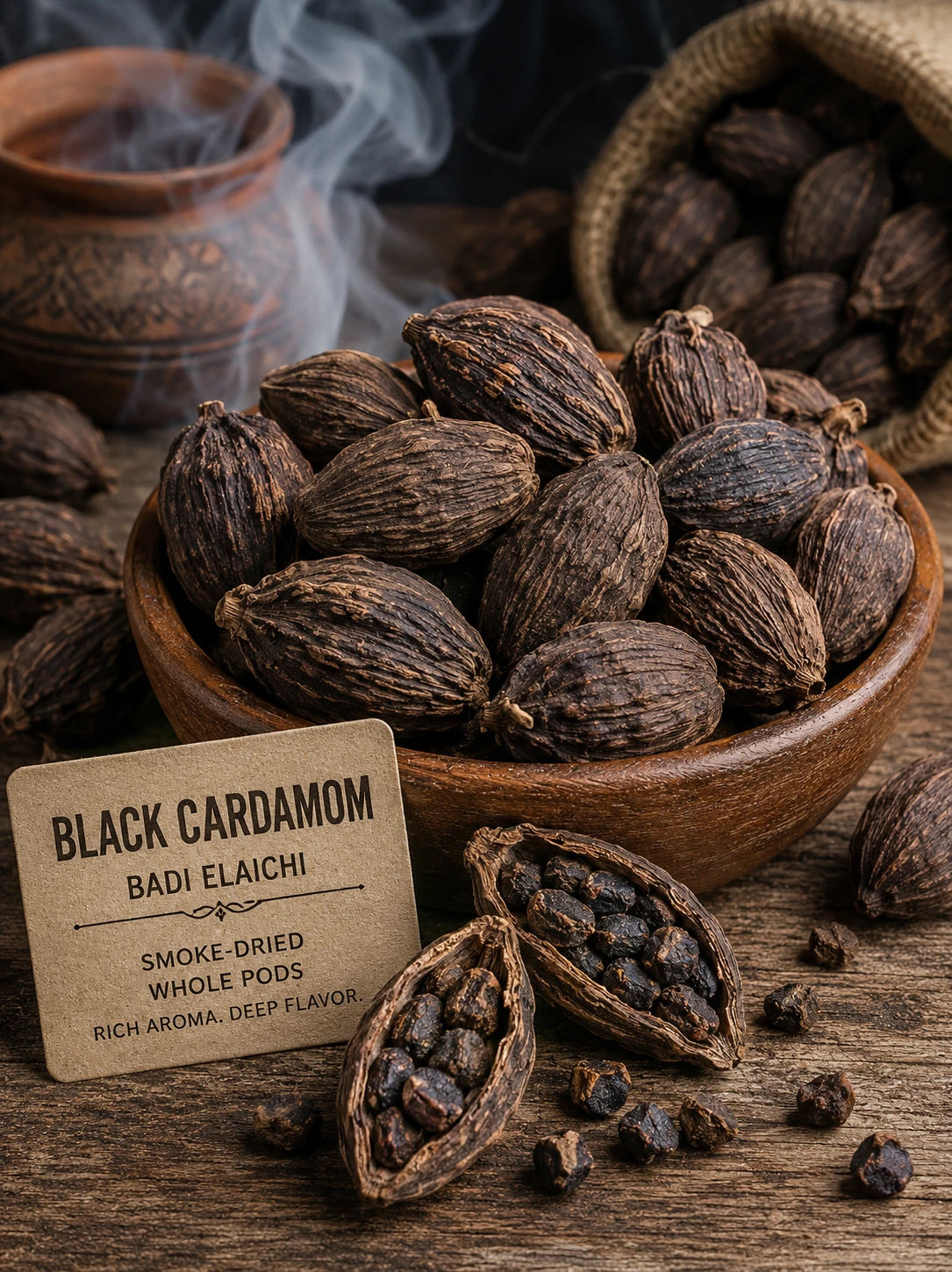
Black cardamom — badi elaichi in Hindi and Urdu, Amomum subulatum in botanical Latin — is not green cardamom’s darker sibling. It is a different spice entirely, dried over an open fire in the foothills of the Himalayas, its seeds saturated with camphor, eucalyptus, and clean wood smoke. It is the spice of slow-cooked biryani, of garam masala, of the Mughal kitchen.
In an espresso martini, dissolved into a 2:1 simple syrup and steeped for 48 hours, it adds a fourth dimension to the drink’s three-axis structure of coffee bitterness, spirit warmth, and liqueur sweetness. The camphor-smoke occupies a completely different aromatic register than any of those three — it sits beneath them, deepening every element without competing with any.
The result is a coffee cocktail that tastes like it was made by a bartender who knows something the others don’t. Green cardamom espresso martinis exist — they add floral sweetness. This is not that. This is the version for people who find most espresso martinis too sweet and not interesting enough.
The Espresso Martini’s Origin — And Why Smoke Improves It
The espresso martini was invented by bartender Dick Bradsell at London’s Soho Brasserie when a young model (reportedly Kate Moss, though this is unconfirmed) asked for something to “wake me up and mess me up.” Bradsell had just had a state-of-the-art espresso machine installed behind the bar. He combined vodka, fresh espresso, coffee liqueur, and sugar syrup, shook it with ice, and served it in a martini glass with three coffee beans on the foam. He originally called it the Vodka Espresso — later, at Fred’s Club, the Pharmaceutical Stimulant. The name Espresso Martini came later and stuck.
The drink went global in the 2010s and became the defining cocktail of the 2020s — searched more than any other cocktail in the UK every single year since 2021. What Bradsell created with simple syrup, this recipe recreates with black cardamom syrup — the smoke layer he never added but the drink was always waiting for.
The original recipe’s one structural limitation has always been its sweetness. Standard simple syrup or Kahlúa’s significant sugar content can make the drink feel heavy and one-dimensional after the first two sips. Black cardamom syrup — which is a 2:1 sugar syrup with 48-hour steeped black cardamom pods — provides the sweetness the drink needs while adding aromatic depth that makes each subsequent sip more interesting than the last.
The Flavour Science — Camphor Meets Coffee

The four core ingredients — premium vodka, fresh espresso, coffee liqueur, black cardamom simple syrup — and how each one interacts with the others.
| Component | Key Compounds | What It Contributes |
|---|---|---|
| Vodka | Ethanol (40% ABV), trace congeners | Clean alcohol structure — the neutral carrier that lets coffee and cardamom dominate. Premium vodka contributes smoothness; cheap vodka adds a harsh ethanol note that competes. |
| Fresh Espresso | Chlorogenic acids (bitterness), melanoidins (crema foam proteins), caffeine, lipids | Bold coffee bitterness, aromatic complexity, crema proteins that create the signature foam when shaken. The single most important ingredient — quality and freshness non-negotiable. |
| Coffee Liqueur | Coffee extract, sugar (25–30% in Kahlúa, ~8% in Mr. Black), ethanol base | Coffee depth, sweetness, viscosity. Mr. Black’s low-sugar cold-brew base produces a drier, more intense result; Kahlúa’s higher sugar produces a sweeter, more accessible one. |
| Black Cardamom Syrup | 1,8-Cineole (camphor-eucalyptus), alpha-terpineol, terpinen-4-ol, sucrose (2:1 ratio) | Camphor-smoke depth beneath the coffee bitterness — a separate aromatic register. Provides sweetness while adding complexity that plain simple syrup never could. |
The interaction between black cardamom’s 1,8-Cineole and freshly brewed espresso’s chlorogenic acid bitterness is functionally complementary. Chlorogenic acids activate bitter taste receptors (TAS2R16 primarily) and produce a sharp, front-of-palate bitterness. Cineole — black cardamom’s dominant volatile — activates TRPM8 (menthol) receptors and produces a cool, resinous, camphor-adjacent character on the mid-palate and retronasal passage. Because these two compounds activate different sensory pathways, they do not compete or amplify each other’s negative qualities. Instead, the cineole’s aromatic contribution extends the espresso’s flavour arc from front-of-palate bitterness through a smoke-resinous mid-palate finish. At ½ oz of 2:1 syrup, the cineole concentration is approximately 0.4–0.6 mg per serving — perceptible but below the threshold where most drinkers consciously identify it as a spice.
Recipe — Classic Black Cardamom Espresso Martini

☕ Black Cardamom Espresso Martini
Vodka, espresso, coffee liqueur, elevated by black cardamom simple syrup. Camphor-smoke beneath the coffee bitterness — the spiced espresso martini no one else is making.
Ingredients
- 2 oz premium vodka
- 1 oz fresh espresso (hot or cold)
- ¾ oz coffee liqueur (Mr. Black or Kahlúa)
- ½ oz black cardamom simple syrup
- 3 espresso beans (garnish)
Method
- Chill glass — ice water in coupe 60 sec, discard
- Build — syrup first, then vodka, liqueur, espresso
- Fill with ice — two-thirds full
- Shake hard — 20–25 sec until shaker is frosted
- Double strain — Hawthorne + fine mesh into coupe
- Wait 10 sec — let foam settle and firm up
- Garnish — 3 espresso beans centred on foam
Step-by-Step — Method & Why Each Step Matters
An espresso martini looks simple. The shaking technique, glass temperature, and straining method are what separate a properly foamed, cold, layered cocktail from a warm, flat, forgettable one.

Fill a coupe or martini glass with ice water. Wait 60 seconds. Discard completely before pouring.
Why it matters: A warm glass causes the foam to collapse on contact within 30 seconds. A properly chilled glass holds the foam stable for 5+ minutes and keeps the cocktail cold. This is the step most home bartenders skip, and the most obvious omission in a finished drink.

Add the black cardamom simple syrup to the shaker first. Then vodka, coffee liqueur, and espresso — always add the espresso last.
Why it matters: Syrup goes first because it distributes evenly when spirits are poured on top of it. Espresso goes last because its crema — the foam-creating proteins — is most active immediately after brewing. Adding espresso last and shaking immediately maximises foam production. Pre-cooling everything else in the shaker before adding hot espresso extends the crema’s foam window.

Fill the shaker two-thirds with ice. Shake vigorously for a full 20–25 seconds — longer than most cocktails — until the outside of the shaker is frosted and painful to hold bare-handed.
Why it matters: The espresso’s crema proteins require sustained mechanical force and rapid temperature drop to form stable foam. 10 seconds is insufficient — you’ll get thin foam that disappears before the glass reaches the table. 20–25 seconds produces the dense, stable, slow-collapsing foam that defines a properly made espresso martini. The cardamom syrup’s slightly higher viscosity than plain simple syrup actually assists foam stability — another reason to prefer it over a plain sugar substitute.

Strain through a Hawthorne strainer and fine mesh strainer simultaneously. Pour in one smooth, uninterrupted motion without pausing.
Why it matters: The Hawthorne catches large ice chips. The fine mesh removes micro-chips and smooths the foam — producing a flat, even, café-quality surface rather than a pitted, uneven one. Pausing mid-pour disrupts the foam layer, leaving a two-tone surface. One smooth motion from shaker to glass is the single technique separating a home espresso martini from a bar-quality one.

After pouring, set the glass down. Do nothing for 10 seconds. The foam rises and firms up before you add the beans.
Why it matters: The foam is still in motion immediately after pouring — it has air bubbles rising and consolidating. Placing the beans immediately causes them to sink into the still-moving foam. Waiting 10 seconds allows the foam to set into a firm, stable surface that supports the beans at the centre exactly where they should be. This is what makes the three-bean garnish look intentional rather than accidental.

Place three espresso beans in the exact centre of the foam in a tight triangle. Serve immediately.
Why it matters: The beans deliver roasted coffee aroma before the first sip — every time the glass is lifted, the nose catches the coffee scent before the liquid reaches the lips. They are a functional sensory primer, not decoration. Centred placement keeps the visual symmetry that makes the drink recognisable. With black cardamom syrup, the camphor-smoke aroma rises from the foam beneath the beans — the aromatic combination of roasted espresso and camphor-smoke is the first thing every drinker experiences before tasting.
How to Make It Without an Espresso Machine
“No espresso machine” is the most common barrier to making an espresso martini at home. Black cardamom syrup reduces this barrier — its aromatic complexity compensates for a slightly less powerful coffee shot. Here are all four viable options, ranked.
| Method | Result | Foam Quality | Cost |
|---|---|---|---|
| ⭐ Moka Pot | Espresso-strength, bold, concentrated — closest to a real shot | Excellent — similar crema proteins to espresso | £15–40 one-time / $15–45 |
| Nespresso / Pod Machine | Consistent, convenient, genuine espresso pressure — best home option | Very good — proper crema from pressurised extraction | Pod machine £80–200 / $90–250 |
| Cold Brew Concentrate | Smoother, less bitter, more approachable — different character | Good but lighter — no crema proteins, foam thinner | £3–8 per bottle / $4–10 |
| Instant Espresso Powder | Acceptable in absence of alternatives — lower quality, more bitter | Poor — no crema, minimal foam | Cheapest option |
If using cold brew concentrate (Cawston Press, Minor Figures, or Starbucks concentrate in the UK; Chameleon, Bizzy, or Stok in the US), use 1 oz concentrate undiluted directly in the recipe — do not add water. The black cardamom syrup’s aromatic depth compensates significantly for cold brew’s lack of crema. Add a very small pinch of fine sea salt (less than ⅛ tsp) to the shaker — it amplifies coffee flavour and partially replicates the body that crema provides.
☕ Smoke & Bitterness Balance Calculator
Every variable shifts the drink’s coffee intensity, smoke level, sweetness, and ABV. Dial in your build before you pour.
🖤 Black Cardamom Espresso Martini Builder
Adjust ratios and ingredients — bitterness, smoke, sweetness, ABV and calories update instantly.
Your Espresso Martini Profile
Estimates only — actual values vary by brand and espresso strength.
Vodka Guide — Which Works Best With Black Cardamom
Vodka’s role in a spiced espresso martini is to provide clean alcohol structure without competing with the coffee or the black cardamom smoke. The best vodka here is the one you don’t taste independently.

⭐ Clean Premium Vodka — Best Choice
Absolut, Grey Goose, Ketel One, Belvedere. Clean, neutral, smooth — lets the espresso and black cardamom dominate entirely. Premium vodka’s smoothness means the alcohol heat doesn’t compete with the cardamom smoke on the finish.

☕ Coffee Vodka — Intensified Version
Absolut Vanilia or Stolichnaya Cold Brew. Doubles down on the coffee character — the vanilla or coffee-infused vodka amplifies the espresso rather than adding a distinct flavour. With black cardamom syrup, the smoke reads more prominently against the sweeter base. Best for people who want maximum coffee forward with smoke in the background.
🔥 Mezcal — Double Smoke Variation
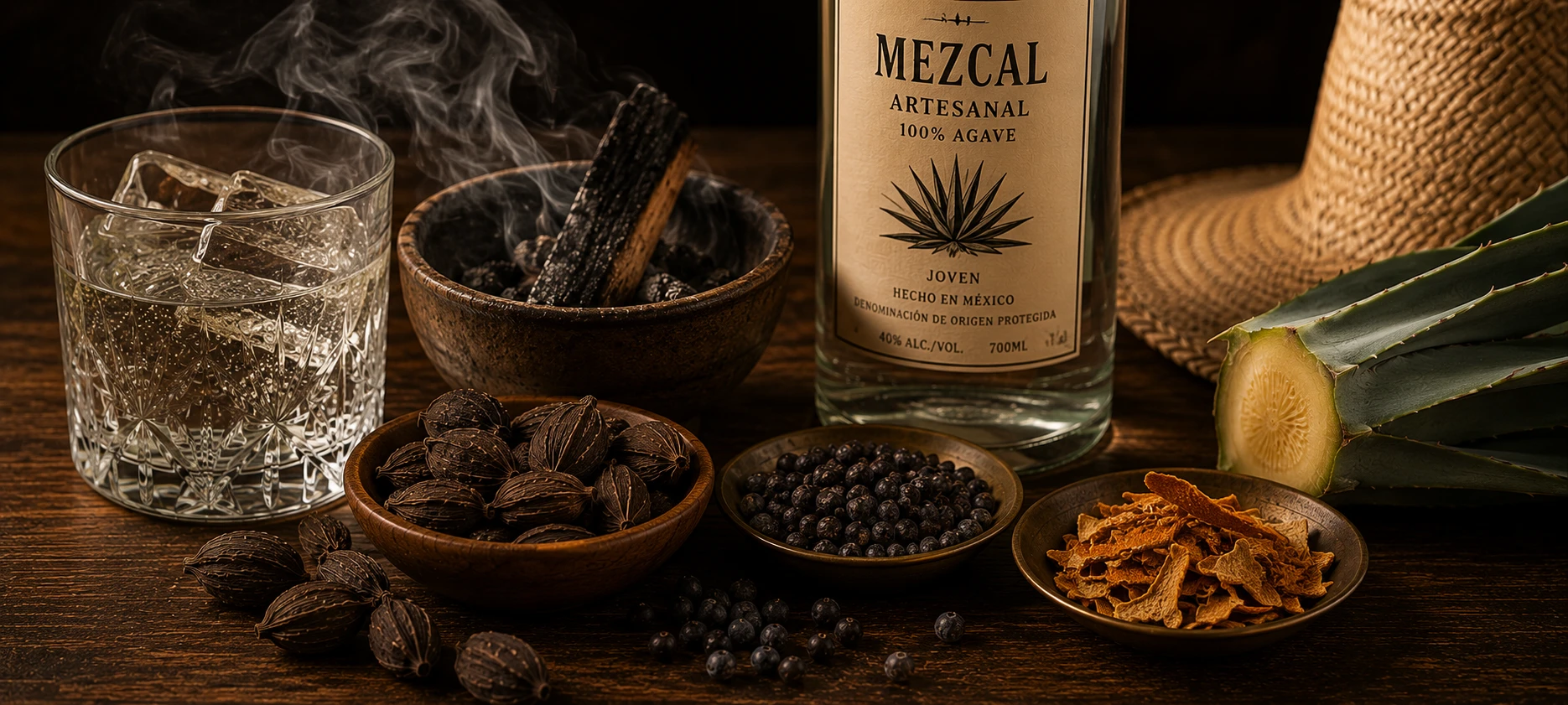
Swap vodka entirely for mezcal. Two smoke sources — agave smoke (phenol-based) from the mezcal and camphor-smoke (terpene-based) from the black cardamom — create a coffee cocktail of extraordinary complexity. Use Del Maguey Vida or Banhez. Not a standard espresso martini at that point — a different drink entirely, but exceptional.

🌵 Tequila — Agave-Coffee Riff
Blanco tequila replaces vodka for an agave-forward coffee cocktail. The tequila’s grassy, citrus-adjacent character opens up a completely different register beneath the coffee and cardamom. The smoke from black cardamom syrup bridges the agave and espresso unexpectedly well. Use Patrón Silver or Olmeca Altos blanco.
Coffee Liqueur Guide — Mr. Black vs Kahlúa vs Others
The coffee liqueur is the second most impactful ingredient after the espresso itself. It determines sweetness level, coffee intensity, and how prominently the black cardamom smoke reads in the finished drink.
| Liqueur | Sugar Level | Coffee Profile | With Black Cardamom | Available |
|---|---|---|---|---|
| ⭐ Mr. Black | ~8% (low) | Cold brew intense, bitter, complex — Australian craft | Best — low sugar lets cardamom smoke remain clearly distinct. Coffee and smoke at equal prominence. The serious bartender’s choice. | UK: Waitrose, Sainsbury’s · US: Total Wine, Whole Foods |
| Kahlúa | ~25% (high) | Sweeter, vanilla-coffee, rum base — global classic | Good — smoke slightly less distinct but very approachable. Most accessible result. The entry-level choice that still works well with the syrup. | Everywhere |
| Tia Maria | ~20% (medium) | Lighter, floral, Jamaican coffee character, vanilla-adjacent | The cardamom smoke reads most forward here — Tia Maria’s lighter coffee doesn’t compete. Best for people who want smoke to be the dominant note. | UK: Waitrose, Sainsbury’s, Tesco · US: Drizly, Total Wine |
| Patrón XO Café | ~15% (medium) | Coffee + tequila base — drier, more spirit-forward | Excellent for a tequila-base variation. The agave character bridges with black cardamom’s earthy notes unexpectedly well. | UK: Waitrose · US: most liquor stores |
| Baileys Espresso | ~20% (medium) | Cream + coffee + Irish whiskey — indulgent | Creates a creamy, dessert-leaning drink. Cardamom smoke adds an unusual savoury edge to the cream. Different register entirely — more dessert cocktail than craft cocktail. | Everywhere |
Mr. Black Cold Brew Coffee Liqueur is available at Waitrose, Sainsbury’s, and online from Master of Malt and The Whisky Exchange. It has become significantly more widely available since 2024. If you cannot find it locally, Tia Maria is the best UK supermarket alternative that still allows the black cardamom smoke to read clearly. Avoid supermarket own-brand coffee liqueurs — their artificial coffee flavour clashes with real espresso.
Why Three Coffee Beans — The Full Story
The three coffee beans on an espresso martini are one of the most asked-about details in cocktail culture — a PAA question, a Google autocomplete, a dinner party conversation. Here is the complete answer.
Origin: Dick Bradsell added three coffee beans to the original Vodka Espresso in 1983, borrowing from Italian sambuca service culture — where espresso beans were traditionally floated in the liqueur. The number three was already embedded in Italian drinking culture through the Sambuca con la mosca (“sambuca with the fly”) tradition, where three beans in sambuca represented health, wealth, and happiness.
Symbolism: Each bean represents one of three blessings — salute, ricchezza, felicità: health, wealth, happiness. In some Italian Catholic tradition, the three also represent the Holy Trinity. In cocktail culture, the number three has taken on the broader meaning of completeness — a balanced, well-considered drink.
Function: Beyond symbolism, the three beans serve three practical roles: (1) they deliver roasted coffee aroma on every sip before the liquid reaches the lips; (2) they test foam quality — beans sink if foam is too thin; (3) they provide visual contrast against the pale foam, making the drink instantly recognisable.
In this version: With black cardamom syrup, the foam carries both roasted coffee aroma from the espresso crema and camphor-smoke aroma from the dissolved cineole compounds. The aromatic combination that greets you when lifting the glass — roasted coffee, then an underlying note of clean wood smoke — is the clearest signal that this is not a standard espresso martini.
5 Black Cardamom Espresso Martini Variations to Try
Each variation takes the smoke-coffee combination in a different direction. Full recipes in development — bookmark the ones that interest you.
🔥 Double Smoke Espresso Martini
Mezcal replaces vodka. Two chemically distinct smoke sources — agave smoke (phenol-based, bold and identifiable) and black cardamom camphor-smoke (terpene-based, resinous and subtle) — layer against the coffee bitterness. The result is extraordinary: a coffee cocktail that tastes like it was made in a mezcal bar by someone who also knows South Asian spices. Use Mr. Black, not Kahlúa — the lower sugar keeps the smoke and mezcal distinct. Garnish with a single charred espresso bean instead of three.
🥃 Black Cardamom Bourbon Espresso Martini
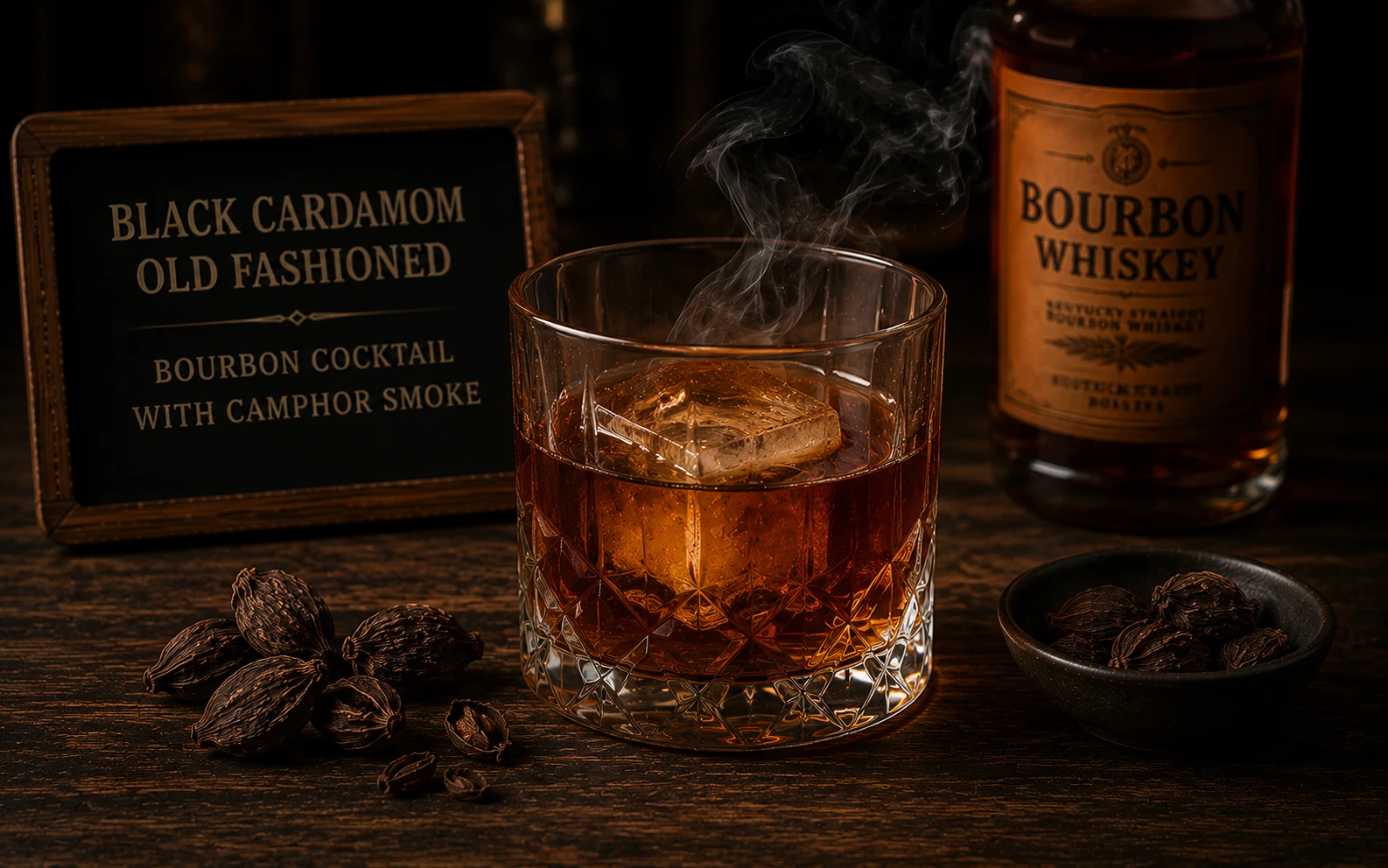
Bourbon replaces vodka for a spirit-forward, warming coffee cocktail. Bourbon’s vanilla-oak notes add a layer between the espresso bitterness and the black cardamom smoke that creates one of the most complex coffee drinks you can make in under five minutes. Use a high-rye bourbon — Bulleit or Woodford Reserve. Reduce syrup to ¼ oz since bourbon already contributes significant sweetness. Best in autumn and winter — this is not a brunch drink, it is a late-evening, fireside cocktail.

🧊 Iced Black Cardamom Espresso
Half the vodka (1 oz), cold brew concentrate instead of espresso, a splash of oat milk added after straining. This is the espresso martini for people who want coffee and smoke without significant alcohol — closer to a spiked iced latte than a cocktail. The black cardamom syrup is essential here because without it, the lower vodka and diluted espresso produce a flat, forgettable drink. With it, the smoke anchors everything and makes the drink feel intentional despite its lower ABV (approximately 12–14%).
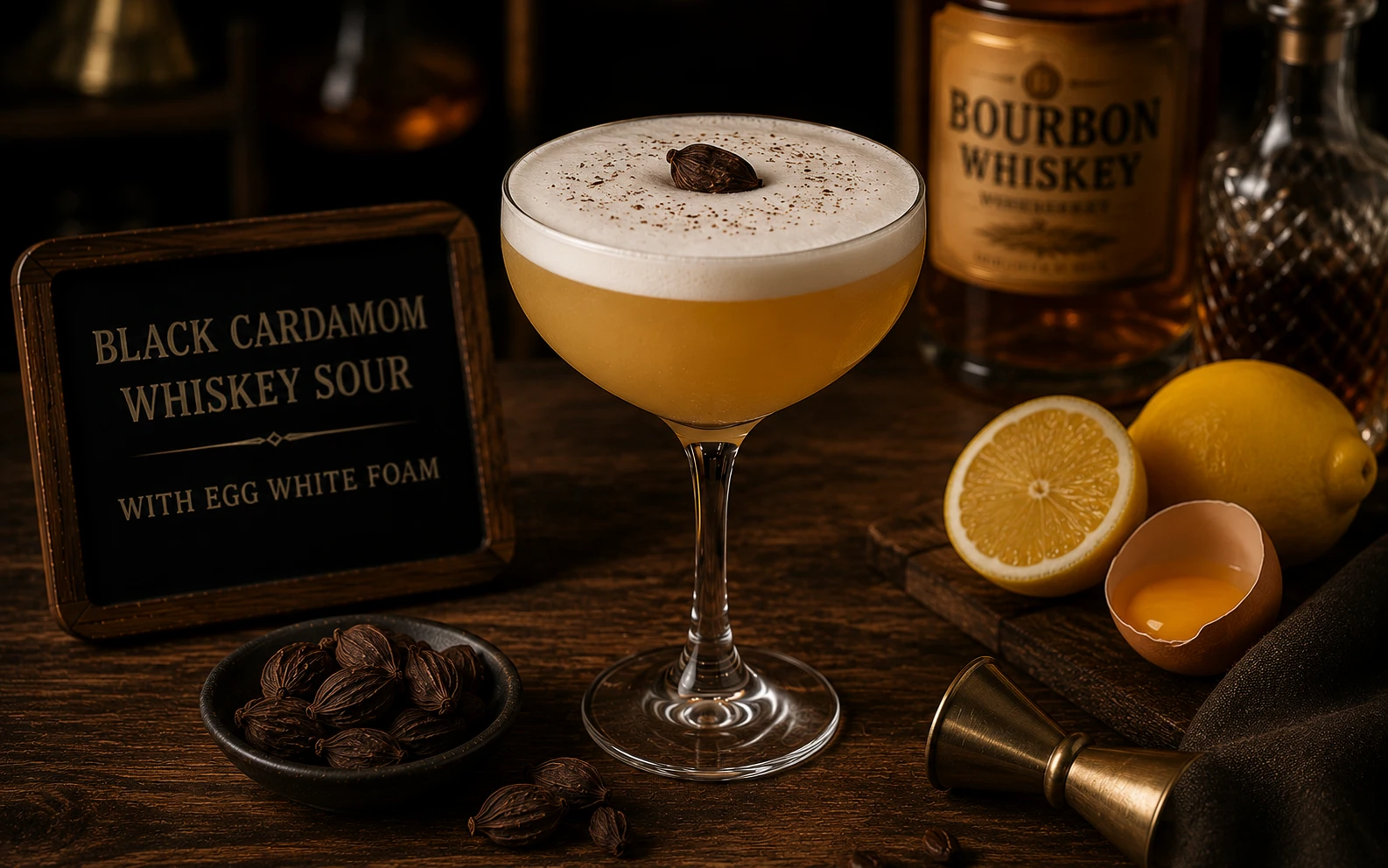
🫧 Black Cardamom Espresso Martini with Cardamom Foam
Add ½ oz aquafaba to the shaker alongside the standard ingredients. The egg-free foam adds the same silky texture as a whiskey sour foam but without any competing flavour — it actually amplifies the black cardamom aroma because the foam surface acts as a larger aromatic delivery area for the dissolved cineole compounds. The most visually impressive and aromatically complex variation. Use a cocktail pick to draw the black cardamom smoke-pattern through the foam before serving.
🤍 Black Cardamom White Espresso Martini
White chocolate liqueur (Godiva, Mozart White) replaces the coffee liqueur. Cold brew replaces fresh espresso. The result is a paler, sweeter, dessert-adjacent cocktail where the black cardamom smoke creates a savoury contrast against the white chocolate sweetness that is genuinely surprising. The smoke-sweet tension makes it more interesting than most dessert martinis. Reduce black cardamom syrup to ¼ oz since white chocolate liqueur contributes significant sweetness. Garnish with ground black cardamom on the foam instead of espresso beans.
Batch Recipe — Black Cardamom Espresso Martini for 8
The spirits base can be batched and refrigerated. Add espresso fresh per glass at serving time — pre-adding espresso causes it to go stale and flat within 2 hours.
☕ Batched Black Cardamom Espresso Martini Base — Serves 8
Pre-batch the spirits. Shake each glass with fresh espresso at serving time. Impressive results, manageable effort.
Batch Base
- 16 oz (2 cups) vodka
- 6 oz coffee liqueur
- 4 oz black cardamom syrup
- Per serving: 1 oz fresh espresso + ice
- 24 espresso beans (garnish)
Method
- Combine vodka, liqueur, syrup in sealed bottle — stir to combine
- Refrigerate up to 1 week without espresso
- Per serving — pour 2.75 oz base + 1 oz fresh espresso into shaker
- Add ice — fill shaker two-thirds
- Shake hard — 20–25 sec until frosted
- Double strain — into chilled coupe
- Wait 10 sec — place 3 beans, serve immediately
Pre-chill 8 coupes in the freezer 30 minutes before serving. Brew espresso in two batches — 4 shots at a time — so it’s always within 5 minutes of brewing. Have the batch base pre-measured in a jug. At service: 2.75 oz base + 1 oz espresso + ice into shaker, shake 20–25 sec, double strain, 10-sec wait, 3 beans. Under 90 seconds per glass. The two-batch espresso approach keeps foam quality consistent across all 8 drinks.
Non-Alcoholic Black Cardamom Espresso Martini
The NA version is the easiest of all the black cardamom mocktails to make — the two defining ingredients (espresso and black cardamom syrup) are already alcohol-free.
| Component | Best NA Substitute (US) | Best NA Substitute (UK) |
|---|---|---|
| Vodka | Seedlip Spice 94 (adds botanical complexity) or Monday Gin NA | Seedlip Spice 94 (Waitrose, Sainsbury’s) · Lyre’s American Malt |
| Coffee Liqueur | Lyre’s Coffee Originale or Monin Coffee Syrup (reduce quantity to ½ oz) | Lyre’s Coffee Originale (Amazon, Waitrose) · Mr. Black has no NA version yet |
| Espresso | Fresh espresso — unchanged, essential, non-negotiable | |
| Black Cardamom Syrup | Already alcohol-free — no substitution needed | |
Unlike NA versions of spirit-forward cocktails (Negroni, Old Fashioned), where the spirit’s complexity is very hard to replicate, the NA espresso martini works well because espresso and black cardamom syrup together carry most of the flavour weight. The Seedlip Spice 94 adds botanical depth without an alcohol base. The result is a coffee-forward, smoke-adjacent drink that is genuinely impressive as a non-alcoholic option — not a compromise.
Frequently Asked Questions
What does black cardamom add to an espresso martini?
Black cardamom adds camphor-smoke depth — derived from 1,8-Cineole and related terpene compounds — that sits beneath the coffee’s bitterness in a separate aromatic register. Unlike green cardamom which adds floral sweetness, black cardamom contributes a resinous, smoke-adjacent layer. At ½ oz of 2:1 syrup, the smoke reads as added complexity — most drinkers describe it as tasting like “a craft bar made this” rather than identifying the spice. It makes the espresso martini drier, more complex, and more interesting after the first sip.
Can I make an espresso martini without an espresso machine?
Yes. A moka pot is the best alternative — it produces espresso-strength coffee with similar crema proteins that create excellent foam. Nespresso or pod machines are the most convenient substitute. Strong cold brew concentrate (2:1 ratio, used undiluted) works well for a smoother, less bitter result. Adding a very small pinch of fine sea salt to the shaker when using cold brew partially replicates the body that espresso crema provides. The black cardamom syrup’s aromatic complexity compensates partially for a weaker shot.
Why does an espresso martini have three coffee beans?
The three beans symbolise health, wealth, and happiness — borrowed from Italian sambuca culture where coffee beans (representing these values) were traditionally served floating in the spirit. Dick Bradsell incorporated this tradition when he created the original Vodka Espresso in London in 1983. Functionally, the beans deliver roasted coffee aroma before the first sip, test foam quality (beans sink if foam is too thin), and provide visual contrast against the pale foam. With black cardamom syrup, the camphor-smoke rises from the foam beneath the beans — the combined aroma is the first thing experienced on lifting the glass.
What coffee liqueur is best for a black cardamom espresso martini?
Mr. Black Cold Brew Coffee Liqueur is the best choice — its low sugar content (approximately 8% vs Kahlúa’s 25%) allows the black cardamom smoke to remain clearly distinct in the finished drink. Kahlúa works well and is more accessible — the cardamom smoke reads slightly less clearly but the drink is more approachable. Tia Maria produces the most smoke-forward result of the three because its lighter coffee profile doesn’t compete. Avoid cheap generic coffee liqueurs — their artificial coffee character clashes with real espresso.
Shake or stir an espresso martini?
Always shake — never stir. The vigorous shaking aerates the espresso crema proteins to create the signature foam that defines an espresso martini. Shake hard for 20–25 seconds with ice — longer than most shaken cocktails. Double-strain through a fine mesh to remove ice chips that would collapse the foam texture and produce a pitted, uneven surface. Never stir an espresso martini — you will have no foam and a flat, under-chilled drink.
Hot or cold espresso for a black cardamom espresso martini?
Hot, freshly brewed espresso produces better foam — the heat activates the crema proteins in the coffee and creates more foam when shaken vigorously with ice. Cold espresso or cold brew works but produces thinner, less stable foam. If using hot espresso: add it last to the shaker and shake immediately — the rapid temperature drop from the ice is what builds the foam. With black cardamom syrup, cold brew is slightly more forgiving than in a standard recipe because the syrup’s higher viscosity assists foam stability.
What vodka works best with black cardamom?
A clean, unflavoured premium vodka — Absolut, Grey Goose, Ketel One. Vodka’s job here is to provide clean alcohol structure without competing with the espresso or black cardamom smoke. Premium vodka’s smoothness means alcohol heat doesn’t compete with the cardamom finish. Avoid flavoured vodkas (vanilla, caramel) unless deliberately making a sweeter variation. In the UK: Absolut is excellent value and widely available; Grey Goose for a premium result.
Is a black cardamom espresso martini vegan?
Yes — all four core ingredients (vodka, espresso, coffee liqueur, black cardamom simple syrup) are vegan. The foam is produced by shaking espresso crema with ice — not egg white — so no animal products are involved. This distinguishes the espresso martini’s foam from a whiskey sour foam, which requires egg white or aquafaba. The only non-vegan component would be a honey syrup variation or adding cream.
Why does my espresso martini have no foam?
Four causes: (1) Insufficient shaking — shake hard for a full 20–25 seconds, not 10; (2) Cold espresso — hot freshly brewed espresso contains active crema proteins that create foam; (3) Skipping double-strain — a fine mesh strainer removes ice chips that collapse foam on impact; (4) Warm glass — foam collapses immediately on contact with a warm surface. Chill your glass with ice water for 60 seconds before pouring. The black cardamom syrup’s slightly higher viscosity assists foam stability relative to plain simple syrup.
Can I batch-make a black cardamom espresso martini?
The spirits base (vodka + coffee liqueur + black cardamom syrup) can be batched and refrigerated up to 1 week. Add espresso fresh per glass at serving time — pre-adding espresso causes it to go stale and flat within 2 hours. At service: pour 2.75 oz base + 1 oz fresh espresso into shaker, add ice, shake 20–25 seconds, double strain. The base without espresso keeps indefinitely refrigerated thanks to the sugar syrup content.
How many calories in a black cardamom espresso martini?
Approximately 185–200 calories with Mr. Black; approximately 210–225 calories with Kahlúa (significantly more sugar). Vodka contributes approximately 130 calories (2 oz at 40% ABV); Mr. Black approximately 40 calories (¾ oz); Kahlúa approximately 65 calories (¾ oz); black cardamom simple syrup approximately 35 calories (½ oz 2:1 syrup); espresso approximately 3 calories. Using Mr. Black over Kahlúa saves approximately 25 calories per cocktail.
What does badi elaichi mean — and why is it in this cocktail?
Badi elaichi (बड़ी इलायची) is the Hindi and Urdu name for black cardamom — Amomum subulatum — grown and smoke-dried in the foothills of the Himalayas in Nepal and northeastern India. It is the essential spice of North Indian biryani, garam masala, and Mughal-era slow-cooked meat dishes. Unlike green cardamom (choti elaichi), which is floral and sweet, badi elaichi has a camphor-smoke character from being dried over an open fire. In a cocktail dissolved into simple syrup, this smoke functions as an aromatic foundation — deepening and anchoring coffee bitterness and spirit character without sweetening the drink.
More Black Cardamom Cocktails
All built on the same black cardamom simple syrup — make one batch, explore the full range.

Continue Exploring
| Page | What You’ll Find |
|---|---|
| Black Cardamom Recipes Hub | All recipes — syrups, cocktails, drinks, savory — the complete index |
| Black Cardamom Cocktails Hub | All cocktails using black cardamom — Negroni, Whiskey Sour, Old Fashioned |
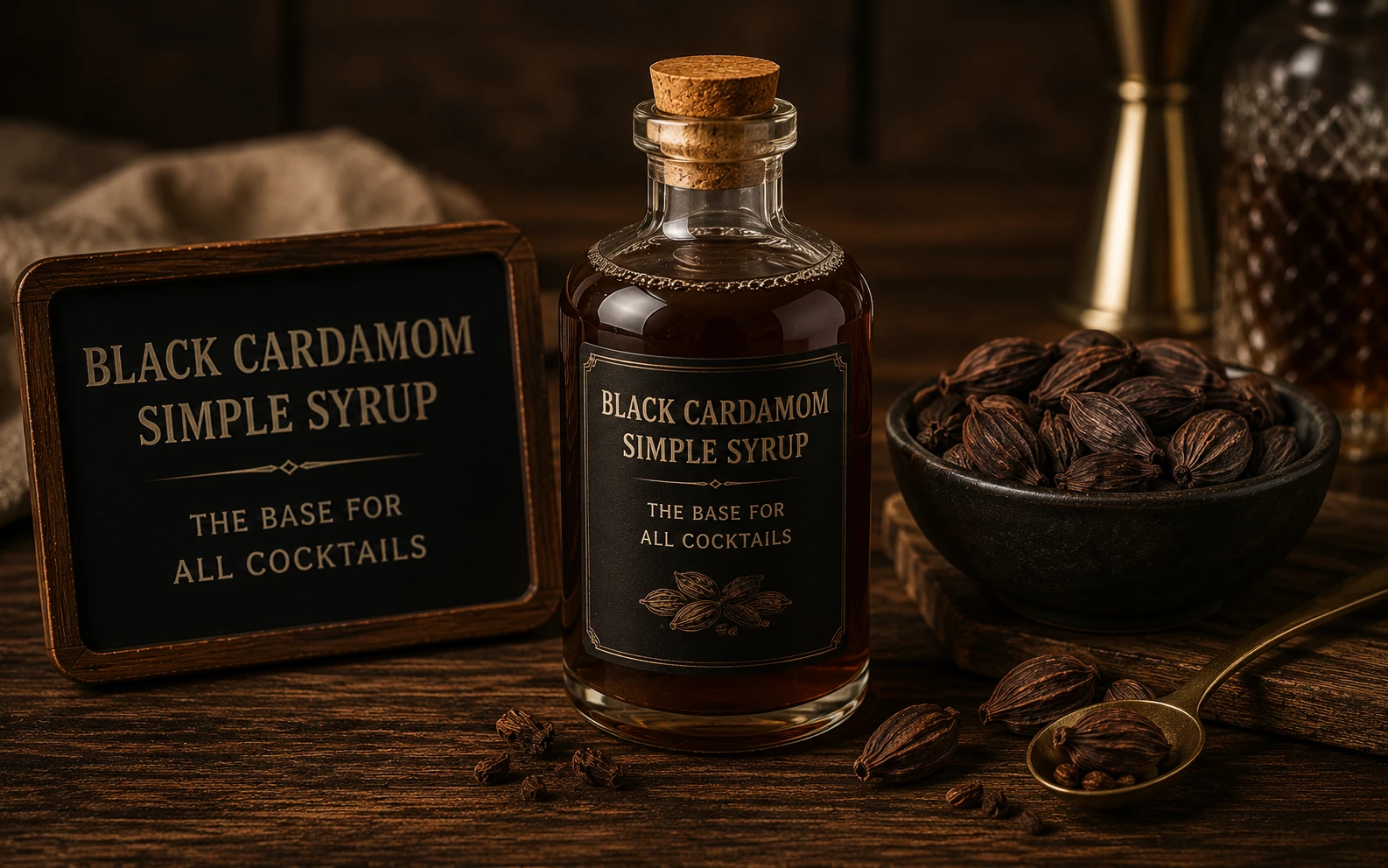
| Black Cardamom Simple Syrup | The foundation recipe — make this first before any cocktail |
| Green vs Black Cardamom | Why these are two completely different spices — and why it matters in cocktails |
| Black Cardamom Latte | The same smoke in a coffee drink — hot, iced, and Blue Bottle style |
WRITTEN BY
Emily Rhodes — Culinary & Spice WriterEmily covers South Asian spice culture, recipe development, and cocktail technique. View full profile →
REVIEWED BY
Dr. Michael Bennett — Food Scientist & PhytochemistReviewed all technical content — volatile compound profiles, crema protein mechanics, and cineole-chlorogenic acid interactions. View profile →